Kamran Faqir is a volunteer investigative journalist and writer committed to exposing hidden truths and amplifying underreported stories. Driven by social justice, he brings sharp insight and fearless truth-telling to independent journalism. NUJ registered.
Original Article Date Published:
Article Date Modified:
Views:362
Listen to this article
Help support our mission, donate today and be the change. Every contribution goes directly toward driving real impact for the cause we believe in.
A Session Held Amidst The Rubble:
On March 2, 2026, the United Nations Security Council convened for a meeting that was historic in its pageantry but haunting in its hypocrisy. For the first time, a First Lady, Melania Trump, presided over a Council session, wielding the gavel to discuss “Children, Technology, and Education in Conflict”. The meeting occurred against the backdrop of the US-Israeli war with Iran, as schools across the Gulf shuddered closed and reports emerged of a devastating strike on a girls’ school in Minab, Iran.
While the chamber in New York heard lofty ideals about digital learning and the power of AI to connect the world’s most vulnerable children, the reality on the ground tells a different story. Behind the statistics, 473 million children living in or fleeing conflict zones, a 25% increase in grave violations, and a 35% rise in sexual violence, lies a deeper crisis of enforcement, political will, and a dangerous reliance on technological band-aids for haemorrhaging geopolitical wounds.
The “Scholasticide” Reality Vs. The Tech Utopia:
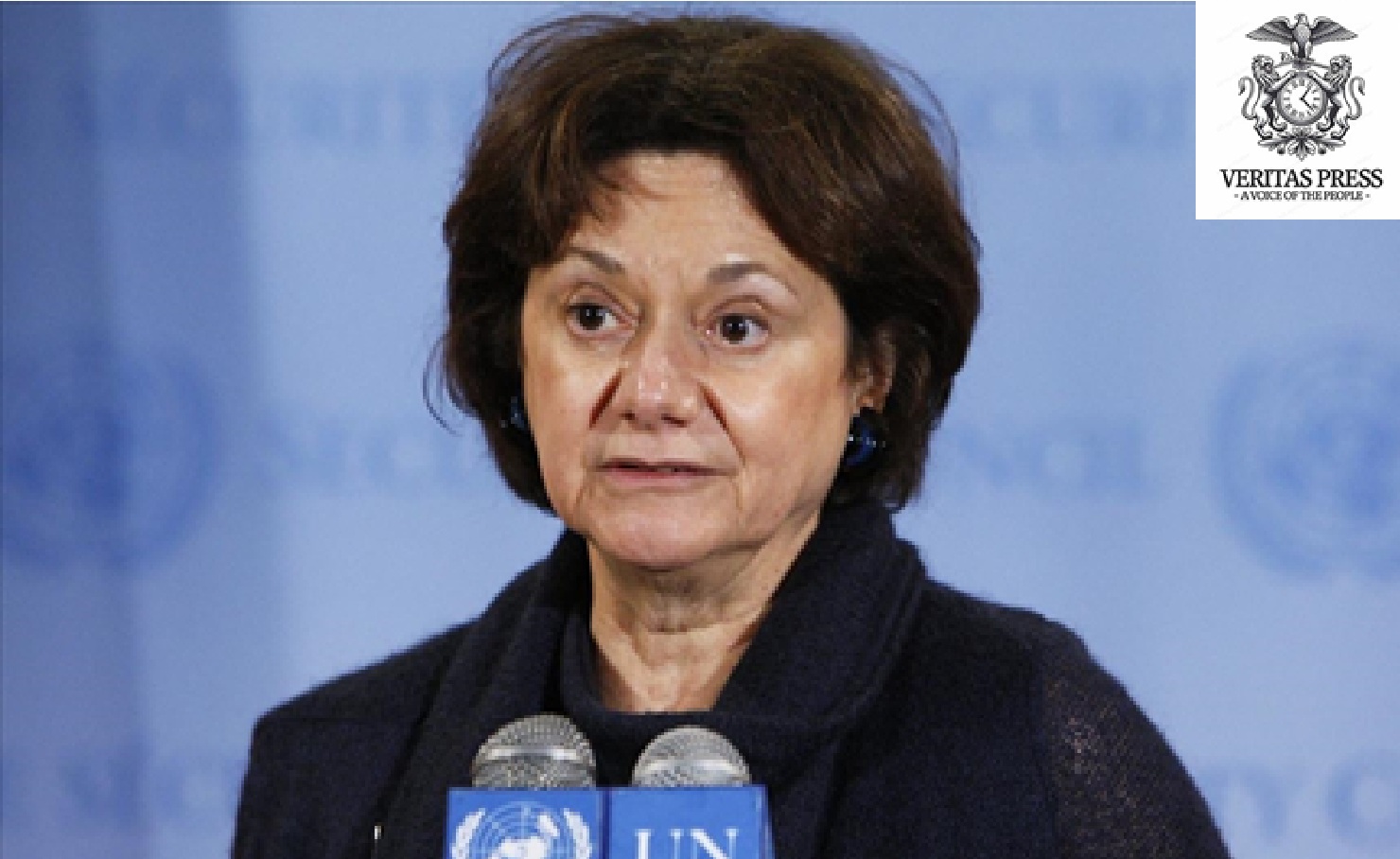
Rosemary DiCarlo, UN Under-Secretary-General for Political and Peacebuilding Affairs, provided the council with stark figures: 234 million children in crisis need educational support, while 85 million are completely out of school. She highlighted the closure of schools in Israel, the UAE, Qatar, Bahrain, and Oman due to regional military operations, noting that “when conflicts erupt, children are among those most severely affected”.
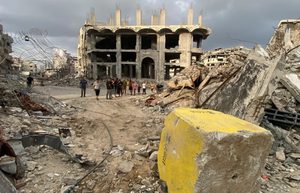
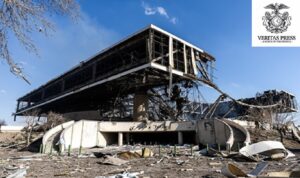
However, the most damning evidence of the council’s impotence came from Gaza. According to the Palestinian Ministry of Education, nearly 5,500 students and over 260 teachers have been killed since October 2023. In the Gaza Strip, 658,000 school-aged children have now lost two consecutive academic years. UNICEF estimates that 96% of school buildings have been damaged or destroyed.
Ten-year-old Muhammad El-Fajem, wandering through the ruins of his school in Khan Younis, told Reuters: “I was top of my class. That was our classroom. Look, it’s totally destroyed. I have friends who died in the war, Bassem, Muhammad and Abdallah”
UN experts have raised the alarm over what they term “scholasticide”, the systematic destruction of the education system. In a joint statement, they noted, “It may be reasonable to ask if there is an intentional effort to comprehensively destroy the Palestinian education system… when schools are destroyed, so too are hopes and dreams”.
Despite this, the Security Council’s primary response, as championed by Melania Trump, was to advocate for digital education. “In a digitally connected age, technology can help meet basic human needs,” Trump told the council, suggesting that AI and mobile devices could bridge the gap. Yet in Gaza, where infrastructure is pulverized and electricity is a memory, the suggestion that a tablet can replace a classroom is a cruel illusion.
The Irony Of The Gavel: Iran, Minab, And The Accusations Of Hypocrisy:
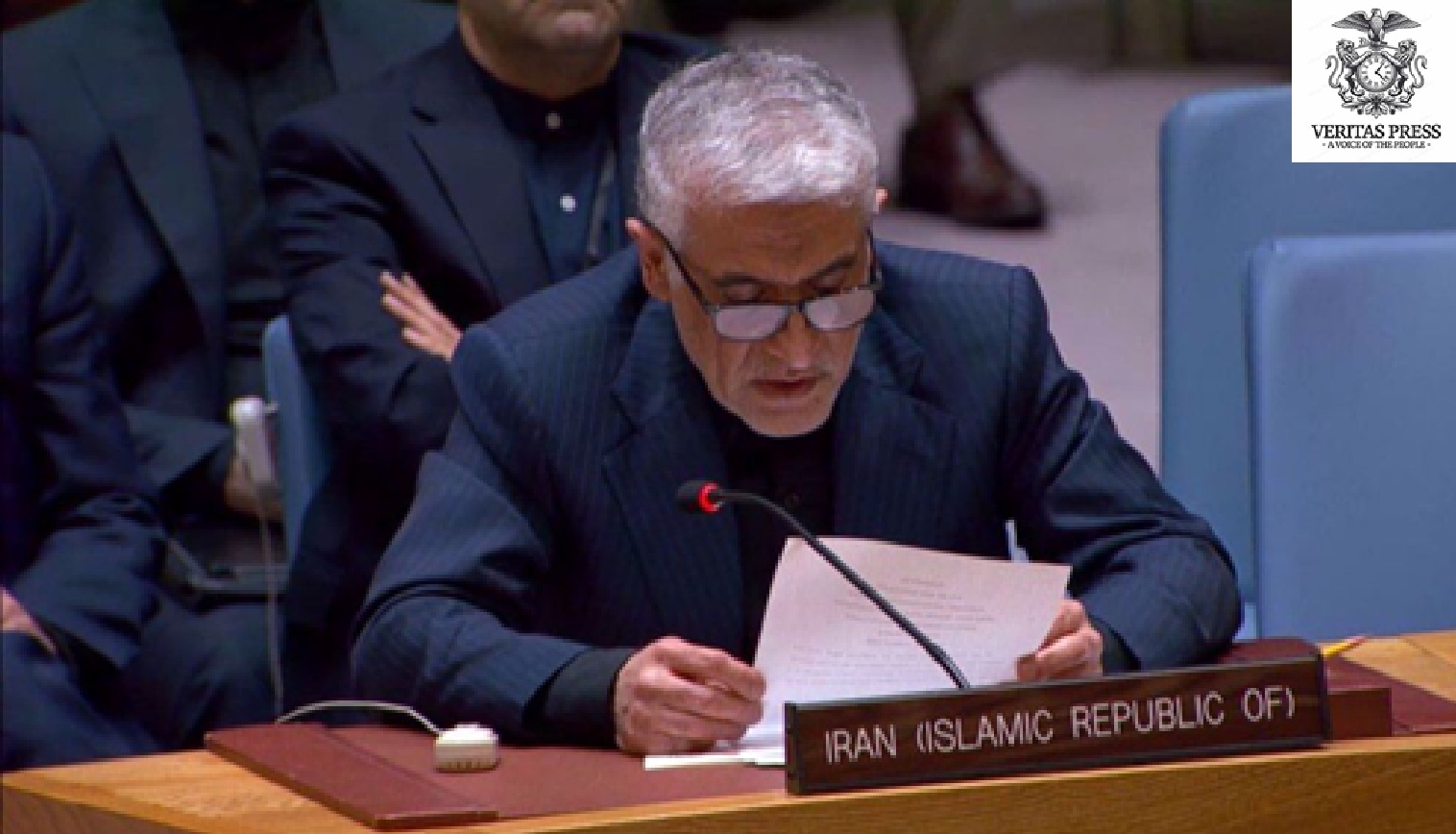
The diplomatic tensions of the day were laid bare before the First Lady even spoke. As Melania Trump took her seat, Iran’s UN Ambassador, Amir Saeid Iravani, delivered a scathing rebuke, stating it was “deeply shameful and hypocritical that on the very first day of its presidency of the Security Council, the United States convened a high-level meeting on protecting children… while at the same time launching missile strikes against Iranian cities and bombing schools and killing children”.
Iravani claimed that a strike on a girls’ primary school in Minab had killed 165 schoolgirls, a figure that Reuters could not independently verify but which cast a pall over the proceedings. DiCarlo acknowledged the reports, stating that US authorities were “looking into these reports”.
US Secretary of State Marco Rubio defended the operations, telling reporters, “The United States will not deliberately target a school”. Israel’s UN ambassador suggested alternative narratives involving the Iranian Revolutionary Guard Corps but expressed regret for civilian loss of life.
The contrast was impossible to ignore: in the council chamber, delegates spoke of safeguarding learning, while outside, the machinery of war that funds and fuels the permanent members continued its devastation. As Pakistan’s Ambassador Asim Iftikhar Ahmad noted, addressing the council, “Across conflict zones around the world, including situations of foreign occupation, notably Palestine and Jammu and Kashmir, millions of children are growing up amid rubble and chaos, rather than classrooms and calm”.
Sudan: The Forgotten 18 Million.
While the Middle East dominated headlines, the crisis in Sudan has quietly become the world’s worst education disaster. According to UNICEF Sudan official Eva Hinds, approximately 8 million children have lost access to education due to the ongoing civil war. About 6,400 schools, one-third of the country’s total, are completely closed. A further 11% are being used to shelter displaced families.
Adil Al-Mahi, MedGlobal’s Sudan country director, described the situation to journalists: “Cities controlled by the Rapid Support Forces are badly damaged, including education facilities… Schools have been used by the RSF as warehouses for military equipment. Around 70% of the facilities might not be safe for children’s education.”
The psychological toll is immense. Jeeda Al-Hakim, a specialist counselling psychologist at City University of London, explained that being out of school is “an emotional wound that goes beyond missed lessons. School offers much-needed stability, a sense of normalcy, and a safe space to form friendships and express themselves. Without it, children are left isolated and burdened by uncertainty.”
The Digital Gamble: Lifeline Or Liability?
The theme of the meeting, technology, was presented as a panacea. DiCarlo highlighted successful programs like UNICEF’s “Learning Passport,” which reaches 10 million children in 47 countries, and the Instant Network Schools in the DRC and South Sudan.
However, the dangers are equally profound. DiCarlo herself warned of “heightened online threats: exploitation, trafficking, radicalisation, digital recruitment into armed groups, and cyberbullying”.
Liberia’s delegate offered a sobering perspective from history. Reflecting on his country’s 14-year civil war, he noted, “We learned a painful truth when education collapses during conflict, the conflict itself does not end, it simply mutates.” He praised community radio as a low-tech solution that worked, warning that if “we fail children in conflict today, we will debate their crises tomorrow”.
Funding: The 24% Drop.
Despite the soaring rhetoric, the financial commitment to education in emergencies has collapsed. DiCarlo noted that funding has dropped by 24%, even as needs escalate. The United States itself, while chairing the meeting on children, remains $4 billion in arrears to the UN, having paid nothing in 2025 before a recent $160 million payment, a fraction of its debt.
UN Secretary-General Antonio Guterres has warned of the organisation’s imminent financial collapse, a fact that undermines any ambitious plan to roll out digital learning in active war zones.
Conclusion: Empty Desks, Empty Promises.
The Security Council meeting on March 2, 2026, will be remembered for its historic chairmanship. But for the 473 million children it purported to serve, it offered little.
In Gaza, Iman Ahmad, a third-grader displaced from Gaza City, described her new reality: “Before the war, I woke up every morning, had breakfast and then put on my school uniform. Now I wake up when I hear the explosions. But I’ve got used to it now”.
Her mother, Ibtisam, voiced the fear of millions: “I’m afraid that my children will fall behind because they haven’t had any lessons for so long. We have tried to make up for it at home as best we can with textbooks. I have worked so hard to ensure that my children have a decent education. As a mother, I find the whole situation just awful”.
As the Security Council members departed the chamber, the words of Rosemary DiCarlo lingered in the air, a quiet rebuke to the theatre that had just unfolded: “The most effective way to protect children from conflict is to prevent and end wars”. Until that truth is acted upon, every digital classroom is a mirage, and every empty desk is a monument to international failure.
Source: Multiple News Agencies
Submissions:
For The Secure Submission Of Documentation, Testimonies, Or Exclusive Investigative Reports From Any Global Location, Please Utilise The Following Contact Details For Our Investigations Desk: enquiries@veritaspress.co.uk or editor@veritaspress.co.uk
Help Support Our Work:
Popular Information is powered by readers who believe that truth still matters. When just a few more people step up to support this work, it means more lies exposed, more corruption uncovered, and more accountability where it’s long overdue.
Help Protect Independent Journalism, Which Is Currently Under Attack.
If you believe journalism should serve the public, not the powerful, and you’re in a position to help, becoming a DONATOR or a PAID SUBSCRIBER truly makes a difference.
DONATION APPEAL: If You Found This Reporting Valuable, Please Consider Supporting Independent Journalism.
Help Support Our Work – We Know, We Know, We Know …
Seeing these messages is annoying. We know that. (Imagine what it’s like writing them … )
Your support fuels our fearless, truth-driven journalism. In unity, we endeavour to amplify marginalised voices and champion justice, irrespective of geographical location.
But it’s also extremely important. One of Veritas Press’s greatest assets is its reader-funded model.
1. Reader funding means we can cover what we like. We’re not beholden to the political whims of a billionaire owner. We are a small, independent and impartial organisation. No one can tell us what not to say or what not to report.
2. Reader funding means we don’t have to chase clicks and traffic. We’re not desperately seeking your attention for its own sake: we pursue the stories that our editorial team deems important and believe are worthy of your time.
3. Reader Funding: enables us to keep our website and other social media channels open, allowing as many people as possible to access quality journalism from around the world, particularly those in places where the free press is under threat.
We know not everyone can afford to pay for news, but if you’ve been meaning to support us, now’s the time.
Your donation goes a long way. It helps us:
Keep the lights on and sustain our day-to-day operations
Hire new, talented independent reporters
Launch real-time live debates, community-focused shows, and on-the-ground reporting
Cover the issues that matter most to our communities, in real time, with depth and integrity
We have plans to expand our work, but we can’t do it without your support. Every contribution, no matter the size, helps us stay independent and build a truly people-powered media platform.
If you believe in journalism that informs, empowers, and reflects the communities we serve, please donate today.
Kamran Faqir is a volunteer investigative journalist and writer committed to exposing hidden truths and amplifying underreported stories. Driven by social justice, he brings sharp insight and fearless truth-telling to independent journalism. NUJ registered.
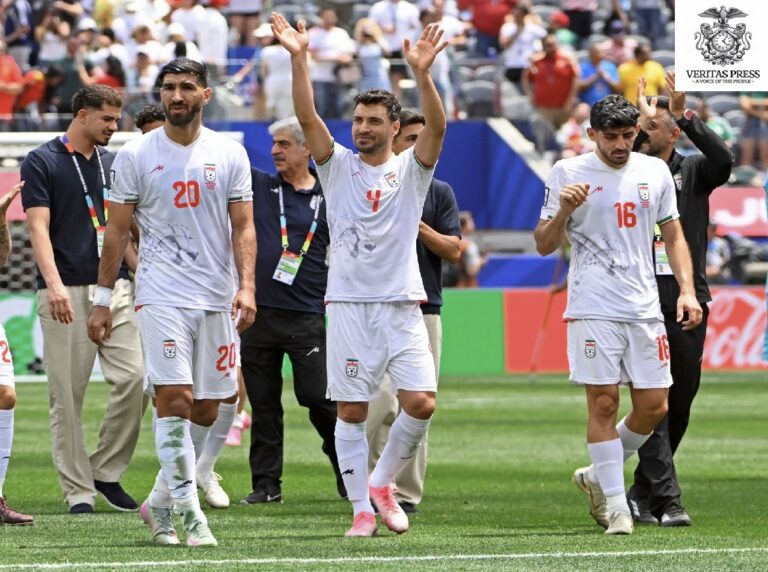
SEATTLE, TEHRAN — The U.S. Department of Homeland Security (DHS) will allow Iran’s national football team to enter the country 48 hours before their critical World Cup match against Egypt on Friday, a modest concession in a tournament where Team Melli’s travel conditions have sparked claims of oppression and competitive disadvantage.