Kamran Faqir is a volunteer investigative journalist and writer committed to exposing hidden truths and amplifying underreported stories. Driven by social justice, he brings sharp insight and fearless truth-telling to independent journalism. NUJ registered.
Article Date Published:
Article Date Modified:
20 minutes
Views:637
Listen to this article
Help support our mission, donate today and be the change. Every contribution goes directly toward driving real impact for the cause we believe in.
The Strait Of Hormuz Escalation, Contested Missile Claims, Frozen Billions, And The Civilians Caught Between Tehran’s New Military Doctrine And Washington’s Red Lines.
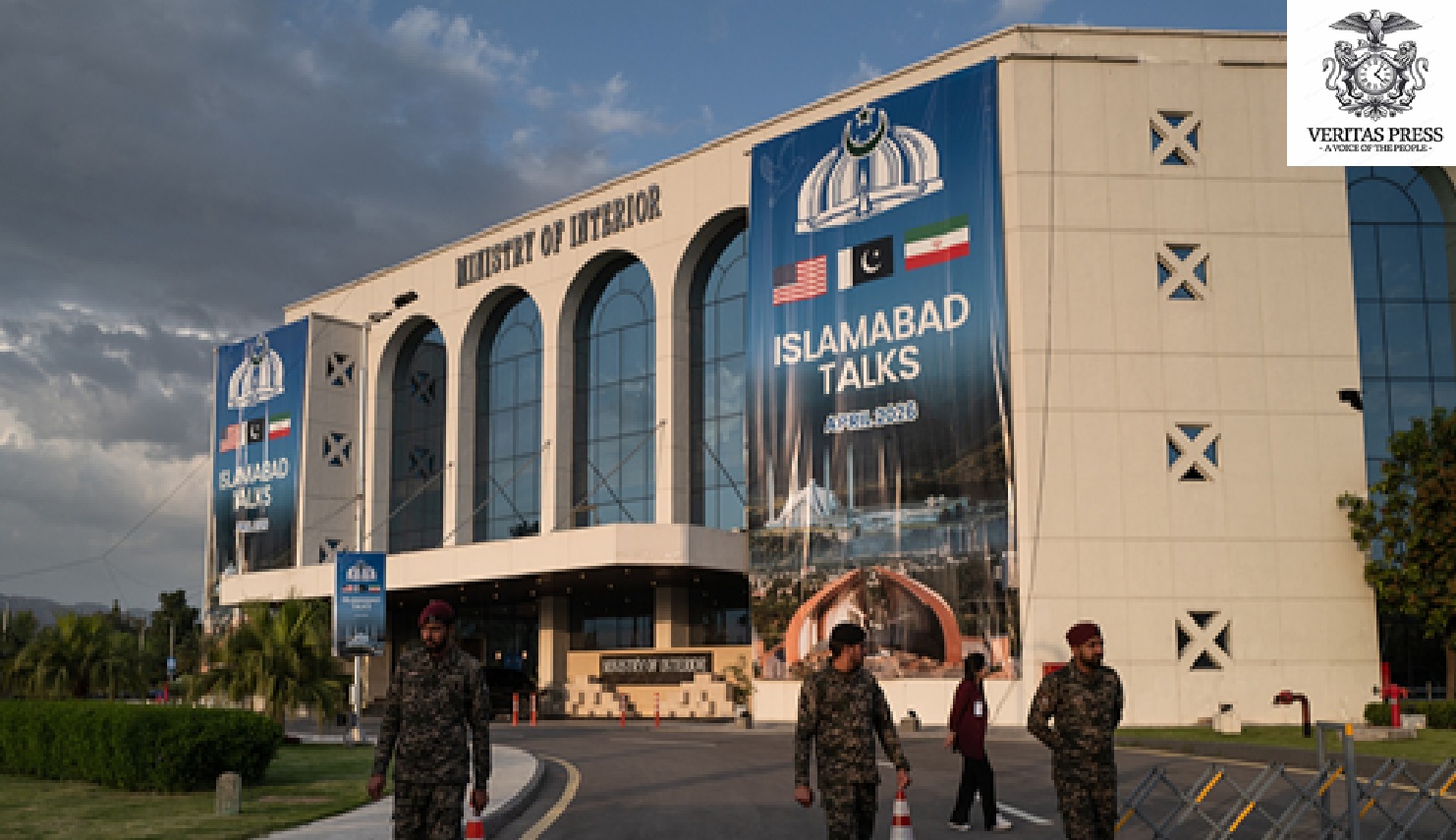
TEHRAN/DUBAI/WASHINGTON — It was just after 1:30 a.m. local time when the first flashes lit up the humid skies over the Strait of Hormuz. Within hours, duelling communiqués from Tehran and Washington would paint radically different pictures of what happened, and what it means for a war that was supposed to have paused nearly two months ago.
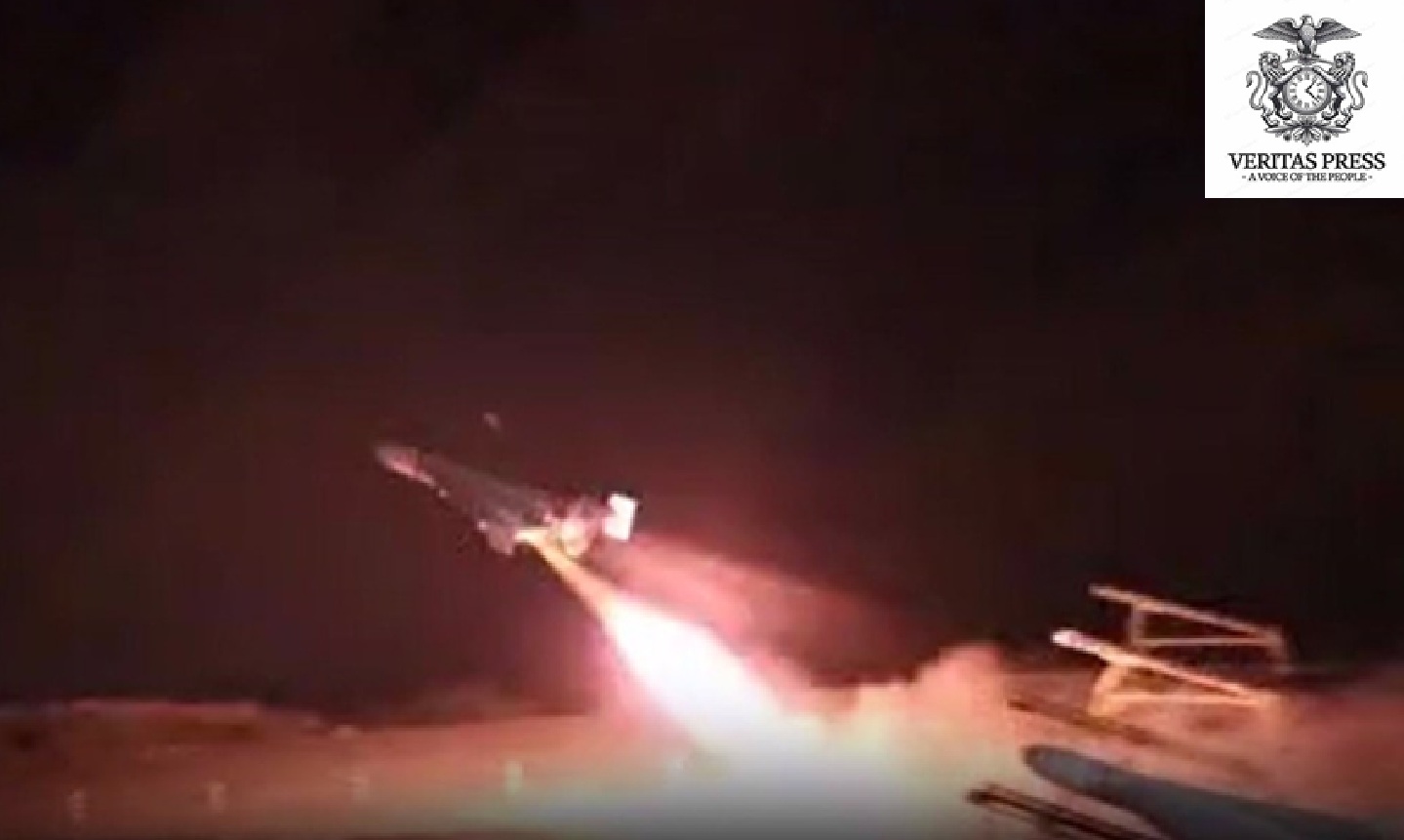
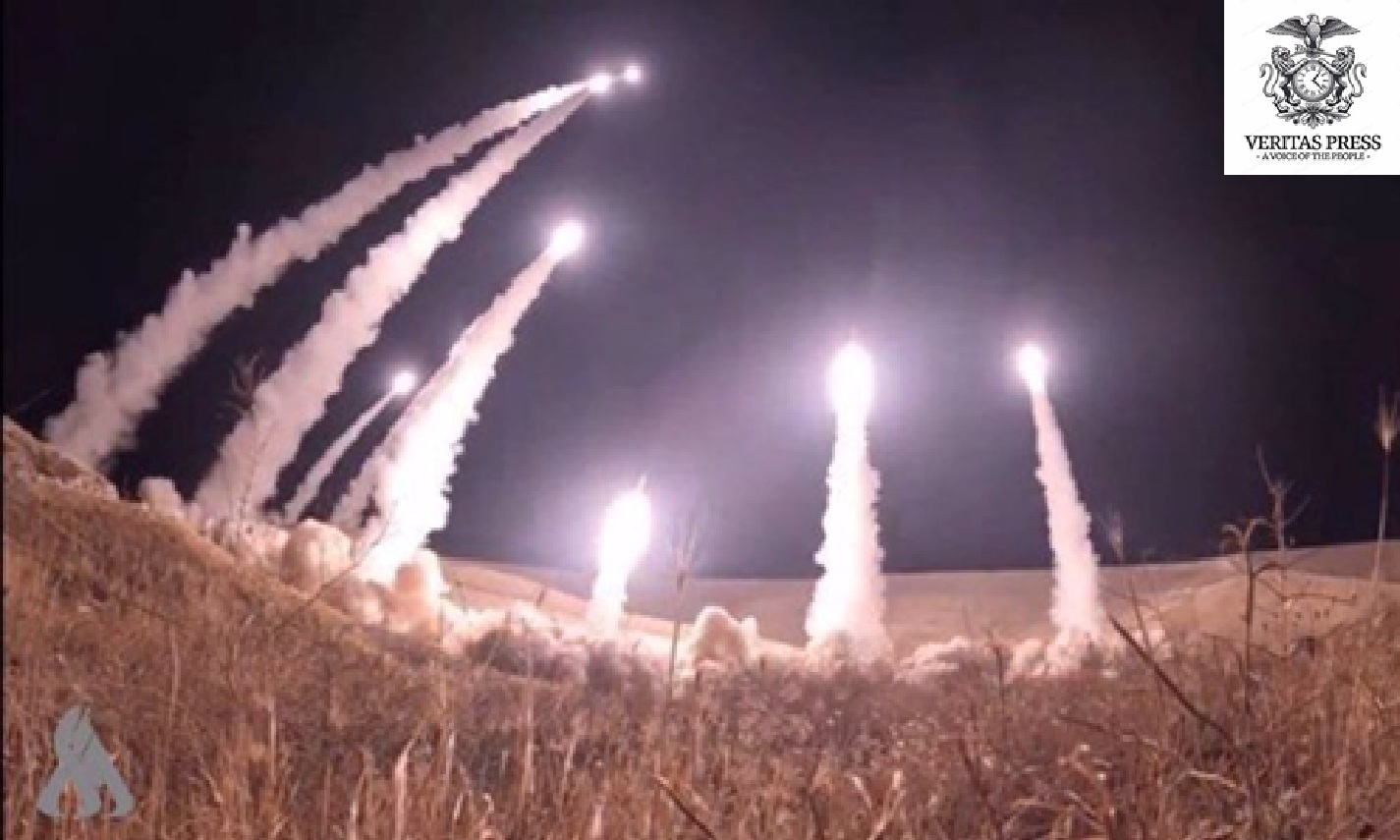
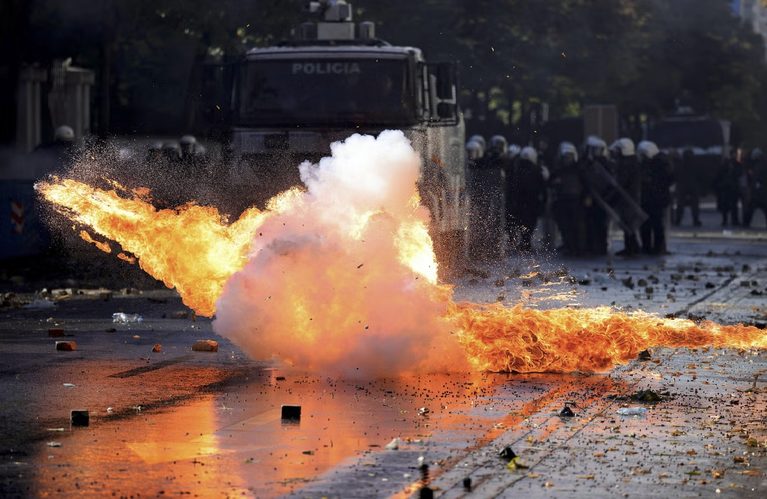
According to Iran’s Islamic Revolution Guards Corps (IRGC), four oil tankers “instigated and guided by the aggressive American army” attempted to force their way through the strait without coordinating with Iranian naval authorities. After repeated warnings, the IRGC says it fired on one vessel, forcing it to stop, while the other three turned back. The United States military tells a different story entirely: that its forces shot down four Iranian one-way attack drones launched toward the strait, then struck coastal surveillance sites in “self-defence.” By dawn, Iran was claiming to have retaliated with ballistic missiles against US air bases in Kuwait and Bahrain, while US Central Command (CENTCOM) insisted nearly all the incoming projectiles were intercepted and no American personnel were harmed.
What actually transpired in the early hours of Saturday morning remains stubbornly opaque, and that opacity is itself a weapon in a conflict where information is as contested as territory. This investigation pieces together eyewitness accounts, official statements, intelligence leaks, and diplomatic cables to reveal a theatre of war increasingly defined by calibrated escalation, deliberate ambiguity, and a ceasefire that, in the words of one US official, amounts to “shooting in a more moderate manner.”
The Strait Of Hormuz Flashpoint: Two Versions Of The Same Night.
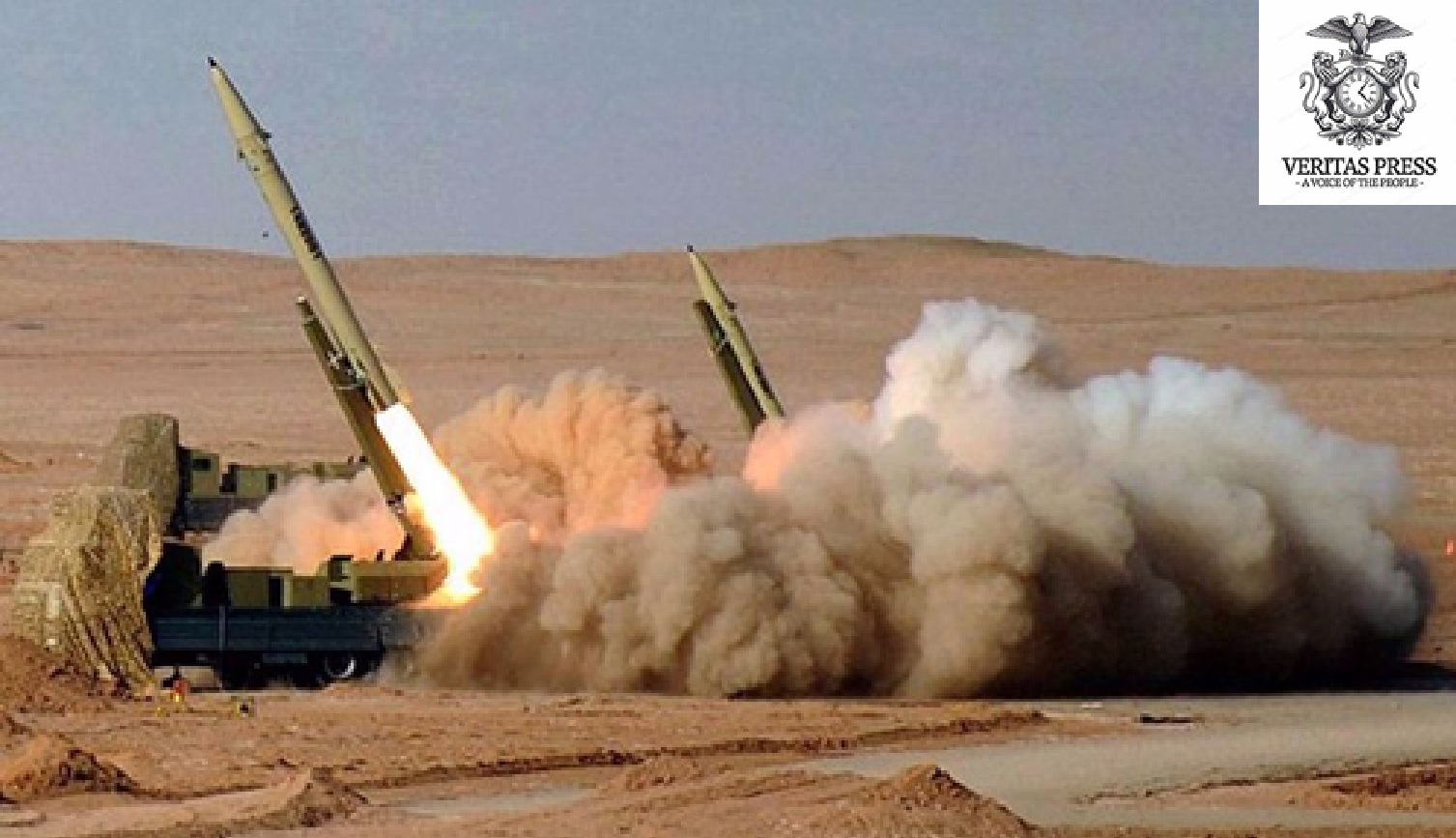
The sequence, as told by the IRGC in a statement published by its Sepah News outlet, begins at 1:30 a.m. Four oil tankers, allegedly under American direction, attempted to exit the Strait of Hormuz without Iranian coordination. The IRGC Navy issued warnings; when one tanker persisted, it was “targeted and stopped.” The rest reversed course. Then, at 2:30 a.m., “American drones struck a telecommunications mast on Qeshm Island and another mast in Sirik with two projectiles.” The IRGC Aerospace Force responded immediately, launching ballistic missiles at “two US air bases in Kuwait, identifying one of them as Ali Al Salem, as well as important remaining facilities of the US Fifth Fleet in Bahrain.”
“We were asleep when the windows shook,” said Marwan, a fisherman from the village of Goruk on Qeshm Island, reached by phone. “I went outside and saw a fire on the hill where the big antenna stands. Everyone was terrified. We’ve been living with this fear since February.” The state broadcaster IRIB confirmed that “the sound of several explosions was heard” in the city of Sirik around the same time.
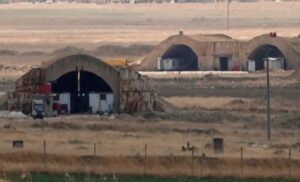
But the US military account, posted by CENTCOM on X, claims the chain of causality ran in the opposite direction. “Moments ago, CENTCOM forces shot down four Iranian one-way attack drones that were launched toward the Strait of Hormuz,” the statement read. “The attack drones posed an immediate threat to regional maritime traffic.” Only after the drones were destroyed, CENTCOM says, did US forces strike “Iranian coastal surveillance radar sites in Goruk and on Qeshm Island to defend against further attacks.”
The divergent narratives obscure a critical question: Who initiated the latest round of hostilities? Was it an Iranian attempt to tighten its chokehold on the strait by menacing commercial shipping, as Washington insists? Or was it an American provocation, guiding tankers through the waterway to test Iranian resolve, as Tehran alleges? Retired Rear Admiral Mark Montgomery, a former US Navy commander who served in the region, told this reporter that the “IRGC narrative of US-guided tankers testing their blockade is not implausible,” but added that “the IRGC has been consistently and aggressively enforcing an illegal blockade of international waters since February. They don’t get to claim self-defence when they’re the ones strangling global commerce.”
Iran’s “New Military Concept”, Or Old Wine In A New Bottle?
In the hours after the exchange, Iranian state media and affiliated analysts began promoting a narrative that the IRGC is executing a “new military concept”: targeting US and allied military installations in the Gulf without widening the war to civilian populations or drawing in new state actors. “What we have been hearing from Iranian officials has been remarkably consistent,” noted an analysis segment broadcast on Iran’s English-language Press TV, a transcript of which was shared with this reporter. “Last week, the IRGC stated clearly that it would retaliate against any country, any airspace [being used by] the United States in the region, from which attacks originated.”
Ali, a Tehran-based strategic analyst with ties to the IRGC’s academic circles who spoke on condition of anonymity, said the doctrine is “designed to impose costs on the Americans and their hosts while preserving the ceasefire architecture. We hit the bases in Kuwait and Bahrain not to destroy them completely, but to send a message: Any use of regional territory for strikes on Iran will be met in kind.”
Yet the events of recent days complicate that tidy framing. Just days before the Hormuz clash, Iranian drones heavily damaged a passenger terminal at Kuwait International Airport, killing one person and wounding dozens. If the IRGC’s intention was to avoid civilian casualties and limit escalation, the strike on a major civilian airport represents a serious, and potentially deliberate, deviation. Kuwaiti officials, speaking on background, expressed fury and bewilderment. “This was not a military target,” one senior Kuwaiti diplomat said. “Our airport is a civilian hub. If Iran wanted to send a message to the Americans at Ali Al Salem, they could have done so without hitting our airport. This crossed a line.”
Nasser Al-Sane, a former Kuwaiti MP and political commentator, was more blunt: “We are being punished for hosting American forces we did not invite. Every missile that lands on our soil, whether aimed at a base or an airport terminal, is a violation of Kuwaiti sovereignty. We are not a battlefield. But the Iranians and the Americans are making us one.”
In Bahrain, the story is equally fraught. During the overnight barrage, sirens wailed across Manama, and residents received emergency alerts urging them to seek shelter. “I was in my apartment in Juffair, not far from the US Navy base, and I heard at least three explosions,” said Fatima, a Bahraini human rights activist who asked that her last name be withheld for security reasons. “The government says nothing, but we feel it. Every week, there is an incident. The ceasefire is a joke.” The US military, for its part, flatly denied Iranian claims of damage, stating that six of seven ballistic missiles were intercepted and the seventh “did not reach its intended target.” CENTCOM called the IRGC’s assertion of hitting the Fifth Fleet headquarters “false.”
The truth may lie somewhere in between. Independent verification is impossible: foreign journalists are heavily restricted in both Iran and the Gulf states, and both sides have strong incentives to exaggerate their successes and minimise their failures. What is clear is that the tempo of attacks has not subsided since the Pakistan-brokered truce took effect on April 8, even if the scale of devastation has diminished from the opening weeks of the war.
The Ceasefire That Never Was: “Shooting In A More Moderate Manner”
When asked about the persistent violence during a recent interview with NBC’s “Meet the Press,” US President Donald Trump offered a startling characterisation of the ceasefire. The fighting, he suggested, involved “shooting in a more moderate manner,” rather than a full halt to hostilities. The remark, while characteristically unorthodox, captures the grim reality on the ground.
Since February 28, when the US and Israel launched joint strikes on Iran, killing Supreme Leader Ayatollah Ali Khamenei and several senior IRGC commanders in a decapitation operation aimed at destabilising the regime and neutralising its nuclear and missile capabilities, the conflict has ebbed and flowed. Iran retaliated within hours, launching waves of missiles and drones at Israeli cities and US bases across the Gulf. The war’s opening phase was devastating: oil prices spiked above $180 a barrel, shipping through the Strait of Hormuz ground to a near-halt, and the humanitarian fallout rippled far beyond the battlefield.
A 60-day ceasefire extension agreed in principle has languished for weeks. Trump publicly stated that the “situation with Iran seems to be going quite well,” and added, “We’re going to come out of Iran very quickly, and it’s going to be very strong one way or the other, whether it’s a piece of paper or the very tough way. The very tough way is maybe the easier way.” Yet his own negotiators, including special envoy Steve Witkoff and son-in-law Jared Kushner, were reported to have visited the Oak Ridge National Laboratory in Tennessee last week to consult with nuclear experts, a clear signal that the administration is preparing for detailed negotiations over Iran’s enriched uranium stockpile, a process that will require far more than a “piece of paper.”
The central sticking point, according to Mohsen Rezaei, the former IRGC commander turned adviser to Iran’s new Supreme Leader, is frozen assets. In an interview with CNN, Rezaei laid down a stark ultimatum: “If he [Trump] wants to reach an agreement with Iran, this $24 billion is a test of trust that Iran wants to have with Trump. This is our own money, not America’s money.” The $24 billion figure represents a fraction of the estimated $100-123 billion in Iranian assets frozen in foreign accounts under the sanctions regime imposed after the 1979 Islamic Revolution and tightened in successive waves. For a country whose economy has been strangled by blockade and sanctions, accessing those funds is an existential priority. “The regime needs hard currency to buy off restive provinces, rebuild its missile infrastructure, and maintain the security apparatus that survived Khamenei’s assassination,” said Naysan Rafati, an Iran researcher at the International Crisis Group. “It’s not just about trust — it’s about survival.”
Trump’s Math Vs. The Mossad’s: How Many Missiles Does Iran Really Have?
In the same NBC interview, Trump made a specific, and puzzling, claim: Iran retains “maybe 21%-22% of their missiles. It’s a lot of missiles, but it’s not what it was when we first attacked.” He insisted that “most of the drone factories have been knocked out, most of the launching pads have been knocked out, and most of the missile manufacturing areas have been knocked out.”
The statement contradicts both earlier US intelligence assessments and a recent report by Israel’s Channel 12, which cited updated American intelligence indicating that roughly two-thirds of Iran’s missile launchers remain operational. Earlier in the war, estimates from US officials suggested that approximately 50% of Iran’s launchers had been destroyed. The discrepancy is not academic: if Iran has lost only a third of its launchers rather than 80%, its capacity to sustain a long-term campaign against US bases and Israeli cities is considerably greater than Trump’s public statements suggest.
A former senior Israeli military intelligence officer, speaking on condition of anonymity, told this reporter: “The 21-22% figure is fantasy. Maybe he means a specific category, long-range precision missiles, or certain mobile launchers. But overall, the Iranian missile force is battered but far from broken. They have dispersed, hidden, and gone underground. Anyone who thinks we’ve removed the threat is deluding themselves.” A US defence official, asked about the discrepancy, said only that “the president may have been referring to a specific classified metric that does not reflect the broader picture.” The official declined to elaborate.
The imprecision in public statements from the highest levels of government raises troubling questions about what the American public is being told about a war that has already cost thousands of lives and billions of dollars. If Trump is downplaying Iran’s residual capabilities to create political space for a deal, or to justify a premature withdrawal, the consequences could be catastrophic. “Overestimating our success in degrading Iran’s arsenal leads to bad policy,” said Senator Chris Murphy (D-CT), a member of the Foreign Relations Committee. “The American people deserve an honest accounting of the threat.”
The Regional Spiral: Lebanon, Gaza, And The “Moderate” Ceasefire.
The fragile truce between Iran and the US is only one front in a broader regional conflagration. In southern Lebanon, the Iran-backed Hezbollah has continued to launch near-daily attacks on Israeli positions, even as a separate US-brokered pact between Israel and the Lebanese government seeks to halt the fighting. Hezbollah leader Naim Qassem categorically rejected that agreement this week, stating that it did not provide for an Israeli withdrawal from Lebanese territory and that Hezbollah had not been a party to the negotiations. The group claims its operations are conducted in solidarity with Tehran, linking its battlefield to the broader fate of the Islamic Republic.
Lebanon’s veteran parliament speaker Nabih Berri, a Hezbollah ally, floated a potential compromise on Friday, suggesting that the group could withdraw from areas south of the Litani River if Israeli forces simultaneously pulled out of occupied territory. But with Israel vowing to continue operations until its northern border is secured, and with friction growing between the Biden administration’s ceasefire push and the Israeli military’s more hawkish posture, the proposal has gained little traction. “We are trapped in a cycle where each side demands the other move first,” said Maha Yahya, director of the Carnegie Middle East Centre in Beirut. “Civilians in southern Lebanon and northern Israel are paying the price for a diplomatic void.”
In Gaza, the situation is equally tenuous. Despite a separate ceasefire arrangement, residents report intermittent shelling and drone strikes. The UN World Food Programme (WFP) sounded the alarm on Friday, warning that rising fuel and transport costs driven by the Gulf crisis were “pushing millions of people closer to hunger” across the Middle East and North Africa. “The war in the Gulf is not a distant conflict; it has created a cascading price shock that is breaking the backs of families from Yemen to Egypt,” said WFP spokesperson Lina Al-Qudsi. “We are seeing a hunger crisis of historic proportions unfolding in real time.”
The Strait As Weapon And Wound:
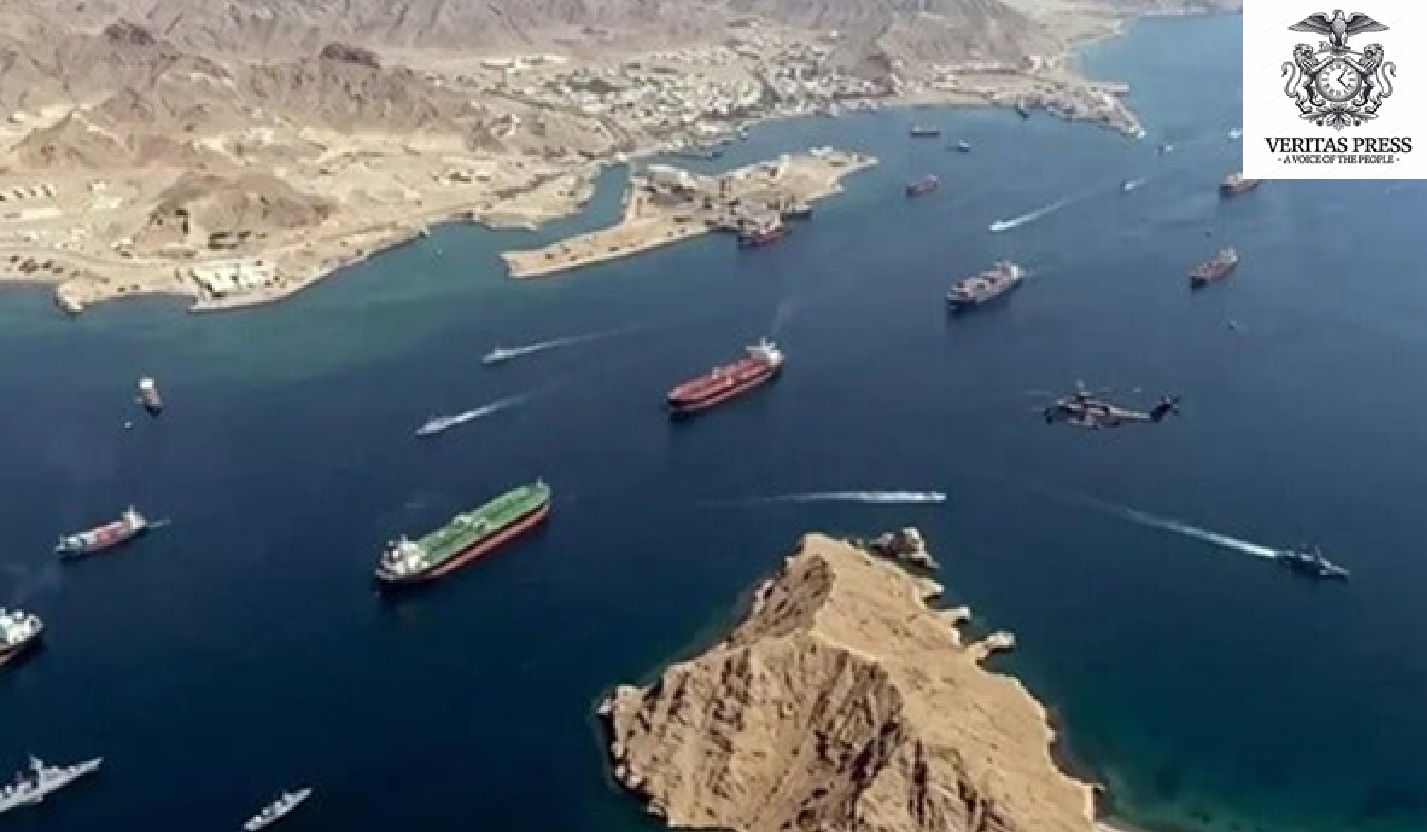
The Strait of Hormuz, a narrow chokepoint through which roughly a fifth of the world’s pre-war oil transited, has become the conflict’s central theatre. The IRGC Navy has maintained effective control since February 28, enforcing a blockade on vessels linked to Israel and the United States while the US Navy imposes a reciprocal blockade on ships bound to and from Iranian ports. The result is a maritime standoff that has crippled global energy markets and created an ever-present risk of miscalculation.
“Every captain who passes through the strait knows they are sailing into a potential war zone,” said Jakob Larsen, head of maritime security for BIMCO, the world’s largest shipping association. “The rules are unclear, the risks are enormous, and the insurance costs are astronomical. We’ve had near-misses, vessels fired upon, and now tankers being targeted. It’s only a matter of time before a major environmental disaster or mass casualty event occurs.”
The Panaya incident, in which the IRGC says it fired missiles at a vessel “affiliated with the United States and Israel,” and a separate US operation to disable the Botswana-flagged tanker M/T Lexi near Iran’s Kharg Island, demonstrate how both sides are weaponising commercial shipping. In each case, the stated justifications differ wildly, but the effect is the same: the free flow of commerce has been subordinated to military imperatives, with devastating economic consequences. “The blockade is killing our industry,” said a Dubai-based shipping magnate who requested anonymity. “Crews are refusing to sail these routes. Freight rates have quadrupled. We are bleeding money, and the world is running out of patience.”
Voices From The Ground: The Human Toll Of A War Without A Name.
Behind the strategic calculus and the competing narratives, ordinary people are living through a nightmare. On Qeshm Island, where US strikes destroyed a radar site and an IRGC communications tower, residents describe a pervasive sense of vulnerability. “The sound of jets and explosions has become a part of our nights,” said Maryam, a schoolteacher in Goruk. “We don’t know who to believe. The Iranian media says one thing, the foreign channels say another. But the shrapnel that fell in my neighbour’s yard is real.”
In Kuwait, the trauma of the airport attack lingers. Footage verified by this publication shows the chaotic aftermath: shattered glass, pools of blood, and passengers sprinting through a smoke-filled terminal. One airport worker, Ahmed, described pulling a wounded elderly woman from the wreckage of a collapsed ceiling panel. “She kept asking me, ‘Why would they bomb us? We are not soldiers.’ I had no answer.” The Kuwaiti government has announced compensation for victims but has been conspicuously silent on attributing blame, a reflection of its precarious position as host to over 13,000 US troops while trying to maintain diplomatic channels with Tehran.
In Bahrain, the sirens have become a grim soundtrack to daily life. Activist Fatima described a population caught between the authoritarian Bahraini regime and the fallout of a war it did not choose. “The government suppresses us at home, and the war terrorises us from outside. There is no safe space. When the missiles come, we hide. Then we come out and are told to be grateful that the base wasn’t hit. But our fear is not measured in battle damage assessments.”
The Road Ahead: Negotiation, Escalation, Or Both?
As the diplomatic track lurches forward, the gap between the two sides remains vast. Iran wants its frozen billions released, sanctions relief, and an end to the naval blockade. It wants a ceasefire in Lebanon that includes an Israeli withdrawal, a condition Israeli officials have privately called “a non-starter.” The US wants verifiable dismantlement of Iran’s nuclear program and guarantees that Tehran cannot reconstitute its long-range missile arsenal. And hovering over everything is the question of the Supreme Leader’s assassination: the new leadership in Tehran, led by a council of clerics and IRGC commanders, must demonstrate strength and avenge Khamenei’s death even as it seeks a way out of the war.
Mohsen Rezaei’s CNN interview laid bare the core demand: trust, embodied in $24 billion. “If he [Trump] wants to reach an agreement with Iran, this is a test of trust that Iran wants to have with Trump,” he said. “This is our own money, not America’s money.” But he also issued a clear warning, one that frames the stakes in stark terms: “If the United States resumes hostilities, Iran will drag the war beyond the Gulf, bringing another dimension to the war.” He added, however, that “the possibility of war is low”, a caveat that seems increasingly at odds with events on the ground.
For now, both sides appear content to fight a limited war of attrition, testing each other’s red lines while keeping the diplomatic door ajar. The new IRGC doctrine of targeting US bases in the Gulf states without widening the conflict to full-scale regional war is a high-wire act: it imposes costs on Washington and its allies, sustains Iranian deterrence, and avoids the cataclysmic escalation that neither side can afford. But it is a doctrine built on ambiguity, and ambiguity invites miscalculation. A missile that falls short of the Fifth Fleet headquarters and hits a residential neighbourhood in Manama, or a drone that strikes a civilian airport instead of Ali Al Salem, could shatter the fragile logic of controlled escalation overnight.
As Trump muses about a “very tough way” that may be “the easier way,” and as Iranian generals promise “the complete closure of the Strait of Hormuz to the export of your oil and gas” if provoked further, the war grinds on, not in decisive battles, but in a corrosive drip of violence that is rewriting the rules of Gulf security, impoverishing millions, and pushing an entire region toward a precipice few seem willing to name, let alone avert.
For The Secure Submission Of Documentation, Testimonies, Or Exclusive Investigative Reports From Any Global Location, Please Utilise The Following Contact Details For Our Investigations Desk: enquiries@veritaspress.co.uk or editor@veritaspress.co.uk
Help Support Our Work:
Popular Information is powered by readers who believe that truth still matters. When just a few more people step up to support this work, it means more lies exposed, more corruption uncovered, and more accountability where it’s long overdue.
Help Protect Independent Journalism, Which Is Currently Under Attack.
If you believe journalism should serve the public, not the powerful, and you’re in a position to help, becoming a DONATOR or a PAID SUBSCRIBER truly makes a difference.
DONATION APPEAL: If You Found This Reporting Valuable, Please Consider Supporting Independent Journalism.
Help Support Our Work – We Know, We Know, We Know …
Seeing these messages is annoying. We know that. (Imagine what it’s like writing them … )
Your support fuels our fearless, truth-driven journalism. In unity, we endeavour to amplify marginalised voices and champion justice, irrespective of geographical location.
But it’s also extremely important. One of Veritas Press’s greatest assets is its reader-funded model.
1. Reader funding means we can cover what we like. We’re not beholden to the political whims of a billionaire owner. We are a small, independent and impartial organisation. No one can tell us what not to say or what not to report.
2. Reader funding means we don’t have to chase clicks and traffic. We’re not desperately seeking your attention for its own sake: we pursue the stories that our editorial team deems important and believe are worthy of your time.
3. Reader Funding: enables us to keep our website and other social media channels open, allowing as many people as possible to access quality journalism from around the world, particularly those in places where the free press is under threat.
We know not everyone can afford to pay for news, but if you’ve been meaning to support us, now’s the time.
Your donation goes a long way. It helps us:
Keep the lights on and sustain our day-to-day operations
Hire new, talented independent reporters
Launch real-time live debates, community-focused shows, and on-the-ground reporting
Cover the issues that matter most to our communities, in real time, with depth and integrity
We have plans to expand our work, but we can’t do it without your support. Every contribution, no matter the size, helps us stay independent and build a truly people-powered media platform.
If you believe in journalism that informs, empowers, and reflects the communities we serve, please donate today.
Kamran Faqir is a volunteer investigative journalist and writer committed to exposing hidden truths and amplifying underreported stories. Driven by social justice, he brings sharp insight and fearless truth-telling to independent journalism. NUJ registered.
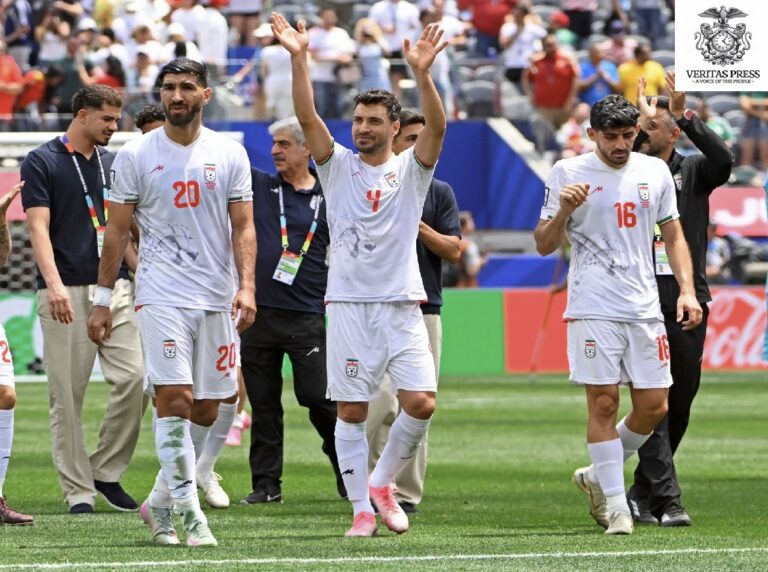
SEATTLE, TEHRAN — The U.S. Department of Homeland Security (DHS) will allow Iran’s national football team to enter the country 48 hours before their critical World Cup match against Egypt on Friday, a modest concession in a tournament where Team Melli’s travel conditions have sparked claims of oppression and competitive disadvantage.