



Press Release: Veritas Press C.I.C.
Author: Kamran Faqir
Article Date Published: 24 Oct 2025 at 13:15 GMT
Category: Middle-East | Palestine-Gaza-West Bank | UN Demands Israel Open Rafah
Source(s): Veritas Press C.I.C. | Multi News Agencies

Business Ads


RAFAH – Despite a fragile US-brokered ceasefire, the United Nations and humanitarian agencies warn that Gaza remains on the brink of collapse as Israel continues to obstruct aid access through key crossings, including the vital Rafah gate. The UN has urged Israel to “allow in more [aid] trucks at more crossing points” amid evidence that famine and disease are deepening across the devastated enclave.
‘A Return To Nothing’: Gaza’s North Reduced To Rubble And Hunger.
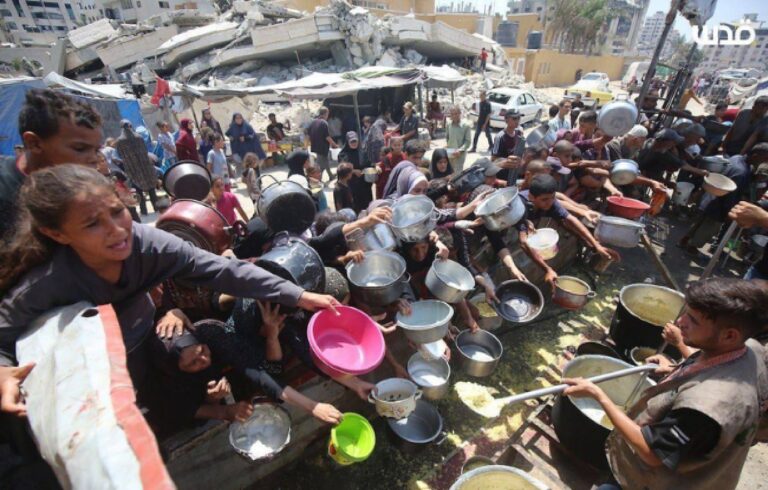
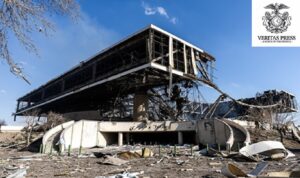
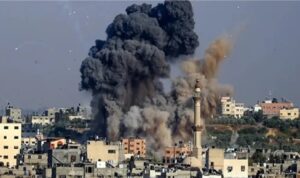
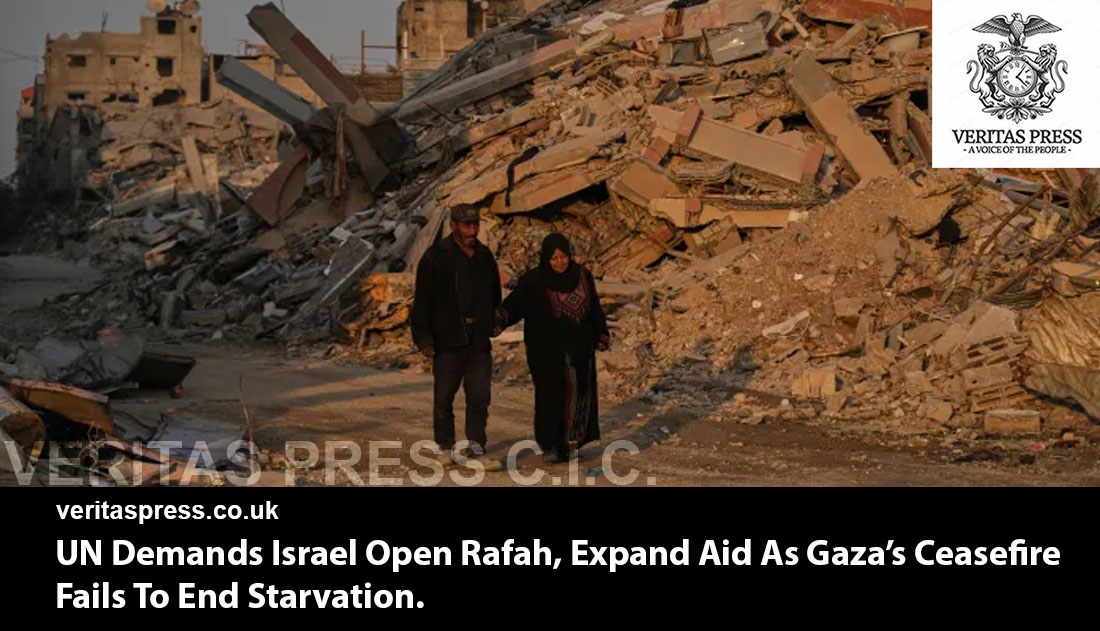
In northern Gaza, Palestinians who have dared to return to their neighborhoods describe a landscape of total ruin, homes flattened, streets unrecognisable, and hunger gnawing at every corner.
“People are returning, but they’re returning to nothing,” said a UN field worker in Beit Hanoun, speaking to Al Jazeera. “The buildings are just skeletons. There’s no water, no food, no power, just dust and despair.”
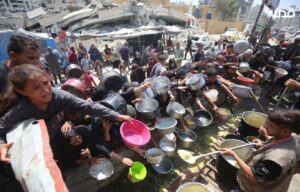
Residents told Reuters that families now walk “for hours, sometimes days,” in search of flour or canned goods. “We survive on lentils if we find them,” said Umm Yasir, a displaced mother of five. “My youngest hasn’t seen bread in weeks.”
The entire electricity grid, once the lifeline for hospitals and bakeries, lies in ruins. Humanitarian groups warn that the absence of electricity has crippled water desalination and sewage systems, fueling outbreaks of waterborne diseases.
Un: Aid Levels Still Far Below Ceasefire Commitments.
Farhan Haq, deputy spokesperson for the UN Secretary-General, told Al Jazeera’s Gabriel Elizondo that “at no point since the ceasefire went into effect have 600 UN trucks entered Gaza on any given day,” referring to the number promised under the truce.
“We want the Israeli authorities to allow in more trucks at more crossing points, we’ve made that clear,” Haq said.
While Haq noted that slightly more aid has entered Gaza since the ceasefire, the volume remains a fraction of what is required to sustain life for over two million people. The UN and the World Food Programme (WFP) estimate that Gaza needs at least 600–800 truckloads daily to avert famine. Current figures hover around 150–200, often delayed or blocked entirely by Israeli inspections.
The World Health Organization’s Director-General Tedros Adhanom Ghebreyesus said Thursday that there had been “no observable reduction in hunger” since the ceasefire began. “The situation remains catastrophic because what’s entering is not enough,” Tedros warned from Geneva. “There has been no dent in hunger because there is not enough food.”
ICJ: Israel Obliged To Provide Basic Needs For Gaza.
The International Court of Justice (ICJ), the UN’s top legal body, reaffirmed this week that Israel remains legally obligated under international law to ensure that Gaza’s civilian population has access to basic necessities, including food, water, and medical care.
The court also addressed Israeli claims that UNRWA, the UN agency for Palestinian refugees, harbors Hamas members, rejecting Israel’s attempts to delegitimise the organisation. “The provision of humanitarian aid cannot be impeded based on unsubstantiated political claims,” the ICJ noted.
Legal scholars say Israel’s ongoing restrictions could constitute violations of the Genocide Convention. “Preventing life-saving aid from entering an occupied territory where famine has already been declared is not just immoral, it’s illegal,” said Dr. Rania Masri, a Lebanese-American environmental and human rights scholar.
‘Starvation Is Still Being Weaponized’
Doctors working in Gaza’s remaining hospitals told The Guardian that children are dying daily from malnutrition and dehydration. “We are losing children not to bombs but to hunger,” said Dr. Ahmad al-Shaer of Kamal Adwan Hospital in northern Gaza. “We are forced to decide who gets the last packet of ready-to-use therapeutic food.”
Since the start of 2025, 411 people have died from malnutrition in Gaza, including 109 children, according to WHO representative Richard Peeperkorn. Rights groups accuse Israel of deliberately using starvation as a weapon of war, a charge that Israeli officials continue to deny.
Oxfam’s regional director Sally Abi Khalil said in a statement: “Israel’s deliberate obstruction of aid, despite a ceasefire, demonstrates that the suffering of Palestinians is not collateral damage; it is policy. The so-called ceasefire is being used to manage starvation, not end it.”
Rafah Remains Closed, Israel Deflects Blame:
Despite repeated international pressure, the Rafah crossing between Gaza and Egypt remains effectively closed to large-scale aid shipments. Egyptian and UN officials blame Israeli security controls for the paralysis.
“The bottleneck is not in Cairo or Rafah; it’s at the Israeli checkpoints,” a senior Egyptian official told Reuters on condition of anonymity. “Every truck is delayed, inspected, or turned back. It’s deliberate.”
Israel claims security concerns justify the restrictions. However, humanitarian agencies insist the blockade is punitive. “There is no credible military rationale for denying food, water, and medicine,” said Jan Egeland, Secretary-General of the Norwegian Refugee Council. “This is collective punishment on an industrial scale.”
US Officials Push Israel To Comply, But Pressure Falls Short:
The Trump administration’s envoys, including Vice President JD Vance, adviser Jared Kushner, and Senator Marco Rubio, have all visited Israel in recent days to discuss “implementation of the Gaza reconstruction plan.” Rubio admitted that “more work was still needed” to meet humanitarian benchmarks, though he claimed “good progress” had been made.
Analysts remain skeptical. “Washington’s pressure is largely symbolic,” said Lara Friedman, president of the Foundation for Middle East Peace. “The U.S. continues to shield Israel from accountability while pretending to demand compliance.”
A Ceasefire Without Relief:
For Gaza’s two million residents, the ceasefire has brought no real respite. “They call it peace, but we are still dying slowly,” said 28-year-old Amal al-Haddad in Gaza City. “There’s no food, no medicine, no electricity, only silence where the bombs used to be.”
The UN warns that unless Israel lifts restrictions and restores essential services, the enclave could see another wave of preventable deaths in the coming weeks. “This is not recovery, it’s managed survival,” said Philippe Lazzarini, UNRWA’s commissioner-general. “And survival should not depend on political permission.”
In Conclusion: A Ceasefire In Name, A Crime In Practice.
The so-called ceasefire has not ended the war in Gaza, and in the Occupied Palestinian Territories, it has only replaced missiles with malnutrition, bombardment with bureaucratic strangulation. Beneath the language of “stability” and “reconstruction,” Israel continues to weaponise starvation and displacement, ensuring that Gaza’s population remains trapped between famine and exile.
What unfolds today is not recovery, but a managed collapse. The deliberate obstruction of aid and the paralysis of crossings like Rafah are not logistical failures; they are tools of control. The United Nations’ repeated calls for unimpeded humanitarian access, the ICJ’s legal orders, and the WHO’s dire warnings have all been ignored as Israel systematically denies food, fuel, and medicine to over two million Palestinians.
“Starvation is being used as a political instrument,” said one senior UN official in Jerusalem. “Israel is not allowing Gaza to live, only to linger.”
Doctors describe children dying from hunger and dehydration in hospital corridors, families surviving on animal feed, and survivors returning to ruins unfit for human habitation. These are not isolated tragedies; they are symptoms of an engineered humanitarian catastrophe. “This is not about aid logistics,” said Oxfam’s regional director Sally Abi Khalil. “It’s about erasing a people through deprivation.”
The Mirage Of Reconstruction: A Blueprint For Dispossession.
At the same time, talk of “reconstruction” has become a convenient distraction for Western diplomats and Gulf investors. Behind closed doors, proposals backed by U.S. and Israeli officials envision turning sections of Gaza’s devastated coast into a “Mediterranean Riviera,” a luxury corridor stripped of its native population and repurposed for regional tourism and Israeli economic expansion.
Multiple sources told Reuters and The Guardian that these plans, presented as part of a “long-term peace and recovery strategy,” involve public-private partnerships that would effectively bypass Palestinian governance. “It’s a smokescreen,” said an economist with the Palestinian Policy Network (Al-Shabaka). “They’re not rebuilding Gaza for Palestinians, they’re rebuilding it without them.”
The language of “investment zones,” “smart cities,” and “sustainable redevelopment” obscures a darker intention: to transform Gaza’s ruins into a test site for occupation-driven capitalism, where Israeli and foreign investors profit from land cleared by war. Analysts warn that the reconstruction discourse, absent Palestinian agency, mirrors the settler-colonial logic of the West Bank, where “development” has long been used to justify dispossession.
Occupation By Other Means:
This post-war vision, endorsed by U.S. envoys like Marco Rubio and Jared Kushner under the banner of the “Gaza Renewal Initiative”, reframes colonial reconstruction as humanitarian benevolence. In practice, it could cement Israeli military and economic control over the enclave, while permanently displacing tens of thousands of Palestinians from the northern and coastal zones of Gaza.
“It’s a new Nakba in corporate language,” said Dr. Rania Masri, a Middle East scholar and human rights advocate. “They destroyed Gaza with bombs, and now they want to rebuild it without Palestinians, to turn the ashes of genocide into beachfront real estate.”
A Famine That Speaks The Language Of Policy:
Every unfulfilled promise of aid, every delayed truck at Rafah, and every diplomatic photo-op in Tel Aviv reflects the same grim reality: this is not a humanitarian failure, it is a political design. The famine, like the siege, serves a purpose: to fragment the Palestinian people, to erase their claim to the land, and to rebrand occupation as redevelopment.
“The ceasefire,” said a UN aid worker in Deir al-Balah, “has not brought peace, it has brought the slowest form of death.”
Unless Israel lifts its blockade and allows full Palestinian participation in reconstruction, Gaza’s so-called recovery will remain a façade, a glittering mirage built atop starvation and graves. The international community’s complicity, cloaked in the rhetoric of “peacebuilding,” will be remembered not as humanitarian aid, but as the final stage of erasure.
Gaza’s future cannot be built on stolen ground or sanitised suffering. To rebuild without justice is to rebuild the crime itself.
Tags:
TOP STORIES


ISRAEL [PALESTINE]: The Third Temple Trap – Trump’s Normalisation Ruse, Complicity, And The Battle For Al-Aqsa.
IRAN: Ceasefire On Paper, War In Practice: How The US-Iran Shadow War Is Spilling Across The Gulf And Rendering Diplomacy A Fiction.

IRAN: Frozen Trust: How $24 Billion In Seized Assets Became The Real Battleground Of The Iran War.
ISRAEL [PALESTINE]: Sacred Ground, Stained Hands – Eid Al-Adha 2026 As A Mirror Of Palestinian Duality.

GAZA: Israel’s War On Gaza Enters Its Third Year As Eid Massacre Pushes Violation Tally Past 3,000.

 Business, Business & Finance, Climate Change, Economy, Environment, Europe, European Union, World News
NORWAY: Nordic Nations Demand EU Keep Arctic Oil And Gas Drilling Ban Intact.


IRAN-US: The Ceasefire That Never Was – How The Strait Of Hormuz Became The Fulcrum Of A Failed Peace.

US-ISRAEL: The Grand Bargain – Trump’s Ceasefire-For-Normalisation Ultimatum And The Unravelling Of A War.


UK: Beyond The Riots: The Systematised Rise Of Anti-Muslim Racism In Britain And Its Global Connections.


BELGIUM, UK: Return Ticket? Inside Europe’s Fast-Track Offer and the Political Maze Blocking Britain’s Path Back to the EU.

IRAN: Iran’s Legal Counter-Offensive Exposes Gulf Complicity And Tests The Limits Of Diplomacy.
CHINA: Death Toll In China Coal Mine Gas Explosion Rises, 82 Dead, As Questions Mount Over Safety Failures In Shanxi.