Kamran Faqir is a volunteer investigative journalist and writer committed to exposing hidden truths and amplifying underreported stories. Driven by social justice, he brings sharp insight and fearless truth-telling to independent journalism. NUJ registered.
Press Release: Veritas Press C.I.C.
Author: Kamran Faqir
Article Date Published: 24 Oct 2025 at 16:55 GMT
Category: South Asia | India | How India’s Far Right
Source(s): Veritas Press C.I.C. | Multi News Agencies
Business Ads
A Festival Of Light, And Darkness:
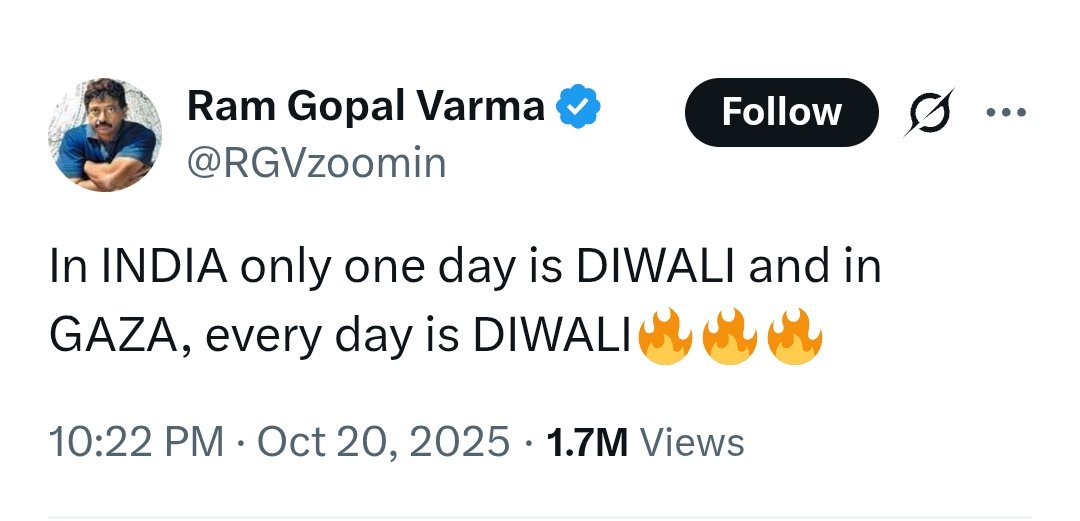
When filmmaker Ram Gopal Varma posted on X (formerly Twitter) this Diwali, “In INDIA only one day is DIWALI and in GAZA, every day is DIWALI,” he may have intended a crude joke. But the reaction revealed something far darker.
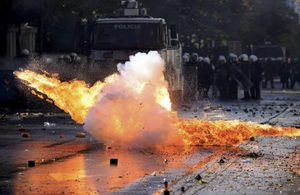
Across India’s social media, hundreds of right-wing accounts reposted Varma’s message, some adding emojis of bombs and fire, others attaching footage of Israeli airstrikes captioned “real fireworks.” What should have been a moment of celebration became, for millions of Indian Muslims, another reminder of how their faith and suffering were being weaponised in public view.
“They are literally celebrating genocide,” said Aman Khan, a Delhi-based student who witnessed the posts spreading through WhatsApp groups during the festival. “For them, Gaza is not a tragedy, it’s entertainment.”
A Coordinated Mockery:
An analysis by Al Jazeera and Inkstick Media traced how Indian right-wing networks have amplified anti-Palestinian disinformation and mockery since late 2023. Using recycled war footage, fabricated stories, and anti-Muslim memes, these networks flooded platforms with posts glorifying Israeli bombings, often framing them as lessons India should learn in “dealing with its own internal enemies.”
“It’s not organic,” said digital researcher Marc Owen Jones, who monitors online propaganda flows. “You see coordinated amplification, hundreds of accounts tweeting the same memes within minutes. This is political messaging disguised as spontaneous outrage.”
Fact-checkers at Alt News, led by journalist Mohammed Zubair, identified dozens of viral posts falsely claiming that Palestinians were “celebrating terrorism” or “faking civilian deaths.” Many of these were traced back to Indian handles linked to Hindutva networks.
Despite repeated debunks, the same content resurfaced during Diwali, suggesting an organised campaign to keep anti-Muslim narratives alive.
From Misinformation To State Signalling:
Investigative outlets have documented how the BJP’s official social media channels began circulating pro-Israel videos and rhetoric after October 7, 2023, often conflating Palestinian fighters with “Islamic terror.” Analysts say this language was not accidental, it mirrored the party’s domestic discourse around Indian Muslims.
“When the ruling party glorifies Israel’s bombings as acts of self-defence, it provides implicit permission for the public to celebrate that violence,” said political analyst Seema Chishti. “It’s the merging of Hindutva and Zionist militarism.”
The ideological and material alliance between New Delhi and Tel Aviv, spanning arms deals, security cooperation, and counterinsurgency training, has only deepened the identification. India is now one of Israel’s largest arms importers, with Israeli drones and surveillance systems used in Kashmir and along the Indo-Pak border.
As Amnesty International warned in a 2024 report, this exchange of “security doctrines” has helped normalise militarised approaches to dissent and religious minorities in India.
Silencing Solidarity:
In the weeks leading up to Diwali, police in Delhi and several state capitals detained or prevented student groups from holding pro-Palestine rallies. Among those detained were Jawaharlal Nehru University student leaders who accused officers of “manhandling” protesters and confiscating banners.
“We were simply mourning the dead in Gaza,” said Aishe Ghosh, one of the detained students. “They treated us as if we were criminals.”
According to Outlook and Clarion India, police cited “public order” concerns and alleged that gatherings might “hurt communal harmony.” Human rights lawyers argue that such justifications have become a pretext to suppress Muslim and leftist voices under the guise of neutrality.
Meanwhile, pro-Israel demonstrations, often featuring openly Islamophobic slogans, faced no such restrictions.
Everyday Intimidation:
For many Indian Muslims, the online rhetoric has translated into offline intimidation. In Madhya Pradesh, residents in predominantly Muslim neighbourhoods told Amnesty International investigators that local officials demolished their homes after minor communal incidents, a form of “collective punishment” that Amnesty called “blatantly discriminatory.”
“When they mock Gaza, they’re telling us, this could be you next,” said Zahid Ali Sayyed, whose property was demolished in 2024. “They cheer the bombs there because they dream of bulldozers here.”
From Memes To Policy:
According to data from Reuters and India Hate Lab, hate speech targeting Muslims spiked by over 70% between 2023 and 2025, coinciding with both the Gaza war and India’s election season. Experts say online vitriol does not remain confined to the digital realm; it shapes policing, legislation, and public policy.
Fact-checker Zubair says the problem is systemic:
“We debunk the same lies week after week, but they never die. Because the ecosystem producing them, politicians, influencers, bots, is protected and encouraged.”
The result is a feedback loop: viral hate content feeds political legitimacy, which then fuels more hate.
As one Delhi journalist put it, “Every tweet becomes a test balloon for what can be said openly next year on television.”
The “Israeli Model” And Its Indian Mirror:
Analysts have long warned of India’s growing emulation of the “Israeli model” combining surveillance technology, militarised policing, and demographic engineering. The 2025 Diwali mockery may be cultural theatre, but it reflects this deeper political convergence.
“It’s not just about Gaza,” said Azad Essa, journalist and author of Hostile Homelands. “It’s about what India wants to become, a nation where the minority’s suffering is a spectacle, and militarism is morality.”
Platforms And Impunity:
Despite public outrage, neither X nor Meta took visible action to curb the hateful content during Diwali week. Posts celebrating bombings as “Hindu fireworks” continued to circulate days later, some reaching hundreds of thousands of views.
Amnesty and Human Rights Watch have repeatedly criticised tech platforms for failing to enforce hate-speech policies in non-Western contexts, especially in India, where government pressure and political alliances shape moderation decisions.
Legal experts note that India’s hate-speech laws exist on paper but are rarely applied when offenders align with ruling-party narratives.
“The message is clear,” says constitutional lawyer Mihir Desai. “You can mock a genocide if it flatters power.”
A Culture Of Cruelty:
The Diwali-Gaza comparison is not merely offensive; it is revelatory. It exposes a culture where suffering can be aestheticised and religion weaponised, where the language of devotion becomes indistinguishable from the language of domination.
As one Muslim student put it:
“They don’t light lamps anymore, they light up screens with explosions.”
The Bigger Picture:
India’s celebration of Israel’s war in Gaza has been more than symbolic. It has reshaped how violence, nationalism, and faith, otherwise known as institutional Zionism (or cross-border Zionism), intersect in public life, from meme culture to foreign policy.
What was once a festival of light has become a mirror of darkness, reflecting not the triumph of good over evil, but the triumph of impunity over empathy.
Conclusion: The Fireworks Of Fascism.
What is unfolding in India is not merely cultural degeneration; it is the institutionalisation of cruelty as culture. The mockery of Gaza during Diwali is not an aberration born of social media ignorance; it is the logical outcome of an ecosystem where power feeds on humiliation and hate is statecraft.
The celebration of Israel’s destruction of Gaza, reframed as “Hindu pride”, reveals how deeply the Hindutva project has absorbed and adapted Zionist logics of supremacy. In both ideologies, violence is not simply tolerated but sanctified. The bomb is not a weapon, but a ritual; the victim not human, but heretical. Each strike in Gaza becomes an allegory for what India’s far right fantasises for its own Muslim population, a purge masked as purification.
“They don’t just cheer for Israel,” says Sharjeel Usmani, a Muslim student activist. “They’re rehearsing for India.”
This descent has been methodically engineered. From government-aligned influencers spreading fabricated videos of Palestinians, to BJP ministers invoking “Hamas-style threats” within India, to tech companies enabling mass hate content, each actor participates in manufacturing a moral numbness where genocide becomes an acceptable metaphor for joy. As journalist Mohammed Zubair noted, the scale of this disinformation is “unprecedented”, a state-sanctioned campaign of psychological conditioning that blurs the line between nationalism and sadism.
The state’s silence is telling. Prime Minister Narendra Modi has neither condemned such comparisons nor discouraged his party’s Islamophobic dog whistles. Instead, his government continues to position India as Israel’s ideological twin: a muscular, ethno-nationalist state that equates dissent with disloyalty and faith with threat. In doing so, India is not merely drifting toward authoritarianism (with dreams of a greater India project), it is perfecting a digital and cultural model of twenty-first-century fascism, one that fuses religious symbolism, algorithmic propaganda, and foreign militarism into a single narrative of dominance.
And yet, the moral question remains: what does it mean when a society finds light in the destruction of others?
When the festival that once celebrated good’s victory over evil becomes a spectacle of conquest, the lamps no longer illuminate; they burn.
The tragedy of today’s India is not confined to politics or policy; it is existential. It is a nation where empathy has been algorithmically erased, where cruelty masquerades as devotion, and where solidarity with the oppressed is recast as treason. Mocking Gaza has become a new language of belonging, a declaration that the Hindu nation’s joy must be built upon Muslim despair.
“Every firework over Delhi’s sky,” said one Kashmiri student in exile, “feels like a bomb over Rafah.”
If this is what Diwali now symbolises, light found only in the suffering of others, then India’s moral darkness runs far deeper than any blackout in Gaza. It is a darkness willingly cultivated, celebrated, and broadcast, one that no festival can disguise.
History will remember this Diwali not for its brilliance, but for the shadows it revealed, and perhaps the real question is whether India still recognises the difference between light and fire.
Kamran Faqir is a volunteer investigative journalist and writer committed to exposing hidden truths and amplifying underreported stories. Driven by social justice, he brings sharp insight and fearless truth-telling to independent journalism. NUJ registered.
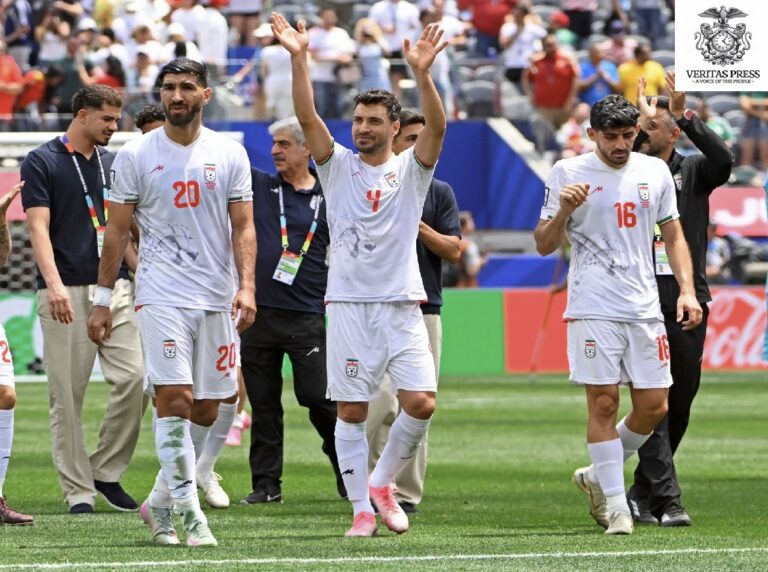
SEATTLE, TEHRAN — The U.S. Department of Homeland Security (DHS) will allow Iran’s national football team to enter the country 48 hours before their critical World Cup match against Egypt on Friday, a modest concession in a tournament where Team Melli’s travel conditions have sparked claims of oppression and competitive disadvantage.