Kamran Faqir is a volunteer investigative journalist and writer committed to exposing hidden truths and amplifying underreported stories. Driven by social justice, he brings sharp insight and fearless truth-telling to independent journalism. NUJ registered.
Press Release: Veritas Press C.I.C.
Author: Kamran Faqir
Article Date Published: 25 Oct 2025 at 11:30 GMT
Category: UK | Politics | Britain’s Rent Crisis Is Breaking Records
Source(s): Veritas Press C.I.C. | Multi News Agencies
Business Ads
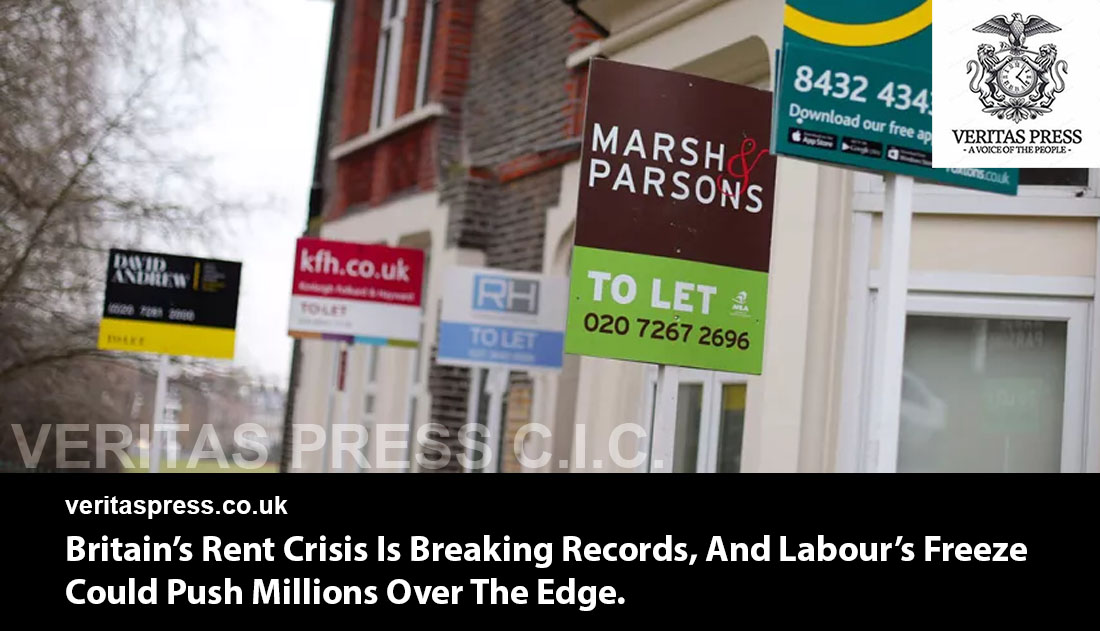
Britain’s rent crisis is deepening at record speed, and without urgent intervention, it threatens to become one of the defining social failures of this decade, “a ticking time bomb waiting to explode.”
New findings from the Resolution Foundation warn that without action, the affordability gap between average rents and housing benefit will hit a record 17% next year, rising to 25% by 2029–30. That means a typical shortfall of £180 a month, over £2,000 a year, for millions of low-income families already on the brink.
As average rents continue to break records and council homelessness budgets spiral out of control, campaigners, economists, and renters are warning that Labour’s decision to freeze Local Housing Allowance (LHA) until at least 2026 is fuelling an affordability catastrophe.
“Quiet, Bureaucratic Cruelty”: How The Freeze Deepens The Crisis.
The Resolution Foundation’s report lays bare the scale of the crisis. Council spending on temporary accommodation has doubled in a decade to £2.8 billion, while the number of children in emergency housing reached a new record of 172,420 by June, according to the Office for National Statistics.
“The freeze on housing allowance is the single biggest driver of hidden homelessness in Britain today. It’s quiet, bureaucratic cruelty,” — Tom Darling, Director, Renters’ Reform Coalition.
The LHA freeze means that housing support is still pegged to September 2023 rent levels, despite private rents soaring by 14% since then. While benefits are normally uprated with inflation, housing support has been readjusted just twice in the last decade, in 2020 and 2024.
For millions of renters, that means their housing benefit no longer covers the cheapest 30% of local rents, as it was originally designed to do. The result: widespread shortfalls, mounting arrears, and a wave of forced evictions.
Families Displaced, Communities Torn Apart:
In London, where rents have surged by 11.6% in the past year, families are being uprooted and pushed miles away from their jobs, schools, and communities.
“We were told we’d be here only a few months, it’s been two years. My son’s therapy stopped, his school changed twice, and we can’t afford the train fare back to London to see family,” — Fatima, displaced from Enfield to Harlow.
Fatima’s story is far from unique. Data shows that London councils are relocating thousands of families outside the capital, often to cheaper towns in Essex, Kent, and the Midlands.
“They told us we could stay if we paid the difference ourselves, but it’s £500 a month. How can we? It’s impossible,” — Jamal Ali, Enfield resident evicted after his LHA shortfall grew beyond his income.
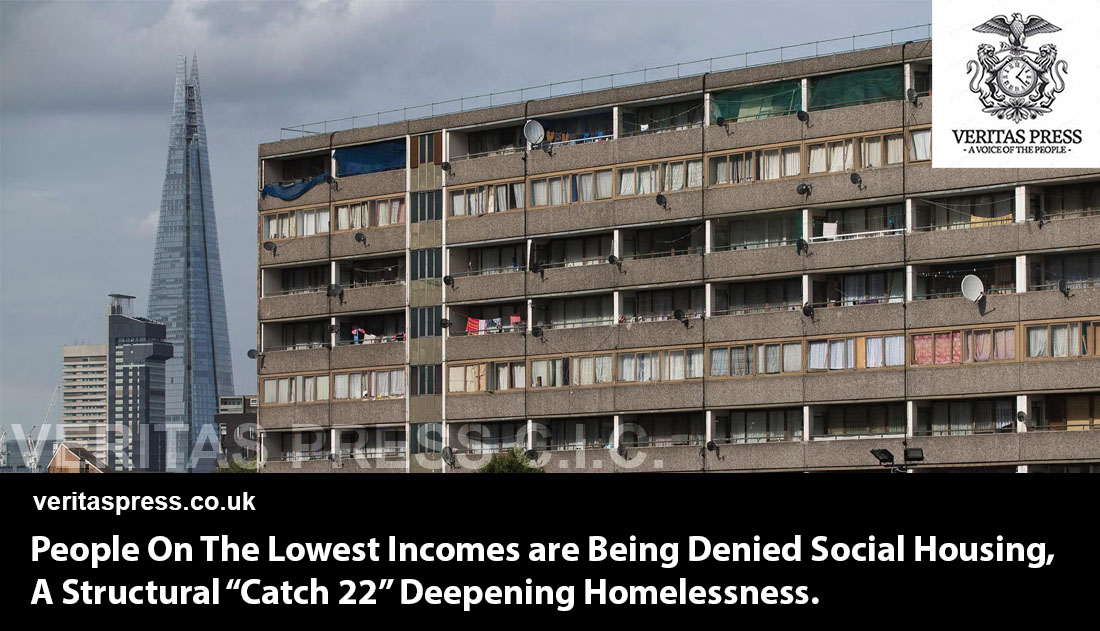
For those unable to bridge the gap, the result is eviction, homelessness, or indefinite confinement in temporary accommodation, often B&Bs and converted hostels.
“Every borough is now competing for the same limited supply of temporary accommodation. We’re effectively outbidding each other with public money, it’s madness,” — Cllr Grace Williams, London Councils.
The Numbers Behind The Human Crisis:
The Resolution Foundation estimates that it would cost £2.5 billion to unfreeze the allowance, less than what councils are now spending on emergency housing each year.
“The Treasury treats LHA as a controllable line item, but it’s really a safety valve. Freeze it long enough, and the system bursts through homelessness and council bankruptcies,” — Hannah Aldridge, Senior Policy Analyst, Resolution Foundation.
The think tank calls Labour’s freeze a “false economy”, warning that short-term fiscal savings will be wiped out by the long-term costs of homelessness.
Meanwhile, the government insists its “Plan for Change”, promising 1.5 million new homes and the “biggest boost to social housing in a generation”, will reverse the crisis. But experts point out that such pledges will take years to materialise, while families face immediate destitution.
“We’re Not Housing Officers Anymore, We’re Crisis Managers”:
On the frontline, local authorities describe a system stretched beyond breaking point.
“We’re not housing officers anymore, we’re crisis managers. Ninety percent of our calls are emergencies.” — Anonymous housing officer, London borough.
Council staff say they are spending public money at record levels just to rent back private housing stock that was once publicly owned, often from corporate landlords or buy-to-let investors.
“Councils are paying up to 60 per cent above market rate for B&B rooms, many of them run by private equity landlords. It’s austerity turned into a business model.” — Rob Booth, Housing Correspondent, The Guardian.
The result is a vicious cycle: public money enriches private landlords while tenants face substandard conditions, rising debt, and homelessness.
The Renters’ Rights Bill: Hope Or Half-Measure?
The new Renters’ Rights Bill, passed this month and awaiting Royal Assent, promises to ban Section 21 “no-fault” evictions, cap rent increases, and create an independent ombudsman. Housing Minister Matthew Pennycook hailed it as a “momentous” step toward a fairer housing market.
Yet campaigners argue that while the bill strengthens tenant protections, it fails to tackle the core issue of affordability.
“Everybody needs a secure home, but unaffordable rent hikes are forcing families out of their communities and into destitution.” — Lucy Tiller, Renters’ Reform Coalition.
The RRC is urging Labour to go further, calling for a cap on rent increases within tenancies and a National Rental Affordability Commission to regulate rent levels.
“We’ve gone from renters’ rights being about ‘fairness’ to being about survival. In Manchester, half our members are one rent hike away from eviction.” — Aisha Begum, Greater Manchester Tenants’ Union.
Labour’s Dilemma: Fiscal Discipline Vs Social Collapse.
For Labour, the rent crisis is an early test of its balancing act between fiscal restraint and social justice.
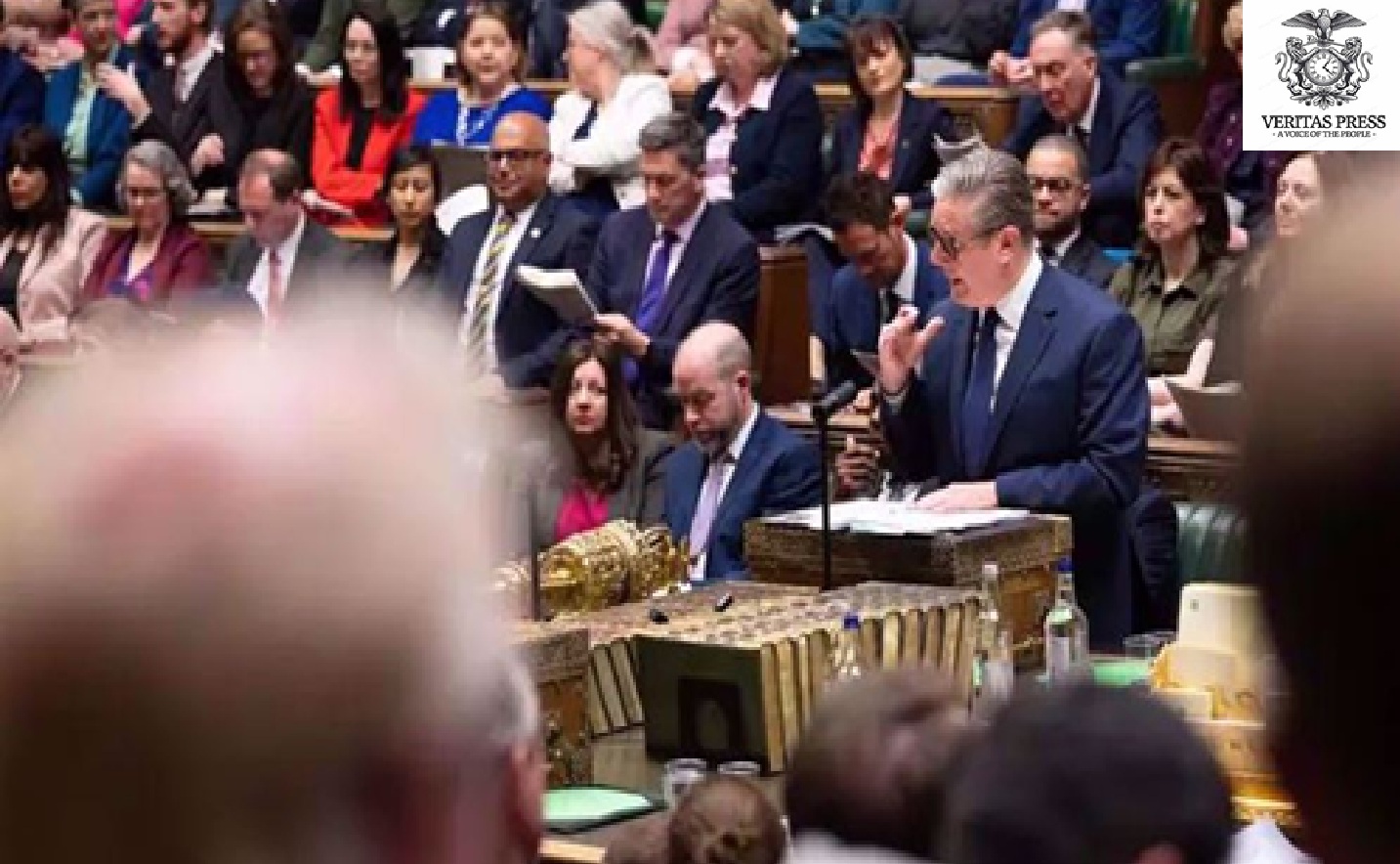
The freeze on LHA, extended by Chancellor Rachel Reeves until at least 2026, is part of the party’s wider drive to show “economic credibility.”
But economists warn that without targeted relief, “economic credibility” may come at the price of social collapse.
“If Labour doesn’t reform rent support alongside its renters’ rights bill, it risks repeating the post-2010 cycle, higher evictions, higher homelessness, and record public spending for no social return.” — Dr Christine Whitehead, LSE Housing and Communities.
Even charities like Shelter and Crisis, traditionally cautious toward Labour governments, have intensified pressure.
“We’re already seeing record numbers of families trapped in temporary accommodation. With the freeze set to continue, the gap between housing benefit and rent will only widen. We cannot sit by as more families are pushed to breaking point.” — Francesca Albanese, Executive Director, Crisis.
Conclusion: Britain’s Rent Crisis A Manufactured Catastrophe Of Policy And Profit.
The deepening rent crisis is not a natural disaster but the predictable outcome of political design, a system built on short-term fixes, fiscal caution, and structural neglect.
While Labour pledges “discipline” and “stability,” the housing market it has inherited, and now sustains, is anything but stable. Rents have soared by 9.3% in just a year, wages by barely 5%, and housing benefits remain frozen against 2023 rent levels. This deliberate mismatch between income, support, and cost is not simply a policy failure. It is a quiet act of social abandonment.
“The Treasury treats LHA as a controllable line item, but it’s really a safety valve. Freeze it long enough, and the system bursts through homelessness and council bankruptcies.” — Hannah Aldridge, Resolution Foundation.
That rupture is already visible. Councils are drowning under a £2.8 billion temporary accommodation bill, with London boroughs competing against one another to rent back private properties at extortionate prices, often owned by the same investors profiting from the crisis. As journalist Rob Booth notes, “It’s austerity turned into a business model.” The market chaos of rising rents has been repackaged as public expenditure.
The Local Housing Allowance (LHA) freeze, extended by Chancellor Rachel Reeves to 2026, lies at the heart of this contradiction. What began as an austerity measure under Conservative governments has now become a bipartisan orthodoxy. Successive administrations have quietly decoupled welfare from real-world housing costs, forcing low-income families to shoulder the burden of a market they can neither influence nor escape.
“We’re already seeing record numbers of families trapped in temporary accommodation. With the freeze set to continue, the gap between housing benefit and rent will only widen.” — Francesca Albanese, Crisis.
The consequences are devastating and measurable. More than 172,000 children now live in temporary accommodation, the highest figure on record. In the absence of affordable homes, Britain has institutionalised transience and called it housing policy.
Even Labour’s flagship Renters’ Rights Bill, soon to become law, offers only partial relief. Banning Section 21 evictions, establishing a Decent Homes Standard, and limiting rent hikes are crucial reforms, but they do not address the structural affordability gap. The Bill may stop unfair evictions, but it does nothing to stop unaffordable ones.
“We’ve gone from renters’ rights being about ‘fairness’ to being about survival.” — Aisha Begum, Greater Manchester Tenants’ Union.
The government’s “Plan for Change” and promises to build 1.5 million homes ring hollow against this immediate crisis. New housing targets will take years to bear fruit; rent rises and benefit freezes are immediate. Shelter’s warning cuts through the rhetoric:
“You cannot solve homelessness without homes.”
The picture that emerges is of a government trapped by its own caution, unwilling to spend to save, unwilling to intervene in markets it privately concedes are broken. By freezing LHA, Labour is repeating the very austerity logic it once denounced: saving pennies in the Treasury while losing billions through councils, homelessness, and human misery.
This is the quiet scandal of modern Britain: a housing system in which public policy subsidises private profit, where families are priced out of stability, and where the state’s refusal to act masquerades as prudence. Each new record, in rents, homelessness, or temporary accommodation spending, is not an accident of economics but a consequence of deliberate political restraint.
If the government continues to defend fiscal orthodoxy at the expense of social reality, the crisis will not just persist, it will define this era.
As one housing officer put it bluntly:
“We don’t need another plan for change, we need change.”
Policy Fallout: Labour’s First Reckoning.
For a government that came to power promising “national renewal,” the rent crisis represents an early and defining test, not of competence, but of conviction. Labour’s housing and welfare stance, framed as fiscal realism, now risks being seen as a moral retreat.
The warning signs are flashing across every level of society. Homelessness charities, renters’ unions, and local councils, many of them Labour-led, are quietly breaking ranks.
“We’ve been told to wait for growth before we can afford compassion,” said Joanna Serwaa, a housing caseworker in Hackney. “But people can’t wait. They’re being priced out now.”
Labour councils are among the loudest critics of the policy vacuum. The Local Government Association has warned that “temporary accommodation costs are rising faster than councils can raise revenue,” with boroughs like Newham, Croydon, and Westminster spending more on emergency housing than on policing or youth services combined. “It’s not just unsustainable,” one senior council leader told the Financial Times, “it’s catastrophic.”
The Resolution Foundation’s report Rented Out captures the contradiction starkly: Britain has entered a “decade of rent inflation,” while real wages have flatlined and social housing remains stagnant. The report warns that without rent controls or benefit uprating, “housing insecurity will become the defining inequality of the 2020s.”
Economist Torsten Bell was blunt on BBC Radio 4:
“The government is running an economic policy that assumes private landlords will fix a public crisis. That’s not fiscal discipline, that’s abdication.”
Grassroots anger is mounting. Renters’ unions across Manchester, Birmingham, Bristol, Leeds, and London have reported record membership growth since the summer, organising protests outside local housing offices and Labour conferences.
“We helped vote them in, but they’ve left renters out,” said David Turner of the London Renters Union. “The freeze isn’t about affordability, it’s about priorities.”
Think tanks and commentators frame this as the first rupture in Labour’s electoral coalition, between those who seek market reassurance and those demanding social justice.
The New Statesman called it “Labour’s quiet betrayal,” while The Guardian’sPolly Toynbee warned that “the government’s moral credibility depends on whether it treats housing as a human right or an investment class.”
Meanwhile, investors and property lobbyists are reading the signals differently. Analysts at Savills and Knight Frank report “high confidence” among large-scale landlords, citing Labour’s “predictable regulatory environment” and the absence of new rent caps. As Sky News’s Ed Conway observed, “the market has rarely been more bullish about a government claiming to be progressive.”
The Humanitarian Fallout, However, Tells Another Story.
Shelter estimates that one in three renters is now cutting back on food to pay rent. The Joseph Rowntree Foundation warns that the crisis is “deepening destitution,” as over 600,000 households spend more than half their income on housing. Its director, Paul Kissack, summed up the situation:
“We are normalising poverty as a policy choice.”
That normalisation is beginning to erode trust. Polling by Ipsos in early October found that 63% of voters believe Labour is “not doing enough to address the housing crisis,” including 41% of its own 2024 voters. Among under-35s, the renters Labour once relied on, disillusionment is spreading fastest.
“We don’t want another generation written off as the rent generation,” said Maya Rahman, 27, an organiser with Generation Rent. “Labour promised a government for working people, not for landlords.”
In Westminster, insiders privately admit the tension. One Treasury source told The Times that “Reeves won’t move on housing benefits unless forced to,” while a senior Labour MP warned:
“If we can’t protect people from homelessness, our fiscal credibility will be meaningless.”
The crisis now poses a broader question about political courage. As The Independent observed, “Labour inherited a broken housing system, but it’s choosing to manage it, not mend it.”
Unless the government reverses the LHA freeze and accelerates social housing investment, the rent crisis could harden into Labour’s defining failure, a self-inflicted wound that mirrors the moral compromises of austerity Britain.
For now, Britain’s renters remain on the front line of a political experiment in restraint, one that measures economic credibility in human cost.
Analysis: A Manufactured Crisis.
This is not merely a housing shortage, analysts argue, it’s a policy-engineered crisis. Successive freezes, under both Conservative and Labour governments, have severed the link between public welfare and real living costs.
By refusing to rebase housing support, the government has outsourced social housing to the private market, and then refused to pay the market price.
The result is a feedback loop of poverty: tenants fall into arrears, landlords withdraw from benefit tenancies, councils overspend on emergency housing, and the national housing shortage worsens.
The Resolution Foundation’s warning is stark: unless ministers unfreeze LHA in the upcoming Budget and re-link support to local rents, Britain’s rent crisis will keep breaking new records, not by accident, but by design.
Kamran Faqir is a volunteer investigative journalist and writer committed to exposing hidden truths and amplifying underreported stories. Driven by social justice, he brings sharp insight and fearless truth-telling to independent journalism. NUJ registered.
SEATTLE, TEHRAN — The U.S. Department of Homeland Security (DHS) will allow Iran’s national football team to enter the country 48 hours before their critical World Cup match against Egypt on Friday, a modest concession in a tournament where Team Melli’s travel conditions have sparked claims of oppression and competitive disadvantage.