Kamran Faqir is a volunteer investigative journalist and writer committed to exposing hidden truths and amplifying underreported stories. Driven by social justice, he brings sharp insight and fearless truth-telling to independent journalism. NUJ registered.
Press Release: Veritas Press C.I.C.
Author: Kamran Faqir
Article Date Published: 30 Oct 2025 at 11:36 GMT
Category: Middle-East | Palestine-Gaza-West Bank |
Source(s): Veritas Press C.I.C. | Multi News Agencies
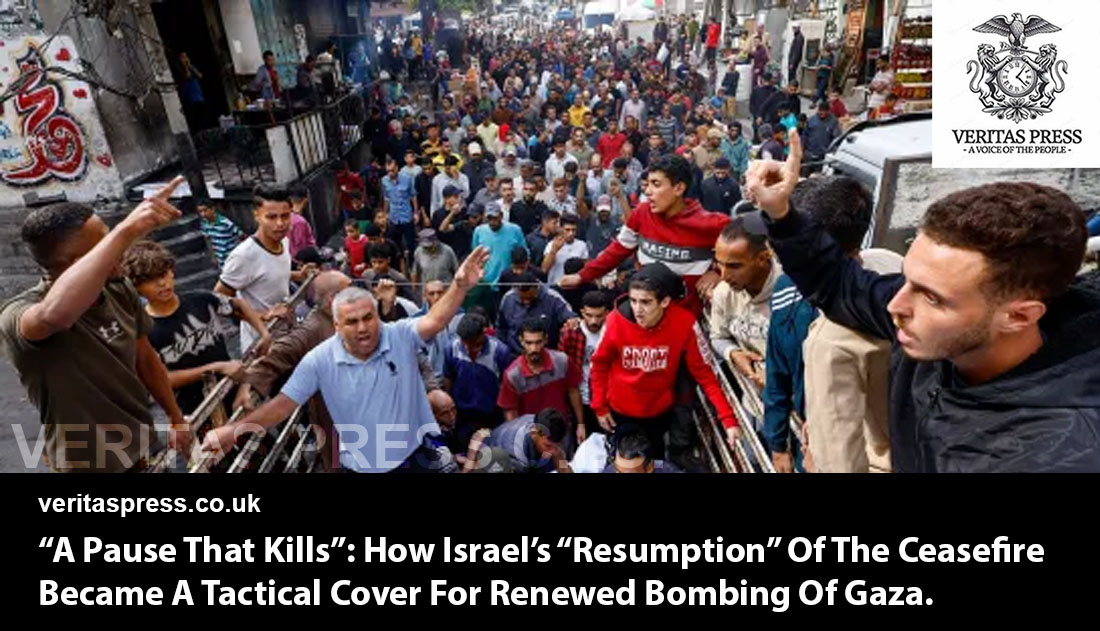
A U.S.-brokered ceasefire that took effect in October 2025 has been punctured repeatedly. Between 28–30 October, a fresh wave of Israeli airstrikes, including more than ten attacks around Khan Younis and bombardments of family homes and tents sheltering displaced people, killed scores of Palestinians in just 24 hours. Humanitarian agencies say aid is being weaponised, hospitals and water networks are collapsing, and rescue teams are overwhelmed recovering bodies buried under rubble. What Israel calls a “resumption” of the ceasefire increasingly appears to be a tactical pause in warfare, a political tool rather than a humanitarian reprieve.
The Sequence: Ceasefire, A Soldier’s Death, And A Deadly Retaliation.
When the U.S.-brokered truce took effect on 10 October 2025, it was hailed as the first genuine step toward halting a two-year war that had killed tens of thousands. Hostage exchanges proceeded, Israeli troops pulled back from several sectors, and Washington claimed a “pathway to reconstruction.”
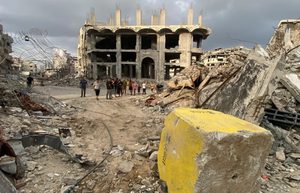
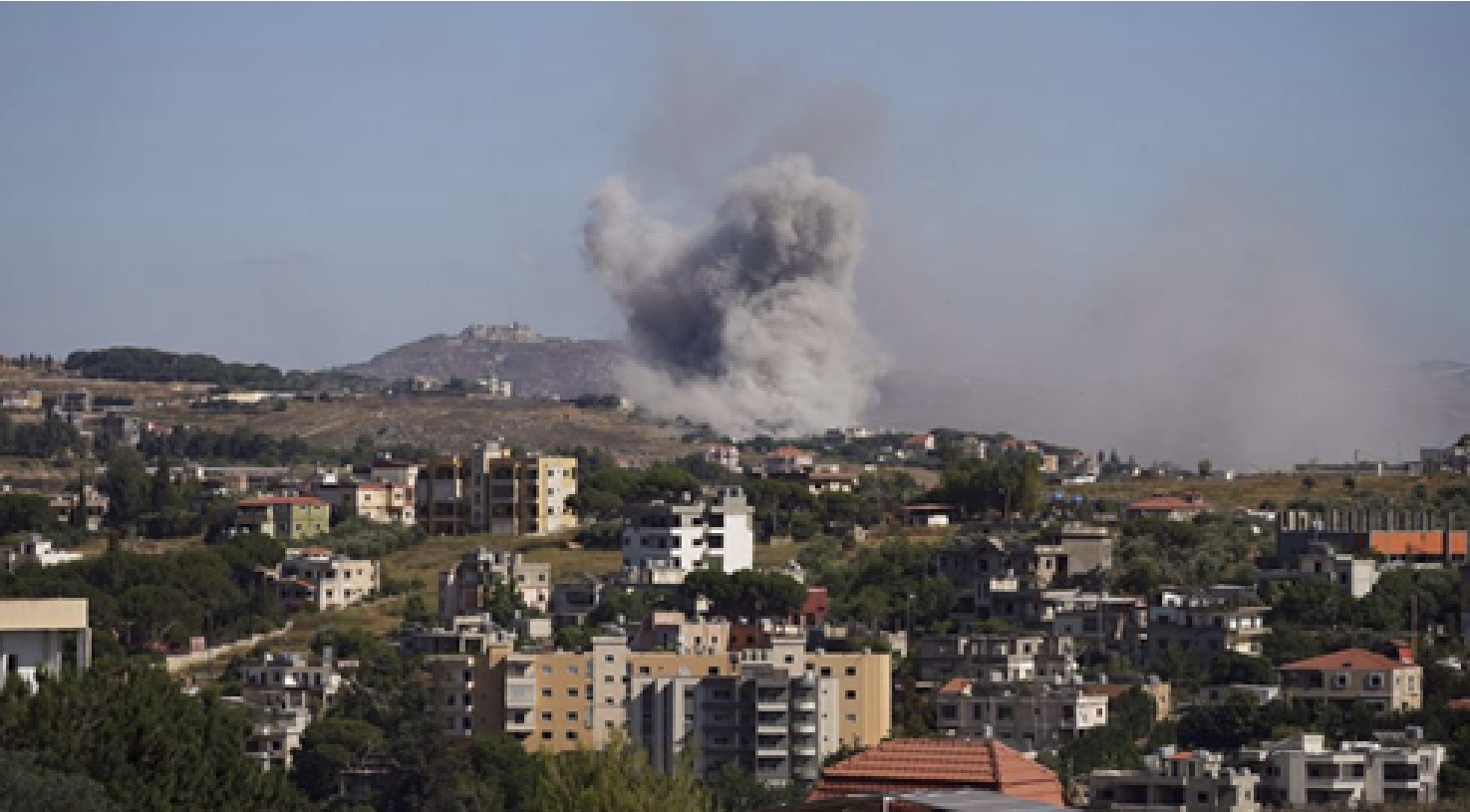
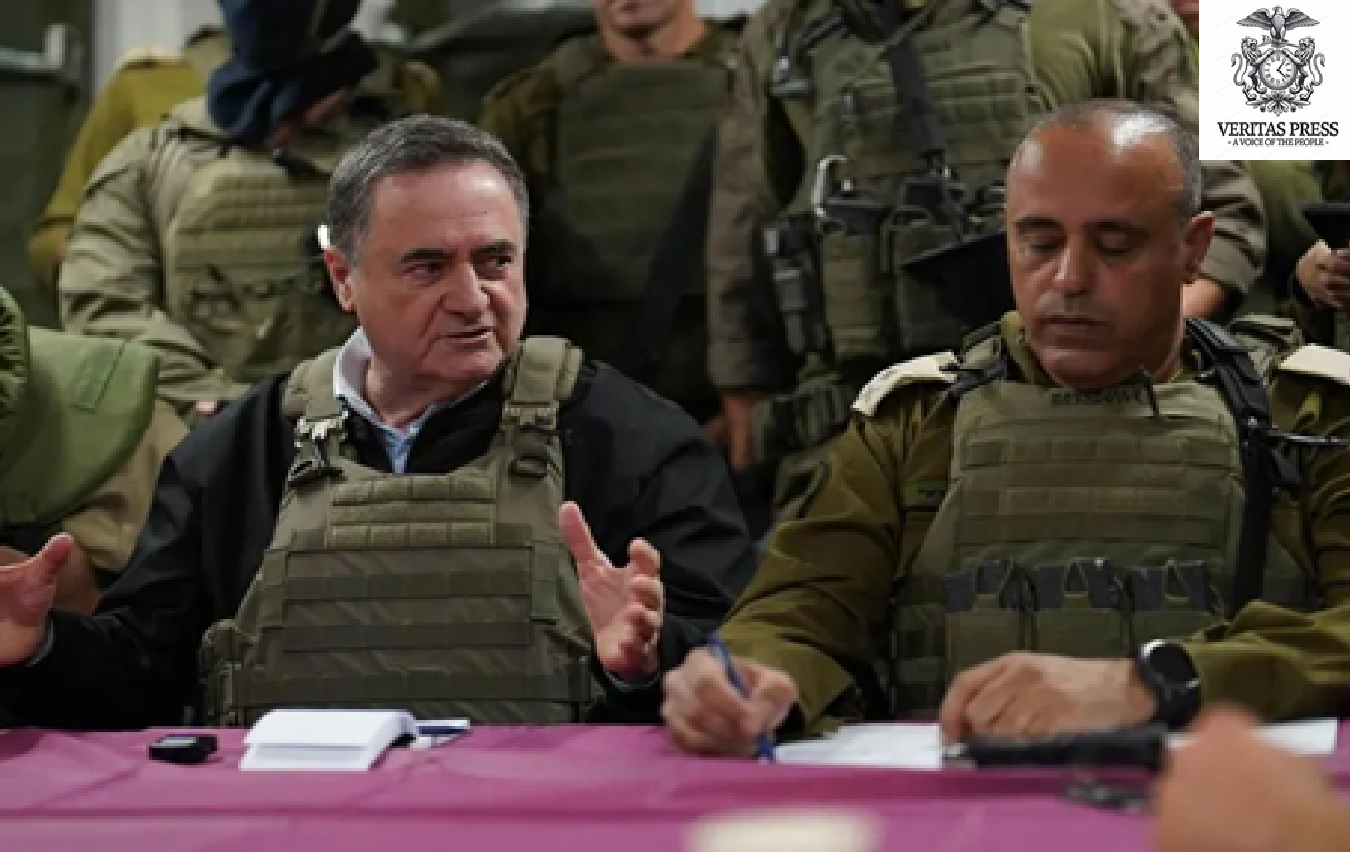
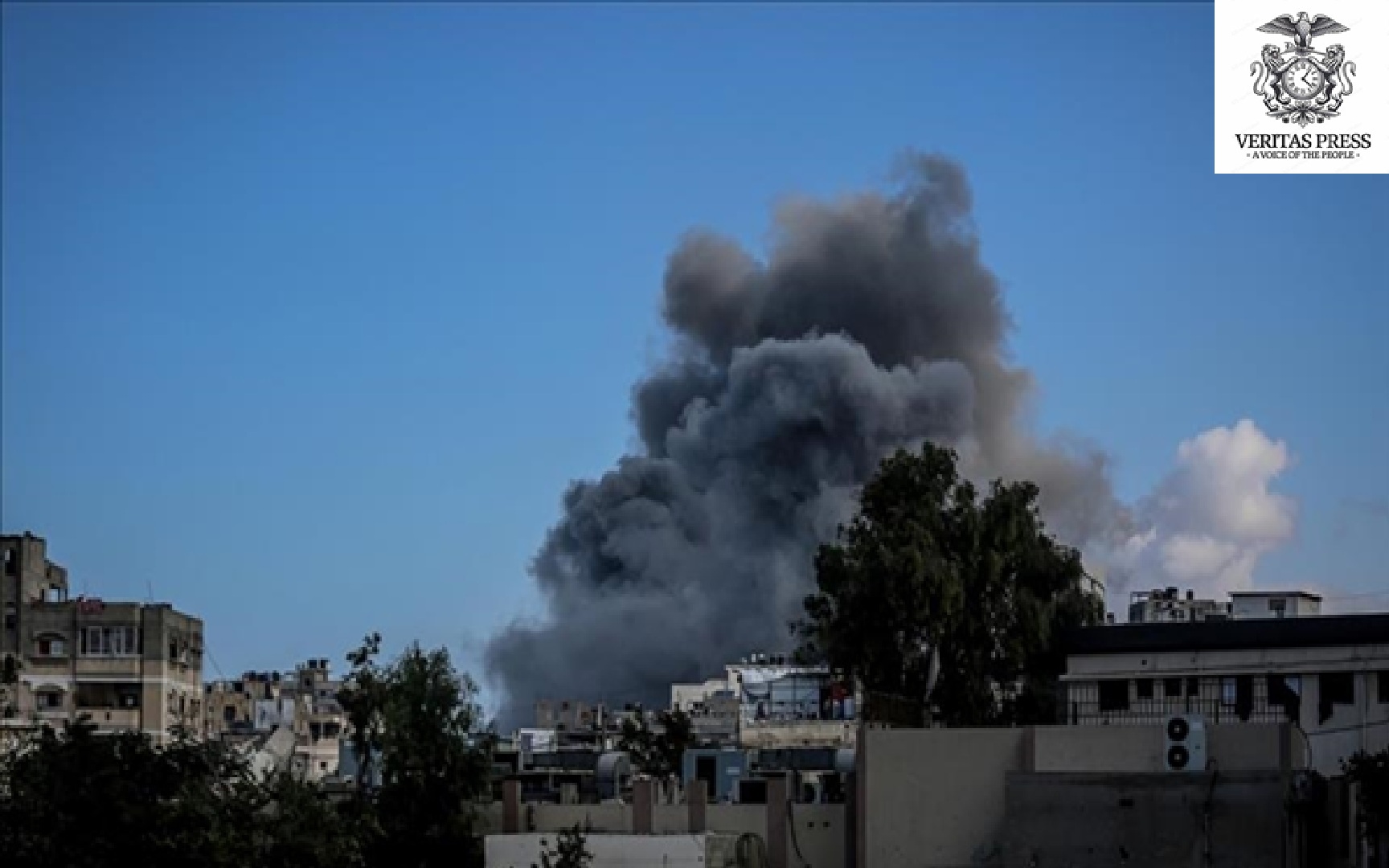
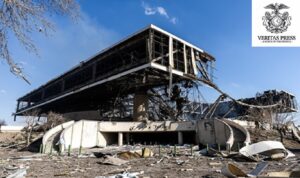
But on 28–29 October, Israeli forces again bombarded Gaza after accusing militants of violating the truce. The Israeli army said a soldier had been killed inside an area under ceasefire control and that “terrorist elements” were operating from residential zones. Overnight strikes followed, flattening entire apartment blocks.
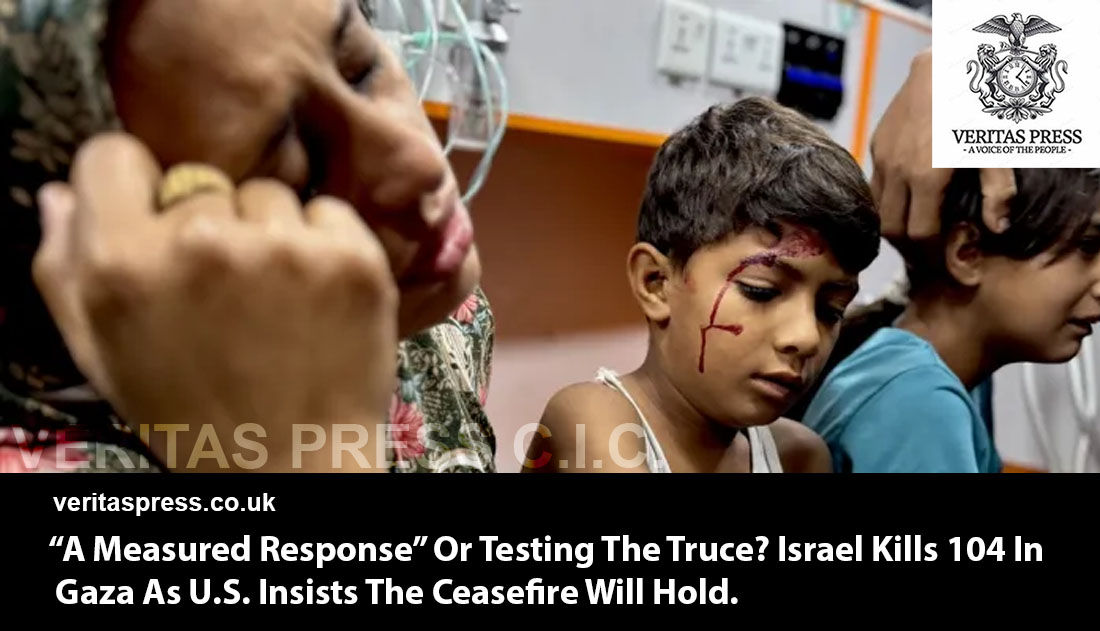
Gaza’s Health Ministry told Reuters that more than 100 Palestinians, including at least 30 children, were killed in less than 24 hours. “We are seeing families wiped out,” a health official said. Al Jazeera and WAFA confirmed multiple strikes on homes in Deir al-Balah and Khan Younis.
Prime Minister Benjamin Netanyahu defended the assault, declaring that Israel “remains committed to the truce, but reserves the right to respond to any threat.” That formula, a ceasefire that permits lethal reprisals at Israel’s discretion, has effectively made the truce unenforceable.
Khan Younis & Nuseirat: Homes, Tents And Rescue Crews Under Attack.
In the early hours of 30 October, local reporters documented at least 10 Israeli airstrikes in Khan Younis and eastern Gaza City, despite an official announcement that the ceasefire had “resumed.”
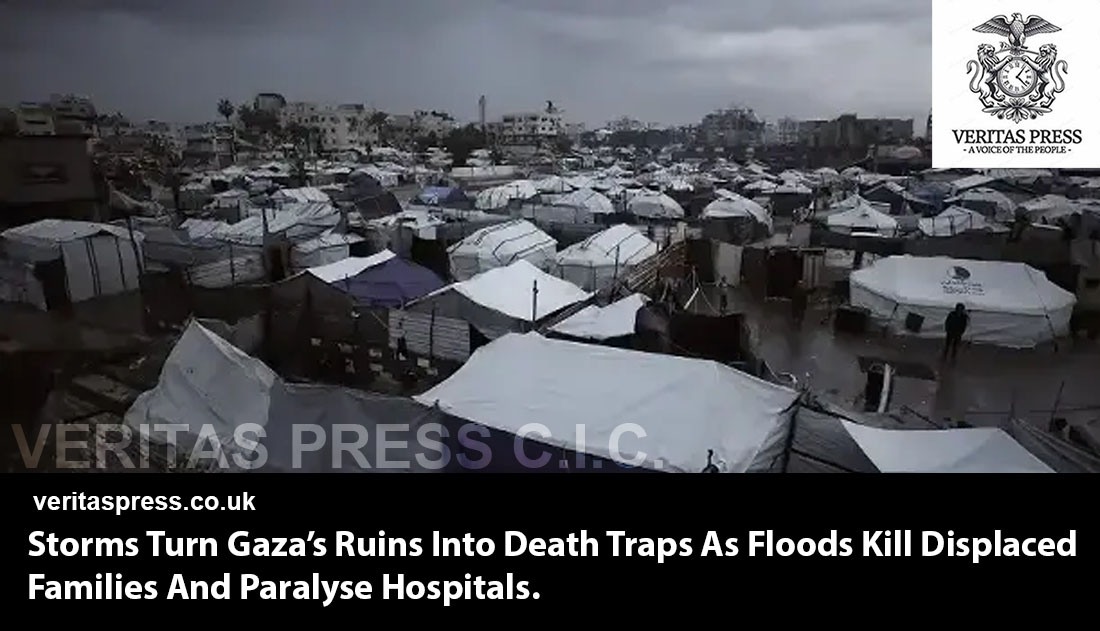
Witnesses told Al Jazeera that several tents sheltering displaced people near the Khan Younis camp were hit without warning. “The sound of the jets came back, then explosions everywhere,” said Ismail Zayda, displaced from Gaza City. “We thought we could breathe for a minute. Now we can’t.”
One of the deadliest incidents occurred in Nuseirat, where a strike levelled the Abu Dalal family home. Civil-defence workers described pulling out entire families. “There were no militants here, just children,” a paramedic told WAFA. Photographs verified by Reuters showed rescuers carrying bodies from the rubble to packed ambulances outside Al-Aqsa Martyrs Hospital.
Hospital administrators in Khan Younis told the Associated Press that emergency wards were “beyond full capacity.” “We are treating the wounded on floors, corridors, even outside,” said Dr Mahmoud al-Sayed, head of emergency medicine.
Civil Defence And Rescue Capacity: Data From The Frontline.
Gaza’s Civil Defence units reported conducting 197 missions in a single week, 15 firefighting operations, 79 rescues and 103 ambulance responses. In a Telegram statement reviewed by Al Jazeera, spokesperson Mahmoud Bassal said crews were “digging through cement with their bare hands.”
Lack of heavy machinery and fuel means many operations halt mid-recovery. “We hear people under the rubble calling for help,” one rescuer told Al Jazeera. “Then the machines stop because there’s no diesel.”
The UN Office for the Coordination of Humanitarian Affairs (OCHA) confirmed that less than 30 percent of Gaza’s rescue equipment remains operational due to fuel shortages and repeated targeting. Aid agencies have urged Israel to guarantee “rescue corridors” protected from strikes, but no mechanism exists to enforce that.
Healthcare: From Triage To Systemic Collapse.
Even during the ceasefire, Gaza’s health infrastructure has collapsed. The Palestinian Medical Relief Society told Middle East Eye that “nearly half of all kidney patients” have died because dialysis centres lack fuel, filters and clean water.
MSF project coordinator Caroline Willemen told WAFA on 29 October: “Israel continues to use aid as a weapon of war.” She said hospitals are treating patients without anaesthesia, while maternity wards operate in darkness.
WHO and UN reports confirm that fewer than 30 of Gaza’s 72 health facilities remain partially functional. WHO official Richard Peeperkorn told the BBC that “the system is beyond breaking point, what we see is medical collapse, not medical care.”
An MSF field coordinator added, “In Gaza, death is everywhere. Our teams are exhausted. People are on their knees.”
Aid Weaponised: Direct Accusations From Humanitarians.
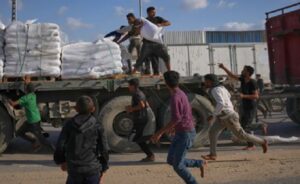
Humanitarian agencies increasingly frame the crisis as deliberate coercion, not logistical failure. “Aid is being used to exert pressure on the population,” MSF stated publicly on 28 October. UNRWA has reported that Israeli authorities blocked or delayed dozens of supply convoys, including medical oxygen shipments.
Jan Egeland of the Norwegian Refugee Council told Al Jazeera that “the manipulation of aid access has become a method of warfare.” UN OCHA field staff said that entry denials for international workers “cripple coordination” and leave communities without food or water for days.
A statement by Oxfam and Save the Children on 30 October declared: “This is not bureaucratic backlog, it is systematic control of humanitarian space.”
The Politics: Buying Time, Normalising Control.
Regional analysts say the ceasefire has become a political instrument. Zeidon Alkinani of Georgetown University (Qatar) told Al Jazeera that Israel is “trying to buy as much time as possible to normalise its actions, to annex land and entrench its colonial project under the cover of a truce.”
Former UN Middle East envoy Nickolay Mladenov said in a Reuters interview that the ceasefire “has no teeth” without an independent verification mechanism. “There is no consequence for violation, that’s what makes this a pause, not a peace.”
The U.S., Qatar and Egypt continue to mediate, but all admit privately that enforcement depends on Israeli goodwill. One Western diplomat told Haaretz anonymously: “We’re managing optics, not compliance.”
Legal And Accountability Questions: Collective Punishment, Forcible Transfer, And Impunity.
Human-rights experts warn that Israel’s conduct may breach multiple provisions of international humanitarian law.
Collective punishment: MSF and Human Rights Watch have said that the blockade’s restrictions on food, fuel and medicine “constitute collective punishment” of civilians.
Forcible transfer: UN agencies report that 1.7 million Gazans, roughly 75 percent of the population, remain displaced. Repeated “evacuation orders” followed by strikes on designated safe zones may meet the legal threshold for forced transfer.
Targeting of protected sites: WHO data shows more than 220 attacks on health facilities since 2023. UN human-rights spokesperson Ravina Shamdasani told the Associated Press that “the scale of damage to hospitals and shelters suggests either deliberate targeting or a complete disregard for civilian protection.”
Despite these findings, no independent body has been empowered to investigate violations tied to the ceasefire, leaving accountability aspirational and impunity entrenched.
Voices From Gaza: Names, Streets, Wards, Human Evidence.
Hassan Lubbad told Al Jazeera: “People who had just begun to feel some sense of safety are once again living in fear.”
Civil Defence logs shared with Reuters record 197 missions in one week, a granular testament to the tempo of catastrophe.
MSF’s Caroline Willemen reiterated: “Humanitarian aid sent to Gaza should not be tied to political conditions. Israel continues to use aid as a weapon of war.”
In the wards of Khan Younis and Nuseirat, these words are literal. Children treated for burns and amputations, parents waiting outside overwhelmed morgues, and rescuers working through renewed air raids embody a truce that feels indistinguishable from war.
The Pattern Behind The Ceasefire:
Ceasefire as a tactical pause: Israeli strikes consistently follow alleged militant incidents, allowing unilateral escalation under the guise of retaliation.
Aid as leverage: Restrictive entry permits and conditional convoys transform relief into political control, an administrative siege that kills by attrition.
Systemic collapse: Health and rescue infrastructure function at a fraction of need, guaranteeing slow deaths even in the absence of bombs.
No credible enforcement: Diplomatic mediation substitutes for independent monitoring, ensuring that violations carry no cost.
Rising legal exposure: The combination of bombardment during a ceasefire, blockade-driven starvation and medical collapse suggests potential war-crimes liability for collective punishment and targeting of civilians.
Conclusion: A Ceasefire That Masks Strategy, Not Safety.
The latest wave of Israeli airstrikes across Khan Younis, Nuseirat, and Gaza City exposes a stark reality: the October 2025 U.S.-brokered ceasefire functions less as a protective framework than as a tactical interlude in an ongoing campaign. Since the ceasefire agreement’s inception, Israel has continued to bomb Gaza, massacring Palestinians while reframing the narrative to justify strikes as retaliatory or targeted actions against militants. Public declarations of truce are repeatedly punctured, while civilians, women, children, and the displaced remain the primary victims.
Humanitarian agencies and frontline medics paint a picture of systematic collapse. Hospitals operate at partial capacity, dialysis patients die without fuel, and civil-defence teams dig through rubble with minimal equipment, all under the persistent threat of renewed bombardment. Médecins Sans Frontières, the Medical Relief Society, and UN agencies warn that aid is being weaponised, restricted, delayed, and made conditional, turning relief into a tool of political leverage rather than a lifeline.
Analysts argue that this pattern is strategic: the ceasefire buys Israel international cover while enabling territorial normalisation and selective violence. Georgetown University lecturer Zeidon Alkinani told Al Jazeera, “Israel is trying to buy as much time as possible to normalise its actions, the annexation of lands and Israel’s colonial project.” On the ground, Gazans experience the human toll: fear, trauma, and the daily impossibility of safe survival.
Compounding the humanitarian crisis, the United States, the United Kingdom, and allied governments fund Israel using taxpayers’ money and supply military hardware, either directly or indirectly through pooling systems and multilateral defence arrangements. This support underwrites the very strikes, advanced weapons systems, and aerial campaigns that continue to devastate civilian areas, raising questions about complicity under international law and the ethical responsibilities of donor states.
From a legal perspective, repeated strikes on civilian homes, schools, hospitals, and refugee tents, combined with blockades that deny essential medical care, may constitute collective punishment, forcible transfer, and violations of medical neutrality under international humanitarian law. Yet enforcement remains aspirational; no independent verification mechanisms accompany the ceasefire, leaving impunity intact. Without enforcement, every “pause” becomes a tactical recalibration of war, a pause that kills.
The evidence is unequivocal: the ceasefire has not ended the war; it has codified a system in which temporary pauses mask structural violence. Without independent monitoring, unimpeded humanitarian access, accountability for civilian harm, and a reckoning with international support that fuels the violence, every pause in fighting becomes, in practice, a tactical recalibration of war, a pause that kills. The ceasefire is no longer a pathway to safety or reconstruction; it is a political tool, a brief interlude that allows the powerful to consolidate control while civilians pay the price.
For journalists, policymakers, and the international community, the imperative is clear: verify and document strikes, protect humanitarian access, and hold all actors, including foreign governments that fund and arm Israel, accountable. This is no longer optional; it is a moral and legal necessity. In Gaza, life under a ceasefire is survival under siege, and until enforcement, accountability, and genuine humanitarian guarantees replace hollow words, every “pause” will remain, in practice, a pause that kills.
Kamran Faqir is a volunteer investigative journalist and writer committed to exposing hidden truths and amplifying underreported stories. Driven by social justice, he brings sharp insight and fearless truth-telling to independent journalism. NUJ registered.
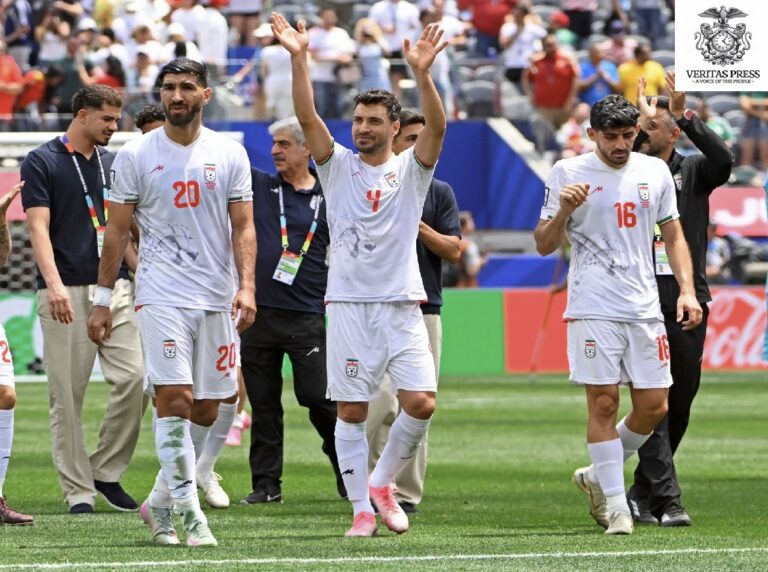
SEATTLE, TEHRAN — The U.S. Department of Homeland Security (DHS) will allow Iran’s national football team to enter the country 48 hours before their critical World Cup match against Egypt on Friday, a modest concession in a tournament where Team Melli’s travel conditions have sparked claims of oppression and competitive disadvantage.