

Date Published:
Date Modified:
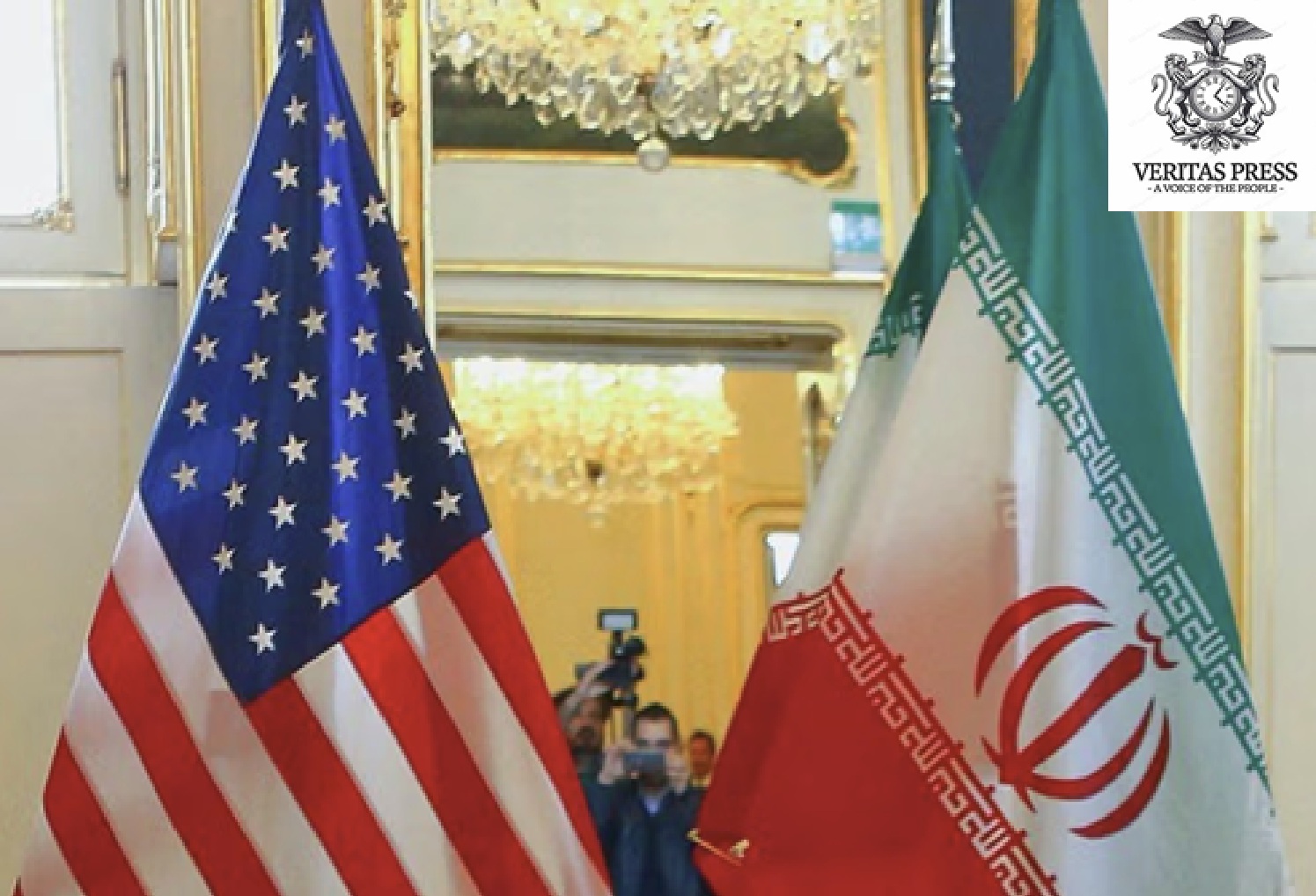
TEHRAN, WASHINGTON – Disinformation aside, the current attempt to revive US–Iran nuclear negotiations is already being premised on non-starters. Beneath the diplomatic choreography lies a widening gulf of mistrust, incompatible demands, and military escalation, conditions that suggest the talks may be less about achieving peace than about managing the timing of a potential conflict.
What is unfolding in Muscat increasingly resembles not a breakthrough moment, but a familiar geopolitical ritual: negotiate publicly, escalate quietly, and prepare structurally for confrontation.
Talks Resume Under The Shadow Of War:
Indirect negotiations between Washington and Tehran began this week in Oman, marking the first meaningful diplomatic engagement since the United States joined Israel’s June 2025 strikes on Iranian nuclear facilities, a turning point that fundamentally reshaped the strategic landscape.
Iranian Foreign Minister Abbas Araghchi said Tehran enters diplomacy “with open eyes and a steady memory of the past year,” signalling that the experience of war and sanctions continues to define Iran’s negotiating posture.
Yet the talks are unfolding alongside a continued American military buildup and increasingly explicit warnings from President Donald Trump, who has suggested that Iran’s leadership “should be very worried” if a deal cannot be reached.
Meanwhile, naval incidents and drone confrontations in the region have underscored how narrow the margin for miscalculation has become, diplomacy advancing even as the machinery of deterrence accelerates.
Rather than replacing confrontation, negotiations appear to be operating within it.
Talks In Oman Mask Escalation As Washington Tightens Strategic Pressure:
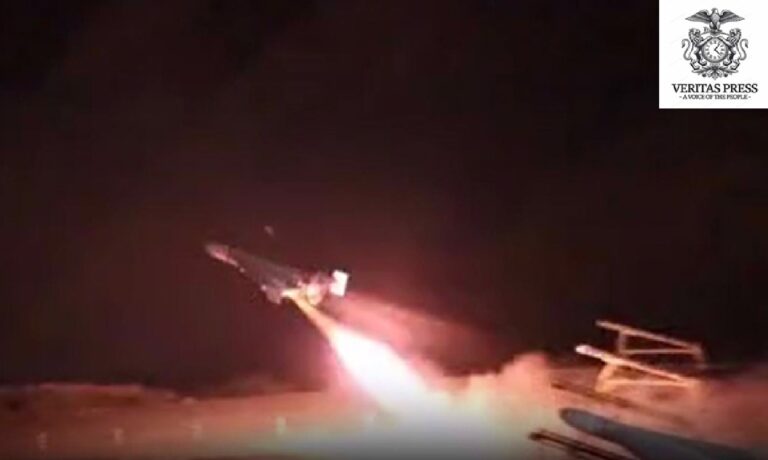
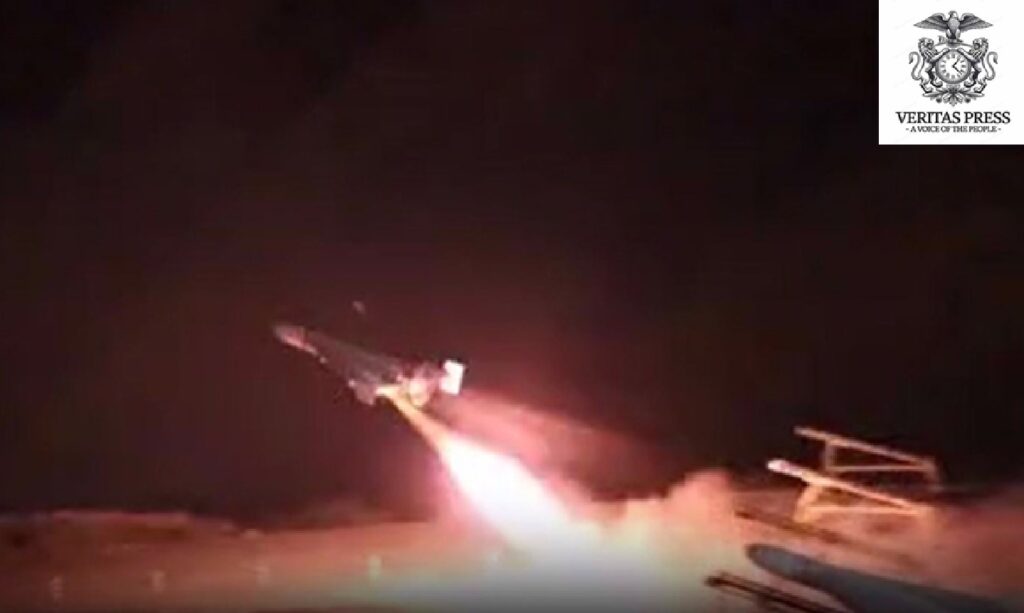
The diplomatic track is proceeding in tandem with visible military positioning. Recent encounters between US and Iranian forces, including the downing of an Iranian drone and maritime harassment near critical shipping lanes, illustrate how close the region remains to direct conflict.
Analysts increasingly warn that Washington’s posture appears closely synchronised with Israel, whose leadership has long advocated military action to neutralise Iran’s nuclear infrastructure.
Taken together, these developments suggest negotiations may function less as a pathway to détente and more as a strategic instrument, preserving international legitimacy while pressure mounts.
This is coercive diplomacy in its modern form: dialogue conducted from a position of overwhelming force.
A Negotiation Defined By Incompatible Goals:
Even before the talks began, the core dispute was unmistakable.
- Iran insists negotiations focus solely on the nuclear issue, sanctions relief, and recognition of its enrichment rights.
- The United States has pushed for a broader agreement encompassing missiles and Tehran’s regional influence, demands Iran rejects outright.
These are not technical disagreements; they are structural contradictions.
One side seeks limits on nuclear activity in exchange for economic reprieve. The other seeks a rollback of Iran’s strategic posture across the Middle East, effectively redefining its role as a regional power.
Iranian officials have openly expressed concern that negotiations could become a pretext for regime change, a suspicion rooted in decades of hostility and reinforced by recent military action.
Given that history, Tehran’s narrow negotiating framework appears less obstinate than strategic self-preservation.
Diplomacy Accompanied By Threats:
Trump has repeatedly threatened military action if no agreement is reached, while Iran has hinted it could expand its nuclear capability amid growing uranium stockpiles.
Such rhetoric creates a paradox: diplomacy conducted under overt coercion.
Negotiations traditionally rely on confidence-building. Here, they unfold alongside evacuation alerts, force deployments, and contingency planning.
This dual-track strategy, negotiate while preparing for war, does more than undermine trust. It reinforces the perception that diplomacy may be functioning primarily as a strategic delay.
The Legacy Of The 2025 War:
The present moment cannot be understood without recalling last year’s conflict, when US forces joined Israeli strikes on Iranian nuclear sites during a brief but consequential confrontation.
For Iranian strategists, the lesson was stark: negotiations do not necessarily prevent attack.
For Washington and Tel Aviv, the episode demonstrated both the risks of escalation and the limits of military pressure, but not enough to abandon the threat altogether.
That history explains why scepticism over Western intentions runs deep, and why Tehran appears determined to negotiate narrowly.
Oil, Chokepoints, And The Strategic Geography Of Power:
Markets respond instantly to even the perception of instability in the Gulf, revealing how deeply the crisis is tied to global energy security. Oil prices have fluctuated amid fears that tensions could disrupt supply routes.
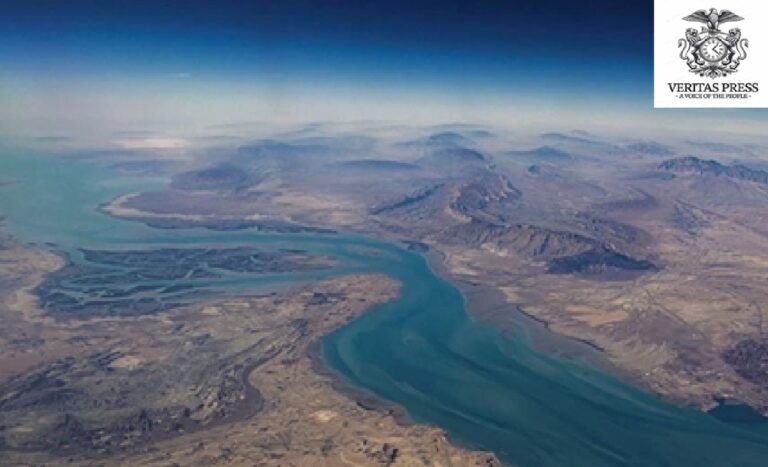
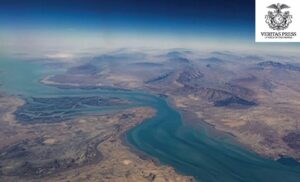
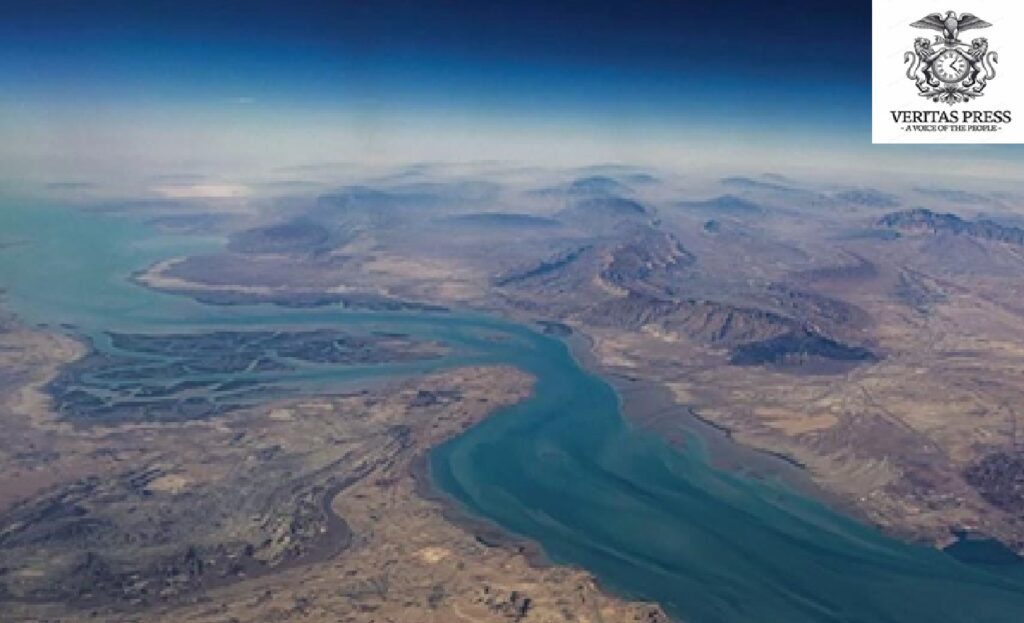
At the centre of this anxiety lies the Strait of Hormuz, a maritime corridor through which roughly one-fifth of the world’s oil passes.
Control over this chokepoint is not merely a regional concern; it is a pillar of global economic order.
For decades, US naval dominance in the Gulf has ensured that no single regional power can independently dictate the terms of energy transit. Preventing such leverage is widely viewed by Western security planners as essential to maintaining geopolitical influence.
Strip away the rhetoric of non-proliferation, and a harder question emerges:
Is this confrontation about nuclear weapons, or about who ultimately shapes the flow of global energy?
The Shadow Of Regime Change:
Regime change is rarely spoken aloud in modern policy circles after the reputational disasters of Iraq and Libya. Yet its logic continues to haunt US–Iran relations.
Sustained sanctions, military encirclement, diplomatic isolation, and covert pressure do not need to explicitly seek governmental collapse to produce regime-weakening effects.
For Israel, neutralising Iran would remove the most formidable state challenger to its regional military superiority, coup d’état and capture its resources.
For Washington, it would reshape the balance of power across the Middle East while reinforcing Western influence over critical energy corridors.
Whether intentional or structural, the cumulative pressure points toward systemic transformation rather than simple behavioural change.
The unresolved strategic question is therefore unavoidable:
Can the United States tolerate an ideologically hostile Iran that still controls one of the world’s most strategic geographies?
If the answer is no, the crisis is not episodic; it is structural.
Negotiations About Negotiations:
The run-up to the Muscat meeting was marked by confusion over venue, format, and agenda, which one diplomat described as “negotiations about negotiations.”
Such procedural wrangling reveals a deeper problem: if the parties cannot agree on how to talk, the likelihood of agreeing on substance appears slim.
Public messaging from US officials reflects similar uncertainty. Some have openly questioned whether a meaningful deal is even possible, reinforcing the sense that diplomacy may be exploratory rather than decisive.
Regional Anxiety And The Risk Of Miscalculation:
Regional governments are watching closely because any confrontation would reverberate across energy markets, shipping routes, and security architectures.
Conflicts involving resource corridors compress decision-making timelines:
- Markets panic rapidly
- Militaries mobilise quickly
- Political leaders face pressure to appear resolute
One misinterpreted naval manoeuvre in a waterway this narrow could trigger consequences far beyond the Gulf.
The global economy remains tethered to a maritime bottleneck.
Why Skepticism Is Widespread:
Several structural factors explain why analysts express little confidence in a breakthrough:
Maximalist demands: Iran refuses to discuss missiles or alliances; Washington seeks a broader deal.
Deep strategic mistrust: Tehran fears regime-change ambitions; the US doubts Iranian compliance.
Militarisation of diplomacy: Threats and deployments accompany negotiations.
The precedent of withdrawal: Trump’s earlier exit from the 2015 nuclear agreement still casts a long shadow.
Taken together, these dynamics suggest the talks may be less about reconciliation than about crisis management.
Stalling, Or Strategy?
Diplomacy can serve purposes beyond reaching an agreement:
- buying time for military positioning
- testing adversary red lines
- reassuring allies
- managing domestic political optics
Whether intentional or not, the current process appears to accomplish all four.
If negotiations fail, Washington can argue that it exhausted diplomatic options. If they succeed only partially, they may merely postpone confrontation rather than resolve it.
In geopolitical terms, tension is not always a policy failure.
Sometimes, it is the policy.
The Deeper Question: Who Actually Wants A Deal?
A meaningful agreement would likely require a framework resembling the 2015 Joint Comprehensive Plan of Action, sanctions relief in exchange for verifiable nuclear limits.
Yet the political environment that enabled that deal has largely vanished.
Today’s landscape is defined by great-power rivalry, proxy conflicts, domestic unrest inside Iran, and a US administration increasingly willing to wield military threats openly.
Under such conditions, diplomacy risks becoming theatre, a process designed to demonstrate effort rather than produce compromise.
On The Brink:
The Muscat talks highlight a stark reality: the United States and Iran are attempting diplomacy while preparing for the possibility of war.
That contradiction alone explains why confidence is so low.
The push for a nuclear deal may be real in form, but in substance it remains constrained by irreconcilable strategic visions, regime security versus regional dominance, sovereignty versus containment, multipolar energy routes versus managed Western access.
Unless one side fundamentally recalibrates its demands, negotiations are unlikely to deliver a durable settlement.
For now, the world is left watching a familiar pattern unfold, dialogue conducted on the edge of confrontation, where every meeting raises the same unresolved question:
Are these talks meant to prevent war, or simply delay it?
In Conclusion:
What is unfolding is not merely another episode of regional instability, but part of a far more consequential geopolitical contest, one in which sovereignty, political order, and control over strategic resources are quietly being renegotiated through force.
Behind the language of “security,” “deterrence,” and “stabilisation” lies a familiar pattern. Modern conflicts are increasingly shaped not only by battlefield objectives but by long-term calculations over influence corridors, energy routes, mineral wealth, and maritime access. When state structures are weakened, fragmented, or reshaped, the beneficiaries are often those positioned to redraw economic and strategic maps in their favour.
The growing external pressure on political leadership, the cultivation of proxy actors, and the normalisation of military intervention all raise uncomfortable but necessary questions: Is this crisis being managed, or manufactured, to produce a more compliant political order? History offers sobering precedents, from Iraq to Libya, where the rhetoric of security masked deeper ambitions tied to resource access and regional dominance. The aftermath in those cases was not stability, but prolonged fragmentation that opened markets while closing democratic space.
Today, similar warning signs are difficult to ignore. Efforts that appear tactical may in fact be structural, aimed at reshaping governance itself. Regime change in the twenty-first century rarely arrives with formal declarations; it often emerges gradually through economic strangulation, diplomatic isolation, internal destabilisation, and selective military pressure until political transformation becomes less an event than an inevitability.
For civilians caught in the centre of this strategic recalibration, the consequences are immediate and devastating. But the long-term danger extends beyond humanitarian catastrophe. If global powers continue to treat fragile states as arenas for competition over resources and influence, the result will not be order; it will be a world increasingly governed by coercion rather than law.
The critical question, therefore, is no longer whether this conflict will reshape the region. It already is. The real question is who will ultimately control the political future and the material wealth that emerges from its ruins.
MOSCOW, LONDON – In what marks a significant escalation in the prolonged confrontation between London
TEL-AVIV – When Lieutenant General Eyal Zamir, Chief of Staff of the Israel Defence Forces

GREEK ISLANDS – A controversial proposal by Israeli politician Avri Steiner to purchase Greek islands
TEHRAN, IRAN – In the early hours of Thursday, the Islamic Revolutionary Guard Corps (IRGC)
LONDON, UK – In the early hours of Monday morning, a quiet street in Golders
SEOUL / TEHRAN — In a packed press conference at the Iranian Embassy in Seoul’s
Pakistan’s imprisoned former prime minister Imran Khan has issued one of his most forceful denunciations
At the Rubaya mining complex in eastern Democratic Republic of Congo, the hillside known as
On the 25th day of a conflict that has already rewritten the geopolitical map of
On the outskirts of Nabatieh, where the Mediterranean breezes once carried the scent of olive
.