


Title: Why Israel Is Pushing For Regime Change In Venezuela Through Washington.
Press Release: Veritas Press C.I.C.
Author: Kamran Faqir
Article Date Published: 14 Dec 2025 at 12:40 GMT
Category: Latin Americas – Americas | Venezuela- Politics | Why Israel Is Pushing For Regime Change In Venezuela Through Washington.
Source(s): Veritas Press C.I.C. | Multi News Agencies
Website: www.veritaspress.co.uk

Business Ads

As Washington escalates its military posture in the Caribbean and openly toys with regime change in Caracas, a familiar constellation of actors has re-emerged: pro-Israel think tanks, Israeli-aligned media figures, and US politicians long embedded in the Israel lobby ecosystem. Together, they are reviving a playbook that bears an uncomfortable resemblance to the buildup to the 2003 invasion of Iraq, this time with Venezuela in the crosshairs.
At the centre of this campaign is not merely oil, sanctions enforcement, or narcotics interdiction, but Israel’s regional and increasingly hemispheric agenda, now fused with Washington’s revived Monroe Doctrine ambitions under Donald Trump.
Oil, Ideology, And The Think Tank Conveyor Belt:
Washington’s pro-Israel think tanks, most prominently the Foundation for Defence of Democracies (FDD), have intensified their output on Venezuela, openly salivating over the prospect of Western control of the country’s vast oil reserves. Venezuela sits atop one of the world’s largest hydrocarbon resource bases, yet years of sanctions and economic warfare have crippled its production capacity.
What is striking is how openly regime change is framed not as a Venezuelan issue, but as a strategic win for Israel.
In a recent article, FDD senior adviser Saeed Ghasseminejad declared with striking certainty that a US-installed government in Caracas would “sever ties with Iran,” asserting, without evidence, that Tehran uses Venezuela as a base for “jihadi influence in America’s backyard.” A “US-aligned Caracas,” he wrote, would “kick Iranian agents out,” making the US homeland “more secure.”
This framing mirrors the pre-Iraq War discourse almost word for word: speculative threats, guilt by association, and the conflation of Israel’s enemies with existential dangers to the United States.
Netanyahu’s Long Shadow And The Iraq Precedent:
One key parallel to the Iraq War buildup is routinely omitted from mainstream discussion: Israeli Prime Minister Benjamin Netanyahu’s central role in cheerleading Washington’s illegal 2003 invasion.
Netanyahu, then an opposition politician, famously testified before the US Congress and lobbied neoconservative networks to press for war, a conflict Israel itself refused to fight, but from which it benefited strategically. Those same networks, many now rebranded and institutionalised within Washington’s think tank ecosystem, are once again pushing the United States toward confrontation, this time with Venezuela.
Despite the Trump administration’s recent 33-page National Security Strategy claiming that “nation-building wars” and regime-change operations are over, the rhetoric and actions tell a different story. Venezuela is now being framed, much like Iraq once was, as an intolerable threat requiring force.
Hezbollah, Hamas, And The Recycling Of Threat Narratives:
To justify this escalation, Trump administration officials and allied commentators repeatedly invoke alleged Venezuelan ties to Hezbollah and Hamas. These claims are not new, but they are increasingly audacious.
Pro-Israel commentators have gone so far as to suggest that Hezbollah and Hamas could be preparing attacks on the US homeland from Venezuelan territory, an assertion that lacks any credible evidence and defies basic strategic logic.
Notably, Hezbollah and Hamas are not enemies of the United States in any conventional military sense. They are, however, principal enemies of Israel. This raises an obvious question: why is Washington fixated on threats that align so neatly with Israeli security narratives?
The Venezuelan opposition has provided the necessary echo. At a recent conference in Oslo, opposition leader María Corina Machado declared that Venezuela “has already been invaded,” claiming that “Iranian agents” and “terrorist groups such as Hezbollah [and] Hamas” are operating freely with government approval. Her remarks were widely circulated in Israeli-aligned media despite offering no substantiating evidence.
The Atlantic Council And The Myth Of “Narcoterrorism”:
The Atlantic Council has played a similar role. In its 2020 issue brief, The Maduro-Hezbollah Nexus, the think tank alleged that Venezuela had become a hub for “narcoterrorism,” implicating Hezbollah, Iran, Syria, FARC dissidents, and Mexican cartels in a sprawling conspiracy.
This narrative has since expanded to include Hamas, forming a near-perfect rogues’ gallery of Israel’s adversaries. The resemblance to the discredited claims about Saddam Hussein’s ties to al-Qaeda is difficult to ignore.
As with Iraq, these allegations rely heavily on assertion rather than evidence, yet they are repeatedly laundered through policy briefs, congressional testimony, and sympathetic media outlets until they acquire the veneer of fact.
Sanctions, Iran, And Aggression By Proxy:
Caracas indeed maintains relations with Tehran, a predictable outcome of Washington’s suffocating sanctions regime. Iran has provided fuel, technical assistance, and trade channels that have helped Venezuela survive economic warfare.
Yet Washington increasingly treats this relationship as casus belli. The recent US seizure of a Venezuelan oil tanker, justified by claims it was transporting Iranian oil, marks a dangerous escalation. Even senior US lawmakers have warned that such actions constitute acts of war.
Venezuela’s government described the seizure as “international piracy,” arguing that it exposed Washington’s true motive: control of natural resources.
Senator Chris Van Hollen called the move proof that the administration’s drug-interdiction narrative was “a big lie,” while Republican Senator Rand Paul warned that “seizing someone’s oil tanker is an initiation of war.” A bipartisan war-powers resolution has now been introduced to block military action without congressional approval.
Trump’s Contradictions And Israel’s Wars:
Donald Trump continues to style himself as a peacemaker, lamenting his stolen Nobel Prize ambitions. Yet between March and May, he launched a failed bombing campaign in Yemen, followed by direct strikes on Iran in June, both undertaken almost entirely in service of Israel’s regional objectives.
‘Venezuela now appears next in line.’
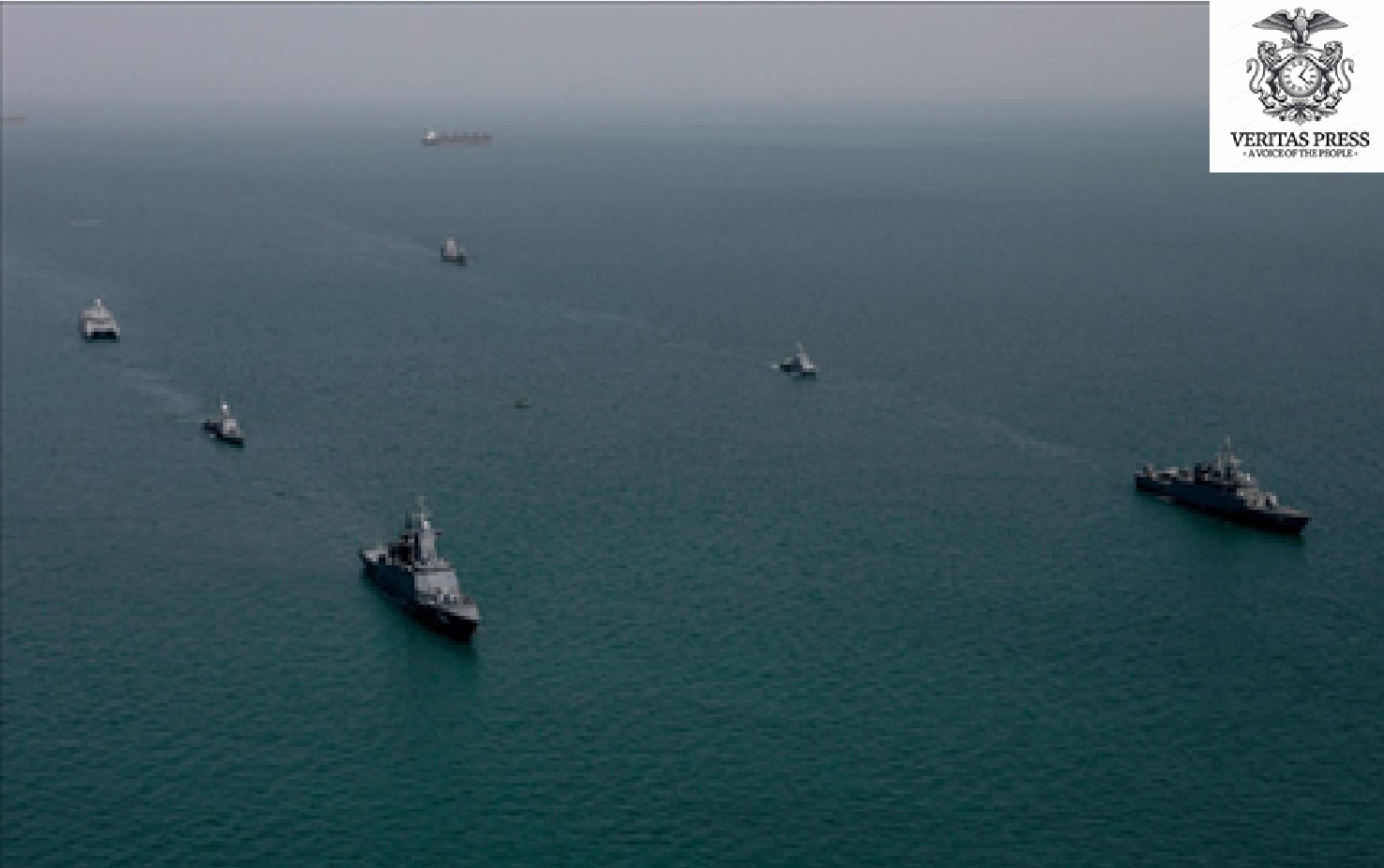
The administration has deployed its largest naval force in the Caribbean since the Cuban Missile Crisis, while Trump openly invoked the Monroe Doctrine’s “Trump corollary,” declaring that US leadership in the hemisphere is “coming roaring back.”
The symbolism is unmistakable.
Oil, Regime Change, And The Iraq Model:
From an energy perspective, the stakes are enormous. Venezuela’s oil production has collapsed from over 3 million barrels per day in the early 2000s to around 900,000 b/d in 2025. Chevron alone now accounts for roughly a quarter of output under a fragile sanctions waiver.
Analysts argue that lifting sanctions and opening the sector to Western capital could rapidly boost production to 2 million b/d, a scenario openly discussed by Treasury Secretary Scott Bessent, who suggested that “something happening in Venezuela” could drive oil prices down for US consumers.
The Iraq precedent looms large. Following regime change and sanctions removal, Iraqi production more than doubled, but at the cost of immense human suffering and regional instability.
The Isaac Accords And Israel’s Latin American Pivot:
Another under-reported driver is Israel’s push into Latin America through the so-called “Isaac Accords,” announced by Argentine President Javier Milei. After failing to expand the Abraham Accords meaningfully across the Arab and Muslim world, Israel is now targeting the Western Hemisphere.
Left-wing governments in Latin America have long been vocal supporters of Palestinian rights. Toppling Venezuela, analysts warn, could trigger a domino effect, placing Cuba and Nicaragua next in Washington’s sights.
US Secretary of State Marco Rubio, a major recipient of Israel lobby funding and a longtime advocate of regime change in Havana, understands this well. Caracas, Havana, and Managua are viewed as interconnected targets.
A Familiar Road To Disaster:
Israel is not the sole driver of Washington’s Venezuela policy. But it is an undeniable beneficiary, strategically, ideologically, and economically.
The obsessive focus on Hezbollah, Hamas, and Iran; the deployment of fact-free threat narratives; the fixation on oil; the use of pliant opposition figures; and the role of Israeli-aligned think tanks all echo the path that led to the Iraq War.
Then, as now, the consequences were paid not by Washington’s strategists or Tel Aviv’s politicians, but by ordinary people, and by American soldiers sent to fight wars that were never truly about US security.
Venezuela may yet avoid that fate. But the warning signs are already unmistakably in place.