


Original Article Date Published:
Article Date Modified:
Help support our mission, donate today and be the change. Every contribution goes directly toward driving real impact for the cause we believe in.
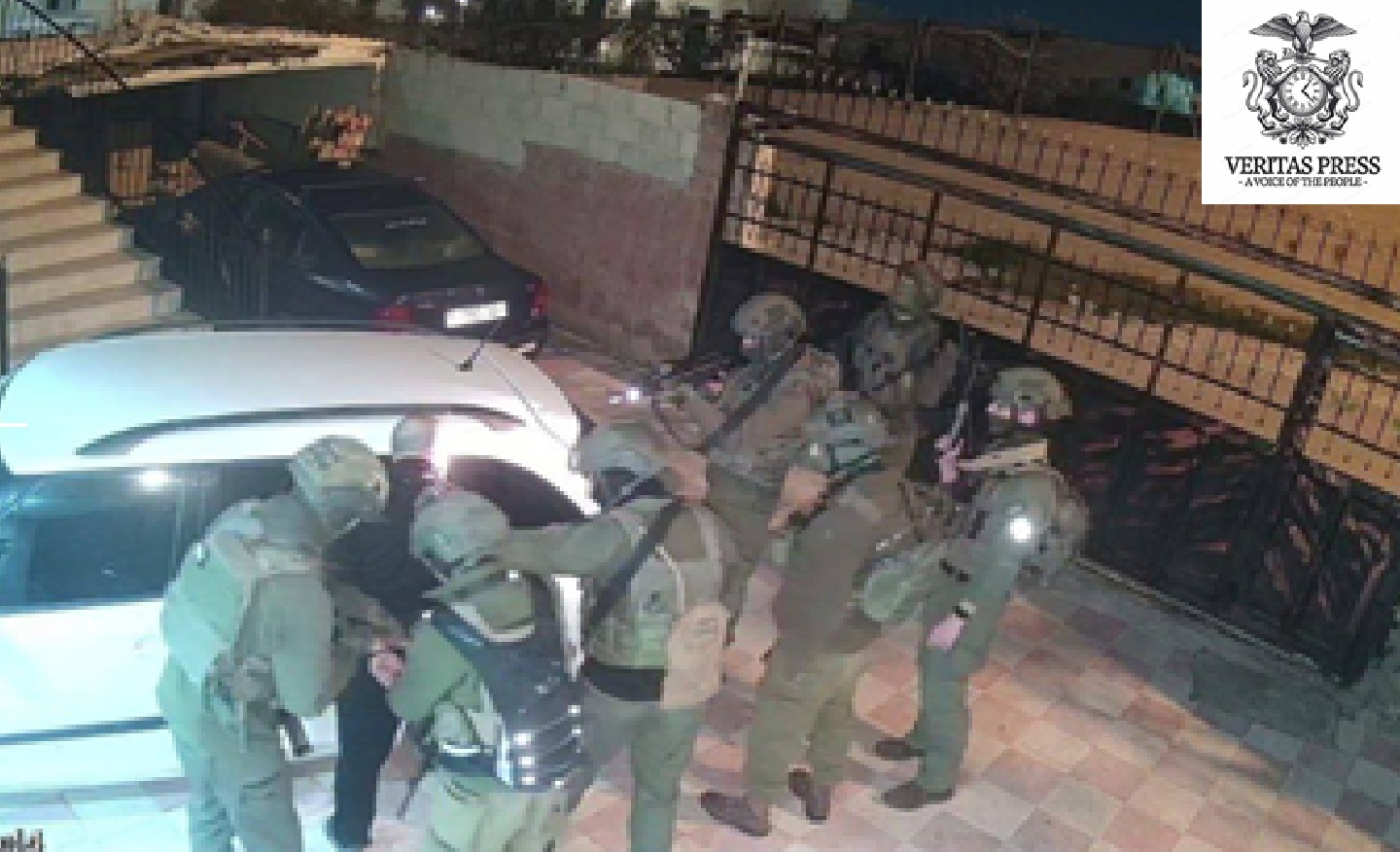
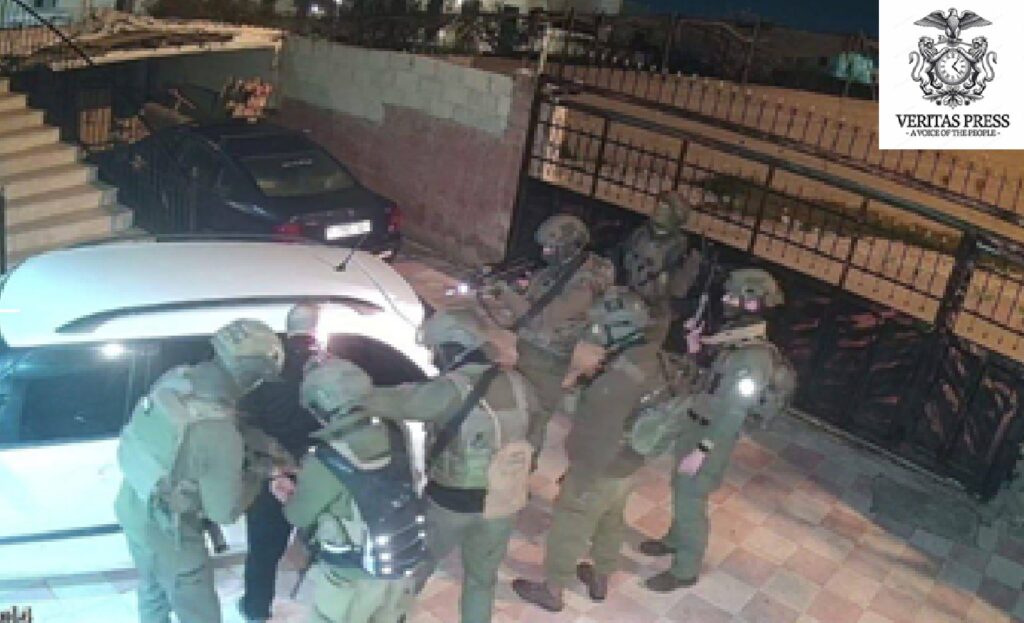
JENIN, OCCUPIED WEST BANK — For the residents of Faqqu’a, a small town nestled east of Jenin, the sound of military drones has replaced the morning call to prayer. For four consecutive days, Israeli occupation forces have maintained a relentless grip on the community, transforming nine family homes into military outposts and forcing residents to flee. “They came on the first of the month and took over,” Barakat al-Amri, the head of the village council, told WAFA. “They are everywhere, in the streets, on the rooftops. We are prisoners in our own village.”
Faqqu’a is not an isolated incident. It is a single thread in a vast and escalating military tapestry being woven across the entire occupied West Bank. What began as a stated Israeli operation, dubbed “Iron Wall”, aimed at rooting out armed groups in the northern refugee camps has metastasised into a sweeping campaign of mass arrests, home demolitions, and land confiscation. This offensive, which intensified dramatically two days after the Gaza ceasefire took effect in January 2025, now appears to be driving a fundamental shift in the reality of the occupation, moving from intermittent raids to a permanent, entrenching military grip on Palestinian land and life.
From Raids To Reinforcements: The New Military Doctrine.
Witness accounts from Jenin, Tulkarem, Tubas, and Nablus paint a picture of an occupation force no longer merely raiding but besieging and entrenching. In Ya’bad, south of Jenin, Israeli forces have commandeered multi-story family homes, converting them into forward operating bases. Local sources described to WAFA how soldiers seized a three-story home, detaining the occupants on the first floor while turning the upper floors into a military barracks. In another instance, a family was confined to a single floor of their home as soldiers occupied the rest, deploying snipers on the roof and stationing advanced Eitan armoured vehicles around the perimeter.
This tactic marks a significant escalation. In the past, military incursions were typically “in and out” operations. Today, the occupation of homes for days on end serves a dual purpose: it provides the Israeli army with a tactical advantage in densely populated areas while deliberately inflicting collective punishment and psychological warfare on the civilian population. Tulkarem Governor Abdullah Kamil confirmed the staggering human cost of this strategy, stating that 85% of the population of the Tulkarem refugee camp has been displaced due to the ongoing assault. Similarly, in Jenin, nearly 90% of the camp’s residents have been forced to flee, seeking shelter in surrounding villages.
The displacement is accompanied by systematic destruction. In a chilling echo of military tactics used during the 2002 Battle of Jenin, Israeli forces have demolished residential blocks in the Jenin refugee camp. Governor Kamal Abu al-Rub confirmed that this marked the first time such large-scale demolitions have occurred in the city since the Second Intifada. Explosions have echoed through the camp at night as homes are levelled, ostensibly for “operational needs.” In the Nur Shams camp near Tulkarem, Israeli bulldozers and cranes have begun demolishing 25 buildings housing approximately 100 families. The military justified the move as necessary to clear paths for vehicles and root out militant infrastructure.
A Campaign Of Mass Detentions:
Parallel to the ground operations, a vast net of arrests is being cast across the West Bank. The Palestinian Prisoners’ Media Office reported that in a single 24-hour period, at least 40 Palestinians, including two women, were rounded up in pre-dawn raids. The arrests target a wide cross-section of society, from former prisoners and activists to journalists and academics.
Among those detained in Hebron were Palestinian Legislative Council member Sheikh Hatem Qafisha and journalist Musab Qafisha. In Tubas, former prisoner Lafi Rafe’ Daraghmeh was pulled from his home. The arrests have extended to children as young as 15, with three detained in the village of Kafr Malik alone. Dr. Bara’ Badeer was among those seized in the town of Anabta, highlighting the campaign’s reach into the professional class.
The Palestinian Prisoners’ Media Office has accused Israel of “continuing a policy of escalated mass arrests,” targeting former prisoners, women, and minors as part of a broader strategy to crush any form of Palestinian political or social resilience.
The Settler Front: State-Protected Violence.
The military campaign is unfolding in lockstep with a dramatic surge in settler violence, which often enjoys the tacit support or direct accompaniment of Israeli forces. According to a report by the Wall and Settlement Resistance Commission, February 2026 saw a staggering 1,965 attacks by Israeli forces and settlers combined. Of these, settlers carried out 511 attacks, including physical assaults, the uprooting of thousands of olive trees, and the burning of agricultural land.
The Jordan Valley has become a flashpoint. In the village of Al-Aqaba, east of Tubas, Mutaz Bisharat, the official responsible for settlement affairs, reported that settlers wearing military uniforms raided homes and threatened residents with expulsion within days. Meanwhile, in Ibziq, settlers from a newly established outpost broke into the village school, smashing windows and destroying solar panels, before physically assaulting seven men who came to assess the damage.
The violence is not merely chaotic; it is strategic. In the Ein Samiya area east of Ramallah, settlers have repeatedly attacked the main water well that serves an estimated 100,000 Palestinians. Armed and masked settlers have vandalised equipment and pepper-sprayed workers, forcing the suspension of pumping and cutting off water to dozens of communities. In Masafer Yatta, settlers have severed water pipelines, leaving entire communities to rely on dwindling winter reserves.
“This is about making life impossible,” said Nidal Hazeibi, an activist in Bethlehem, where Israeli bulldozers began razing 20 dunams of agricultural land planted with olive trees behind the Apartheid Wall. “They want to create a reality where we cannot stay, so they can take the land.”
An Analytical Critique: The End Of The Two-State Mirage.
To view these events as a simple military crackdown is to miss the forest for the trees. What is unfolding in the West Bank is a methodical, strategic project aimed at rendering a contiguous, viable Palestinian state impossible. The current offensive is not a reaction to a specific threat but an execution of a long-desired revisionist blueprint.
The “Iron Wall” Against Demography:
The focus on the northern West Bank, Jenin, Tulkarem, Tubas, is telling. These areas, historically the most resistant to occupation and the source of significant militant activity, are being targeted for “de-development.” By destroying infrastructure, displacing populations, and turning refugee camps (the very symbols of the Palestinian Nakba) into rubble, Israel is not just hunting militants; it is dismantling the social and physical fabric of Palestinian nationalism. As one resident of the Nur Shams camp told AFP while watching his home be demolished, “They want to destroy the idea of the camps, to turn us into regular neighbourhoods, so the refugee issue is forgotten.”
Legalised Annexation by Other Means:
While the world focuses on the explosions and arrests, a quieter, more profound theft is underway. On February 8, the Israeli Security Cabinet approved measures that de-classify West Bank land registries, resume land registration in Area C for the first time since 1967, and transfer planning powers from Palestinian bodies to the Israeli Civil Administration.
UN Secretary-General António Guterres warned that these moves “could lead to the dispossession of Palestinians of their property and risks expanding Israeli control over land in the area”. In plain language, this means Israel is formalising its theft of land. By registering vast swathes of the West Bank as “state land,” it creates a legal veneer for de facto annexation, bypassing the messy political process of formal sovereignty while achieving the same outcome: permanent Israeli control.
The Gaza-West Bank Pincer:
A deeper geopolitical analysis reveals a disturbing “division of labour” emerging between the two Palestinian territories. As argued in a recent analysis by Pakistan Today, Gaza is being discussed in international circles as a candidate for “managed autonomy”, a trusteeship that handles services and reconstruction but denies sovereignty. The West Bank, meanwhile, is being systematically fragmented and swallowed.
“Gaza is to be internationalised and stabilised under supervision while the West Bank is steadily weakened, fragmented and stripped of the territorial and social coherence required for statehood,” the analysis notes. The destruction of roads, the blockade of hospitals like the Thabet Thabet Governmental Hospital in Tulkarem (now besieged and cut off), and the conversion of commercial complexes like the al-Adawiya complex into Israeli military bases all serve to canton Palestinian communities into disconnected Bantustans.
This is not a conflict management strategy; it is a conflict exploitation strategy. By keeping the Palestinian people alive but stateless, and by physically separating Gaza from the West Bank, the occupation creates a permanent underclass with no political horizon. As Mohammed El Kurd posted on social media in response to the recent events, “Dehumanisation of Palestinians is so normalised” that these sweeping land grabs and military tactics barely register as a newsworthy escalation in global headlines.
Conclusion: The New Facts On The Ground.
As the sun sets over Faqqu’a, the olive trees that Barakat al-Amri was notified would be uprooted stand as silent witnesses. For the 26 dunams of land between Faqqu’a and Jalbun, their fate is sealed. They will be cleared, and soon, perhaps, a new outpost or a settler road will take their place.
The numbers tell a grim story: at least 1,121 Palestinians killed in the West Bank since October 7, 2023, over 22,000 detained, and thousands displaced in just the first two months of 2026. But the numbers cannot capture the texture of life under this new reality, the children in Tammun living under near-total power outages for days on end, the paramedic in Beita shot at by stun grenades while trying to reach the wounded, or the families in Ya’bad confined to a single room in their own homes while soldiers occupy the rest.
The international community, mired in debates over Gaza’s post-war governance, seems unable or unwilling to see that the West Bank is being consumed right before its eyes. The “Iron Wall” operation may one day end, but the walls being built around Palestinian towns, the legal walls being erected around their land, and the demographic walls being fortified by settlers are creating a prison from which there will be no release. The two-state solution is not just dying in the West Bank; it is being bulldozed, demolished, and buried under the rubble of homes that will never be rebuilt.
Source: Multiple News Agencies
Submissions:
For The Secure Submission Of Documentation, Testimonies, Or Exclusive Investigative Reports From Any Global Location, Please Utilise The Following Contact Details For Our Investigations Desk: enquiries@veritaspress.co.uk or editor@veritaspress.co.uk
Help Support Our Work:
Popular Information is powered by readers who believe that truth still matters. When just a few more people step up to support this work, it means more lies exposed, more corruption uncovered, and more accountability where it’s long overdue.
Help Protect Independent Journalism, Which Is Currently Under Attack.
If you believe journalism should serve the public, not the powerful, and you’re in a position to help, becoming a DONATOR or a PAID SUBSCRIBER truly makes a difference.
DONATION APPEAL: If You Found This Reporting Valuable, Please Consider Supporting Independent Journalism.
Help Support Our Work – We Know, We Know, We Know …
Seeing these messages is annoying. We know that. (Imagine what it’s like writing them … )
Your support fuels our fearless, truth-driven journalism. In unity, we endeavour to amplify marginalised voices and champion justice, irrespective of geographical location.
But it’s also extremely important. One of Veritas Press’s greatest assets is its reader-funded model.
1. Reader funding means we can cover what we like. We’re not beholden to the political whims of a billionaire owner. We are a small, independent and impartial organisation. No one can tell us what not to say or what not to report.
2. Reader funding means we don’t have to chase clicks and traffic. We’re not desperately seeking your attention for its own sake: we pursue the stories that our editorial team deems important and believe are worthy of your time.
3. Reader Funding: enables us to keep our website and other social media channels open, allowing as many people as possible to access quality journalism from around the world, particularly those in places where the free press is under threat.
We know not everyone can afford to pay for news, but if you’ve been meaning to support us, now’s the time.
Your donation goes a long way. It helps us:
- Keep the lights on and sustain our day-to-day operations
- Hire new, talented independent reporters
- Launch real-time live debates, community-focused shows, and on-the-ground reporting
- Cover the issues that matter most to our communities, in real time, with depth and integrity
We have plans to expand our work, but we can’t do it without your support. Every contribution, no matter the size, helps us stay independent and build a truly people-powered media platform.
If you believe in journalism that informs, empowers, and reflects the communities we serve, please donate today.
For The Secure Submission Of Documentation, Testimonies, Or Exclusive Investigative Reports From Any Global Location,
JENIN, OCCUPIED WEST BANK — For the residents of Faqqu’a, a small town nestled east
NEW DELHI/TEL AVIV: When Narendra Modi stood before the Knesset and described Israel as the

US Lawmakers clash over the rationale behind Trump’s Iran strikes, calling them “very disturbing” as
Just four days into what President Donald Trump has dubbed “Operation Epic Fury,” the United
BEIRUT, LEBANON – The echoes of the 2024 ceasefire, already faint after months of daily
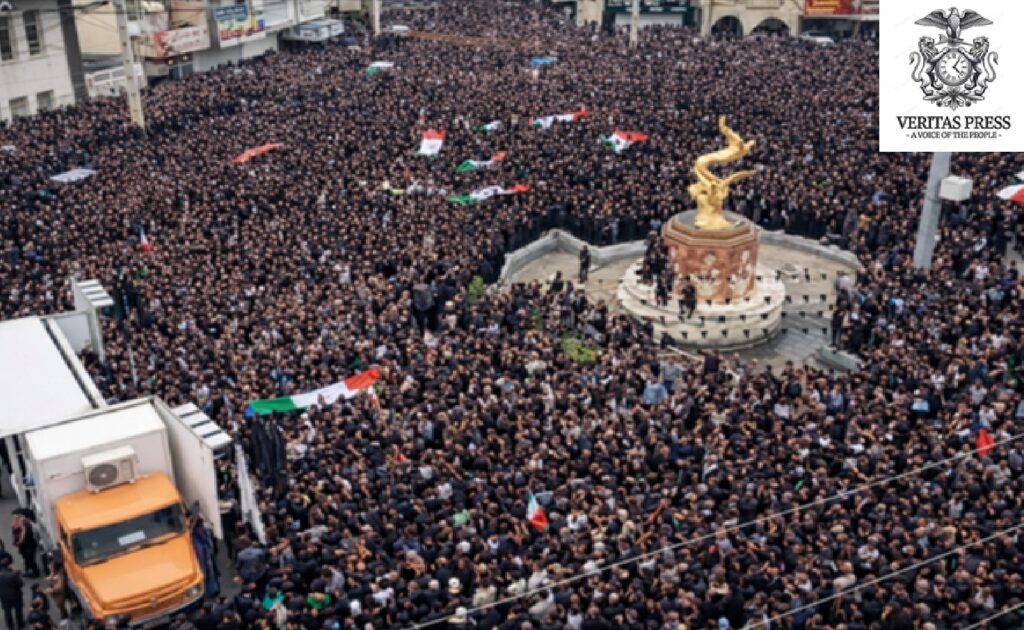
MINAB, IRAN – Funerals were held this week for 168 victims of the devastating bombing
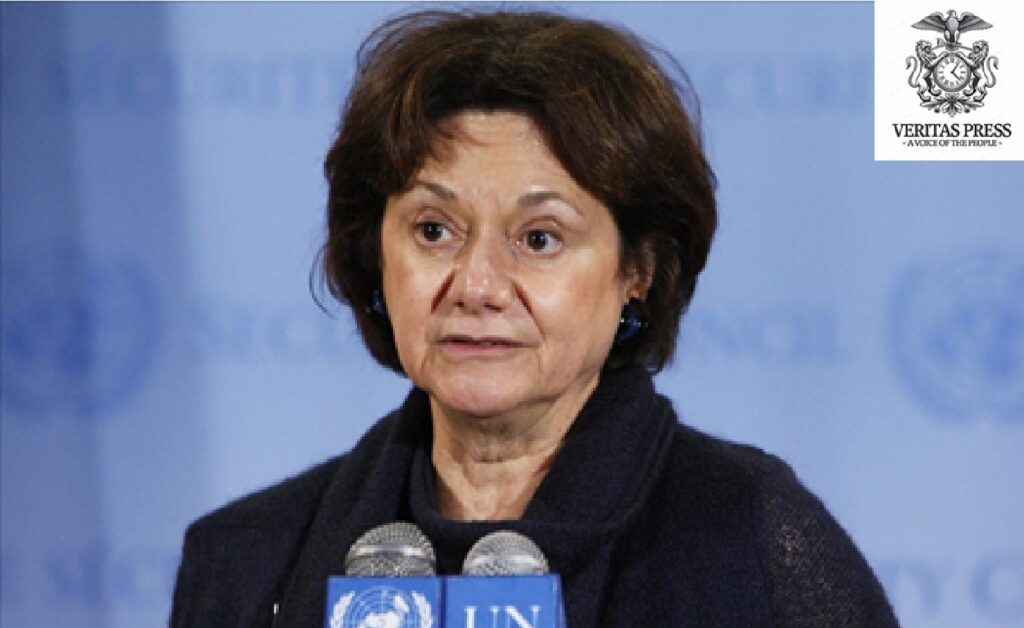
On March 2, 2026, the United Nations Security Council convened for a meeting that was

LONDON, UK – Prime Minister Keir Starmer insists the United Kingdom is “not at war.”
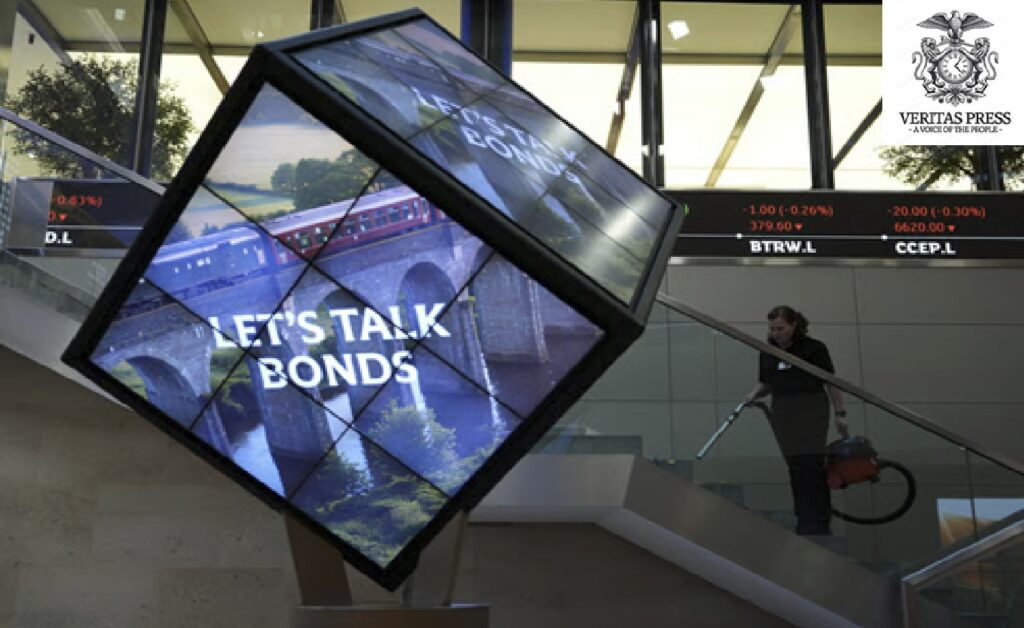
Global financial markets have been jolted by the rapid escalation of war between the United