
Original Article Date Published:
Article Date Modified:
Help support our mission, donate today and be the change. Every contribution goes directly toward driving real impact for the cause we believe in.
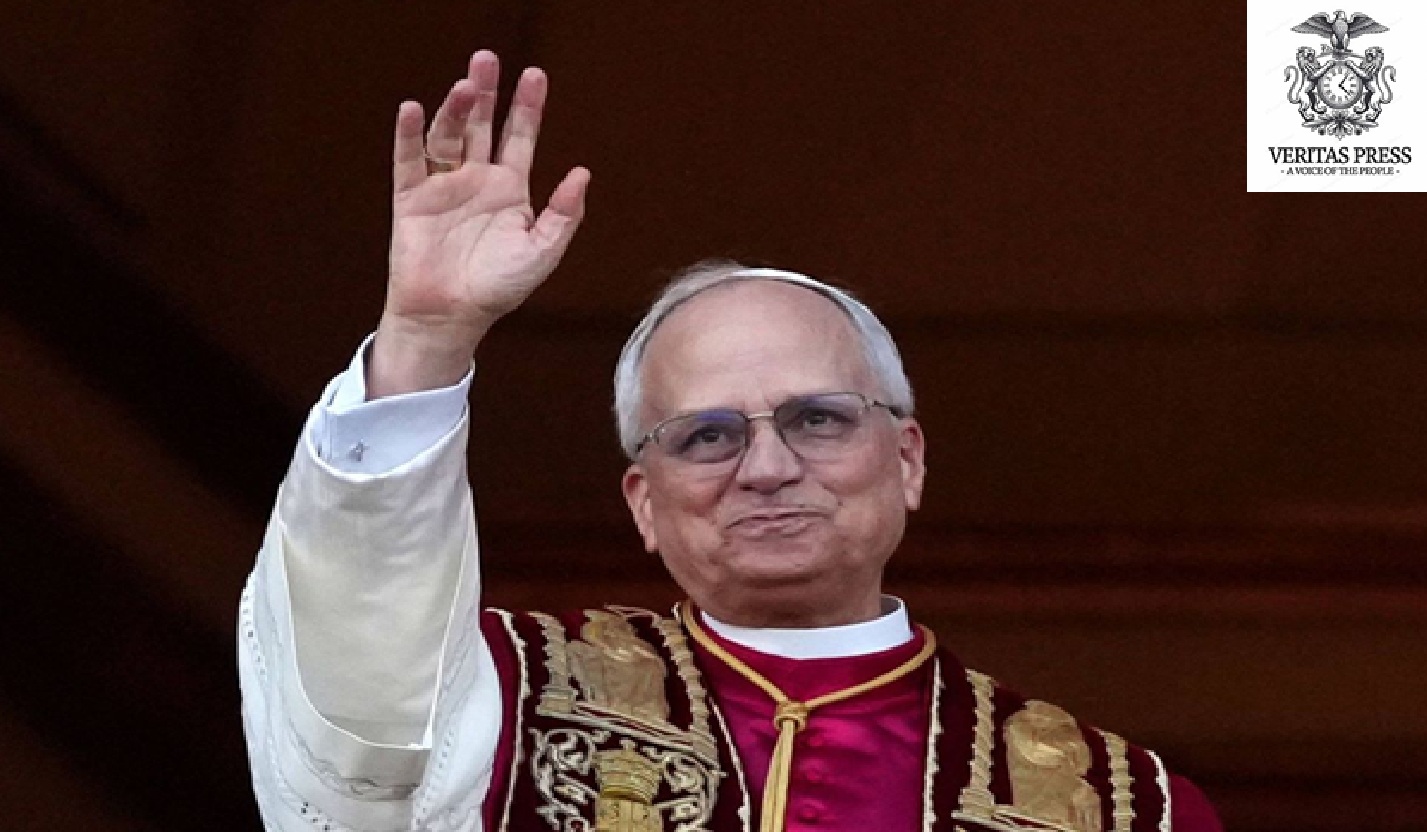
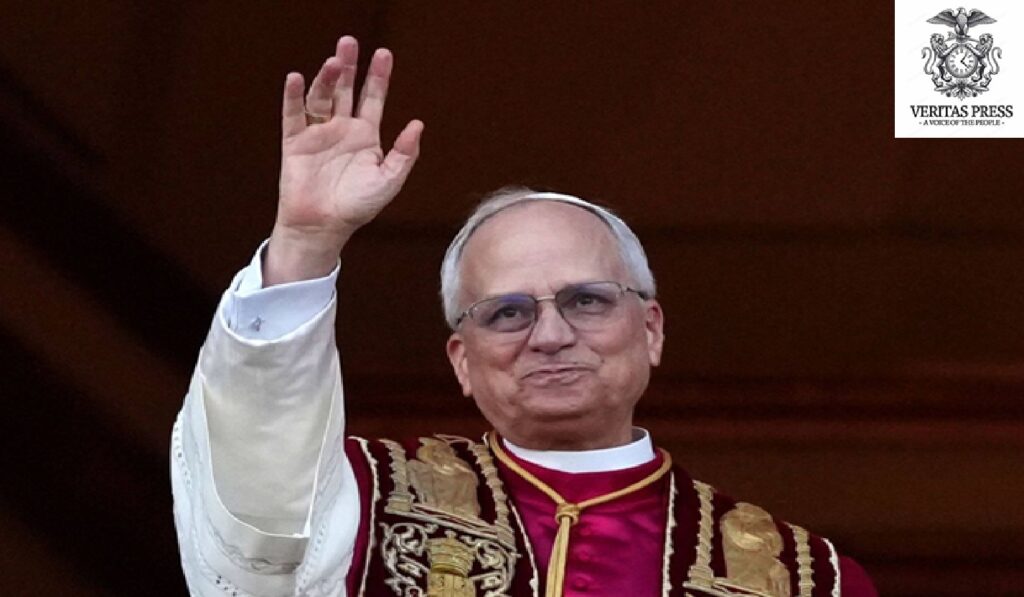
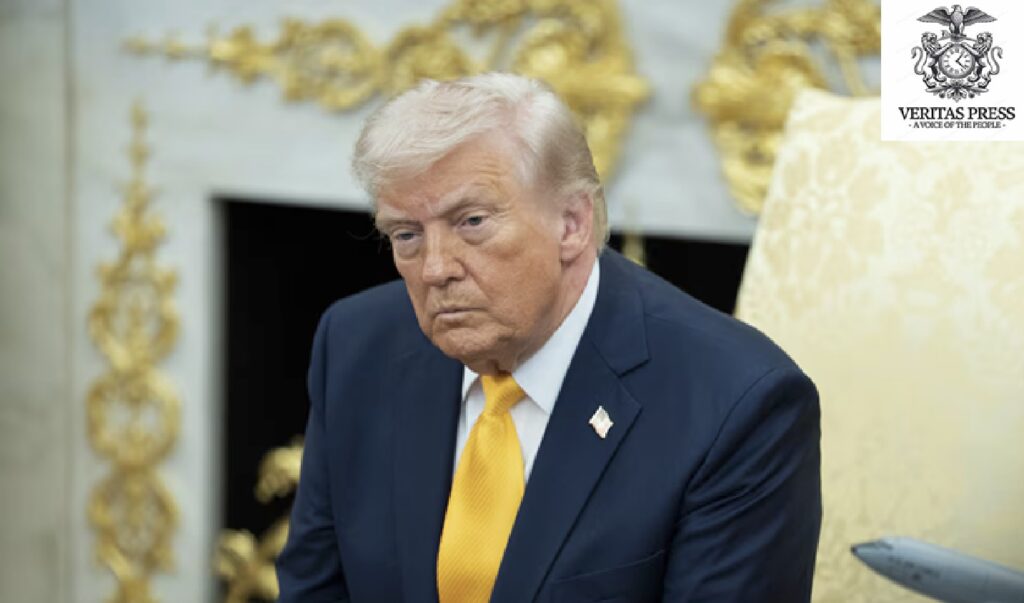
VATICAN, WASHINGTON – In the annals of modern geopolitics, few confrontations have been as symbolically charged, as theologically fraught, and as politically explosive as the one currently unfolding between the White House and the Vatican. When President Donald Trump took to his Truth Social platform on Sunday night to unleash a 334-word tirade against Pope Leo XIV, the first American-born pontiff in the history of the Catholic Church, he did more than simply vent his displeasure at a religious leader who had dared to criticise his foreign policy. He shattered a diplomatic and spiritual taboo that had held firm through two world wars, the Cold War, and countless global crises: the unwritten understanding that the President of the United States does not publicly attack the Pope.
The exchange, which has reverberated from the marble corridors of the Vatican to the war-torn streets of Tehran, represents far more than a personal feud between two powerful men. It is a collision of two fundamentally incompatible worldviews: one grounded in the Gospel’s call to peacemaking and the dignity of every human person, the other in the raw exercise of military and political power. And as the dust settles on the initial volley of insults and AI-generated blasphemy, the question haunting both the Catholic faithful and the international community is not whether this confrontation will escalate further, but what it reveals about the soul of American power and the role of moral authority in an age of perpetual war.
The Spark: A Pope’s Plea For Peace In A Time Of War.
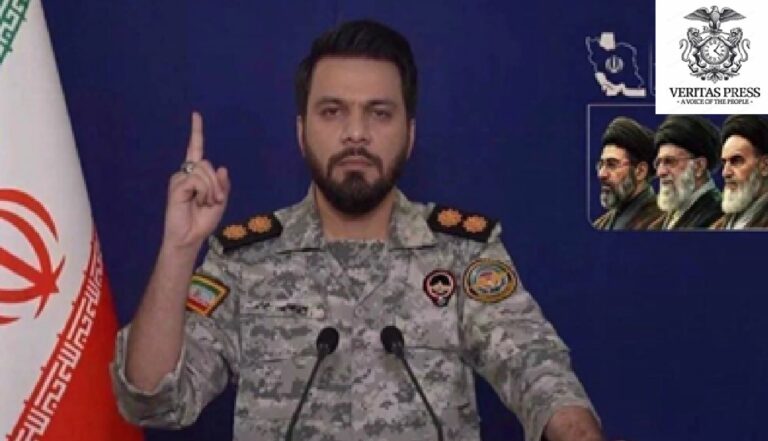
To understand the ferocity of Trump’s attack, one must first understand the context of Pope Leo’s escalating criticism of the U.S.-Israeli war against Iran. The conflict, which began on February 28, 2026, with a joint U.S.-Israeli military operation, has rapidly metastasised into one of the most devastating wars in recent Middle Eastern history. In just five weeks, U.S. and Israeli forces struck more than 13,000 targets across Iran, including nuclear facilities, weapons production sites, and critical infrastructure. The human toll has been staggering: an estimated 3,000 killed in Iran, 2,020 in Lebanon, and dozens more across the Gulf region. The conflict has displaced hundreds of thousands, crippled Iran’s oil export capacity, and pushed the region to the brink of a broader conflagration.
It is against this apocalyptic backdrop that Pope Leo XIV, a Chicago-born Augustinian who was elected to the papacy in May 2025 following the death of Pope Francis, has emerged as one of the world’s most prominent voices for peace. Over the past several weeks, the pontiff has used every platform at his disposal, from Palm Sunday homilies in St. Peter’s Square to Saturday prayer vigils at St. Peter’s Basilica, to denounce what he has called the “madness of war” and the “delusion of omnipotence” that fuels it.
The escalation reached a breaking point last week when Trump, in a characteristic display of rhetorical brinkmanship, threatened Iran with annihilation. “A whole civilisation will die tonight, never to be brought back again,” the president declared, in what many interpreted as a genocidal threat against the Iranian people. Pope Leo’s response was swift and unequivocal. The threat, he said, was “truly unacceptable”.
This was not the first time Leo had challenged the moral foundations of Trump’s policies. In September 2025, the pontiff delivered a searing critique of the administration’s immigration crackdown, questioning the coherence of a “pro-life” ethic that excludes migrants. “Someone who says, ‘I am against abortion, but I am in agreement with the inhuman treatment of immigrants in the United States,’ I don’t know if that’s pro-life,” Leo said. The comment struck at the heart of the uneasy alliance between conservative Catholics and the Trump movement, an alliance built largely on opposition to abortion but increasingly strained by the administration’s aggressive deportation policies and its treatment of vulnerable populations.
The Attack: “WEAK On Crime, Terrible For Foreign Policy”.
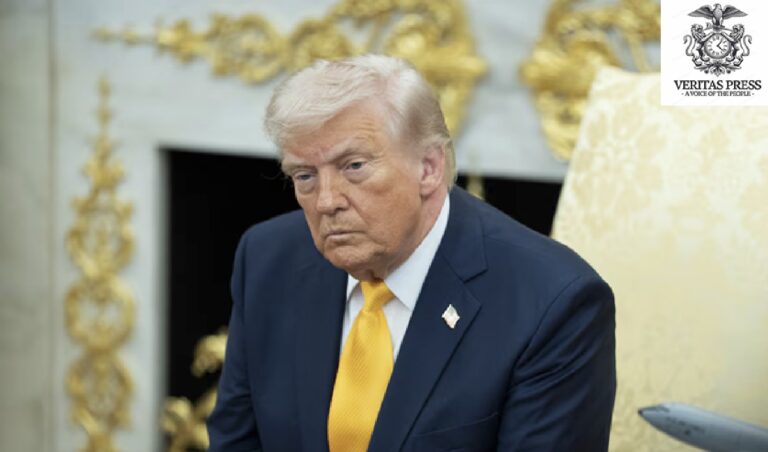
Trump’s response, when it came, was both predictable in its bluster and shocking in its directness. In a Truth Social post that ran to 334 words, longer than the Gettysburg Address, the president accused Pope Leo of being “WEAK on Crime, and terrible for Foreign Policy”. He claimed that the pontiff was “weak on nuclear weapons,” suggested that Leo believed it was “OK for Iran to have a Nuclear Weapon,” and accused him of opposing America’s military intervention in Venezuela, a country Trump claimed was “emptying their prisons, including murderers, drug dealers, and killers, into our Country”.
But perhaps the most extraordinary element of Trump’s diatribe was his assertion of personal credit for Leo’s election to the papacy. “He wasn’t on any list to be Pope, and was only put there by the Church because he was an American, and they thought that would be the best way to deal with President Donald J. Trump,” the president wrote. “If I weren’t in the White House, Leo wouldn’t be in the Vatican”.
The claim is, of course, historically and theologically absurd. The College of Cardinals, meeting in conclave under the frescoes of the Sistine Chapel, does not select popes to appease American presidents. Yet the assertion reveals something deeper about Trump’s worldview: a conviction that all power flows from him, that every institution, even the 1.4-billion-member Catholic Church, exists in relation to his presidency.
Trump did not stop at the written word. Speaking to reporters at Joint Base Andrews in Maryland, he doubled down. “I’m not a big fan of Pope Leo,” he said. “He’s a very liberal person, and he’s a man who doesn’t believe in stopping crime… He likes crime, I guess”. When pressed on why he would attack the leader of the world’s largest Christian denomination, Trump’s answer was revealing: “We don’t like a pope who says it’s ok to have a nuclear weapon. We don’t want a pope that says crime is ok. I am not a fan of Pope Leo”.
The president’s rhetorical escalation was matched by a visual one. Within hours of his Truth Social rant, Trump posted an AI-generated image depicting himself in biblical robes, bathed in divine light, placing his hand on a sick man’s forehead in a pose unmistakably reminiscent of Jesus Christ healing the afflicted. In the background, American flags waved alongside military aircraft and the Statue of Liberty, a tableau that blended nationalist iconography with religious imagery in a manner that even many of Trump’s evangelical supporters found troubling.
The reaction from Trump’s own base was swift and, in some quarters, furious. Videos began circulating on social media showing disillusioned MAGA supporters burning their signature red hats in protest. “It says ‘2016 MAGA’ because I voted for Trump in 2016, and I put ‘lies’ because I was lied to and I fell for it,” one former supporter explained in a TikTok video before tossing her hat into the flames. The imagery of Trump’s most loyal followers torching the symbol of his movement underscored the profound unease that the president’s blasphemous post had triggered among Christians who had previously been willing to overlook his personal transgressions in pursuit of political objectives.
The Pope’s Response: “I Have No Fear”.
As his plane lifted off from Rome’s Fiumicino Airport en route to Algiers for the start of an 11-day pastoral visit to Africa, Pope Leo addressed the controversy with a calm that stood in stark contrast to the president’s fury. Speaking to reporters aboard the papal plane, the pontiff refused to be drawn into a personal confrontation, but he left no doubt about his resolve.
“I have no fear of the Trump administration, or speaking out loudly of the message of the Gospel, which is what I believe I am here to do, what the Church is here to do,” Leo said. “I don’t want to get into a debate with him. Too many people are suffering in the world today. Too many innocent people are being killed. And I think someone has to stand up and say: there’s a better way to do this.”
The pope’s response was masterful in its restraint. By refusing to engage Trump on the president’s chosen terrain of personal insult and political combat, Leo reaffirmed the distinct nature of his moral authority. “To put my message on the same plane as what the president has attempted to do here, I think, is not understanding what the message of the Gospel is,” he said. “And I’m sorry to hear that, but I will continue on what I believe is the mission of the church in the world today”.
Drawing directly from Scripture, Leo invoked the Beatitudes: “The Gospel is very clear, ‘Blessed are the peacemakers.'” He added that he would “not shy away from announcing the message of the Gospel and inviting all people to look for ways of building bridges of peace and reconciliation”.
The Historical Precedent: “Not Even Hitler Or Mussolini”.
To grasp the full significance of Trump’s attack on the pope, it is essential to situate it within the long and often fraught history of relations between temporal power and the Holy See. The papacy has weathered centuries of conflict with emperors, kings, and dictators, from the Investiture Controversy of the 11th century to Napoleon’s imprisonment of Pope Pius VII in the early 19th century. But even in the darkest chapters of the 20th century, when totalitarian regimes sought to co-opt or silence the Church, no major world leader had launched such a direct, public, and personal assault on a sitting pope.
Massimo Faggioli, a professor of theology and religious studies at Villanova University and one of the world’s foremost experts on the papacy, offered a stark historical assessment. “There is no ambiguity about the situation now,” Faggioli told Reuters. “Not even Hitler or Mussolini attacked the pope so directly and publicly”.
The comparison is not hyperbolic. During World War II, both Hitler and Mussolini sought to pressure Pope Pius XII into supporting their causes, but neither resorted to the kind of public name-calling and character assassination that Trump deployed on Truth Social. Even in their most aggressive moments, the fascist dictators understood, or at least observed, the diplomatic taboo against directly insulting the Vicar of Christ.
Faggioli’s assessment was echoed by a broad coalition of Catholic leaders and institutions. Archbishop Paul S. Coakley, president of the U.S. Conference of Catholic Bishops, issued a statement expressing his dismay. “Pope Leo is not his rival; nor is the Pope a politician,” Coakley said. “He is the Vicar of Christ who speaks from the truth of the Gospel and for the care of souls”.
The Fractured Alliance: American Catholics And The Trump Presidency.
The confrontation between Trump and Pope Leo exposes a fault line that has been widening beneath the surface of American Catholic politics for years. Catholics constitute approximately 20% of the U.S. population, some 64.6 million people. They are a diverse and increasingly fragmented demographic, with younger Catholics far more likely to be Hispanic or Latino and less likely to align with the Republican Party’s conservative orthodoxy.
Trump has long cultivated support among conservative Catholics, particularly those drawn to his judicial appointments and his administration’s opposition to abortion. In the 2024 election, Catholic voters “resoundingly supported President Trump,” as White House spokesperson Anna Kelly emphasised in a statement to Military.com. Vice President JD Vance, a convert to Catholicism, attended Pope Leo’s inaugural mass, a gesture the administration has repeatedly cited as evidence of its positive relationship with the Vatican.
But this alliance has always been uneasy. The U.S. Catholic bishops have emerged as increasingly vocal critics of Trump’s immigration policies, which they have condemned as “detrimental to human rights” and “indiscriminate mass deportation”. In February 2026, just hours before Trump’s State of the Union address, twenty bishops, most from border states, issued a joint statement calling for reforms to immigration enforcement, including protections for sensitive locations such as houses of worship, schools, and hospitals.
“The most urgent political concern for America’s Catholic leaders is no longer abortion; it’s immigration,” observed The Atlantic in a recent analysis. This shift has placed the bishops on a collision course with an administration that has made immigration enforcement a centrepiece of its domestic agenda.
Trump’s ambassador to the Holy See, Brian Burch, a former president of CatholicVote Civic Action who proudly describes himself as a “MAGA Catholic”, has sought to bridge this divide. In a March 2026 interview with EWTN News, Burch defended the administration’s deportation policies while acknowledging that immigration “will constantly be a source of debate and conversation between the U.S. and the Holy See”. Burch insisted that the conflict should not be reduced to “a personality fight between the pope and the president,” arguing instead that it reflects a substantive disagreement over policy priorities.
Yet Trump’s Truth Social rant has rendered such diplomatic nuance all but impossible. By accusing the pope of being “weak on crime” and suggesting that the Church selected Leo to curry favour with the White House, the president has transformed a policy dispute into a personal vendetta, one that implicates not just the pontiff but the entire institutional Church.
The Geopolitical Context: A War Without End.
The Trump-Pope confrontation cannot be understood in isolation from the broader geopolitical crisis that precipitated it. The U.S.-Israeli war against Iran, now in its seventh week, has proven far more costly and intractable than the administration initially anticipated.
The conflict was triggered by intelligence assessments, later contested by independent analysts, that Iran was on the verge of achieving nuclear weapons capability. In response, the United States and Israel launched a coordinated military campaign designed to degrade Iran’s nuclear infrastructure, destroy its military command-and-control systems, and neutralise its ability to project power across the Middle East.
The results have been mixed at best. While the U.S. has claimed significant military achievements, including the destruction of 80% of Iran’s air defence systems, 150 naval vessels, and 90% of its weapons production facilities, the costs have been substantial. Four THAAD missile defence systems, representing half of the global inventory, have been destroyed. The USS Gerald R. Ford aircraft carrier was rendered inoperable for nearly a month. An estimated 21 U.S. aircraft have been lost, at a cost of approximately $2.8 billion. The total financial toll of the war is estimated to range from $33 billion to $42 billion, and climbing.
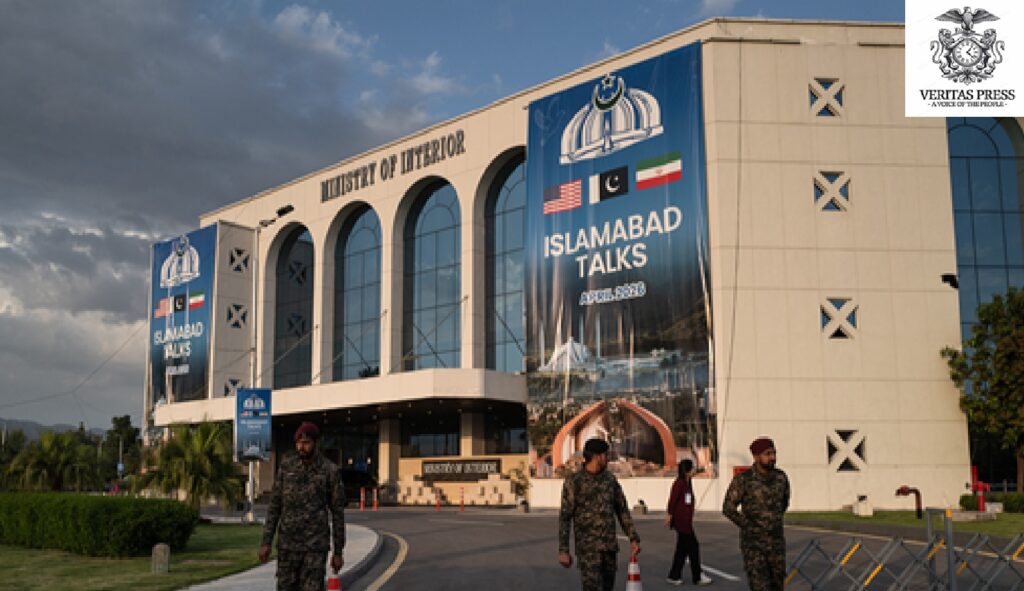
Perhaps more significantly, the war has failed to achieve its stated objective of neutralising Iran’s nuclear threat. Peace talks held in Islamabad, Pakistan, collapsed on Saturday after Vice President JD Vance presented what he described as Washington’s “final and best offer”. Iran has rejected the terms, which include demands that Tehran permanently dismantle its nuclear program and accept intrusive international inspections. In response, the Trump administration has announced a naval blockade of Iranian ports, a move that threatens to escalate the conflict further and potentially draw other powers into the fray.
It is against this backdrop of military stalemate and diplomatic failure that Pope Leo’s peace advocacy has gained such resonance. The pontiff has repeatedly called for a negotiated settlement, urging both sides to “come back to the table” and find an “off-ramp” from the cycle of violence. His message has found a receptive audience among war-weary populations across the Middle East and Europe, as well as among a growing segment of the American public that has grown sceptical of the conflict’s costs and objectives.
The Pentagon Meeting: A “Bitter Lecture” Or “Frank Dialogue”?
Tensions between the Vatican and the Trump administration predate the current confrontation. In January 2026, a meeting took place at the Pentagon between Cardinal Christophe Pierre, then the Holy See’s ambassador to the United States, and Elbridge Colby, the Undersecretary of Defence for Policy. According to a report published by The Free Press and subsequently confirmed by independent journalist Christopher Hale, the meeting was far from routine.
The report alleged that Colby summoned Pierre to deliver what was described as a “bitter lecture,” warning that “the United States has the military power to do whatever it wants in the world” and that “the Catholic Church had better take its side”. The warning was reportedly a response to Pope Leo’s January address to the Vatican’s diplomatic corps, in which he lamented that “a diplomacy that promotes dialogue and seeks consensus among all parties is being replaced by a diplomacy based on force”.
Both the Pentagon and the Vatican have denied that the meeting was contentious. The Department of Defence issued a statement describing the encounter as a “respectful and reasonable discussion” and dismissing The Free Press’s account as “grossly false and distorted”. Vatican spokesman Matteo Bruni stated that “the account presented by certain media outlets regarding this meeting does not correspond to the truth in any way”.
Yet the report has proven difficult to dismiss entirely. According to Hale’s reporting, some Vatican officials were so alarmed by the Pentagon’s tactics that they “shelved plans for Pope Leo XIV to visit the United States later this year”. The pope, who hails from Chicago, had been expected to travel to the U.S. in July as part of the nation’s 250th anniversary celebrations. The cancellation, or indefinite postponement, of such a historic visit would represent a significant diplomatic setback and a powerful symbol of the deteriorating relationship between Washington and the Holy See.
Francis DeBernardo, executive director of New Ways Ministry, a Catholic advocacy organisation, offered a blunt assessment of the administration’s approach. “If the report is accurate, it simply reveals the ridiculous hubris of Pentagon officials and the Trump administration in thinking that they have the power to move such a steadfast institution as the papacy,” DeBernardo told Military.com. “Secular power does not threaten the Vicar of Christ”.
The Immigration Flashpoint: “Inhuman Treatment”.
While the Iran war has provided the immediate spark for the current confrontation, the underlying tensions between the Vatican and the Trump administration run deeper and centre on a fundamental disagreement over the moral obligations owed to migrants and refugees.
From the earliest days of his second term, Trump has pursued an aggressive immigration enforcement agenda. His administration has loosened restrictions on ICE agents making arrests at sensitive locations, including churches and schools; sought to abolish birthright citizenship for children of undocumented immigrants; and announced plans to construct massive “mega centres” for the mass detention of immigration violators.
Pope Leo has responded with a clarity that leaves little room for misinterpretation. In his September 2025 comments, he explicitly linked the treatment of immigrants to the Church’s pro-life teachings, a rhetorical move designed to challenge conservative Catholics who have long prioritised abortion as the preeminent moral issue while remaining silent on immigration. The pope has also called for “deep reflection” about the way migrants are being treated in the United States, a message that resonates with his predecessor’s famous declaration that Trump was “not a Christian” during the 2016 campaign.
The U.S. Catholic bishops have amplified the pope’s message. In their February 2026 statement, the bishops condemned what they described as “indiscriminate mass deportation” and called for an end to “intimidation and fear tactics” in immigration enforcement. The statement cited specific abuses, including “the use of masks, random stops without probable cause, roving patrols, and physical abuse of immigrants”.
The bishops’ stance reflects a broader shift within the American Catholic Church. As The Atlantic observed, immigration has eclipsed abortion as the most urgent political concern for Catholic leaders, a development that has profound implications for the Church’s relationship with the Republican Party and the Trump administration.
The African Journey: A Pontiff’s Mission In A Time Of Crisis.
As the war of words between Washington and the Vatican escalated, Pope Leo boarded a plane for Algiers, the first stop on an 11-day pastoral visit to Africa. The trip, which will also include stops in Cameroon, Angola, and Equatorial Guinea, is the pontiff’s second major foreign journey since his election and underscores the Vatican’s commitment to the Global South at a moment when the world’s attention is fixated on the Middle East.
The symbolism of the trip is difficult to overlook. Africa is a continent that has been disproportionately affected by the fallout from global conflicts and climate change, yet it remains largely marginalised in the councils of world power. By choosing to begin his journey in Muslim-majority Algeria, a nation with a complex history of colonialism and religious coexistence, Pope Leo is signalling his determination to build bridges across religious and cultural divides at precisely the moment when those bridges are under the greatest strain.
The African trip also provides the pope with a platform to articulate his vision of a more just and peaceful international order, a vision that stands in stark contrast to the “diplomacy based on force” that he has repeatedly condemned. In his public addresses, Leo is expected to highlight the human costs of war, the moral imperative of welcoming migrants and refugees, and the need for a multilateral approach to global challenges.
The timing of the trip, coming just hours after Trump’s Truth Social attack, ensures that every word the pope utters will be scrutinised for implicit or explicit references to the American president. Yet Leo has made clear that he will not be drawn into a personal confrontation. His mission, as he sees it, is not to engage in political combat but to bear witness to the Gospel’s call to peace and reconciliation.
The Broader Implications: Moral Authority In An Age Of Power Politics.
The clash between Donald Trump and Pope Leo XIV is about more than two men with oversized personalities and incompatible worldviews. It is a proxy battle in a larger struggle over the nature and location of moral authority in the 21st century.
Trump’s attack on the pope reflects a worldview in which power, military, economic, and political, is the ultimate arbiter of value. In this worldview, the Church’s moral teachings are relevant only insofar as they align with or serve the interests of the state. A pope who criticises American foreign policy is not exercising his legitimate spiritual authority; he is “catering to the Radical Left” and undermining the nation’s security. A pope who questions the treatment of migrants is “weak on crime” and “doesn’t believe in stopping crime”.
Pope Leo’s response, by contrast, embodies a different understanding of power, one rooted in the conviction that moral truth transcends the calculations of princes and presidents. By refusing to engage Trump on the president’s chosen terrain of insult and invective, Leo has reaffirmed the distinctiveness of the Church’s voice. His authority does not derive from armies or economies, but from the Gospel he is charged with proclaiming.
This understanding of moral authority has deep roots in Catholic tradition. It is the same authority that led Pope John Paul II to challenge Soviet communism in the 1980s that inspired Pope Francis to denounce the “globalisation of indifference” toward migrants and the poor, and that now compels Pope Leo to speak out against what he sees as a catastrophic and unjust war.
The question is whether such moral authority retains any purchase in an era of resurgent nationalism, information warfare, and algorithmic polarisation. Trump’s base may be willing to overlook his attacks on the pope, just as many evangelical Christians have long been willing to overlook his personal transgressions in pursuit of political objectives. But the broader Catholic community, diverse, global, and increasingly centred in the Global South, may prove less forgiving.
The Unanswered Questions:
As the world watches this unprecedented confrontation unfold, several critical questions remain unanswered.
First, how will the U.S. Catholic bishops respond? Archbishop Coakley’s statement expressing dismay at Trump’s comments was a necessary first step, but it is unlikely to be sufficient. Will the bishops issue a more forceful collective condemnation? Will individual bishops use their pastoral authority to challenge Catholic politicians who remain aligned with the administration? The answers to these questions will shape the Church’s relationship with American political power for years to come.
Second, what are the diplomatic implications? The cancellation, or indefinite postponement, of Pope Leo’s planned visit to the United States would be a significant blow to U.S.-Vatican relations. It would also deprive the Trump administration of a valuable opportunity to project an image of religious legitimacy and international statesmanship. The White House may seek to repair the damage through back-channel diplomacy, but Trump’s personal investment in the conflict makes such efforts difficult.
Third, how will this confrontation affect the Iran war? Pope Leo’s peace advocacy has already resonated with war-weary populations across the Middle East and Europe. If the conflict continues to escalate, particularly if the U.S. naval blockade of Iranian ports triggers a broader confrontation, the pope’s moral authority may become an increasingly significant factor in shaping global public opinion. A prolonged war, combined with a sustained papal critique, could erode domestic support for the conflict in the United States and among its allies.
Fourth, and perhaps most fundamentally, what does this episode reveal about the state of American democracy and its relationship to religious institutions? Trump’s claim that the Catholic Church selected an American pope “because they thought that would be the best way to deal with President Donald J. Trump” is, on its face, absurd. But it is also revealing. It reflects a worldview in which every institution, including the 2,000-year-old Church, exists only in relation to the president’s ego and power. This is not merely a personal quirk; it is a vision of political order that is fundamentally incompatible with the pluralism and institutional independence that undergird democratic society.
Conclusion: A Test Of Faith And Power.
The confrontation between Donald Trump and Pope Leo XIV is, in many ways, a test. It is a test of the Church’s willingness to speak truth to power, even when that power is wielded by the leader of the world’s most formidable military and economic force. It is a test of the American Catholic community’s ability to navigate the tensions between its religious convictions and its political allegiances. And it is a test of the international community’s capacity to hear and heed a moral voice that refuses to be silenced by threats or insults.
Pope Leo has made his choice. “I have no fear of the Trump administration,” he told reporters as his plane carried him toward a continent scarred by war, poverty, and the lingering wounds of colonialism. “I will continue on what I believe is the mission of the church in the world today”.
Whether the world is listening, and whether it is prepared to act on what it hears, remains to be seen.
Source: Multiple News Agencies
Submissions:
For The Secure Submission Of Documentation, Testimonies, Or Exclusive Investigative Reports From Any Global Location, Please Utilise The Following Contact Details For Our Investigations Desk: enquiries@veritaspress.co.uk or editor@veritaspress.co.uk
Help Support Our Work:
Popular Information is powered by readers who believe that truth still matters. When just a few more people step up to support this work, it means more lies exposed, more corruption uncovered, and more accountability where it’s long overdue.
Help Protect Independent Journalism, Which Is Currently Under Attack.
If you believe journalism should serve the public, not the powerful, and you’re in a position to help, becoming a DONATOR or a PAID SUBSCRIBER truly makes a difference.
DONATION APPEAL: If You Found This Reporting Valuable, Please Consider Supporting Independent Journalism.
Help Support Our Work – We Know, We Know, We Know …
Seeing these messages is annoying. We know that. (Imagine what it’s like writing them … )
Your support fuels our fearless, truth-driven journalism. In unity, we endeavour to amplify marginalised voices and champion justice, irrespective of geographical location.
But it’s also extremely important. One of Veritas Press’s greatest assets is its reader-funded model.
1. Reader funding means we can cover what we like. We’re not beholden to the political whims of a billionaire owner. We are a small, independent and impartial organisation. No one can tell us what not to say or what not to report.
2. Reader funding means we don’t have to chase clicks and traffic. We’re not desperately seeking your attention for its own sake: we pursue the stories that our editorial team deems important and believe are worthy of your time.
3. Reader Funding: enables us to keep our website and other social media channels open, allowing as many people as possible to access quality journalism from around the world, particularly those in places where the free press is under threat.
We know not everyone can afford to pay for news, but if you’ve been meaning to support us, now’s the time.
Your donation goes a long way. It helps us:
- Keep the lights on and sustain our day-to-day operations
- Hire new, talented independent reporters
- Launch real-time live debates, community-focused shows, and on-the-ground reporting
- Cover the issues that matter most to our communities, in real time, with depth and integrity
We have plans to expand our work, but we can’t do it without your support. Every contribution, no matter the size, helps us stay independent and build a truly people-powered media platform.
If you believe in journalism that informs, empowers, and reflects the communities we serve, please donate today.
TEHRAN, April 13, 2026 – A tenuous two-week ceasefire has shattered, plunging the Persian Gulf
ISLAMABAD / TEHRAN – In the hours after a 21-hour diplomatic marathon collapsed in Pakistan’s
VATICAN, WASHINGTON – In the annals of modern geopolitics, few confrontations have been as symbolically
WASHINGTON – The American experiment is under stress. Not from a foreign adversary or an
LONDON, UK – This wasn’t just another protest. On a Saturday afternoon in London’s Trafalgar
GAZA – The fragile ceasefire in Gaza was never a return to normalcy, but for
ISTANBUL — In a dramatic escalation of legal and political pressure against Israeli leadership, the
ISLAMABAD, TEHRAN, WASHINGTON – For 21 hours, the world watched Islamabad. Delegations from Washington and
GAZA CITY / GENEVA – The ceasefire was supposed to mark the beginning of the
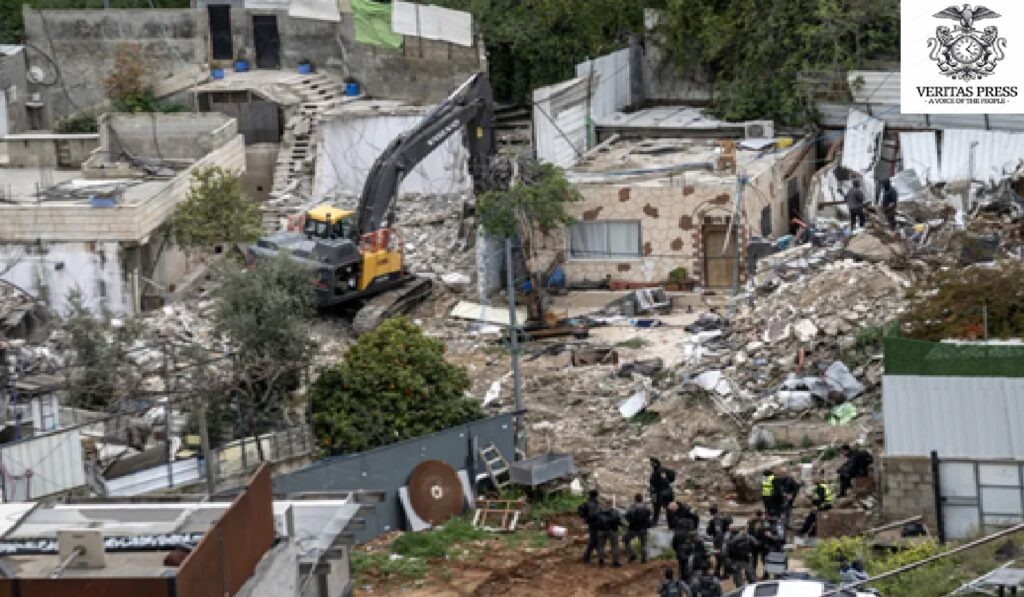
EAST JERUSALEM — On a crisp April morning in the Ras al-Amud neighbourhood of Silwan,