


Original Article Date Published:
Article Date Modified:
Help support our mission, donate today and be the change. Every contribution goes directly toward driving real impact for the cause we believe in.
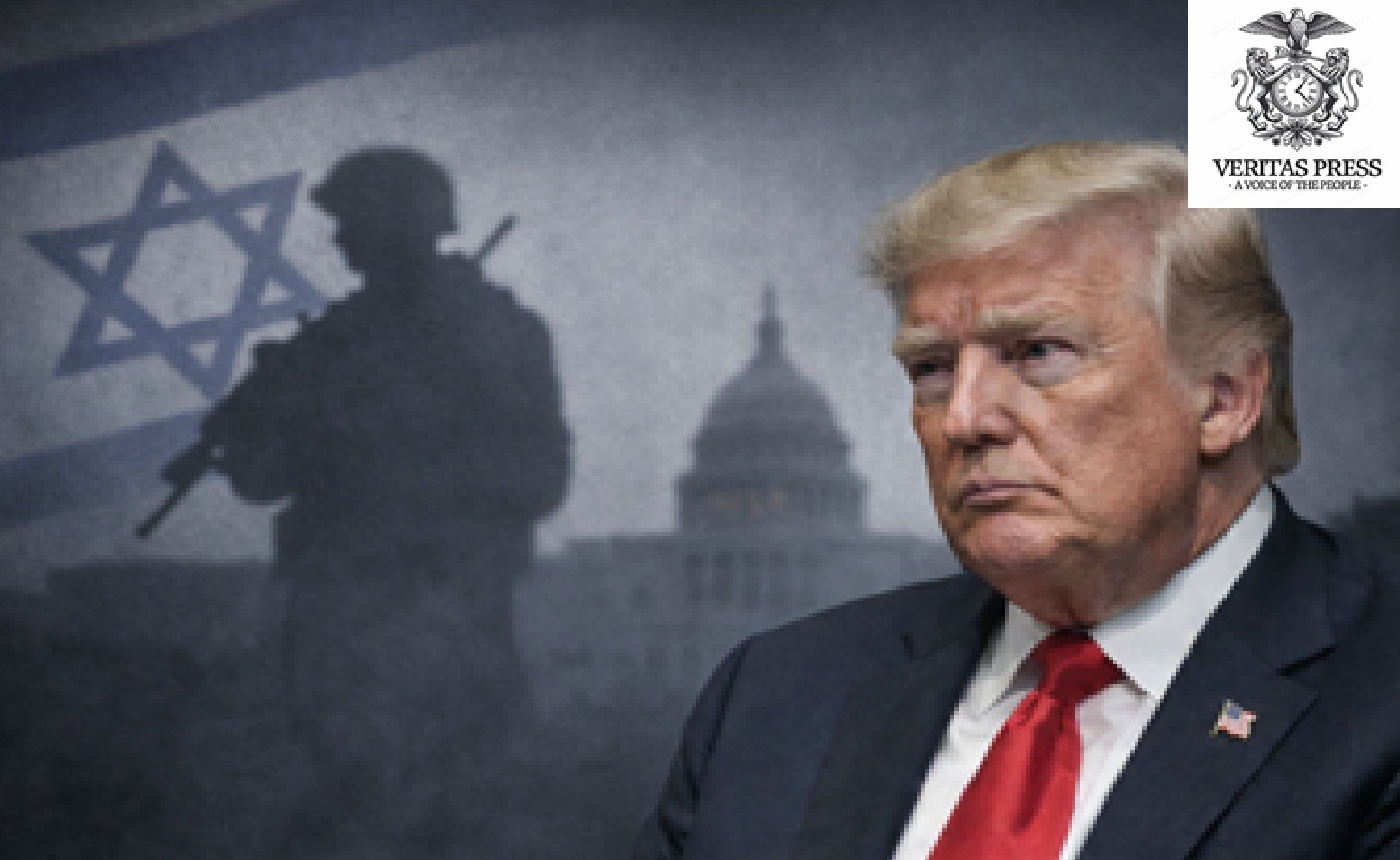
U.S. lawmakers clash over the rationale behind Trump’s Iran strikes, calling them “very disturbing” as Congress moves to limit executive war powers amid mounting regional chaos and U.S. casualties.
Key Developments:
- Sen. Angus King calls U.S. entry into war with Iran “very disturbing” if driven by Israeli timing, as new intelligence questions the imminence of any Iranian threat.
- Democrats advance a War Powers Resolution to limit Trump’s authority, but the measure faces a near-certain veto and reveals deep divisions even among opponents of the war.
- Six U.S. service members have been confirmed killed since the strikes began, with Iran retaliating across eight countries, including Bahrain, Qatar, the UAE, and Saudi Arabia.
- Conflicting explanations from Trump and Marco Rubio intensify scrutiny, with lawmakers from both parties demanding clarity on objectives, costs, and safeguards against escalation.
- Gulf Arab states, caught in the crossfire, issue rare joint condemnation of Iran’s “indiscriminate and reckless” attacks while privately expressing fury at being dragged into the conflict.
- Polling shows 59% of Americans disapprove of the strikes, with 56% believing Trump relies too heavily on military force.
‘Very Disturbing’: The Rationale Unravels.
When Independent Senator Angus King of Maine said it would be “very disturbing” if the United States entered a war because “Israel wanted to bomb Iran,” he gave voice to a question that has haunted Capitol Hill since the joint U.S.-Israeli strikes began on February 28: Who exactly decided the timing of this war, and why?
The question has only grown more urgent as contradictory explanations from the Trump administration have emerged. Secretary of State Marco Rubio initially told lawmakers that U.S. officials anticipated imminent Israeli action and believed that if “Israel moved first,” Iran would immediately target U.S. forces, prompting Washington to act pre-emptively. “We knew that there was going to be an Israeli action,” Rubio reportedly said, arguing that early intervention would prevent higher U.S. casualties.
President Donald Trump, however, rejected that framing during an Oval Office meeting. “If anything, I might have forced Israel’s hand,” he said, directly countering criticism that the U.S. had been drawn into conflict by Israeli decisions.
The diverging explanations have fuelled criticism across party lines. Speaking to CNN on Sunday, Democratic Senator Mark Warner, vice chairman of the Senate Select Committee on Intelligence, delivered a blunt assessment: he had received no indication that “Iran was on the verge of launching any kind of pre-emptive strike against the United States of America”.
“When the president commits American forces to a war of choice, he needs to come before Congress and the American people and ask for a declaration of war,” Warner said.
Veteran Democratic Senator Tim Kaine went further on Fox News Sunday, describing the military action as “an illegal war” and dismissing Trump’s claims of an imminent threat. Current intelligence, Kaine argued, indicates that Iran is about “a decade” away from building missiles that could reach the United States.
Democratic Senator Adam Schiff, former chair of the House Intelligence Committee, told ABC News that “there is no imminent threat to the United States that would justify exposing U.S. troops to that kind of risk.” His deeper concern, he said, was that “we have unleashed factors in the region now that we cannot control”.
The administration’s shifting justifications reached a point of near farce during classified briefings on Tuesday. Lawmakers emerged with sharply divergent assessments that fell almost entirely along party lines, but even some Republicans expressed unease.
“I am truly worried about mission creep,” Senate Minority Leader Chuck Schumer said after exiting a classified briefing with Rubio and Gen. Dan Caine, the chairman of the Joint Chiefs of Staff. He called the closed-door meeting “very unsatisfying,” noting that the administration had offered “different answers every day” about why the president ordered the strikes.
Representative Pramila Jayapal, Democrat of Washington, was more pointed: “We got no additional information on what the imminent threat was. There were a lot of references to the 47 years of Iran being a problem. That is not imminent. That is in the past. Imminent means an immediate threat to the U.S.”
Representative Sara Jacobs, Democrat of California, described the administration’s presentation as “all very incoherent. ” Officials pushed back on the idea that Israel was calling the timing. But then they kind of said that Israel was calling the timing”.
Republican leaders struggled to echo the administration’s conflicting explanations. On Monday, Speaker Mike Johnson told reporters that the “great concern” was that in the wake of an Israeli attack, U.S. troops would have been targeted. “We would have suffered staggering losses,” Johnson said.
By Tuesday, however, he had adopted Rubio’s revised rationale, telling reporters: “This is really a very simple matter. It’s about the building of ballistic missiles. That’s what Iran was engaged in. And they were doing it at a speed and at a scale that was exceeding the ability of our regional allies to respond appropriately. This created an imminent and serious threat”. He made no mention of Israel.
The confusion has not been lost on the American public. A CNN poll conducted over the weekend found that approximately 59% of U.S. adults disapprove of the decision to take military action in Iran. A Reuters/Ipsos poll released Sunday painted an even more sceptical picture: just 27% of Americans approved of the strikes, while 43% opposed them and 29% were unsure. More troubling for the White House, 56% of Americans, including 23% of Republicans, believe Trump is too quick to use military force.
The War Powers Showdown:
At the centre of the congressional dispute is a War Powers Resolution introduced by Democratic lawmakers, led by Senator Tim Kaine and Representative Ro Khanna. The measure would require congressional authorisation for continued or expanded U.S. military operations against Iran, seeking to reassert Congress’s constitutional authority over decisions of war.
The 1973 War Powers Act, passed in the wake of the Vietnam War, was designed to rein in a president’s ability to embark on military adventures without congressional approval. It demands consultation with Congress and 48-hour notification for troop deployments and imposes a 60-day limit on unauthorised engagements.
Kaine, a member of the Senate Armed Services and Foreign Relations committees, has argued that the act can be invoked even after hostilities begin. The Senate is expected to vote on his resolution as early as Wednesday, with the House following later in the week.
But the path to passage is fraught. Even if the resolutions clear the narrowly divided Congress, a significant challenge given near-unanimous Republican opposition, Trump would almost certainly veto them, and lawmakers lack the two-thirds majority needed to override.
Some Democrats have already signalled they will oppose the effort. Senator John Fetterman of Pennsylvania announced he was a “hard no” on the resolution, while in the House, Representatives Josh Gottheimer of New Jersey, Jared Moskowitz of Florida, and Greg Landsman of Ohio have said they will vote no, instead offering an alternative resolution that would give the president 30 days to wind down operations before seeking authorisation.
Their positions highlight a deeper Democratic divide, one that New York politics has thrown into sharp relief.
The New York Divide: War As Wedge.
The joint U.S.-Israeli military action is creating fissures within New York City’s Democratic ranks, with party members of various stripes offering fundamentally different takes on both the substance and procedure of the conflict.
Assemblymember Claire Valdez, a democratic socialist running for Congress, told POLITICO she was disturbed by House Minority Leader Hakeem Jeffries and Senate Minority Leader Chuck Schumer’s focus on whether Trump went through proper channels, rather than opposing the war itself.
“I think it could be a real dividing line,” Valdez said. “The emphasis on procedure and expecting the Trump administration to provide some evidence or rationale that supports this war is an abdication of our responsibility to say that we don’t want another endless war, we don’t want to be locked into another forever war that doesn’t make our lives here at home any better, that just destroys lives abroad, that siphons off so much of our taxpayer dollars.”
New York Governor Kathy Hochul, far more moderate than Valdez, took a measured approach that highlighted the authoritarian tactics of the Iranian government while demanding answers.
“Iran’s regime has been abhorrent for decades. It oppresses its own people. It supports terrorism. It threatens our allies and pursues dangerous ambitions. No one is going to defend that regime, full stop,” Hochul said at a press briefing. “But the scale of what is happening now demands answers.”
The disparate responses highlight volatile political currents: the left’s deeply held antipathy toward foreign interventionism versus more comfort among moderates with military action against a despotic regime. They also reinforce an already established rift around Israel’s military actions, which has divided New Yorkers between those vehemently opposed to the Israeli government and those who either support or have more nuanced reservations about its conduct in Gaza.
One of the most prominent clashes is between New York City Mayor Zohran Mamdani, a standard-bearer of the left, and his predecessor, the MAGA-curious conservative Democrat Eric Adams.
“Today’s military strikes on Iran, carried out by the United States and Israel, mark a catastrophic escalation in an illegal war of aggression,” Mamdani wrote on social media. “Bombing cities. Killing civilians. Opening a new theatre of war. Americans do not want this. They do not want another war in pursuit of regime change. They want relief from the affordability crisis. They want peace.”
Jeffries, for his part, struck a procedural note in his public statements while expressing grief over U.S. casualties. In a post on X Sunday, he said he was “heartbroken by the loss of life of multiple service members in the Middle East” and called on Congress to act: “No more American heroes need to die because of a reckless decision to go to war. Congress must act this week to restrain this president”.
Republicans Rally With Notable Exceptions:
Republicans have largely closed ranks behind Trump, though the unity is not absolute. House Speaker Mike Johnson praised the action, stating that “Iran is facing the severe consequences of its evil actions,” including “terrorism,” the murder of Americans, and the regime’s nuclear ambitions. Senate Majority Leader John Thune commended Trump for “taking action to thwart these threats”.
Senator Lindsey Graham, a longtime advocate of military intervention against Iran, offered ecstatic praise, calling Trump’s action “the catalyst for the most historic change in the Middle East in a thousand years.” In a series of posts on X, Graham wrote: “It will be violent, extensive, and I believe, at the end of the day, successful. The demise of the ayatollah’s regime with American blood on its hands is necessary and more than justified”.
Senator Tom Cotton pointed to multiple grievances against Iran, including the 1979 hostage crisis and the 1983 Beirut bombing. “Iran has waged war against the US for 47 years. The butcher’s bill has finally come due for the ayatollahs,” he posted.
But dissent, though rare, exists. Former Representative Marjorie Taylor Greene, who broke with Trump in recent months and resigned her seat in January, posted on X: “War with Iran is AMERICA LAST, and we voted against it”.
Congressman Thomas Massie, a frequent Trump critic, was equally blunt: “I am opposed to this war. This is not ‘America First.’ When Congress reconvenes, I will work with Representative Ro Khanna to force a congressional vote on war with Iran”.
Even among Republicans supporting the action, there are warnings. Representative Nancy Mace of South Carolina told reporters after Tuesday’s briefing that she would vote no on the War Powers Resolution “for now,” but cautioned: “If this thing goes beyond a few weeks, I’m going to have a lot more concerns, particularly if U.S. troops are deployed on the ground in Iran.
Representative Dusty Johnson of South Dakota said officials had “assuaged a lot of concerns,” but acknowledged that ground troops would “indicate a deeper level of engagement” requiring “greater congressional involvement”.
Senator Josh Hawley of Missouri also indicated his support could shift if U.S. troops are deployed on the ground. For now, he said, the administration is “in compliance with statute, and the statute gives them 60 days”.
The Human Toll: Casualties Mount.
The conflict’s human cost is already substantial and growing. Inside Iran, the Iranian Red Crescent reported at least 201 people killed and 747 injured from the initial U.S.-Israeli strikes, which reportedly eliminated Supreme Leader Ayatollah Ali Khamenei, Defence Minister Aziz Nasir-Zadeh, IRGC Commander Mohammad Pakpour, and dozens of other senior officials.
Iran’s retaliation has been widespread and deadly. According to Anadolu Agency, Iranian strikes have hit at least eight countries: Bahrain, Iraq, Jordan, Kuwait, Oman, Qatar, Saudi Arabia, and the United Arab Emirates.
In the UAE, three people from Pakistan, Nepal, and Bangladesh were killed, with 58 others injured. Kuwait reported one death and 32 injuries. Qatar’s injuries rose to 16. Iraq reported two dead and three wounded. Oman reported five injured, including four aboard an oil tanker struck north of Khasab Port. In Bahrain, an Iranian drone struck Bahrain International Airport, and a separate kamikaze drone hit a building in Manama.
U.S. casualties have also mounted. As of March 2, U.S. Central Command confirmed six service members killed since the operation began. In a video posted on Truth Social Sunday afternoon, Trump acknowledged there will “likely be more” service members killed before the conflict ends.
In Israel, nine Israelis were killed in an Iranian missile strike that directly hit a building in Beit Shemesh in west Jerusalem on Sunday.
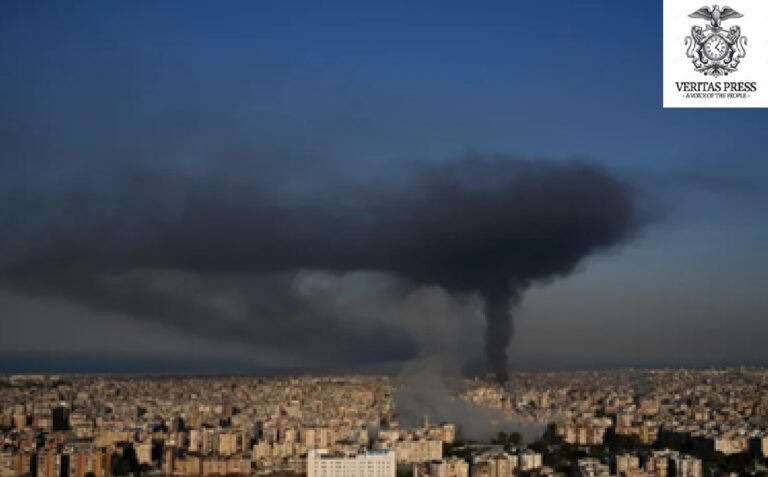
The strikes have also ensnared civilians far from the front lines. In Bahrain, images circulated on social media showed smoke rising from a building on Al-Ma’arid Street in Manama after a drone strike. In the UAE, debris from intercepted missiles caused damage and casualties in civilian areas, including Dubai’s Palm Jumeirah. At least one individual was killed in Abu Dhabi due to falling missile debris.
Regional Repercussions: Gulf States Caught In The Crossfire.
Perhaps the most significant strategic development has been the reaction of Gulf Arab states, which find themselves unwillingly drawn into a conflict they actively sought to avoid.
On Sunday, the United States, Bahrain, Jordan, Kuwait, Qatar, Saudi Arabia, and the UAE issued a rare joint statement strongly condemning Iran’s “indiscriminate and reckless” missile and drone attacks across the region.
“These unjustified strikes targeted sovereign territory, endangered civilian populations, and damaged civilian infrastructure,” the countries said. “We stand united in defence of our citizens, sovereignty and territory and reaffirm our right to self-defence in the face of these attacks”.
The language masked deeper anxieties. As Eric Alter, a nonresident senior fellow with the Atlantic Council, noted, the confrontation is forcing Gulf states much closer to the U.S.-Israeli position than they want to be. The UAE, for instance, remains a security partner of the United States and quietly aligns with Israel on many regional concerns, but has heavily invested in building a more stable relationship with Tehran. Trade has grown, diplomatic ties have been renewed, and both sides have been working to prevent escalation.
Those advances are now unravelling. UAE President Sheikh Mohamed bin Zayed Al Nahyan spoke with Saudi Crown Prince Mohammed bin Salman following the events, and both expressed solidarity, warned against further escalation, and called for restraint and diplomacy.
But as Khalid Al-Jaber, executive director of the Middle East Council on Global Affairs, observed: “What makes this escalation particularly alarming is that the Iranian strikes were not limited to military installations, despite Tehran’s claims. They affected airports, critical infrastructure, hotels, and residential areas, spaces where civilians live, work, and travel. Such actions extend beyond conventional battlefield engagement. They amount to a serious violation of sovereignty and pose a direct threat to regional stability”.
Al-Jaber argued that Iran’s regional credibility has already been significantly damaged. “Trust, once damaged, is difficult to restore. Gulf states have long supported mediation efforts, particularly those led by Oman and Qatar, to reduce tensions and sustain dialogue. Targeting countries that backed de-escalation weakens those initiatives”.
Aziz Alghashian, a senior non-resident fellow at the Gulf International Forum, offered an even bleaker assessment: “Diplomacy in the region is now one of the casualties. Despite the immense investment in rapprochement over the past years, this war and the unfolding events associated with it indicate that the region has entered a post-rapprochement era and is heading toward calculated militarisation”.
He noted that Gulf states had approached rapprochement with Iran as a “laborious and taxing psychological approach, akin to a psychologist dealing with a traumatised patient with violent outbursts.” That approach, he said, is now upended. “Mediation, particularly involving Iran and Israel, has become unappealing”.
Turkey: Bracing for Impact.
For Turkey, which shares a 330-mile border with Iran, the conflict is not an abstraction. The province of Van, home to 1.1 million people near the Iranian border, is already feeling the impact in daily life and the local economy.
Local journalist Ruşen Takva told Bianet that the economic fallout has been severe. “Around 70% of Van’s market relies on Iran,” he said. Tourism has been hit hardest: hotel occupancy rates, which would typically stand at 90-95% during this time of year, have plummeted to just 5%. Newroz holiday visits and bookings for March were “almost entirely cancelled”.
Some 770,000 Iranian tourists visited Van in 2025, with a target of 1 million for 2026. With average spending around $500 per tourist, the revenue at risk could reach $500 million.
Just as striking as the economic toll is the growing sense of fear. “The people of the Kurdish-populated region know the realities of war very well because Kurds have had many experiences with war,” Takva said. Those living near the border in Van and Hakkari are especially worried because they “hear the war and the sounds of bombs almost every night.” There have even been reports of visible rocket marks in some villages, with images starting to circulate on social media.
“The war may be happening in Iran, but it’s just 30 kilometres from Van. This proximity is having a serious psychological effect on the local population,” Takva said.
Turkey’s government is navigating a high-stakes crisis. As a NATO member hosting the Küreçik radar station and İncirlik Air Base, Turkey is in a delicate position. The presidential office announced that Turkey is not allowing the bases to be utilised for the attacks.
Energy security is another major concern: Iran currently provides approximately 15% of Turkey’s natural gas. Any damage to the Tabriz-Ankara pipeline or a halt in exports would cause immediate energy shortages and spike heating and electricity prices. With Turkey already battling roughly 31% inflation, a regional war driving up global oil prices could widen the current account deficit and put further downward pressure on the lira.
Foreign Minister Hakan Fidan is reportedly leading a “diplomatic push” to secure a cease-fire and prevent the total collapse of the Iranian state, while President Recep Tayyip Erdoğan, who spoke with Trump on Saturday, has previously proposed a trilateral mediation framework between the United States and Iran.
Hezbollah’s Dilemma:
The elimination of Khamenei has presented Hezbollah with perhaps the biggest dilemma in its forty-five-year existence. According to Nicholas Blanford, a non-resident senior fellow with the Atlantic Council, there was no knee-jerk military retaliation by Hezbollah to the assassination, and even statements released by Hezbollah leader Sheikh Naim Qassem mourning the loss contained no threats of revenge.
“If Hezbollah attacks Israel, on Iranian instructions, the Israelis would respond with overwhelming force, not only targeting the organisation but also potentially striking Lebanese infrastructure such as Beirut airport, power stations, and bridges. In the aftermath, no Lebanese, including Shias, will thank Hezbollah for dragging Lebanon into another ruinous war for the sake of a country lying more than five hundred miles to the east for which few Lebanese have much sympathy,” Blanford wrote.
Hezbollah did ultimately fire rockets at northern Israel on the night of March 1, claiming it was a response to the “spilling of the pure blood” of Khamenei and a “legitimate defensive response”. But the relatively restrained nature of the response, and the fact that it came after initial statements that avoided explicit threats, suggests internal debates about how to proceed.
According to the Meir Amit Intelligence and Terrorism Information Centre, Hezbollah’s response was likely the result of Iranian pressure, despite calls in Lebanon that it not respond. “However, its commitment to Iran outweighed its loyalty to Lebanon and led to an extensive, forceful Israeli response”.
Israeli forces indeed responded forcefully, attacking Hezbollah targets in south Lebanon and the Dahiyeh al-Janoubia in Beirut, eliminating senior figures and attacking headquarters, weapons depots, and other military facilities.
The Lebanese leadership had tried to persuade Hezbollah to exercise restraint. President Joseph Aoun called for maintaining a high level of preparedness and coordination while “keeping Lebanon away from the repercussions of external conflicts.” Prime Minister Nawaf Salam urged all Lebanese to act wisely and patriotically, “not to allow Lebanon to be dragged into adventures that threatened its security and unity”.
Whether those appeals will succeed remains uncertain. Blanford noted that while Qassem appears to be a pragmatist focused on survival in the Lebanese domestic context, there appears to be “some dissatisfaction among military elements within the Islamic Resistance toward the current political leadership.” It cannot be ruled out, he said, that some commanders could conclude that loyalty to the slain Khamenei and frustration at not retaliating against Israel’s near-daily airstrikes requires action even without formal approval.
Iraq: Opportunity And Danger.
A weakened Iran or the fall of the regime could provide a dramatic opportunity to alter the course of Iraq, binding it more closely to the West and the region and reducing Iran’s influence. But as Victoria J. Taylor, director of the Iraq Initiative at the Atlantic Council, noted, this will not necessarily mean that the Iraqi government will make decisions that align with U.S. interests.
Iraq remains a venue for confrontation between the United States and Iran, frequently pulled into conflict despite its attempts to navigate a foreign policy that maintains relations with both. In the short term, militia strikes against U.S. or Israeli targets could start a cycle of retaliation. Thus far, there have been threats from hardline militias like Kataib Hezbollah and several militia attacks on the U.S. base in Erbil. These attacks could increase following several U.S. strikes in Iraq that killed militia members.
At the same time, many Iraqi militias may decide to sit this out, protecting their political and economic interests in Iraq. Under pressure from the United States, a number of prominent militias, such as Asa’ib ahl al-Haq, have already announced their readiness to disarm, “demonstrating the extent to which certain militias have become focused on their interests in Iraq rather than acting as a tool of Iran,” Taylor wrote.
With the strikes on Iran as the new backdrop, Iraq’s Shia Coordination Framework remains paralysed by the process to select the next prime minister after Trump’s sharp public message opposing Nouri al-Maliki’s third term. The deaths of Khamenei and other senior Iranian leaders might break the gridlock, but Maliki will remain a formidable force within Iraqi politics with or without Iranian backing.
Palestinians: Losing The World’s Attention Yet Again.
For Palestinians in Gaza and the West Bank, the conflict represents yet another loss. Shortly after the attacks on Iran began, Israel closed all crossings into the Palestinian territories, effective Sunday until further notice, including the Rafah crossing. The Coordinator of Government Activities in the Territories stated the decision follows “the operation launched by the Israeli and American armies (against Iran)”.
While COGAT claimed closing crossings to Gaza “will not affect the humanitarian situation,” both the United Nations and Human Rights Watch flagged in mid-February that aid, medicine, and reconstruction materials were already in short supply. Wounded and sick Palestinians are trapped as well.
As Gina Abercrombie-Winstanley, a distinguished fellow at the Atlantic Council, observed: “This current war represents further loss for Palestinians. They lose momentum for rebuilding their lives. They lose the world’s attention to their plight within the Gaza Strip and land confiscations in the West Bank. Iran may no longer be the vocal supporter of Palestinian self-determination that it has been”.
Hamas and Palestinian Islamic Jihad have indicated they will not open a support front for Iran because of the damage done in the Gaza Strip War, according to Israeli intelligence assessments.
The Political Fallout: Midterms Loom.
The political implications of the conflict could extend well into the midterm election cycle. The strikes began just three days before the midterm primaries, and voters’ top concern remains the economy, not foreign affairs.
Trump’s approval rating has already slipped to 39% in recent polling, down one point from mid-February. More concerning for the White House, 45% of Americans said they would be less likely to support the strikes if they led to higher gasoline or oil prices. On March 1, Brent crude futures spiked 10% in over-the-counter trading to around $80 per barrel, with analysts predicting prices could climb to $100.
Republican support, while strong, shows cracks. Although 55% of Republicans approve of the strikes, 42% said they would be less likely to support the action if it leads to U.S. casualties. With six service members already dead and Trump acknowledging more are likely, that could become a significant factor.
Democratic leaders are attempting to balance criticism of the administration’s actions with internal divisions over Israel policy, while Republicans frame opposition to the strikes as partisan resistance to Trump. But the deeper critique, voiced by figures like Claire Valdez and Zohran Mamdani, goes beyond procedure to substance: that the United States has no business fighting another regime-change war in the Middle East, regardless of who authorised it or why.
As Bernie Sanders put it in a statement: “This Trump–Netanyahu war is unconstitutional and violates international law. It endangers the lives of U.S. troops and people across the region. We’ve lived through the lies of Vietnam and Iraq. No more endless wars.”
Thomas Massie, the Kentucky Republican, echoed that sentiment in simpler terms: “This is not ‘America First.'”
Whether that message resonates with voters, and whether it can overcome the institutional and political forces that have drawn the United States into yet another Middle Eastern conflict, remains to be seen. What is clear is that the debate over war powers, whatever its legislative fate, has given voice to a deep well of anxiety and uncertainty on Capitol Hill and across the country about a president’s ability to commit the nation to war without the consent of Congress or the American people.
Source: Multiple News Agencies
Submissions:
For The Secure Submission Of Documentation, Testimonies, Or Exclusive Investigative Reports From Any Global Location, Please Utilise The Following Contact Details For Our Investigations Desk: enquiries@veritaspress.co.uk or editor@veritaspress.co.uk
Help Support Our Work:
Popular Information is powered by readers who believe that truth still matters. When just a few more people step up to support this work, it means more lies exposed, more corruption uncovered, and more accountability where it’s long overdue.
Help Protect Independent Journalism, Which Is Currently Under Attack.
If you believe journalism should serve the public, not the powerful, and you’re in a position to help, becoming a DONATOR or a PAID SUBSCRIBER truly makes a difference.
DONATION APPEAL: If You Found This Reporting Valuable, Please Consider Supporting Independent Journalism.
Help Support Our Work – We Know, We Know, We Know …
Seeing these messages is annoying. We know that. (Imagine what it’s like writing them … )
Your support fuels our fearless, truth-driven journalism. In unity, we endeavour to amplify marginalised voices and champion justice, irrespective of geographical location.
But it’s also extremely important. One of Veritas Press’s greatest assets is its reader-funded model.
1. Reader funding means we can cover what we like. We’re not beholden to the political whims of a billionaire owner. We are a small, independent and impartial organisation. No one can tell us what not to say or what not to report.
2. Reader funding means we don’t have to chase clicks and traffic. We’re not desperately seeking your attention for its own sake: we pursue the stories that our editorial team deems important and believe are worthy of your time.
3. Reader Funding: enables us to keep our website and other social media channels open, allowing as many people as possible to access quality journalism from around the world, particularly those in places where the free press is under threat.
We know not everyone can afford to pay for news, but if you’ve been meaning to support us, now’s the time.
Your donation goes a long way. It helps us:
- Keep the lights on and sustain our day-to-day operations
- Hire new, talented independent reporters
- Launch real-time live debates, community-focused shows, and on-the-ground reporting
- Cover the issues that matter most to our communities, in real time, with depth and integrity
We have plans to expand our work, but we can’t do it without your support. Every contribution, no matter the size, helps us stay independent and build a truly people-powered media platform.
If you believe in journalism that informs, empowers, and reflects the communities we serve, please donate today.
For The Secure Submission Of Documentation, Testimonies, Or Exclusive Investigative Reports From Any Global Location,
JENIN, OCCUPIED WEST BANK — For the residents of Faqqu’a, a small town nestled east
NEW DELHI/TEL AVIV: When Narendra Modi stood before the Knesset and described Israel as the
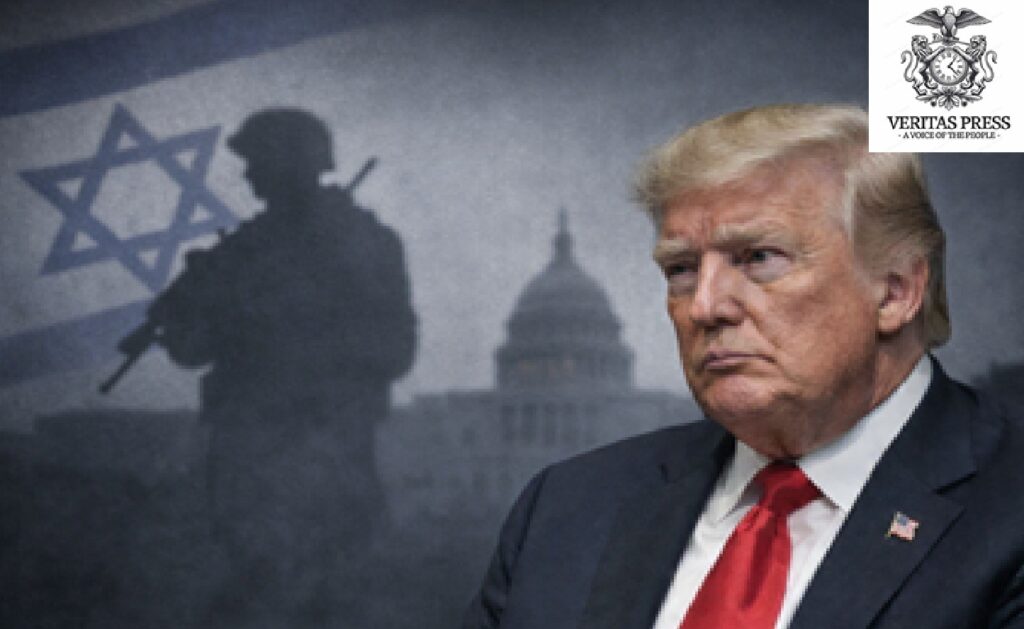
US Lawmakers clash over the rationale behind Trump’s Iran strikes, calling them “very disturbing” as
Just four days into what President Donald Trump has dubbed “Operation Epic Fury,” the United
BEIRUT, LEBANON – The echoes of the 2024 ceasefire, already faint after months of daily
MINAB, IRAN – Funerals were held this week for 168 victims of the devastating bombing
On March 2, 2026, the United Nations Security Council convened for a meeting that was
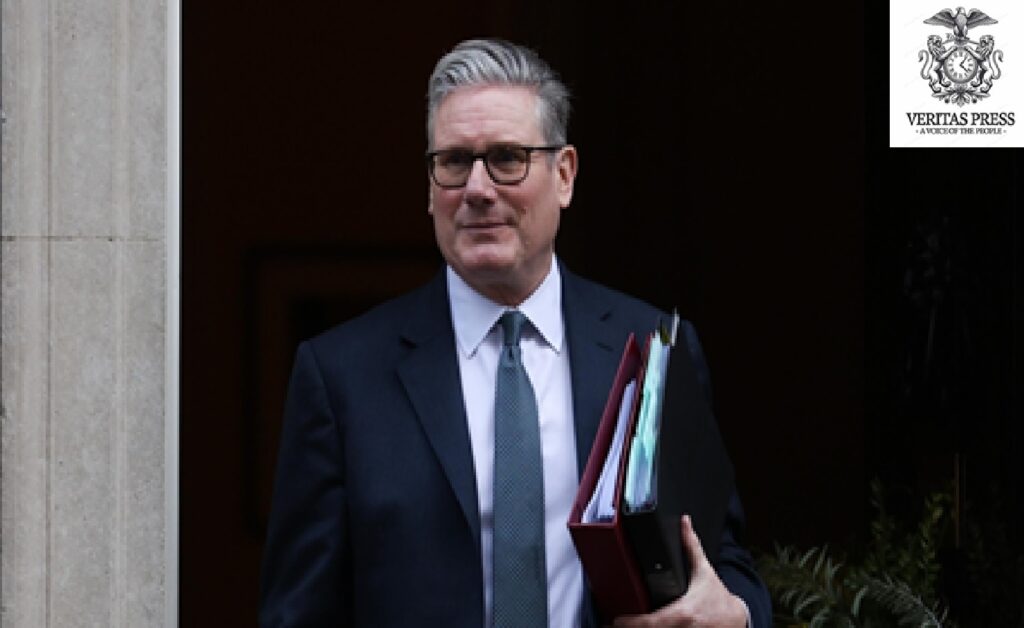
LONDON, UK – Prime Minister Keir Starmer insists the United Kingdom is “not at war.”

Global financial markets have been jolted by the rapid escalation of war between the United