


Original Article Date Published:
Article Date Modified:
Help support our mission, donate today and be the change. Every contribution goes directly toward driving real impact for the cause we believe in.
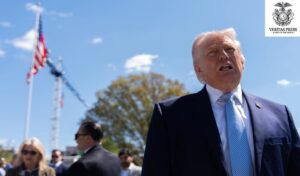
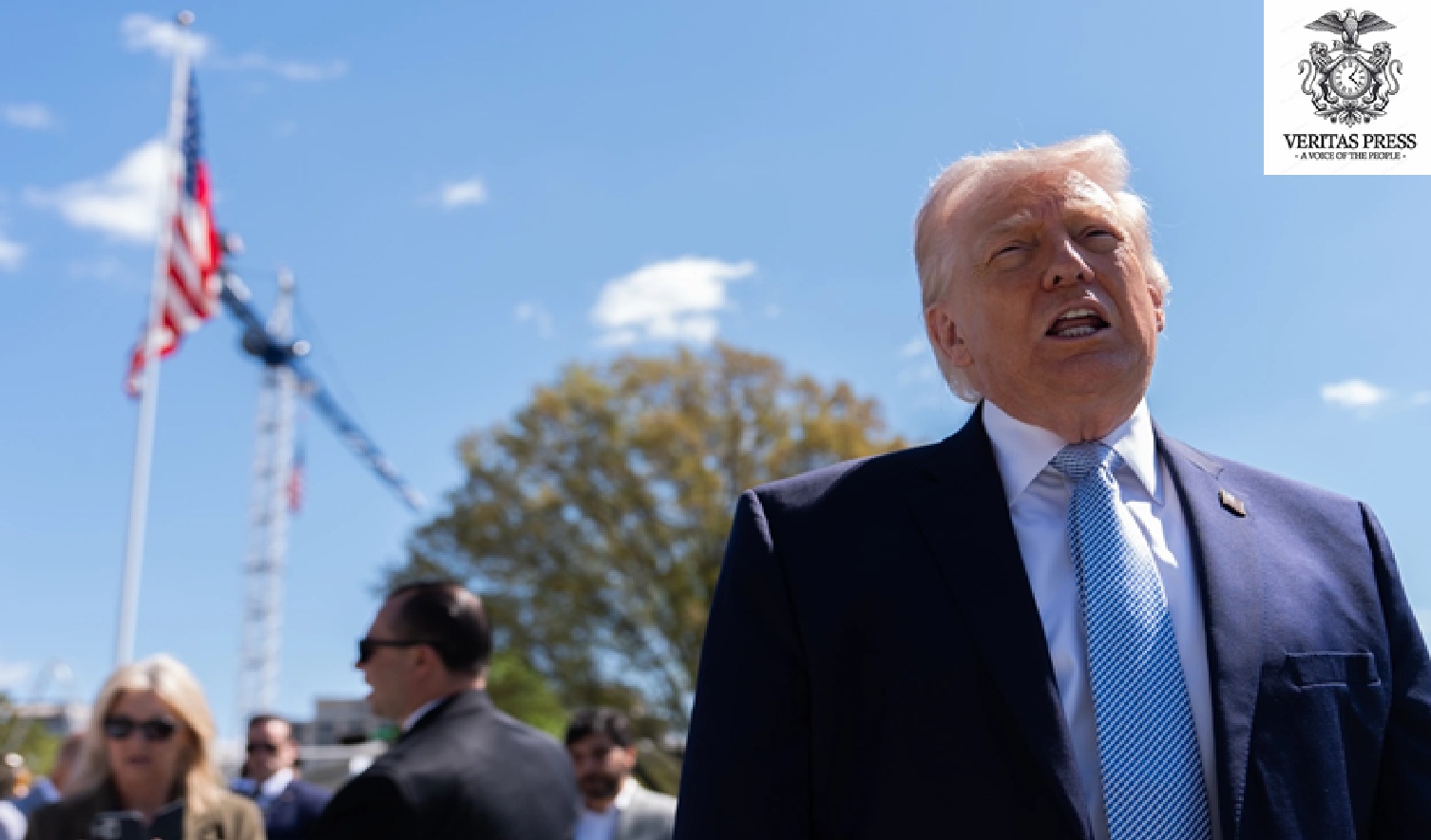
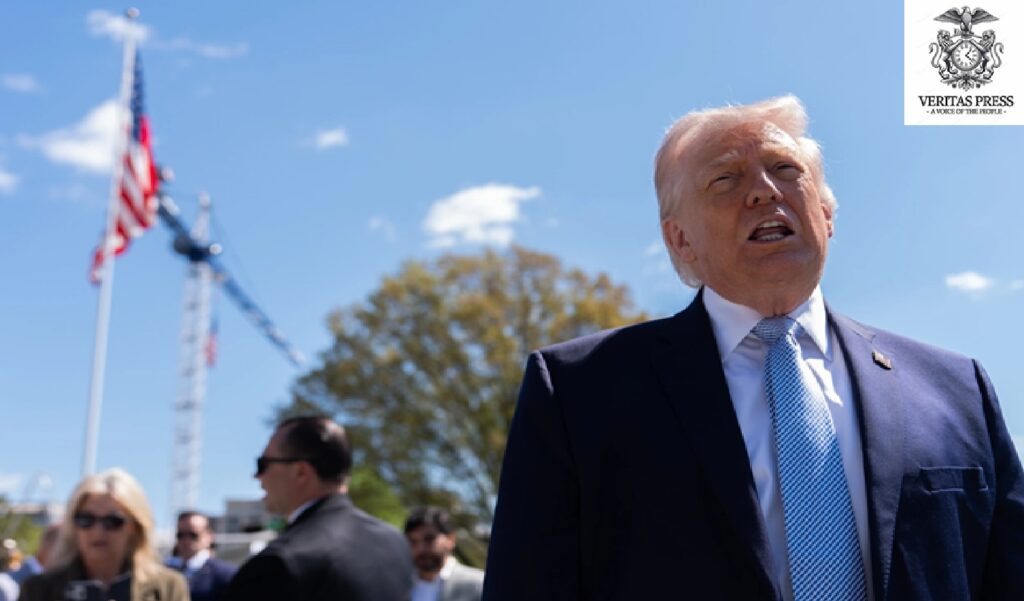
WASHINGTON – Within hours of announcing what he described as a pathway to “long-term PEACE,” Donald Trump issued a sweeping ultimatum that risks undermining that very claim.
“A Country supplying Military Weapons to Iran will be immediately tariffed… 50%, effective immediately. There will be no exclusions or exemptions!”
The statement, targeting any country engaged in military trade with Iran, has triggered alarm not only in diplomatic circles, but among legal scholars and trade experts who argue that Trump may not actually have the authority to do what he is threatening.
More significantly, analysts are now asking a deeper question:
Is this economic threat itself a form of ceasefire violation, reframed as policy?
A Ceasefire Announced Then Immediately Undermined:
The tariff warning came within hours of a fragile ceasefire framework between Washington and Tehran, reportedly tied to:
- The reopening of the Strait of Hormuz
- Discussions over sanctions relief
- Broader de-escalation across the region
Markets initially surged. Oil prices stabilised. Shipping insurers signalled cautious optimism.
But the mood quickly shifted.
A Gulf-based shipping executive told Lloyd’s List:
“You cannot de-escalate militarily while escalating economically. For us, risk is risk whether it’s missiles or sanctions.”
No Clear Legal Authority: “He Can Threaten, But Not Execute”
At the heart of the controversy lies a simple but critical fact:
The US president does not have unilateral authority to impose sweeping global tariffs at will, especially for geopolitical coercion.
Earlier this year, the Supreme Court of the United States dealt a major blow to Trump’s trade strategy by curtailing his use of the International Emergency Economic Powers Act.
That ruling:
- Rejected the use of emergency powers for broad tariff imposition
- Forced refunds of roughly $166 billion in collected tariffs
- Established clear limits on executive authority over trade
A former US trade official told the Financial Times:
“The president cannot simply declare tariffs on the entire world based on foreign policy disagreements. That’s not how US law, or the global trading system, works.”
In practical terms, this means:
- Any tariff action requires legal justification tied to trade practices, not military alliances
- Most mechanisms require lengthy investigations and public processes
- Immediate, blanket tariffs of 50% are almost certainly unlawful if challenged
A Washington-based trade lawyer put it bluntly:
“This is not policy, it’s posturing. There is no clean legal path to do what he’s describing.”
A Threat Without Mechanism, Or A Deliberate Grey Zone?
Trump’s post notably does not specify any legal authority—a silence the White House has not clarified.
Possible tools like:
- Section 338 (Tariff Act of 1930)
- Section 301 (unfair trade practices)
- Section 232 (national security tariffs)
…all require procedural steps incompatible with his promise of “immediate” action.
This raises a key possibility:
The threat may be designed less as a policy instrument and more as strategic pressure operating in a legal grey zone.
An international law expert at Chatham House observed:
“Ambiguity can be weaponised. Even if the tariffs are never implemented, the threat alone can shape behaviour.”
Economic Coercion As Ceasefire Violation?
The timing is what makes the move particularly contentious.
Trump’s tariff threat came within hours of a fragile ceasefire agreement with Iran, which reportedly includes:
- Reopening the Strait of Hormuz
- Discussions around sanctions relief
- Commitments toward de-escalation
Yet by threatening sweeping economic penalties on Iran’s partners, the US is effectively:
- Expanding pressure on Iran indirectly
- Deterring third-party engagement with Tehran
- Maintaining coercion through economic means
From Tehran’s perspective, this may amount to a breach in spirit, if not letter, of the ceasefire.
An Iranian foreign ministry adviser told regional media:
“You cannot claim de-escalation while threatening those who engage with us. This is pressure by another name.”
A European diplomat echoed the concern:
“If the ceasefire includes economic normalisation or relief discussions, then threatening third countries undermines that framework.”
Targeting China And Russia, Without Naming Them:
Though unnamed, the primary targets are widely understood to be:
- China
- Russia
Both states have longstanding military and technological ties with Iran.
Recent reports indicate:
- Chinese dual-use exports supporting Iran’s drone programs
- Potential Iranian acquisition of Chinese anti-ship missiles
- Allegations, denied by Moscow, of continued Russian military cooperation
A US defence analyst explained:
“This is secondary sanction logic dressed up as tariffs, punishing anyone who enables your adversary.”
Diplomatic Fallout: A Ceasefire Undermined?
The contradiction is stark:
- Trump claims a “peace breakthrough”
- Iran proposes a 10-point framework, including sanctions relief
- Markets briefly stabilize
Then Washington threatens a global economic crackdown.
This has already triggered unease among allies.
US Secretary of State Marco Rubio met NATO chief Mark Rutte amid growing concerns that economic escalation could destabilise the fragile truce.
Meanwhile, Trump is preparing for a summit with Xi Jinping, raising the stakes further.
A senior EU official warned:
“This risks turning a regional ceasefire into a global trade conflict.”
Iran’s Leverage: Hormuz And Conditional Compliance.
Iran has signalled that its cooperation is conditional.
Measures already taken include:
- Partial restrictions on tanker traffic through Hormuz
- Warnings of withdrawal if Israeli operations in Lebanon continue
An Iranian oil official stated:
“The Strait is not a charity; it is leverage. If pressure continues, so will consequences.”
Human Impact: Economic Pressure Beyond The Battlefield.
While framed as a strategic move, the real-world consequences extend far beyond state actors.
A representative from Human Rights Watch warned:
“Broad economic measures often hit civilians hardest. Restrictions on trade ripple through healthcare, food supply, and employment.”
An analyst from the International Crisis Group added:
“Economic coercion can destabilise fragile ceasefires by increasing domestic pressure on governments to retaliate.”
Within the United Nations, officials have repeatedly cautioned that sustained economic pressure can undermine diplomatic processes.
A UN diplomat said:
“De-escalation requires consistency. If coercion continues in another form, trust collapses.”
Strategic Interpretation: Negotiation Tactic Or Escalation Strategy?
There are two competing interpretations of Trump’s move:
1. Negotiation Tactic
A continuation of “maximum pressure”:
- Escalate rhetorically
- Extract concessions
- Offer partial relief
2. Controlled Escalation
A deliberate effort to:
- Maintain pressure without direct war
- Undermine Iran’s support networks
- Retain leverage without collapsing talks
But critics point to a third, more troubling possibility:
3. Ceasefire Undermining by Design
By targeting Iran’s economic relationships, the US may be:
- Violating the spirit of de-escalation
- Weakening Iran’s incentives to comply
- Creating conditions for the ceasefire to fail
A Middle East analyst put it starkly:
“You don’t need to fire a missile to break a ceasefire. Economic warfare can do the same job.”
Conclusion: A Ceasefire Undermined By Design.
Strip away the rhetoric, and Donald Trump’s tariff threat exposes something more consequential than a legal overreach or a diplomatic misstep; it reveals a strategy that deliberately blurs the boundary between peace and coercion.
On paper, Washington is pursuing de-escalation with Tehran. In practice, it is threatening to economically punish any state that engages with Iran, effectively extending the conflict outward through financial pressure. The contradiction is not incidental; it is structural.
Because even if these tariffs never materialise in court, their purpose may already be fulfilled.
They signal to allies and adversaries alike that:
- Engagement with Iran carries risk
- Economic normalisation will be obstructed
- The United States retains leverage, even without legal authority
This is not traditional diplomacy. It is coercion calibrated below the threshold of open conflict, a form of pressure designed to reshape behaviour without formally breaking the ceasefire, while steadily eroding its foundations.
A ceasefire is not simply the absence of military strikes; it is the creation of conditions under which escalation becomes less likely. By that standard, threatening sweeping economic penalties against third countries does the opposite. It sustains pressure, hardens positions, and reduces the political space for compromise inside Iran.
More critically, it risks setting a precedent:
That ceasefires can coexist with parallel forms of economic warfare, undermining their credibility altogether.
Trump’s tariff threat reveals a deeper contradiction:
- He lacks clear legal authority to implement it
- Yet the threat itself carries real geopolitical consequences
It blurs the line between:
- Trade policy and coercion
- Diplomacy and escalation
- Ceasefire and continued pressure
Legal experts may ultimately block Trump’s ability to enforce these tariffs. Courts may intervene, as they have before. Allies may resist compliance. But none of that neutralises the immediate geopolitical effect: uncertainty, deterrence, and distrust.
For Iran, the message is clear: any relief is conditional, reversible, and subordinate to Washington’s shifting demands.
For global powers like China and Russia, the warning is equally stark: strategic partnerships may now carry punitive economic consequences.
For the wider international system, it signals something deeper still:
The rules governing trade, diplomacy, and conflict are increasingly being rewritten through unilateral threats rather than negotiated frameworks.
Whether this is a bluff, a bargaining chip, or a calculated provocation, one reality is clear:
Peace built on threats—legal or not—remains inherently unstable.
Because if a ceasefire can be undermined not by bombs, but by policy.
Then the distinction between war and peace becomes little more than semantics.
Source: Multiple News Agencies
Submissions:
For The Secure Submission Of Documentation, Testimonies, Or Exclusive Investigative Reports From Any Global Location, Please Utilise The Following Contact Details For Our Investigations Desk: enquiries@veritaspress.co.uk or editor@veritaspress.co.uk
Help Support Our Work:
Popular Information is powered by readers who believe that truth still matters. When just a few more people step up to support this work, it means more lies exposed, more corruption uncovered, and more accountability where it’s long overdue.
Help Protect Independent Journalism, Which Is Currently Under Attack.
If you believe journalism should serve the public, not the powerful, and you’re in a position to help, becoming a DONATOR or a PAID SUBSCRIBER truly makes a difference.
DONATION APPEAL: If You Found This Reporting Valuable, Please Consider Supporting Independent Journalism.
Help Support Our Work – We Know, We Know, We Know …
Seeing these messages is annoying. We know that. (Imagine what it’s like writing them … )
Your support fuels our fearless, truth-driven journalism. In unity, we endeavour to amplify marginalised voices and champion justice, irrespective of geographical location.
But it’s also extremely important. One of Veritas Press’s greatest assets is its reader-funded model.
1. Reader funding means we can cover what we like. We’re not beholden to the political whims of a billionaire owner. We are a small, independent and impartial organisation. No one can tell us what not to say or what not to report.
2. Reader funding means we don’t have to chase clicks and traffic. We’re not desperately seeking your attention for its own sake: we pursue the stories that our editorial team deems important and believe are worthy of your time.
3. Reader Funding: enables us to keep our website and other social media channels open, allowing as many people as possible to access quality journalism from around the world, particularly those in places where the free press is under threat.
We know not everyone can afford to pay for news, but if you’ve been meaning to support us, now’s the time.
Your donation goes a long way. It helps us:
- Keep the lights on and sustain our day-to-day operations
- Hire new, talented independent reporters
- Launch real-time live debates, community-focused shows, and on-the-ground reporting
- Cover the issues that matter most to our communities, in real time, with depth and integrity
We have plans to expand our work, but we can’t do it without your support. Every contribution, no matter the size, helps us stay independent and build a truly people-powered media platform.
If you believe in journalism that informs, empowers, and reflects the communities we serve, please donate today.
WASHINGTON – Within hours of announcing what he described as a pathway to “long-term PEACE,”
HELSINKI, FINLAND – For seven consecutive years, Finland has been crowned the “happiest country in
TEHRAN/ISLAMABAD/WASHINGTON — In the early hours of Wednesday, a deafening silence fell over the skies
TEHRAN / ISLAMABAD – The world exhaled on April 8, 2026, as the United States

In the United States, millions of people are now going into debt to buy food.
The Islamic Revolution Guards Corps (IRGC) has pounded US-owned petrochemical sites in the Wave 99
TEL-AVIV – It was, by any measure, a grotesque spectacle. In the corridors of the
TEHRAN, April 7, 2026 — In the arid plains south of Isfahan, where the Zagros

JERUSALEM, OPT – Occupied Jerusalem is witnessing what Palestinian officials, religious authorities, and analysts describe
TEHRAN – The conflict, which began with a devastating US-Israeli pre-emptive strike on Iran on