




Title: US Seizes Russian-Flagged Oil Tanker In North Atlantic: Imperialism At Sea And Rising Global Tensions
Press Release: Veritas Press C.I.C.
Author: Kamran Faqir
Article Date Published: 07 Jan 2026 at 12:05 GMT
Category: Americas | Politics | US Seizes Russian-Flagged Oil Tanker In North Atlantic: Imperialism At Sea And Rising Global Tensions
Source(s): Veritas Press C.I.C. | Multi News Agencies
Website: www.veritaspress.co.uk

Business Ads


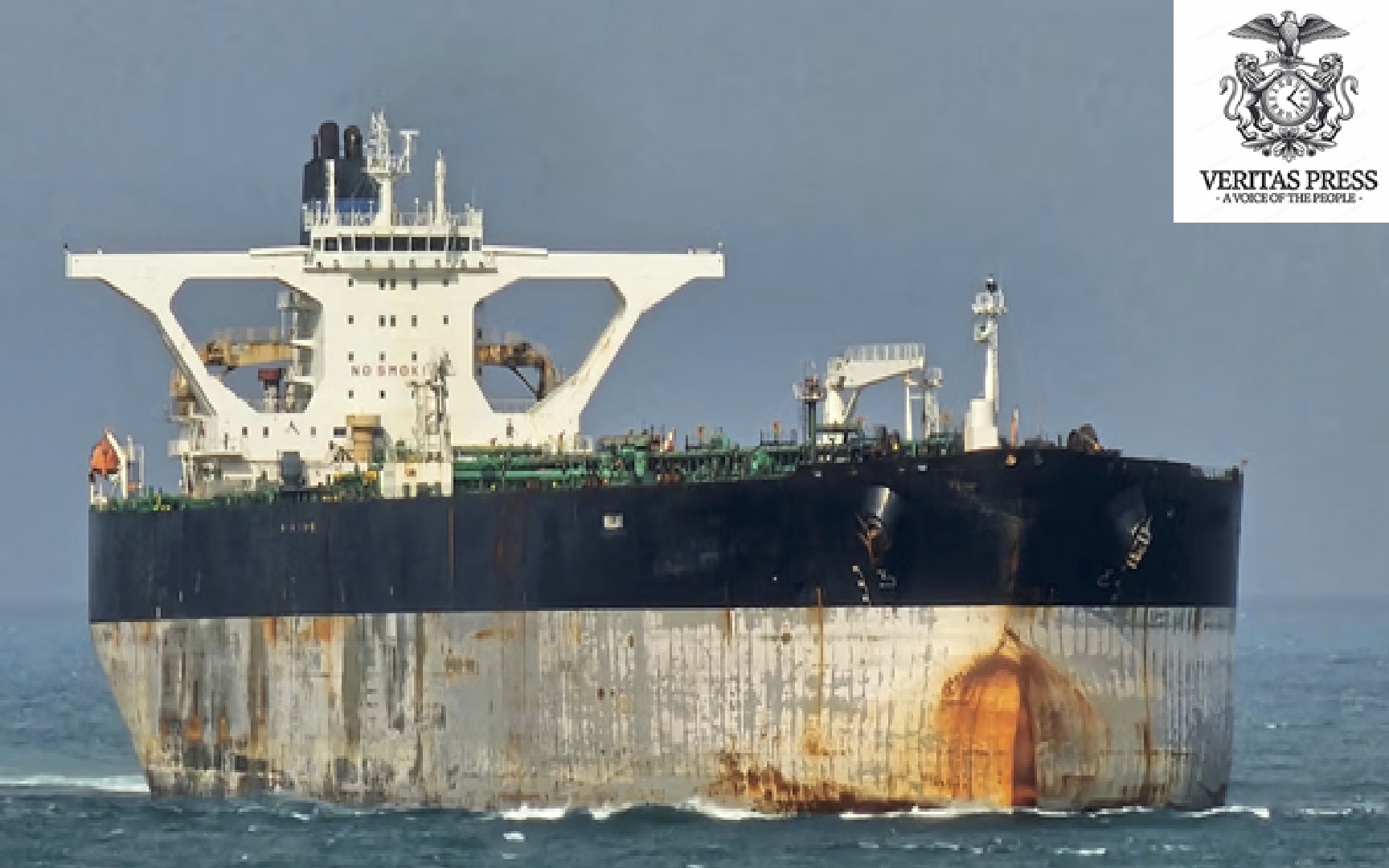
In a dramatic transatlantic operation on January 7, 2026, U.S. forces seized the Russian-flagged oil tanker Marinera, formerly M/V Bella‑1, hundreds of miles from the nearest coast. The U.S. European Command said the seizure was carried out under a federal court warrant for alleged violations of U.S. sanctions connected to Venezuelan and Iranian oil shipments.
But beyond the official narrative, analysts and critics argue that the operation reflects a pattern of imperialist overreach, reliance on false or exaggerated sanctions rhetoric, and a willingness to risk military confrontation with major global powers.
Sanctions And False Rhetoric: Manufacturing A Threat.
The U.S. government framed the Marinera as a vessel linked to “illicit” oil trafficking, Hezbollah, and narcoterrorism. Pentagon chief Pete Hegseth declared:
“The blockade of sanctioned and illicit Venezuelan oil remains in FULL EFFECT — anywhere in the world.”
Such claims, while presented as legal justification, have been questioned by independent analysts. Maritime experts and shipping intelligence analysts note that the vessel was empty at the time of interception and had not yet loaded Venezuelan oil.
Dr. Emily Barlow, an international relations scholar at LSE, commented:
“The U.S. often frames targeted states or actors as threats to hemispheric security, even when there is no immediate danger. This rhetoric is designed to justify extraterritorial interventions and reinforce a narrative of moral and military superiority.”
Critics argue that such statements mirror historical imperialist patterns: using exaggerated threats to justify interventions far from domestic borders, undermining sovereignty, and asserting unilateral control over global trade flows.
Maritime Seizures And Escalating Risks With Russia And China:
The Marinera seizure is not an isolated incident. A second vessel, M/S Sophia, was apprehended simultaneously near the Caribbean. Both are part of the so-called “shadow fleet” used to circumvent sanctions imposed on Venezuela.
The operation drew Russian naval attention, including a submarine escort, and prompted a formal diplomatic protest by Moscow. The Russian Foreign Ministry denounced the seizure as:
“A clear violation of international maritime law. No state has the right to use force against vessels duly registered in the jurisdiction of another state.”
Similarly, Beijing criticised the operation as “unilateral bullying” against international norms, warning that freedom of navigation and trade are at risk. Both powers suggest that U.S. maritime seizures of sanctioned vessels could normalise aggressive extraterritorial enforcement, a dynamic that may bring naval confrontation close to the level of war.
Dmitris Ampatzidis, maritime security analyst at Kpler, said:
“Operations like this raise the risk of miscalculation. Any encounter between U.S. and Russian or Chinese forces on the high seas, even accidental, could escalate quickly into conflict.”
Indeed, legal scholars and international affairs experts warn that this represents a strategic escalation: the U.S. is asserting the right to enforce domestic sanctions globally through military force, a precedent that could trigger reciprocal interdictions against U.S. and allied vessels in sensitive waters.
Imperial Overreach And Venezuela As A Case Study:
The seizure occurred days after the U.S. operation to capture Venezuelan President Nicolás Maduro and First Lady Cilia Flores, an extraordinary extraterritorial action widely condemned as a violation of sovereignty. Venezuelan officials called the tanker seizure “international piracy”, framing it as part of an imperialist campaign to control the country’s oil resources.
The Trump administration’s claims that Venezuela would surrender tens of billions of barrels of oil to the U.S. have been described by Latin American observers as “coercive resource theft under the guise of legal enforcement”.
Jorge Valenzuela, a Caracas-based activist, said:
“The U.S. uses sanctions and military power to strip countries of their resources, then frames this as a fight against crime or terrorism. This is classic imperialist logic cloaked in legalistic language.”
International Legal Implications: Dangerous Precedents.
The seizure challenges key principles of international maritime law:
- Flag State Authority: UNCLOS grants exclusive jurisdiction to a vessel’s flag state in international waters. By boarding a Russian-flagged ship without Moscow’s consent, the U.S. enters legally uncharted territory.
- Freedom of Navigation: Experts note that repeated U.S. interventions risk weaponising maritime freedom, undermining norms that protect commercial shipping worldwide.
- Reciprocal Risks: Analysts warn that Russia or China could respond by targeting vessels flagged to Western states, particularly in the South China Sea or Arctic, creating flashpoints for military confrontation.
Broader Strategic Analysis: Power, Control, And The Risk Of War.
The Marinera and Sophia seizures illustrate a pattern in U.S. foreign policy where economic coercion is enforced by military might, and legal rhetoric is used to mask imperial ambition. By asserting the right to board and seize foreign-flagged vessels in international waters, Washington is testing Russia’s and China’s tolerance for unilateral maritime enforcement, a gamble that could spark high-stakes naval incidents.
Dr. Emily Barlow concluded:
“This is not simply a sanctions operation. It is a demonstration of military reach and political will. But pushing this too far, especially against nuclear-armed states, risks a confrontation that could escalate into open conflict.”
Conclusion: Imperial Overreach, Maritime Law, And The Looming Risk Of Great-Power Conflict.
The U.S. seizure of the Marinera is far more than a sanctions enforcement operation; it is a stark illustration of modern imperial overreach in action. Under the guise of combating “illicit oil shipments” and protecting hemispheric security, the Trump administration has asserted the right to enforce domestic law across the globe, effectively treating international waters as an extension of U.S. territorial jurisdiction. This operation, coordinated with military, law enforcement, and intelligence assets, reflects a strategic calculus that conflates sanctions enforcement with military power projection, a logic long criticised as coercive imperialism.
By boarding a Russian-flagged vessel in the North Atlantic, the United States has challenged the fundamental norms of maritime law enshrined in the 1982 UN Convention on the Law of the Sea. The Kremlin has condemned the seizure as “maritime piracy” and a violation of flag-state sovereignty, while Beijing warns against the precedent of unilateral interdictions. Legal scholars and maritime analysts agree that this operation risks normalising extraterritorial enforcement through military means, undermining freedom of navigation and exposing global trade to potential reprisals.
The broader geopolitical implications are profound. The pursuit and seizure of the Marinera, coupled with the simultaneous interdiction of the M/T Sophia, signals to Russia and China that the U.S. is willing to escalate maritime confrontations in pursuit of its strategic objectives. Analysts warn that even a minor miscalculation, an accidental collision, miscommunication, or aggressive manoeuvre could ignite a direct military confrontation between nuclear-armed powers, a risk previously unthinkable in the context of sanctions enforcement.
Moreover, the operation exposes a pattern of false or exaggerated rhetoric used to justify unilateral interventions. Claims of illicit activity, terrorism financing, and threats to hemispheric stability mask what is, in reality, a campaign to assert control over Venezuela’s oil resources and intimidate global adversaries. Activists, legal experts, and Latin American governments alike have criticised these moves as coercive, illegal, and emblematic of a renewed U.S. imperial posture.
Ultimately, the Marinera case is a cautionary tale: as Washington wields sanctions as a tool backed by military force, the line between law enforcement and aggressive imperialism blurs, creating conditions in which legal pretexts, economic coercion, and military power collide on the open seas. The world is witnessing the emergence of a dangerous new paradigm, where unilateral enforcement of sanctions could trigger a high-stakes confrontation with Russia and China, destabilise maritime norms, and signal a return to great-power brinkmanship that risks war.










cz4rqz