

Original Article Date Published:
Article Date Modified:
Help support our mission, donate today and be the change. Every contribution goes directly toward driving real impact for the cause we believe in.
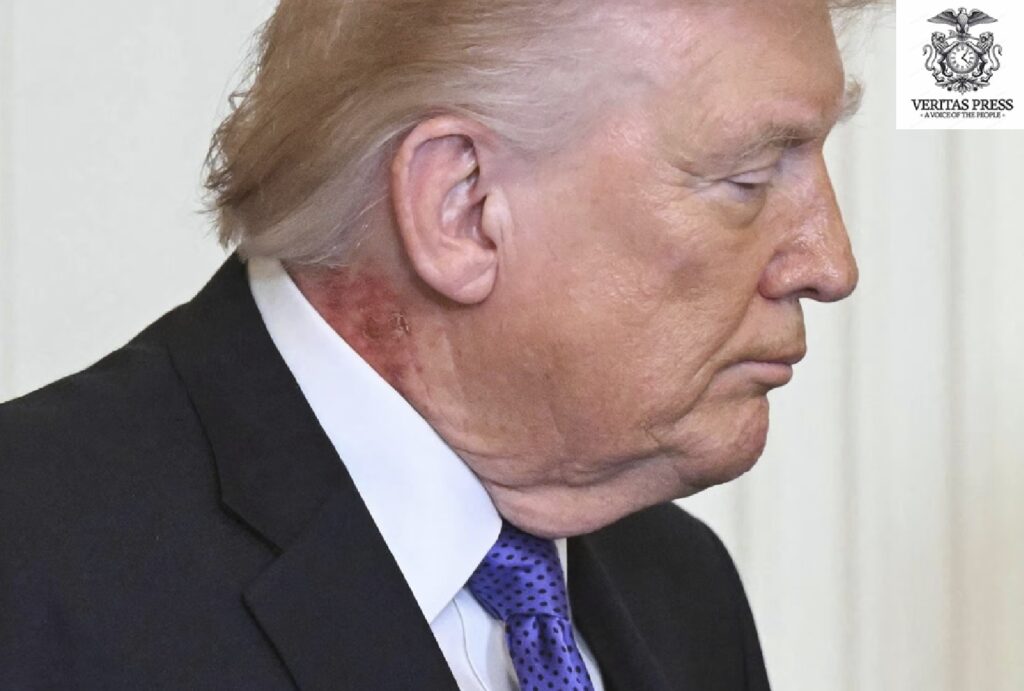
WASHINGTON – The United States’ sudden descent into war with Iran is not merely another episode in Washington’s long history of military intervention. It is, critics argue, something far more dangerous: a convergence of constitutional breakdown, alleged war crimes, financial misconduct concerns, and the consolidation of unchecked executive power in the hands of one man, Donald Trump.
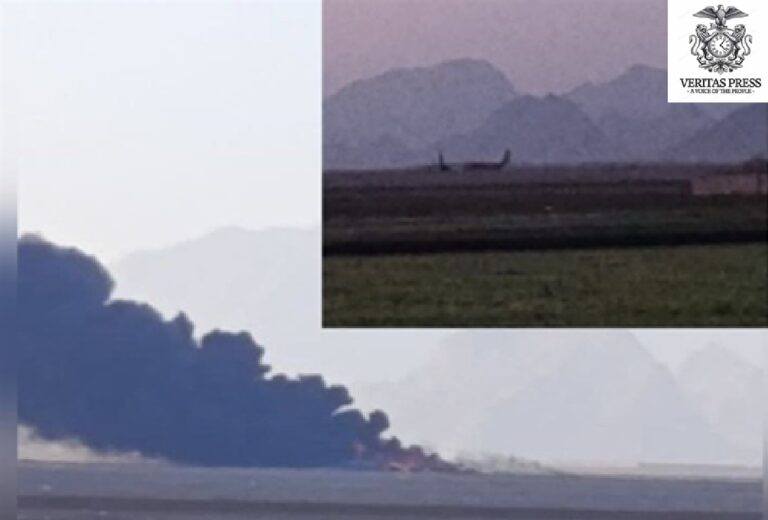
In the days since U.S. and Israeli forces launched coordinated strikes across Iran, killing senior leadership, including Supreme Leader Ali Hosseini Khamenei, legal scholars, lawmakers, activists, and international observers have issued a stark warning: this war may not only be unlawful, but part of a broader pattern of conduct that meets the constitutional threshold for impeachment.
A War Without Congress, Or Legal Basis:
Under the U.S. Constitution, the authority to declare war rests with Congress. Yet Trump neither sought nor obtained congressional approval before initiating what he openly called a “war.”
According to legal expert Eugene Fidell:
“The Constitution has always provided that the power to declare war is vested in Congress.”
Even under the War Powers Resolution of 1973, the president may only initiate hostilities in response to an actual or imminent attack. By the administration’s own admission, no such threat existed.
Instead, the White House relied on vague, unsubstantiated claims, leaving what one legal analysis described as
“No practical legal argument at all.”
From Executive Authority To Executive Supremacy:
Trump’s actions go beyond a single decision; they reflect an assertion of near-total war-making authority:
- Launching wars unilaterally
- Targeting foreign leaders
- Sustaining open-ended military campaigns
This marks a shift toward what critics describe as executive supremacy.
The framers warned explicitly against this. James Madison cautioned that the executive is “most interested in war, and prone to it,” which is why the Constitution vested war powers in Congress.
“What we are witnessing,” one scholar noted,
“is the transformation of the presidency into an elected monarchy.”
Civilian Deaths And Allegations Of War Crimes:
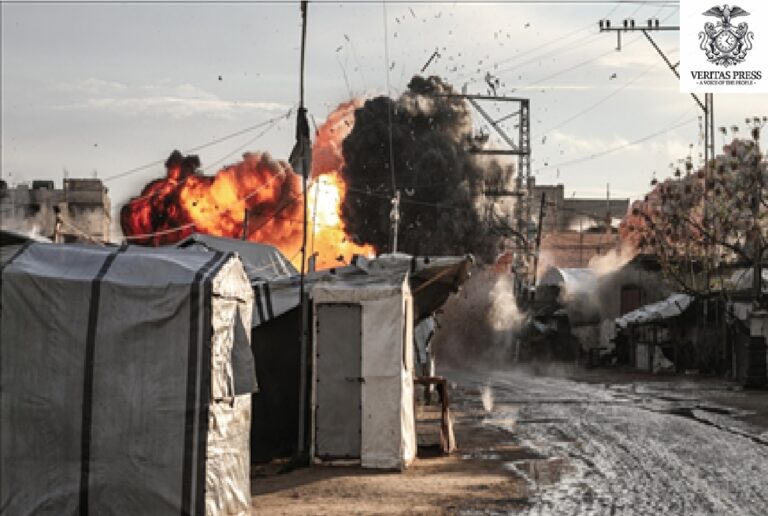
The humanitarian toll has been immediate.
The Iranian Red Crescent Society reported at least 200 dead and over 700 injured in the first wave. Among the most shocking incidents: the bombing of a girls’ school in Minab, where dozens of children were killed.
A local rescue volunteer told journalists:
“We were digging through rubble with our hands. These were children; there was no warning.”
Such attacks raise serious concerns under the Fourth Geneva Convention, which prohibits targeting civilians.
A Clear Breach Of International Law:
Under the United Nations Charter, force is only lawful in self-defence or with Security Council approval. Neither condition was met.
UN Secretary-General António Guterres condemned the strikes, while European allies distanced themselves.
A European diplomat stated:
“This destroys the credibility of international law.”
Regional Escalation And Global Fallout:
The war has rapidly expanded:
- Iranian retaliation across the region
- Hezbollah is entering the conflict
- Israeli escalation in Lebanon
- U.S. casualties reported
- Global oil prices are surging
What began as a strike is now a widening regional war.
Domestic Backlash And Impeachment Demands:
Inside the United States, opposition is mounting.
A Reuters / Ipsos poll shows fewer than 25% support the war.
Free Speech For People called it:
“An egregious abuse of power… a crime of aggression.”
Foreign policy expert Matt Duss warned:
“Unchecked presidential war-making has led us to this moment.”
A Pattern Of Unchecked Militarism:
Iran is not an isolated case. Since returning to office, Trump has launched or escalated military operations across multiple countries, including Venezuela, where Nicolás Maduro was seized in a controversial operation.
Critics argue this reflects a broader pattern: escalation without accountability.
Expanding The Case For Impeachment: Power, Pattern, And The Shadow Of Epstein.
Beyond the constitutional and international law violations tied to the Iran war, critics argue that the case for impeachment against Donald Trump does not exist in isolation. Instead, it forms part of a broader pattern of alleged abuses of power, ethical breaches, and long-standing controversies, including his documented associations with convicted sex offender Jeffrey Epstein.
Trump’s past relationship with Epstein, who was convicted in 2008 for procuring a minor for prostitution and later died in federal custody in 2019 while awaiting trial on sex trafficking charges, has remained a persistent issue in public discourse. The two men were photographed together multiple times in the 1990s and early 2000s, and Trump once described Epstein in a 2002 interview as a “terrific guy,” adding that he was “fun to be with.”
While there has been no criminal conviction or formal charge linking Trump to Epstein’s crimes, the association has drawn renewed scrutiny amid broader concerns about accountability and abuse of power at the highest levels of government.
Legal analysts argue impeachment extends beyond criminal acts to patterns of behaviour:
- Abuse of public office
- Conduct undermining public trust
- Repeated ethical breaches
“Impeachment is not just about a single act,” one constitutional scholar said.
“It’s about patterns.”
Advocacy groups such as Free Speech For People stress that these patterns must be assessed cumulatively.
Financial Conduct: Fraud, Money, And The Question Of Corruption.
In addition to war powers and ethical concerns, Trump’s business and financial conduct have long been under scrutiny, further expanding the potential grounds for impeachment.
Trump and his company, the Trump Organisation, have faced multiple legal cases involving allegations of:
- Fraudulent business practices
- Financial misrepresentation
- Tax-related misconduct
In 2023, a New York civil court found Trump liable for fraud, concluding that he had significantly inflated asset values for financial gain. While civil in nature, the ruling intensified concerns about broader financial conduct.
Separately, financial experts and watchdog groups have raised repeated questions about potential money laundering risks tied to:
- Complex real estate transactions
- Foreign investments
- Opaque financial structures
It is important to note that not all allegations have resulted in criminal convictions, and Trump has denied wrongdoing. However, constitutional scholars stress that impeachment does not require a criminal conviction.
“High crimes and misdemeanours include serious abuses of trust,” one legal analyst explained.
“Financial misconduct, especially if it intersects with public office, can meet that threshold.”
Advocacy groups warn that such concerns are especially serious when combined with presidential power, raising fears about conflicts of interest, foreign influence, and corruption at the highest level.
A Convergence of Crises:
Taken together, critics argue the case is cumulative:
- An unauthorised war violating the Constitution
- Potential breaches of international law
- A pattern of unilateral military escalation
- Ethical controversies and associations
- Allegations and findings related to financial misconduct
This convergence, they argue, reflects not isolated incidents but a systemic pattern.
As one Washington-based analyst put it:
“The question is no longer whether there are grounds for impeachment. The question is how many, and whether Congress is willing to act on them.”
Regime Change Without A Plan:
Despite calls for Iranian “liberation,” there is no clear post-war strategy.
An Iranian activist said:
“We want freedom, but not through bombs.”
The Collapse Of Constraints:
Critics say Trump has moved beyond stretching legal limits to discarding them entirely.
“This is the normalisation of lawlessness,” one analyst warned.
Conclusion: A Republic At The Edge Of Executive Rule.
What is unfolding is not simply another controversial war, nor even a series of isolated abuses. It is the convergence of power exercised without constraint, military, legal, financial, and geopolitical, by a presidency that increasingly operates beyond the boundaries it is meant to respect.
The decision by Donald Trump to launch a war without congressional approval is not just unconstitutional; it is a direct challenge to the foundational principle that no single individual should wield the authority to decide matters of war and peace. The framers designed a system to prevent precisely this: a republic in which the gravest decisions are collective, deliberative, and accountable. That system is now being openly bypassed.
At the same time, the consequences are not theoretical. Civilians have been killed. A region already destabilised by overlapping conflicts is sliding toward wider war. International law, already fragile, is being further eroded by actions that mirror the very violations the United States has historically condemned.
But the deeper concern, as critics argue, lies in the pattern, and in the forces shaping it.
Increasingly, analysts point to the extent to which U.S. foreign policy in the Middle East appears deeply entangled with, and in some cases subordinate to, the strategic priorities of Israel and the government of Benjamin Netanyahu. The coordinated nature of the strikes on Iran, the alignment of rhetoric around “pre-emptive” war, and the longstanding political pressure exerted by pro-Israel lobbying networks in Washington have all intensified scrutiny.
Critics, ranging from foreign policy analysts to former diplomats, argue that this dynamic risks leaving the United States effectively held hostage to external influence, where decisions of war and peace are shaped not solely by American national interest or democratic deliberation, but by the strategic calculus of an allied state.
A former U.S. official, speaking anonymously, described the concern bluntly:
“When your red lines, your timing, even your targets begin to mirror another government’s priorities, you have to ask, whose war is this?”
This is not a claim of simple alliance, but of asymmetry, where political pressure, lobbying power, and strategic alignment converge to narrow the range of independent decision-making available to U.S. leaders. The result, critics warn, is a foreign policy increasingly insulated from public accountability, yet deeply responsive to external agendas.
At the same time, the pattern extends beyond foreign policy.
This is a presidency marked not only by unilateral war-making, but by repeated assertions that legal limits, whether constitutional, statutory, or ethical, are optional. From the targeting of foreign leaders to the dismissal of treaty obligations, from longstanding ethical controversies to documented findings of financial misconduct, the through-line is consistent: power exercised first, justification constructed later, accountability deferred indefinitely.
The danger is cumulative.
Each instance in isolation may be contested, debated, or politically rationalised. But taken together, they point to a systemic shift, away from a constitutional order grounded in checks and balances, toward a model in which authority is centralised, personalised, and increasingly immune from restraint.
This is the logic of what scholars have long warned about: the gradual normalisation of executive overreach. Not through a single dramatic rupture, but through repeated violations that go unanswered, each one expanding the scope of what becomes politically acceptable.
Congress now stands at the centre of that question.
Impeachment was not designed as a partisan weapon, but as a constitutional safeguard, a mechanism to confront precisely this kind of accumulation of power and disregard for law. Its purpose is not only to address past conduct, but to prevent the further erosion of democratic governance.
As one human rights advocate put it:
For a growing number of legal scholars, activists, and advocacy organisations, that threshold has already been crossed. They argue that the deliberate targeting of civilian areas, the absence of lawful justification for war, and the scale of destruction raise serious concerns under international humanitarian law, including potential war crimes. On that basis, they contend that Donald Trump should not only be impeached but removed from office.
“If the Constitution means anything, it must apply when the stakes are highest, when lives are lost, when laws are broken, and when power is abused on a global scale.”
Failure to act carries its own consequences.
Because if a president can:
- initiate war without approval,
- bypass both domestic and international law,
- operate amid unresolved ethical and financial controversies,
- align the nation’s military trajectory with external strategic pressures without democratic consent,
- and face no meaningful institutional response,
Then the precedent does not end with this presidency. It becomes the new baseline.
As one constitutional analyst put it bluntly:
“The issue is no longer what this president has done; it is what future presidents will be allowed to do because of it.”
The question before Congress and the American public is therefore not simply about one war or one leader.
It is whether the constitutional system still functions as a constraint on power, or whether it has already begun to yield to it.
Source: Multiple News Agencies
Submissions:
For The Secure Submission Of Documentation, Testimonies, Or Exclusive Investigative Reports From Any Global Location, Please Utilise The Following Contact Details For Our Investigations Desk: enquiries@veritaspress.co.uk or editor@veritaspress.co.uk
Help Support Our Work:
Popular Information is powered by readers who believe that truth still matters. When just a few more people step up to support this work, it means more lies exposed, more corruption uncovered, and more accountability where it’s long overdue.
Help Protect Independent Journalism, Which Is Currently Under Attack.
If you believe journalism should serve the public, not the powerful, and you’re in a position to help, becoming a DONATOR or a PAID SUBSCRIBER truly makes a difference.
DONATION APPEAL: If You Found This Reporting Valuable, Please Consider Supporting Independent Journalism.
Help Support Our Work – We Know, We Know, We Know …
Seeing these messages is annoying. We know that. (Imagine what it’s like writing them … )
Your support fuels our fearless, truth-driven journalism. In unity, we endeavour to amplify marginalised voices and champion justice, irrespective of geographical location.
But it’s also extremely important. One of Veritas Press’s greatest assets is its reader-funded model.
1. Reader funding means we can cover what we like. We’re not beholden to the political whims of a billionaire owner. We are a small, independent and impartial organisation. No one can tell us what not to say or what not to report.
2. Reader funding means we don’t have to chase clicks and traffic. We’re not desperately seeking your attention for its own sake: we pursue the stories that our editorial team deems important and believe are worthy of your time.
3. Reader Funding: enables us to keep our website and other social media channels open, allowing as many people as possible to access quality journalism from around the world, particularly those in places where the free press is under threat.
We know not everyone can afford to pay for news, but if you’ve been meaning to support us, now’s the time.
Your donation goes a long way. It helps us:
- Keep the lights on and sustain our day-to-day operations
- Hire new, talented independent reporters
- Launch real-time live debates, community-focused shows, and on-the-ground reporting
- Cover the issues that matter most to our communities, in real time, with depth and integrity
We have plans to expand our work, but we can’t do it without your support. Every contribution, no matter the size, helps us stay independent and build a truly people-powered media platform.
If you believe in journalism that informs, empowers, and reflects the communities we serve, please donate today.

JERUSALEM, OPT – Occupied Jerusalem is witnessing what Palestinian officials, religious authorities, and analysts describe
TEHRAN – The conflict, which began with a devastating US-Israeli pre-emptive strike on Iran on
WASHINGTON – The white-knuckle countdown is ticking towards President Donald Trump’s self-imposed Tuesday deadline, a
WASHINGTON – The United States’ sudden descent into war with Iran is not merely another

TEHRAN – The fog of war thickened over central Iran on Sunday, as sharply conflicting
ISFAHAN PROVINCE, IRAN – April 5, 2026, In the rugged, mountainous terrain south of the
Original Article Date Modified: Article Date Modified: Help support our mission, donate today and be
The raw numbers tell a story of profound inequality. On 1 April 2026, more than
What began on February 28, 2026, as a coordinated US-Israeli campaign to decapitate Iran’s military

The idea of a “freedom flotilla” carries a ghost in its hold: the 2010 Mavi