



Original Article Date Published:
Article Date Modified:
Help support our mission, donate today and be the change. Every contribution goes directly toward driving real impact for the cause we believe in.
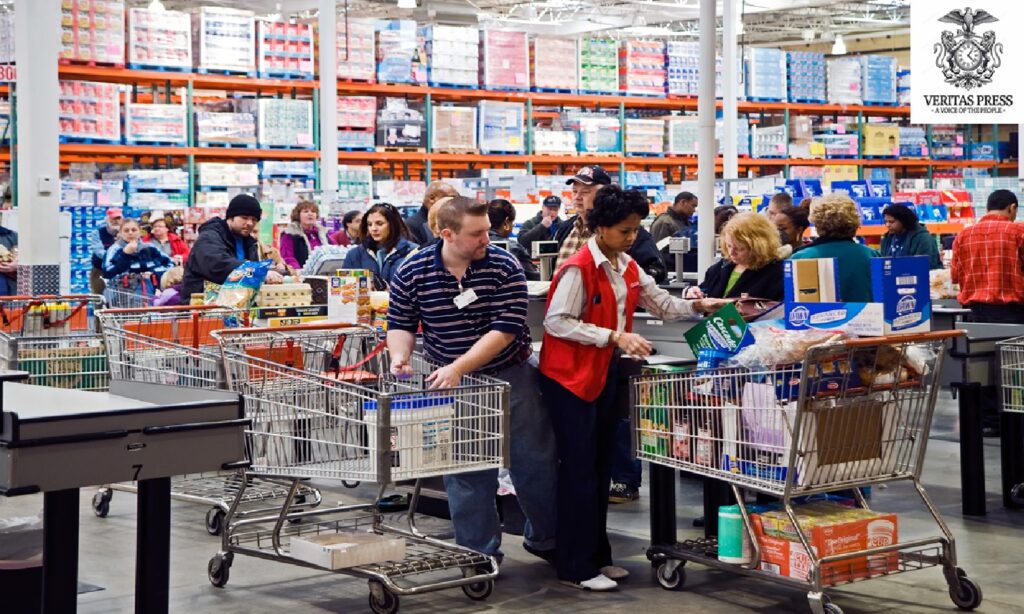
In the United States, millions of people are now going into debt to buy food.
This is not a metaphor. It is a measurable reality.
New consumer data shows that one in four users of “buy now, pay later” (BNPL) loans are financing groceries, while more than half of Americans have used these services at least once. What began as a fintech convenience has quietly become something else: a credit system for survival.
As Abha Bhattarai of The Washington Post recently reported, “more Americans are turning to short-term borrowing not for big purchases, but for everyday essentials like food and gas.” In similar reporting, Megan Cerullo of CBS News noted that the shift reflects “mounting financial pressure on households already stretched by rising costs.”
Even financial analysts are sounding the alarm.
“We’re seeing people use instalment loans for things that used to be cash purchases,”
said Sara Rathner of NerdWallet. “That’s a warning sign about underlying financial stress.”
“I Split My Groceries Into Four Payments”
For many Americans, this is no longer abstract.
“I never thought I’d be putting groceries on a payment plan,” said Angela Morris, a retail worker in Ohio, speaking to local media. “But when rent goes up, and wages don’t, what choice do you have? I split my groceries into four payments just to get through the month.”
Labour organisers say stories like Morris’s are increasingly common.
“Workers are effectively subsidising the economy with their own debt.”
said Sara Nelson, president of the Association of Flight Attendants-CWA. “People are working full-time and still can’t afford basic necessities without borrowing. That should set off alarm bells everywhere.”
The numbers back this up:
- 111 million Americans cannot pay off their credit card balances in full
- Total debt has reached $1.27 trillion
- Interest rates exceed 22%, locking families into long-term repayment cycles
As Jeanna Smialek, chief economics correspondent at The New York Times, wrote in recent coverage of household finances, “beneath steady macroeconomic growth, many families remain financially fragile, with little room for unexpected costs.”
War Spending Accelerates Without Restraint:
While households stretch every dollar, U.S. military spending is moving in the opposite direction.
Within weeks of escalating conflict with Iran, costs surged into the tens of billions, with projections pointing toward $200 billion if operations continue at the same pace.
According to Lara Jakes of The New York Times, Pentagon officials have described the campaign as “a high-tempo operation with significant resource demands,” underscoring how quickly costs are mounting.
Reporting from Reuters has echoed that assessment. In a recent dispatch, defence correspondent Phil Stewart noted that “the scale of munitions deployment and air defence operations is driving costs upward at a rate rarely seen outside major conflicts.”
The Associated Press has highlighted the domestic implications.
“Rising military expenditures are colliding with ongoing economic pressures at home,”
wrote AP economics reporter Christopher Rugaber, pointing to inflation, borrowing costs, and stagnant wage growth.
“Guns Versus Groceries”
Economists have long described the trade-off between war spending and domestic welfare as “guns versus butter.”
Today, that trade-off feels more immediate, more personal.
Because what’s being sacrificed is no longer abstract. It’s food, healthcare, and housing.
The same tens of billions spent on war could:
- Restore healthcare coverage to millions
- Reverse cuts to food assistance programmes
- Fund childcare, education, and housing support
Instead, many of those programmes have been scaled back.
As Heather Long of The Washington Post has written, recent fiscal policy has “intensified the financial squeeze on working families,” particularly through reduced social spending and rising borrowing costs.
Debt Is The System Now:
The deeper issue is not BNPL itself; it is what it reveals.
Across the country, households are relying on layered forms of debt:
- Credit cards for recurring expenses
- BNPL for short-term cash flow
- Payday and alternative loans when credit runs out
Consumer advocates warn that this is creating a fragile system built on overlapping obligations.
“It’s not just debt, it’s debt stacked on debt.”
said Mike Calhoun, president of the Centre for Responsible Lending. “People are juggling multiple payments just to stay afloat.”
As Annie Lowrey wrote in The Atlantic, the U.S. is drifting toward an economy where “financial insecurity is not episodic, it’s structural.”
Inequality Beneath The Surface:
The burden is not shared equally.
Data shows Black, Latino, and Native American households are more likely to:
- Carry high-interest debt
- Make minimum payments
- Exhaust available credit
These disparities reflect deeper inequalities in wages, wealth, and access to financial stability.
“Debt is filling the gaps left by inequality.”
said Darrick Hamilton, an economist and professor at The New School, in recent commentary on racial wealth disparities. “But it’s a costly and unsustainable substitute.”
A Question Of Political Will:
None of this is inevitable.
It is the result of policy choices:
- Failure to cap credit card interest rates
- Rollbacks of consumer protections
- Cuts to healthcare and food assistance
- Continued prioritisation of military spending
As Nobel laureate Paul Krugman wrote in The New York Times, economic growth alone is insufficient if it “fails to deliver meaningful security for ordinary households.”
Right now, for millions of Americans, that security is absent.
Conclusion: Debt, War, And The Architecture Of Economic Power.
An economy in which millions must borrow to eat is not simply under strain; it is exposing how power operates within it.
This is no longer just a story of inflation or stagnant wages. It is a system in which debt has become structurally embedded in everyday life, an economic enslavement in which credit is no longer optional but necessary for survival. From credit cards to “buy now, pay later” loans, Americans are drawn into overlapping cycles of repayment, often just to cover food, rent, and basic bills.
The result is not only hardship. It is a dependency.
As Jeanna Smialek of The New York Times has reported, many households appear stable on paper, yet in reality operate with “little buffer” against shocks. That fragility is compounded by policy choices that keep borrowing costs high, weaken consumer protections, and scale back public support systems.
At the same time, the federal government demonstrates a very different capacity elsewhere.
When it comes to war, there is no hesitation. Billions are mobilised in days. Supply chains accelerate. Political divisions collapse into consensus. The contrast is stark and revealing.
Because it raises a deeper question: why is scarcity imposed at home, while abundance is unleashed abroad?
Part of the answer lies in who benefits.
As defence analysts have long argued, modern warfare sustains vast networks of contractors, financiers, and private firms whose revenues are directly tied to conflict. As William Hartung of the Quincy Institute has warned, military spending not only serves geopolitical aims, it also funnels enormous public wealth into private hands, enriching those positioned to profit from war while domestic needs go unmet.
Meanwhile, ordinary Americans are left navigating a different economy, one defined by rising costs, shrinking safety nets, and expanding debt.
“Workers are effectively subsidising the system through their own financial insecurity,”
said Sara Nelson of the Association of Flight Attendants.
This convergence, debt at home, war spending abroad, is not accidental in its effects.
Because when households are locked into cycles of repayment, their economic agency narrows. When public resources are diverted away from social investment, alternatives shrink. And when financial and military sectors continue to expand, wealth and power concentrate further at the top.
Some critics argue that this level of loose, normalised borrowing risks becoming something more insidious: a system that conditions entire populations to live permanently in debt, sustaining consumption in the short term while deepening long-term economic vulnerability. Whether by design or by outcome, the effect is the same: millions are kept financially afloat, but never financially secure.
And systems built this way are not stable.
As Annie Lowrey warned in The Atlantic, an economy defined by widespread financial insecurity is not just unequal, it is inherently fragile. History shows that when debt expands faster than real economic security, the consequences eventually surface, through defaults, contraction, or systemic shocks.
Which brings us back to the reality now confronting millions of Americans:
An economy where people must borrow to eat is not a healthy one.
And a government that can mobilise billions overnight for war, but not for food security, is making a clear statement about its priorities.
The contradiction is no longer subtle.
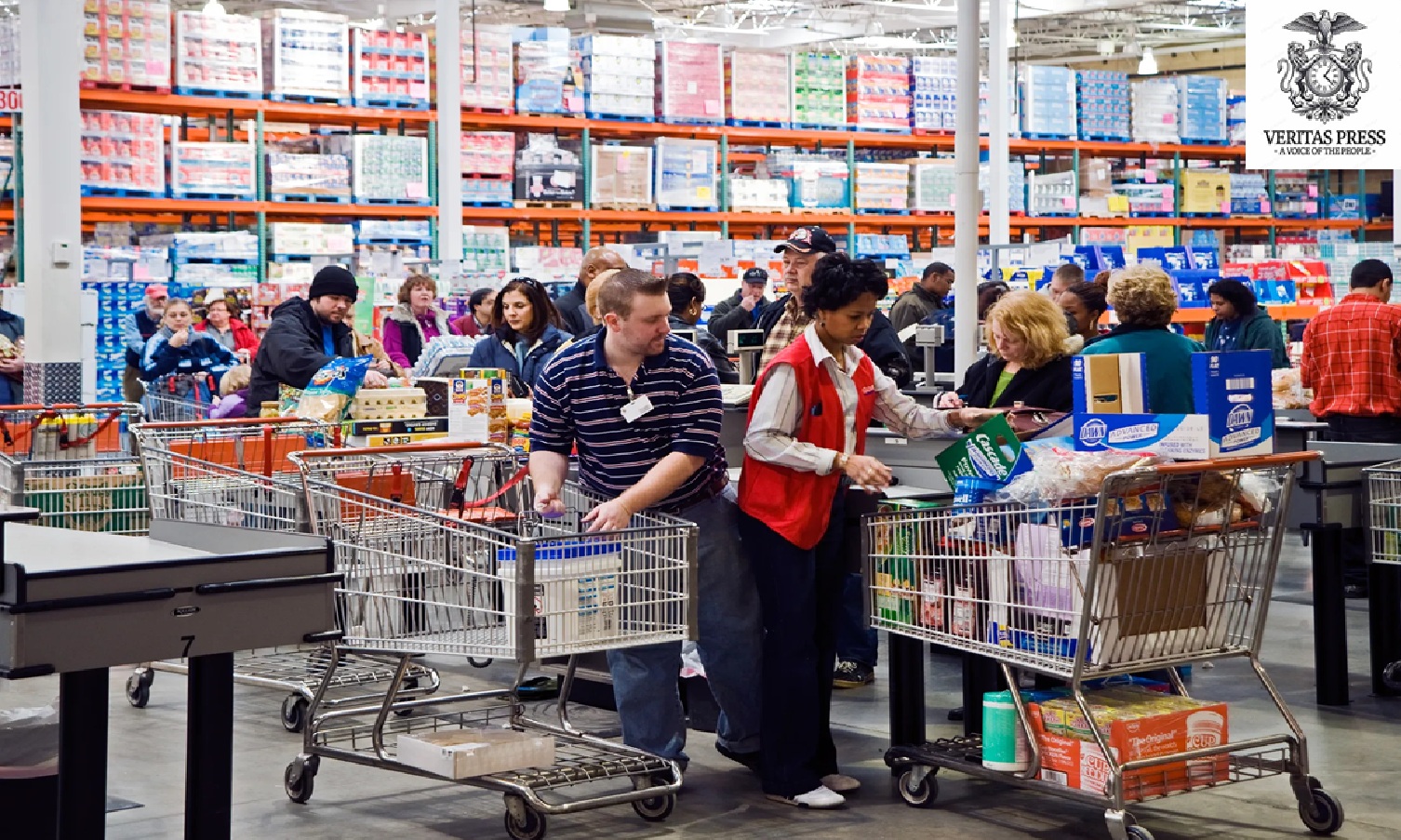
It is visible at the checkout counter,
where Americans are not just paying for groceries,
but paying for them later, with interest.
And when a system reaches that point,
where survival itself is financed, while vast public wealth circulates through industries that profit from war and scarcity,
The line between economic participation and economic entrapment begins to blur.
That is not just a warning sign.
It is a structural fault line.
Source: Multiple News Agencies
Submissions:
For The Secure Submission Of Documentation, Testimonies, Or Exclusive Investigative Reports From Any Global Location, Please Utilise The Following Contact Details For Our Investigations Desk: enquiries@veritaspress.co.uk or editor@veritaspress.co.uk
Help Support Our Work:
Popular Information is powered by readers who believe that truth still matters. When just a few more people step up to support this work, it means more lies exposed, more corruption uncovered, and more accountability where it’s long overdue.
Help Protect Independent Journalism, Which Is Currently Under Attack.
If you believe journalism should serve the public, not the powerful, and you’re in a position to help, becoming a DONATOR or a PAID SUBSCRIBER truly makes a difference.
DONATION APPEAL: If You Found This Reporting Valuable, Please Consider Supporting Independent Journalism.
Help Support Our Work – We Know, We Know, We Know …
Seeing these messages is annoying. We know that. (Imagine what it’s like writing them … )
Your support fuels our fearless, truth-driven journalism. In unity, we endeavour to amplify marginalised voices and champion justice, irrespective of geographical location.
But it’s also extremely important. One of Veritas Press’s greatest assets is its reader-funded model.
1. Reader funding means we can cover what we like. We’re not beholden to the political whims of a billionaire owner. We are a small, independent and impartial organisation. No one can tell us what not to say or what not to report.
2. Reader funding means we don’t have to chase clicks and traffic. We’re not desperately seeking your attention for its own sake: we pursue the stories that our editorial team deems important and believe are worthy of your time.
3. Reader Funding: enables us to keep our website and other social media channels open, allowing as many people as possible to access quality journalism from around the world, particularly those in places where the free press is under threat.
We know not everyone can afford to pay for news, but if you’ve been meaning to support us, now’s the time.
Your donation goes a long way. It helps us:
- Keep the lights on and sustain our day-to-day operations
- Hire new, talented independent reporters
- Launch real-time live debates, community-focused shows, and on-the-ground reporting
- Cover the issues that matter most to our communities, in real time, with depth and integrity
We have plans to expand our work, but we can’t do it without your support. Every contribution, no matter the size, helps us stay independent and build a truly people-powered media platform.
If you believe in journalism that informs, empowers, and reflects the communities we serve, please donate today.
In the United States, millions of people are now going into debt to buy food.
The Islamic Revolution Guards Corps (IRGC) has pounded US-owned petrochemical sites in the Wave 99

TEL-AVIV – It was, by any measure, a grotesque spectacle. In the corridors of the
TEHRAN, April 7, 2026 — In the arid plains south of Isfahan, where the Zagros

JERUSALEM, OPT – Occupied Jerusalem is witnessing what Palestinian officials, religious authorities, and analysts describe
TEHRAN – The conflict, which began with a devastating US-Israeli pre-emptive strike on Iran on

WASHINGTON – The white-knuckle countdown is ticking towards President Donald Trump’s self-imposed Tuesday deadline, a
WASHINGTON – The United States’ sudden descent into war with Iran is not merely another
TEHRAN – The fog of war thickened over central Iran on Sunday, as sharply conflicting
ISFAHAN PROVINCE, IRAN – April 5, 2026, In the rugged, mountainous terrain south of the