




Original Article Date Published:
Article Date Modified:
Help support our mission, donate today and be the change. Every contribution goes directly toward driving real impact for the cause we believe in.
The opening salvos of Operation Epic Fury have carved a fiery scar across the Middle East, a war Donald Trump frames as a campaign for “unconditional surrender.”
In the first 100 hours alone, the financial cost to the United States has been conservatively estimated at $5.82 billion, a figure that represents roughly 0.69% of the entire 2026 US defence budget. The number reflects not only the price of bombs and missiles, but the immense logistical and strategic cost of sustaining a high-intensity war in one of the world’s most volatile regions.
Long-term projections paint an even starker picture. Fortune’s report, drawing on the Penn-Wharton Budget Model, estimates that the cumulative economic impact of the war could hit $210 billion under scenarios of expansion or prolonged duration, resulting in substantial expenses for American taxpayers.
Yet beneath the Pentagon’s projections of dominance and the White House’s maximalist rhetoric, a more complex and dangerous reality is emerging. What began as a campaign of targeted strikes is rapidly evolving into a sprawling regional war, one where the financial mathematics of modern warfare is colliding with geopolitical reality, and where America’s allies in the Gulf are questioning the very strategy meant to protect them.
Part I: The Ledger Of War, Counting The Bill.
Even before the first missiles were launched, Washington had already begun paying the price of escalation.
According to the Penn-Wharton Budget Model, approximately $630 million had already been spent pre-positioning military assets, including aircraft carriers, fighter jets, and missile-defence systems, across the Middle East in the weeks leading up to the operation.
Once the campaign began, spending accelerated dramatically.
Within the first 24 hours alone, the United States spent an estimated $779 million, according to reporting by Anadolu Agency.
Analysts now estimate that direct military costs could reach approximately $65 billion, driven by sustained air campaigns, naval deployments, logistical operations, and the replenishment of weapons and equipment consumed during combat.
Even in the opening days, the financial burn rate has been extraordinary.
Based on operational data presented by Dan Caine, chairman of the Joint Chiefs of Staff, analysts estimate that airstrikes and missile usage alone exceeded $4 billion within the first four days of operations.
Additional losses have further inflated the cost.
Three F-15 fighter jets were destroyed in a friendly-fire incident involving Kuwaiti air defences, a loss estimated at roughly $351 million. While all six crew members survived, the incident underscored how quickly the conflict is spiralling beyond tightly controlled military planning.
Taken together, even conservative calculations show that the first four days of the operation cost more than $5 billion.
The Carrier Strike Group Factor:
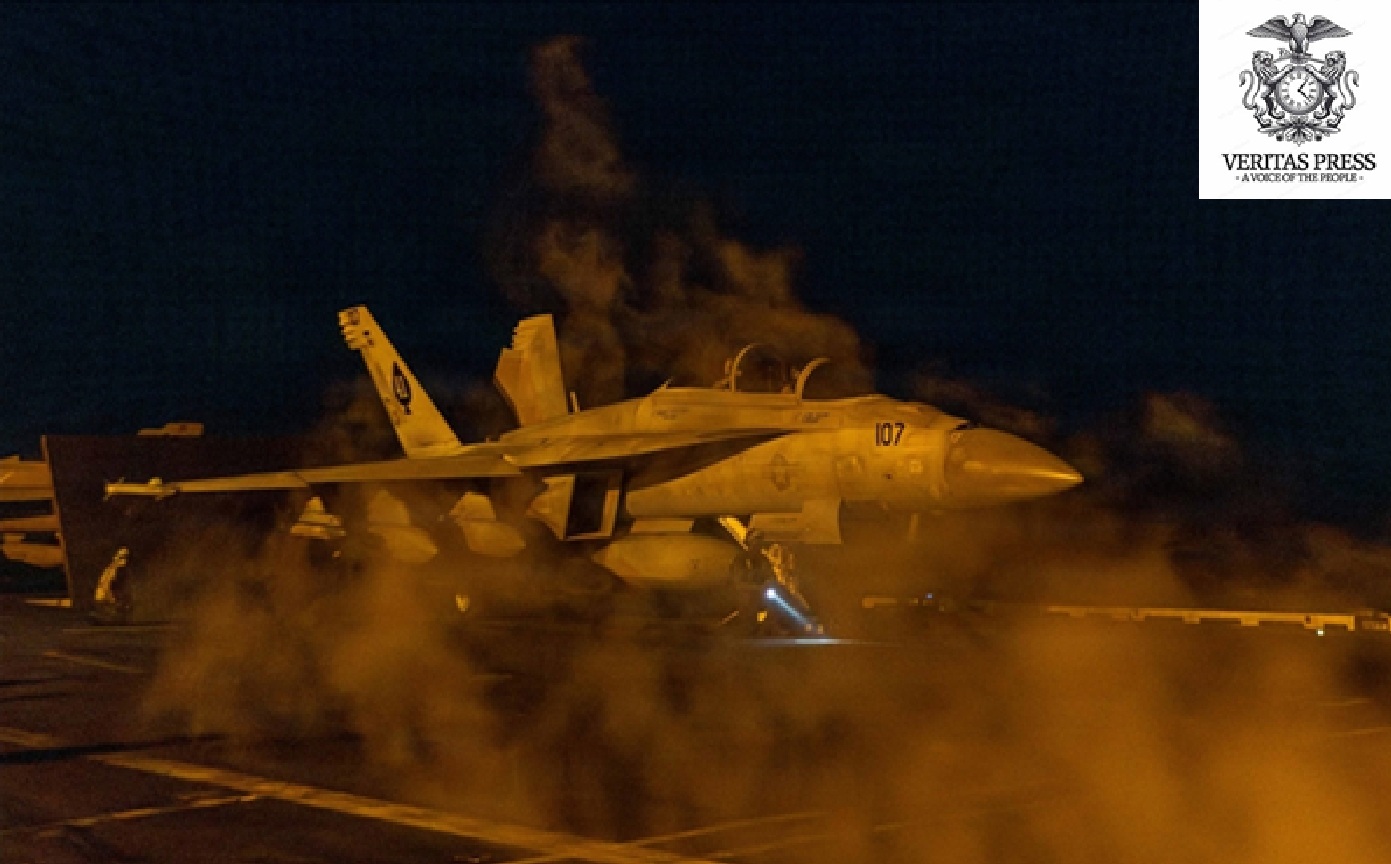
One of the highest operational costs is the deployment of aircraft carrier strike groups.
According to the Centre for American Progress, the daily operational cost of two carrier strike groups alone amounts to roughly $18 million per day.
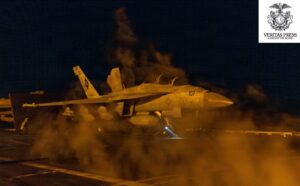
Among the vessels deployed are the USS Abraham Lincoln and the USS Gerald R. Ford, floating military cities capable of sustaining continuous air operations.
Yet the $18-million figure represents only baseline operating expenses. When the cost of fighter-jet sorties, precision-guided munitions, surveillance operations, and missile-defence systems are included, the true cost of maintaining the deployment rises dramatically.
In modern warfare, the price of simply keeping forces deployed can rival the cost of the weapons themselves.
Missile Defence: A War Of Attrition.
If attacking Iran is expensive, defending against its retaliation is proving equally costly.
According to estimates from the Payne Institute for Public Policy, US and allied forces have already fired:
- 180 SM-2, SM-3, and SM-6 naval interceptors
- 90 Patriot PAC-2 and PAC-3 missiles
- 40 THAAD interceptors
Each interceptor costs millions of dollars, turning missile defence into a brutal war of attrition.
The financial burden is particularly visible in the Gulf.
Officials in Qatar reported that 101 ballistic missiles were launched toward their territory in a single barrage. Although 98 were intercepted, the cost of that defence alone may have exceeded $1 billion, given that Patriot interceptors can cost upwards of $12 million each.
The result is a paradox of modern warfare: defending against missiles can cost nearly as much as launching them.
High-Value Assets Under Attack:
Iran’s retaliatory strikes have also targeted key components of the region’s air-defence architecture.
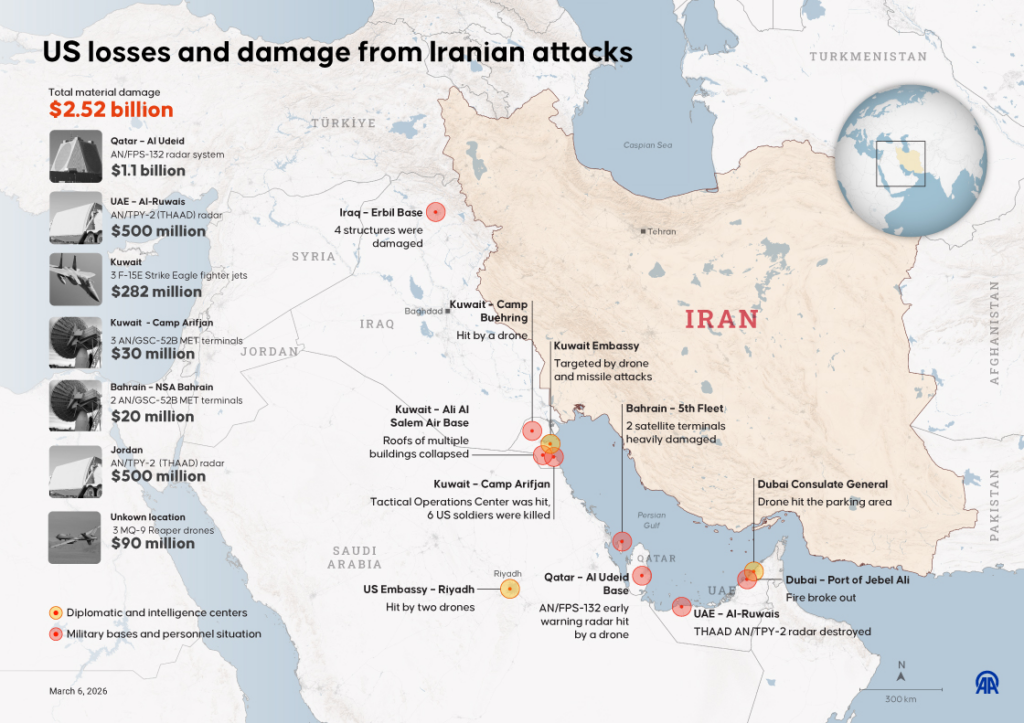
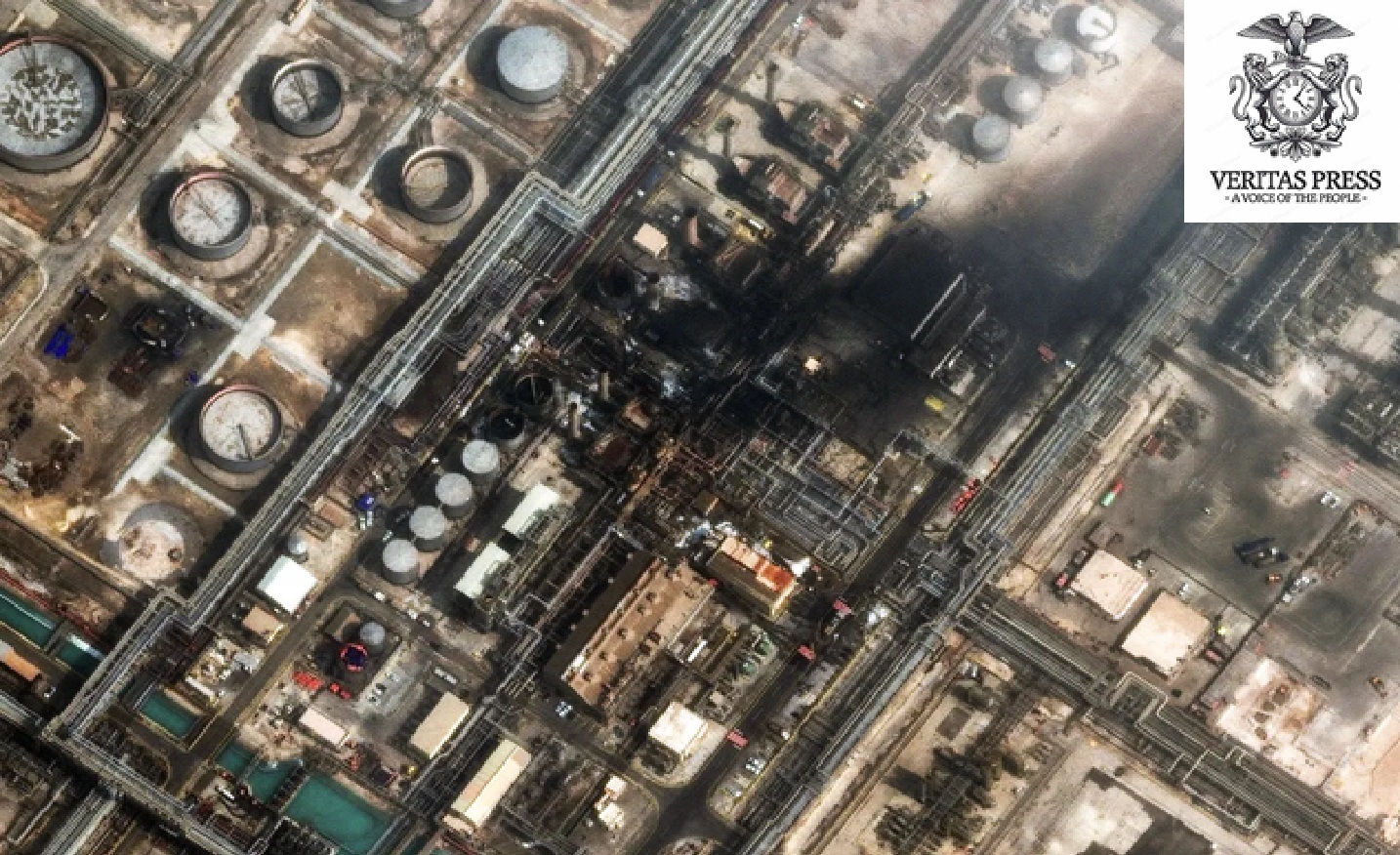
One of the most significant losses reported so far was the destruction of an AN/FPS-132 early-warning radar at Al Udeid Air Base, valued at roughly $1.1 billion.
Two additional AN/TPY-2 radar systems, integral to the THAAD missile defence network, were reportedly destroyed in the United Arab Emirates and Jordan, each estimated at $500 million.
Beyond their financial value, these systems form the backbone of the region’s missile detection network. Their loss not only represents billions in damage but also weakens the defensive shield protecting US forces and allied infrastructure across the Gulf.
The Macroeconomic Shockwave:
The direct cost of combat, however, may ultimately represent only a fraction of the war’s economic impact.
Analysis by Kent Smetters, director of the Penn-Wharton Budget Model, estimates that if the conflict prolongs, macroeconomic losses to the US economy could reach over $115 billion.
These losses could stem from several simultaneous disruptions:
- instability in global oil markets
- disruptions to international trade routes
- financial market volatility
- rising energy prices.
Combined with the estimated $65 billion in direct military costs, the total economic impact of the war could reach $210 billion.
Even at this early stage, defence economists warn that America is bleeding money, with billions disappearing in a matter of days simply to sustain combat operations.
The Penn-Wharton analysis also warns that if high-intensity operations continue, core US military supply stocks could be depleted within a week, forcing an emergency surge in weapons production and dramatically increasing defence spending.
Part II: The Maximalist Gambit.
At the political centre of the war lies a sweeping objective.
On his platform, Truth Social, President Trump declared:
“There will be no deal with Iran except UNCONDITIONAL SURRENDER.”
The statement represents one of the most ambitious war aims announced by a modern US president against a country of nearly 90 million people.
Israeli Prime Minister Benjamin Netanyahu, long an advocate of military action against Iran, welcomed the campaign.
“This combined effort allows us to do what I have hoped to achieve for 40 years: to crush the regime of terror completely.”
Part III: The Human Cost.
The rhetoric of liberation contrasts sharply with the rising civilian toll.
The deadliest incident so far occurred when a strike hit a girls’ primary school in the southern Iranian city of Minab.
According to UNICEF, 185 students and staff were killed, most of them girls between the ages of seven and twelve.
In a rare statement, the organisation warned:
“Children and schools must be protected under international humanitarian law.”
The US-based Human Rights Activists News Agency reports that more than 1,097 civilians have been killed across Iran since the conflict began.
Iranian retaliatory strikes have also killed dozens across the Gulf, including six US service members in Kuwait and foreign nationals in the United Arab Emirates.
Part IV: The Gulf’s Dilemma.
Perhaps the most significant strategic fracture emerging from the first days of the war is the growing unease among America’s Gulf allies.
Officials from two Gulf states told the Associated Press they were not given advance notice of the US-Israeli attack and had warned Washington that such a move could provoke devastating retaliation.
One official summarised the frustration bluntly:
“This is not our war, but we are the ones paying the price.”
Former Saudi intelligence chief Turki al-Faisal echoed that sentiment:
“This is Netanyahu’s war. He somehow convinced the president to support his views.”
Part V: The Global Chessboard.
As Washington and Tel Aviv deepen their military campaign, other global powers are manoeuvring.
China, which brokered the Saudi-Iran rapprochement in 2023, has dispatched diplomatic envoys to the region.
Foreign Minister Wang Yi warned:
“It is unacceptable for the United States and Israel to launch attacks against Iran and attempt regime change.”
Beijing appears eager to position itself as a mediator while protecting its energy interests in the Gulf.
Conclusion: The Bill Comes Due.
The first 100 hours of Operation Epic Fury have proven one thing clearly: there is no such thing as a cheap or contained war with Iran.
The $5.82 billion already spent represents only the opening instalment of what could become a conflict costing $210 billion or more.
Carrier strike groups are burning tens of millions of dollars each day. Missile defences are firing interceptors worth millions apiece. Aircraft losses, damaged infrastructure, and emergency weapons production are rapidly inflating the cost.
In the blunt assessment of defence economists monitoring the war, America is bleeding money, spending billions not only to wage the conflict but also to rebuild the very arsenal being exhausted by it.
Yet the financial cost is only one dimension of a widening crisis.
Across the Middle East, from the Gaza Strip to Lebanon, Iraq, Syria, and Yemen, existing conflicts risk being pulled into a wider confrontation.
The United States and Israel have bet on overwhelming force to reshape the region.
But in a heavily armed and increasingly multipolar Middle East, the early signs suggest the bill, in dollars, lives, and global stability, is only beginning to arrive.
Source: Multiple News Agencies
Submissions:
For The Secure Submission Of Documentation, Testimonies, Or Exclusive Investigative Reports From Any Global Location, Please Utilise The Following Contact Details For Our Investigations Desk: enquiries@veritaspress.co.uk or editor@veritaspress.co.uk
Help Support Our Work:
Popular Information is powered by readers who believe that truth still matters. When just a few more people step up to support this work, it means more lies exposed, more corruption uncovered, and more accountability where it’s long overdue.
Help Protect Independent Journalism, Which Is Currently Under Attack.
If you believe journalism should serve the public, not the powerful, and you’re in a position to help, becoming a DONATOR or a PAID SUBSCRIBER truly makes a difference.
DONATION APPEAL: If You Found This Reporting Valuable, Please Consider Supporting Independent Journalism.
Help Support Our Work – We Know, We Know, We Know …
Seeing these messages is annoying. We know that. (Imagine what it’s like writing them … )
Your support fuels our fearless, truth-driven journalism. In unity, we endeavour to amplify marginalised voices and champion justice, irrespective of geographical location.
But it’s also extremely important. One of Veritas Press’s greatest assets is its reader-funded model.
1. Reader funding means we can cover what we like. We’re not beholden to the political whims of a billionaire owner. We are a small, independent and impartial organisation. No one can tell us what not to say or what not to report.
2. Reader funding means we don’t have to chase clicks and traffic. We’re not desperately seeking your attention for its own sake: we pursue the stories that our editorial team deems important and believe are worthy of your time.
3. Reader Funding: enables us to keep our website and other social media channels open, allowing as many people as possible to access quality journalism from around the world, particularly those in places where the free press is under threat.
We know not everyone can afford to pay for news, but if you’ve been meaning to support us, now’s the time.
Your donation goes a long way. It helps us:
- Keep the lights on and sustain our day-to-day operations
- Hire new, talented independent reporters
- Launch real-time live debates, community-focused shows, and on-the-ground reporting
- Cover the issues that matter most to our communities, in real time, with depth and integrity
We have plans to expand our work, but we can’t do it without your support. Every contribution, no matter the size, helps us stay independent and build a truly people-powered media platform.
If you believe in journalism that informs, empowers, and reflects the communities we serve, please donate today.

The third Friday of Ramadan is typically a day when the ancient stones of Hebron’s

JERUSALEM – While Israel cites the war with Iran as the rationale for banning Friday
In the first 100 hours alone, the financial cost to the United States has been
LONDON, UK – In the span of a single week, the fragile foundations of the
IRAN, DAY 6 – As the US-Israeli military campaign against Iran enters its sixth day,
The opening days of March 2026 have witnessed a seismic shift in the Middle Eastern
KHAN YUNIS, GAZA – In the early hours of Wednesday morning, east of Khan Yunis,
For The Secure Submission Of Documentation, Testimonies, Or Exclusive Investigative Reports From Any Global Location,
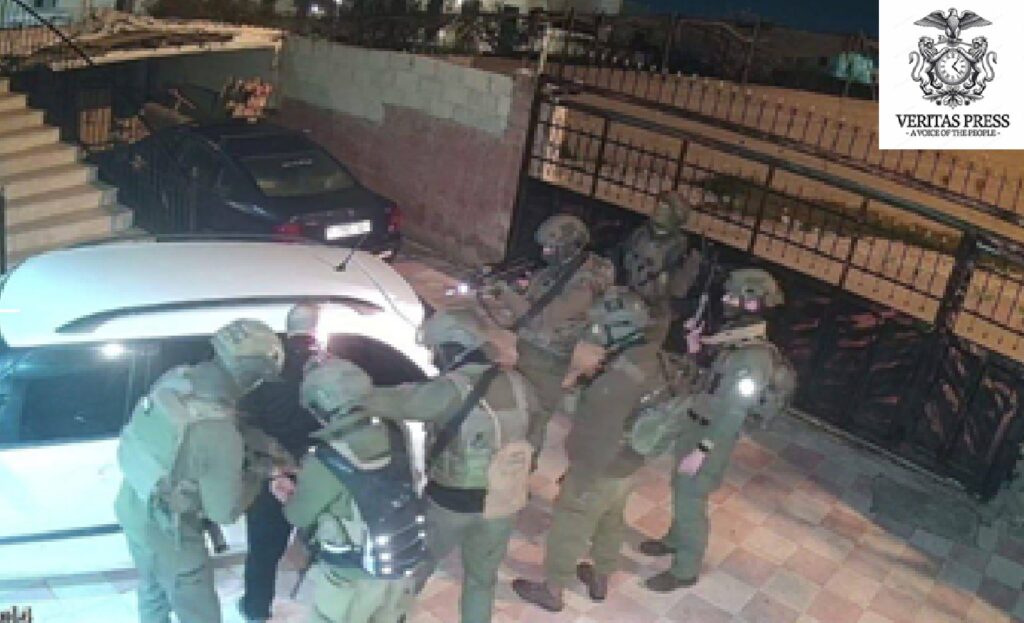
JENIN, OCCUPIED WEST BANK — For the residents of Faqqu’a, a small town nestled east
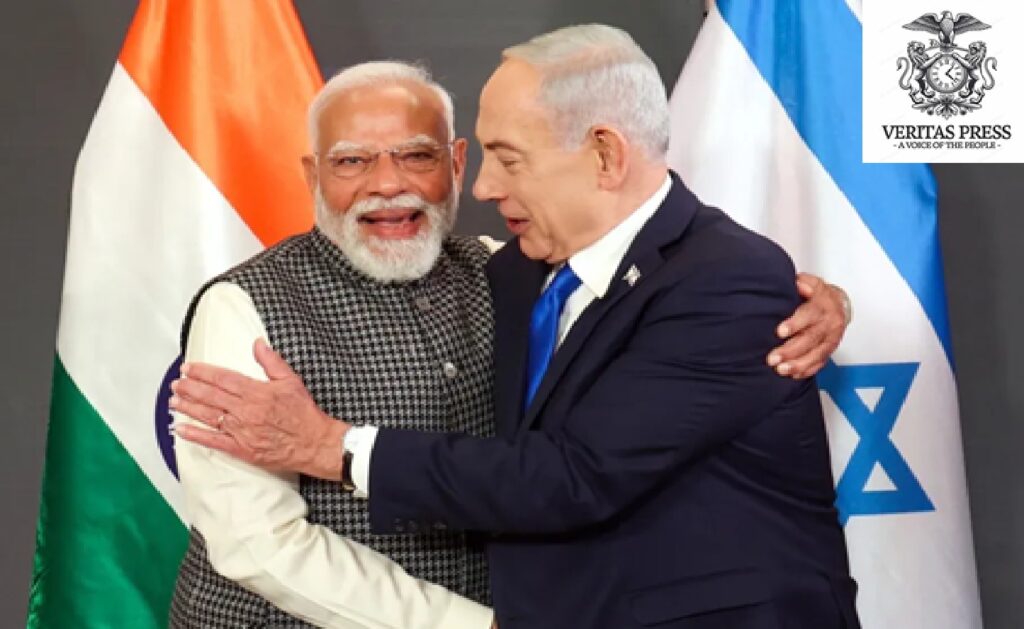
NEW DELHI/TEL AVIV: When Narendra Modi stood before the Knesset and described Israel as the