

Original Article Date Published:
Article Date Modified:
Help support our mission, donate today and be the change. Every contribution goes directly toward driving real impact for the cause we believe in.
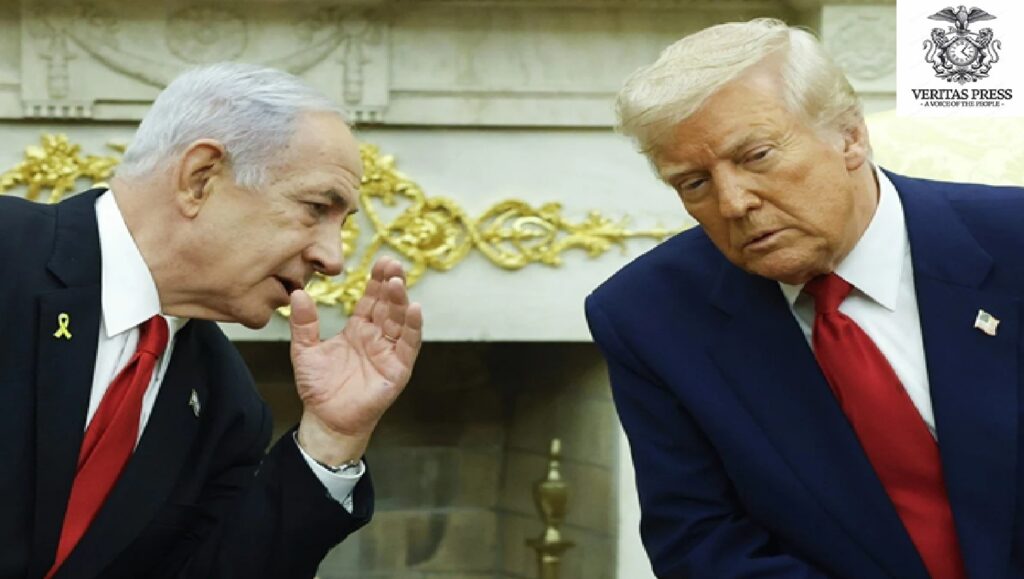
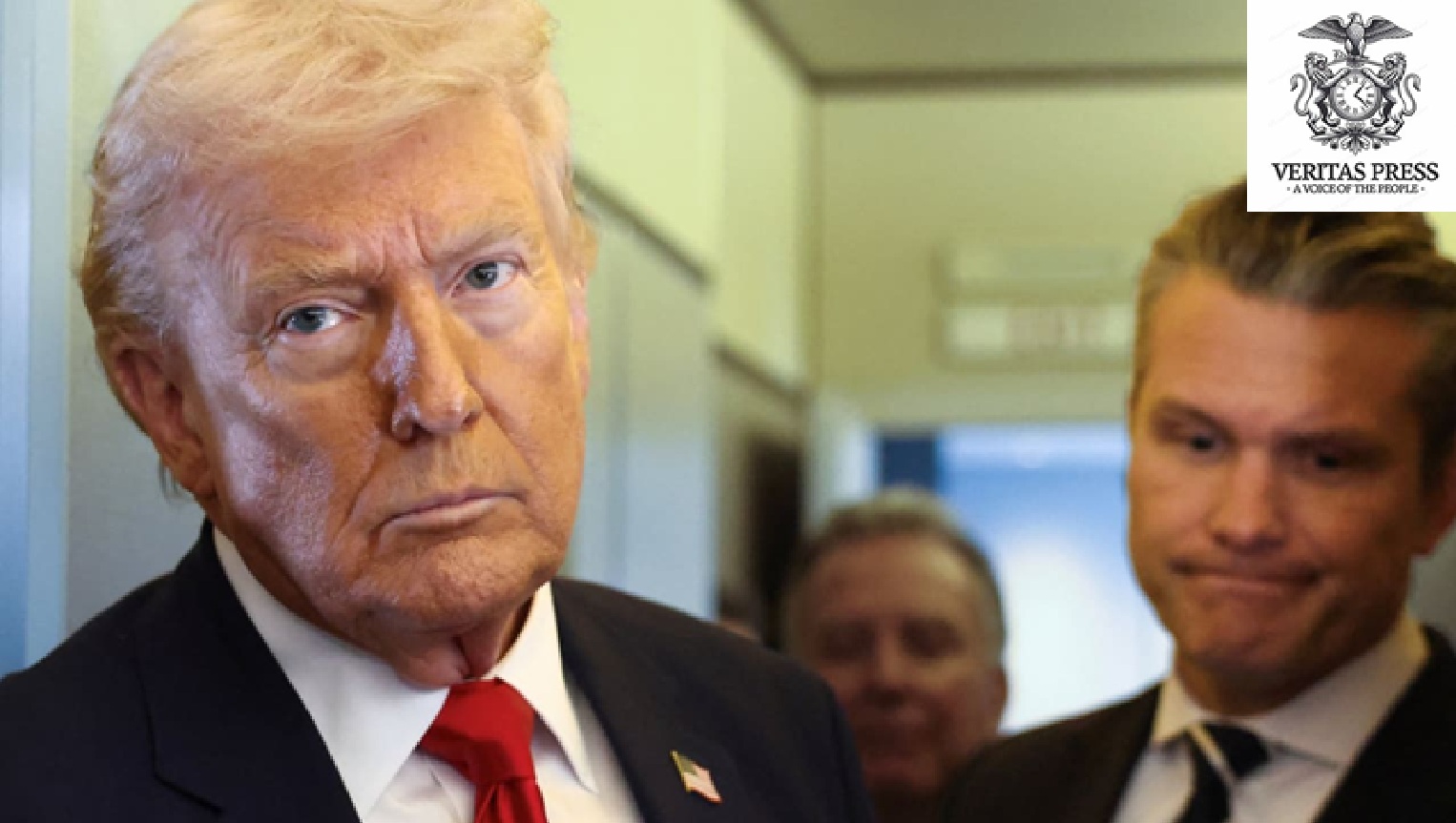
WASHINGTON – By the time US President Donald Trump took to the airwaves on April 1, 2026, the war with Iran had already defied every political timeline he had laid out. What was sold as a swift, decisive campaign to dismantle Iran’s military and nuclear ambitions had devolved into a grinding war of attrition, threatening to drag Washington back into a Middle East quagmire it had spent years trying to escape.
In his prime-time address, Trump extolled the “swift, decisive, overwhelming victories on the battlefield,” and insisted the United States was “on track to complete all of America’s military objectives shortly, very shortly”. Yet his own words betrayed the deeper reality: the war’s stated goals have been so repeatedly and dramatically reframed that “victory” now resembles a rhetorical sleight of hand, allowing an exit before any of the original strategic objectives have been fully met.
The contradiction is glaring: Trump can declare success only because the definition of success keeps changing. And as the administration races toward an exit, it is leaving behind a fractured alliance, an economy in turmoil, and a conflict whose core drivers remain entirely unresolved.
Shifting Goalposts: The Reframing Of Victory
From the very first days of the conflict, the Trump administration’s stated aims have been remarkably fluid. In his initial announcement of “Operation Epic Fury,” Trump cited Iran’s nuclear programme and missile development as the primary casus belli. Days later, his administration listed four formal goals: destroying Iran’s ballistic missile stocks, annihilating its navy, preventing it from obtaining a nuclear weapon, and stopping its funding of proxy militant groups.
But as the war unfolded, so did the objectives. Washington began floating the seizure of Iran’s oil exports, the physical occupation of Kharg Island, and the complete reopening of the Strait of Hormuz. By late March, Trump was even talking of regime change, something he had conspicuously omitted from his original list.
“We’ve won this war,” Trump declared on March 24, before suggesting within 24 hours that continued bombing might still be necessary. This pattern of oscillating rhetoric has continued unabated. By April 1, Trump was telling reporters that US forces would leave Iran “very soon” within a two-to-three-week timeline, adding that “whether we have a deal or not, it’s irrelevant”.
The shifting goalposts, as Chinese analysts were quick to note, are not a sign of strategic adaptation but of political expediency. Fan Hongda, director of the China-Middle East Centre at Shaoxing University, put it bluntly: “I would not be surprised if the US declared its victory now because it could just state that it had accomplished its goals so that the US could leave any time soon.” Zhang Chuchu, deputy director of the Centre for Middle Eastern Studies at Fudan University, added that Trump would need a “so-called achievement” to frame the war as a victory, any achievement, however vaguely defined.
Related Articles:
- The Great Abandonment: Trump’s Iran Strategy Leaves Allies Adrift In A Sea Of Chaos. “Have The Courage, Go To The Strait And Just Take The Oil”
- The Deception Doctrine: How Iran Is Rewriting The Rules Of War In The Strait Of Hormuz.
- US-Israel – US Prepares For Ground War Scenario In Iran As Strategic Gulf Targets Come Into Focus.
- The New Arms Race – How PIPIR Is Reshaping The Indo-Pacific Battlefield.
This is precisely what the prime-time address delivered: an assertion of victory so elastic that it could accommodate almost any outcome. Trump claimed Iran’s nuclear ambitions had been “systematically dismantled” and that the regime’s ability to threaten America or project power had been broken. But he offered no evidence, no battlefield assessments, and no independent verification.
Tehran’s Calculus: Resilience Over Surrender
The fundamental flaw in Trump’s exit calculus is that wars do not end because one side grows tired. In Tehran, the calculation is markedly different.
Iranian Foreign Minister Abbas Araghchi has made it clear that his country is prepared to fight for at least six months, dismissing any notion of externally imposed deadlines. “You cannot speak to the people of Iran in the language of threats and deadlines,” Araghchi told Al Jazeera. “We do not set any deadline for defending ourselves”. Iran has explicitly rejected US claims of ongoing negotiations, with foreign ministry spokesman Esmaeil Baqaei calling Trump’s assertion that Tehran had asked for a ceasefire “false and baseless”.
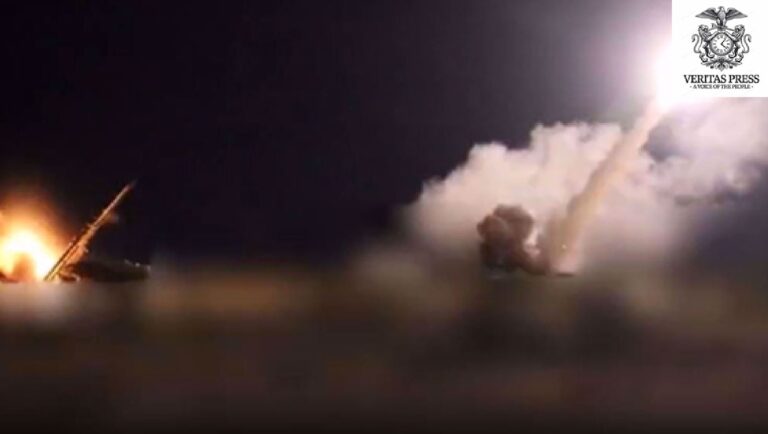
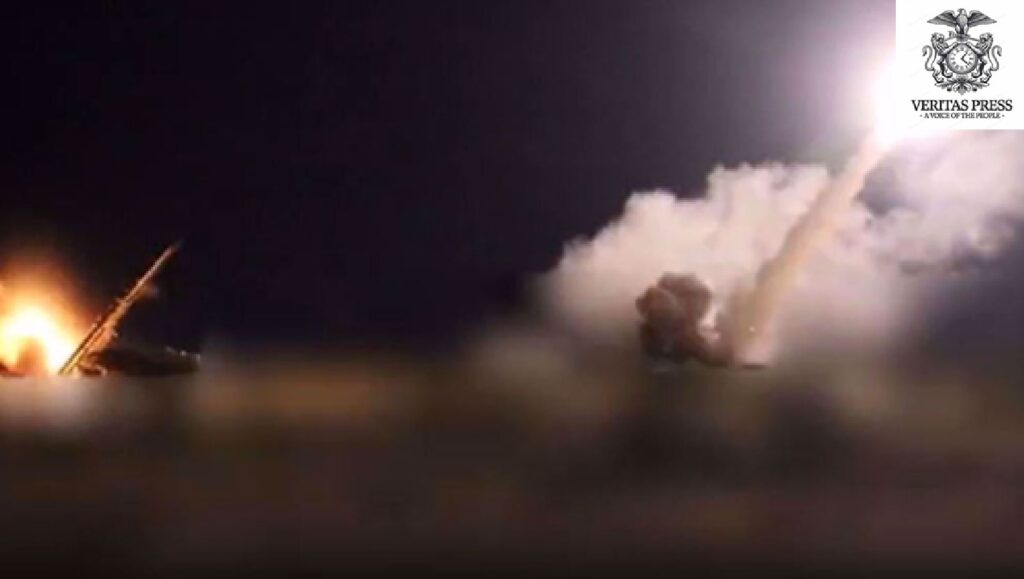
Behind this defiance lies a sober military reality. Despite a month of relentless US and Israeli airstrikes, Iran’s missile systems have proven remarkably resilient. Tehran has shifted its tactics: launching fewer missiles overall but deploying them with greater precision against higher-value targets. According to military analysts, Iran is still firing an average of 20 to 30 ballistic missiles per day, alongside dozens of drones. As retired General Joseph Votel, former commander of US Central Command, observed: “They’re not doing the big volleys like they were doing in the early days, but they don’t need to. All they really have to do is get something through, and they get a big bang for the buck”.
The resilience of Iran’s missile infrastructure has profound implications. If the war ends with Tehran still capable of threatening the Strait of Hormuz, US and Israeli shipping, and Gulf Arab energy infrastructure, Iran will claim strategic victory regardless of battlefield losses. As Nicole Grajewski, a nonresident scholar at the Carnegie Endowment for International Peace, noted: “They have been able to withstand the bombing campaign. There is something they are doing that enables them to sustain these operations”.
The Strait Of Hormuz: Iran’s Ultimate Leverage
Perhaps the most consequential failure of the US campaign is its inability to break Iran’s stranglehold over the Strait of Hormuz. The waterway, which typically carries about a fifth of the global oil supply, has been effectively closed since the war began. Transits are down 95%, with fewer than five ships passing through daily compared to around 140 in peacetime.
The economic toll has been staggering. The blockade has kept approximately half a billion barrels of oil off global markets, pushing crude prices up by around 40%. Brent futures surged 59% in March alone, the highest monthly gain on record, while West Texas Intermediate rose 58%. Energy consultancy FGE NexantECA has warned that oil could spike to $150 or even $200 a barrel if the closure persists for another six to eight weeks.
Trump’s response has been characteristically erratic. At various points, he has threatened to “obliterate” Iran’s energy plants, demanded that European allies “go get your own oil,” and suggested the United States would simply leave the strait’s reopening to other nations. “What happens with the strait we’re not going to have anything to do with,” Trump told reporters, adding that “China, China will go up and they’ll fuel up their beautiful ships… There’s no reason for us to do it”.
But walking away from the strait is not cost-free. As Ellen Wald, senior fellow at the Atlantic Council’s Global Energy Centre, explained: “It would be a disaster for energy markets because it would mean oil will have a huge surcharge from Iran. There would be a massive amount of uncertainty”. More fundamentally, abandoning the Strait would represent a historic downgrade of America’s ability to project power in the region, effectively dismantling the longstanding US security guarantee in the Middle East.
The Human Cost: Civilians Caught In The Crossfire
Behind the geopolitical manoeuvring lies a human tragedy that the Trump administration’s victory narrative cannot obscure.
The toll is staggering. According to the Iranian Ministry of Health, more than 23,000 casualties have been reported, including at least 1,801 children and 4,150 women. Human rights groups estimate the death toll at over 3,400, including more than 1,500 civilians and at least 236 children. Some 3.2 million Iranians have been displaced since the conflict began.
One of the deadliest single attacks occurred on February 28, when a US Precision Strike Missile struck a sports hall in Lamerd, killing 21 teenagers and young adults. The weapon, a newly developed US Army PrSM missile, “explodes above its target, dispersing thousands of lethal fragments to maximise human casualties,” according to Iran’s foreign ministry spokesman, who condemned the attack as a “despicable war crime”.
In Lebanon, the situation is equally dire. The country’s Ministry of Public Health reports 1,094 killed and more than 3,000 injured, with over one million people displaced. The World Health Organization has documented 77 attacks on healthcare workers, resulting in 53 deaths.
The UN Office for the Coordination of Humanitarian Affairs has warned that civilian infrastructure continues to be hit, including schools, hospitals, and residential areas. “Residential areas should be protected; this includes avoiding placing military objects in or near them, and respecting the prohibition on indiscriminate attacks,” OCHA stated.
US Senator Bernie Sanders, one of the most prominent critics of the war, highlighted the cost in stark terms: “Netanyahu led Trump into this horrific & unpopular war. Now he doesn’t know how to get out.” Sanders listed the toll: more than 1,200 Iranian civilians killed, 13 US troops killed, 3.2 million Iranians displaced, and $16.5 billion spent in just 12 days.
The Paradox Of Iranian Public Opinion
Yet the picture inside Iran is more complex than a simple anti-war narrative might suggest. While Western anti-war activists have chanted “no war with Iran,” some Iranians inside the country have responded very differently.
Following the killing of Supreme Leader Ali Khamenei, videos emerged of Iranians dancing to the Village People’s “YMCA” in the exaggerated style popularised by Trump, a surreal cultural moment that underscored the deep fissures within Iranian society. As Siavash Rokni, an Iranian pop culture expert, explained: “Iranians will use any opportunity to bypass the Islamic Republic to assure the fall of the Islamic Republic and the institution of a democracy”.
This is not ideological support for the war itself, but rather a reflection of the regime’s deep unpopularity. As one Tehran resident told Iran International after witnessing an airstrike: a video showed him thanking Trump directly. The reaction, analysts say, is about seeing any weakening of the Islamic Republic as a rare opportunity to escape decades of repression.
At the same time, the Iranian regime is cracking down ruthlessly on any potential domestic unrest. The Basij militia has set up checkpoints across major cities, recruiting children as young as 12 to staff them. Authorities have made arrests, carried out executions, and deployed massive street patrols to forestall any spark of protest. “The regime is paranoid, wounded and bitter, and it will want to crush any trouble before it starts,” said Ali Ansari, a professor of modern history at the University of St Andrews. “But doing so could actually turn more people against it”.
The most dangerous moment for Tehran may come after the war ends, when Iranians “gaze upon the ruins of their economy and consider their bleak prospects,” as one Reuters analysis put it. In January, before the war began, Iran’s ruling clerics and Revolutionary Guards killed thousands as they quashed nationwide street protests sparked by economic anger. Post-war conditions are likely to be far worse.
Allies In Retreat: The Transatlantic Rupture
Perhaps the most striking development of the war has been the widening rift between Washington and its traditional allies. European members of NATO have refused key requests for military support, denying overflight permissions, basing access, and naval deployments.
Trump’s response has been to lash out publicly, labelling NATO a “paper tiger” and threatening to withdraw the United States from the alliance. “I would say it’s beyond reconsideration,” Trump told The Daily Telegraph. “I was never swayed by NATO. I always knew they were a paper tiger”. His frustration was rooted in what he saw as a failure of reciprocity: “Ukraine wasn’t our problem. It was a test, and we were there for them. They weren’t there for us”.
European leaders have held their ground. Norwegian Prime Minister Jonas Gahr Store stated bluntly: “This is not our war. It was initiated by the US and Israel without consultation, and we believe this war should end”. Finnish President Alexander Stubb added: “As far as the war in Iran is concerned, it is not a NATO matter because NATO is a defence alliance”. France, Italy, and Spain have refused the use of their airspace for the transport of US weapons, with French junior army minister Alice Rufo noting that NATO operations in the Strait of Hormuz would be a breach of international law.
As one European official told reporters: “This isn’t the first time he’s done this, and since it’s a recurring phenomenon, you can probably judge the consequences for yourself”. The damage to transatlantic relations may prove lasting. A German government spokesperson’s dry assessment captured the broader sentiment: Europe has learned not to take Trump’s threats at face value, but also not to rely on American steadfastness.
China And Russia: Strategic Restraint
Meanwhile, China and Russia, Iran’s ostensible strategic partners, have kept their distance. While both nations have condemned the US-Israeli strikes at the UN and called for ceasefires, they have refrained from providing direct military support to Tehran.
China’s foreign minister, Wang Yi, called the strikes “a grave violation of Iran’s sovereignty” and urged an immediate cessation of military operations. Russia’s Foreign Ministry condemned the assault as a “pre-planned and unprovoked act of armed aggression”. But neither has intervened militarily, reflecting what analysts describe as a cold calculation: intervening as Iran faces the United States and Israel would bring high costs and limited gains.
Behind the scenes, however, there is evidence of quieter support. CIA Director John Ratcliffe has confirmed that Russia and China are sharing intelligence with Iran. Russia has reportedly been providing drone technology and strategy advice, while China has offered access to its BeiDou Navigation Satellite System. But this falls far short of the robust military backing that Iran might have hoped for.
The restraint of Beijing and Moscow underscores a broader reality: even Iran’s allies see this as a war they cannot afford to join. And that isolation may shape Tehran’s calculations about how long it can sustain the conflict.
Israel’s Endgame: A Problem Trump Cannot Solve
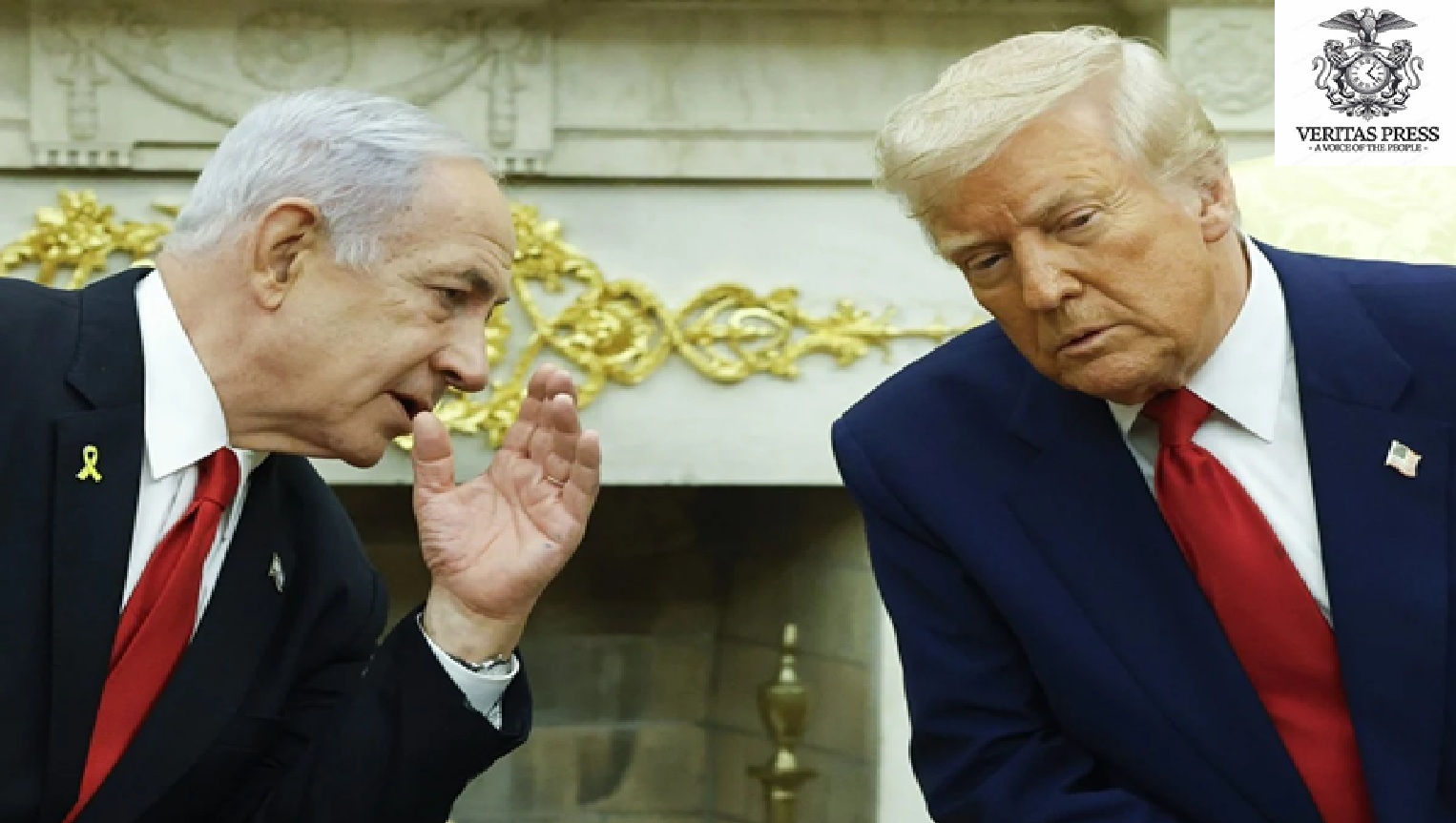
If Trump wants to exit the war, Israel presents perhaps the most intractable obstacle. Israeli Prime Minister Benjamin Netanyahu has signalled that more than half of his military aims have been achieved, but he has refused to commit to a timeline. “It’s definitely beyond the halfway point. But I don’t want to put a schedule on it,” Netanyahu told Newsmax.
According to Zhang Chuchu of Fudan University, Israel’s goals are fundamentally different from America’s. “Israel may look to completely dismantle Iran’s nuclear and missile capabilities, and also seeks to thoroughly destroy Iran’s military strength, rendering it incapable of confronting Israel in the future, so it may want to draw the US even deeper into this conflict.”
Even as Trump has signalled de-escalation, Israeli military operations continue. On the night of April 1, following Trump’s address, Israeli air defences responded to waves of Iranian missile fire, including at least two attacks after the president’s speech. The fighting shows no sign of abating.
The divergent endgames of Washington and Tel Aviv create a dangerous dynamic. If the United States withdraws while Iran’s missile arsenal remains partially intact, Israel may feel compelled to continue the campaign unilaterally, potentially drawing the US back into a conflict it thought it had left behind.
The Domestic Political Calculus
At home, Trump faces mounting pressure to end the war. A Reuters/Ipsos survey found that two-thirds of Americans believe the US should end the conflict soon, even if all its goals have not been achieved, including four in 10 Republicans. Trump’s overall job approval rating has sagged to 36% in the Ipsos poll and 35% in a CNN survey, amid GOP alarm that the war is shaking an already-difficult political landscape ahead of the November midterm elections.
Rising fuel prices are a particular vulnerability. Gasoline costs have surged since the war began, and the closure of the Strait of Hormuz has sent shockwaves through global energy markets. As Johns Hopkins professor Vali Nasr told reporters: “Trump has no solution for the chokehold that Iran is putting on global markets. If he escalates the war further, he would make the problem even worse”.
Trump’s response has been to reframe the issue, telling allies to “build up some delayed courage” and “just take it, protect it, use it for yourselves” when it comes to the strait. But this abdication of American responsibility is not cost-free, either politically or strategically.
Conclusion: The Illusion Of Exit
The central question facing the Trump administration is not whether it wants to end the war, clearly, it does, but whether it can do so without leaving behind a situation that is worse than the one it sought to remedy.
As Carl von Clausewitz observed in On War, conflict is the continuation of politics by other means, but it is also governed by its own internal logic, one that resists political timelines and rhetorical shortcuts. Trump appears to be attempting the inverse: forcing war to conform to his messaging, to bend to declarations of victory and imminent closure. Yet Clausewitz offers a quieter, more sobering reminder: “Everything in war is very simple, but the simplest thing is difficult.”
The difficulty is now on full display. Iran still holds the Strait of Hormuz. Its missile systems remain operational. Its proxies continue to strike US and Israeli targets. And the regime in Tehran, while battered, shows no sign of collapse. Trump can declare victory, redefine objectives, and order a withdrawal. But none of that will make the war’s underlying drivers disappear.
The million-dollar question, as one analyst put it, is not whether Trump wants to end the war. It is whether he knows what he is doing.
Source: Multiple News Agencies
Submissions:
For The Secure Submission Of Documentation, Testimonies, Or Exclusive Investigative Reports From Any Global Location, Please Utilise The Following Contact Details For Our Investigations Desk: enquiries@veritaspress.co.uk or editor@veritaspress.co.uk
Help Support Our Work:
Popular Information is powered by readers who believe that truth still matters. When just a few more people step up to support this work, it means more lies exposed, more corruption uncovered, and more accountability where it’s long overdue.
Help Protect Independent Journalism, Which Is Currently Under Attack.
If you believe journalism should serve the public, not the powerful, and you’re in a position to help, becoming a DONATOR or a PAID SUBSCRIBER truly makes a difference.
DONATION APPEAL: If You Found This Reporting Valuable, Please Consider Supporting Independent Journalism.
Help Support Our Work – We Know, We Know, We Know …
Seeing these messages is annoying. We know that. (Imagine what it’s like writing them … )
Your support fuels our fearless, truth-driven journalism. In unity, we endeavour to amplify marginalised voices and champion justice, irrespective of geographical location.
But it’s also extremely important. One of Veritas Press’s greatest assets is its reader-funded model.
1. Reader funding means we can cover what we like. We’re not beholden to the political whims of a billionaire owner. We are a small, independent and impartial organisation. No one can tell us what not to say or what not to report.
2. Reader funding means we don’t have to chase clicks and traffic. We’re not desperately seeking your attention for its own sake: we pursue the stories that our editorial team deems important and believe are worthy of your time.
3. Reader Funding: enables us to keep our website and other social media channels open, allowing as many people as possible to access quality journalism from around the world, particularly those in places where the free press is under threat.
We know not everyone can afford to pay for news, but if you’ve been meaning to support us, now’s the time.
Your donation goes a long way. It helps us:
- Keep the lights on and sustain our day-to-day operations
- Hire new, talented independent reporters
- Launch real-time live debates, community-focused shows, and on-the-ground reporting
- Cover the issues that matter most to our communities, in real time, with depth and integrity
We have plans to expand our work, but we can’t do it without your support. Every contribution, no matter the size, helps us stay independent and build a truly people-powered media platform. If you believe in journalism that informs, empowers, and reflects the communities we serve, please donate today.
USA, NASA – Spurred by American ingenuity, astronauts on NASA’s Artemis II mission are in
At the National Education Union (NEU) conference in Brighton, general secretary Daniel Kebede delivered a
WASHINGTON – By the time US President Donald Trump took to the airwaves on April
WEST BANK – The Knesset’s approval on March 30, 2026, of a law imposing the
In the annals of American foreign policy, few moments have laid bare the tectonic shift
TEHRAN — In the early hours of March 31, 2026, the Islamic Revolution Guards Corps

On March 30, 2026, the Israeli Knesset passed legislation that fundamentally alters the country’s relationship
LONDON, UK – On a crisp Saturday in late March, central London became the stage
BINT JBEIL, LEBANON – The airstrike came just after midnight. Israeli warplanes targeted the perimeter
More than half a decade after COVID-19 first reshaped global society, a new variant dubbed