

Title: “Unacceptable, Worsens Situation”, Spain’s Sharp Rebuke Exposes A Broader Humanitarian And Legal Crisis In Gaza.
Press Release: Veritas Press C.I.C.
Author: Kamran Faqir
Article Date Published: 02 Jan 2026 at 19:30 GMT
Category: Europe | Spain-Palestine | “Unacceptable, Worsens Situation”, Spain’s Sharp Rebuke Exposes A Broader Humanitarian And Legal Crisis In Gaza.
Source(s): Veritas Press C.I.C. | Multi News Agencies
Website: www.veritaspress.co.uk

Business Ads

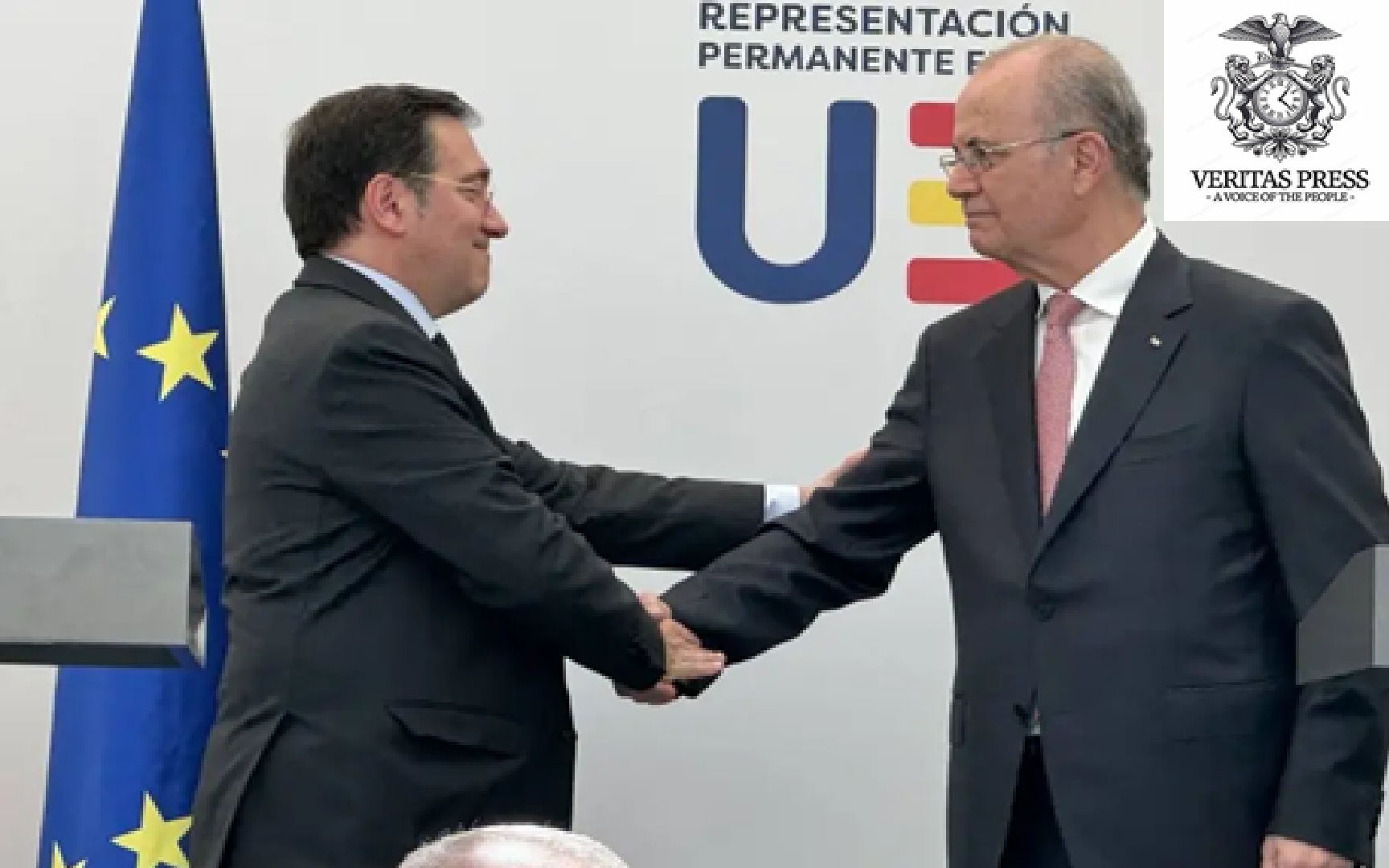
MADRID / GAZA, 2 January 2026 — Spain’s foreign minister José Manuel Albares has not merely criticised Israel’s latest restrictions on international humanitarian organisations; he has placed the actions within a broader narrative of systemic obstruction, warning that these measures deepen an already catastrophic humanitarian crisis, undermine international law, and threaten the very survival of vulnerable civilians in the Gaza Strip.
“The humanitarian situation in Gaza is catastrophic. Restrictions on NGOs are unacceptable and worsen the situation,” Albares told Palestinian Prime Minister Mohammad Mustafa in a phone call, while insisting that UNRWA and UN agencies must operate freely across Gaza and the West Bank.
The Ban On INGOs: Beyond Bureaucracy, A Strategic Obstruction?
On 1 January 2026, Israel formally revoked licences for 37 international humanitarian organisations, including high-impact groups such as Médecins Sans Frontières (MSF), CARE International, Oxfam, World Vision, and the Norwegian Refugee Council. These bans, due to take full effect on March 1, prohibit these organisations from operating in Gaza and the occupied West Bank, unless they comply with new Israeli vetting requirements.
Israel justified the measure as security-driven, requiring groups to submit complete details of their Palestinian staff, funding sources, and organisational structures, ostensibly to prevent militant infiltration.
But this bureaucratic framing masks a more fundamental problem, rights experts argue: the criminalisation of humanitarian aid itself.
Humanitarian And Legal Voices: ‘Catastrophic Consequences’.
The United Nations, European governments, rights groups, and the NGOs themselves have reacted with alarm:
- UN Secretary-General Antonio Guterres condemned parallel Israeli legislation cutting water and electricity to UNRWA facilities — emphasising that UN agencies retain legal protections under the Convention on the Privileges and Immunities of the United Nations. He stressed that such actions “further impede” humanitarian operations already under strain.
- UNRWA Commissioner-General Philippe Lazzarini accused Israel of pursuing a campaign to discredit the agency and obstruct its critical work, warning that undermining humanitarian operations sets a “dangerous precedent”.
- In a joint statement, Western foreign ministers from Canada, France, the UK, and others called on Israel to ensure that INGOs can operate in Gaza “in a sustained and predictable way”, warning that one in three healthcare facilities could close if the ban goes ahead.
- UN human rights officials described the ban as “outrageous”, stressing that removing humanitarian actors amid winter, severe food insecurity, and collapsing infrastructure will be devastating for children, women, and men reliant on aid.
Aid Workers Warn Of Collapsed Services And Security Risks:
Voices from within the humanitarian sector paint a stark picture:
- Shaina Low, communications adviser for the Norwegian Refugee Council, said the ban will overburden exhausted local staff and strip Gaza of essential services. “Not being able to send staff into Gaza means all of the workload falls on our exhausted local staff,” she told the press, describing the new requirements as legally and operationally unworkable.
- Aid groups have repeatedly raised data security concerns, noting that Israeli demands for employee lists could place Palestinian staff at direct risk, especially given that hundreds of aid workers have been killed during the conflict.
Experts argue that the new rules breach core humanitarian principles of independence, neutrality, and impartiality, making operational conditions for INGOs untenable. Al Jazeera
Palestinians Fear The Human Cost:
Local testimony underscores what international organisations have warned:
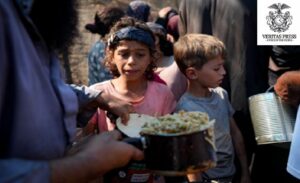
“Even with the presence of humanitarian organisations, the situation is already tragic,” said Gaza resident Ramzi Abu al-Neel. “If their support and presence are removed, many children will die, and lives will be destroyed.”
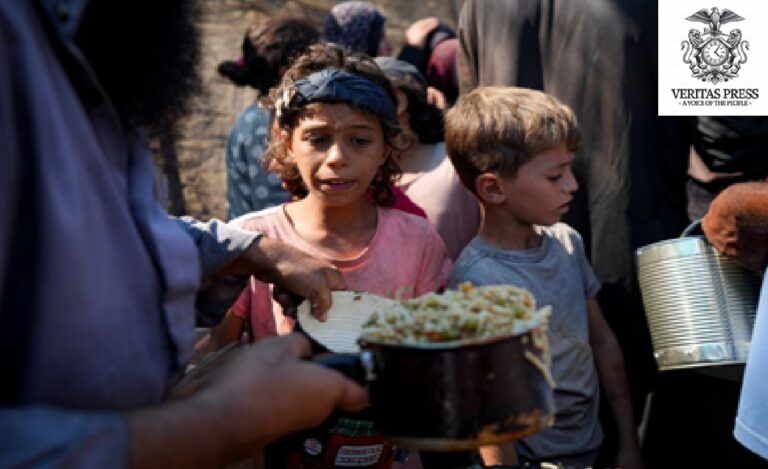
Displaced families like Abdullah al-Hawajri of Khan Younis emphasise the sheer dependency on aid: “Most people rely entirely on the assistance that comes from international organisations.”
Critics Frame The Ban As Part Of A Broader Strategy:
Human rights advocates see the move not as an isolated regulatory tweak but part of a broader agenda to assert control over Gaza’s humanitarian space:
- A coalition of 18 Israeli civil society organisations, including B’Tselem and Physicians for Human Rights-Israel, condemned the measure as “weaponisation of bureaucracy”, undermining independent humanitarian action.
- Critics note that many of the organisations targeted are not fringe groups but vital providers of essential services whose absence cannot easily be compensated, especially amid ongoing reconstruction needs.
- Legal analysts point to a pattern: the targeting of UNRWA (from licence revocation to cuts in utilities) and the push to restructure humanitarian delivery away from established bodies have raised red flags about compliance with international humanitarian law and the protections owed to civilians under occupation.
Spain’s Critique: More Than Words.
Spain’s government responded forcefully, denouncing the restrictions as an attempt to limit humanitarian work and obstruct responses to the humanitarian catastrophe in Gaza. It emphasised that such actions compound the devastation wrought by years of conflict and undermine efforts to meet even basic needs.
Albares also called on Israel to release nearly $2 billion in withheld Palestinian tax revenues, a financial chokehold that Palestinian authorities say violates existing agreements and cripples essential governance functions.
Legal And Moral Faultlines: A Broader International Rift.
The crisis over NGO access has become a legal battleground:
- The International Court of Justice (ICJ), in advisory opinions, has reiterated Israel’s obligations to ensure unimpeded humanitarian access in occupied territories and to refrain from creating conditions of famine or deprivation, rulings that critics say are at odds with the current restrictions.
- Western governments have openly criticised the NGO vetting framework, with the EU describing the law as non-implementable in its current form and violating data protection norms, further complicating diplomatic relations.
- Israel’s framing of security concerns has been widely rejected by humanitarian actors, some of whom argue that such requirements are a pretext for sidelining independent witnesses and voices documenting civilian suffering and rights abuses.
The Reality On The Ground: Beyond Policy To Human Cost.
As winter intensifies in Gaza, where millions are displaced, housing is destroyed, water and sanitation systems have collapsed, and food insecurity is acute, the withdrawal of INGOs risks plunging the territory into a deeper humanitarian catastrophe. The Guardian
Even within ceasefire frameworks, aid organisations have documented that restricted access, delayed supplies, and political obstacles have left essential aid trapped at borders, a crisis now magnified by the prospect of scaled-back NGO presence.:
Conclusion: The Systematic Obstruction Of Humanitarian Relief And The Legal Architecture Of Impunity.
Spain’s denunciation of Israel’s restrictions on international humanitarian organisations lays bare not a regulatory disagreement, but a prima facie breach of Israel’s obligations as an occupying power under international humanitarian law. The deregistration and effective expulsion of INGOs from Gaza and the occupied West Bank cannot be viewed in isolation; rather, they form part of a pattern of conduct that legal scholars and human rights organisations increasingly describe as unlawful interference with humanitarian relief operations.
This denunciation is not diplomatic posturing. It reflects a growing international consensus that Israel’s measures compromise core humanitarian principles, place civilian lives at greater risk, undermine international law, and weaken mechanisms for neutral, independent aid delivery in one of the world’s most embattled regions. Whether this pressure will translate into meaningful policy shifts remains uncertain. But for Gaza’s civilians, already bearing the brunt of prolonged conflict, mass displacement, occupation, ethnic cleansing, forced displacement, starvation, aid restrictions and infrastructure collapse, the stakes could not be higher.
Under Article 59 of the Fourth Geneva Convention, an occupying power is obligated to allow and facilitate the rapid and unimpeded passage of humanitarian relief for civilians in need. The deliberate suspension of NGO registrations, the imposition of non-viable vetting requirements, and the targeting of UNRWA, including legislative measures to cut water and electricity to its facilities, constitute measures of obstruction that may amount to collective punishment, expressly prohibited under Article 33 of the Convention. When assessed cumulatively, these policies transform humanitarian access from a legal obligation into a conditional privilege, subject to political approval.
Moreover, the selective criminalisation of humanitarian actors raises serious concerns under customary international humanitarian law, which protects impartial humanitarian relief personnel and guarantees their freedom to carry out their functions. By conditioning access on political and security compliance beyond reasonable necessity, Israel risks violating the principle of humanitarian neutrality, a cornerstone of IHL and UN humanitarian doctrine. As humanitarian organisations have repeatedly warned, the removal of INGOs does not merely limit aid delivery; it engineers deprivation, transferring the burden of survival onto an already devastated civilian population.
Legal experts further caution that the cumulative impact of these policies, when combined with prolonged siege conditions, Israeli control over borders and essential goods, and the large-scale destruction of civilian infrastructure, may meet the legal threshold of “starvation of civilians as a method of warfare,” prohibited under Article 54 of Additional Protocol I and recognised as a war crime under Article 8(2)(b)(xxv) of the Rome Statute of the International Criminal Court. The foreseeability of humanitarian collapse under such conditions satisfies the element of intent recognised in international criminal jurisprudence.
Critically, humanitarian organisations also function as independent monitors and evidence-gatherers. Their exclusion narrows the space for documentation and accountability at a moment when allegations of war crimes and crimes against humanity are under international scrutiny. Legal analysts warn that the systematic obstruction of humanitarian operations may impede future accountability mechanisms, including investigations by the International Criminal Court and compliance assessments stemming from the International Court of Justice’s advisory opinion, which affirmed the illegality of Israel’s occupation and settlement enterprise. In substance, if not yet in formal legal designation, the NGO ban risks constituting obstruction of justice.
Spain’s intervention also exposes the widening dissonance between codified international law and its enforcement. While the prohibition of forcible transfer, annexation, and settlement expansion is well established under Article 49(6) of the Fourth Geneva Convention and repeatedly reaffirmed by the ICJ, Israel’s continued expansion of illegal settlements and administrative strangulation of Palestinian institutions reveal a pattern of de facto annexation, eroding the Palestinian people’s right to self-determination as enshrined in the UN Charter and the International Covenant on Civil and Political Rights.
The ongoing withholding of Palestinian tax revenues further implicates violations of international fiduciary obligations under existing agreements and may amount to economic coercion incompatible with Israel’s duties as an occupying power. Taken together, the obstruction of humanitarian relief, financial strangulation, settlement expansion, and institutional dismantling constitute a composite internationally wrongful act, engaging state responsibility under the Articles on Responsibility of States for Internationally Wrongful Acts (ARSIWA).
For Gaza’s civilian population, the consequences are immediate and severe. As Médecins Sans Frontières has warned, “humanitarian access is not discretionary; it is a binding legal obligation.” The denial of that access transforms humanitarian deprivation into a predictable and foreseeable outcome, raising the spectre of crimes against humanity, particularly persecution and other inhumane acts under Article 7 of the Rome Statute, when committed as part of a widespread or systematic attack against a civilian population.
Spain’s condemnation reflects a broader international legal reckoning. Yet absent effective countermeasures, including sanctions, enforcement of arms embargoes, universal jurisdiction prosecutions, and concrete protections for humanitarian actors, the erosion of humanitarian law risks becoming normalised. The central question confronting the international community is no longer whether Israel’s actions violate international legal norms, the law is unequivocal, but whether states will fulfil their own duty to ensure respect for the Geneva Conventions under Common Article 1.
At stake is not only Gaza’s survival, but the credibility of the international legal order itself.
In the face of mounting evidence of crimes against humanity, how long will Israel’s unprecedented and unchecked lies be permitted to substitute for accountability under international law?