

Original Article Date Published:
Article Date Modified:
Help support our mission, donate today and be the change. Every contribution goes directly toward driving real impact for the cause we believe in.
LONDON — In the polished corridors of 10 Downing Street, the language remains meticulously calibrated: “collective self-defence,” “defensive operations,” “not getting drawn into the wider conflict.” But on the ground, in the waters of the Persian Gulf and across the military installations of the Indian Ocean, those carefully chosen words are beginning to ring hollow.
On Friday, the United Kingdom formally approved an expansion of United States access to British military bases for strikes targeting Iranian missile sites threatening shipping in the Strait of Hormuz. The decision, announced after a Cabinet meeting on March 20, marks a significant escalation in Britain’s involvement in the US-Israeli offensive against Iran that began on February 28, an offensive that has already killed an estimated 1,300 people, including then-Supreme Leader Ali Khamenei.
The policy shift represents what opposition Conservative leader Kemi Badenoch, writing on X, called the “mother of all U-turns”. And it raises a fundamental question that Prime Minister Keir Starmer’s government has so far failed to answer convincingly: At what point does “defensive support” become indistinguishable from active participation in war?
The Quiet Reversal: From Red Line To Green Light.
When the high-intensity US-Israeli offensive, codenamed Operation Epic Fury by Pentagon officials, was launched in late February, the British position appeared clear. Starmer initially rejected US requests to use British bases for strikes on Iran, insisting he needed to be satisfied that any military action was legal. The government’s public stance emphasised restraint, de-escalation, and a refusal to be drawn into another Middle Eastern conflict.
That clarity has since eroded.
According to a Downing Street statement released Friday, ministers “confirmed that the agreement for the US to use UK bases in the collective self-defence of the region includes US defensive operations to degrade the missile sites and capabilities being used to attack ships in the Strait of Hormuz”.
The phrasing is careful, almost legalistic. But the substance is unmistakable: RAF Fairford in Gloucestershire and Diego Garcia, the joint US-UK base in the Indian Ocean, are now authorised platforms for American strikes against Iranian military infrastructure.
The government insists that “the principles behind the UK’s approach to the conflict remain the same” and that Britain is “not getting drawn into the wider conflict”. Yet the expansion of base access comes barely three weeks after the conflict began, following sustained public pressure from President Donald Trump, who had grown increasingly frustrated with what he perceived as allied hesitation.
Speaking to reporters outside the White House on Friday, Trump called it “a very late response from the UK”. He added: “I’m surprised because the relationship is so good, but this has never happened before. They were really, pretty much our first ally, all over the world.”
The criticism had been building for weeks. On Monday, Trump said there were “some countries that greatly disappointed me” before he singled out Britain, which he said had once been considered “the Rolls-Royce of allies”. In another social media post, he called NATO allies “cowards,” insisting the US could secure the Strait of Hormuz alone while accusing its partners of failing to step up.
Behind closed doors, the diplomatic pressure was intense. And it appears to have worked.
The Gulf’s Critical Artery: Why The Strait Matters.
The Strait of Hormuz is not merely another shipping lane. It is, as the International Institute for Strategic Studies (IISS) recently noted, “a chokepoint like no other”.
Under normal circumstances, approximately 20% of the world’s oil, about 20 million barrels per day, passes through its narrow waters, along with roughly 20% of the global liquefied natural gas trade. The strait, which narrows to just 21 miles (33 kilometres) at its tightest point, connects the Gulf to the Gulf of Oman and the Arabian Sea. It is the only maritime route in and out of the Gulf.
The stakes, therefore, are global. When Iran effectively closed the Strait to most shipping in retaliation for the US-Israeli offensive, the economic consequences were immediate and severe.
Oil prices have surged from approximately $70 per barrel before the conflict to $109, briefly touching $119 earlier this week. UK gas prices have nearly doubled, rising from 80p per therm to 151p, with a peak of 184p. At the pump, average petrol prices have increased by almost 12p per litre (9%) since the conflict began, while diesel has jumped by 24p (17%), adding roughly £13 to the cost of filling a typical family car.
For British households already struggling with a cost-of-living crisis, these increases translate into tangible pain. Housing Secretary Steve Reed met with local residents on Friday to discuss efforts to protect household finances, with Starmer acknowledging that “the longer the conflict continues, the bigger the impact on the cost of living”.
But the economic disruption extends far beyond Britain. The International Energy Agency has warned that the world faces the “greatest global energy security challenge in history”. And as the IISS analysis notes, the Strait of Hormuz lacks the redundancy of other maritime chokepoints: while shippers could reroute around the Cape of Good Hope when Houthi rebels threatened the Bab el-Mandeb Strait, no such alternative exists for Hormuz.
The Human Cost: Seafarers Trapped And Stranded.
Amid the geopolitical manoeuvring and economic calculations, a human crisis is unfolding that has received far less attention.
According to the International Maritime Organisation (IMO), approximately 20,000 seafarers are currently stranded in the Gulf west of the Strait of Hormuz, unable to leave following Iranian threats to attack ships. These are civilian merchant mariners, many from developing countries, who have become unwilling hostages to a conflict not of their making.
In an extraordinary session convened in London last week, the IMO Council strongly condemned the threats and attacks against vessels and the “purported closure” of the strait, calling for a coordinated international approach to ensure the safety of navigation.
The Council urged that “all attacks on ships affecting innocent civilian seafarers be halted immediately” and called on member states to ensure the continued provision of water, food, fuel, and other essential supplies to ships currently unable to leave the region.
IMO Secretary-General Arsenio Dominguez, in his closing remarks, struck a tone of urgency that stands in stark contrast to the careful diplomatic language emanating from Downing Street:
“Let it be the responsibility of each and every one of us to demonstrate that inaction is not an option, that words alone are not sufficient. Together, we can drive the change required to protect the well-being of those who have no voice and safeguard the principle of freedom of navigation”.
The IMO has called for the establishment of a “safe maritime framework” as a provisional and urgent measure to facilitate the safe evacuation of merchant ships currently confined within the Gulf region. “I am ready to start working immediately in negotiations to establish a humanitarian framework to evacuate all vessels and seafarers trapped,” Dominguez said. “However, for this to materialise, I will need the understanding, commitment and, above all, the concrete actions from all relevant countries and stakeholders”.
Iran’s Warning: “Participation In Aggression.”
The Iranian response to Britain’s decision was swift, sharp, and unambiguous.
Foreign Minister Abbas Araghchi, in a phone call with British Foreign Secretary Yvette Cooper, warned that allowing US access to British military bases would be considered “participation in aggression” and would leave a lasting mark on relations between Tehran and London.
In a post on X, Araghchi wrote that Starmer was “putting British lives in danger by allowing UK bases to be used for aggression against Iran,” adding that “Iran will exercise its right to self-defence.”
The Iranian foreign ministry readout of the call, released on Friday, said Araghchi “criticised Britain for allowing the United States access to British military bases, calling the move tantamount to participation in aggression against Iran and warning it would leave a lasting mark on relations between Tehran and London”.
Araghchi also invoked Iran’s right to self-defence under the United Nations Charter, accused the United States of using bases in neighbouring countries to strike Iranian territory, and condemned recent attacks on Iran’s South Pars gas field.
The Iranian warning was not merely rhetorical. In a chilling post written in Farsi on Telegram, Araghchi claimed he told Cooper: “At the same time, we reserve our inherent right to defend the country’s sovereignty and independence.”
The British Foreign Office, in response, said Cooper had “warned Iran against targeting UK bases, territory or interests directly” and condemned the country’s “reckless attacks” on Gulf partners and critical energy infrastructure.
It is a dangerous game of diplomatic chicken, with both sides trading threats while the military situation on the ground continues to escalate.
The Military Reality: A Tactically Complex Environment.
Behind the political rhetoric, military planners are grappling with a challenge that one senior US officer described as a “tactically complex environment.”
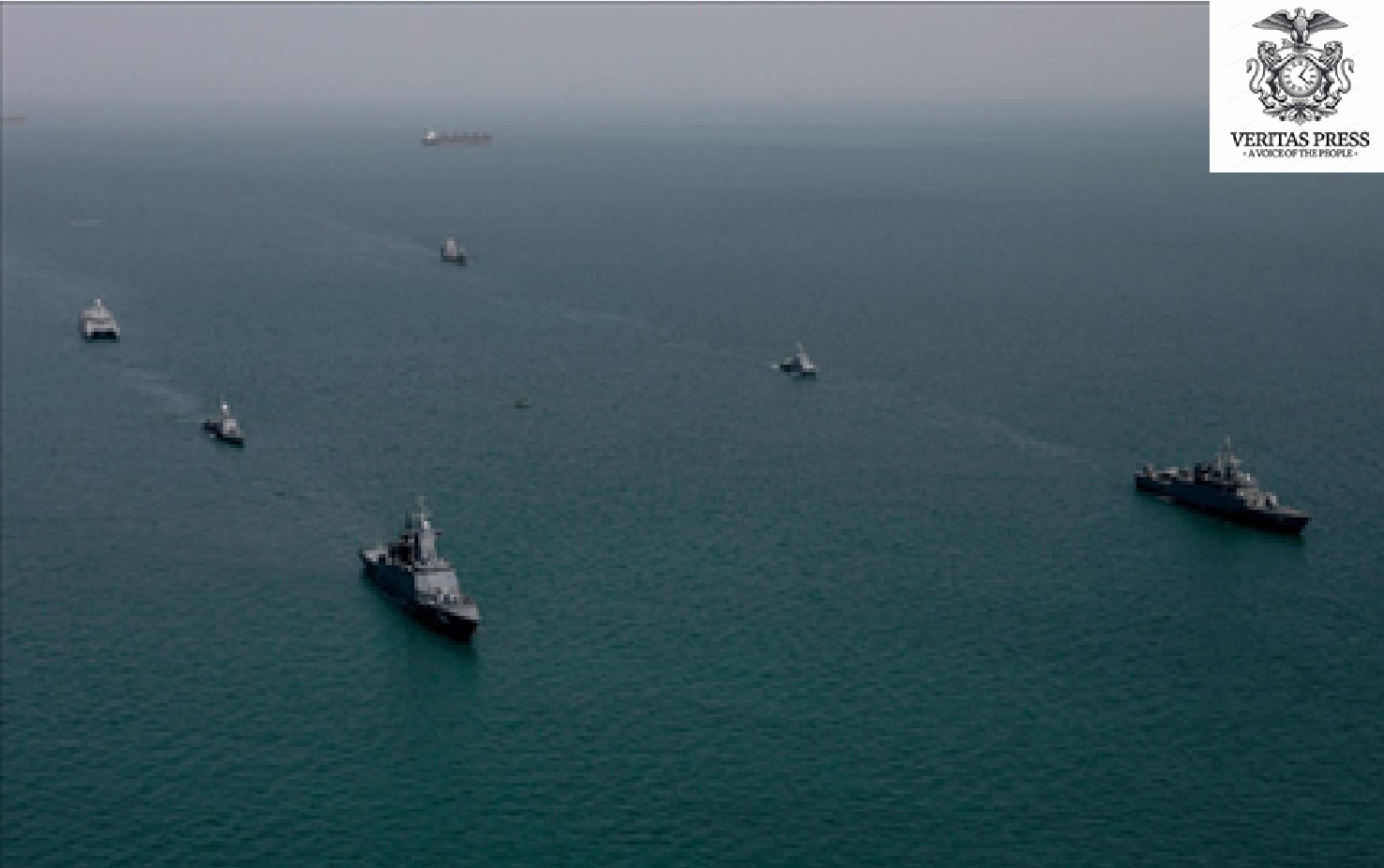
The conventional wisdom that the US Navy can escort commercial shipping through the strait has collided with the harsh reality of Iran’s asymmetric capabilities. As the IISS analysis points out, the main threat comes not from Iran’s conventional navy but from its “considerable array of land-based anti-ship missiles and its unconventional and asymmetric arsenal of one-way attack uninhabited aerial vehicles (UAVs), swarms of small attack craft and potentially uncrewed surface vessels, midget submarines, and limpet and other naval mines.”
Even for the US Navy, escorting commercial ships under these conditions would be a significant challenge. It would require diverting naval resources from other missions, substantial air support, and operating in constricted waters where warning times of attack are short and capability advantages are reduced.
The US has already deployed additional forces to the region. According to media reports, around 2,500 Marines from the California-based USS Boxer and the 11th Marine Expeditionary Unit are heading to the Middle East, arriving three weeks ahead of schedule. The amphibious ready group led by the big-deck amphibious-assault ship USS Tripoli, with more than 2,000 US Marines aboard, is reportedly being positioned for potential future missions that could include raids on shore-based threats around the strait.
European allies, meanwhile, have shown limited appetite for direct military engagement. While France initially called for a protection effort, President Emmanuel Macron suggested this would only be possible after the worst of the combat operations had died down. The European Union’s experience marshalling forces for the Red Sea, where only a handful of countries actually sent warships, operating under restrictive rules of engagement, has not inspired confidence that a more challenging mission in the Gulf would fare better.
The UK, for its part, faces its own capability challenges. Having spent decades maintaining a naval presence in the Gulf, Britain has in recent years withdrawn most of its assets. As the IISS notes, “the UK may be uniquely embarrassed by the timing of this conflict. It spent decades maintaining a naval presence in the Gulf, which until recently included a frigate, four mine-countermeasures vessels that were considered a ‘crown jewel’ capability, and an auxiliary mother ship. None of these remain.”
The Coalition Response: Twenty Nations Speak.
On Friday, a coalition of 20 nations, including the United Kingdom, France, Germany, Italy, the Netherlands, Japan, Canada, South Korea, New Zealand, Denmark, Latvia, Slovenia, Estonia, Norway, Sweden, Finland, the Czech Republic, Romania, Lithuania, and Bahrain, issued a joint statement condemning Iran’s attacks on commercial shipping.
The statement, released through Finnish President Alexander Stubb’s office, “condemns in the strongest terms recent attacks by Iran on unarmed commercial vessels in the Gulf, attacks on civilian infrastructure including oil and gas installations, and the de facto closure of the Strait of Hormuz by Iranian forces.”
It expresses “deep concern about the escalating conflict” and calls on Iran to “cease immediately its threats, laying of mines, drone and missile attacks and other attempts to block the Strait to commercial shipping, and to comply with UN Security Council Resolution 2817.”
The signatories also expressed readiness to “contribute to appropriate efforts to ensure safe passage through the Strait” and welcomed “the commitment of nations who are engaging in preparatory planning.”
The joint statement represents a significant diplomatic achievement for the US and its allies, demonstrating that despite the reluctance of some European nations to commit military assets, there is a broad international consensus on the need to maintain freedom of navigation in the strait.
But as the IISS analysis cautions, “a naval mission is not a panacea when it comes to restoring stable energy and other maritime trade.” The political cross-currents at play, including a desire by many nations not to be too closely associated with US policy, have complicated responses to every recent threat to navigation in the region. The risk is that a combination of capability shortfalls and political sensitivities will produce a response that is sub-optimal, fragmented, and ultimately insufficient.
Domestic Discontent: The Politics Of Escalation.
If the international response has been mixed, the domestic British reaction to Friday’s announcement has been decidedly hostile in some quarters.
Badenoch’s characterisation of the decision as the “mother of all U-turns” was echoed by other Conservative figures. Shadow Defence Secretary James Cartlidge said: “Where we have been clear from the outset that we would have allowed our closest military ally to use our bases, Starmer has been all over the place. When we need strong leadership in challenging times, Starmer is weak and indecisive.”
The Liberal Democrats went further, calling for a parliamentary vote on the terms of the agreement. Foreign affairs spokesman Calum Miller said: “We have warned from the start that the UK has to avoid being dragged into another war in the Middle East with no obvious end. This decision by the prime minister reminds us all of the disaster of Iraq and shows how we’re being drawn further and further down Trump’s slippery slope.”
Perhaps more significantly, public opinion appears to be firmly against deeper British involvement. A YouGov poll cited by multiple news outlets found that 59% of those surveyed opposed the US-Israeli attacks. According to Pars Today, citing Iranian state media, 70% of Britons do not agree with London joining the US military invasion of Iran, while 57% considered the US decision to militarily attack Iran a mistake.
The economic consequences of the conflict are already beginning to bite, and British economists have warned of a severe crisis resulting from the financial impact of the war. The Daily Telegraph reported that more than 100,000 people may lose their jobs due to pressure on British companies, stemming from increased energy prices and decreased economic activity. The unemployment rate in Britain has increased to 5.2%, the highest level recorded in the past five years.
The Legal Argument: Collective Self-Defence Under Scrutiny.
Central to the government’s justification for its expanded role is the concept of “collective self-defence,” the idea that the UK has the legal right to assist the US in defending regional allies against Iranian attacks.
The Downing Street statement on Friday reaffirmed “that the principles behind the UK’s approach to the conflict remain the same: the UK remains committed to defending our people, our interests and our allies, acting in accordance with international law and not getting drawn into the wider conflict.”
But legal experts and critics have questioned whether the “collective self-defence” argument holds up under scrutiny. The UK is not itself under direct attack from Iran, and the US-Israeli offensive that triggered the Iranian response was initiated by Washington and Jerusalem, not Tehran.
Former foreign secretary Sir Malcolm Rifkind, while critical of Iran’s actions, acknowledged the complexity of the situation: “The UK has not acted aggressively towards Iran during the current war. Iran, however, has been very aggressive towards the UAE, Saudi Arabia, Qatar, Kuwait, Oman and Bahrain, none of whom had attacked Iran. What hypocrisy.”
Yet the question of who started what is increasingly beside the point. What began as a limited US-Israeli operation has metastasised into a regional conflagration with no clear off-ramp. And with each escalation, the killing of Supreme Leader Ali Khamenei, the closure of the Strait of Hormuz, the deployment of US Marines, the expansion of British base access, the conflict takes on a momentum of its own.
The Path Ahead: De-Escalation Or Deeper Entanglement?
In its official statements, the UK government continues to call for “urgent de-escalation and a swift resolution to the war.” Starmer reiterated on Monday that “while taking the necessary action to defend ourselves and our allies, we will not be drawn into the wider war.”
But critics argue that the distinction between “defensive support” and “active participation” is becoming increasingly difficult to sustain. When British bases are used to launch strikes that kill Iranian military personnel, when British intelligence supports US targeting decisions, when British-supplied weapons are used in combat operations, at what point does the UK become a co-belligerent rather than a supporting ally?
The debate is not merely academic. Iran has made clear that it views British base access as participation in aggression, and has warned that it reserves the right to respond. If Iranian retaliation targets British assets or territory, the UK would face a stark choice: escalate further or back down.
Meanwhile, the humanitarian situation continues to deteriorate. The Joint Maritime Information Centre (JMIC) on Friday raised the overall maritime threat level to “critical” for commercial shipping across the Persian Gulf, Strait of Hormuz, and Gulf of Oman, citing repeated attacks on vessels, ongoing interference with navigation systems, and heightened risk to port infrastructure.
In its latest advisory note, JMIC said there have been more than 20 incidents involving commercial vessels and offshore facilities since the escalation of regional hostilities on February 28, and warned that “the risk of further attacks, electronic navigation interference and operational disruption remains high.”
Conclusion: The Price Of Alliance.
For the United Kingdom, the decision to expand US base access represents a classic foreign policy dilemma: how to balance the demands of a vital alliance with the risks of military entanglement.
The special relationship with the United States is, for successive British governments, a strategic asset of incalculable value. Refusing US requests for military support carries diplomatic costs that no prime minister would bear lightly, particularly when that prime minister is already facing public criticism from an American president known for his willingness to weaponise personal grievances.
But the costs of deeper involvement are also significant. The economic impact of the conflict is already being felt in British households, with energy prices rising and unemployment threatening to follow. Public opinion is sceptical, and opposition parties are lining up to attack the government for what they portray as indecisiveness and mission creep.
And then there is the question that no one can yet answer: Where does this end?
President Trump has said he is “winding down” the war and that the Strait of Hormuz “will have to be guarded and policed, as necessary, by other nations who use it.” But the US is reportedly considering plans to send ground troops to occupy or blockade Iran’s Kharg Island to pressure the country into reopening the waterway, a move that would represent a major escalation.
For the UK, which has already pivoted from an initial refusal of base access to a state of “deep logistical and kinetic integration” with US operations, the risk of being drawn further into the conflict is real and growing.
Former defence minister Tobias Ellwood dismissed Iranian threats as an attempt to “rattle us and sow division.” But the deeper question is whether the British government’s own actions, however carefully calibrated and legally justified, are not themselves a form of escalation that risks making the conflict harder, not easier, to resolve.
As the IISS concluded in its analysis of the situation: “Some level of unease and disruption may persist. Tehran may opt for a continuing maritime insurgency using asymmetric forces, including mines, missiles and UAVs, with sporadic nuisance attacks over an extended period. Such a strategy could soak up valuable Western and other naval forces for a prolonged period”.
For the seafarers stranded in the Gulf, for the families facing higher energy bills, for the communities that will bear the human cost of this conflict, the distinction between “defensive support” and “active participation” matters less than the simple fact of entanglement. And on that count, Britain is already entangled, far more deeply than Downing Street’s careful language would suggest.
KEY QUOTES:
Prime Minister Keir Starmer: “While taking the necessary action to defend ourselves and our allies, we will not be drawn into the wider war.”
President Donald Trump: “There were some countries that greatly disappointed me… Britain was considered the Rolls-Royce of allies.”
Kemi Badenoch, Leader of the Conservative Party: The decision is the “mother of all U-turns.”
Abbas Araghchi, Iranian Foreign Minister: Starmer is “putting British lives in danger by allowing UK bases to be used for aggression against Iran.”
IMO Secretary-General Arsenio Dominguez: “Let it be the responsibility of each and every one of us to demonstrate that inaction is not an option, that words alone are not sufficient.”
General Dan Caine, US Chairman of the Joint Chiefs of Staff: The Strait of Hormuz is a “tactically complex environment.”
Statistical Highlights:
| Indicator | Pre-Conflict | Current |
| Oil price (Brent Crude) | $70/barrel | $109/barrel |
| UK gas price | 80p/therm | 151p/therm |
| UK petrol price | 132.5p/litre | 144.5p/litre |
| UK diesel price | 142.2p/litre | 166.2p/litre |
| UK unemployment rate | N/A | 5.2% (5-year high) |
| Seafarers stranded in the Gulf | 0 | ~20,000 |
| Conflict-related deaths | 0 | 1,300+ |
Source: Multiple News Agencies
Submissions:
For The Secure Submission Of Documentation, Testimonies, Or Exclusive Investigative Reports From Any Global Location, Please Utilise The Following Contact Details For Our Investigations Desk: enquiries@veritaspress.co.uk or editor@veritaspress.co.uk
Help Support Our Work:
Popular Information is powered by readers who believe that truth still matters. When just a few more people step up to support this work, it means more lies exposed, more corruption uncovered, and more accountability where it’s long overdue.
Help Protect Independent Journalism, Which Is Currently Under Attack.
If you believe journalism should serve the public, not the powerful, and you’re in a position to help, becoming a DONATOR or a PAID SUBSCRIBER truly makes a difference.
DONATION APPEAL: If You Found This Reporting Valuable, Please Consider Supporting Independent Journalism.
Help Support Our Work – We Know, We Know, We Know …
Seeing these messages is annoying. We know that. (Imagine what it’s like writing them … )
Your support fuels our fearless, truth-driven journalism. In unity, we endeavour to amplify marginalised voices and champion justice, irrespective of geographical location.
But it’s also extremely important. One of Veritas Press’s greatest assets is its reader-funded model.
1. Reader funding means we can cover what we like. We’re not beholden to the political whims of a billionaire owner. We are a small, independent and impartial organisation. No one can tell us what not to say or what not to report.
2. Reader funding means we don’t have to chase clicks and traffic. We’re not desperately seeking your attention for its own sake: we pursue the stories that our editorial team deems important and believe are worthy of your time.
3. Reader Funding: enables us to keep our website and other social media channels open, allowing as many people as possible to access quality journalism from around the world, particularly those in places where the free press is under threat.
We know not everyone can afford to pay for news, but if you’ve been meaning to support us, now’s the time.
Your donation goes a long way. It helps us:
- Keep the lights on and sustain our day-to-day operations
- Hire new, talented independent reporters
- Launch real-time live debates, community-focused shows, and on-the-ground reporting
- Cover the issues that matter most to our communities, in real time, with depth and integrity
We have plans to expand our work, but we can’t do it without your support. Every contribution, no matter the size, helps us stay independent and build a truly people-powered media platform.
If you believe in journalism that informs, empowers, and reflects the communities we serve, please donate today.
When Lieutenant Colonel Ebrahim Zolfaqari, spokesman for Iran’s Khatam al-Anbiya Central Headquarters, issued a warning

The historic Christian presence in Palestine, dating back to the earliest centuries of Christianity, is
JERUSALEM – For the first time since the aftermath of the Six-Day War, the courtyards
TEHRAN – As the sun rose on Eid al-Fitr, a day meant for celebration and
HUNGARY – As Benjamin Netanyahu prepares to travel to Hungary this weekend, a mounting legal
LONDON — In the polished corridors of 10 Downing Street, the language remains meticulously calibrated:
On March 20, 2026, the Pentagon quietly announced what amounts to a fundamental restructuring of
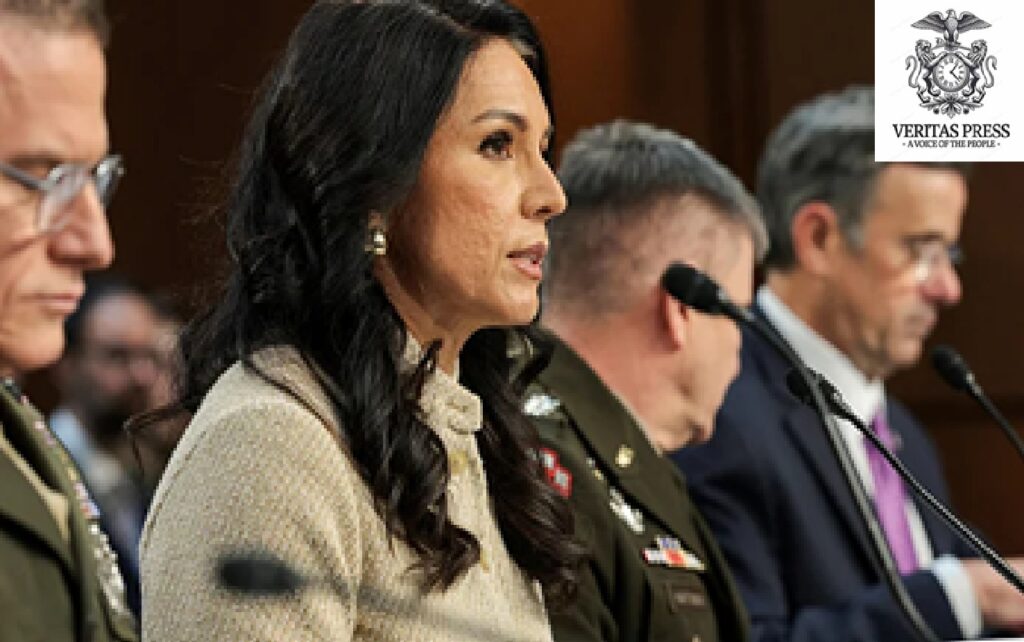
WASHINGTON / ISLAMABAD — A fresh warning by US Director of National Intelligence Tulsi Gabbard
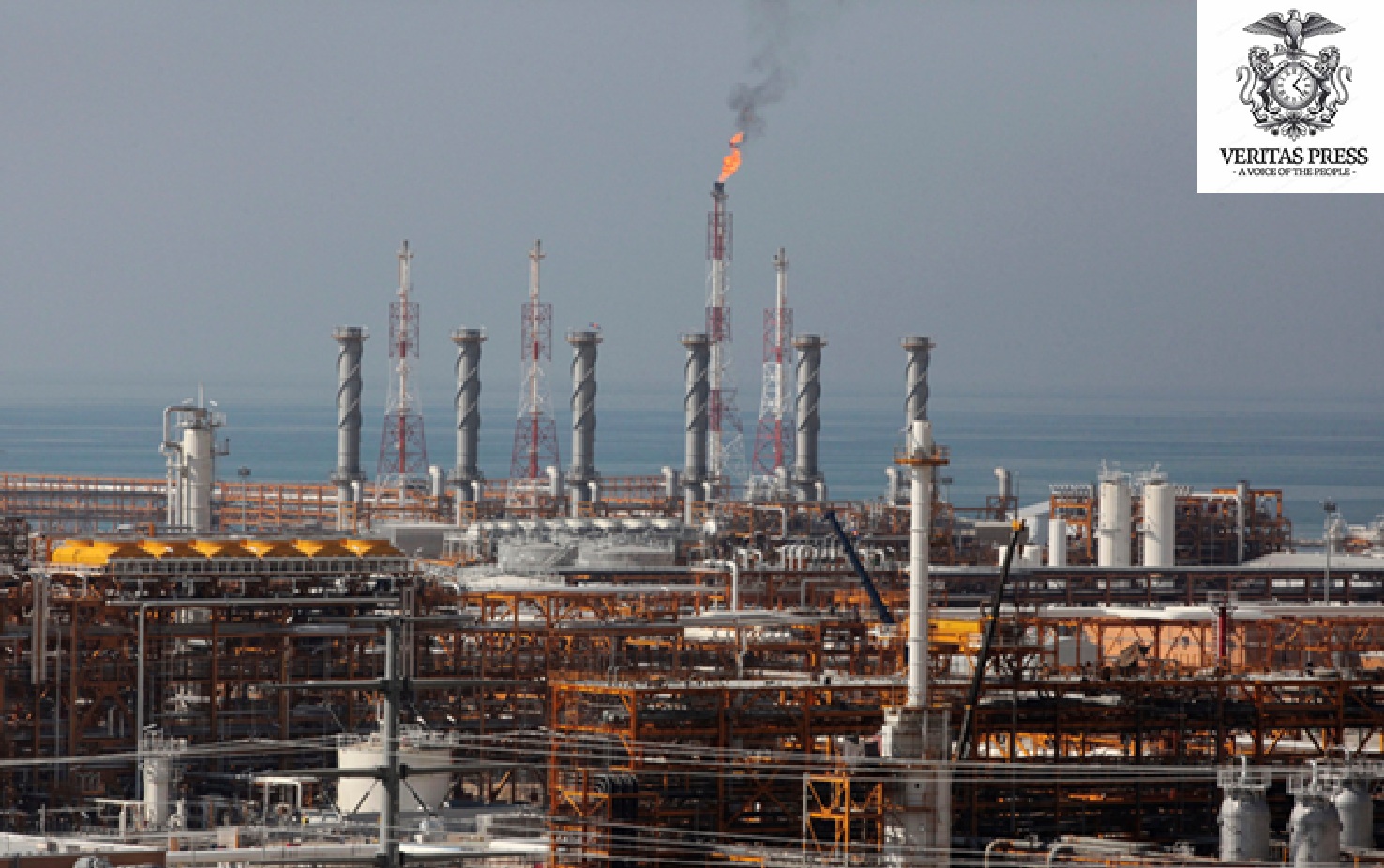
For the first time since the US-Israeli campaign against Iran began on February 28, the
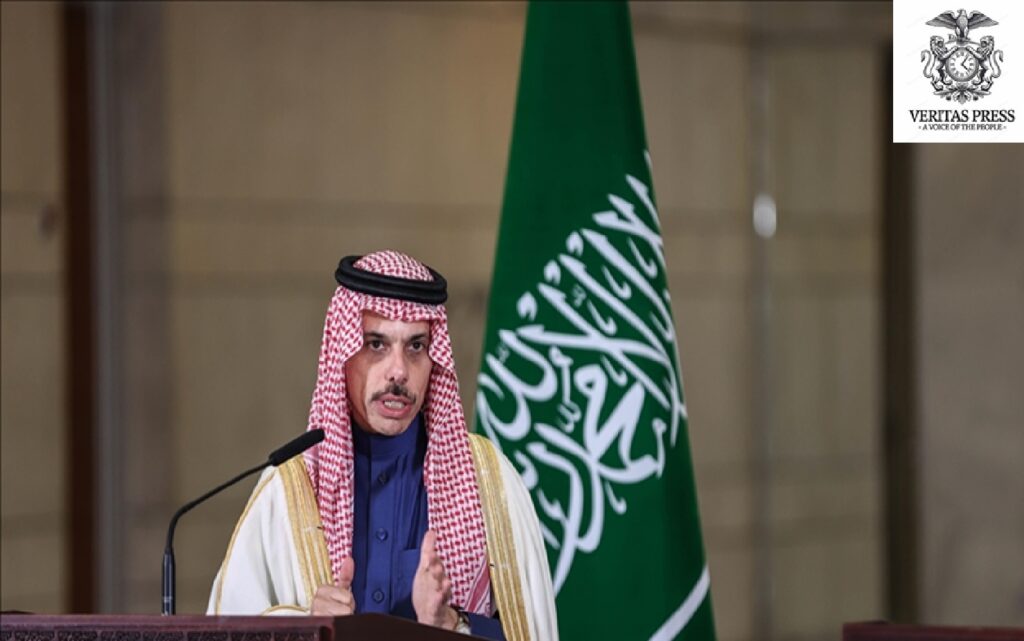
Tensions across the Gulf have escalated to levels not seen in decades, as Saudi Arabia