





Original Article Date Published:
Article Date Modified:
Help support our mission, donate today and be the change. Every contribution goes directly toward driving real impact for the cause we believe in.
The Invisible Siege:
On February 28, 2026, the first wave of U.S.-Israeli pre-emptive strikes hit Iranian military and economic infrastructure. Within days, the world’s focus was on the geopolitics of the Middle East. But a quieter, more insidious war has since been declared on the world’s most vulnerable people: a war on the global food supply chain.
New data from the United Nations reveals that the conflict is not just reshaping borders but is fundamentally breaking the economic engine that feeds the planet. The UN’s Food and Agriculture Organisation (FAO) reported on Friday that its benchmark Food Price Index surged for the second consecutive month in March, driven not by weather, but by war. As global leaders grapple with the military fallout, a deeper investigative critique of the data, supply chains, and policy responses reveals a stark truth: the wealthy nations worried about petrol prices are missing the point. The real crisis is one of hunger, and time is running out.
Part I: The Conflict Escalates, The “Economic War”
The conflict, now in its second month, has moved far beyond a conventional battle. The death of Iran’s Supreme Leader Ali Khamenei and the ascension of Mojtaba Khamenei have not de-escalated tensions; they have unleashed a full-scale regional retaliation. Iranian-backed Houthis and Hezbollah have joined the fray, while Tehran has systematically weaponised its geography.
The Siege Of The Strait Of Hormuz:
The most devastating economic blow has been the effective closure of the Strait of Hormuz, the world’s most critical maritime chokepoint. Since March 1, 2026, the strait has been closed to most commercial traffic. Maritime tracking data shows that daily vessel transits have collapsed by 95%, from a baseline of 135–138 vessels to just 5–6 per day. “The immediate effects are clear,” notes a report from Seatrade Maritime, “many ships are trapped inside the Arabian Gulf, unable to leave as threats from Iranian missile and drone strikes prevent the ships from running the gauntlet.” This has effectively removed approximately 20% of global oil supply from the market, sending Brent crude soaring above $120 per barrel.
The geopolitical ripple effects are fracturing global governance. In a stark rebuke of U.S. leadership, the United Kingdom is hosting a virtual summit of over 30 nations to discuss reopening the strait, specifically excluding the United States after President Trump declared it was “Europe’s problem.” UN Secretary-General Antonio Guterres, in a desperate appeal, warned that the world is “on the edge of a wider war that would engulf the whole Middle East with dramatic impacts around the globe.” He added, “When the Strait of Hormuz is strangled, the world’s poorest and most vulnerable cannot breathe.”
Part II: The Spillover, How War Infects The Food Chain
The UN’s data is the first quantitative proof of the transmission mechanism. The FAO Food Price Index averaged 128.5 points in March, a 2.4% increase from February.
The Vegetable Oil Shock:
The sharpest rise was in vegetable oils, which surged 5.1%. Palm oil prices hit their highest point since mid-2022. This is a direct result of crude oil prices spiking. As crude oil becomes more expensive, demand for biofuels rises, diverting vegetable oils (palm, soy, sunflower) away from food shelves and into gas tanks.
The Sugar And Grain Emergency:
Sugar prices jumped 7.2%, driven by expectations that Brazil, the world’s largest exporter, will divert more sugarcane to ethanol production. Global wheat prices rose 4.3%, driven by a confluence of disasters: drought in the U.S. (where 40% of winter wheat is now in drought zones) and the skyrocketing cost of fertiliser, which is hitting Australian planting.
However, a deeper investigative critique reveals a dangerous complacency. The FAO’s Chief Economist, Maximo Torero, is currently stating that “ample global cereal supplies” have so far “cushioned” the damage. This is a dangerously myopic view of the present. While cereal stocks are indeed higher than during the 2008 or 2022 crises, the UN’s own projections contain a ticking clock. The war is currently 40 days old. Torero himself warns that if the conflict passes this threshold, “farmers will have to choose: farm the same with fewer inputs, plant less, or switch to less intensive fertiliser crops. Those choices will hit future yields and shape our food supply for the rest of this year and all of the next.”
Part III: The Silent Killer, The Fertiliser Time Bomb
If the world is not yet panicking about food, it is because the worst is yet to come. The crisis in the Strait of Hormuz is a fertiliser catastrophe in slow motion.
The Persian Gulf accounts for roughly 49% of global urea exports and 30% of ammonia. Since the conflict began, nitrogen fertiliser prices have risen by 40%. Urea has jumped from under $425 per metric ton to over $700. Ammonia is up 24%. Unlike the 2022 spike caused by the Russia-Ukraine war, which was a cost issue, this is a supply issue. Factories are not just expensive; they are offline or unable to ship.
Goldman Sachs warns that “the largest potential boost to grain prices is more likely to come from reduced grain supply” rather than just higher costs. This is a critical distinction. A 40% rise in fertiliser prices reduces yields. A physical inability to access fertiliser destroys harvests.
JPMorgan analysts estimate the world has only about 25 days of strategic fertiliser reserves left. If the strait remains closed, storage facilities will fill up, forcing complex chemical plants to halt operations. Restarting them takes four to six weeks, creating a supply lag that will paralyse planting.
The consequences are already visible. In the United States, corn planting area is projected to drop significantly as farmers switch to soybeans, which require less nitrogen. As a recent analysis for Pro Farmer notes, “The 2022 Russia-Ukraine fertiliser crisis sent urea to $925 a metric ton… We won’t see the full effects of fertiliser prices spiking until the harvest season, 6-12 months later.” The world is currently sleepwalking into a 2027 harvest disaster.
Part IV: The Human Cost Who Pays The Price?
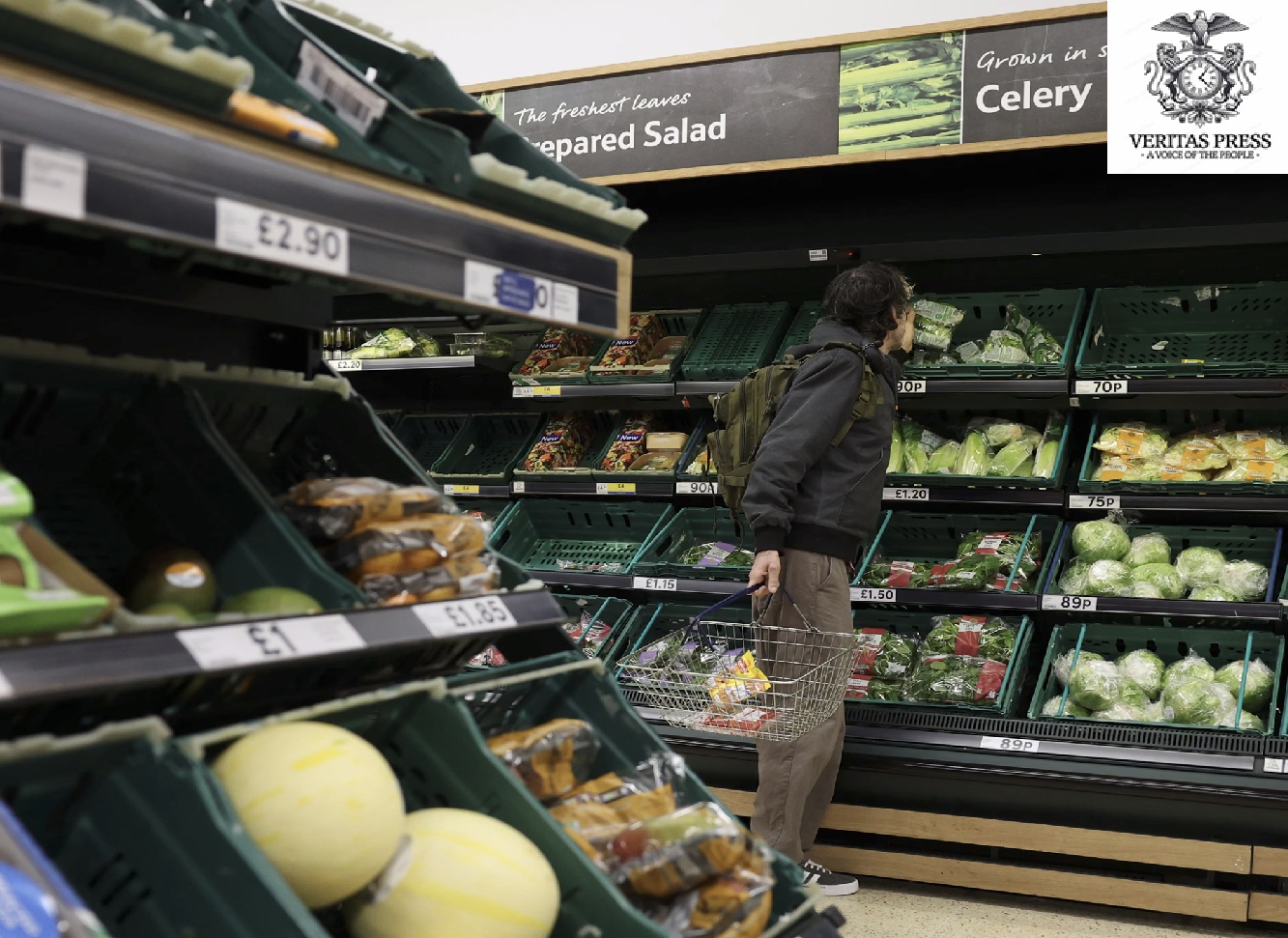
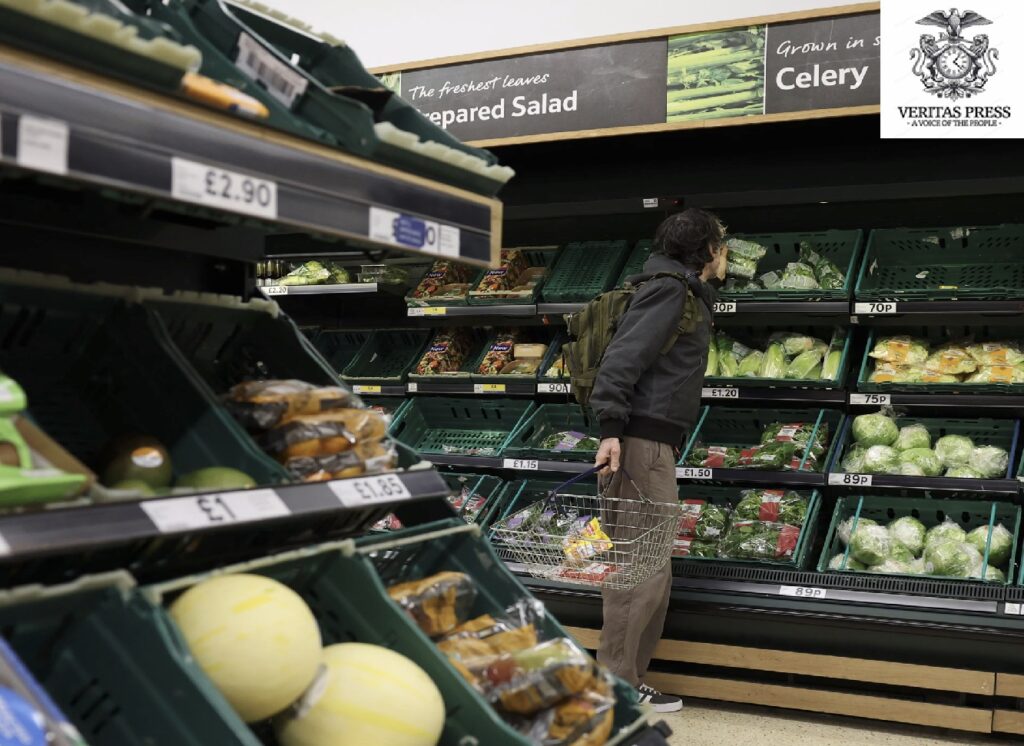
While UK Chancellor Rachel Reeves meets with Tesco and Sainsbury’s bosses to discuss the cost of living, the actual human toll is being measured in malnutrition and death in the Global South.
The World Food Programme (WFP) has issued a chilling projection: If the conflict continues through the second quarter of 2026, an additional 45 million people will be pushed into acute hunger, bringing the global total to 363 million.
A simple economic analysis shows why. The share of household income spent on food falls as income rises. Poor households in low- and middle-income countries spend up to 70% of their budget on food. A 10% increase in food prices translates to a 5-7% cut in real income for them. For a wealthy household, it is an inconvenience. For a poor one, it means a child is pulled from school, or a meal is skipped.
The most vulnerable nations are those that are both heavily reliant on food imports and already teetering on the edge of famine. Six countries sit at this dangerous intersection: South Sudan, Haiti, Yemen, Afghanistan, the Central African Republic, and Somalia. These nations have a third to half of their populations facing acute food insecurity and import large shares of their food. In these fragile settings, a price shock of this magnitude is not an economic event; it is a trigger for civil unrest and state failure.
Part V: Policy Failure vs. Effective Response, A Critique.
The global response so far has been a study in failed instincts. Wealthy nations focus on fuel, and fragile states resort to counter-productive price controls.
Case Study In Failure: Egypt
Egypt, one of the world’s largest wheat importers, is caught in a trap. It has raised the local wheat procurement price to 2,500 Egyptian pounds per ardeb to shore up reserves, a necessary move. But to appease a public that has rioted over bread prices before, it has imposed price caps on unsubsidized bread. While politically expedient, price controls are economically catastrophic. As economic theory and the 2008 crisis showed, they lead to shortages, black markets, and the withdrawal of goods from the market. The government is essentially paying bakeries not to go bankrupt, a costly band-aid on a haemorrhaging wound.
The Case For Targeted Cash Transfers
The data suggests a better way. While routine cash transfers have small effects on consumption, humanitarian cash transfers during acute shocks are different. A study of emergency cash given to microenterprise owners in Nairobi during COVID-19 found that food expenditures rose 8% relative to those who didn’t get a transfer.
Targeted cash transfers are far more cost-effective than generalised food subsidies. For every dollar spent, targeted cash reduces poverty by roughly twice as much as an untargeted subsidy, because it concentrates relief on the households for whom the food price shock is a genuine income crisis, not an inconvenience. Price controls, by contrast, actually increase poverty and food insecurity by creating scarcity.
The lesson of COVID-19 is that rapid response is feasible. By June 2020, 131 countries had implemented emergency response cash transfers. That infrastructure exists. What is lacking is the political will to deploy it before the fertiliser shock hits harvests later this year.
The Countdown:
The war in Iran has entered its second month. The immediate price spikes are just the warning shots. The real crisis, the one involving empty shelves, closed or failing stores, failed harvests, and famine, will hit in late 2026 and 2027.
As FAO’s Torero noted, “If the conflict goes on beyond 40 days… those choices will hit future yields.” The 40-day mark is now. The G20 must hold the line on export bans and beggar-thy-neighbour trade restrictions. The World Bank must pre-fund emergency cash top-ups. And the world must realise that a war in the Middle East is not a distant geopolitical affair; it is a direct attack on the world’s most vulnerable people, one meal at a time.
Source: Multiple News Agencies
Submissions:
For The Secure Submission Of Documentation, Testimonies, Or Exclusive Investigative Reports From Any Global Location, Please Utilise The Following Contact Details For Our Investigations Desk: enquiries@veritaspress.co.uk or editor@veritaspress.co.uk
Help Support Our Work:
Popular Information is powered by readers who believe that truth still matters. When just a few more people step up to support this work, it means more lies exposed, more corruption uncovered, and more accountability where it’s long overdue.
Help Protect Independent Journalism, Which Is Currently Under Attack.
If you believe journalism should serve the public, not the powerful, and you’re in a position to help, becoming a DONATOR or a PAID SUBSCRIBER truly makes a difference.
DONATION APPEAL: If You Found This Reporting Valuable, Please Consider Supporting Independent Journalism.
Help Support Our Work – We Know, We Know, We Know …
Seeing these messages is annoying. We know that. (Imagine what it’s like writing them … )
Your support fuels our fearless, truth-driven journalism. In unity, we endeavour to amplify marginalised voices and champion justice, irrespective of geographical location.
But it’s also extremely important. One of Veritas Press’s greatest assets is its reader-funded model.
1. Reader funding means we can cover what we like. We’re not beholden to the political whims of a billionaire owner. We are a small, independent and impartial organisation. No one can tell us what not to say or what not to report.
2. Reader funding means we don’t have to chase clicks and traffic. We’re not desperately seeking your attention for its own sake: we pursue the stories that our editorial team deems important and believe are worthy of your time.
3. Reader Funding: enables us to keep our website and other social media channels open, allowing as many people as possible to access quality journalism from around the world, particularly those in places where the free press is under threat.
We know not everyone can afford to pay for news, but if you’ve been meaning to support us, now’s the time.
Your donation goes a long way. It helps us:
- Keep the lights on and sustain our day-to-day operations
- Hire new, talented independent reporters
- Launch real-time live debates, community-focused shows, and on-the-ground reporting
- Cover the issues that matter most to our communities, in real time, with depth and integrity
We have plans to expand our work, but we can’t do it without your support. Every contribution, no matter the size, helps us stay independent and build a truly people-powered media platform.
If you believe in journalism that informs, empowers, and reflects the communities we serve, please donate today.
The raw numbers tell a story of profound inequality. On 1 April 2026, more than
What began on February 28, 2026, as a coordinated US-Israeli campaign to decapitate Iran’s military

The idea of a “freedom flotilla” carries a ghost in its hold: the 2010 Mavi

Original Article Date Published: Article Date Modified: Help support our mission, donate today and be

Original Article Date Published: Article Date Modified: Help support our mission, donate today and be
A United States fighter jet has been shot down over Iran, marking a dangerous and
On February 28, the United States and Israel launched coordinated strikes on Iran, reported by

LONDON, UK – Just weeks after being appointed as the government’s “Cost of Living Champion”,
On February 28, 2026, the first wave of U.S.-Israeli pre-emptive strikes hit Iranian military and
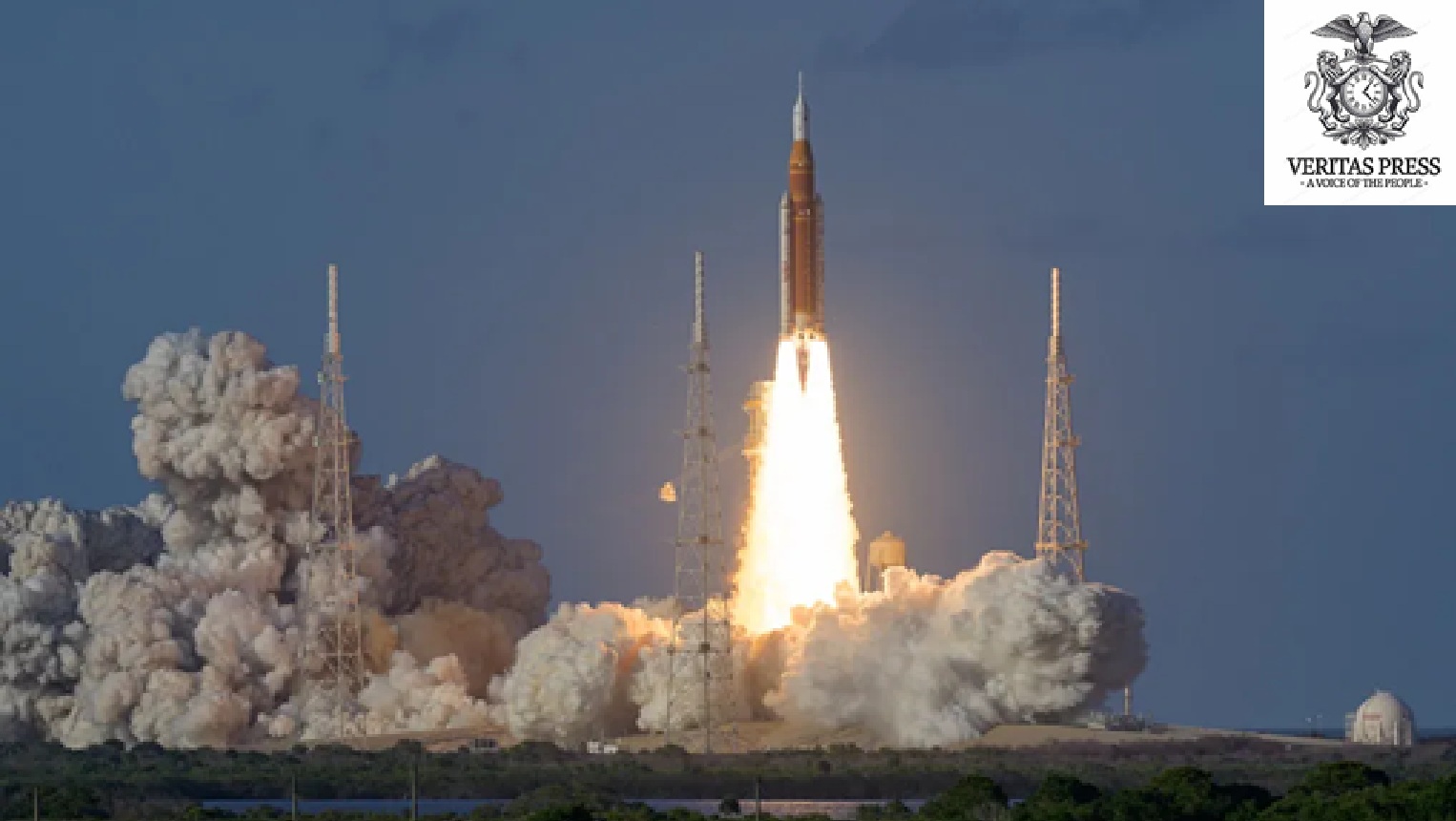
USA, NASA – Spurred by American ingenuity, astronauts on NASA’s Artemis II mission are in