




Original Article Date Published:
Article Date Modified:
Help support our mission, donate today and be the change. Every contribution goes directly toward driving real impact for the cause we believe in.
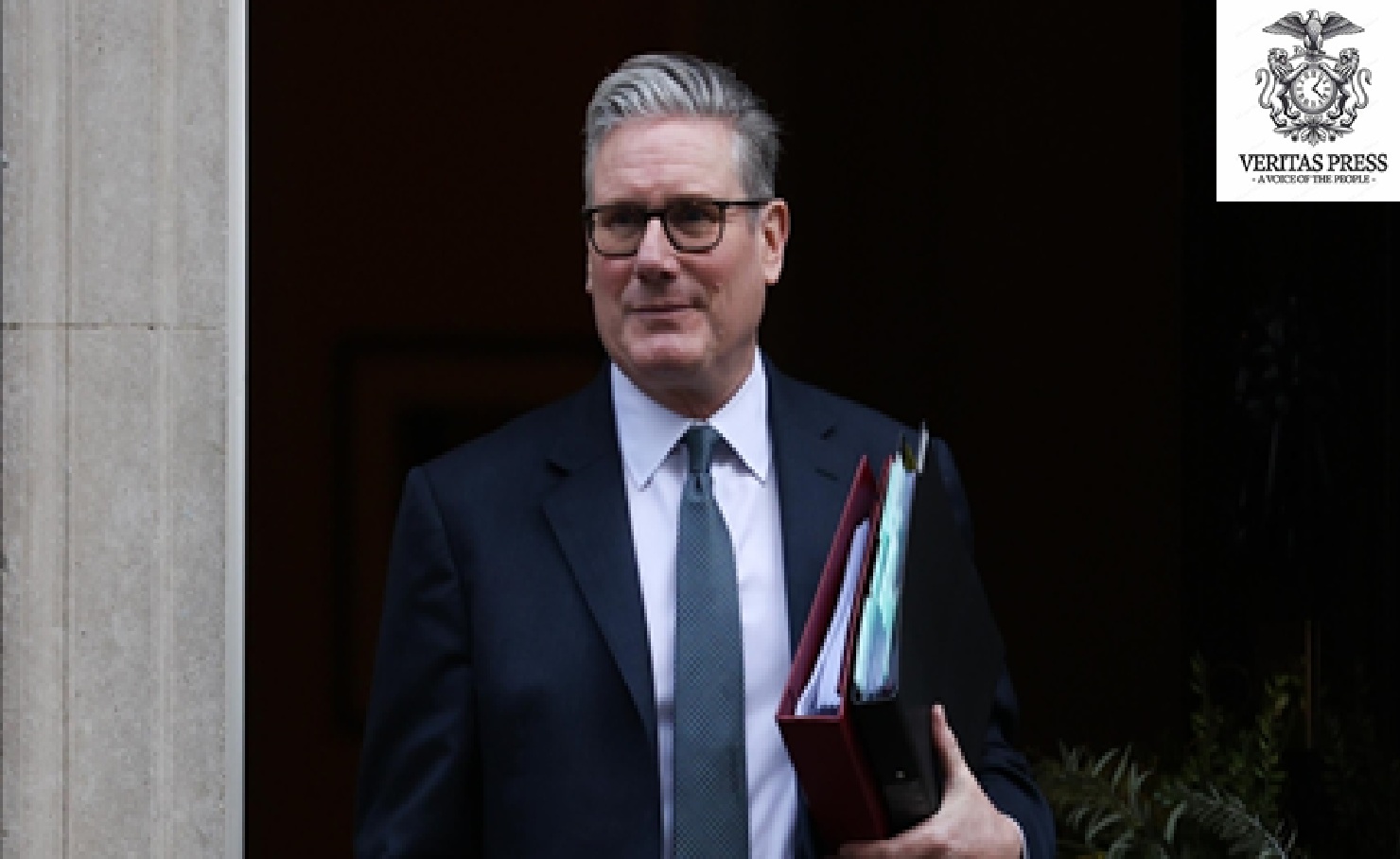
LONDON, UK – Prime Minister Keir Starmer insists the United Kingdom is “not at war.” Yet British fighter jets are conducting defensive missions, US forces are operating from UK-linked bases, and an Iranian drone has already struck RAF Akrotiri in Cyprus.
The government’s position rests on a narrow distinction between “offensive” and “defensive” operations. But as the crisis deepens, legal scholars, opposition MPs and defence analysts are questioning whether that distinction can withstand scrutiny, and whether Britain has already entered the conflict indirectly in defence of Israel and its Gulf allies.
The Trigger: Strikes On Iranian Sovereignty.
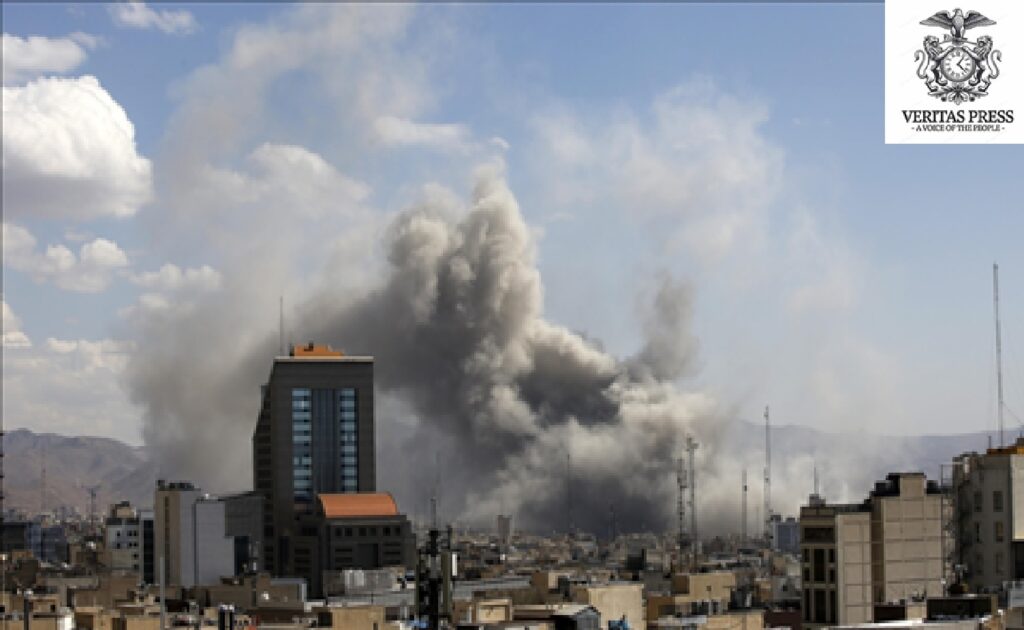
The current escalation began when the United States and Israel launched coordinated strikes inside Iranian territory, reportedly killing senior figures, including Supreme Leader Ali Khamenei.
Washington framed the strikes as pre-emptive or a case of war of choice action against Iran’s missile and drone capabilities. However, critics, including several UK MPs, argue that the attacks lacked a clear UN Security Council mandate and therefore raise serious questions under international law.
Under Article 2(4) of the UN Charter, states are prohibited from the use of force against the territorial integrity or political independence of another state. Article 51 provides a narrow exception: the inherent right of self-defence if an armed attack occurs.
If the initial US–Israeli strikes are deemed unlawful or lacking imminent threat justification, Iran’s retaliatory missile and drone attacks could be argued, from Tehran’s perspective, as falling within Article 51’s right to self-defence.
That legal tension sits at the heart of Britain’s dilemma.
Labour Foreign Affairs Committee chair Emily Thornberry described the US–Israeli attack as “ill-advised, ill-judged, reckless and illegal,” even as she condemned Iran’s retaliation against Gulf states.
Green Party representatives were more direct, calling the initial strikes “deeply irresponsible and illegal.”
The question then becomes unavoidable: if Iran’s sovereignty was violated first, does it have the legal right to respond?
International law does not permit indiscriminate retaliation, but it does recognise a state’s right to defend itself from armed attack.
Starmer’s Legal Shield, And Its Contradictions:
Starmer has repeatedly insisted that any UK action must have:
- A lawful basis
- A clear objective
- A viable plan
“We all remember the mistakes of Iraq,” he told MPs, invoking the 2003 invasion backed by Tony Blair.
“This government does not believe in regime change from the skies.”
Initially, the UK refused to allow the US use of Diego Garcia and RAF Fairford for the first wave of strikes.
But after Iran launched retaliatory missiles across the region, targeting Israel, Bahrain, Qatar and shipping lanes, Starmer reversed course and authorised base access for what he called “specific and limited defensive purposes.”
“The only way to stop the threat is to destroy the missiles at source,” he said.
Here lies the contradiction.
If the initial US–Israeli strikes violated Iranian sovereignty, then Iran’s counter-strikes, however destabilising, may be framed legally as defensive action. In that scenario, UK facilitation of further strikes inside Iran risks placing Britain on the side of the original aggressors under international law.
Legal experts note that the doctrine of collective self-defence requires that the party being defended must itself be acting lawfully. If that underlying action is disputed, the legal basis becomes fragile.
Iran’s Retaliation, Lawful Defence Or Regional Escalation?
Iran launched waves of missiles and drones targeting Israel and several Gulf states following the US–Israeli strikes.
From Tehran’s perspective, this was a direct response to a violation of its territorial sovereignty and the killing of its leadership.
Western governments describe the retaliation as “outrageous” and destabilising. Starmer told MPs that Iran’s actions had become “a threat to our people, our interests and our allies.”
But international law does not evaluate legitimacy based on moral approval; it evaluates sequence, proportionality and necessity.
If a state suffers an armed attack on its soil, it retains the right to respond in self-defence, provided its response is proportionate and targeted at ending the threat.
That legal debate is not academic. It shapes whether Britain’s enabling role, intercepting Iranian drones and authorising US use of bases, constitutes lawful collective defence or participation in an unlawful use of force.
The Drone Strike On RAF Akrotiri:
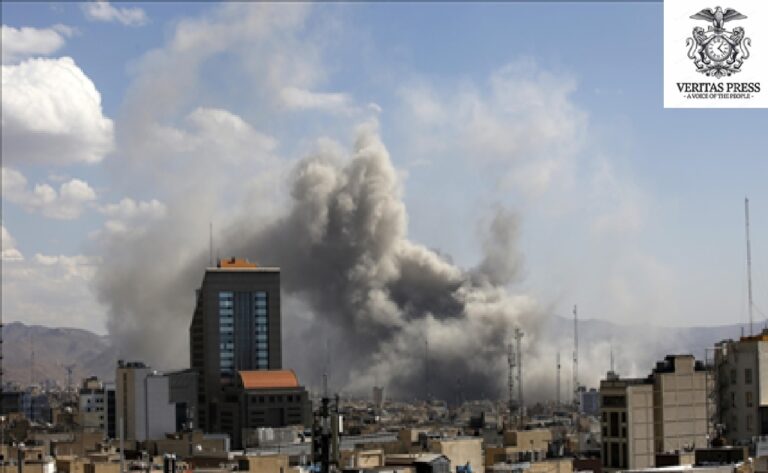
Shortly after Starmer authorised defensive base access, an Iranian drone struck RAF Akrotiri, causing minor runway damage.
The Ministry of Defence confirmed no casualties.
Tehran did not differentiate between Britain’s “offensive” versus “defensive” semantics. From its vantage point, Britain had enabled operations against Iranian military infrastructure.
Once a state allows its territory to be used for military action against another, it may become a lawful target under the laws of armed conflict.
That reality underscores the fragility of Starmer’s assertion:
“We are not at war.”
A Weak National Address In A Moment Of Escalation:
Starmer’s address to the nation was cautious, measured and legally dense, but critics argue it lacked clarity and authority.
There was no full exposition of the legal advice underpinning the decision. No detailed explanation of how destroying Iranian missile launchers differs materially from offensive action. No acknowledgement of the argument that Iran, having been struck first, may be acting within a recognised right of self-defence.
Instead, the address leaned heavily on process and precedent.
Even some Labour MPs privately expressed concern that the government appeared reactive rather than strategic.
Meanwhile, Donald Trump publicly criticised Starmer for delaying access to bases. Conservative leader Kemi Badenoch accused him of weakness, while Liberal Democrat leader Ed Davey warned he risked complicity in an illegal war.
Britain now faces pressure from both sides: from Washington to align more openly, and from domestic critics to disengage entirely.
Indirect War In Defence Of Allies:
Operationally, Britain is already:
- Allowing the US use of British bases for strikes on Iranian missile infrastructure
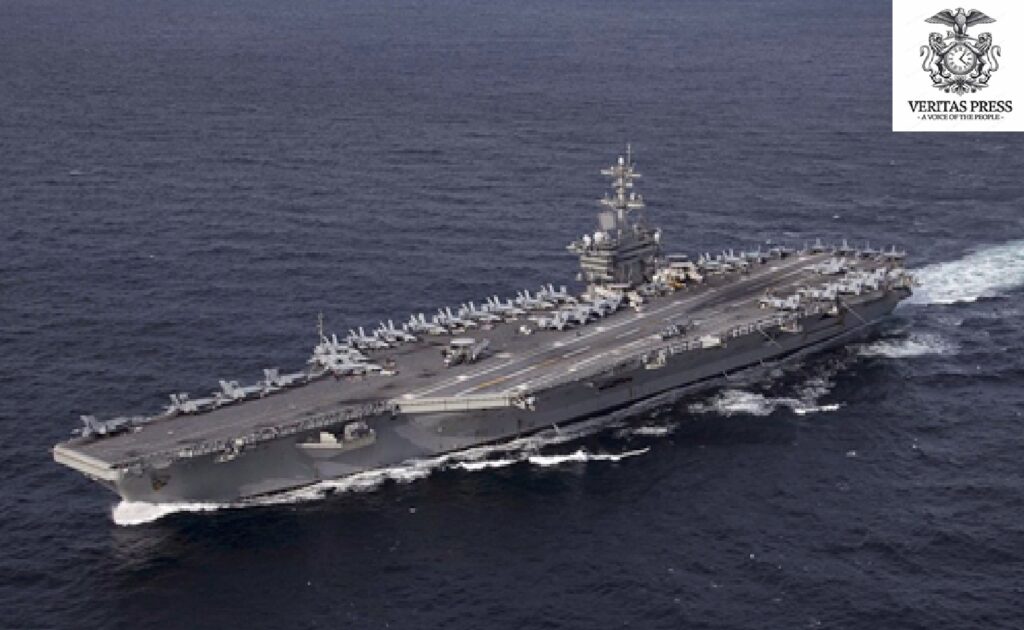
- Deploying RAF jets in regional defensive operations
- Sharing intelligence with US forces
Defence Secretary John Healey described Iran as “a source of evil,” reinforcing the moral framing of the conflict.
Yet morality and legality are not identical categories.
If Iran’s right to self-defence is recognised under international law following an unlawful strike on its territory, then the UK’s enabling role may be viewed not as neutral defence, but as siding with aggressors.
That is precisely the legal and political minefield Starmer is attempting to navigate.
200,000 Britons At Risk, Or At Greater Risk?
Starmer has repeatedly cited the presence of roughly 200,000 British nationals in the region as justification for action.
But critics argue that indirect military participation may increase the risk to those same citizens.
Scotland’s First Minister John Swinney warned that allowing the US use of British bases “creates further risks and dangers.”
If Britain becomes perceived as an active belligerent, its citizens and installations may be viewed as legitimate targets under the logic of reciprocal force.
The Credibility Question:
Starmer’s government has positioned itself as committed to “warfighting readiness” while avoiding unnecessary entanglement.
Yet the Iran crisis reveals a deeper credibility issue:
- If the UK insists on international law, it must grapple honestly with whether the initial strikes respected it.
- If it invokes collective self-defence, it must examine whether the party it is defending acted lawfully.
- If it claims not to be at war, it must explain why British bases and jets are engaged in active military operations connected to the conflict.
The prime minister says he has “learned the lessons of Iraq.”
But the lesson of Iraq was not only about legality, but it was also about transparency, proportionality and public trust.
At present, Britain’s position appears legally cautious but strategically entangled.
Iran, having suffered strikes on its own territory, asserts its right to defend itself against aggression and violations of sovereignty.
Britain, in turn, asserts its right to defend allies under collective self-defence.
Those two legal claims now collide in the skies over the Middle East, with RAF aircraft flying beneath them.
And however Downing Street chooses to define it, the distance between indirect participation and open war is narrowing.
Conclusion: Semantics Cannot Shield Britain From The Consequences Of War.
The central weakness in Keir Starmer’s position is not caution, it is contradiction.
The government insists it is upholding international law. Yet it has declined to clearly state whether the initial US–Israeli strikes on Iran were lawful. It insists it is not pursuing regime change. Yet it is facilitating military operations that followed the killing of Iran’s head of state. It insists Britain is not at war. Yet British territory is being used in active kinetic operations, RAF pilots are intercepting combat drones, and a UK airbase has already been struck in retaliation.
This is not neutrality. It is participation with caveats.
International law does not bend around rhetorical categories such as “offensive” versus “defensive” if the underlying use of force is contested. If Iran’s sovereignty was violated in the first instance, absent clear evidence of imminent armed attack, then Tehran’s invocation of Article 51 self-defence cannot simply be dismissed as “outrageous retaliation.” States retain the right to defend themselves against armed aggression. That principle applies universally, not selectively.
By enabling US strikes from facilities such as Diego Garcia, Britain risks being viewed not as a detached stabiliser but as an operational enabler of escalation. Once a state allows its territory to be used to conduct attacks against another sovereign state, it cannot reasonably expect immunity from response.
The drone strike on RAF Akrotiri may prove a warning shot, not just from Iran, but from the logic of war itself.
More fundamentally, Starmer’s approach exposes a structural tension in British foreign policy:
- A doctrine of “warfighting readiness” without political appetite for war.
- A commitment to NATO solidarity without full endorsement of allied actions.
- An appeal to legality without transparent publication of the legal advice underpinning decisions.
The prime minister repeatedly invokes the shadow of Iraq and Tony Blair’s legacy. But the enduring lesson of Iraq was not simply that wars require legal arguments, it was that governments lose public trust when legality is asserted without scrutiny and when military escalation outpaces democratic consent.
Starmer’s address to the nation failed to close that trust gap. It projected restraint but not authority; legality but not clarity; involvement but not ownership.
If Britain is defending allies, including Israel, under collective self-defence, it should say so plainly and justify it openly. If it believes the initial strikes were lawful, it should explain why. If it believes they were unlawful, it should confront the implications of facilitating subsequent action.
What it cannot credibly sustain is a posture of partial engagement paired with rhetorical distance.
Wars do not hinge on vocabulary. They hinge on force, territory, retaliation and alignment.
And when British bases are struck, British jets are airborne, and British facilities enable strikes on another sovereign state, the distinction between “indirect” and “involved” begins to collapse.
The danger now is not only escalation in the Middle East.
It is the erosion of coherence at the heart of British foreign policy, where legality, alliance politics and strategic deterrence are being forced into a balancing act that may not hold if the conflict deepens.
At some point, Britain will have to decide whether it is merely defending stability or whether it has already crossed the threshold into war by another name.
Source: Multiple News Agencies
Submissions:
For The Secure Submission Of Documentation, Testimonies, Or Exclusive Investigative Reports From Any Global Location, Please Utilise The Following Contact Details For Our Investigations Desk: enquiries@veritaspress.co.uk or editor@veritaspress.co.uk
Help Support Our Work:
Popular Information is powered by readers who believe that truth still matters. When just a few more people step up to support this work, it means more lies exposed, more corruption uncovered, and more accountability where it’s long overdue.
Help Protect Independent Journalism, Which Is Currently Under Attack.
If you believe journalism should serve the public, not the powerful, and you’re in a position to help, becoming a DONATOR or a PAID SUBSCRIBER truly makes a difference.
DONATION APPEAL: If You Found This Reporting Valuable, Please Consider Supporting Independent Journalism.
Help Support Our Work – We Know, We Know, We Know …
Seeing these messages is annoying. We know that. (Imagine what it’s like writing them … )
Your support fuels our fearless, truth-driven journalism. In unity, we endeavour to amplify marginalised voices and champion justice, irrespective of geographical location.
But it’s also extremely important. One of Veritas Press’s greatest assets is its reader-funded model.
1. Reader funding means we can cover what we like. We’re not beholden to the political whims of a billionaire owner. We are a small, independent and impartial organisation. No one can tell us what not to say or what not to report.
2. Reader funding means we don’t have to chase clicks and traffic. We’re not desperately seeking your attention for its own sake: we pursue the stories that our editorial team deems important and believe are worthy of your time.
3. Reader Funding: enables us to keep our website and other social media channels open, allowing as many people as possible to access quality journalism from around the world, particularly those in places where the free press is under threat.
We know not everyone can afford to pay for news, but if you’ve been meaning to support us, now’s the time.
Your donation goes a long way. It helps us:
- Keep the lights on and sustain our day-to-day operations
- Hire new, talented independent reporters
- Launch real-time live debates, community-focused shows, and on-the-ground reporting
- Cover the issues that matter most to our communities, in real time, with depth and integrity
We have plans to expand our work, but we can’t do it without your support. Every contribution, no matter the size, helps us stay independent and build a truly people-powered media platform.
If you believe in journalism that informs, empowers, and reflects the communities we serve, please donate today.
BEIRUT, LEBANON – The echoes of the 2024 ceasefire, already faint after months of daily
MINAB, IRAN – Funerals were held this week for 168 victims of the devastating bombing
On March 2, 2026, the United Nations Security Council convened for a meeting that was

LONDON, UK – Prime Minister Keir Starmer insists the United Kingdom is “not at war.”

Global financial markets have been jolted by the rapid escalation of war between the United
DEIR EL-BALAH, GAZA STRIP – The first wave of panic did not arrive with an
The human cost of the “Lion’s Roar” operation has crystallised into a stark, horrifying statistic.
IRAN – The third day of “Operation Epic Fury” has plunged the Middle East into
On Saturday, February 28, 2026, Israeli authorities announced the indefinite closure of all crossings into
The military confrontation between Israel, the United States, and Iran is no longer confined to