


Original Article Date Published:
Article Date Modified:
Help support our mission, donate today and be the change. Every contribution goes directly toward driving real impact for the cause we believe in.
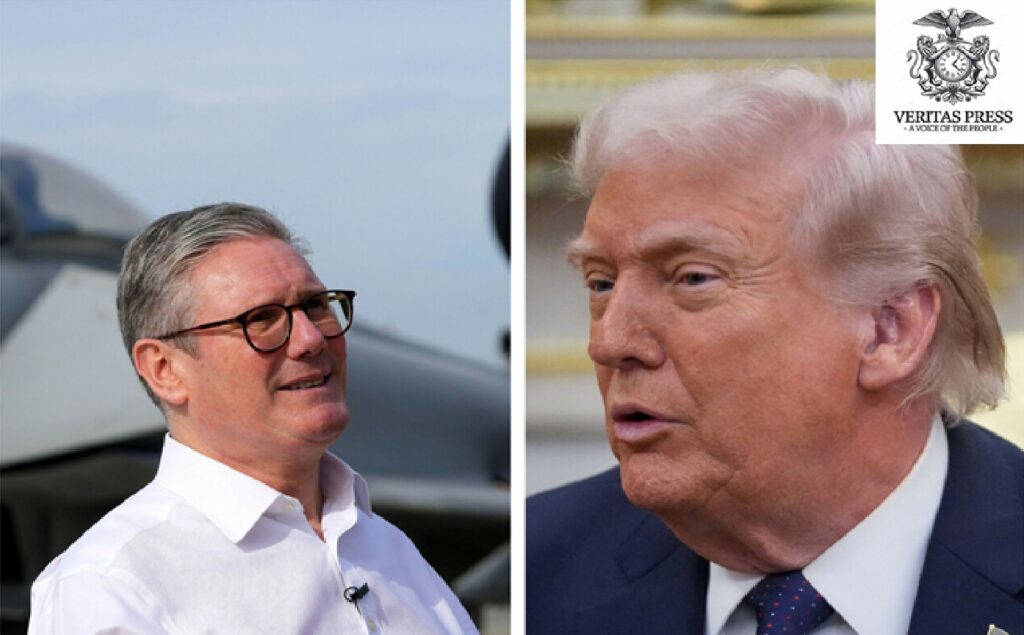
LONDON, UK – In the span of a single week, the fragile foundations of the post-World War II international order have been illuminated by fire and fury over the Middle East.
The assassination of Iran’s Supreme Leader, Ali Khamenei, in what multiple reports describe as a joint US-Israeli covert operation, has plunged the region into one of its most volatile crises in decades. For British Prime Minister Keir Starmer, the escalation has triggered a political and diplomatic firestorm that exposes the agonising dilemmas of being Washington’s closest ally in an era increasingly defined by American unilateralism.
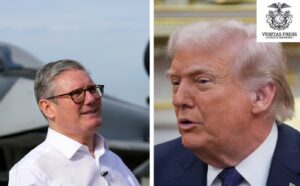
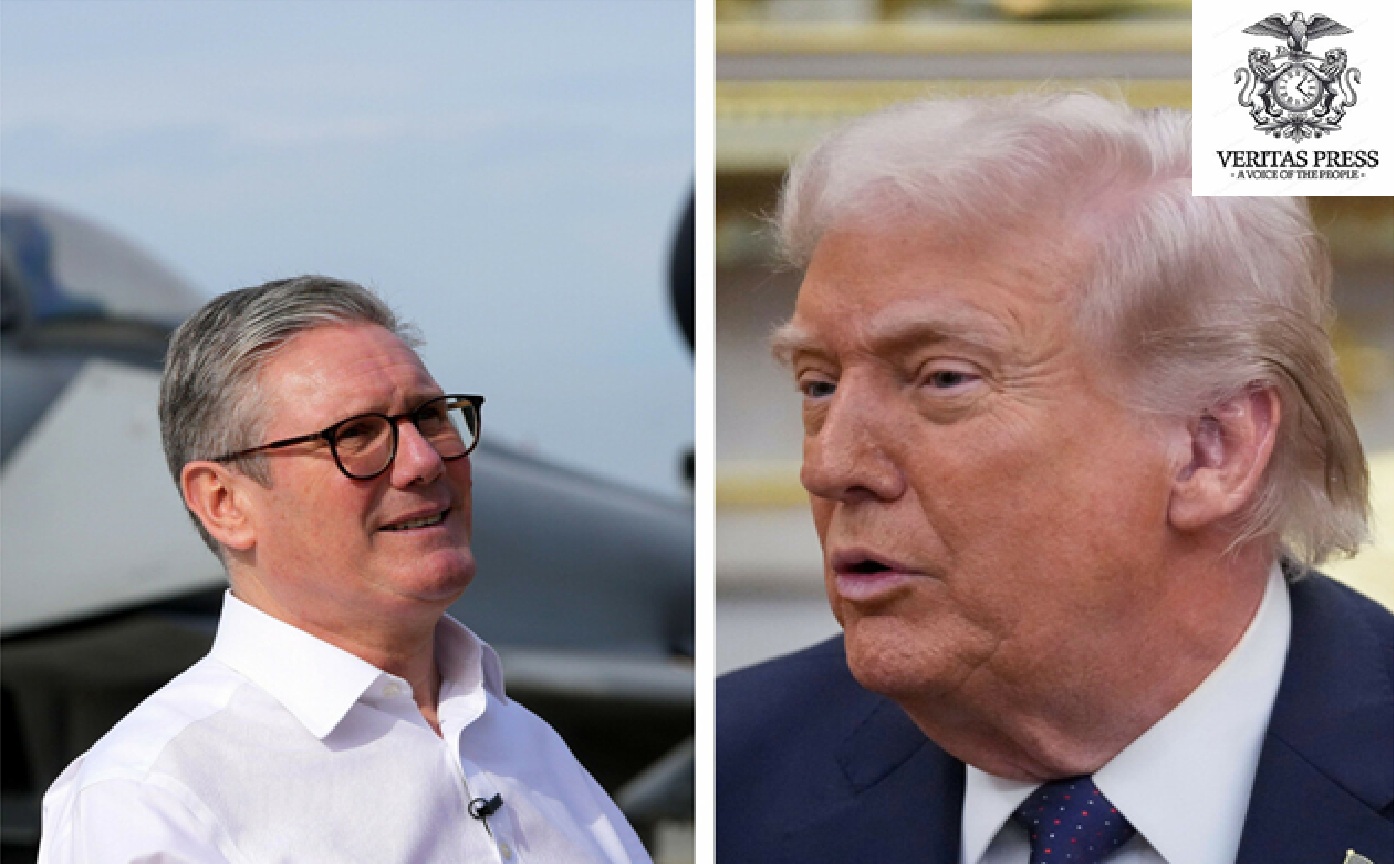
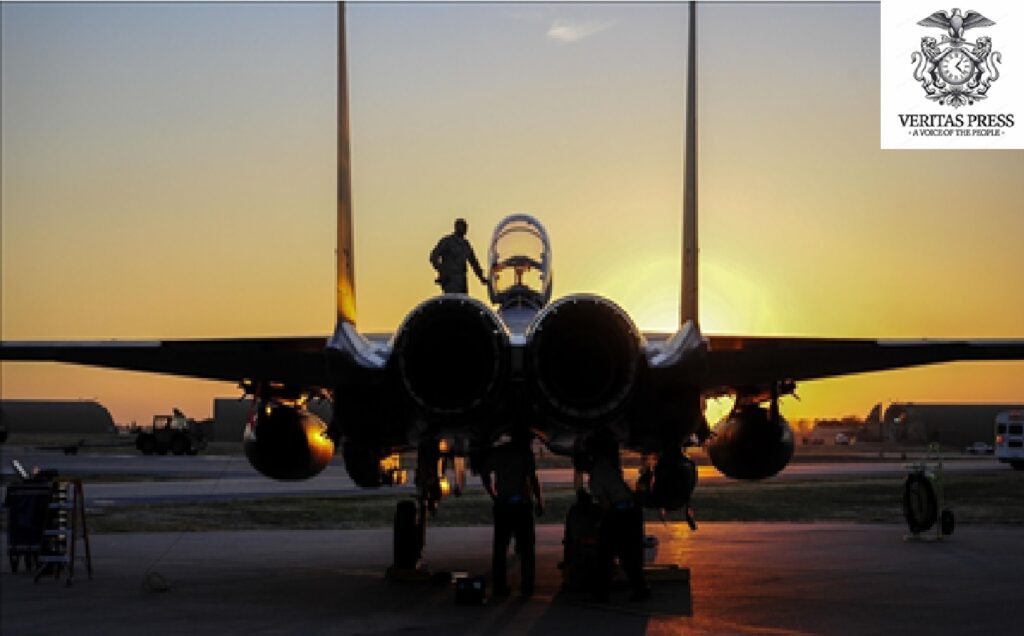
As the United States and Israel pursue what officials describe as a campaign to dismantle Iran’s military capabilities, Starmer finds himself navigating a geopolitical knife-edge. Within days, London has dispatched additional fighter jets (Typhoon Fighter Jets) to the Gulf, launched one of the largest civilian evacuation operations since the fall of Kabul, and endured public humiliation from the White House.
The source of that humiliation: US President Donald Trump, who dismissed the British leader as “a loser” and “no Churchill.”
For Starmer, the crisis is more than a diplomatic spat. It is a moment that lays bare the structural reality of Britain’s foreign policy, caught between the ghosts of Iraq, the volatility of a nationalist America, and a military apparatus deeply integrated with the Pentagon.
At stake is not merely Britain’s stance on a single war, but the future meaning of the so-called “special relationship.”
The Churchill Calculus: A “Middle Ground” Under Fire.
At the heart of the transatlantic tension lies a fundamental disagreement over the nature and legitimacy of the war.
When US and Israeli forces launched the initial strike on Tehran targeting Iran’s leadership, Starmer attempted to draw a clear line. Addressing Parliament, the prime minister insisted Britain would not participate in offensive military action.
“This government does not believe in regime change from the skies,” he said, invoking the shadow of the 2003 invasion of Iraq and the political trauma still associated with the decision by former prime minister Tony Blair to support George W. Bush in the Iraq War.
Yet the room for manoeuvre for any British prime minister is narrow.
Political commentator Rafael Behr captured the dilemma bluntly, writing that while friendship with Trump is uncomfortable, antagonising him could be far more dangerous.
For a Britain that has left the European Union and remains deeply dependent on American intelligence, nuclear cooperation, and military logistics, the doctrine of “strategic autonomy” remains more aspiration than reality.
That dependency became clear within 48 hours.
Following Iranian retaliatory missile and drone strikes across the region, including one that damaged the runway of the British base at RAF Akrotiri, London authorised limited US use of British facilities.
Officials framed the decision as participation in collective self-defence.
But the distinction between defensive and offensive war is increasingly contested.
Anthony Dworkin of the European Council on Foreign Relations noted that the restrictions placed on American use of British bases remain significant. Even so, critics argue that once infrastructure is opened to military operations, the line between assistance and participation quickly blurs.
For Trump, such nuance appears irrelevant.
“He should be giving us, without question or hesitation, things like bases where we can use others,” the US president reportedly complained, mocking Starmer’s reluctance to offer unconditional support.
His comparison with Winston Churchill was intended to sting.
But it also misrepresents the situation. Starmer is not refusing to engage in the conflict. Rather, he is attempting to engage in a way that remains legally defensible and politically survivable at home.
The Illusion Of Distance: War By Proxy.
Despite repeated assurances that Britain is not participating in the war, the reality on the ground tells a more complicated story.
By authorising the United States to operate from British facilities, including the strategic base at RAF Akrotiri, the government has effectively embedded the United Kingdom within the logistical architecture of the US-Israeli campaign.
At the same time, London has deployed additional Eurofighter Typhoon jets and support aircraft to Cyprus. Officials insist the move is designed purely to strengthen defensive capabilities and protect British personnel.
Yet critics say such distinctions are largely semantic.
Modern warfare relies not only on missiles and bombs but also on infrastructure, airfields, communications networks, intelligence hubs, and aerial refuelling systems. These systems form the backbone of any sustained military campaign.
Allowing them to be used inevitably pulls Britain deeper into the conflict.
The contradiction has not gone unnoticed in Washington.
Trump has publicly mocked the British leader’s attempt to maintain distance from the war effort.
“He’s trying to act like he’s not in the war,” the US president reportedly said. “But he’s helping us anyway.”
For critics on the anti-war left, this reflects a familiar pattern in British foreign policy: war without declaration.
For supporters in the security establishment, it is simply the reality of alliance politics.
Either way, Starmer’s attempt to occupy a middle ground, neither fully committed nor fully detached, has left him vulnerable to accusations of hypocrisy at home and ridicule abroad.
Cyprus: The Unsinkable Aircraft Carrier.
Britain’s military presence in Cyprus explains why the island has become central to the unfolding crisis.
The base at RAF Akrotiri has long served as one of the West’s most important operational hubs in the Middle East.
From this vantage point in the eastern Mediterranean, aircraft can reach the Levant, the Persian Gulf, and North Africa within hours. Over the years, the base has supported surveillance missions during the Syrian Civil War and operations against the Islamic State.
Military planners often describe Cyprus as an “unsinkable aircraft carrier”, a forward platform for intelligence gathering, aerial refuelling, and operational coordination.
That strategic role is precisely why the base now sits at the centre of the Iran crisis.
Even if British aircraft are not conducting strikes, the infrastructure at Akrotiri forms part of the wider operational network sustaining coalition military activity.
In modern warfare, logistical nodes such as airbases and intelligence facilities are as important as frontline weapons systems.
This reality became painfully clear when an Iranian-aligned militia launched a Shahed drone attack that struck a hangar at the base.
The message was unmistakable: for Iran’s allies, British facilities are already part of the battlefield.
A Vassal State Or A Prudent Ally?
At home, Starmer’s attempt at nuance has satisfied few.
Conservative leader Kemi Badenoch has accused the government of hiding behind international law as a pretext for inaction.
Meanwhile, Nigel Farage and his allies argue that Britain’s strategic dependence on Washington makes full alignment inevitable.
Criticism from the left has been equally fierce.
Ed Davey warned that Britain could be dragged into another prolonged Middle Eastern conflict. Green Party deputy leader Zack Polanski accused the government of enabling “another illegal war.”
Outside Parliament, organisations including the Stop the War Coalition and the Campaign Against Arms Trade argue that Britain is already deeply entangled.
Allowing American forces to operate from British bases, they say, effectively makes the country a participant regardless of official language.
Yet government insiders privately acknowledge a harsher strategic reality.
Britain would be “massively exposed” if a hostile US administration curtailed intelligence cooperation.
The Intelligence Dependency:
That warning reflects the hidden architecture of the transatlantic alliance.
For more than seventy years, Britain has been a central member of the Five Eyes intelligence network alongside the United States, Canada, Australia, and New Zealand.
Through the alliance, British agencies such as GCHQ work closely with the American National Security Agency to share signals intelligence, satellite data, cyber monitoring, and counterterrorism information.
The integration is so deep that disentangling the two systems would be extraordinarily difficult.
British military operations depend heavily on American intelligence feeds, from missile tracking to satellite imagery.
For Starmer, this creates a strategic trap.
Openly breaking with Washington could jeopardise the intelligence infrastructure underpinning Britain’s national security.
Thus, London’s policy appears contradictory: resisting the most aggressive elements of the US campaign while continuing to support the alliance systems that sustain it.
Ghosts Of Iraq:
Historical memory also shapes the prime minister’s calculations.
The disastrous aftermath of the Iraq War left deep scars on British politics. The subsequent Chilcot Inquiry concluded that the decision to join the invasion had been based on flawed intelligence and inadequate planning.
The findings damaged public trust in government claims about military interventions and permanently altered Britain’s political landscape.
For Starmer, the lesson is clear.
British leaders who follow Washington into war risk paying a heavy political price.
This explains the government’s careful emphasis on international law, defensive deployments, and humanitarian evacuations.
Yet critics note the uncomfortable similarity with 2003: Britain insisting it is acting cautiously while gradually deepening its involvement in an American-led conflict.
Operation Fidelity: Bringing Britons Home.
Amid the geopolitical turmoil, the British government is also grappling with a massive humanitarian challenge.
More than 140,000 British citizens are believed to be in the Gulf region.
With commercial aviation disrupted and tensions escalating around the Strait of Hormuz, London has launched a large-scale evacuation effort known as Operation Fidelity.
Starmer described it as one of the largest evacuation operations in modern British history.
Additional Typhoon aircraft have been deployed to support regional air defence, while the destroyer HMS Dragon has been dispatched to assist with maritime security.
The first chartered flights have begun departing from Oman, though thousands remain stranded as airspace closures complicate the effort.
The Inescapable Gravity Of The Alliance:
Starmer may not be Churchill, but he is operating in a world Churchill would recognise: one dominated by the gravitational pull of great powers.
By refusing to join the initial strikes, Britain has created a narrow band of legal distance from the conflict.
By allowing limited US use of its bases, it has preserved the intelligence and defence cooperation that underpin its security.
But the contradictions remain stark.
Britain insists it is not a belligerent even as its territory hosts infrastructure central to the war effort.
For Iran and its regional allies, that distinction may matter little.
Starmer insists the “special relationship” remains intact.
Yet the crisis has exposed the nature of that relationship more clearly than ever: less a partnership of equals than a system of strategic dependency.
In the unfolding war, Britain is neither fully inside nor safely outside the conflict.
And as missiles continue to fly across the Middle East, the political space for remaining in that uneasy middle ground may be disappearing.
Conclusion: The Myth of Distance.
Sir Keir Starmer has tried to craft a position that appears careful, responsible, and restrained: Britain, he says, will not participate in offensive operations against Iran. It will defend its personnel, protect its citizens, and uphold international law.
But the unfolding crisis reveals how fragile that position really is.
In practice, the United Kingdom has already been drawn into the operational ecosystem of the war. American forces are using British infrastructure, aircraft are flying from British territory, intelligence systems are integrated with US command structures, and additional fighter jets have been dispatched to reinforce the region around RAF Akrotiri.
In the language of diplomacy, these steps are described as defensive measures.
In the language of war, they are known as enabling operations.
The difference is largely political.
This is the contradiction at the heart of Starmer’s strategy: publicly presenting Britain as a reluctant bystander while quietly sustaining the logistical and strategic architecture that allows the conflict to continue.
Critics argue that this approach risks repeating a pattern embedded in British foreign policy for decades: participation without admission, escalation without declaration.
The legal distinction may matter in Westminster debates. It may matter in parliamentary briefings and carefully worded government statements.
It is far less likely to matter to those launching missiles.
For Iran and its regional allies, the presence of British bases supporting US operations already makes the UK part of the battlefield. The drone strike on RAF Akrotiri suggests that this perception is not hypothetical.
Nor is the contradiction lost on Washington.
US President Donald Trump has openly mocked Starmer’s attempts to maintain distance from the war effort, portraying them as the behaviour of a hesitant subordinate rather than a sovereign ally. His taunts, calling the British prime minister weak and “no Winston Churchill”, are not simply personal insults. They reflect a deeper shift in the transatlantic relationship.
The era in which Britain could claim to shape American policy from within the alliance may be over.
Instead, the current crisis exposes a harsher reality: Britain’s military infrastructure, intelligence networks, and strategic posture are so deeply intertwined with those of the United States that meaningful independence is extraordinarily difficult.
This is the true dilemma confronting Starmer.
Breaking with Washington could jeopardise the intelligence-sharing and defence cooperation that underpin Britain’s national security. Yet aligning too closely with the United States risks dragging the country into another Middle Eastern conflict whose consequences are impossible to predict.
The prime minister’s current strategy, attempting to stand both inside and outside the war, may buy time. It may help contain political fallout at home.
But wars have a gravitational pull.
As military operations expand and retaliatory strikes intensify, the space for ambiguity narrows. The distinction between host and participant, between ally and combatant, becomes increasingly difficult to sustain.
In the end, the crisis may expose something more profound than a temporary diplomatic rift. It may reveal that the “special relationship” is not a partnership that Britain can shape at will, but a strategic dependency from which it cannot easily escape.
For Starmer, the question is no longer whether Britain wants to be part of the war.
It is whether Britain already is.
Source: Multiple News Agencies
Submissions:
For The Secure Submission Of Documentation, Testimonies, Or Exclusive Investigative Reports From Any Global Location, Please Utilise The Following Contact Details For Our Investigations Desk: enquiries@veritaspress.co.uk or editor@veritaspress.co.uk
Help Support Our Work:
Popular Information is powered by readers who believe that truth still matters. When just a few more people step up to support this work, it means more lies exposed, more corruption uncovered, and more accountability where it’s long overdue.
Help Protect Independent Journalism, Which Is Currently Under Attack.
If you believe journalism should serve the public, not the powerful, and you’re in a position to help, becoming a DONATOR or a PAID SUBSCRIBER truly makes a difference.
DONATION APPEAL: If You Found This Reporting Valuable, Please Consider Supporting Independent Journalism.
Help Support Our Work – We Know, We Know, We Know …
Seeing these messages is annoying. We know that. (Imagine what it’s like writing them … )
Your support fuels our fearless, truth-driven journalism. In unity, we endeavour to amplify marginalised voices and champion justice, irrespective of geographical location.
But it’s also extremely important. One of Veritas Press’s greatest assets is its reader-funded model.
1. Reader funding means we can cover what we like. We’re not beholden to the political whims of a billionaire owner. We are a small, independent and impartial organisation. No one can tell us what not to say or what not to report.
2. Reader funding means we don’t have to chase clicks and traffic. We’re not desperately seeking your attention for its own sake: we pursue the stories that our editorial team deems important and believe are worthy of your time.
3. Reader Funding: enables us to keep our website and other social media channels open, allowing as many people as possible to access quality journalism from around the world, particularly those in places where the free press is under threat.
We know not everyone can afford to pay for news, but if you’ve been meaning to support us, now’s the time.
Your donation goes a long way. It helps us:
- Keep the lights on and sustain our day-to-day operations
- Hire new, talented independent reporters
- Launch real-time live debates, community-focused shows, and on-the-ground reporting
- Cover the issues that matter most to our communities, in real time, with depth and integrity
We have plans to expand our work, but we can’t do it without your support. Every contribution, no matter the size, helps us stay independent and build a truly people-powered media platform.
If you believe in journalism that informs, empowers, and reflects the communities we serve, please donate today.
LONDON, UK – In the span of a single week, the fragile foundations of the
IRAN, DAY 6 – As the US-Israeli military campaign against Iran enters its sixth day,
The opening days of March 2026 have witnessed a seismic shift in the Middle Eastern
KHAN YUNIS, GAZA – In the early hours of Wednesday morning, east of Khan Yunis,
For The Secure Submission Of Documentation, Testimonies, Or Exclusive Investigative Reports From Any Global Location,
JENIN, OCCUPIED WEST BANK — For the residents of Faqqu’a, a small town nestled east
NEW DELHI/TEL AVIV: When Narendra Modi stood before the Knesset and described Israel as the
US Lawmakers clash over the rationale behind Trump’s Iran strikes, calling them “very disturbing” as
Just four days into what President Donald Trump has dubbed “Operation Epic Fury,” the United
BEIRUT, LEBANON – The echoes of the 2024 ceasefire, already faint after months of daily