


Original Article Date Published:
Article Date Modified:
Help support our mission—donate today and be the change. Every contribution goes directly toward driving real impact for the cause we believe in.
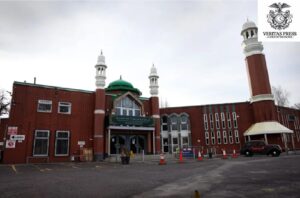
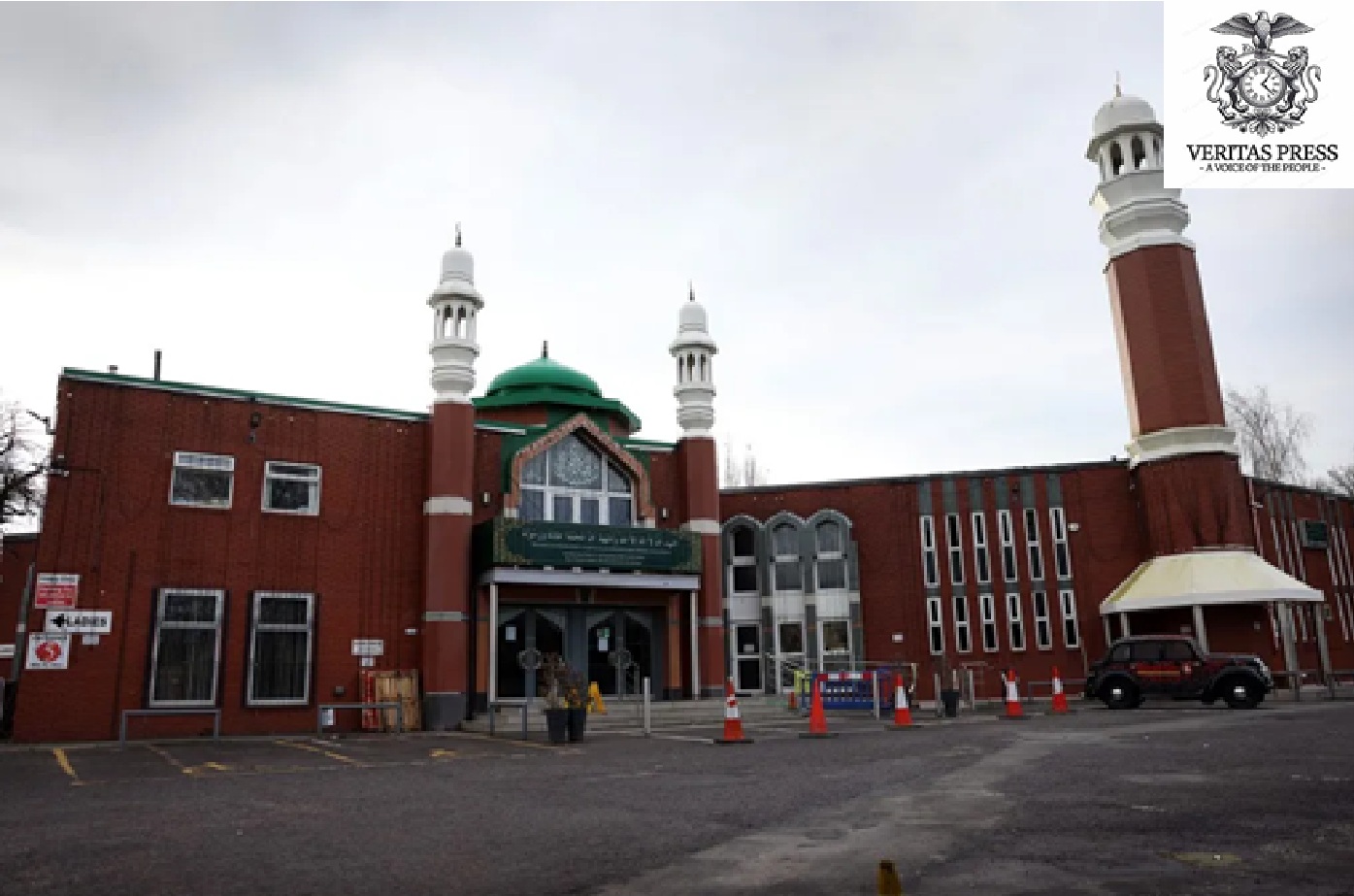
GREATER MANCHESTER, UK – On the evening of February 24, prayers at Manchester Central Mosque, one of the UK’s largest Islamic centres, were interrupted by what officials have called a “serious security incident.” Two men, one armed with a bag containing an axe, hammer, and knife, walked into the mosque during Taraweeh prayers in the holy month of Ramadan, triggering a chaotic but ultimately peaceful containment by mosque volunteers and swift police intervention.
While no worshippers were harmed, and Greater Manchester Police (GMP) have stated the incident is not currently being treated as terror-related, the broader impact goes significantly beyond one evening’s disruption.
For many Muslims in the UK, this is less an isolated anomaly than the latest flare-up in a pattern of rising Islamophobia, emboldened far-right rhetoric, and real threats to everyday life.
What Happened Inside The Mosque:
According to the mosque’s detailed statement:
- Around 8.40 pm, a white man in his 40s, wearing a high-visibility jacket and carrying a large bag, entered the prayer hall, accompanied by a second man.
- Volunteers immediately became suspicious, noticing an axe inside the bag placed near the main hall.
- The suspect was quickly escorted to a separate room where additional weapons, a hammer and a knife, were reportedly found.
- Volunteers restrained him until police arrived. CCTV footage and statements were handed over to GMP.
- The second man left before officers arrived and remains unaccounted for, with inquiries ongoing.
GMP arrested the first suspect on suspicion of possession of offensive weapons and Class B drugs. Despite the severity of the weapons involved and the timing, late evening prayers at one of the UK’s largest mosques during Ramadan, police maintain there is no evidence at present to link the incident to terrorism.
The Police Response And Official Statements:
Superintendent Simon Nasim of GMP emphasised that no threats were made and that no worshippers were injured. He reassured the community that increased patrols would remain in place while enquiries continue and urged anyone with information to come forward.
Prime Minister Keir Starmer expressed his concern on social media, offering “thanks to volunteers and emergency services” and highlighting recent funding, reportedly up to £40 million, allocated for mosque security and community protection.
On the surface, the official response appears measured. But many within the mosque community and Muslim civil society question whether this measured framing adequately captures the broader risk environment that made such an incident conceivable, and perhaps predictable.
A Spike In Anti-Muslim Hostility Across The UK:
If the weapon-carrying intrusion was shocking, the reaction in some quarters offers a revealing look at how Islamophobia has become normalised in British public life:
Return Of ‘Us Vs Them’ Rhetoric:
In recent years, right-wing politicians, commentators, and social media networks have amplified narratives that portray Muslim communities as foreign, threatening, and ‘out of place’ in British society. This is not fringe talk anymore; it has entered mainstream political discourse. Politicians from several parties have made statements conflating British Muslims with extremism or casting doubt on their loyalty to the nation.
Rising Recorded Islamophobic Incidents:
Community organisations and campaigners have documented significant increases in reports of:
- Verbal abuse and street harassment.
- Arson and vandalism targeting mosques.
- Threatening phone calls and online hate campaigns directed at Muslim families and religious leaders.
These increases correlate not with a reduction in violence, but with just the opposite — an emboldening of hateful actors who see their rhetoric reflected and amplified in mainstream media and political platforms.
A Disconnected Classification:
Many Muslims note an unsettling contradiction: attacks targeting Muslim communities are often not categorised as terrorism unless there is clear evidence of extremist ideology. Meanwhile, Muslim individuals and communities have frequently been subjected to terrorism investigations, stop-and-search operations, and surveillance on the suspicion of radicalisation without proportional evidence.
This double standard in threat framing contributes to a perception, widely shared among British Muslims, that threats against them are minimised even as rhetoric against them becomes ever more extreme.
Voices From The Ground: Fear, Frustration, And A Sense Of Vulnerability.
Local resident Maryam Khan, who lives near the mosque, told reporters she and her family now hesitate to attend evening prayers they once attended every night. “It’s really sad and really horrible to feel unsafe even in a Muslim-dense area,” she said. “We love this community, but after living here for years, you always worry something might happen.”
Her reaction is not unique.
For many British Muslims, the incident has reopened old wounds:
- Memories of attacks on mosques in cities like London, Birmingham and Bradford.
- The 2019 stabbing of a worshipper outside a mosque in Birmingham.
- Threats and harassment following international tensions or terror incidents abroad.
The cumulative effect is an erosion of the simple expectation that one should feel safe in a place of worship, especially during a sacred period like Ramadan.
Political Critiques: From Funding To Fundamental Failures:
Rusholme MP Afzal Khan was forthright in his criticism:
“This is the consequence of far-right politicians scapegoating Muslims. This is Islamophobia, plain and simple.”
He emphasised that the recent funding boost for mosque security, while welcome, underscores a reactive approach: invest after incidents occur rather than address the conditions that foster Islamophobic violence and resentment in the first place.
Analysts echo this critique. They argue that:
- Funding for physical security, cameras, gates, patrols, is necessary but insufficient.
- There is a lack of investment in community-level education, countering hate networks online, and robust enforcement against hate speech and violent intimidation before it culminates in physical threats.
In the absence of such preventive frameworks, volunteer mosque stewards continue to act as the first line of defence against violent intrusions, a responsibility that should not fall to unpaid civilians.
What This Incident Reveals About Britain Today:
Even if officials maintain the incident is not terror-related, the context matters:
- It occurred during Ramadan, a time of reflection and heightened attendance at mosques across the UK.
- Armed entry into a place of worship is an inherently symbolic act, weaponised fear, even without a stated threat.
- The demographic described, a group entering together with multiple weapons, raises questions about motives that go beyond spontaneous criminality.
- The quick departure of the second suspect and absence of immediate classification as extremist violence invites scrutiny and demand for transparency.
This was not just an attempted crime scene; it was a flashpoint in an ongoing struggle over who is seen as part of Britain’s civic community and who is treated as a suspect, a threat, or an outsider.
Conclusion: A Country At A Crossroads?
The Manchester mosque incident did not result in physical injury. But the lingering effects may run deeper:
- A sense of vulnerability and fear among Muslims at a moment when they should feel spiritually secure.
- A perception that hate speech and political scapegoating have real consequences, emboldening individuals predisposed to violence.
- A debate over whether Britain’s policies on hate crime, policing, and security funding are sufficiently forward-looking or merely reactive.
British Muslims are not calling for panic, but for policy coherence, political accountability, and a societal reckoning with the rise of Islamophobia that ordinary worshippers feel every time they step into a mosque.
In a democratic society that prides itself on pluralism and tolerance, incidents like this demand not just police responses, but a deep and honest public conversation about the forces driving hostility, and the measures needed to safeguard all communities, in law and in practice.
For The Secure Submission Of Documentation, Testimonies, Or Exclusive Investigative Reports From Any Global Location, Please Utilise The Following Contact Details For Our Investigations Desk: enquiries@veritaspress.co.uk or editor@veritaspress.co.uk
Popular Information is powered by readers who believe that truth still matters. When just a few more people step up to support this work, it means more lies exposed, more corruption uncovered, and more accountability where it’s long overdue.
If you believe journalism should serve the public, not the powerful, and you’re in a position to help, becoming a DONATOR or a PAID SUBSCRIBER truly makes a difference.
DONATION APPEAL: If You Found This Reporting Valuable, Please Consider Supporting Independent Journalism.
Help Support Our Work – We Know, We Know, We Know …
Seeing these messages is annoying. We know that. (Imagine what it’s like writing them … )
Your support fuels our fearless, truth-driven journalism. In unity, we endeavour to amplify marginalised voices and champion justice, irrespective of geographical location.
But it’s also extremely important. One of Veritas Press’s greatest assets is its reader-funded model.
1. Reader funding means we can cover what we like. We’re not beholden to the political whims of a billionaire owner. We are a small, independent and impartial organisation. No one can tell us what not to say or what not to report.
2. Reader funding means we don’t have to chase clicks and traffic. We’re not desperately seeking your attention for its own sake: we pursue the stories that our editorial team deems important and believe are worthy of your time.
3. Reader Funding: enables us to keep our website and other social media channels open, allowing as many people as possible to access quality journalism from around the world, particularly those in places where the free press is under threat.
We know not everyone can afford to pay for news, but if you’ve been meaning to support us, now’s the time.
Your donation goes a long way. It helps us:
- Keep the lights on and sustain our day-to-day operations
- Hire new, talented independent reporters
- Launch real-time live debates, community-focused shows, and on-the-ground reporting
- Cover the issues that matter most to our communities, in real time, with depth and integrity
We have plans to expand our work, but we can’t do it without your support. Every contribution, no matter the size, helps us stay independent and build a truly people-powered media platform.
If you believe in journalism that informs, empowers, and reflects the communities we serve, please donate today.
In what press freedom watchdogs are calling a historic collapse of civilian protection, 2025 has
In an extraordinary parliamentary intervention that has sent shockwaves through Westminster, a coalition of Labour
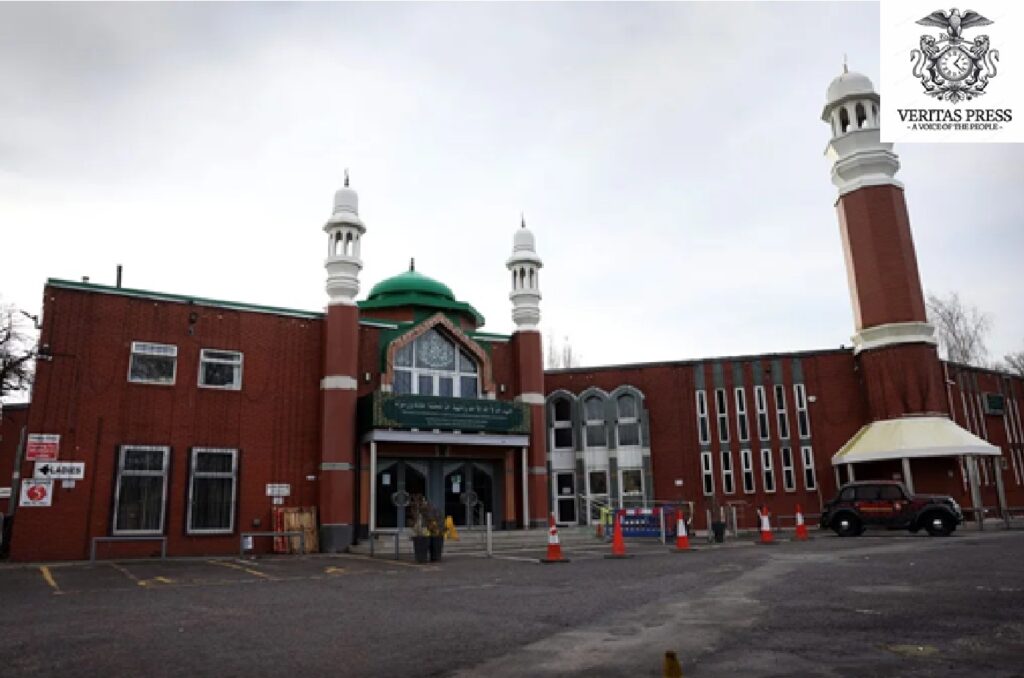
GREATER MANCHESTER, UK – On the evening of February 24, prayers at Manchester Central Mosque,
WEST BANK, Date: February 25, 2026 – The occupied West Bank is witnessing a dramatic
NEW DELHI/KASHMIR -As Narendra Modi makes his second official visit to Israel starting February 25,
WASHINGTON/TEHRAN, Feb 25, 2026- For the second time in a week, Tehran has levelled an
US – In a move that has simultaneously energised moderate pro-Israel advocates and drawn sharp
GAZA – A comprehensive investigation has concluded that the deaths of 39 Palestinians, including 22
As Indian Prime Minister Narendra Modi prepares to land in Tel Aviv on February 25

In the complex tapestry of Middle Eastern geopolitics, cartography is often the sharpest weapon. In