
Original Article Date Published:
Article Date Modified:
Help support our mission, donate today and be the change. Every contribution goes directly toward driving real impact for the cause we believe in.
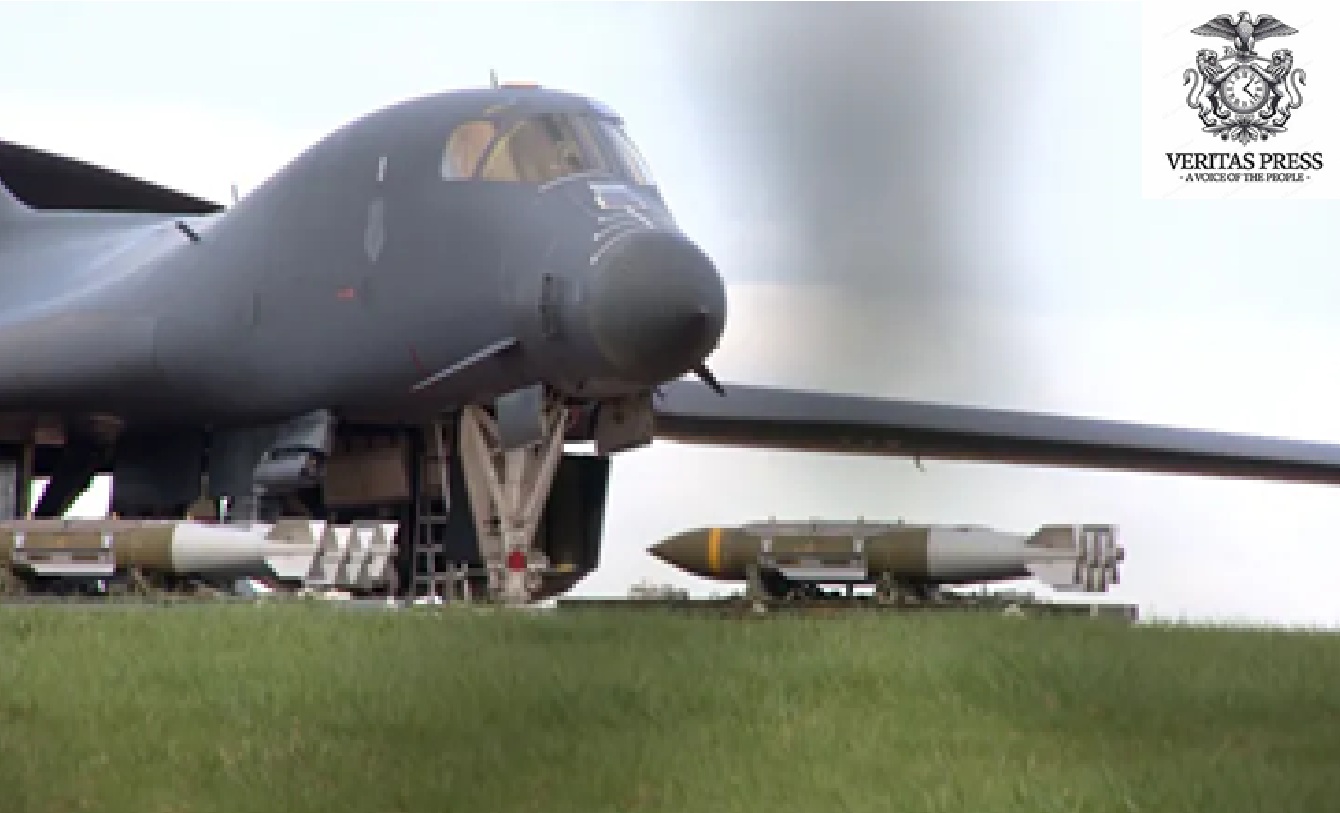
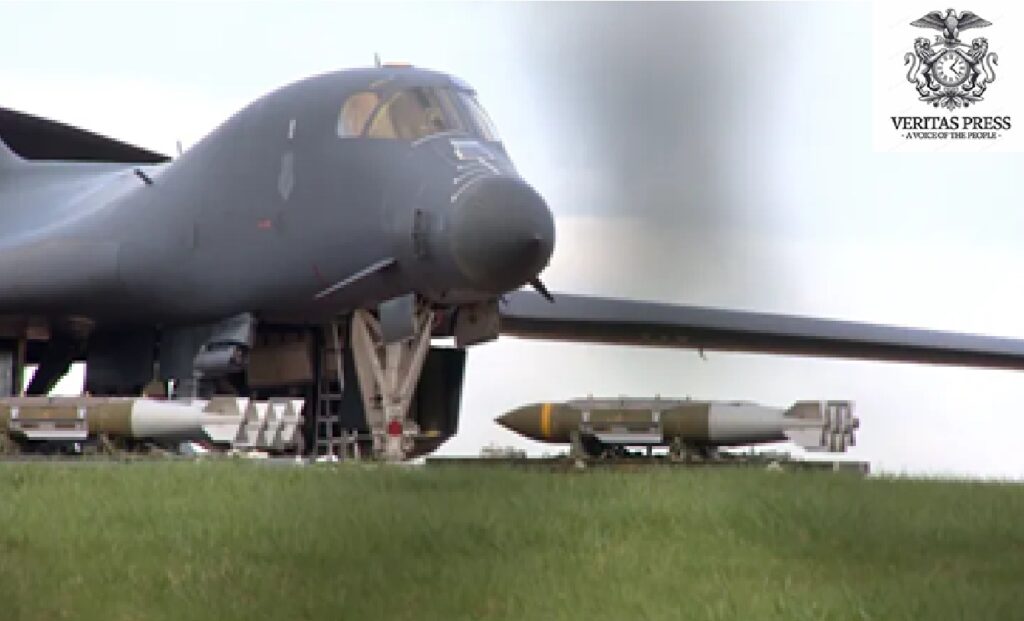
LONDON, UK – Footage captured by an Al Jazeera television crew has intensified scrutiny over Britain’s role in the escalating US-led military campaign against Iran after journalists filmed bunker-busting bombs being loaded onto American bombers at a British airbase before flights linked to attacks on Iranian targets.
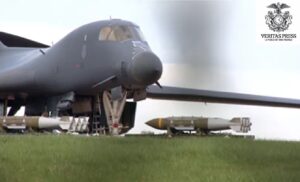
The footage, reportedly filmed at RAF Fairford in Gloucestershire, shows US ground crews loading heavy ordnance onto B-1B Lancer strategic bombers, aircraft capable of carrying large bunker-penetrating bombs designed to destroy hardened underground facilities. The aircraft later took off toward the Middle East amid what US officials described as one of the “most intense” days of strikes in the conflict.
The images have raised urgent questions about the extent of the United Kingdom’s involvement in the expanding war, particularly after Prime Minister Keir Starmer’s government approved the use of British bases for US “defensive operations” against Iran earlier this month.
Bombs Loaded In Britain Before Strikes On Iran.
According to reporting by regional media outlets and defence observers, US personnel were seen loading precision bunker-buster munitions onto B-1 bombers at RAF Fairford shortly before the aircraft departed on operational missions.
These weapons are designed to penetrate reinforced underground structures such as military bunkers, command centres or nuclear facilities before detonating. Variants like the BLU-109 or the larger GBU-28 class can weigh between 2,000 and 5,000 pounds and are widely used by the US military to attack hardened targets buried under concrete or rock.
Such munitions have been central to previous US strikes on Iranian nuclear facilities, including attacks on sites such as Fordow and Natanz, where deeply buried enrichment facilities are protected by mountain rock and reinforced concrete.
A defence analyst quoted by Al Jazeera said the loading operation captured on camera showed preparations typical of long-range deep-strike missions targeting fortified infrastructure.
“When you see bunker-penetrating weapons being loaded onto strategic bombers, you’re looking at preparations for hardened targets,” the analyst said.
RAF Fairford: The US Bomber Hub In Europe.
RAF Fairford is one of the most important overseas bases for the US Air Force. With a 10,000-foot runway capable of supporting heavy bombers, it functions as the United States’ primary European airfield for long-range strike aircraft, including B-1 and B-52 bombers.
The base has historically been used for missions in Afghanistan, Iraq and Libya, but its role in the current Iran conflict is drawing renewed scrutiny.
Recent reports confirm that multiple US bombers have been deployed to the base, from where they launched missions connected to the current air campaign against Iranian targets.
US Defence Secretary Pete Hegseth reportedly described the latest round of operations as the “most intense” phase of the campaign so far, targeting Iran’s ballistic-missile infrastructure and strategic facilities.
Legal And Political Controversy In Britain:
The revelation that bombs were loaded onto US aircraft in Britain before strikes on Iran has sparked growing criticism from British lawmakers, peace activists and legal experts.
Critics argue that allowing the US military to launch attacks from British territory risks making the UK legally complicit in the war.
Declassified UK, a London-based investigative outlet, noted that the British government initially refused permission for offensive strikes from RAF Fairford and the joint UK-US base at Diego Garcia because of concerns they could violate international law.
However, the government later allowed the use of the bases for “defensive” operations, a distinction that critics say is politically convenient but legally ambiguous.
“It’s impossible to verify whether missions launched from British bases are defensive or offensive once the aircraft are in the air,” one defence analyst told investigators.
Opposition politicians and anti-war campaigners have called for an urgent parliamentary inquiry into Britain’s role.
A spokesperson for the Stop the War Coalition said:
“If bombs loaded in Britain are being dropped on Iran, then Britain is directly involved in this war.”
Escalating US-Iran War:
The controversy comes as the United States expands its military campaign against Iran alongside Israel amid growing regional tensions.
US stealth bombers have already carried out coordinated strikes using bunker-buster bombs and cruise missiles against Iranian nuclear and military sites, according to officials familiar with the operations.
The conflict has triggered retaliatory Iranian attacks on US military facilities across the region, including missile strikes on the Al-Udeid air base in Qatar, which Tehran described as retaliation for US air raids.
Military analysts warn that continued escalation could lead to a broader regional war involving Gulf states, Israel and Western forces.
Activists And Analysts Warn Of Expanding Western Involvement:
Human rights activists and anti-war groups say the Al Jazeera footage provides rare visual evidence of how Western infrastructure is being used to sustain the war effort.
Campaigners argue that Britain’s role goes beyond logistical support.
A Middle East researcher from a UK-based peace organisation said:
“This is not neutrality. When a country allows its territory to be used for bombing missions, it becomes part of the military campaign.”
Some British-Iranian activists have also warned that the conflict could worsen tensions across the region and strengthen hardline factions in Tehran.
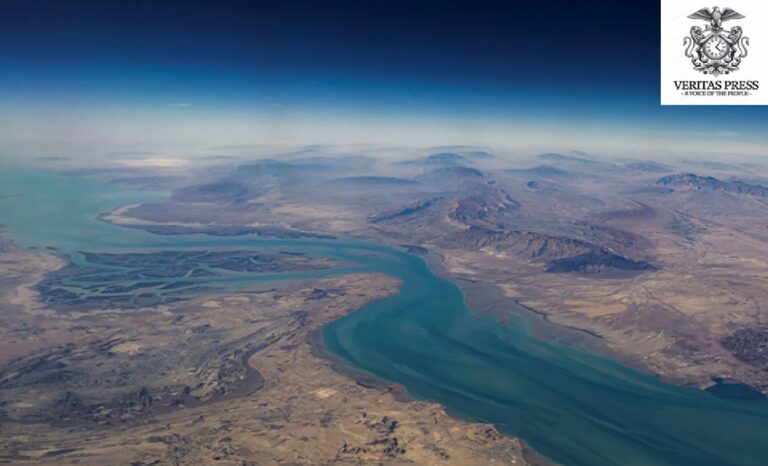
Meanwhile, global energy markets remain on edge as fighting threatens shipping routes through the Strait of Hormuz, a vital corridor for the world’s oil supply.
Growing Pressure On The UK Government:
As footage of bombs being loaded at RAF Fairford circulates widely, pressure is mounting on the British government to clarify the extent of its involvement.
Critics are demanding answers to several key questions:
- Did the UK approve the loading of bunker-buster bombs at the base?
- Were British personnel involved in facilitating the missions?
- Do the strikes comply with international law?
So far, the UK Ministry of Defence has insisted that its cooperation with Washington is limited to “defensive operations and regional security support.”
But with journalists documenting weapons being prepared on British soil before missions against Iran, the political debate over Britain’s hidden role in the conflict is likely to intensify.
Conclusion:
Taken together, the footage filmed by Al Jazeera at RAF Fairford exposes more than a single military operation, it reveals the quiet but critical role Britain is playing in a rapidly expanding war against Iran.
For weeks, Prime Minister Keir Starmer and his government have publicly insisted that the United Kingdom would not participate in the war and would avoid joining offensive military action. In Parliament and public statements, Starmer argued that Britain would only act with a “lawful basis and a viable, thought-through plan” and insisted the UK was not joining the conflict directly.
Yet the reality emerging from the ground tells a more complex, and politically uncomfortable, story.
The British government has already authorised the United States to use UK bases such as RAF Fairford and Diego Garcia for what it describes as “limited defensive strikes” against Iranian missile infrastructure.
At the same time, US strategic bombers have been deploying from these facilities as part of the expanding campaign against Iranian targets.
When bunker-busting bombs are loaded onto American bombers on British soil, the line between logistical support and participation becomes increasingly difficult to sustain. In modern warfare, the battlefield does not begin where bombs land, it begins where they are stored, armed, and launched.
For critics, the contradiction is stark. While Starmer’s administration maintains that Britain is not “fighting a war,” the country’s infrastructure, bases, and airspace are clearly embedded in the operational chain of the US-led campaign.
Legal scholars often note that under international law, states that enable or facilitate military operations, even indirectly, can still bear responsibility if those operations result in unlawful attacks.
This raises an uncomfortable question: can Britain truly claim neutrality when the weapons used in the conflict are being prepared on its territory?
Political critics, peace organisations and some analysts say the government’s position reflects a carefully crafted political balancing act, appearing to avoid another Iraq-style war while quietly supporting Washington’s military objectives.
The contradiction has not gone unnoticed internationally either. The dispute between Washington and London over the war has already exposed tensions within the Western alliance, with US officials openly criticising Britain’s hesitation while still relying on British bases to sustain the campaign.
In that context, the images filmed at RAF Fairford undermine the central claim of Starmer’s policy: that Britain is not involved.
If bombs loaded in Gloucestershire are later dropped on targets in Iran, the claim that the UK is merely an observer begins to look increasingly untenable.
For many critics, this points to a deeper issue of political credibility. Despite repeated assurances that Britain would not participate in the war, the government’s decisions suggest a form of indirect involvement, militarily supportive yet politically deniable.
In other words, while Starmer has insisted Britain is not fighting Iran, the infrastructure of the British state is nonetheless helping to wage the war.
The result, critics argue, is a policy marked by strategic ambiguity and double standards: publicly distancing Britain from the conflict while quietly enabling it behind the scenes.
As the war escalates and civilian casualties mount across the region, the questions facing the British government are becoming unavoidable:
- If weapons prepared on British soil are used in the war, can the UK truly claim it is not a participant?
- Where does responsibility lie if those operations lead to civilian deaths?
- And how long can the government maintain the narrative of non-involvement when evidence increasingly points in the opposite direction?
The footage captured at RAF Fairford does not merely document bombs being loaded onto aircraft.
It captures something far more politically significant: the gap between official rhetoric and operational reality.
And in that gap lies a troubling possibility that, despite repeated public assurances, Britain may already be more deeply entangled in the Iran war than its government is willing to admit.
Source: Multiple News Agencies
Submissions:
For The Secure Submission Of Documentation, Testimonies, Or Exclusive Investigative Reports From Any Global Location, Please Utilise The Following Contact Details For Our Investigations Desk: enquiries@veritaspress.co.uk or editor@veritaspress.co.uk
Help Support Our Work:
Popular Information is powered by readers who believe that truth still matters. When just a few more people step up to support this work, it means more lies exposed, more corruption uncovered, and more accountability where it’s long overdue.
Help Protect Independent Journalism, Which Is Currently Under Attack.
If you believe journalism should serve the public, not the powerful, and you’re in a position to help, becoming a DONATOR or a PAID SUBSCRIBER truly makes a difference.
DONATION APPEAL: If You Found This Reporting Valuable, Please Consider Supporting Independent Journalism.
Help Support Our Work – We Know, We Know, We Know …
Seeing these messages is annoying. We know that. (Imagine what it’s like writing them … )
Your support fuels our fearless, truth-driven journalism. In unity, we endeavour to amplify marginalised voices and champion justice, irrespective of geographical location.
But it’s also extremely important. One of Veritas Press’s greatest assets is its reader-funded model.
1. Reader funding means we can cover what we like. We’re not beholden to the political whims of a billionaire owner. We are a small, independent and impartial organisation. No one can tell us what not to say or what not to report.
2. Reader funding means we don’t have to chase clicks and traffic. We’re not desperately seeking your attention for its own sake: we pursue the stories that our editorial team deems important and believe are worthy of your time.
3. Reader Funding: enables us to keep our website and other social media channels open, allowing as many people as possible to access quality journalism from around the world, particularly those in places where the free press is under threat.
We know not everyone can afford to pay for news, but if you’ve been meaning to support us, now’s the time.
Your donation goes a long way. It helps us:
- Keep the lights on and sustain our day-to-day operations
- Hire new, talented independent reporters
- Launch real-time live debates, community-focused shows, and on-the-ground reporting
- Cover the issues that matter most to our communities, in real time, with depth and integrity
We have plans to expand our work, but we can’t do it without your support. Every contribution, no matter the size, helps us stay independent and build a truly people-powered media platform.
If you believe in journalism that informs, empowers, and reflects the communities we serve, please donate today.

In contemporary geopolitics, the language of gender equality and women’s liberation increasingly appears within the
BEIRUT, LEBANON, OCCUPIED PALESTINE — The Middle East is hurtling toward an unprecedented abyss. What
TEHRAN, IRAN – For the past two weeks, the Middle East has been engulfed in
WEST BANK – In the pre-dawn hours of Thursday, March 12, 2026, the occupied West
Original Article Date Published: Article Date Modified: Help support our mission, donate today and be
TEHRAN, IRAN – The global economy is holding its breath. Nearly two weeks after the

As the Middle East conflict enters its second week, triggering the largest energy supply disruption

RAMALLAH / JERUSALEM / AMMAN — For the twelfth consecutive day, the gates of the
TEHRAN, IRAN – The early hours of March 11, 2026, marked a significant and dangerous

It was the kind of volatility that wipes out traders and creates legends. In a