



Original Article Date Published:
Article Date Modified:
Help support our mission, donate today and be the change. Every contribution goes directly toward driving real impact for the cause we believe in.
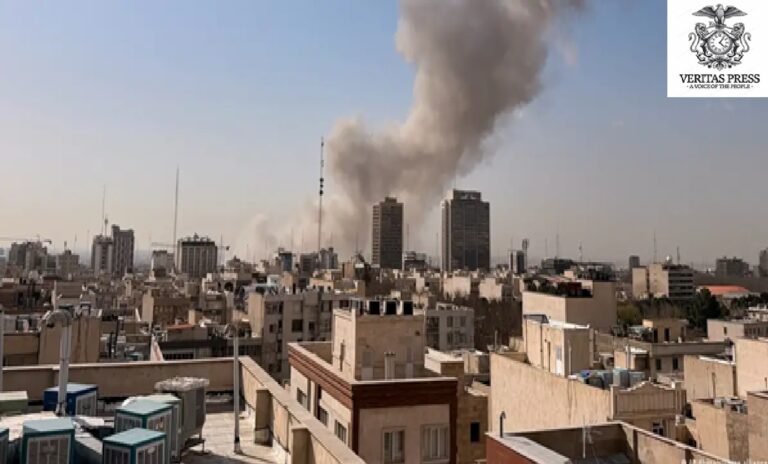
UK, Saturday, 28 February 2026 – In the early hours of Saturday morning, the Middle East lurched into a new and terrifying phase of conflict. Waves of US and Israeli “preventative” strikes hit Tehran and other major Iranian cities, targeting not just nuclear facilities but, according to reports, the very leadership of the Islamic Republic. By mid-morning, Iranian missiles were raining down on US Fifth Fleet headquarters in Bahrain, US airbases across Qatar and the UAE, and cities in Israel.
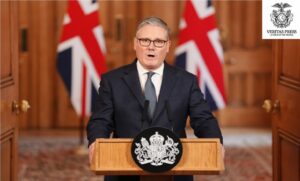
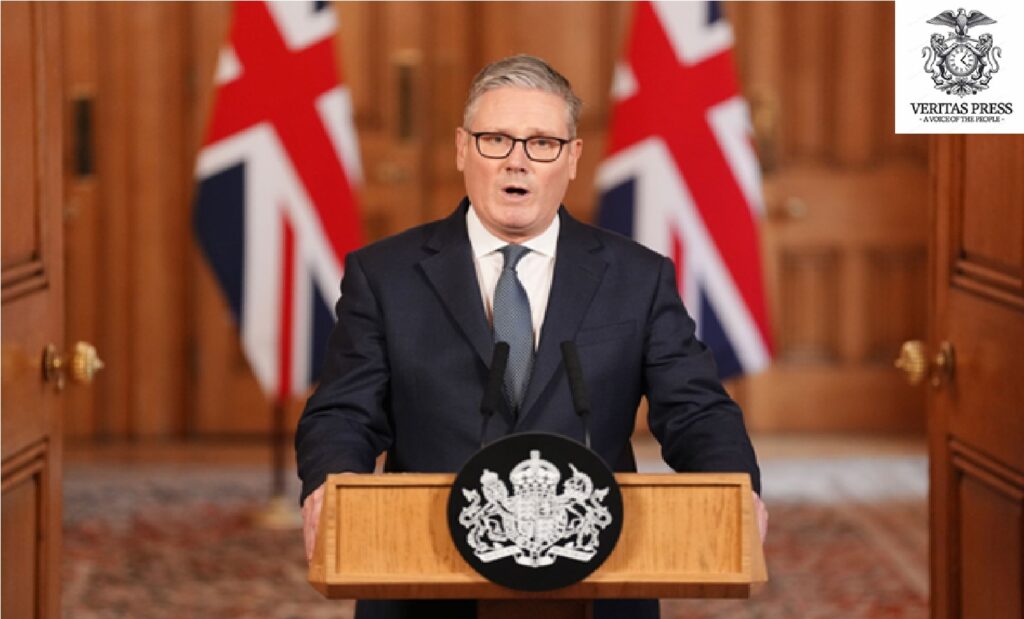
In London, Prime Minister Sir Keir Starmer moved quickly to address a nervous nation. Standing in Downing Street, he confirmed a flurry of activity in the skies above the Middle East. But his message was one of careful, and some might say precarious, distinction.
“The United Kingdom played no role in these strikes,” Starmer asserted, while simultaneously confirming that “British planes are in the sky today as part of coordinated regional defensive operations to protect our people, our interests and our allies”.
This is the central paradox of the UK’s position on 28 February 2026: how to defend against a war it claims it is not part of, launched by an ally whose actions it reportedly considers a violation of international law.
“In The Sky” But Not Involved: A Legal And Political Quagmire:
Starmer’s statement was a masterclass in diplomatic tightrope-walking, but the wires are fraying. He condemned Iran’s retaliatory strikes on regional partners, strikes that hit Bahrain, Kuwait, and the UAE, expressing “solidarity” with those nations. He labelled the Iranian regime “utterly abhorrent,” accusing it of backing lethal plots on UK soil and brutally crushing its own people.
However, the Prime Minister conspicuously avoided direct condemnation of the US-Israeli pre-emptive attack that ignited this firestorm. This silence speaks volumes.
It comes just hours after Lord Peter Ricketts, former UK national security adviser, delivered a damning assessment on BBC Radio 4’s Today programme. “None of this, I think, is in any sense legal in a way that the UK would recognise,” he said. “There was really no imminent threat to the US. This is an action that they chose to undertake, or were dragged into it by the Israelis.”
This sentiment was echoed by senior Labour MP Dame Emily Thornberry, chair of the Commons foreign affairs committee, who told the same programme she did not believe the strikes were legal. The government’s own actions betray its concerns: Whitehall sources have confirmed that permission was denied for the US to use RAF bases in Cyprus or the crucial Diego Garcia facility for the strikes, due to fears they would breach international law.
Yet, British jets are refuelling and flying. British personnel at bases in Cyprus are on their highest state of alert. The UK is now actively participating in the defence of partners who are under attack because of an American operation London felt it could not legally support.
“Keir Starmer has avoided the biggest risk participating in an illegal war, but he is now deeply enmeshed in its consequences,” said Chris Doyle, director of the Council for the Advancement of Arab-British Understanding. “The government is clearly aware that if Iran mounts significant reprisals, they could impact British allies and supply routes. But the risk is a significant fallout with the Trump administration. If this conflict goes wrong, Starmer will be part of the blame game.”
The Trump Factor: From Chagos To Tehran.
The tension with the US administration is palpable. The strikes come at a low point in UK-US relations. President Donald Trump was reportedly incensed by the UK’s refusal to allow use of its bases, a snub that has wider implications.
Just days before the strikes, Trump took to Truth Social to publicly undermine Starmer’s flagship foreign policy move: the Chagos Islands deal. In a stunning reversal, Trump urged the UK not to hand over the archipelago to Mauritius, warning that the vital Diego Garcia base, which the UK had just refused him for this operation, could be needed for a strike on Iran.
“Prime Minister Starmer should not lose control, for any reason, of Diego Garcia,” Trump wrote, adding that leases were “no good”. With the base now a critical safe haven for US assets, the UK’s refusal to allow its use for offensive strikes has created a glaring diplomatic rift.
Across the Atlantic, the reaction to the strikes has exposed deep domestic divisions. While President Trump described the campaign as “massive and ongoing” from his war room at Mar-a-Lago and called on Iranians to “take over your government”, Democratic Senator Tim Kaine was blistering in his condemnation, calling the strikes “dangerous, unnecessary, and idiotic” and demanding an immediate Senate vote to block US forces from engaging in hostilities with Iran.
In the UK, the political reaction has fractured along familiar lines. Conservative leader Kemi Badenoch offered full-throated support, standing “with our allies in the US and Israel”. Reform UK’s Nigel Farage demanded Starmer “change his mind” and back the Americans. Conversely, Green Party leader Zack Polanski labelled the US and Israel “rogue states” and the attack “illegal and unprovoked,” while Liberal Democrat leader Sir Ed Davey urged Starmer to rule out allowing British bases to be used for any future unilateral US action.
The View From Tehran And The Region: Diplomacy Is Dead.
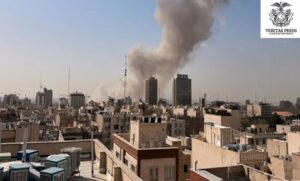
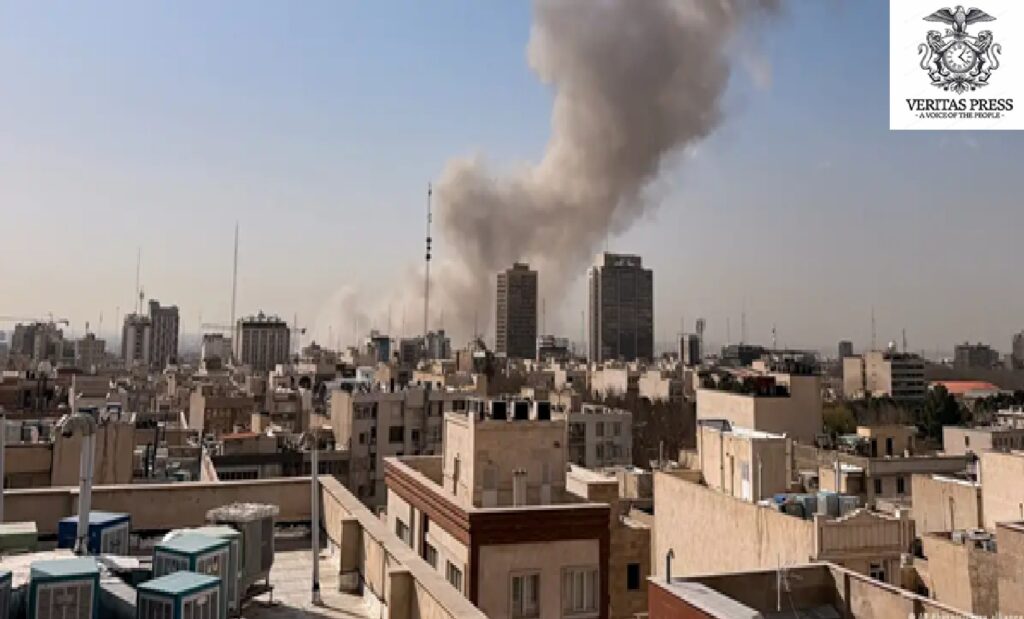
On the ground, the reality is starker. Satellite images obtained by CNN show black smoke billowing from the compound of Iran’s Supreme Leader, Ayatollah Ali Khamenei, in Tehran. While his fate remains unconfirmed, the targeting of leadership represents a massive escalation from the limited strikes on nuclear facilities last summer.
Iran’s response was swift. The Revolutionary Guard launched “Truthful Promise 4,” striking at the heart of the US presence in the Gulf. In Abu Dhabi, a civilian was killed by debris from an intercepted missile. Dubai’s international airport, the world’s busiest, was forced to suspend all flights. The UAE, a key UK partner and business hub, found itself on the frontline of a war it wanted no part of.
Oman, the tireless mediator that had just hosted the latest rounds of US-Iran talks, watched its efforts go up in flames. Omani Foreign Minister Sayyid Badr Albusaidi posted a despairing message on X: “I am dismayed. Active and serious negotiations have yet again been undermined. Neither the interests of the United States nor the cause of global peace are well served by this… This is not your war”.
Those talks in Geneva, which just days ago saw both sides present “practical proposals,” now seem like a cruel prelude to war. Analysts suggest this was always the intent. Tang Zhichao, a Middle East expert at the Chinese Academy of Social Sciences, argued bluntly that “the negotiations were completely a smokescreen… This was a carefully planned result. It shows that the United States and Israel have completely lost hope in negotiations, and leadership change in Iran is the goal”.
This view is supported by the IAEA’s latest confidential report, which confirms that technical discussions on Iran’s nuclear programme are still scheduled for next week, even as the agency pleads with Tehran for access to sites bombed by Israel and the US. The pursuit of diplomacy and the pursuit of war are now running on parallel, contradictory tracks.
The “Abhorrent” Regime And The People Caught In Between
In his statement, Starmer was careful to decry the “appalling violence and repression against the Iranian people”. It is a crucial point. As the world watches missiles fly, a new comprehensive report from the Human Rights Activists group details the “Crimson Winter” of 2025-2026, a 50-day period in which they have verified the deaths of over 7,000 people, including 236 children, during nationwide protests.
The report paints a picture of a regime under immense internal pressure, having arrested over 53,000 people and forced confessions from hundreds. For many Iranians, the fear of their own government is as potent as the fear of American bombs. President Trump’s call for the Iranian people to “take over your government” is a dangerous echo of past interventions, offering solidarity to a population that may see it as a cynical tool of war rather than a genuine hand of friendship.
What Comes Next?
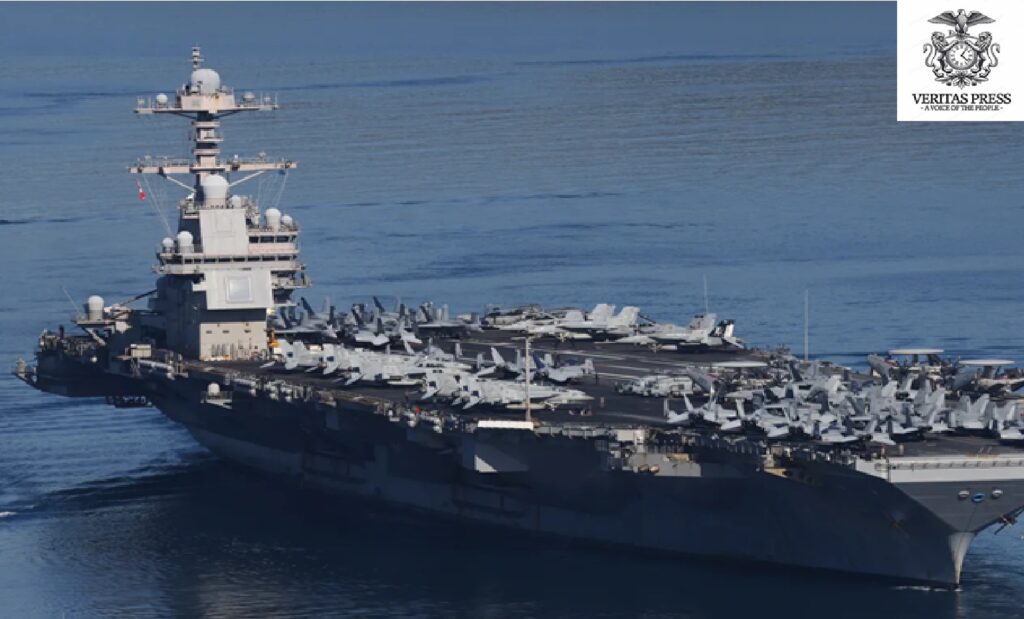
As night falls on the Middle East, the situation remains terrifyingly fluid. The Israeli military has warned of further waves of incoming missiles. The US has two carrier strike groups in the region and is planning for several days of attacks. Iran has demonstrated its ability to strike US allies directly.
For the UK, the path forward is fraught with peril. It has placed its jets in the middle of a storm; it claims it did not start. It has angered its most important ally by refusing offensive support, while being forced into a defensive posture that could quickly become offensive if British assets are directly targeted.
The international order, meanwhile, appears to be fracturing. While Canada expressed support for the US action, key European allies like France and Spain issued statements of deep concern or outright rejection. Finland’s President Alexander Stubb noted bluntly that the US is now operating “outside traditional international law”.
As the UN Security Council convenes, the question remains: can the UK, or anyone else, broker a return to the negotiating table while the “Lion’s Roar” of bombs echoes across Tehran? Or has the window for diplomacy been slammed shut, with British planes flying defensively overhead, unable to stop the chaos unfolding below?
Submission:
For The Secure Submission Of Documentation, Testimonies, Or Exclusive Investigative Reports From Any Global Location, Please Utilise The Following Contact Details For Our Investigations Desk: enquiries@veritaspress.co.uk or editor@veritaspress.co.uk
Help Support Our Work:
Popular Information is powered by readers who believe that truth still matters. When just a few more people step up to support this work, it means more lies exposed, more corruption uncovered, and more accountability where it’s long overdue.
If you believe journalism should serve the public, not the powerful, and you’re in a position to help, becoming a DONATOR or a PAID SUBSCRIBER truly makes a difference.
DONATION APPEAL: If You Found This Reporting Valuable, Please Consider Supporting Independent Journalism.
Help Support Our Work – We Know, We Know, We Know …
Seeing these messages is annoying. We know that. (Imagine what it’s like writing them … )
Your support fuels our fearless, truth-driven journalism. In unity, we endeavour to amplify marginalised voices and champion justice, irrespective of geographical location.
But it’s also extremely important. One of Veritas Press’s greatest assets is its reader-funded model.
1. Reader funding means we can cover what we like. We’re not beholden to the political whims of a billionaire owner. We are a small, independent and impartial organisation. No one can tell us what not to say or what not to report.
2. Reader funding means we don’t have to chase clicks and traffic. We’re not desperately seeking your attention for its own sake: we pursue the stories that our editorial team deems important and believe are worthy of your time.
3. Reader Funding: enables us to keep our website and other social media channels open, allowing as many people as possible to access quality journalism from around the world, particularly those in places where the free press is under threat.
We know not everyone can afford to pay for news, but if you’ve been meaning to support us, now’s the time.
Your donation goes a long way. It helps us:
- Keep the lights on and sustain our day-to-day operations
- Hire new, talented independent reporters
- Launch real-time live debates, community-focused shows, and on-the-ground reporting
- Cover the issues that matter most to our communities, in real time, with depth and integrity
We have plans to expand our work, but we can’t do it without your support. Every contribution, no matter the size, helps us stay independent and build a truly people-powered media platform.
If you believe in journalism that informs, empowers, and reflects the communities we serve, please donate today.
In the early hours of Saturday morning, the Middle East lurched into a new and
MINAB, IRAN — In the quiet coastal town of Minab, along the strategic Strait of
GORTON AND DENTON, UK – At 4:30 am on February 27th, 2026, Hannah Spencer stood
IRAN/US/ISRAEL – In the early hours of February 28, 2026, residents of Tehran awoke to
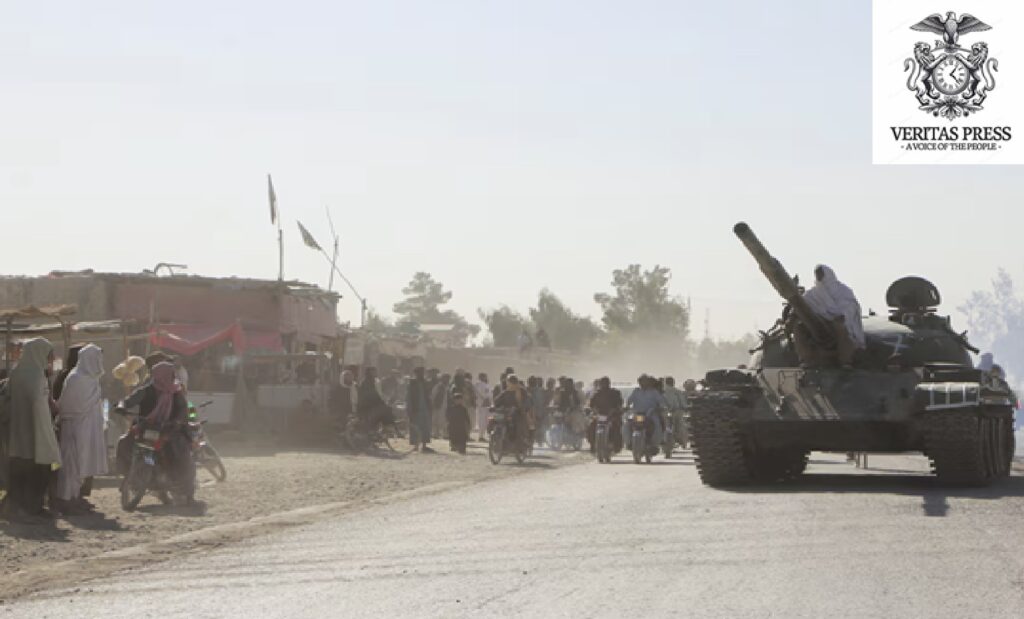
ISLAMABAD/KABUL – The thunder of Pakistani warplanes over the capitals of two nations at dawn
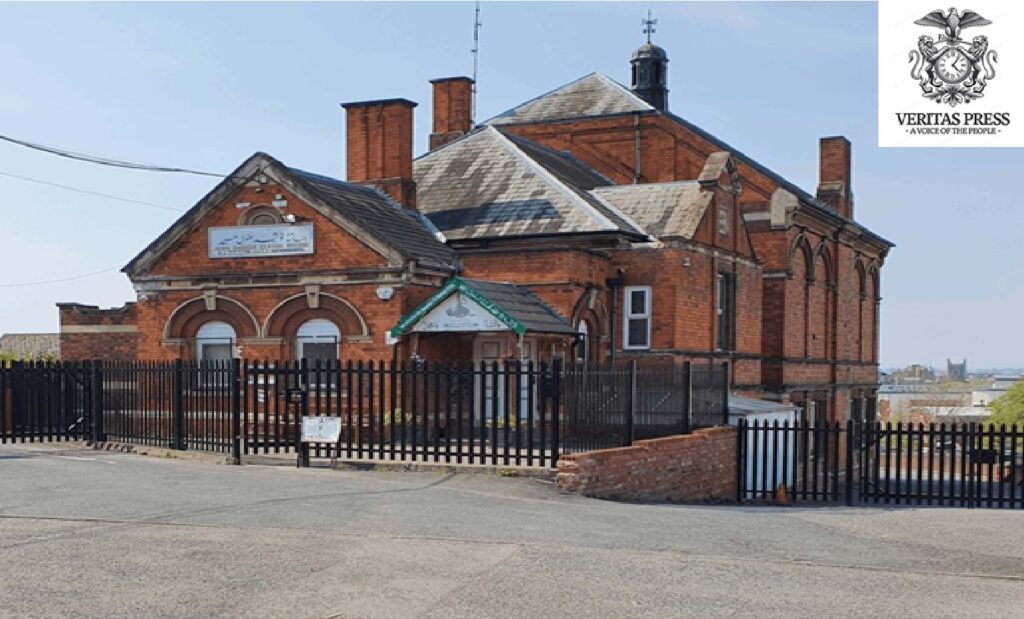
A Muslim community centre adjacent to a mosque in Worcester was firebombed in the early
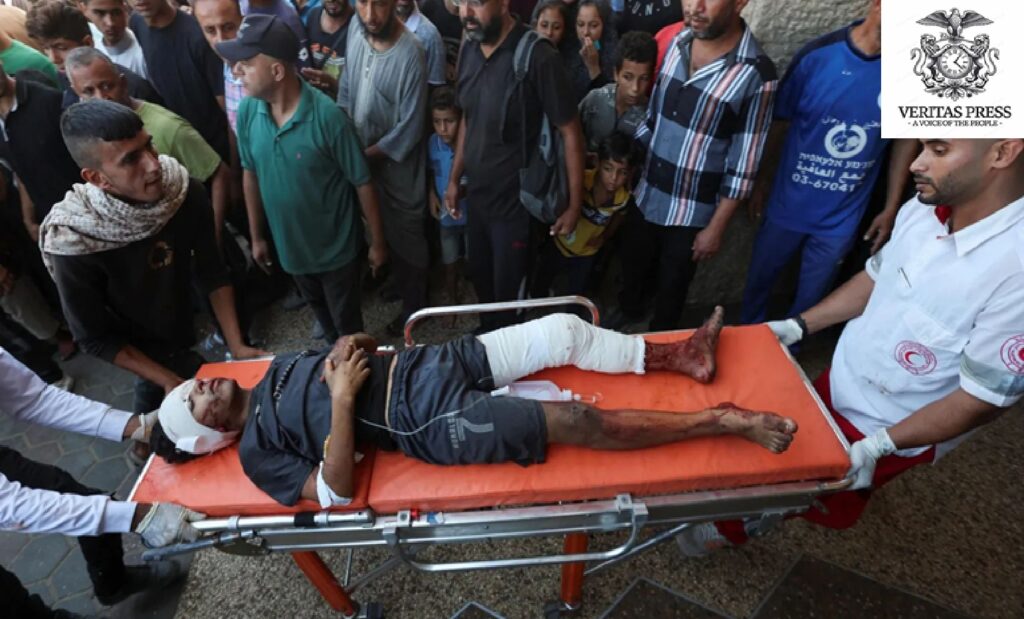
GAZA CITY — In the predawn stillness of the 27th day of Ramadan, the sound
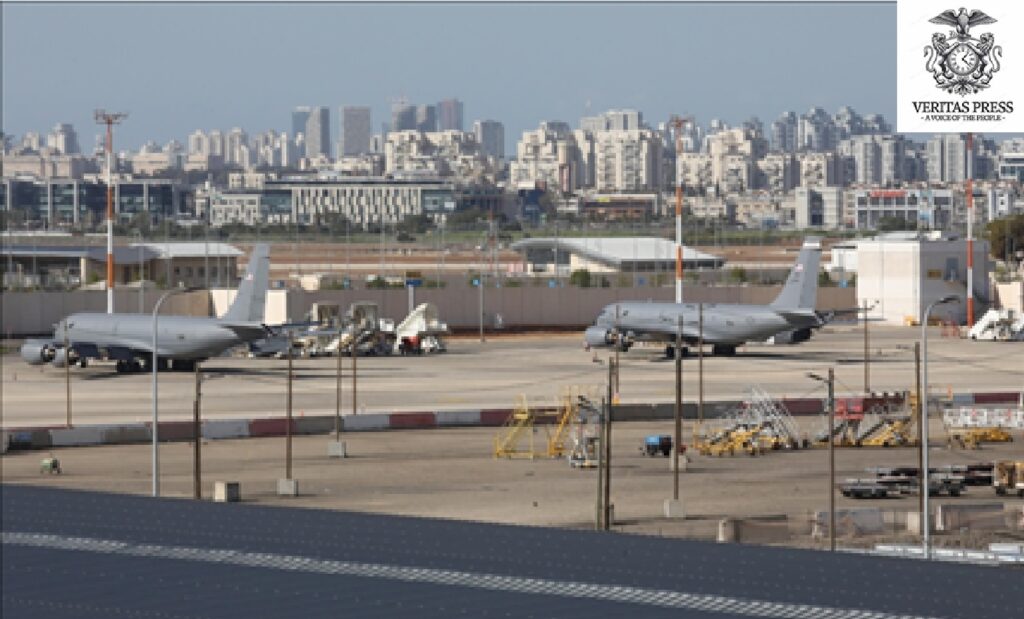
JERUSALEM / WASHINGTON — The skies over the Middle East have become a barometer of
US/IRAN – In a significant escalation of American military posture in the Middle East, the
ISLAMABAD, PAKISTAN – The political temperature in Pakistan, already simmering after years of instability, has