
Original Article Date Published:
Article Date Modified:
Help support our mission, donate today and be the change. Every contribution goes directly toward driving real impact for the cause we believe in.
ISTANBUL — In a dramatic escalation of legal and political pressure against Israeli leadership, the Istanbul Chief Public Prosecutor’s Office has filed a sweeping 35-defendant indictment that seeks to hold Prime Minister Benjamin Netanyahu and his top officials accountable for a 2025 military assault on a civilian aid flotilla. The charges, which include genocide and crimes against humanity, are framed not merely as an attack on a convoy but as a microcosm of a systematic, state-driven campaign to starve and subjugate the population of Gaza.
The 500-plus-page indictment, finalised on April 11, 2026, and submitted to Istanbul’s 10th High Criminal Court, seeks aggravated life imprisonment for each suspect, along with additional prison terms ranging from 1,102 years and 9 months to 4,596 years. This action follows a domestic investigation and a previous November 2025 Turkish arrest warrant, adding to the 2024 ICC warrants. While the legal impact may be largely symbolic given jurisdictional limits, its political and moral weight has reverberated globally, representing the most concrete national legal action yet against Israel’s wartime cabinet. The event has ignited a fierce war of words, with Turkey branding Netanyahu the “Hitler of our times” and Israeli officials responding with crude insults and accusations of hypocrisy.
Anatomy Of A Maritime Assault: The Global Sumud Flotilla
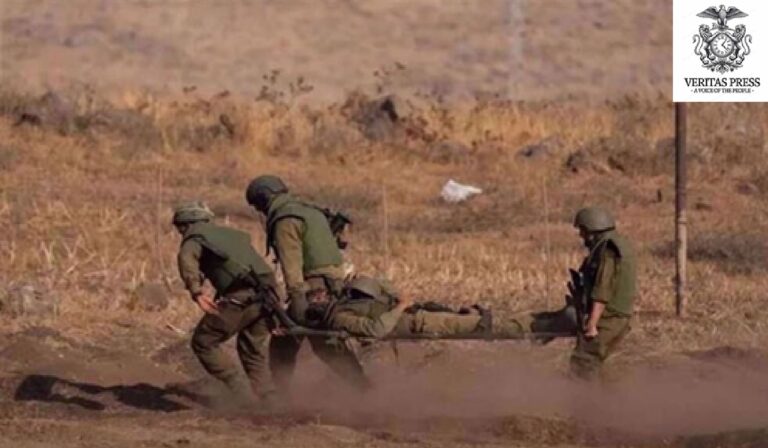
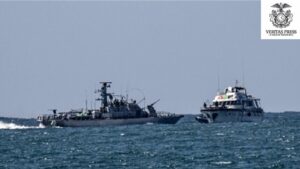
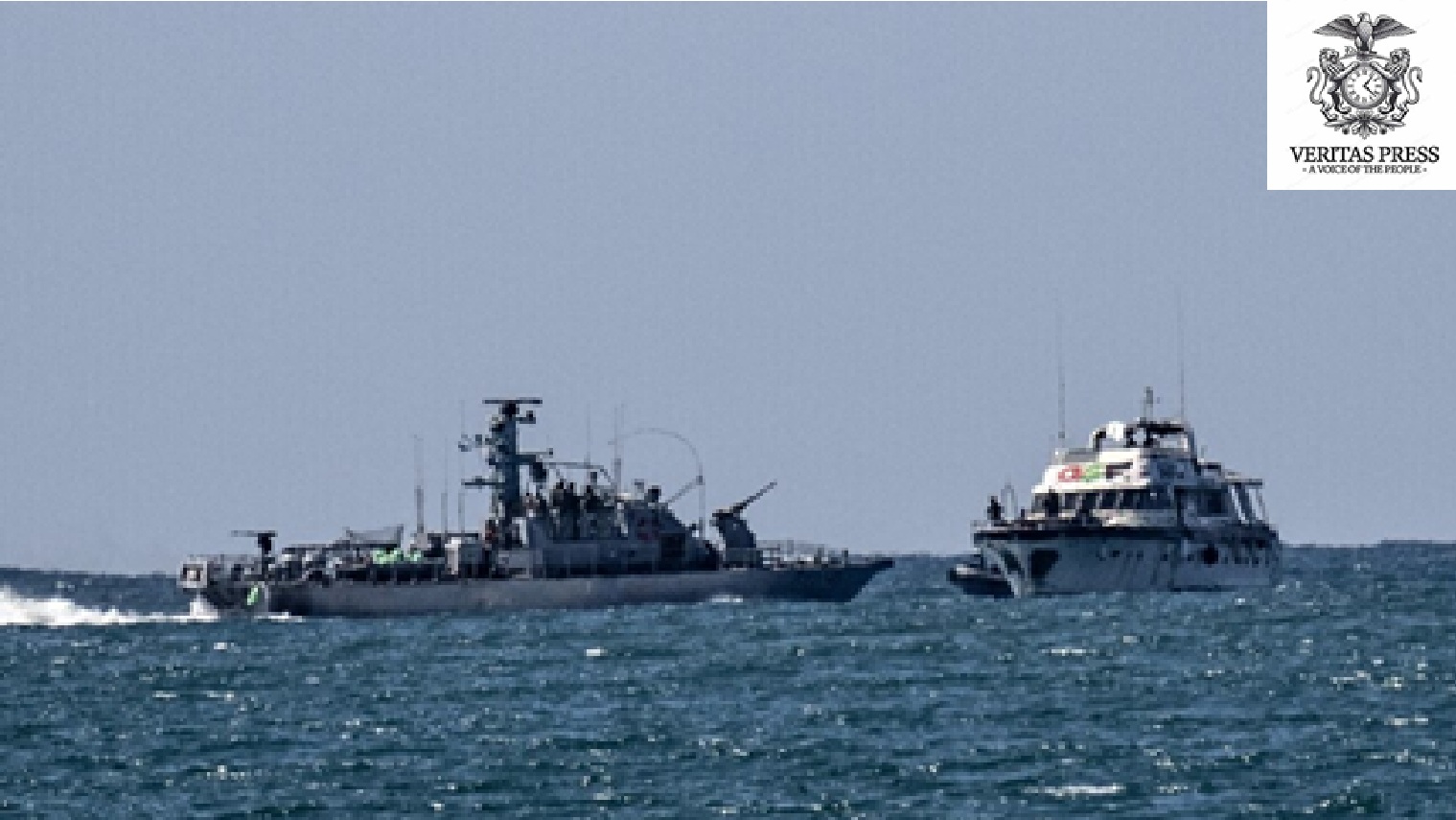
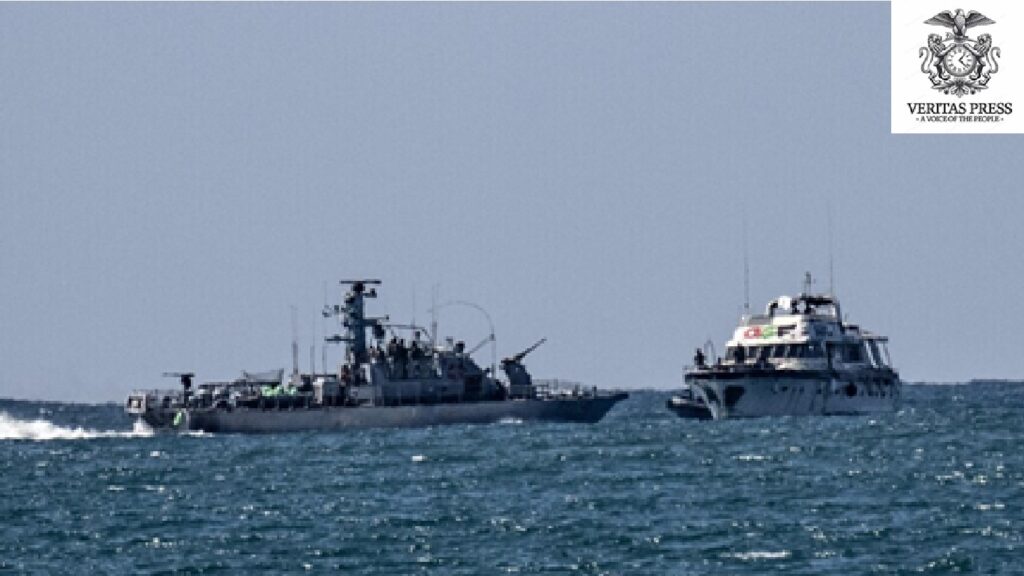
In early September 2025, the Global Sumud Flotilla, a coalition of over 40 civilian vessels and nearly 500 activists from 44 countries, set sail for Gaza carrying food, baby formula, and medical supplies. Approximately 70 nautical miles from the Gaza coast, Israeli naval commandos stormed the vessels, cutting communications, jamming signals, and detaining over 400 people, including climate activist Greta Thunberg and former Pakistani Senator Mushtaq Ahmad. Organisers described it as an “unlawful intervention,” and the indictment emphasises that the raid occurred entirely outside Israeli territorial waters. The seized ships were towed to the Israeli port of Ashdod, and their humanitarian cargo was never delivered to Gaza.
The Indictment: Charges And Legal Foundation
The legal basis for Turkey’s jurisdiction rests on the UN Convention on the Law of the Sea, coupled with the Turkish Penal Code’s provisions on extraterritoriality for crimes against humanity. The charges include genocide, crimes against humanity, deprivation of liberty, torture, property damage, and the hijacking of transport vehicles.
The indictment argues that the flotilla attack was not an isolated incident but a component of a broader genocidal campaign. It explicitly states that “the attacks against civilians, the destruction of livelihoods, the obstruction of humanitarian aid, and the condemnation of the population to hunger, thirst, and lack of treatment cannot be evaluated solely as a security measure; they are directly linked to acts that constitute genocide and crimes against humanity.” The prosecutor’s office has named 35 senior Israeli officials, including Defense Minister Israel Katz, National Security Minister Itamar Ben-Gvir, former Defense Minister Yoav Gallant, IDF Chief of Staff Eyal Zamir, and Navy Commander David Saar Salama.
Diplomatic Firestorm: “Hitler of Our Times”
The indictment has ignited an extraordinarily personal diplomatic war. In response to Israeli officials’ attacks on President Erdoğan, Turkey’s Ministry of Foreign Affairs issued a statement calling Netanyahu “the Hitler of our time” due to the crimes committed in Gaza. The statement highlighted that Netanyahu is already subject to an International Criminal Court arrest warrant and that Israel faces genocide proceedings at the International Court of Justice. The Turkish statement accused Netanyahu of seeking to “undermine ongoing peace negotiations and continue his expansionist policies” and warned that “failing this, he risks being tried in his own country.”
Israeli officials responded with a blend of deflection and crude hostility. Netanyahu accused Erdoğan of “massacring his own Kurdish citizens” and supporting Iran, while Defence Minister Katz dismissed the Turkish proceedings as a “grand absurdity” and called Erdoğan a “paper tiger.” National Security Minister Ben-Gvir’s response was the most vulgar: “Erdoğan, do you understand English? F*ck you.” Turkish Communications Director Burhanettin Duran had earlier stated that Netanyahu “has no moral values and legitimacy to lecture anyone” and was “dragging the region into instability.”
The Broader Context: Ceasefire Violations And Legal Precedents
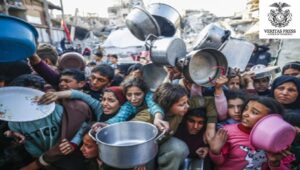
The Istanbul indictment arrives against a backdrop of persistent Israeli violations of the October 10, 2025, ceasefire, which have rendered the truce largely theoretical. According to the Gaza Health Ministry, at least 750 Palestinians have been killed and over 2,090 injured since the ceasefire took effect. UN High Commissioner for Human Rights Volker Türk has documented 738 deaths during this supposed period of calm, noting that the violence reflects “continuing disregard for Palestinian lives, enabled by sweeping impunity.” Overall, the death toll in Gaza since October 2023 has surpassed 72,320, with 90% of civilian infrastructure destroyed.
The Turkish indictment sits alongside the November 2024 arrest warrants issued by the International Criminal Court against Netanyahu and Gallant for war crimes and crimes against humanity, including starvation as a method of warfare. South Africa continues to lead a genocide case against Israel at the International Court of Justice. These overlapping legal proceedings, ICC, ICJ, and now Turkish domestic courts, create a multifaceted legal architecture that increasingly constrains Israeli officials’ international movement and legitimacy. Netanyahu’s decision to skip the Davos World Economic Forum in January 2026 over fear of arrest underscores the practical consequences of this growing legal isolation.
Legal And Political Analysis: Symbolism Vs. Substance
Legal analysts caution that the practical enforcement of the Turkish indictment remains highly unlikely. Turkey is not a party to the Rome Statute and cannot enforce ICC warrants directly, and its domestic jurisdiction over foreign nationals for crimes committed extraterritorially is contested. However, the cumulative effect of multiple jurisdictions issuing warrants, ICC, Turkey, and potentially others, creates what legal scholars describe as a “legal pincer” that significantly restricts travel and diplomatic options for the accused. The indictment also provides a legal framework for civil society organisations and victims’ families to pursue universal jurisdiction cases in other European states with more robust mechanisms for enforcement.
The Turkish indictment represents a significant escalation in the legal campaign against Israeli leadership over the Gaza war. Whether or not it ever results in an actual arrest or trial, it has fundamentally altered the diplomatic calculus and further entrenched the narrative that Israeli officials are international pariahs facing credible allegations of the most serious crimes known to humanity. As Turkish officials have vowed to “continue to stand by innocent civilians and … ensure that Netanyahu is held accountable for the crimes he has committed,” the Istanbul indictment may prove to be more than a symbolic gesture, it may be the opening salvo in a new phase of transnational legal warfare against those accused of presiding over one of the most devastating conflicts of the 21st century.
Conclusion: The Juridical Spectacle And The Limits Of Symbolic Justice.
The Istanbul indictment of Benjamin Netanyahu and his 34 co-defendants is a legal and diplomatic thunderclap, but upon closer investigative scrutiny, it reveals itself as a double-edged sword that cuts both against Israeli impunity and against the very notion of impartial international law. The 500-page dossier, with its staggering demand for 4,596-year sentences, is a masterwork of prosecutorial narrative. Yet, in the corridors of The Hague and the lecture halls of Ankara law schools, a more uncomfortable question is being whispered: Is this a genuine pursuit of justice for Gaza’s dead, or the most sophisticated geopolitical performance art of the 21st century?
The Jurisdictional Trap And The “Legal Pincer” Mirage:
Turkish prosecutors have anchored their case firmly in the UN Convention on the Law of the Sea and the principle of universal jurisdiction for crimes against humanity. The evidence is visceral: the Global Sumud Flotilla was attacked in international waters, and activists like Greta Thunberg were detained in a manner the indictment characterises as “state piracy.” However, an investigative deep-dive into the enforcement mechanism reveals a chasm between the indictment’s rhetorical power and its practical impotence.
While the International Criminal Court’s 2024 warrants have already turned Netanyahu into a caged traveller—forcing him to skip the 2026 Davos summit and cancel a planned visit to Prague, the Turkish indictment adds a layer of political stigma without adding a single new extradition lever. “Turkey is not a party to the Rome Statute, and its domestic courts have no apparatus to arrest a sitting prime minister in Jerusalem,” notes Professor Omer Shatz, an international law scholar at Sciences Po and former legal advisor to the ICC. “This is a judgment of history being drafted in a courtroom that cannot summon the accused. It is a powerful moral document, but it is a legal fiction.”
The critique deepens when examining the domestic jurisdiction argument. Turkey’s invocation of Articles 12 and 13 of its Penal Code to prosecute foreign officials for acts committed abroad is an aggressive interpretation of sovereignty. This same legal elasticity, critics argue, has been used inside Turkey to silence domestic opposition, imprison journalists, and strip lawmakers of immunity under the guise of “terrorism” charges. The contrast is stark: An activist state demanding accountability for the detention of 400 aid workers, while its own prisons hold thousands of political detainees under conditions the Council of Europe has repeatedly deemed in violation of human rights standards.
The Hypocrisy Of Selective Victimhood:
An investigative critique cannot ignore the elephant in the courtroom: the politicisation of the victim narrative. The Turkish government’s statements, calling Netanyahu the “Hitler of our time,” are calibrated for maximum resonance in the Global South and the Muslim world. Yet, these statements ring hollow when measured against Ankara’s own geopolitical manoeuvring.
Despite the fiery rhetoric and the indictment, Turkey’s trade relations with Israel, though officially restricted, continue to flow through third-party loopholes and the Turkish-controlled port of Haifa’s trade routes via Palestinian Authority intermediaries. Investigative reports from Middle East Eye and Nordic Monitor have tracked shipments of Azerbaijani oil arriving in Israel via Turkey’s Ceyhan pipeline months after the flotilla attack. This economic undercurrent suggests that while the Turkish judiciary wages a war of legal symbolism, the Turkish state apparatus maintains a pragmatic, if opaque, financial detachment.
“Where is the indictment for the arms shipments to Azerbaijan during the blockade of Nagorno-Karabakh? Where is the indictment for the displacement of Kurds in Northern Syria?” asks Deniz Baran, a human rights lawyer with the Istanbul Bar Association’s International Law Commission. “We are using the genocide convention as a weapon against Netanyahu, and rightly so. But we cannot be selective. If we accept universal jurisdiction for Gaza, we must accept it for Afrin and Diyarbakir. Otherwise, this isn’t law; it’s a propaganda offensive.”
The UN’s Blind Eye And The Collapse Of Humanitarian Order:
Perhaps the most damning critique emerging from this saga is directed not at Netanyahu or Erdoğan, but at the United Nations Security Council and the Western powers who have enabled this cycle of impunity. The Global Sumud Flotilla was not a rogue operation; it was a direct response to the abject failure of the international community to enforce its own ceasefire resolutions and the ICJ’s provisional measures on famine prevention.
The October 2025 Gaza truce has become a cruel joke. With over 750 Palestinians killed post-ceasefire, the UN’s own Volker Türk described the situation as one of “sweeping impunity.” The Istanbul indictment highlights this vacuum. It is a national court stepping into a void created by the US veto power at the Security Council and Europe’s strategic paralysis.
As one senior UNRWA official, speaking on condition of anonymity due to the sensitivity of the situation, told this investigation: “The Turkish indictment is the symptom of a broken system. We have over 72,000 bodies in Gaza and a World Court order to stop the killing, but the only entity actually drafting a formal charge sheet is a prosecutor in Istanbul. That should terrify us all. It means the multilateral system has ceded its moral authority to individual states with individual agendas.”
Final Assessment: The Shadow Of Justice.
In the final analysis, the Istanbul indictment against Netanyahu is a potent instrument of lawfare, the use of law as a weapon of war. It succeeds brilliantly in cementing the narrative that the Israeli war cabinet is a collection of international pariahs. It provides a legal scaffold for activists in Belgium, Spain, and South Africa to push for universal jurisdiction arrests. It deepens Netanyahu’s personal and political isolation.
However, as a vehicle for justice, it remains critically flawed. It offers the survivors of the Sumud Flotilla and the starving children of Jabalia no tangible remedy. It cannot feed a single mouth or rebuild a single hospital. It is a ghost judgment, haunting the accused but never touching them. Until the international community summons the political will to enforce the ICC warrants and uphold the ICJ genocide convention findings, the Istanbul indictment will remain what it is today: a deeply researched, morally righteous, and profoundly incomplete chapter in the long, bitter struggle for accountability in the Middle East. It is a mirror held up to a world that knows what is happening in Gaza but has chosen, whether in Jerusalem, Washington, or Ankara, to prioritise politics over the pain of the Palestinians.
Source: Multiple News Agencies
Submissions:
For The Secure Submission Of Documentation, Testimonies, Or Exclusive Investigative Reports From Any Global Location, Please Utilise The Following Contact Details For Our Investigations Desk: enquiries@veritaspress.co.uk or editor@veritaspress.co.uk
Help Support Our Work:
Popular Information is powered by readers who believe that truth still matters. When just a few more people step up to support this work, it means more lies exposed, more corruption uncovered, and more accountability where it’s long overdue.
Help Protect Independent Journalism, Which Is Currently Under Attack.
If you believe journalism should serve the public, not the powerful, and you’re in a position to help, becoming a DONATOR or a PAID SUBSCRIBER truly makes a difference.
DONATION APPEAL: If You Found This Reporting Valuable, Please Consider Supporting Independent Journalism.
Help Support Our Work – We Know, We Know, We Know …
Seeing these messages is annoying. We know that. (Imagine what it’s like writing them … )
Your support fuels our fearless, truth-driven journalism. In unity, we endeavour to amplify marginalised voices and champion justice, irrespective of geographical location.
But it’s also extremely important. One of Veritas Press’s greatest assets is its reader-funded model.
1. Reader funding means we can cover what we like. We’re not beholden to the political whims of a billionaire owner. We are a small, independent and impartial organisation. No one can tell us what not to say or what not to report.
2. Reader funding means we don’t have to chase clicks and traffic. We’re not desperately seeking your attention for its own sake: we pursue the stories that our editorial team deems important and believe are worthy of your time.
3. Reader Funding: enables us to keep our website and other social media channels open, allowing as many people as possible to access quality journalism from around the world, particularly those in places where the free press is under threat.
We know not everyone can afford to pay for news, but if you’ve been meaning to support us, now’s the time.
Your donation goes a long way. It helps us:
- Keep the lights on and sustain our day-to-day operations
- Hire new, talented independent reporters
- Launch real-time live debates, community-focused shows, and on-the-ground reporting
- Cover the issues that matter most to our communities, in real time, with depth and integrity
We have plans to expand our work, but we can’t do it without your support. Every contribution, no matter the size, helps us stay independent and build a truly people-powered media platform.
If you believe in journalism that informs, empowers, and reflects the communities we serve, please donate today.
LONDON, UK – This wasn’t just another protest. On a Saturday afternoon in London’s Trafalgar
GAZA – The fragile ceasefire in Gaza was never a return to normalcy, but for
ISTANBUL — In a dramatic escalation of legal and political pressure against Israeli leadership, the
ISLAMABAD, TEHRAN, WASHINGTON – For 21 hours, the world watched Islamabad. Delegations from Washington and
GAZA CITY / GENEVA – The ceasefire was supposed to mark the beginning of the
EAST JERUSALEM — On a crisp April morning in the Ras al-Amud neighbourhood of Silwan,
BEIRUT/TEL AVIV — A humanitarian catastrophe is unfolding in Lebanon as Israeli military operations intensify,

US, NASA – On Friday, April 10, 2026, at precisely 5:07 p.m. PDT (0007 GMT
A fragile ceasefire intended to pause a 40-day war and reopen the world’s most critical
ISLAMABAD / BEIRUT — As dawn breaks over a locked-down Islamabad on Friday, the world’s