
Title: Trump’s ‘Locked And Loaded’ Threat, Iran’s Deadly Protests, And The Long Shadow Of Regime Change.
Press Release: Veritas Press C.I.C.
Author: Kamran Faqir
Article Date Published: 02 Jan 2026 at 11:00 GMT
Category: Asia | US-Israel-Iran | Trump’s ‘Locked and Loaded’ Threat, Iran’s Deadly Protests, and the Long Shadow of Regime Change.
Source(s): Veritas Press C.I.C. | Multi News Agencies
Website: www.veritaspress.co.uk

Business Ads

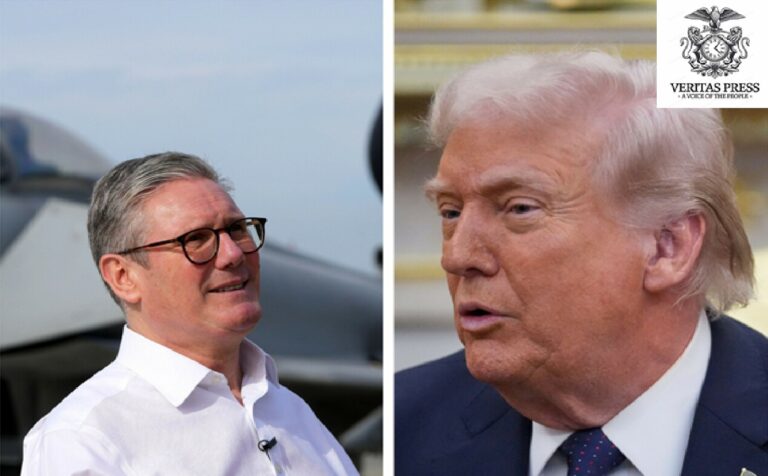
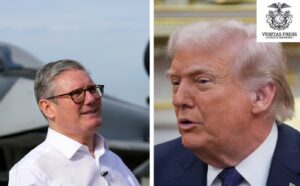
US President Donald Trump’s declaration that the United States is “locked and loaded” to intervene if Iran “shoots and violently kills peaceful protesters” has intensified scrutiny not only of Tehran’s repression, but also of Washington and Israel’s strategic intentions, raising serious questions about regime change, selective human rights advocacy, and the erosion of international law.
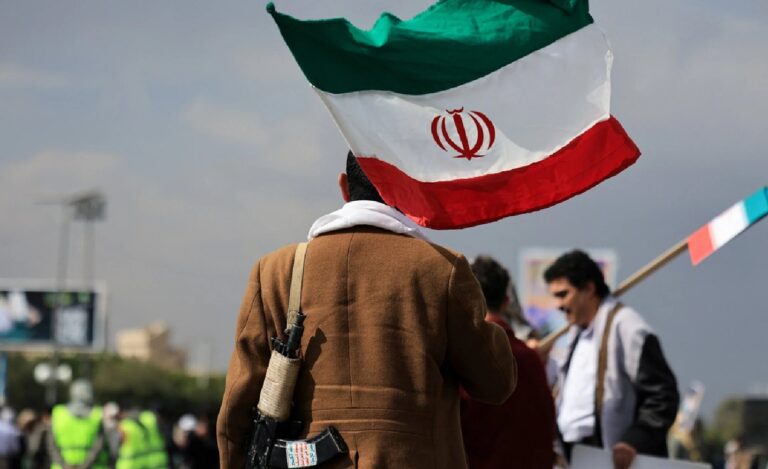
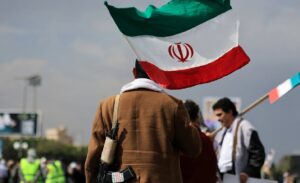
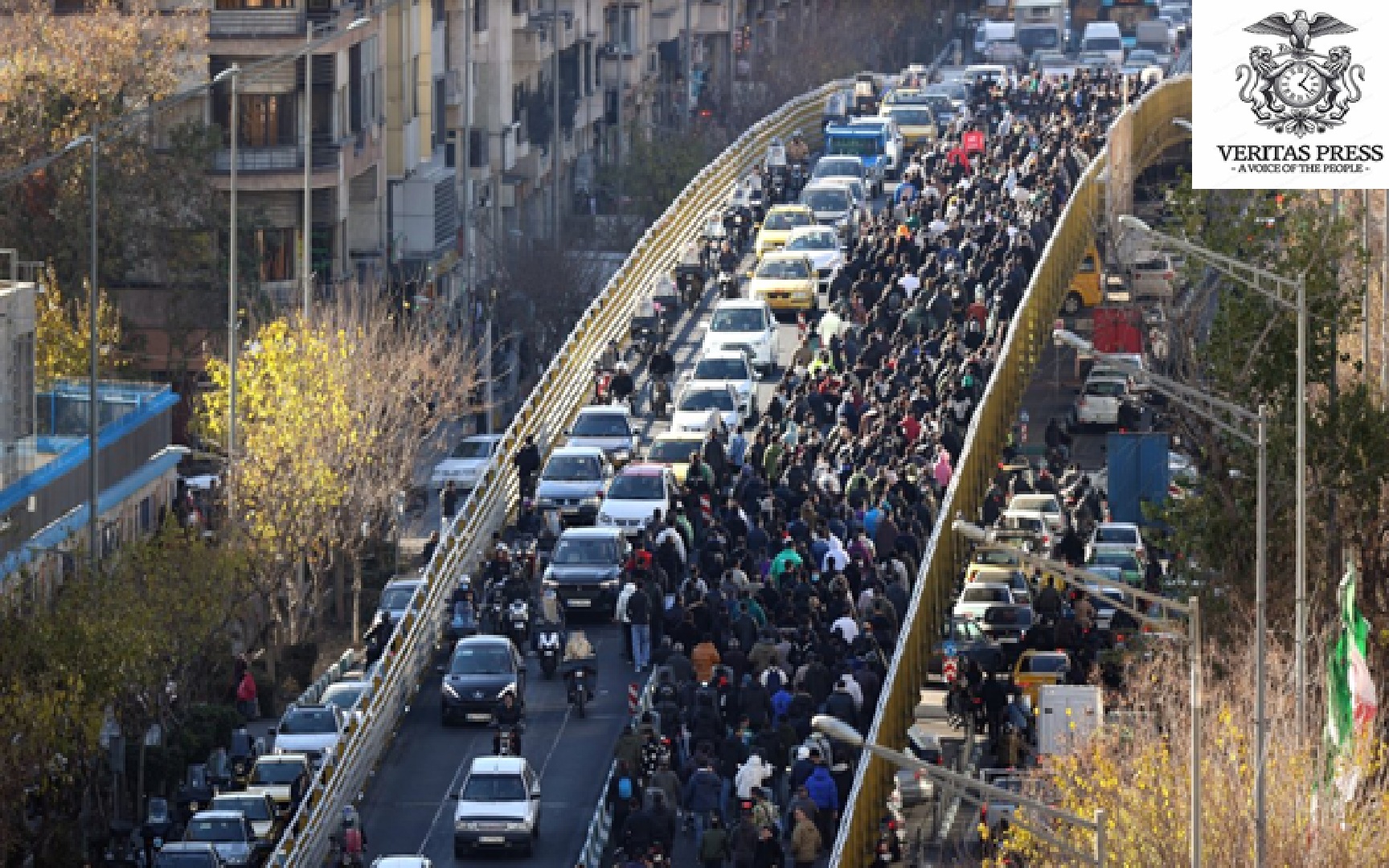
The warning came as Iran faces its most significant nationwide unrest since the 2022 Mahsa Amini uprising, with protests spreading across dozens of cities and at least six people confirmed dead amid clashes with security forces. Yet critics argue that Trump’s rhetoric cannot be disentangled from a longer US–Israeli strategy aimed at coercive transformation of the Iranian state, a strategy that has repeatedly inflicted collective punishment on civilians and undermined legal norms governing sovereignty and the use of force.
From Protest Protection To Military Threat:
Posting on Truth Social, Trump wrote:
“If Iran shoots and violently kills peaceful protesters, which is their custom, the United States of America will come to their rescue. We are locked and loaded and ready to go.”
While framed as a warning against human rights abuses, the language is explicitly militarised. Trump did not outline diplomatic, legal, or humanitarian mechanisms for protecting civilians, instead invoking readiness for force, a posture that international law experts warn risks violating the UN Charter’s prohibition on the use of force and non-intervention in domestic affairs.
“There is no legal doctrine that allows unilateral military intervention because a state represses protests,” said a former UN special rapporteur quoted by international legal commentators. “Even when abuses occur, the threshold for force is extremely high, and it requires collective authorisation, not a Truth Social post.”
Economic Collapse And A Protest Movement Beyond Reform:
The protests erupted on December 28 at Tehran’s Grand Bazaar, a powerful symbol of Iran’s economic life and political legitimacy. Shopkeepers protested the collapse of the rial, runaway inflation, and rising living costs that have pushed millions below the poverty line.
Economists and analysts note that Iran’s crisis is the cumulative result of internal mismanagement and decades of external pressure.
“The Iranian economy has been structurally weakened by corruption and authoritarian governance,” said an Iran-focused political economist. “But US sanctions have dramatically magnified that suffering. They are not a neutral backdrop; they are a material driver of the crisis.”
The unrest quickly spread nationwide, from Tehran and Isfahan to Qom, Khuzestan, Lorestan, Kurdistan, and Sistan and Baluchestan, with chants increasingly rejecting the Islamic Republic altogether.
Journalists inside Iran told international media that the protests are decentralised, leaderless, and rooted in both economic despair and political exhaustion, making them resilient but also more vulnerable to indiscriminate repression.
Deadly Crackdowns And Minority Regions Under Fire:
Iran’s semi-official Fars News Agency confirmed fatalities in Lordegan, Azna, and Kuhdasht, claiming protesters opened fire on police. Human rights groups strongly contest that narrative.
Arsalan Yarahmedi, founder of the Hengaw Organisation for Human Rights, said victims were predominantly from Kurdish and Lor communities, with security forces using live ammunition early in the protests.
“This mirrors past crackdowns,” Yarahmedi said. “Minority regions are treated as expendable zones. The state uses lethal force first and asks questions later.”
Amnesty International and Human Rights Watch have repeatedly documented Iran’s use of live fire, mass arrests, torture, and internet shutdowns during protests, conduct that likely constitutes serious violations of international human rights law.
Yet activists caution against allowing Iran’s abuses to be instrumentalised by external powers with their own agendas.
The Regime-Change Question:
Trump’s warning follows a series of increasingly explicit statements by US and Israeli officials linking Iran’s internal unrest to broader strategic objectives.
Earlier this week, Trump stood alongside Israeli Prime Minister Benjamin Netanyahu and threatened renewed strikes on Iran’s nuclear infrastructure, saying Washington would “knock the hell out of them” if Iran continues its nuclear programme.
Israeli officials have long framed Iran’s internal instability as an opportunity. Israeli media analysts have openly discussed protests as weakening the regime’s ability to project power, while hawkish US commentators have called for “maximum support” to unrest.
For critics, the pattern is unmistakable.
“This is textbook regime-change rhetoric,” said a Middle East scholar quoted by regional outlets. “Human rights language is being layered onto coercive military threats. We’ve seen this before, Iraq, Libya, Syria.”
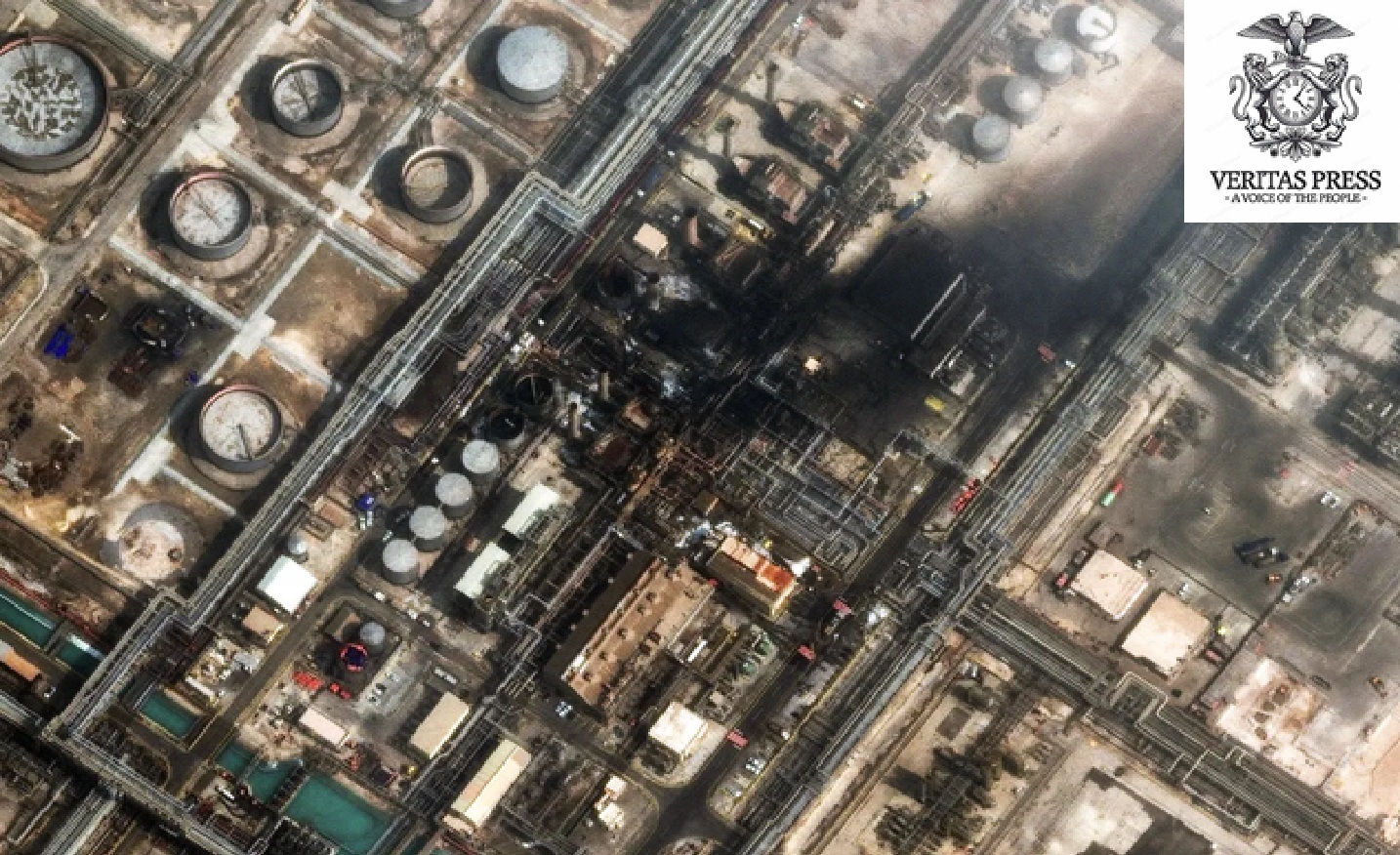
The June conflict, in which Israel killed senior Iranian military commanders and nuclear scientists, followed by US strikes on Natanz and Fordow, already represented a grave escalation that many legal experts described as unlawful use of force.
Under international law, targeted killings, pre-emptive strikes, and attacks on nuclear facilities in the absence of an imminent threat raise serious legal concerns. Iran’s nuclear sites are subject to International Atomic Energy Agency monitoring, complicating claims of self-defence.
International Law Under Strain:
Legal scholars warn that Trump’s statement further erodes norms designed to prevent powerful states from exploiting internal unrest to justify intervention.
“The Responsibility to Protect doctrine does not authorise unilateral military action,” said one international law professor. “Yet US rhetoric repeatedly collapses that distinction, turning humanitarian concern into a rhetorical cover for force.”
Trump’s first-term “maximum pressure” campaign, widely viewed as collective punishment, did not weaken Iran’s security apparatus but instead empowered hardliners, crushed civil society, and accelerated nuclear escalation.
“The people paid the price, not the regime,” said an Iranian activist in exile. “Now they are suffering again while foreign powers posture.”
Tehran’s Response And Internal Fractures:
Iran’s leadership has rejected Trump’s remarks as foreign interference. Supreme Leader Ali Khamenei characterised the unrest as psychological warfare orchestrated by enemies.
President Masoud Pezeshkian, however, acknowledged public anger and admitted the government bears responsibility for economic failures, urging officials not to scapegoat the US, an unusually candid admission that suggests divisions within the ruling elite.
Still, the state has mobilised Basij militias, expanded arrests, and tightened information controls, reinforcing fears of a wider crackdown.
Protesters Caught In The Crossfire:
For protesters, the convergence of repression and regime-change rhetoric is deeply unsettling.
“We are fighting our own government,” one protester in Isfahan told an independent journalist. “When America and Israel talk about bombs, it only helps them call us traitors.”
That fear is echoed by veteran Iranian journalists, who warn that foreign threats have historically enabled Tehran to delegitimise protest movements and justify lethal force.
A Tehran-based reporter wrote:
“Every time foreign leaders threaten Iran, the state reframes domestic dissent as treason. Protesters become collateral damage in a geopolitical game.”
A Dangerous Convergence:
The current moment represents a convergence of crises: an Iranian state facing deep legitimacy erosion, a protest movement unwilling to retreat, and external powers openly signalling readiness to exploit instability.
Israel and the United States insist their rhetoric is aimed at deterrence and protection. Critics argue it is indistinguishable from a regime-change strategy that violates international law and risks catastrophic escalation.
As one regional analyst concluded:
“Iran’s rulers fear their people more than foreign bombs. But foreign bombs are what they use to justify crushing their people.”
Whether Trump’s “locked and loaded” warning restrains violence or accelerates repression remains uncertain. What is clear is that Iran’s civilians once again stand at the intersection of authoritarian rule and great-power ambition, with human rights invoked loudly, and international law quietly sidelined.
In Summary: Human Rights As Cover, Regime Change As Objective.
Iran’s streets are once again the site of extraordinary civilian courage, and extraordinary state violence. The Islamic Republic’s security forces have responded to economic desperation with bullets, arrests, and repression, continuing a long record of human rights violations for which Tehran bears unequivocal responsibility under international law.
But the danger facing Iranian civilians does not end with their own government.
Washington and Tel Aviv are not disinterested guardians of Iranian lives. Trump’s “locked and loaded” warning, delivered without reference to diplomacy, international mechanisms, or legal restraint, reveals a deeper continuity in US–Israeli policy: the strategic exploitation of internal unrest to advance regime-change objectives long pursued through sanctions, sabotage, assassinations, and military coercion.
Analysts, historians, and regional experts warn that this rhetoric is not primarily about protecting protesters; it is about power.
“The language of civilian rescue is being weaponised,” said one Middle East analyst. “What’s being signalled is not humanitarian intervention, but an opportunity to weaken the Iranian state, force political collapse, and reshape the region on Western and Israeli terms.”
The record is instructive. From Iraq to Libya, humanitarian justification has repeatedly masked campaigns aimed at dismantling hostile governments, installing compliant political orders, securing strategic resources, and expanding military footprints. In each case, promises of liberation gave way to state collapse, sectarian violence, and long-term instability, while foreign bases multiplied and corporate interests moved in.
Iran, with its vast energy reserves, critical geography, and resistance to US–Israeli regional dominance, represents a far larger prize.
Critics argue that regime change in Tehran would not be pursued to empower Iranians, but to neutralise an independent regional actor, open access to strategic resources, realign energy flows, and entrench Western military infrastructure across a region already saturated with foreign bases. Any successor government installed under such conditions, they warn, would lack legitimacy and function as a client state, accountable outward rather than to its own people.
This is why Trump’s threat is so dangerous. By fusing human rights rhetoric with explicit military readiness, Washington and Israel hand Iran’s hardliners exactly what they need: proof that foreign powers seek domination, not justice. Every bomb threat strengthens the security state, discredits grassroots protest, and turns civilians into collateral, both politically and physically.
Iran’s protesters understand this contradiction. Many have explicitly rejected foreign intervention, insisting their struggle is domestic, indigenous, and rooted in social and economic dignity, not geopolitical realignment. As one Iranian journalist wrote, “We are trapped between a regime that kills us and foreign powers that would use us.”
International law exists precisely to prevent this convergence of repression and opportunism. Yet it is being steadily eroded, by Tehran’s violence against its own people, and by Washington and Tel Aviv’s willingness to threaten force, violate sovereignty, and collapse humanitarian concern into strategic coercion.
If the past is any guide, regime change pursued through pressure, isolation, and military threat will not free Iran. It will fracture it.
True solidarity with Iran’s civilians would mean protecting their right to self-determination, not deciding their future in foreign capitals. It would mean accountability without invasion, pressure without collective punishment, and human rights without ulterior motive.
Anything else is not rescue.
It is domination, repackaged.