





Date Published:
Date Modified:
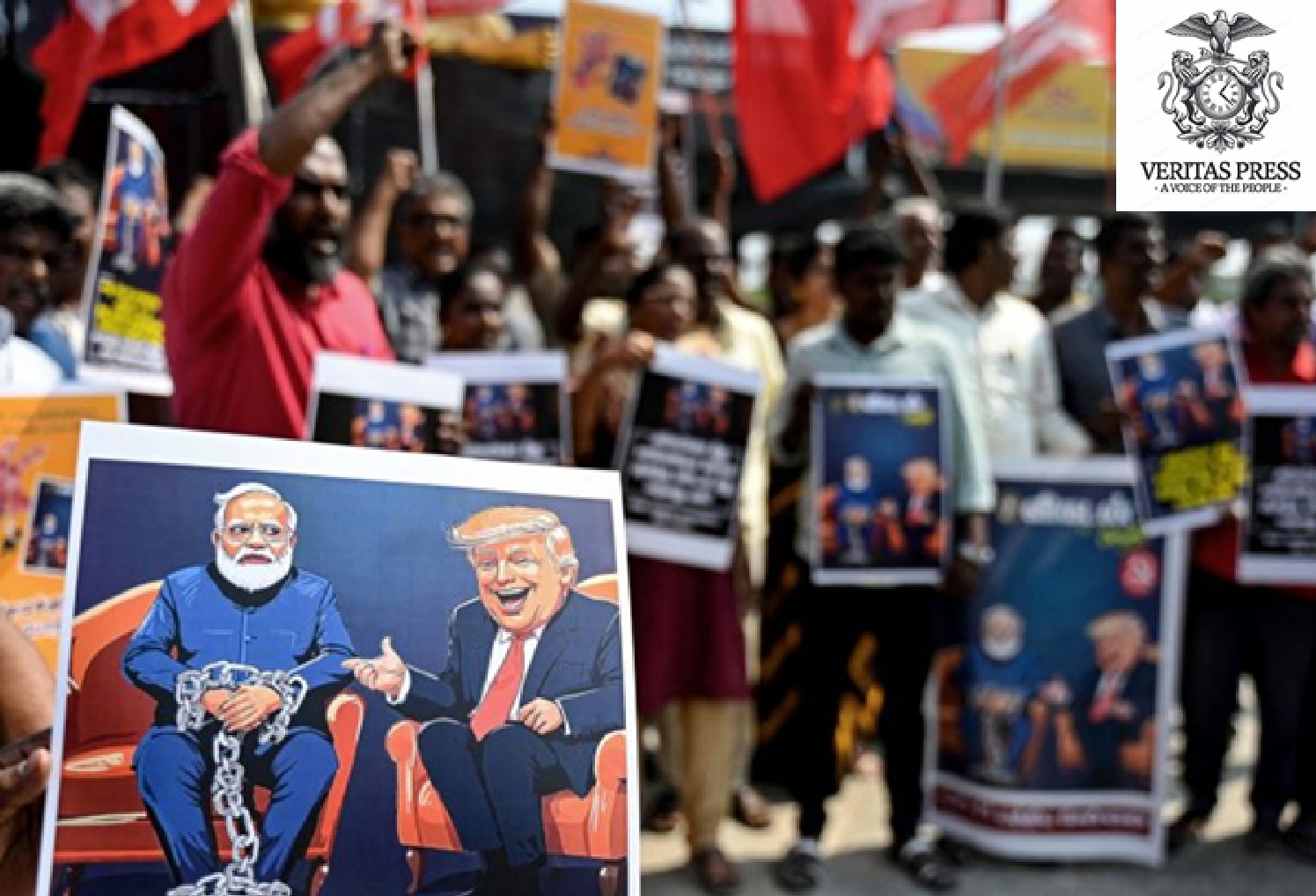
NEW DELHI-WASHINGTON – In a move reverberating through global energy markets and geopolitical corridors, U.S. President Donald Trump announced what he describes as a major trade agreement with India, tying deep tariff cuts to New Delhi’s pivot away from Russian crude oil, a shift that, if fully realized, could carve a serious dent in Moscow’s energy revenues amid the ongoing war in Ukraine and Western sanctions.
Yet beneath the Washington rhetoric lies a far more complex and contested reality. New Delhi has not formally confirmed any halt in Russian oil imports, and the Kremlin has stated it has received no official notification about stopping purchases, exposing a glaring gap between political messaging and policy execution.
Moreover, India’s pivot toward the U.S., framed as a geopolitical win by Washington, has eroded domestic and international credibility, spooked investors, and introduced uncertainty into trade corridors critical for energy and manufacturing flows.
1. The Deal Trump Announced, Political Spin Vs. Practical Reality
On February 2, 2026, Trump posted on Truth Social that the U.S. had reached a comprehensive deal with Indian Prime Minister Narendra Modi that would:
- Cut U.S. tariffs on Indian goods from roughly 50% to 18%.
- Remove a 25% punitive tariff imposed on Indian goods over Russian oil purchases.
- Encourage India to cease buying Russian crude in favour of U.S. or Venezuelan energy.
- Boost U.S.–India trade across energy, technology, agriculture, and defence sectors, with Trump floating a promise of $500 billion in future U.S. purchases.
While Washington frames the pact as a geopolitical lever to weaken Russia, New Delhi’s official statements were cautious. India welcomed tariff reductions but avoided confirming any energy commitment, stating that negotiations remain ongoing and the final deal text has not been concluded.
Analysis: The deal, as announced, is more performative than binding. It serves domestic U.S. political purposes, demonstrating “pressure on Russia” and a “win” for American exporters, while leaving India room to maintain energy and strategic autonomy. At the same time, India’s credibility in the eyes of global investors and its reputation for consistent trade and energy policy have been undermined, raising questions about the reliability of Indian markets in the medium term.
2. India’s Russian Oil Imports: Falling But Not Gone
Independent data shows India’s Russian crude purchases declined in late 2025 but remain economically significant:
- December 2025 imports were roughly 1.44–1.5 million bpd, down from earlier peaks but still making Russia India’s largest supplier.
- Analysts from Kpler and other trade data firms suggest the reduction is driven largely by short-term contractual shifts, not a structural move away from Russian crude.
- Major refiners such as Reliance trimmed quotas due to contract expiry, while Nayara Energy and others continued purchases where economically advantageous.
- Most shipments for February and March 2026 were already contracted, making a sudden cessation nearly impossible.
Critique: Trump’s claim that India will halt Russian oil is highly overstated, conflating planned gradual reductions with a full strategic pivot. In practice, Indian energy planners remain bound by commercial contracts, refinery economics, and domestic energy security concerns.
3. Moscow’s Response: Diversification and Resilience
In Moscow, officials greeted U.S. claims with scepticism:
- Kremlin spokespeople said Russia received no formal notice from India to stop imports.
- Since 2014, Russia has shifted energy exports from Europe to Asia, particularly China and India, maintaining 4.9 million bpd exports even amid heavy Western sanctions.
Analysis: Even if India were to reduce purchases further, Russia has strategically diversified its energy exports. The U.S. narrative exaggerates the potential economic impact of Indian policy shifts on Russian oil revenue, underestimating China’s absorption capacity.
4. Economic Stakes: Budgets, Discounts, And Market Realities
Russian oil revenues are under stress:
- Budget deficits are rising as price discounts on Russian crude widen.
- Tankers with Russian oil increasingly remain at anchor due to difficulty finding buyers.
Yet the global oil market complicates the narrative:
- Indian refiners require compatible crude grades; replacing Russian Urals with U.S. light sweet or Venezuelan heavy crude involves logistical, technical, and cost challenges.
- Discounts on Russian crude may continue to make it attractive, even under U.S. pressure.
Investigative insight: Any reduction in Indian purchases will likely be incremental and tactical, not a sudden market shock to Russia. Washington’s assumption that tariffs alone can drive immediate energy realignment is economically naive.
5. Strategic Credibility And Market Confidence: A Hidden Cost
India’s pivot toward the U.S. has cost more than political capital:
- Investor confidence has been shaken: Foreign investors rely on predictable trade and energy policy, and abrupt pivots undermine perceptions of India as a stable market.
- Trade and supply routes are strained: Shipping lanes, refinery logistics, and long-term contracts with Russian suppliers are disrupted, increasing costs and reducing flexibility.
- Domestic and regional credibility is at risk: India now appears vulnerable to foreign pressure in critical sectors like energy and agriculture, creating uncertainty for trade partners across Asia, Europe, and the Middle East.
Critical analysis: While Trump presents the deal as a triumph, India may have sacrificed trust with both investors and traditional trade partners, leaving its economy exposed to geopolitical and market volatility.
6. Geopolitical Chessboard: Energy Security Vs. Strategic Autonomy
India faces competing pressures:
- Energy security: Over 85% of crude is imported; affordability and refinery compatibility are paramount.
- Geopolitical autonomy: Maintaining ties with both Moscow and Washington is key to India’s strategic freedom.
- Domestic politics: Sudden cuts in Russian oil risk higher energy prices, refinery strain, and political backlash.
Critical perspective: Trump’s strategy of linking trade concessions to geopolitical compliance assumes Indian acquiescence that is not supported by economic realities. India is unlikely to jeopardise energy security and credibility for political optics.
7. Strategic And Market Implications
Even if India reduces imports further:
- Russia is resilient: China and other buyers can absorb additional volumes.
- U.S. exports may struggle to replace Russian crude: Grade differences, refinery adjustments, and logistical constraints limit immediate substitution.
- Geopolitical risk: The U.S. risks undermining trust with India while inadvertently strengthening China’s strategic position.
Investigative critique: The deal exemplifies the limits of economic leverage as a tool for geopolitical coercion. Short-term political optics in Washington mask long-term market, technical, and strategic realities in Asia, while India’s credibility and trade stability are compromised.
8. What Comes Next: Watching The Numbers And Negotiations
Energy analysts will monitor:
- India’s crude import statistics for January–April 2026.
- Refinery order books and tanker movements for Russian cargoes.
- Finalisation of treaty text or legislative action in New Delhi and Washington.
Bottom line: Trump’s trade narrative injects volatility into global oil markets, but the real-world impact on Russian energy revenue is likely modest and gradual. At the same time, India’s pivot toward the U.S. has damaged investor confidence, disrupted trade routes, and weakened domestic credibility, highlighting the hidden costs of tying national energy and economic policy to foreign political imperatives.

When Lieutenant Colonel Ebrahim Zolfaqari, spokesman for Iran’s Khatam al-Anbiya Central Headquarters, issued a warning

The historic Christian presence in Palestine, dating back to the earliest centuries of Christianity, is

JERUSALEM – For the first time since the aftermath of the Six-Day War, the courtyards
TEHRAN – As the sun rose on Eid al-Fitr, a day meant for celebration and

HUNGARY – As Benjamin Netanyahu prepares to travel to Hungary this weekend, a mounting legal

LONDON — In the polished corridors of 10 Downing Street, the language remains meticulously calibrated:
On March 20, 2026, the Pentagon quietly announced what amounts to a fundamental restructuring of
WASHINGTON / ISLAMABAD — A fresh warning by US Director of National Intelligence Tulsi Gabbard
For the first time since the US-Israeli campaign against Iran began on February 28, the

Tensions across the Gulf have escalated to levels not seen in decades, as Saudi Arabia