






Title: Trump Is In The Epstein Files, And His Own Chief Of Staff Has Now Said It.
Press Release: Veritas Press C.I.C.
Author: Kamran Faqir
Article Date Published: 17 Dec 2025 at 13:18 GMT
Category: Americas | Politics | Trump Is In The Epstein Files, And His Own Chief Of Staff Has Now Said It.
Source(s): Veritas Press C.I.C. | Multi News Agencies
Website: www.veritaspress.co.uk

Business Ads


For years, Donald Trump dismissed the Jeffrey Epstein files as a “hoax,” a political fabrication designed to smear him and protect Democrats. That claim has now collapsed, not because of an opposition investigation or a court ruling, but because Trump’s own White House chief of staff has publicly admitted it is false.
In a remarkable interview with Vanity Fair, Susie Wiles, the most powerful unelected official in the Trump administration, confirmed that the US president appears in the Epstein files, including on Epstein’s flight manifests.
“We know he’s in the file,” Wiles said. “He was on Epstein’s plane… he’s on the manifest.”
Although Wiles insisted Trump is “not in the file doing anything awful,” her admission represents a seismic shift. For the first time, a senior Trump official has acknowledged what years of court records, flight logs, photographs, and investigative reporting have already shown: Trump was not a peripheral figure in Epstein’s world; he was part of it.
A Denial Strategy That Finally Broke:
Trump’s strategy has long relied on denial and deflection. When Epstein’s name resurfaced in public discourse, Trump pointed fingers at Democrats, especially former president Bill Clinton, claiming, without evidence, that Clinton visited Epstein’s private island “28 times.”
Wiles dismantled that narrative.
“There is no evidence” Clinton visited the island, she said. “The president was wrong.”
That statement alone undercuts a central pillar of Trump’s public defence: that the Epstein scandal belongs to others. Instead, Wiles acknowledged what Trump has repeatedly refused to concede, that his own relationship with Epstein places him squarely inside the documentary record now being released under federal law.
The Records Trump Couldn’t Erase:
Trump’s presence in Epstein-related documents has been known for years. Flight logs from the early 1990s place Trump aboard Epstein’s private jet on domestic routes between Palm Beach and New York. Photographs show Trump socialising with Epstein and Ghislaine Maxwell, now serving a 20-year federal sentence for child sex trafficking, at Mar-a-Lago in 2000.
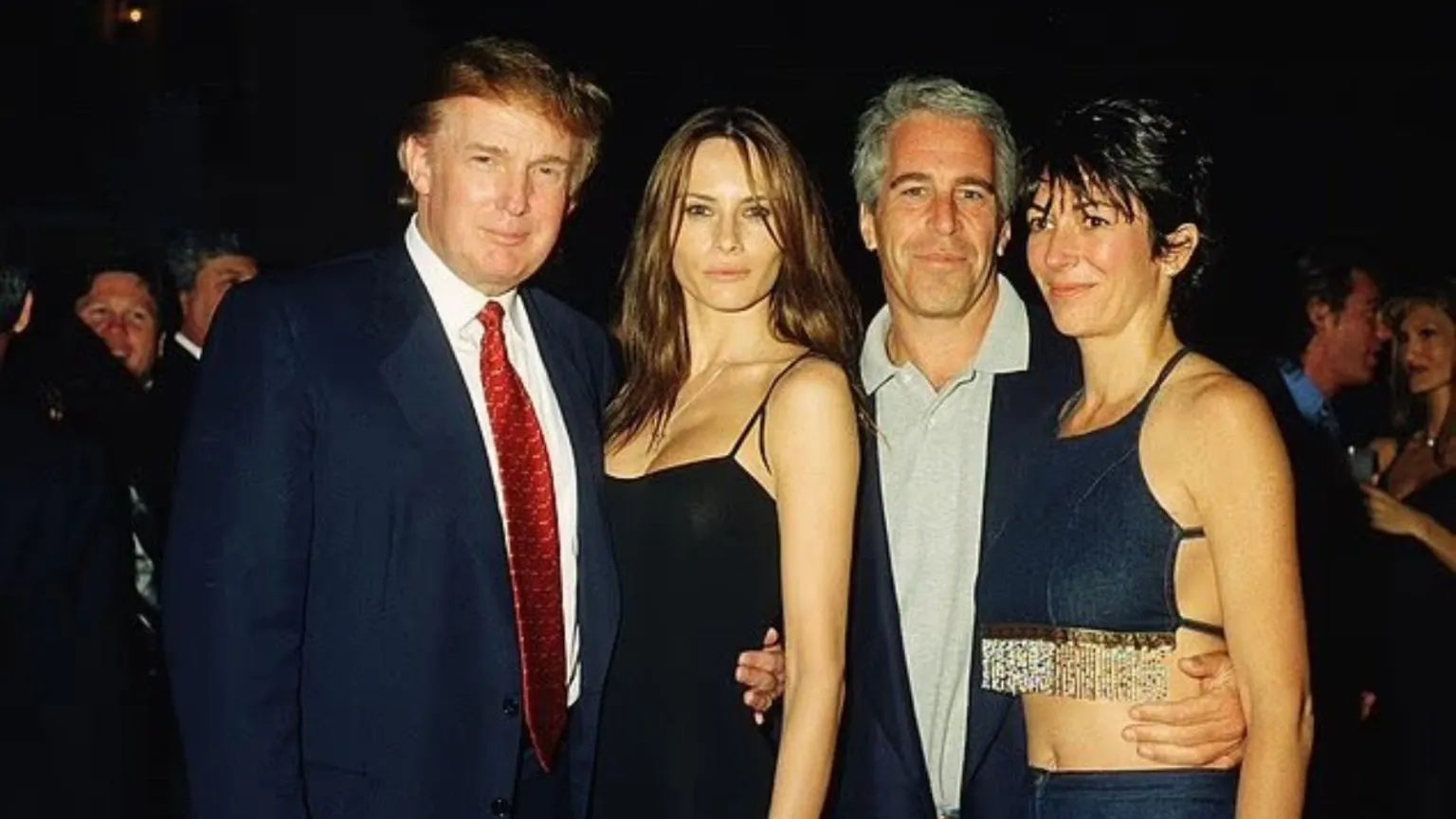
One of Epstein’s most prominent victims, Virginia Giuffre, has said she first encountered Epstein while working at Trump’s Mar-a-Lago spa that same year.
Those records were never seriously disputed. What Trump denied was their significance, insisting the files themselves were either fake, incomplete, or politically motivated. Wiles’s admission removes that last refuge.
“Trump is in the file. The file is real.”
A White House At War With Itself:
The fallout from Wiles’s remarks has been immediate and chaotic. Within hours of publication, Wiles accused Vanity Fair of running a “disingenuously framed hit piece,” claiming the article omitted favourable context. The White House issued statements of unity. Trump, who days earlier had called Wiles “the greatest chief of staff,” remained publicly silent on the substance of her Epstein comments.
Privately, however, Wiles’s interview revealed deep fractures inside the administration, particularly over the handling of the Epstein files themselves.
Wiles openly criticised Attorney General Pam Bondi, accusing her of misleading the public and bungling the release of Epstein-related materials.
“There is no client list,” Wiles said. “And it sure as hell wasn’t on her desk.”
That rebuke followed Bondi’s highly choreographed February event at the White House, where conservative influencers were handed binders labelled “The Epstein Files: Phase 1.”The binders contained no new evidence, only previously known contact lists with heavy redactions.
Victims’ advocates called the episode political theatre. Wiles agreed.
“First she gave them binders full of nothingness,” she said. “Then she claimed a client list existed. That was not true.”
DOJ Contradictions And A Contested Release:
The Justice Department later issued a memo asserting that Epstein did not maintain a formal “client list”, a conclusion that immediately drew scepticism from survivors and watchdog groups, particularly given the vast quantity of sealed records, missing evidence, and unexplained charging decisions that have marked the Epstein case for over a decade.
Under the Epstein Files Transparency Act, signed into law in November, the DOJ is now legally required to release all unclassified Epstein-related investigative materials. The deadline arrives this week, setting the stage for the first full public accounting of Epstein’s network and social contacts, including, now confirmed, the president himself.
Advocacy groups, including RAINN, have warned that survivors are already facing harassment and threats as the release approaches, while simultaneously demanding that transparency not be sacrificed to protect powerful figures.
“The danger,” one victim’s advocate said, “is that the truth is once again filtered through politics instead of evidence.”
Ghislaine Maxwell And The Questions That Won’t Go Away:
Wiles also disclosed that Trump was not informed about the recent transfer of Ghislaine Maxwell to a lower-security federal prison following a meeting with DOJ officials, a move that reportedly enraged the president.
“The president was ticked,” Wiles said. “He was mighty unhappy.”
The transfer has raised fresh questions about whether Maxwell, Epstein’s chief recruiter and facilitator, is being positioned as a closed chapter rather than a continuing source of testimony. Maxwell has never publicly testified about Epstein’s full network.
Legal Accountability: What Exposure Exists, And Who Has Failed To Act.
The confirmation that Donald Trump appears in the Epstein files does not, on its own, establish criminal liability. But it reopens a series of unresolved legal questions that have haunted the Epstein case for more than fifteen years, questions about obstruction, selective prosecution, sealed evidence, and whether the justice system systematically shielded powerful individuals.
Under US law, presence in flight logs, contact lists, or social records is not a crime. However, those records can be legally significant when combined with corroborating evidence: witness testimony, timelines of abuse, communications showing knowledge or facilitation, or repeated appearances at locations where crimes occurred.
Federal prosecutors have long argued that Epstein’s 2008 non-prosecution agreement, widely condemned as one of the most lenient plea deals ever granted to a serial sex offender, foreclosed broader accountability. Yet legal experts and victims’ attorneys have countered that the agreement applied only to Epstein himself and did not immunise co-conspirators, many of whom were explicitly named as “potentially unindicted” in sealed filings. Those names have never been fully disclosed.
The Justice Department’s assertion that Epstein did not maintain a formal “client list” does not end the matter. Former prosecutors note that criminal networks rarely keep explicit rosters. Liability is often established through patterns: repeated travel with victims, communications before and after abuse, and financial or logistical support. This is where the coming document release becomes legally pivotal.
If the DOJ’s disclosure includes flight manifests cross-referenced with dates of known abuse, internal emails referencing victims, or communications indicating awareness of Epstein’s activities, prosecutors could face renewed pressure to examine whether prior investigative failures rose to the level of negligence, misconduct, or deliberate suppression.
Legal accountability may not stop with individuals. Civil suits filed by Epstein survivors have alleged that institutions knowingly enabled abuse, including private clubs, airlines, banks, and government agencies that ignored red flags. Trump’s Mar-a-Lago has previously been named in survivor testimony as a site where Epstein recruited young women, though Trump himself has denied knowledge. If released records corroborate those accounts, they could expose institutions to renewed civil litigation and regulatory scrutiny.
There is also the unresolved question of obstruction. Victims’ attorneys have repeatedly argued that evidence was withheld, mischaracterised, or buried during both Epstein’s 2008 case and the federal investigation preceding his death in custody in 2019. If internal DOJ or FBI communications, particularly those involving political appointees, reveal decisions to delay, redact, or narrow disclosure for non-legal reasons, that could trigger congressional investigations, inspector general probes, or referrals for professional misconduct.
Congress retains the power to intervene. Lawmakers can subpoena unredacted records, compel sworn testimony from DOJ officials, and demand a full accounting of how Epstein investigations were conducted across administrations. Whether they will do so, particularly when the sitting president’s name appears in the files, remains an open question.
For survivors, the legal stakes are clear.
“This is not about retroactive punishment,” one advocate said. “It’s about whether the rule of law applies upward.”
If the Epstein files are released in full, they could expose not only who associated with Epstein, but also how the justice system repeatedly failed to follow its own evidence. If they are not, the failure itself may become the most damning evidence of all.
Survivors Still Waiting For Accountability:
For survivors, Wiles’s admission does not bring closure, only confirmation.
“This isn’t about gossip or politics,” said one advocate working with Epstein survivors. “It’s about documents, timelines, witnesses, and whether the justice system applies to rich men.”
Being named in records is not proof of a crime. But the files are essential for establishing patterns: who travelled together, who appeared at known abuse sites, and who had repeated contact with Epstein and Maxwell over time. That evidence has been systematically delayed, diluted, or buried.
The Bottom Line:
Susie Wiles did not accuse Donald Trump of criminal conduct. What she did was arguably more consequential: she confirmed that the president’s denials about the Epstein files were false.
- Trump is in the Epstein files.
- The files are real.
- And the question is no longer whether they exist, but whether the full truth will finally be allowed to emerge.
As the Justice Department prepares its release, the stakes could not be higher. If the documents are complete, they may illuminate one of the most protected criminal networks in modern American history. If they are sanitised, redacted, or selectively disclosed, the Epstein scandal will stand as a case study in how power defeats accountability.
Either way, one line can no longer be repeated with a straight face: Donald Trump had nothing to do with Jeffrey Epstein.