


Title: The UK Is Now Willing To Undermine Its Institutions To Protect Israel.
Press Release: Veritas Press C.I.C.
Author: Kamran Faqir
Article Date Published: 22 Jan 2026 at 15:15 GMT
Category: UK | Politics | The UK Is Now Willing To Undermine Its Institutions To Protect Israel
Source(s): Veritas Press C.I.C. | Multi News Agencies
Website: www.veritaspress.co.uk

Business Ads


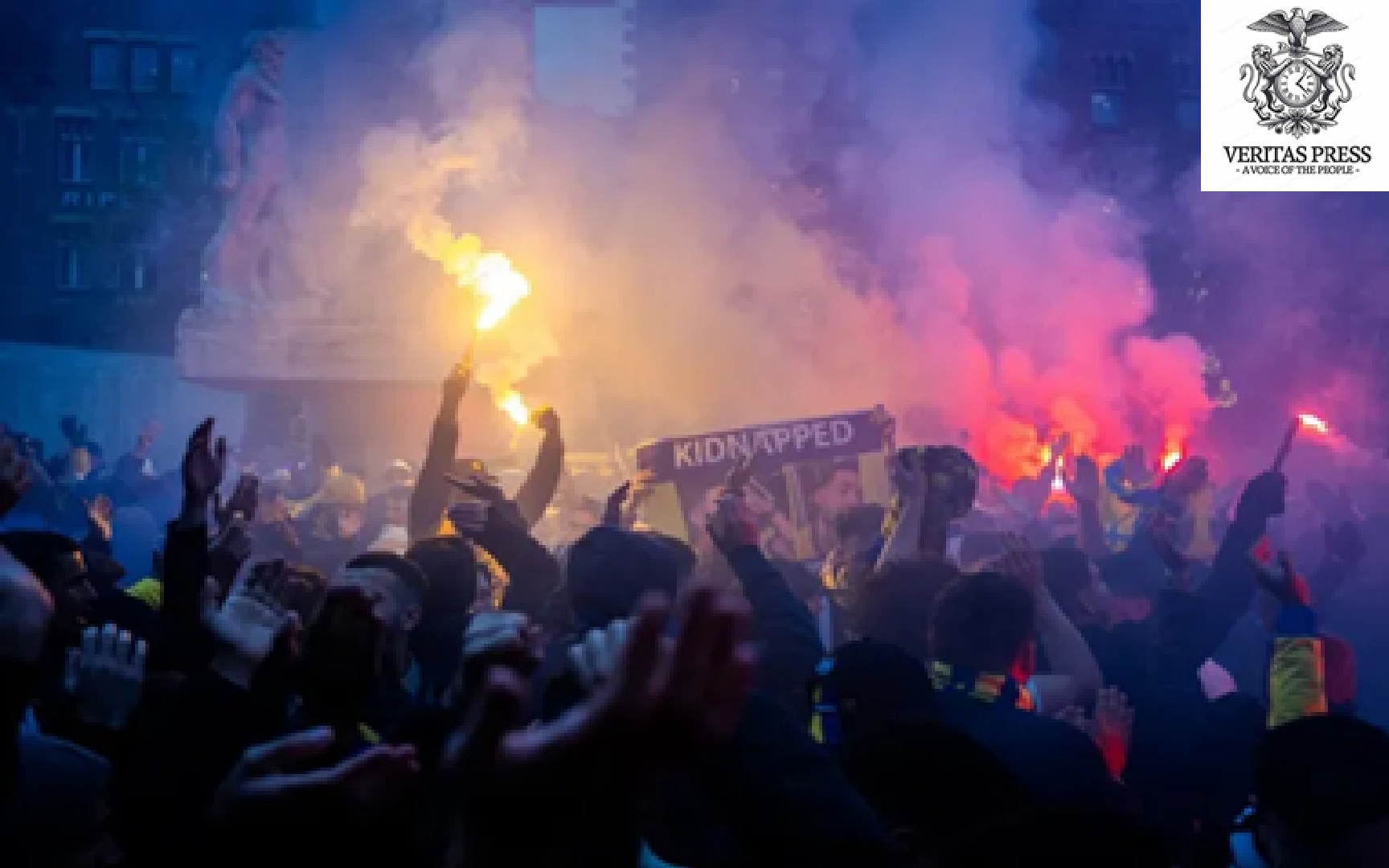
On Friday, Craig Guildford, Chief Constable of West Midlands Police, announced his retirement, citing an unprecedented “political and media frenzy” over the force’s decision to recommend banning supporters of Maccabi Tel Aviv from travelling to Birmingham for a Europa League match against Aston Villa last November.
Guildford’s departure was not due to corruption, brutality, or cover-ups, but a risk assessment grounded in public safety concerns. The decision was designed to protect community cohesion and prevent any potential hostilities, reflecting a careful, preventive approach to policing amid tensions in the local and international context. Yet ministers and the media framed it as a moral and political crisis. Days earlier, Home Secretary Shabana Mahmood publicly declared she had “lost confidence” in Guildford’s leadership, the first such statement from a home secretary in two decades.
In effect, the British state sided with fans of an Israeli football club against its own police force, undermining operational independence and signalling a willingness to politicise policing decisions.
Police Risk Assessment: Correct, Preventive, But Imperfect.
The decision to ban Maccabi Tel Aviv fans from Villa Park was neither arbitrary nor discriminatory. It was based on a legitimate risk assessment, taking into account a documented history of violent and racist behaviour among a subset of the club’s supporters, including explicitly anti-Palestinian chanting at European matches and clashes in Amsterdam in 2024.
West Midlands Police later acknowledged minor errors in their intelligence, including reliance on misleading and AI-generated sources.
An Independent Office for Police Conduct (IOPC) investigation is ongoing to determine whether professional standards were breached.
Crucially, the watchdog found no evidence of anti-Semitism. The mistakes were operational, flawed documentation, and miscommunication, not evidence of conspiracy or political bias. Yet the political and media response portrayed the police as incompetent or malicious, raising serious questions about the health of British democracy when operational judgments meant to protect citizens can be publicly discredited for political reasons.
Context Ignored: History And Risk.
A long-documented element of Maccabi Tel Aviv’s supporters has engaged in violent and racist behaviour, including explicitly anti-Palestinian chanting.
These facts were central to the police assessment. Yet Westminster politicians and mainstream media refused to acknowledge context, portraying any scrutiny of Israeli fans as inherently suspect and weaponising accusations of anti-Semitism to stifle discussion. Preventive policing aimed at protecting local communities and preventing escalation was recast as a scandal.
British Fans Are Routinely Banned, Israeli Fans Are Sacred:
In the UK, pre-emptive bans on football supporters are routine. Domestic and international fans are barred when credible intelligence or reputations suggest violence. Such measures are treated as ordinary public-order policing; ministers rarely intervene.
But when Israeli supporters were the subject, ministers and media escalated it into a national crisis, exposing a double standard rooted in political loyalty rather than principle.
A Mirror Of Foreign Policy: Protecting Israel, Ignoring Palestinians.
For Palestinians, Birmingham is not a football story; it is a mirror of Britain’s foreign policy.
For more than two years, Israel has waged a genocidal campaign in Gaza, killing tens of thousands, displacing most of the population, and destroying infrastructure. International human rights organisations and legal experts warn of war crimes and crimes against humanity. Britain’s response? Delay, equivocation, and protection, no sanctions, no arms embargo, no accountability.
Domestically, those who attempt to obstruct or challenge supply chains supporting Israel’s machinery of war, such as Palestine Action activists, face prosecution, imprisonment, and hunger strikes. The state mobilises not to protect human rights but to shield political and corporate interests.
Is The UK Government Actively Undermining Democracy?
The Guildford episode raises a broader, urgent question: is the government actively undermining British democracy?
- Ministers publicly overrode operational policing, humiliating a senior officer to appease a foreign-aligned interest.
- The media amplified political pressure, framing a routine public safety decision as a national disgrace.
- Independent institutions, including police and intelligence assessments, were delegitimised for political purposes.
- Citizens and activists challenging systemic injustice, whether on foreign policy or domestic supply chains, face criminalisation.
When loyalty to Israel trumps institutional integrity, operational independence, and civil rights, democracy itself is weakened. Preventive policing decisions, designed to protect citizens and community cohesion, become political liabilities rather than tools of public safety.
The Real Question At The Heart Of This Story:
If Britain cannot tolerate a policing decision that inconveniences an Israeli football club, it will never confront Israel over mass killing.
If ministers are willing to undermine institutions to signal loyalty, they will never uphold justice for those challenging systemic violence or impunity.
For Palestinians and their supporters, the message is unmistakable: justice under these conditions is not merely delayed, it is denied.
The football controversy matters not for the stadium in Birmingham but because it exposes how power works, whose fears are taken seriously, whose suffering commands action, and whose lives are explained away.
The UK government’s actions raise a profound and uncomfortable question: if operational decisions to protect citizens and community cohesion can be sacrificed for political optics today, what will Britain sacrifice tomorrow?