


Original Article Date Published:
Article Date Modified:
Help support our mission, donate today and be the change. Every contribution goes directly toward driving real impact for the cause we believe in.
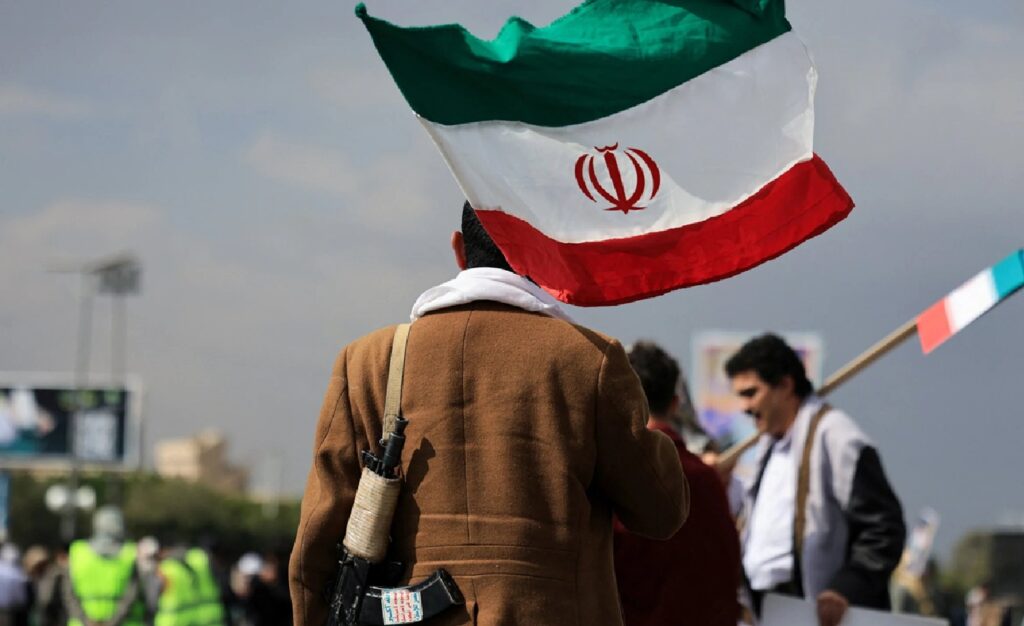
IRAN, DAY 6 – As the US-Israeli military campaign against Iran enters its sixth day, a far more insidious and complex narrative is emerging from the fog of war, one that threatens to shatter the fragile trust between Washington and its Gulf Arab allies. While Tehran has openly retaliated against US military assets in the region following the assassination of Supreme Leader Ayatollah Ali Khamenei, a wave of drone strikes on Gulf energy infrastructure and civilian sites has sparked a furious blame game. Iranian officials, regional analysts, and even Western commentators are now presenting evidence and arguments that point to a single, explosive conclusion: Israel has carried out its own attacks on Gulf states in a bid to frame Iran and drag Riyadh, Abu Dhabi, and Doha into a full-blown regional conflagration.
The ‘False Flag’ Allegation: From Suggestion To Source-Based Reporting.
What began as conjecture from pundits has, within 48 hours, solidified into a formal accusation from Tehran. An Iranian foreign ministry official, speaking on condition of anonymity to Middle East Eye, stated categorically that Israel was responsible for several of the drone strikes against Saudi Arabia and at least one attack on Oman’s strategic Duqm Port. “I can categorically say that some of the attacks were not carried out by us [Iran].”
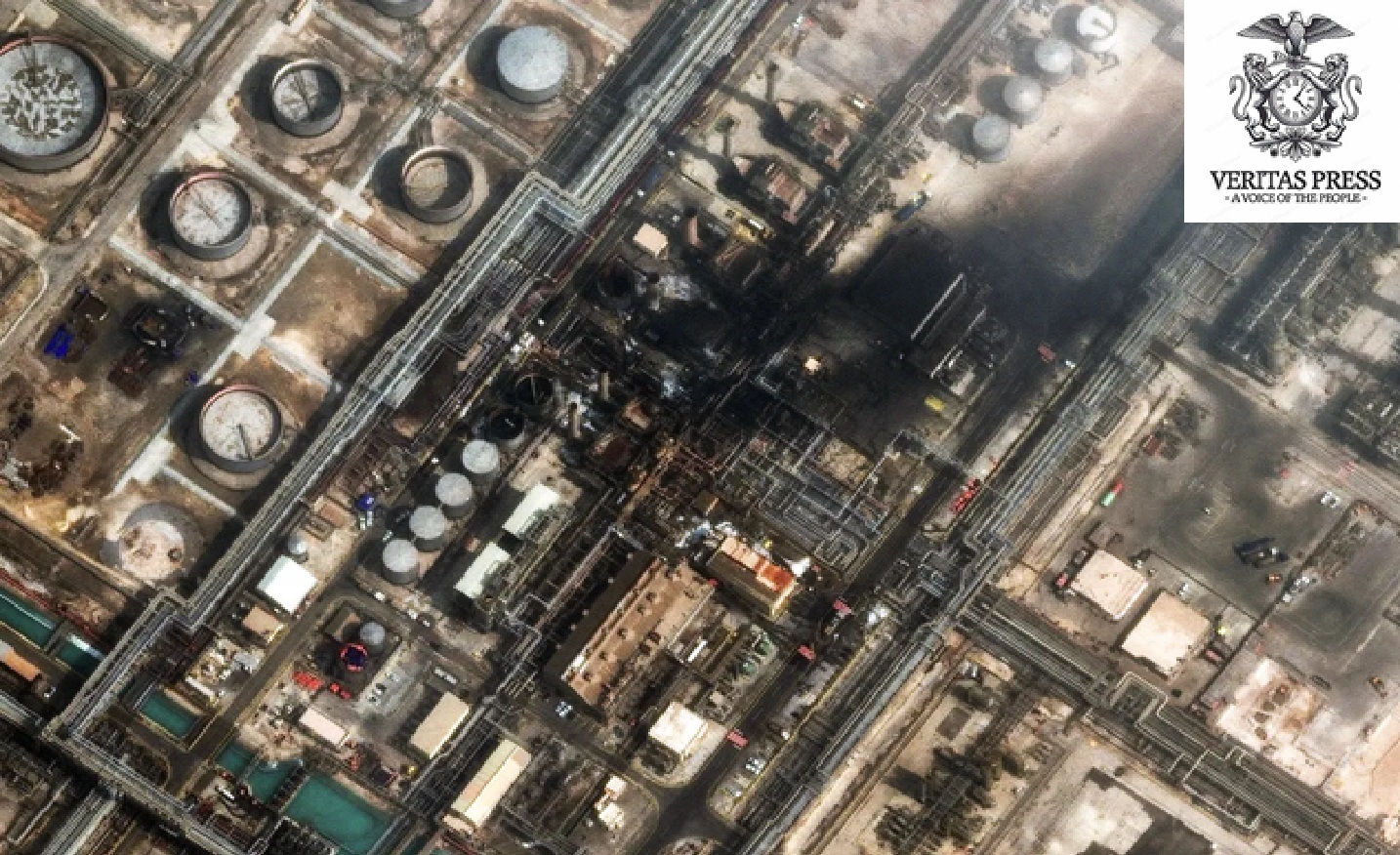
This claim was dramatically reinforced on Monday by Iran’s semi-official Tasnim news agency, which cited a military source directly accusing Israel of perpetrating the strike on the Saudi Aramco facility in Ras Tanura, the kingdom’s largest crude oil refinery. “The attack against petroleum facilities of Saudi Arabia this morning was made by Israelis and is an example of a false flag operation,” the source told Tasnim, adding that intelligence indicated the UAE’s Port of Fujairah was being eyed as the next target for such a covert operation.”
These are not merely rhetorical defences from Tehran. They are detailed allegations suggesting a sophisticated covert campaign. According to two Iranian sources speaking to MEE, Israel’s Mossad is operating from warehouses on Iranian soil, using a pre-existing deep network of agents to launch drones. “We would not be surprised if there are such warehouses and operational rooms in other countries in the region that Israel would use to target our Gulf neighbours from,” one source said, implying that the attacks could be staged from within the Gulf states themselves to further implicate Iran.
The Tucker Carlson Bombshell And The ‘GCC As A Speed Bump’.
The Iranian narrative found an unlikely, yet powerful, amplifier in the United States. Political commentator Tucker Carlson claimed on his show that Saudi Arabia and Qatar had recently arrested Israeli Mossad agents who were actively planning bombings on their soil.
“Why would the Israelis be committing bombings in two Gulf countries, which are also being attacked by Iran? Aren’t they on the same side? No,” Carlson said. He framed the Gulf Cooperation Council (GCC), comprising Saudi Arabia, UAE, Qatar, Kuwait, Bahrain, and Oman, as a strategic obstacle to Israeli regional dominance. “There are two speed bumps on the way to regional dominance for Israel. The first is something called the GCC. If those states formed a real military alliance, they would be a massive threat to Israel”. This framing provides a strategic rationale for the alleged false-flag operations: not just to provoke a war with Iran, but to fracture and subordinate America’s traditional Arab allies.
Iran’s Calculated Restraint And Direct Messages To Riyadh:
Contrary to the image of a reckless Tehran lashing out at its neighbours, sources indicate a deliberate attempt by Iran to decouple its retaliation from the strikes on Gulf sovereign territory. An Iranian source told MEE that Tehran had sent “a clear statement” to Saudi Arabia, explicitly denying responsibility for the Ras Tanura attack and labelling it “an Israeli effort to sabotage regional peace and alliances between neighbours.”
This aligns with Iran’s public posture. On Wednesday, President Masoud Pezeshkian addressed Gulf leaders directly, stating, “We respect your sovereignty, and we believe that the security and stability of the region must be achieved through the collective efforts of its states.” The Islamic Republic’s official line is that its retaliatory fire has been directed at US and Israeli military bases, not civilian energy infrastructure belonging to its neighbours.
The Gulf Tightrope: Calls For Restraint Amidst Rising Fury.
The Gulf states find themselves in an impossible position. Their territory is being struck. Their economic lifelines, oil and gas facilities, are burning. Saudi Arabia, Qatar, and the UAE have officially condemned the attacks and, according to Newsweek, have reserved the right to respond, a move that initially appeared to push them closer to the US camp.
However, beneath the official statements, a current of deep suspicion is flowing against Israel and, by extension, Washington. Veteran Saudi politician Abdulaziz Altuwaijri warned that the targeting of his country raises “suspicions that go beyond Iran. I firmly believe that the Zionist entity [Israel] wants to drag these countries into the war for more destruction.” Similarly, Qatar’s former prime minister, Hamad bin Jassim bin Jaber Al Thani, cautioned that a direct clash between the GCC and Iran would “deplete the resources of both sides and provide an opportunity for many forces to control us.”
The fear is palpable: that they are being set up to fight Israel’s war, pay for it with their own infrastructure, and then be abandoned. As Saudi journalist Adhwan al-Ahmari noted, the trust between Washington and its Gulf allies is eroding by the day. “What if the US announces after a week… that the war is over and then leaves the Gulf states in an open confrontation?” he asked.
The Washington Backlash: “We Did Not Vote For This.”
The “Israel-first” narrative is not just resonating in the Gulf; it has ignited a political firestorm in Washington, D.C., exposing deep fissures within the American body politic. The administration’s justification for the war, articulated by Secretary of State Marco Rubio, that a preemptive strike was necessary because an Israeli action would have prompted an Iranian attack on US forces, has been met with incredulity and outrage.
Senator Bernie Sanders cut to the heart of the matter, posting, “Netanyahu wanted war with Iran. Trump just gave it to him.” Thomas Massie, a Republican representative, connected the escalation to the broken promises of the “America First” doctrine, warning of soaring gas prices and noting that “the only winners in [the US] are defence company shareholders.”
Even within the pro-Trump base, dissent is boiling over. The influential pro-Trump account HodgeTwins, with its 3.5 million followers, posted a stark rebuke: “We did not vote for sending Americans to die for Israel’s wars. We won’t stay silent about this.” This sentiment underscores a growing populist rejection of the notion that US blood and treasure should be spent to secure Israeli primacy in the Middle East.
The Economic And Geopolitical Fallout:
The consequences of this shadow war are already devastating the global economy. The Strait of Hormuz, through which 20% of the world’s oil passes, is effectively closed. While Iran has declared it shut, it is the threat of attack, whether real or perceived, from any party, that has caused insurers to suspend coverage and at least 200 vessels to anchor rather than risk transit. European natural gas prices have spiked nearly 50%.
Meanwhile, the leadership vacuum in Tehran creates another layer of volatility. With the funeral of Ayatollah Khamenei indefinitely postponed due to security concerns, the race to succeed him is fraught with danger. The emergence of his son, Mojtaba Khamenei, as a frontrunner suggests a regime digging in, while the mention of reformist candidate Hassan Khomeini hints at internal schisms. Israel has already vowed to hunt down whoever is chosen.
Analysis: A War Of Narratives And A Crisis Of Trust.
The central question of this conflict is no longer “Will Iran get a bomb?” but “Who is bombing the Gulf?” The Iranian narrative, once easily dismissed as propaganda, is now supported by a confluence of sources: official Tehran statements, independent regional analysts, captured intelligence agents (per Carlson), and a growing anti-war movement in the US.
For the Gulf states, the truth is almost secondary to the perception. Whether a drone is launched from Iran, Iraq, or a Mossad warehouse, the damage to their economies and the threat to their stability are the same. The real strategic danger they face is being manoeuvred into a corner where retaliation against Iran seems like the only option, thereby playing directly into the hands of an actor, Israel, that seeks to regionalise and prolong the conflict for its own benefit.
As Russia’s Foreign Ministry aptly noted, the US and Israel are “trying to drag the Arabs into a war for someone else’s interests.” The coming days will reveal whether the Gulf monarchies can resist the gravity of this war and prove that, in the modern age of intelligence and information warfare, the most dangerous attacks are not always the ones that make the loudest noise, but the ones designed to make you shoot at the wrong target.
Conclusion: Deconstructing The Deniability.
The central, haunting question emerging from the rubble of Ras Tanura and the smouldering terminals of Duqm is not merely who fired the missile, but for whom the trigger was pulled. The official narrative of a monolithic Iranian threat lashing out at its neighbours collapses under the weight of investigative scrutiny. What emerges instead is a portrait of a meticulously planned intelligence operation, leveraging the fog of war to achieve what decades of conventional conflict could not: the immolation of the nascent detente between the Gulf Arab states and Tehran. By seeding the battlefield with drones that carry the signature of an Iranian attack but the strategic fingerprint of Israeli interests, an actor has sought to weaponise the very concept of attribution. This is warfare evolved: a conflict where the primary target is not an enemy’s military, but its alliances. For the Gulf monarchies, the trap is exquisitely cynical. To retaliate against Iran is to fall into Israel’s strategic embrace, regionalising and destabilising the region into a war that serves Tel Aviv’s aim of isolating Tehran permanently. To do nothing is to appear weak in the face of attacks on their sovereign soil, inviting domestic instability. The real bombs in this campaign are not just the warheads that pierced energy facilities, but the questions of loyalty and intent now detonating within the war rooms of Riyadh and Abu Dhabi. As the smoke clears, one truth becomes dangerously apparent: in this shadow war, the most devastating explosions are the ones designed to make allies see enemies in the mirror.
Source: Multiple News Agencies
Submissions:
For The Secure Submission Of Documentation, Testimonies, Or Exclusive Investigative Reports From Any Global Location, Please Utilise The Following Contact Details For Our Investigations Desk: enquiries@veritaspress.co.uk or editor@veritaspress.co.uk
Help Support Our Work:
Popular Information is powered by readers who believe that truth still matters. When just a few more people step up to support this work, it means more lies exposed, more corruption uncovered, and more accountability where it’s long overdue.
Help Protect Independent Journalism, Which Is Currently Under Attack.
If you believe journalism should serve the public, not the powerful, and you’re in a position to help, becoming a DONATOR or a PAID SUBSCRIBER truly makes a difference.
DONATION APPEAL: If You Found This Reporting Valuable, Please Consider Supporting Independent Journalism.
Help Support Our Work – We Know, We Know, We Know …
Seeing these messages is annoying. We know that. (Imagine what it’s like writing them … )
Your support fuels our fearless, truth-driven journalism. In unity, we endeavour to amplify marginalised voices and champion justice, irrespective of geographical location.
But it’s also extremely important. One of Veritas Press’s greatest assets is its reader-funded model.
1. Reader funding means we can cover what we like. We’re not beholden to the political whims of a billionaire owner. We are a small, independent and impartial organisation. No one can tell us what not to say or what not to report.
2. Reader funding means we don’t have to chase clicks and traffic. We’re not desperately seeking your attention for its own sake: we pursue the stories that our editorial team deems important and believe are worthy of your time.
3. Reader Funding: enables us to keep our website and other social media channels open, allowing as many people as possible to access quality journalism from around the world, particularly those in places where the free press is under threat.
We know not everyone can afford to pay for news, but if you’ve been meaning to support us, now’s the time.
Your donation goes a long way. It helps us:
- Keep the lights on and sustain our day-to-day operations
- Hire new, talented independent reporters
- Launch real-time live debates, community-focused shows, and on-the-ground reporting
- Cover the issues that matter most to our communities, in real time, with depth and integrity
We have plans to expand our work, but we can’t do it without your support. Every contribution, no matter the size, helps us stay independent and build a truly people-powered media platform.
If you believe in journalism that informs, empowers, and reflects the communities we serve, please donate today.
LONDON, UK – In the span of a single week, the fragile foundations of the
IRAN, DAY 6 – As the US-Israeli military campaign against Iran enters its sixth day,
The opening days of March 2026 have witnessed a seismic shift in the Middle Eastern
KHAN YUNIS, GAZA – In the early hours of Wednesday morning, east of Khan Yunis,
For The Secure Submission Of Documentation, Testimonies, Or Exclusive Investigative Reports From Any Global Location,
JENIN, OCCUPIED WEST BANK — For the residents of Faqqu’a, a small town nestled east
NEW DELHI/TEL AVIV: When Narendra Modi stood before the Knesset and described Israel as the
US Lawmakers clash over the rationale behind Trump’s Iran strikes, calling them “very disturbing” as
Just four days into what President Donald Trump has dubbed “Operation Epic Fury,” the United
BEIRUT, LEBANON – The echoes of the 2024 ceasefire, already faint after months of daily