


Title: The Illusion Of “Obliteration”: A Critical Analysis Of Trump’s Iran Threat And The Stalled Gaza “Deal”.
Press Release: Veritas Press C.I.C.
Author: Kamran Faqir
Article Date Published: 30 Dec 2025 at 12:20 GMT
Category: US | Politics | The Illusion Of “Obliteration”: A Critical Analysis Of Trump’s Iran Threat And The Stalled Gaza “Deal”.
Source(s): Veritas Press C.I.C. | Multi News Agencies
Website: www.veritaspress.co.uk

Business Ads

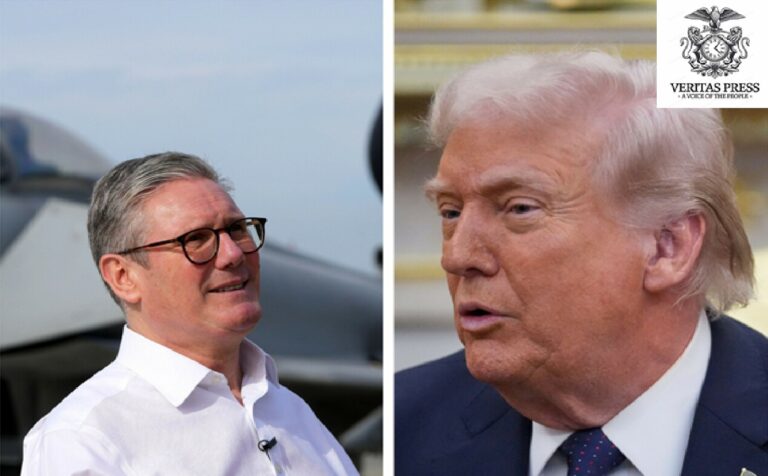
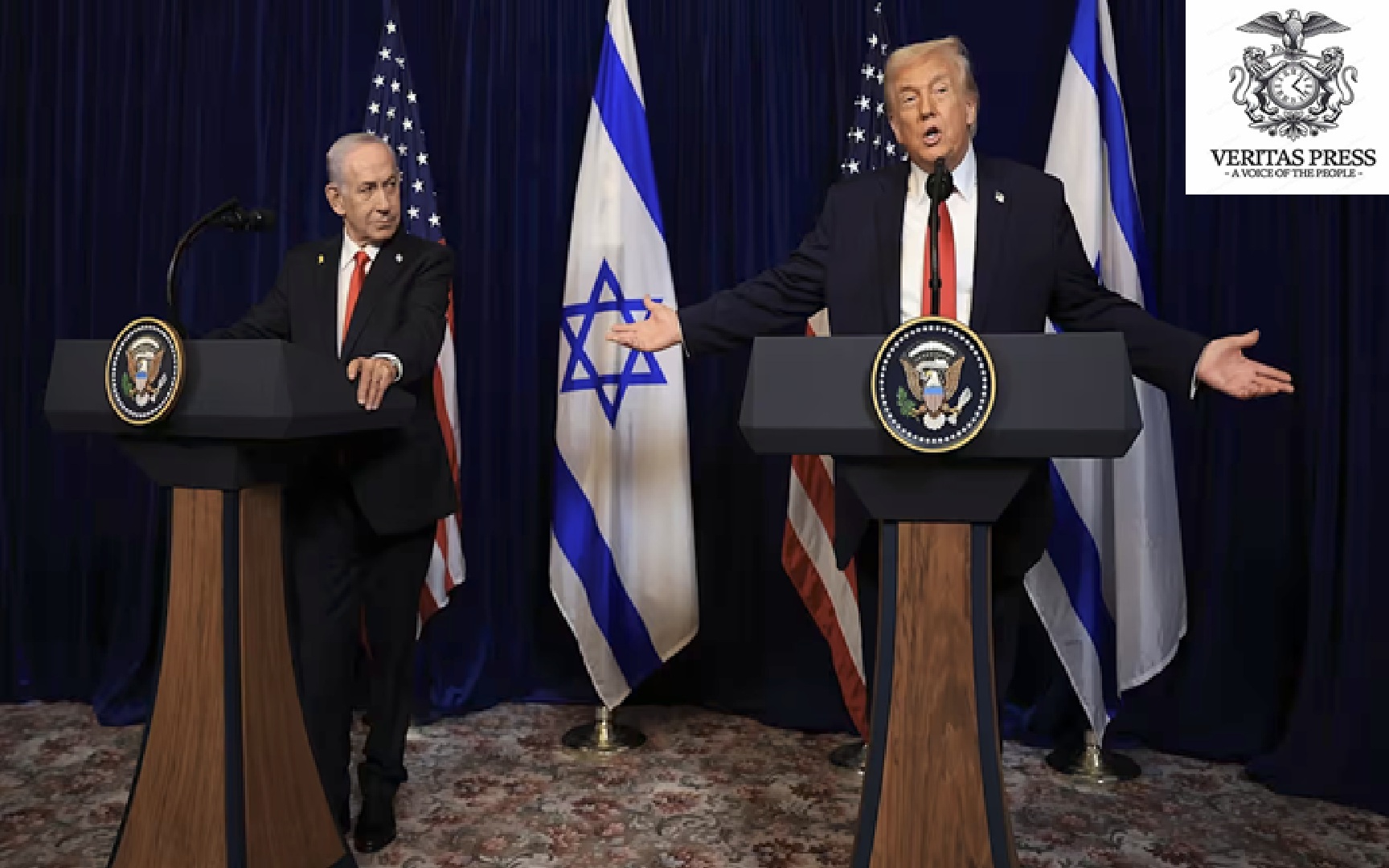
The convivial setting of Mar-a-Lago, where President Donald Trump and Israeli Prime Minister Benjamin Netanyahu stood side-by-side, projected an image of unshakeable alliance and decisive power. The rhetoric was characteristically blunt: a threat to “knock the hell” out of Iran if it reconstituted its nuclear program. Yet, a deeper investigation reveals a theatre of escalation masking profound policy failures, strategic misalignments, and a peace process in Gaza that exists more in Trump’s declarations than in reality. This moment is less a show of strength and more a manifestation of transactional politics, shifting goalposts, and a region teetering on the brink of a wider, more devastating war.
The Iranian Narrative: From “All-Out War” to “Non-Negotiable” Defence
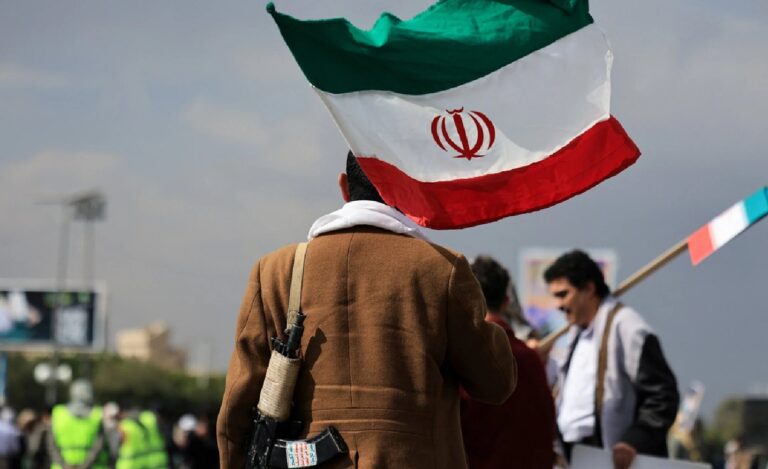
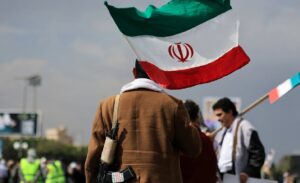
While Trump and Netanyahu framed Iran as a rogue state secretly rearming, the Iranian leadership articulated a starkly different worldview. President Masoud Pezeshkian did not mince words in an interview with the Supreme Leader’s official website, framing the conflict in existential terms.
“In my view, we are in an all-out war with the United States, Israel, and Europe; they do not want our country to stand on its own feet… If one understands it properly, this war is far more complex and more difficult than the [Iran-Iraq] war.”
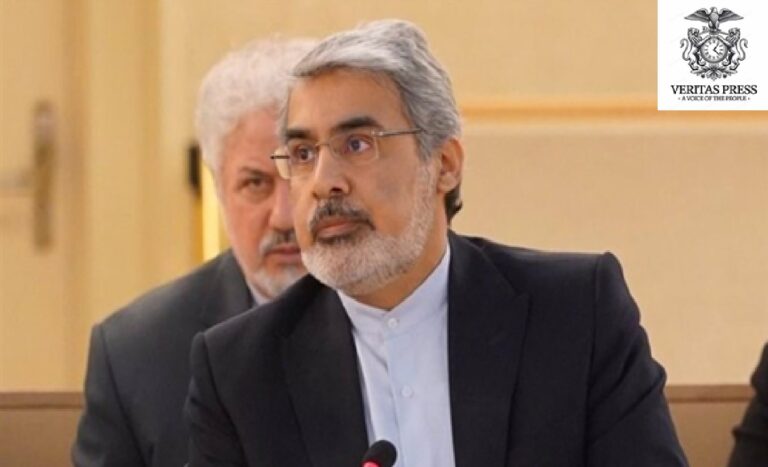
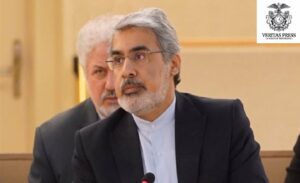
This statement reframes the conflict beyond missiles and centrifuges. It is portrayed as a multi-domain siege, economic, cultural, political, and security, aimed at regime change or submission. Iranian Foreign Ministry spokesman Esmaeil Baghaei reinforced the non-negotiable nature of their deterrent: “Iran’s missile program has been developed to defend the country’s sovereignty and is ‘non-negotiable.’”
Analysts note that Iran’s perceived restraint in June, following devastating strikes, was strategic, not a sign of weakness. Trita Parsi, Executive Vice President of the Quincy Institute, warns that a second round would be different: “The Iranian response would be much harsher, much quicker because the Iranians understand that unless they strike back hard… Iran will become a country that Israel will bomb every six months.” This sets a dangerous trap: Netanyahu’s push for pre-emptive action could trigger precisely the large-scale retaliation he claims to want to prevent.
Netanyahu’s Strategic Pivot: Moving the Goalposts from Nuclear to Missile Threat
A critical investigative thread is the evolution of Netanyahu’s casus belli. For decades, the central plank was Iran’s nuclear program. After Trump’s August 2025 strikes and his triumphant declaration that the program was “obliterated,” that justification evaporated. The focus has now seamlessly shifted to Iran’s ballistic missile arsenal.
“Netanyahu is pushing the United States to join Israel in yet another war with Iran, this time with a focus on the missiles,” Parsi told Al Jazeera. “Partly because Trump is not receptive to the idea of addressing the nuclear issue – since he has said that he fixed it… The Israelis will constantly shift the goal posts to make sure that they can make the confrontation with Iran an endless, forever war.”
This shift is loudly echoed by Israel’s allies in Washington. The American Israel Public Affairs Committee (AIPAC) emailed supporters warning of Iran’s remaining missiles, and Senator Lindsey Graham told The Jerusalem Post: “We cannot allow Iran to produce ballistic missiles because they could overwhelm the Iron Dome.” The messaging creates a perpetual threat matrix, ensuring continuous pressure and justifying ongoing military readiness and U.S. support.
Sina Toossi, a senior fellow at the Centre for International Policy, argues this reflects a deeper Israeli aim: “This desire for perpetual US involvement, for perpetual wars against Iran to really break the Iranian state reflects Israel’s aim for unchallenged dominance, unchallenged hegemony and expansionism… That’s going to come to a head with US interests going in another direction.”
The Hollow Core of the “Trump Peace Plan”
The Gaza portion of the Mar-a-Lago meeting revealed a plan collapsing under the weight of its own contradictions. Trump’s threat that Hamas has a “very short period of time to disarm” or face “hell to pay” is analytically empty without a viable mechanism for enforcement.
- The Mirage of the International Force: A Western diplomat, speaking anonymously to the AP, exposed the fundamental rift: There is a “huge gulf” between the U.S.-Israeli vision of a force with a “commanding role” in disarming Hamas and the view of potential contributing nations, who fear becoming an “occupation force.” No country has committed troops. This leaves the plan’s central security pillar as pure fantasy.
- Hamas’s Unyielding Calculus: Hamas’s political stance, as reported, makes disarmament a non-starter. A spokesperson stated the group is willing to discuss “freezing or storing” weapons, but insists on the right to armed resistance while occupation continues. This is an irreconcilable chasm with Israel’s core demand.
- The Political Theatre of the Hostage Crisis: The poignant meeting with the family of fallen officer Ran Gvili served a political purpose for Netanyahu. It provided a morally unimpeachable reason for delaying Israeli withdrawals and the “Phase Two” transition, allowing him to blame Hamas for the stalemate while avoiding concessions Trump might have sought.
The American Domestic Divide: “America First” vs. The War Hawks
Trump’s position is torn by a profound internal contradiction. His political brand is built on “America First,” a scepticism of foreign entanglements championed by influential media voices. Tucker Carlson explicitly called out the dynamic with Netanyahu: “It’s been less than six months since Trump risked a war with Iran on Netanyahu’s behalf, but instead of acting grateful, the prime minister is already demanding more. This is the definition of a parasitic relationship.”
Yet, Trump’s administration and donor base pull him in the opposite direction. Secretary of State Marco Rubio is a known Iran hawk. Pro-Israel megadonors like Miriam Adelson wield significant influence. As Parsi notes, “The voters don’t want this. The donors – at least a large number of them – want this… both of whom Trump believes that he needs.” This schism makes U.S. policy volatile and unpredictable, driven more by personal diplomacy and transactional politics than a coherent strategy.
Conclusion: The Architecture Of Perpetual Conflict.
The choreographed display of unity at Mar-a-Lago was not a diplomatic breakthrough but a revelation of a dangerous and deliberate strategy. In essence, the Mar-a-Lago summit was not a display of statesmanship but a high-stakes performance. President Trump’s bellicose rhetoric and Prime Minister Netanyahu’s shifting justifications are symptoms of a policy vacuum filled by transactional politics. Trump’s threats against Iran are a gambit to appear strong while being pushed into a corner by an ally with a divergent agenda. Simultaneously, the “peace plan” for Gaza is a crumbling facade, exposing the impossibility of reconciling maximalist Israeli security demands with Palestinian rights and political reality. A deeper investigation exposes that the true “architecture” being built is not for peace, but for managed, perpetual conflict, a system that serves the immediate political needs of its architects while systematically dismantling the possibility of long-term stability.
The Feedback Loop of Manufactured Threat and Political Survival
This summit solidified a self-reinforcing cycle. Netanyahu’s political survival, dependent on his image as Israel’s indispensable security guarantor, requires a perpetual existential threat. Iran, first its nuclear program, now its missiles, is cast in that role. Trump, whose political brand thrives on spectacle and “winning,” is presented with opportunities for dramatic, unilateral action that can be framed as decisive victories. As analyst Trita Parsi identified, this creates an “endless, forever war” dynamic. Each “obliteration” becomes a political trophy while simultaneously necessitating the identification of the next looming threat. This is not a security policy; it is a political addiction to crisis. At its core, it serves a deeper strategic interest for Israel: the pursuit of regime change in Tehran to install a government aligned with, or subservient to, Israeli regional hegemony. Every strike and every threat is a step toward degrading the Islamic Republic’s capabilities and legitimacy, keeping the ultimate goal of a pliable Iranian state within the realm of possibility.
The Gaza Mirage: Exposing the Fundamental Contradiction
The stalling of the Gaza plan is not an implementation failure; it is the inevitable result of its design as a mechanism for pacification, not liberation. The demand for Hamas to disarm before a political settlement was a poison pill, a deliberately impossible hurdle that allows Israel to maintain control while shifting blame. The hollow nature of the proposed International Stabilisation Force, with its “huge gulf” in understanding between the U.S.-Israel bloc and potential contributors, was a predictable fiction. Gaza remains a shattered, open-air prison, its reconstruction held hostage to a disarmament fantasy, ensuring it stays a festering crisis that justifies perpetual security demands.
The Strategic Blind Spot: Subsumed Interests and Converging Dangers
The most critical investigative finding is the effective capture of a significant strand of U.S. Middle East policy by a partner’s maximalist objectives, undermining the “America First” premise. The greatest danger lies in the convergence of these failing policies. A stalled Gaza process perpetuates the instability that Netanyahu uses to justify a relentless focus on Iran. An unverified claim of Iranian “reconstitution,” amplified by Israeli intelligence and U.S. hawks, could become the pretext for a strike that Iran has vowed to answer with unprecedented force. The U.S. is being manoeuvred into a conflict where the primary strategic beneficiary is Israel’s long-term vision for the region, a vision that necessitates the removal or total enfeeblement of the current Iranian regime to neutralise its support for proxies and secure Israeli dominance from the Mediterranean to the Persian Gulf.
A Cycle of Illusion and Inevitable Conflagration
The path charted leads not to peace but to a precipice. By declaring Iran’s nuclear program “obliterated,” Trump painted himself into a corner where any ambiguous evidence demands a military response to save face. By endorsing Netanyahu’s shifting focus, he legitimised a limitless set of future targets. The region is not on the path to the “partnership, friendship, and investment” touted in Trump’s National Security Strategy, but is instead trapped in a cycle where the illusion of total victory by one side guarantees prolonged conflict for all.
Ultimately, the leaders are preparing for the last war while igniting the next one. They operate under the illusion that overwhelming force can deliver a permanent solution, yet the response will be asymmetric escalation. The investigative critique reveals a leadership more adept at manufacturing crises than resolving them, with the people of the region, from Tehran to Gaza City, bearing the gravest risks. The architecture being built is one of perpetual confrontation, where short-term political theatre mortgages long-term security. The coming conflagration will be the logical conclusion of a policy that mistakes threats for strategy and victory for peace, all while advancing a narrow agenda of regional dominance that treats the stability of millions as a disposable commodity.