



Date Published:
Date Modified:
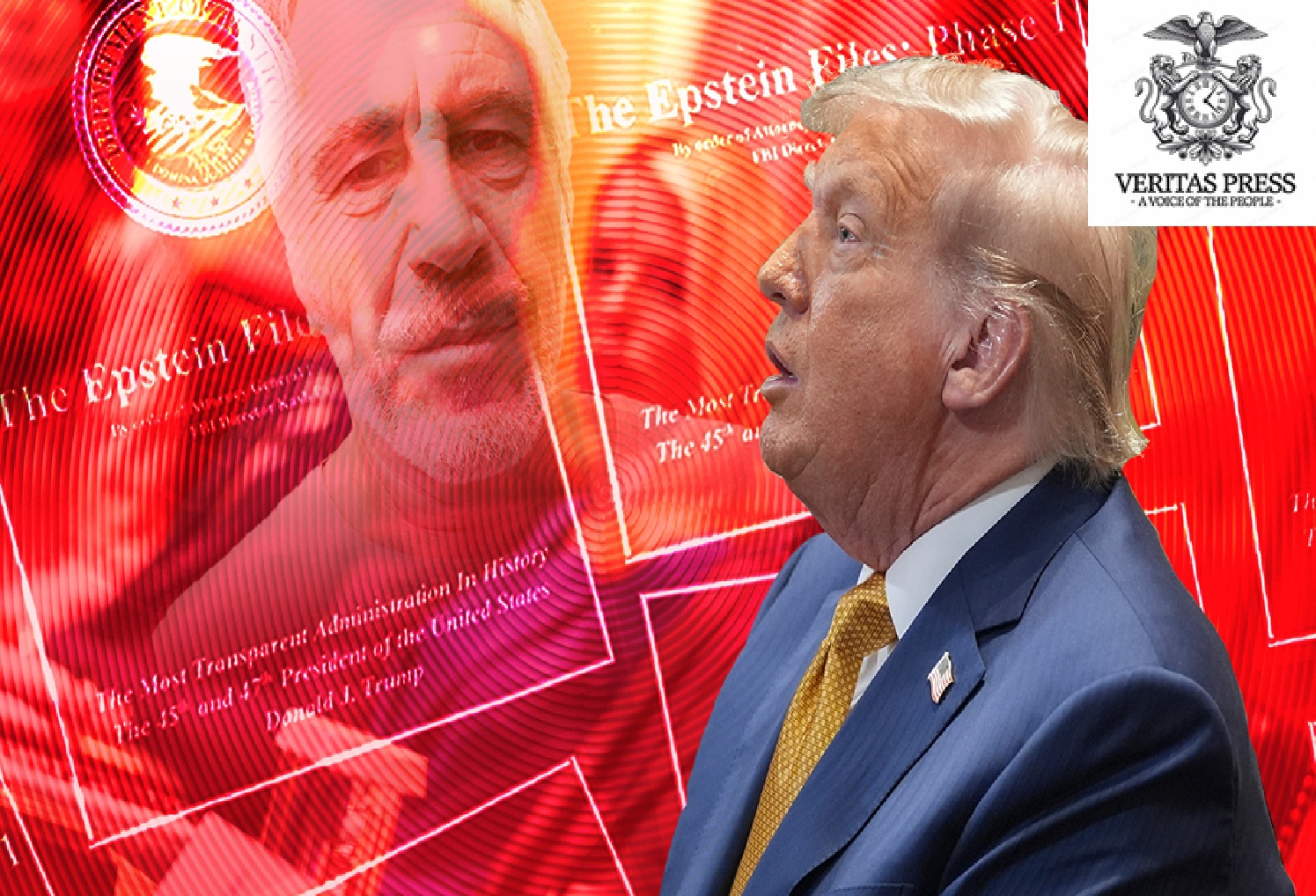
Jeffrey Epstein was a convicted sex offender. Yet for years after his 2008 conviction for procuring a minor, he continued to circulate within the highest tiers of global power.
Thousands of records, including emails, flight logs, contact directories, and court materials, now reveal disturbing allegations alongside the names of influential figures spanning politics, finance, academia, philanthropy, and entertainment.
But the disclosures themselves have triggered a second controversy.
Large portions remain heavily redacted, with entire pages blacked out. The opacity has drawn bipartisan criticism, fueling suspicion that the public may still be seeing only fragments of Epstein’s true network rather than the full architecture of influence that sustained him.
Importantly, being named in these files does not imply criminal wrongdoing, and numerous individuals have denied involvement or stated their interactions were limited.
Yet the central investigative question is no longer confined to Epstein alone.
How did a known offender retain legitimacy inside institutions designed to manage risk?
The answer increasingly points toward something more systemic than oversight failure.
It suggests accommodation.
Not An Anomaly, But A Stress Test Of Power:
Epstein is often framed as a singular predator who manipulated his way into elite society.
That interpretation is reassuring.
It is also dangerously incomplete.
Anomalies trigger safeguards.
Epstein triggered access.
Universities accepted his donations. Billionaires took meetings. Political figures engaged with him. Cultural elites socialised with him.
This was not simply a breakdown of institutional defences.
It revealed a hierarchy embedded deep within prestige ecosystems:
Financial opportunity often outranks moral hazard.
Instead of asking whether engagement was appropriate, many organisations appeared to focus on whether reputational risk could be quietly managed.
Ethics became procedural.
Due diligence became performative.
Safeguards did not collapse — they bent.
High-Profile Figures Appearing In Epstein Documents:
Recent reporting and document reviews show numerous prominent names referenced in connection with Epstein. Appearance in records may reflect social contact, business dealings, or indirect mentions, not criminal conduct.
Still, from an institutional perspective, the pattern exposes an extraordinary tolerance for proximity to reputational danger.
Business, Tech, and Finance
- Elon Musk — appears in email exchanges discussing a possible visit to Epstein’s Caribbean island; Musk has said he declined the invitations.
- Richard Branson — exchanged emails inviting Epstein to his private island and suggesting ways to publicly rehabilitate his image.
- Bill Gates — met Epstein multiple times after the financier’s earlier conviction.
- Sergey Brin — reportedly sought Epstein’s advice regarding financial arrangements for his children.
Political and Government Circles
- Prince Andrew — repeatedly identified in court records as tied to Epstein; he has denied wrongdoing.
- Ehud Barak, former Israeli prime minister, visited Epstein’s townhouse and flew on his jet several times.
Entertainment, Fashion, and Cultural Elites
- Naomi Campbell — socially acquainted with Epstein, whose name was allegedly used to lure aspiring victims with promises of career opportunities.
Sports and Media Power Brokers
- Steven Tisch, New York Giants co-owner, appears extensively in correspondence in which Epstein offered to connect him with women; Tisch has expressed regret over the association.
- Casey Wasserman, president of the LA 2028 Olympic organising committee, exchanged emails with Ghislaine Maxwell, described in the release as flirtatious.
Philanthropic and Academic Circles
- Thorbjørn Jagland, former Norwegian prime minister, reportedly hosted Epstein alongside Gates.
Additionally, released files reference figures such as Donald Trump, Prince Andrew, and Bill Gates, among other elite individuals connected socially or professionally to Epstein.
Critical distinction: Being named is not evidence of wrongdoing. But institutional analysis does not depend solely on criminal guilt; it examines risk tolerance.
And what these networks suggest is not necessarily a conspiracy.
It is normalisation.
Each additional association lowered the perceived danger for the next institution.
Sociologists call this borrowed legitimacy.
Investigators might use a harsher word:
Cover.
The Reputation Laundering Machine:
Modern institutions are engineered to detect threats, legal, financial, and reputational.
Yet Epstein moved through these structures with remarkable ease.
Governance experts describe a phenomenon known as reputation laundering, in which association with respected organisations rehabilitates compromised individuals faster than scrutiny can catch up.
Epstein did not merely benefit from this mechanism.
He appeared to understand it.
Every philanthropic pledge, academic connection, and high-profile meeting functioned as reputational insulation.
Each handshake signalled safety to the next gatekeeper.
The result was not overt protection.
It was something more subtle, and arguably more dangerous:
collective hesitation.
Compliance Theatre And The Myth Of Oversight:
Most elite organisations maintain ethics committees, donor review boards, compliance officers, and reputational risk frameworks.
Epstein passed through this architecture repeatedly.
Which forces a prosecutorial question rarely asked aloud:
Were these safeguards designed to detect danger, or merely to document that someone looked?
Paper trails can provide legal insulation without producing moral action.
Inside powerful institutions, risk often becomes a calculation:
- How damaging would exposure be?
- Who else is associating with him?
- Is disengagement worth the lost capital or access?
When influential peers continue engagement, withdrawal begins to appear less like prudence — and more like overreaction.
Thus begins the quiet cascade of institutional permission.
Wealth As A Behavioural Override:
Epstein exploited a structural vulnerability deeply embedded within prestige culture:
Extreme wealth alters threat perception.
Psychologists refer to this as the halo effect of status, a cognitive bias that allows success in one domain to obscure danger in another.
Warning signals that would exile an ordinary offender often become negotiable when attached to immense financial power.
- Meetings continue.
- Emails are answered.
- Invitations are extended.
Not necessarily because institutions are unaware of risk, but because proximity to capital exerts gravitational pull.
In this sense, Epstein was less an infiltrator than a stress test.
And the system did not hold.
What The Documents Suggest About Epstein’s Operating Model:
Taken together, the files reinforce a portrait of Epstein not simply as an isolated predator but as a financier who strategically embedded himself across philanthropy, politics, technology, academia, and celebrity culture.
Prosecutors have long argued that this aura of legitimacy helped obscure his crimes.
Emails show him offering introductions, arranging meetings, and leveraging social capital, behaviour consistent with grooming at an institutional scale rather than solely interpersonal exploitation.
One striking example involves correspondence in which Epstein offered to connect a business executive with women, underscoring how access itself functioned as currency within his orbit.
Where ambition concentrates, scrutiny often relaxes.
Epstein did not need institutions to approve of him.
He needed them to want something.
Once desire enters the equation, ethics frequently become negotiable.
Transparency vs. Protection: Why So Much Remains Hidden.
Despite the scope of the release, significant portions remain censored. The Justice Department maintains that redactions are legally required, including to protect victims.
Yet secrecy carries consequences.
Critics warn it reinforces a long-standing perception: that wealth and political influence can shield powerful actors from meaningful accountability.
- The concern is not merely historical.
- It is structural.
- Because systems do not reform themselves by prosecuting ghosts.
The After-Conviction Question Institutions Never Answered, After 2008, Epstein Was Not An Unknown Risk:
- He was a registered sex offender.
- That fact alone should have triggered automatic exclusion from many elite environments.
- Instead, engagement often continued.
Which leaves one question echoing above all others:
What level of misconduct actually disqualifies a wealthy man from elite society?
- If a conviction involving a minor did not suffice, what would?
- The absence of a clear answer suggests a chilling possibility:
- For individuals of extreme means, the threshold may be far higher than institutions publicly admit.
Structural Cowardice:
The speed with which organisations sever ties after public scandal proves they possess the capability to act decisively.
What was missing in Epstein’s case was not capacity.
It was will.
Large institutions often avoid confrontation with powerful benefactors until external pressure makes inaction more dangerous than action, a phenomenon governance analysts sometimes describe as structural cowardice.
Epstein operated inside that hesitation window.
For years.
The Dead Man Fallacy:
There is narrative convenience in treating Epstein as both the beginning and the end of the scandal, a singular monster now gone.
But focusing exclusively on the perpetrator risks obscuring the enabling terrain.
The harder institutional question is this:
If another Epstein emerged tomorrow, wealthy, connected, strategically philanthropic, what would stop the cycle from repeating?
- Policies already existed.
- Committees already existed.
- Background checks already existed.
- And yet.
A Crucial Distinction, And An Unfinished Investigation, For Responsible Reporting, One Fact Must Remain Unequivocal:
- Appearance in Epstein-related documents does not equal participation in crimes.
Many individuals were referenced due to social contact, professional interactions, or secondhand mentions, and several have publicly denied wrongdoing.
However, the breadth of Epstein’s connections raises a deeper structural question that continues to shadow the investigation:
Did institutions fail, or did they function exactly as power required?
Because the most unsettling lesson may not be how one predator rose.
But how many structures made room?
Until the remaining documents are fully examined and potentially unsealed, that question will remain at the centre of Epstein’s unfinished reckoning.
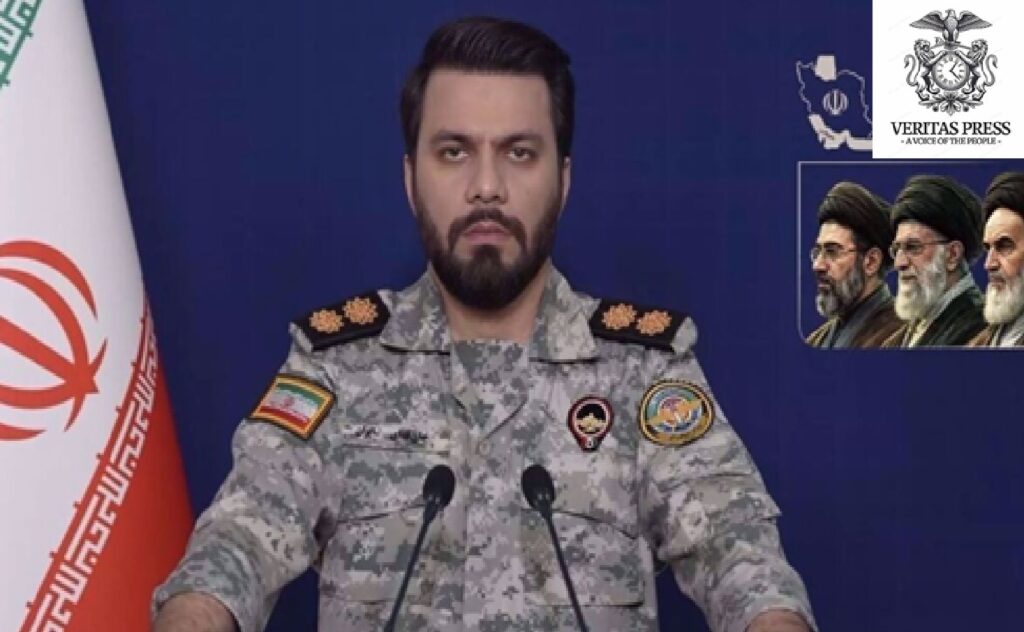
When Lieutenant Colonel Ebrahim Zolfaqari, spokesman for Iran’s Khatam al-Anbiya Central Headquarters, issued a warning

The historic Christian presence in Palestine, dating back to the earliest centuries of Christianity, is

JERUSALEM – For the first time since the aftermath of the Six-Day War, the courtyards

TEHRAN – As the sun rose on Eid al-Fitr, a day meant for celebration and

HUNGARY – As Benjamin Netanyahu prepares to travel to Hungary this weekend, a mounting legal

LONDON — In the polished corridors of 10 Downing Street, the language remains meticulously calibrated:
On March 20, 2026, the Pentagon quietly announced what amounts to a fundamental restructuring of
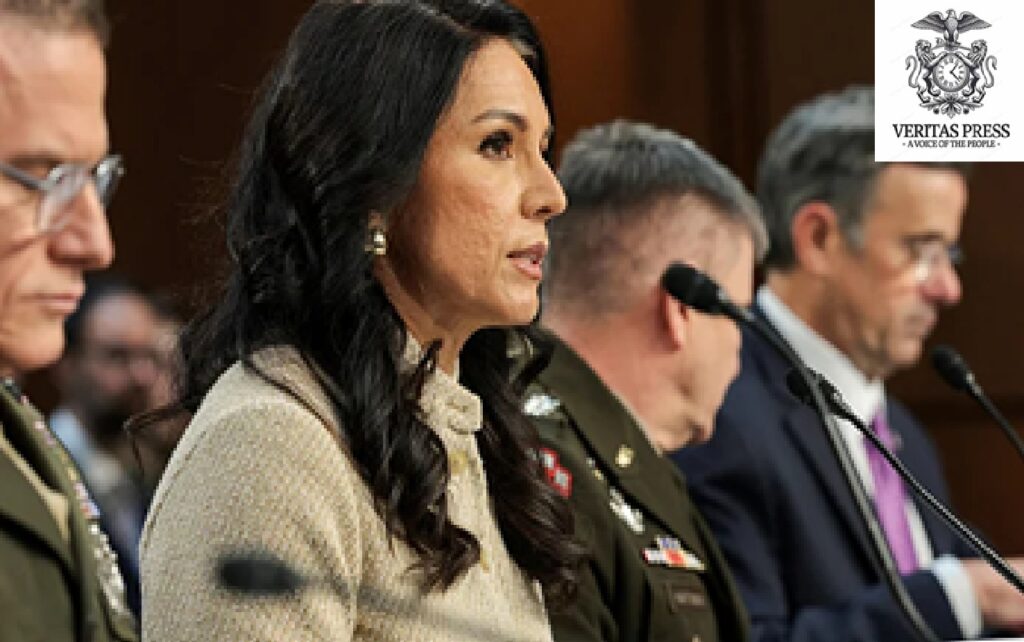
WASHINGTON / ISLAMABAD — A fresh warning by US Director of National Intelligence Tulsi Gabbard

For the first time since the US-Israeli campaign against Iran began on February 28, the
Tensions across the Gulf have escalated to levels not seen in decades, as Saudi Arabia