



Original Article Date Published:
Article Date Modified:
Help support our mission—donate today and be the change. Every contribution goes directly toward driving real impact for the cause we believe in.
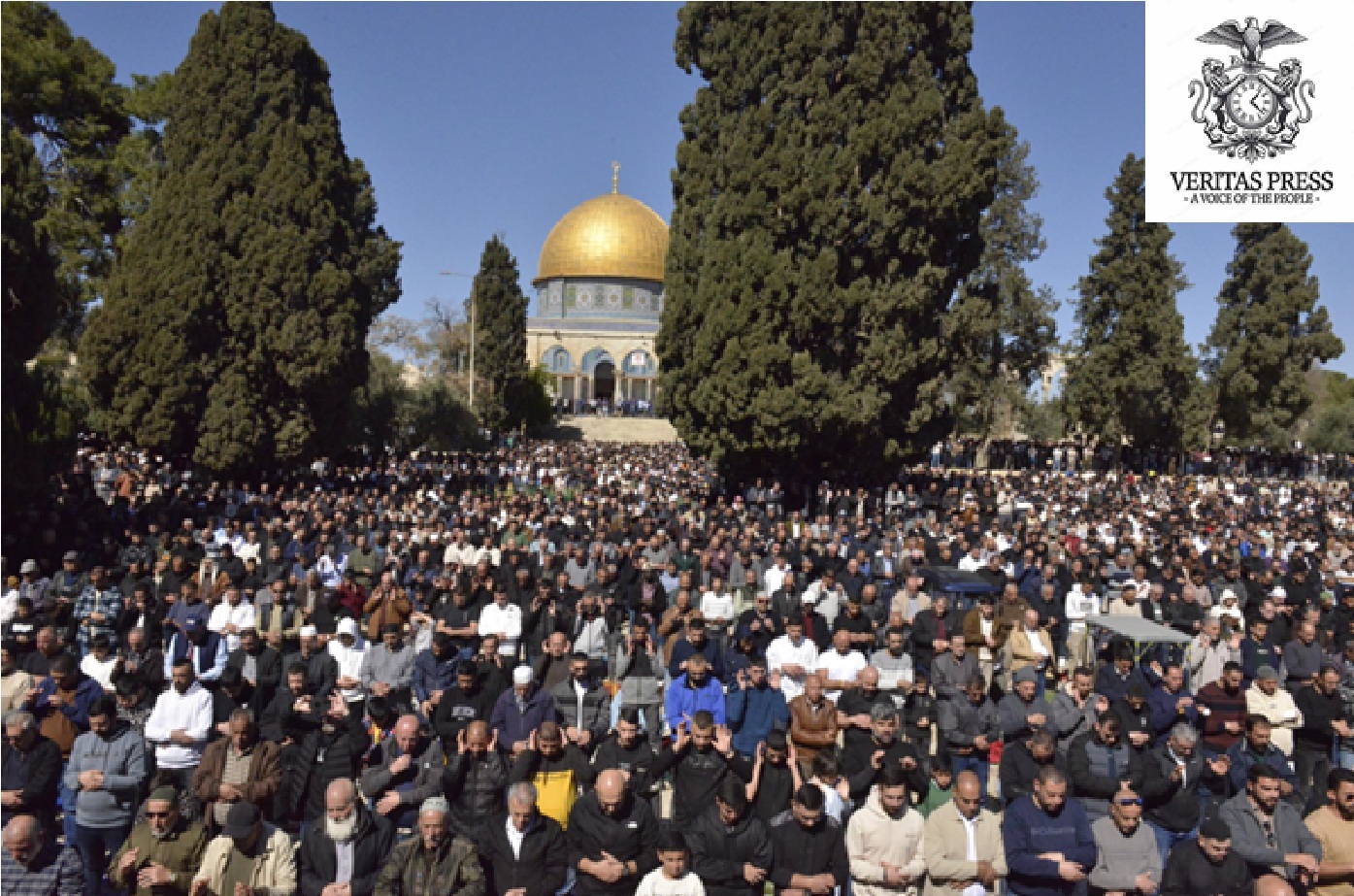
The first Friday of Ramadan at Al-Aqsa Mosque has always been a barometer for tensions in Jerusalem. But the events of February 20, 2026, were not merely a spike on the gauge; they signified the shattering of the instrument itself. For the first time since Israel’s occupation of East Jerusalem in 1967, the foundational principles that prevented outright religious warfare at the Haram al-Sharif / Temple Mount have not just been bent, but systematically dismantled by the highest levels of Israeli governance.
As 80,000 Palestinians performed their prayers within the compound, a remarkably high number given the circumstances, they did so under the shadow of a new reality. Far-right Minister Itamar Ben-Gvir’s heavily policed incursion was not just a provocation; it was a performative assertion of a new order. This analysis delves into the mechanics of that new order, drawing on exclusive reports, Waqf sources, and the latest developments to argue that we are witnessing the replacement of the 1967 status quo with a state-enforced vision of shared, and soon, perhaps, exclusive, sovereignty.
The Ben-Gvir Doctrine: From Raids To Routine.
Itamar Ben-Gvir’s visit to the compound on the first Friday of Ramadan was his most high-profile yet. According to field reports, he was accompanied by senior Israeli police commanders, using the site not as a visitor, but as a minister overseeing a territorial possession. He held on-site discussions regarding enforcement policies, effectively turning the courtyards into a command post.
However, to view this as a singular event is to miss the strategic shift. As documented by the Jerusalem Governorate, January 2026 saw 4,397 settlers “storm” the mosque, a term the Waqf uses to describe coordinated, police-escorted entries. This is not sporadic vigilantism; it is a bureaucratic flood. These incursions are now characterised by “Talmudic prayers,” dancing, and “epic prostration”, acts that are a direct visual and theological refutation of the status quo, which explicitly forbids non-Muslim worship.
The Israeli police, once the enforcers of the ban on Jewish prayer, have, under Ben-Gvir’s orders, been transformed into its protectors. A Knesset member from Netanyahu’s own Likud party, Amit Halevi, stated explicitly that Jewish prayers should not be changed during Ramadan, calling for the maintenance of these incursions. The message is clear: what was once a violation is now policy.
The Mechanics Of “Collapse”: A Targeted Assault On The Waqf.
The Guardian’s recent investigation, titled “‘Detonator’: long agreement on prayer at Al-Aqsa site collapses,” provides the forensic detail behind the headlines. The report confirms that the collapse is not an accident but the result of a targeted campaign to incapacitate the Islamic Waqf, the Jordanian-appointed custodian of the site.
The latest developments corroborate this with devastating precision:
- Arrest of the Imam: On February 16, Israeli police arrested the imam of Al-Aqsa Mosque, Sheikh Mohammed al-Abbasi, directly from the compound. This was followed by a ban order preventing him from returning. Hamas correctly framed this as “blatant interference in the affairs of Al-Aqsa and an unacceptable assault on its imams”.
- Systematic Bans: According to Waqf sources, over 250 ban orders have been issued against Palestinian Jerusalemites this year alone, barring them from the compound they have a right to access. Among the 100 deportation decisions recorded in January, 95 were specifically related to Al-Aqsa.
- Denial of Logistics: The Waqf has been prevented from carrying out essential Ramadan preparations. Reports confirm they were blocked from installing sun and rain shelters for the thousands of worshippers and from setting up temporary field clinics. This is a deliberate strategy to hamper the Waqf’s ability to function, creating an administrative vacuum that the occupation authorities and settler groups can then fill.
The Human Filter: Ramadan Under Siege.
While the political theatre unfolded inside the compound, the reality for the average Palestinian was one of humiliation and physical exclusion. Israeli authorities announced a quota of 10,000 permits for Palestinians from the West Bank, restricted to men over 55 and women over 50.
In practice, the system was even more brutal. At the Qalandia checkpoint, hundreds queued in vain. By late morning, authorities declared the quota “filled,” turning back dozens of elderly worshippers and even detaining four paramedics. Journalists were assaulted and obstructed from covering the scene. Of the 80,000 who prayed, the vast majority were Palestinian citizens of Israel or residents of occupied East Jerusalem, who do not need to cross the military checkpoints. The spiritual heart of the Muslim world was thus rendered physically inaccessible to the vast majority of West Bank Palestinians.
The “Detonator” Argument: Why This Time Is Different.
Jerusalem lawyer Daniel Seidemann has long warned that the Al-Aqsa compound is a “detonator”. In 2000, Ariel Sharon’s visit sparked the Second Intifada. In 2023, Hamas named its offensive “Al-Aqsa Flood,” citing Israeli violations at the site as a primary casus belli.
What makes this Ramadan exponentially more dangerous is the confluence of factors identified by analysts like Amjad Iraqi of the International Crisis Group. First, the war in Gaza has left a trail of unprecedented destruction and rage, with no political horizon for Palestinians. Second, the Israeli government is not merely allowing provocations but actively engineering them. Third, the international community’s response has been muted.
The United States’ recent pledge of $10 billion for a Gaza relief package, announced by President Trump at the “Board of Peace” meeting, does little to address the immediate spark at Al-Aqsa. As one Palestinian official in Jerusalem noted, “You cannot pour money on rubble while simultaneously allowing the match to be lit.”
Conclusion: The End Of An Era
The status quo was never a just arrangement; it was a pragmatic one. It was a ceasefire mechanism designed to manage, if not resolve, the conflicting claims to the Haram al-Sharif. What the events of this first Friday of Ramadan confirm is that the Israeli government, led by its most extreme elements, has decided to unilaterally abrogate that mechanism.
By arresting imams, banning Waqf staff, facilitating settler prayers, and restricting Muslim access, Israel is not just violating the status quo; it is rewriting it. The question is no longer whether the agreement has collapsed, but what violent new equilibrium will take its place. With the memory of Gaza still fresh and the West Bank boiling, the “detonator” is now exposed, and the region holds its breath to see if the spark catches.

Britain is heading into a prolonged economic squeeze, where rising household bills, stagnant wages, and
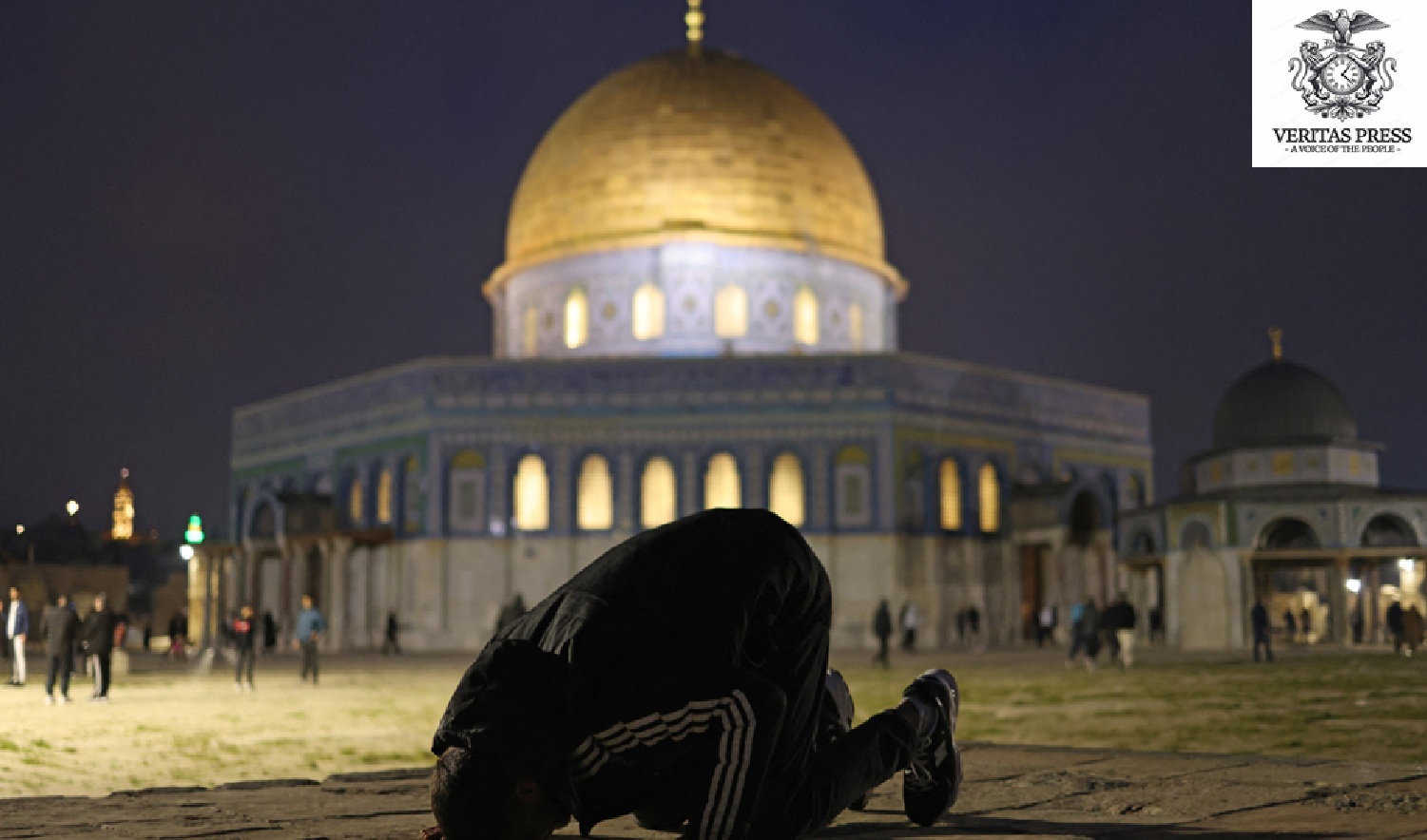
OCCUPIED EAST JERUSALEM, OPT, April 9, 2026 – After forty days of unprecedented closure, the
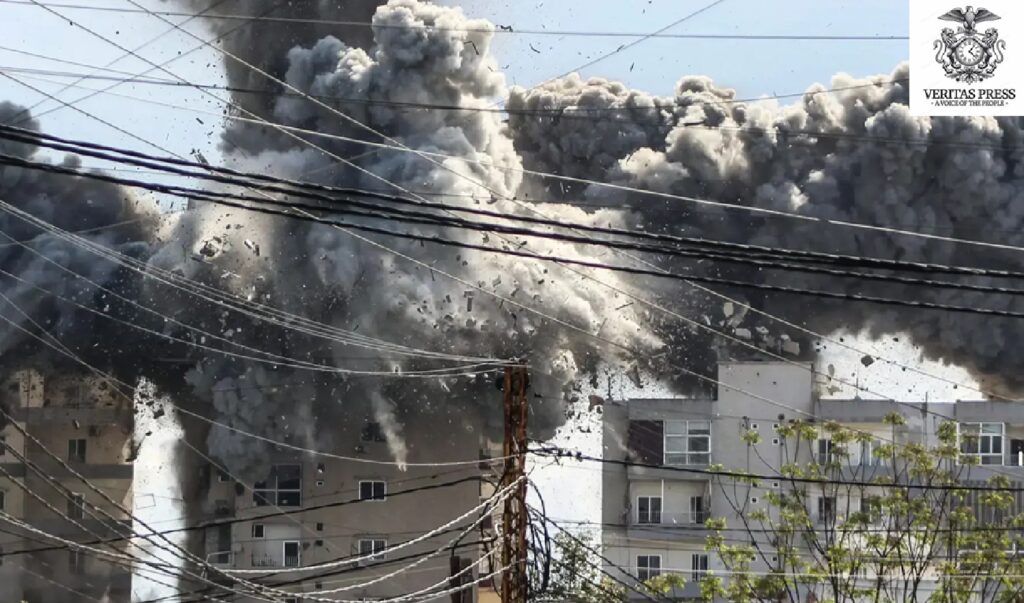
BEIRUT/ISLAMABAD — The ink had barely dried on a historic, last-minute ceasefire agreement between the
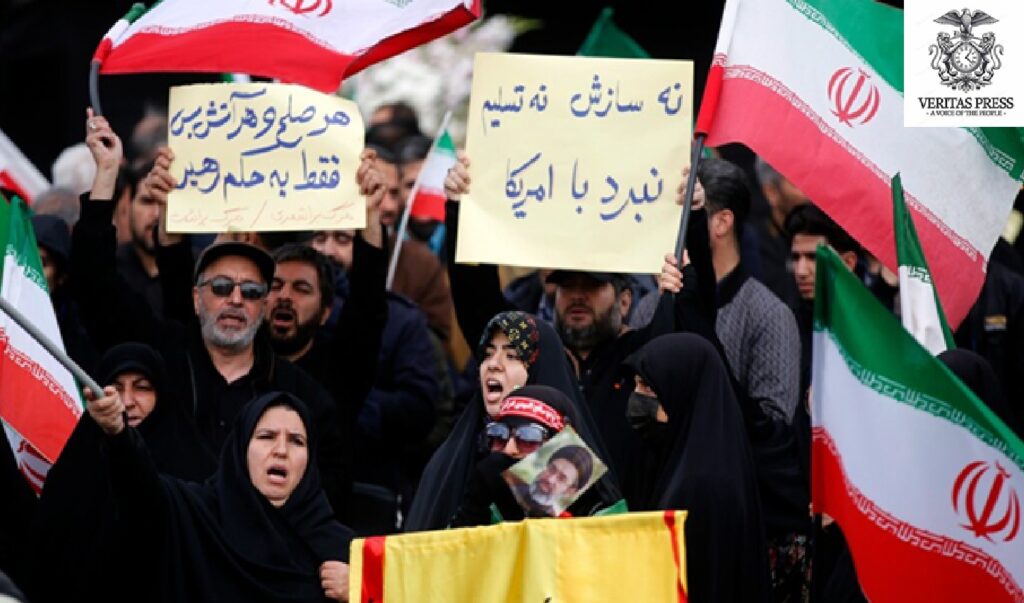
TEHRAN, WASHINGTON, TEL-AVIV – After 40 days of intense warfare that had reshaped the geopolitical
WASHINGTON – Within hours of announcing what he described as a pathway to “long-term PEACE,”

HELSINKI, FINLAND – For seven consecutive years, Finland has been crowned the “happiest country in
TEHRAN/ISLAMABAD/WASHINGTON — In the early hours of Wednesday, a deafening silence fell over the skies
TEHRAN / ISLAMABAD – The world exhaled on April 8, 2026, as the United States

In the United States, millions of people are now going into debt to buy food.
The Islamic Revolution Guards Corps (IRGC) has pounded US-owned petrochemical sites in the Wave 99