


Title: The Ceasefire That Never Was: Israel Has Hit Lebanon 10,000 Times Since Signing An “Ink On Paper” Deal.
Press Release: Veritas Press C.I.C.
Author: Kamran Faqir
Article Date Published: 27 Nov 2025 at 18:45 GMT
Category: Middle-East | South Lebanon | The Ceasefire That Never Was: Israel Has Hit Lebanon 10,000 Times Since Signing An “Ink On Paper” Deal.
Source(s): Veritas Press C.I.C. | Multi News Agencies
Website: www.veritaspress.co.uk

Business Ads

One year after the November 27, 2024, ceasefire between Israel and Hezbollah, the agreement’s text remains, in the words favoured by Lebanese officials, “ink on paper.” Rather than a return to peace, Lebanon has endured roughly 10,000 documented Israeli air and ground violations, repeated strikes on civilian areas and reconstruction works, occupation of strategic heights inside Lebanese territory, and an intensifying political campaign to force Lebanese disarmament that now risks plunging the country back into large-scale war. The picture that emerges from UN peacekeepers, human-rights investigators, medics on the frontlines and residents is not of a truce but of a slow-burn, institutionalised violence that has become Lebanon’s new normal.
What The Data Says, And Why It Matters:
UNIFIL, the UN peacekeeping force deployed in southern Lebanon, has recorded more than 7,500 air violations and almost 2,500 ground violations since the ceasefire’s start, totals UNIFIL says amount to over 10,000 infringements of Lebanese territory. UNIFIL has repeatedly described specific incidents as blatant violations of UN Security Council Resolution 1701 and has documented the construction of fortifications and walls that encroach on Lebanese land. Those quantitative records are the backbone of any claim that the ceasefire has been systemically violated.
Human costs recorded by Lebanon’s Ministry of Public Health, at least 331 killed and 945 wounded since November 27, 2024, turn abstract breach counts into a human ledger of suffering: civilians, medics and emergency teams among the casualties. Relief agencies warn tens of thousands remain displaced, and reconstruction has been repeatedly interrupted by new strikes.
Amnesty International’s investigation documented widespread destruction, more than 10,000 structures heavily damaged or destroyed in southern Lebanon between late 2024 and early 2025, and described attacks that appear to deliberately target civilian infrastructure and livelihoods. Amnesty called for independent probes into actions that may constitute war crimes. That is not only a humanitarian finding: it is a legal indictment of how the conflict has been prosecuted.
How The Ceasefire Became A Pretext: Occupation, Fortification, And “Buffer” Tactics:
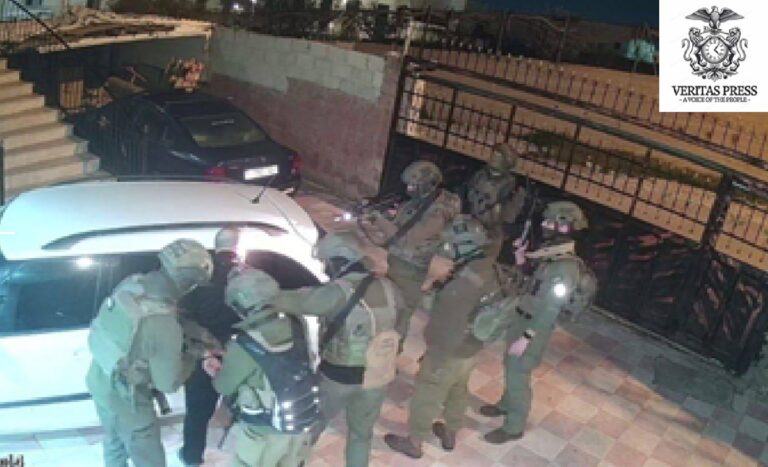
A ceasefire is supposed to freeze lines of control and prevent further harm. Instead, Israeli forces remain entrenched on five hilltop positions inside southern Lebanon and have constructed concrete barriers and T-walls that push past the Blue Line and render Lebanese land inaccessible to civilians and farmers, an occupation thinly cloaked as security. UNIFIL has documented walls and fortifications and reported ground incursions. These occupations undercut the very basis for disarmament talks: you cannot credibly ask an armed group to give up its weapons while your opponent remains on the ground and is expanding fortifications.
On the ground, local reconstruction teams say they are hunted as they try to rebuild. Engineers and municipal officials report drones and strike warnings hovering over bulldozers and convoys; in one detailed account, engineer Tarek Mazraani described being singled out by Israeli drones when he tried to organise reconstruction efforts, loudspeakers warned him by name, effectively criminalising reconstruction itself. This has turned post-war recovery into a dangerous, often deadly endeavour.
Eyewitnesses, Medics And Civil Defence: A Catalogue Of Targeted Harm:
Medics and rescue workers have been repeatedly attacked. Reuters and AP documented multiple incidents in which ambulances, civil-defence gathering points and paramedics were struck; dozens of health workers and first responders were killed at times when rescue operations were most needed. An emergency doctor told AP that “we run where the shells fall, and now the shells come for us,” describing a health system stretched to breaking point and targeted in a way that worsens civilian mortality. Those are not collateral lamentations: they are front-line testimony that rescue services are being deliberately impeded.
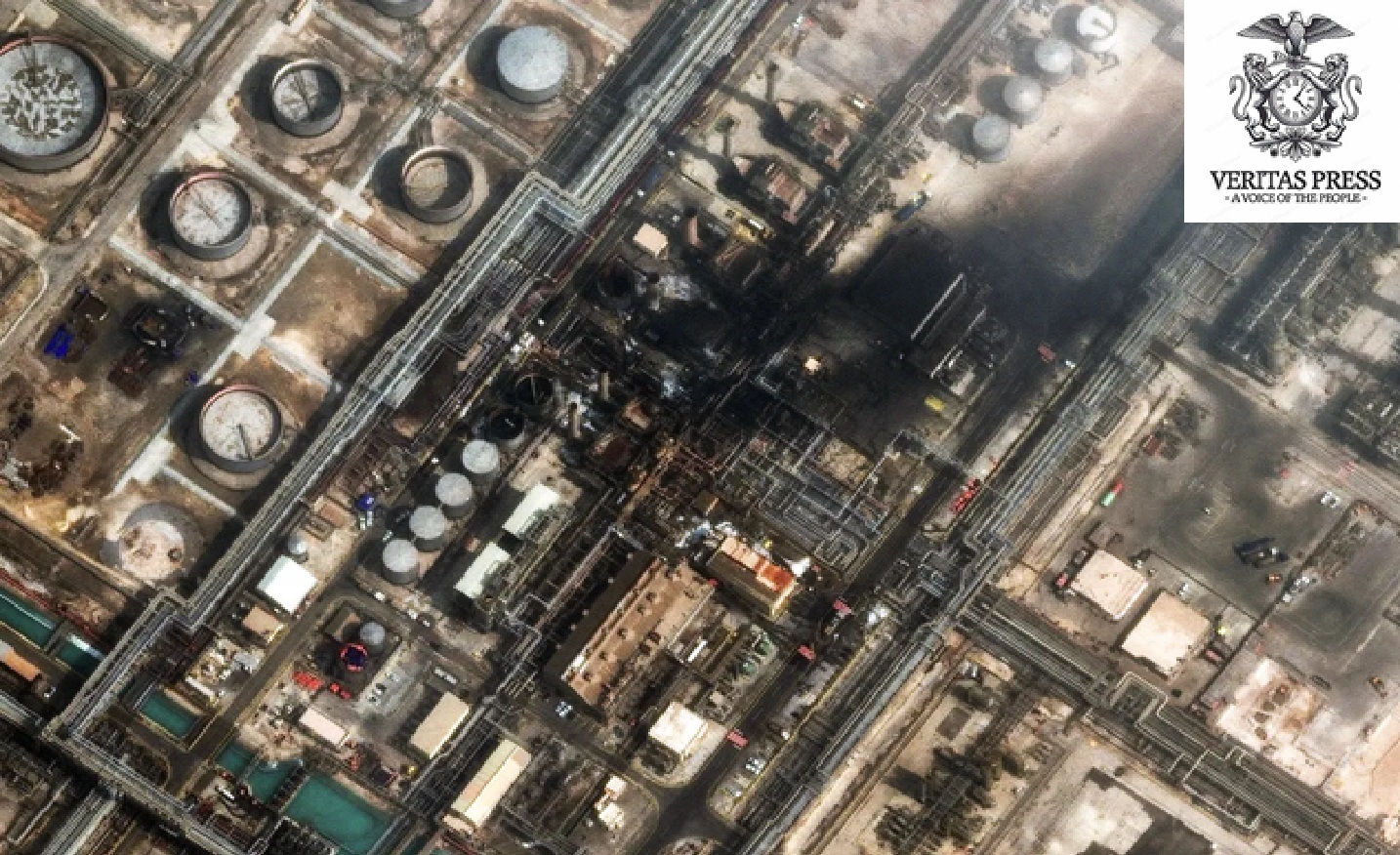
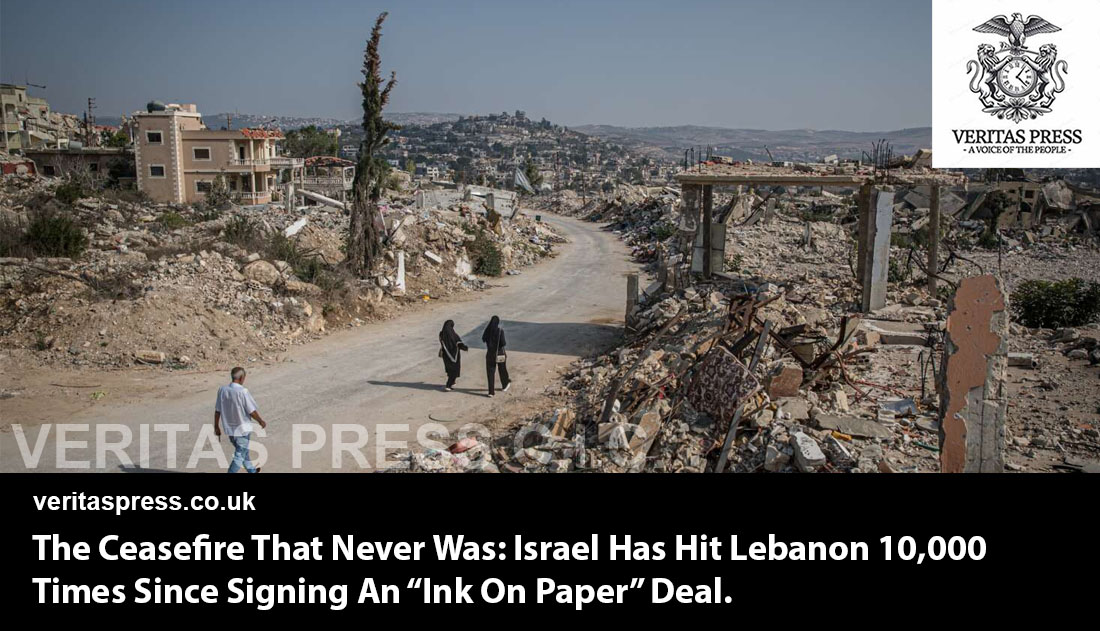
Residents returning to razed villages recount streets of rubble, collapsed homes and scorched fields. Satellite imagery and field reporting by Reuters, L’Orient Today and others show towns such as Aita al-Shaab, Rmeish, Maroun al-Ras and Kfar Kila reduced to rubble. A farmer from Aita al-Shaab told local reporters: “What is left cannot sustain a life — the soil, the trees, everything is gone.” Those images and testimonies build a consistent narrative: an operational campaign that destroys the social and economic base of whole districts.
The Killing In Beirut: Escalation, Intent And Consequence:
The assassination on 23 November 2025 of Haytham Ali Tabtabai, identified by western and regional outlets as Hezbollah’s chief of staff, inside Beirut’s densely populated Dahieh neighbourhood was a watershed. The strike killed Tabtabai and several others, wounded dozens, and triggered massive public mourning. Israel framed the strike as a targeted counter-rearmament operation; Hezbollah and Lebanese officials saw it as proof that Israeli policy is now to decapitate leadership inside civilian population centres, a policy bound to provoke retaliation and wider conflict. The strike marks a clear escalation from “border policing” to urban targeted killings.
A Legal And Moral Critique: When A Ceasefire Becomes A Cover For Impunity.
Independent investigators and human-rights NGOs argue the pattern of strikes, hitting rescue teams, civilian infrastructure, and reconstruction equipment, combined with occupation of foreign territory, crosses from contestable military necessity into unlawful conduct that merits independent investigation.
- Amnesty concluded that the large-scale destruction of civilian property needs to be probed as possible war crimes.
- UN human-rights experts have repeatedly decried near-daily strikes that have caused mounting civilian deaths and infrastructure devastation, and urged investigations.
Under the laws of armed conflict, parties must distinguish military from civilian objects and avoid disproportional harm. The pattern documented by organisations and UN bodies gives credible grounds to ask whether proportionality and distinction were regularly respected, especially where strikes repeatedly hit reconstruction crews, aid convoys or health-service facilities. That question matters not just technically, but politically: if a ceasefire enables a stronger party to degrade the civilian and economic base of the weaker, it becomes an instrument of strategic subjugation, not peace.
The Political Economy Of Pressure: Disarmament Demands, US-Israeli Alignment And Regional Levers.
Beyond the battlefields, the political strategy is clear. Israel and its patrons have framed the issue in simple terms: Hezbollah must disarm, and they have put the Lebanese state and the LAF under intense pressure to deliver. Israeli rhetoric, including threats of renewed war from officials such as Defence Minister Israel Katz, has been matched by diplomatic pressure to accelerate a disarmament plan that Lebanese officials insist cannot be fully implemented under active Israeli occupation and bombardment. The contradiction is obvious: disarmament requires conditions of security and sovereignty that Israel’s ongoing practices deny.
Washington has pressed the Lebanese Army as the mechanism for disarmament, while acknowledging the LAF’s gains in recovering munitions (nearly 10,000 rockets and hundreds of missiles cleared, per LAF/CENTCOM claims). But international support, weapons, training, and diplomatic cover have not been matched by accountability pressure on the side conducting the violations. This asymmetry risks turning the Lebanese army into the enforcement arm of an externally-directed policy that will fail without genuine security guarantees.
Egypt’s recent diplomatic intervention, Badr Abdelatty’s visit to Beirut and warnings of “serious and imminent escalation” make clear the region’s alarm. Yet Cairo’s engagement has been framed as cajoling Lebanon to make concessions and to allow the LAF to take the lead, even as Israel retains de facto control over parts of the south. That dynamic privileges external strategic aims over on-the-ground protection of people.
Voices From Lebanon, Officials, Activists, Residents:
- A senior Lebanese army source told The New Arab that the LAF had run thousands of missions, closed tunnels, seized munitions and dismantled rocket platforms, but “Israeli attacks and occupation remain the main obstacle” to full deployment south of the Litani. That is a judgment from inside the institution that is supposed to deliver the state monopoly of force.
- On reconstruction, engineer Tarek Mazraani said Israeli surveillance and warnings made rebuilding “almost impossible,” describing drones that “hovered” and public naming of reconstruction activists, tactics that intimidate and stop projects before they begin.
- A field medic, speaking to AP in earlier waves of the conflict, said: “When ambulances are hit, when civil defence points are bombed, we lose not only lives but the capacity to care, that is how death multiplies.” This voice from the hospital wards is a direct moral indictment of tactics that strike rescue services.
Accountability Gaps: Why International Mechanisms Have Failed So Far.
UNIFIL can monitor, report and attempt to de-escalate by escorting convoys and patrolling. But UNIFIL cannot, on its own, compel a state to withdraw or to stop a campaign. Security Council diplomacy remains constrained by geopolitical divides; the US and other guarantors have focused on disarmament as an end goal while failing to deliver enforceable measures to halt the violations that make disarmament impossible. The result is a carrot-and-stick dynamic where Lebanon is pressured to disarm on terms set by the stronger party, a recipe for failure.
Human-rights organisations insist on independent investigations into alleged unlawful strikes and attacks on civilians and humanitarian workers. Without that transparency and legal scrutiny, violations will continue to be counted and reported, but not punished. That creates a structure of impunity that incentivises further breaches.
What A Rigorous Investigative Follow-Up Should Pursue:
To move beyond counting violations and toward accountability, journalists and investigators should pursue:
- Satellite imagery + geolocated strike database. Cross-reference UNIFIL patrol logs with satellite imagery (Planet Labs, Maxar) and local civil-defence incident reports to map patterns of strikes against reconstruction works, schools, ambulances and markets. Reuters’ earlier satellite work on Aita al-Shaab shows how powerful this evidence can be.
- Chain-of-command documentation. Track public statements and military orders from Israeli government and IDF spokespeople, juxtaposed with operational outcomes on the ground, to test whether strikes were incidental or part of a directed campaign. FT and Reuters reporting on the assassination of Tabtabai illustrates how political choices produce battlefield outcomes.
- Witness and survivor testimony. Systematically collect sworn statements from medics, rescue workers, displaced families and municipal engineers (like Mazraani) to build cases showing repeated targeting of essential services and reconstruction. AP and Al Jazeera reportage are a starting point.
- Legal review by independent counsel. Commission international investigators to examine specific strikes for adherence to distinction and proportionality rules under IHL, and to assess whether attacks on rescue operations and deliberate obstruction of reconstruction amount to war crimes. Amnesty and other NGOs have already called for such probes.
Conclusion: A Ceasefire That Entrenches Violence Unless Policies Change.
One year on, the November 27, 2024, ceasefire stands exposed not as a diplomatic failure but as a structural deception, a legal instrument hollowed out in real time by the very party meant to uphold it. The accumulated record from UNIFIL patrol logs, satellite analysis, human-rights investigations, and frontline medical testimony leaves little room for ambiguity: Israel has used the ceasefire as operational cover for a calibrated campaign of pressure, degradation, and territorial encroachment that has pushed Lebanon to the edge of state collapse. What Lebanese officials dismiss as “ink on paper” is, in practice, the scaffolding for a new doctrine of slow-burn coercion.
The numbers alone, over 10,000 Israeli air and ground violations, five entrenched incursions beyond the Blue Line, thousands of destroyed buildings, 331 killed and nearly a thousand wounded, describe a reality incompatible with the basic premise of a ceasefire. But the deeper significance is structural: the emergence of a systematic, not incidental, pattern of infringement. UNIFIL reports of “blatant violations” and evidence of new permanent Israeli fortifications underscore a strategic logic that dismantles the truce while weaponising its diplomatic cover.
The human toll transforms these violations from abstraction into indictment. Civilians, medics, municipal workers, and first responders are being killed in circumstances documented by Reuters, AP, Amnesty International, and local civil-defence units as deliberate or repeated. A Beirut emergency doctor captures the shift in operational norms: “We run where the shells fall, and now the shells come for us.” Drone harassment of reconstruction crews and the methodical shelling of infrastructure reveal an intentional strategy: destroy, prevent repair, then declare the destruction proof of enemy militarisation.
This logic spreads across the entire battlespace. Southern villages lie levelled, strategic heights remain occupied, reconstruction zones are stalked by drones, and urban assassinations, including the killing of Haytham Ali Tabtabai in the heart of Beirut’s Dahieh, have pushed the conflict deep into civilian neighbourhoods. These are not border incidents; they are the signatures of a campaign designed to exhaust the Lebanese state and reshape the political field under fire.
Parallel to the military offensive runs a coordinated propaganda and psychological warfare campaign. Israeli ministries and military units flood the information space with selective satellite imagery, unverifiable claims of “imminent threats,” and staged or misattributed footage circulated through Western media before independent verification can occur. Civilians in southern Lebanon report receiving threatening SMS messages and deepfake audio, classic psyops designed to induce panic and accelerate depopulation. This information war sanitises violations, deflects scrutiny, and manufactures diplomatic paralysis, the invisible front that enables the visible one.
It is within this context that the core truth becomes unavoidable:
A ceasefire that coexists with occupation, daily violations and a campaign to prevent reconstruction is not peace; it is a strategic freeze that preserves gains made by force and amplifies the suffering of civilians.
The evidence collected over the past year, UNIFIL counts, Amnesty’s destruction mapping, medics’ testimony and satellite imagery, points to a deliberate logic: degrade Lebanon’s institutions, prevent reconstruction, and press the state to disarm under duress. That logic is politically expedient for some external actors, but it is morally bankrupt and dangerously destabilising. Unless the international community acts to stop the violations, investigate alleged abuses, and ensure Israeli withdrawal from the occupied heights as stipulated in the ceasefire, Lebanon is not merely at risk of renewed war; it is being prepared for it.
This dual campaign, kinetic on the ground, psychological in the public sphere, exposes why the ceasefire has collapsed in practice: not because it is violated at the margins, but because it has been systematically repurposed into an instrument of coercion. UNIFIL can count strikes; Amnesty can trace destruction; medics can catalogue the wounded they cannot reach. But propaganda ensures these facts are contested, obscured, or inverted before accountability can cohere.
The Security Council remains paralysed. Reconstruction is encouraged rhetorically yet attacked in practice. Independent investigations are demanded yet never authorised. In this vacuum, impunity becomes an operating condition, not a diplomatic failure.
The accumulated evidence, territorial occupation, deliberate targeting of civilian infrastructure, intimidation of reconstruction teams, urban assassinations, disinformation campaigns, and psychological warfare, converges on a single stark conclusion:
Lebanon is not living through a ceasefire.
It is living through a managed continuum of coercion, engineered through force, maintained through propaganda, and legitimised through international inertia.
Unless the architecture of impunity and information warfare is dismantled, this ceasefire will not be remembered as a failed agreement.
It will be remembered as the document that quietly midwifed the next regional catastrophe.