

Title: The Board Of Peace Explained: Gaza As A Blueprint For A New U.S.–Israeli World Order.
Press Release: Veritas Press C.I.C.
Author: Kamran Faqir
Article Date Published: 29 Jan 2026 at 13:19 GMT
Category: Middle East-Americas | Politics | The Board Of Peace Explained: Gaza As A Blueprint For A New U.S.–Israeli World Order.
Source(s): Veritas Press C.I.C. | Multi News Agencies
Website: www.veritaspress.co.uk

Business Ads

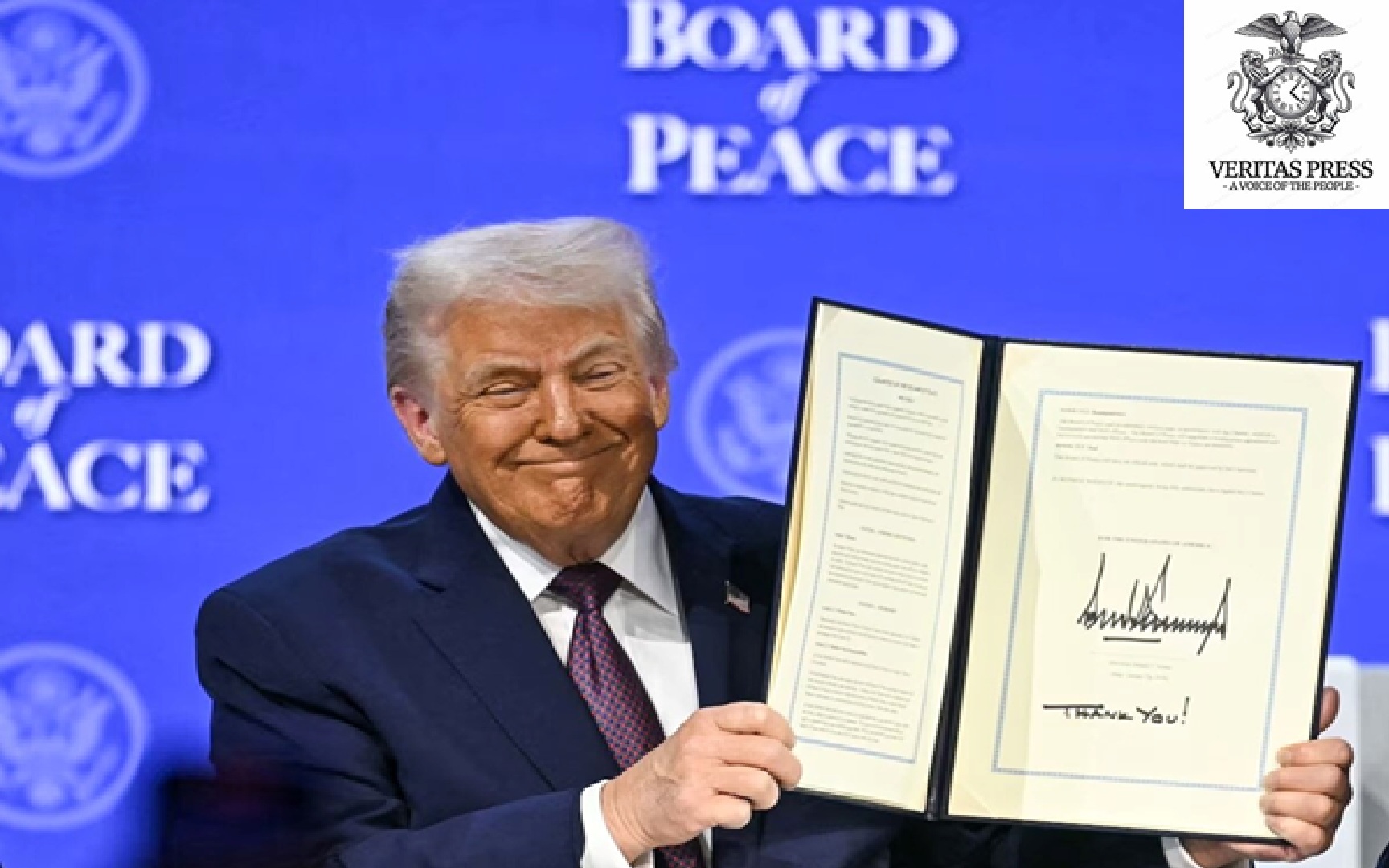
The launch of the so-called Board of Peace at the World Economic Forum in Davos in January 2026 was presented by the Trump administration as a historic step toward stabilising Gaza and broader global conflicts. In reality, this initiative marks a strategic pivot in U.S. foreign policy, one that uses Gaza’s devastation not to deliver justice or reconstruction, but to reshape regional governance, expand imperial reach, and assert U.S.–Israeli dominance in the Middle East and beyond.
Contrary to its branding, the Board of Peace is not primarily about peace. It is an instrument of geopolitical control that seeks to supplant multilateral institutions like the United Nations with a U.S.-centric architecture, fortify alliances rooted in U.S. and Israeli strategic interests, and consolidate influence over the Middle East’s political and economic future, including its critical energy resources and emerging trade corridors.
From Gaza Reconstruction To Global Governance:
At its Davos launch, Trump portrayed the Board as a benevolent mechanism for stabilising Gaza, a territory shattered by years of bombardment and blockade. Yet even U.S. officials acknowledge that the Board’s mandate goes well beyond Gaza, positioning it as a potential alternative to the United Nations in managing conflict zones worldwide.
More than 20 countries have been invited to join, some even asked for permanent seats in exchange for huge financial contributions, a transactional model that reinforces power hierarchiesrather than promoting human rights or legal accountability.
This transactional mode of diplomacy reflects a broader U.S. effort to redefine international order on its terms, sidestepping multilateral norms when inconvenient, and building new structures that prioritise American influence over collective decision-making.
The Board Of Peace And The Greater Israel Project:
The Board of Peace cannot be understood in isolation from the larger geopolitical project that the U.S. and Israel have been pursuing in the Middle East for decades: a networked regional order anchored in U.S. military and diplomatic dominance and the security and expansion ambitions of the Israeli state.
This system has several key components:
- Israeli territorial ambitions: Successive Israeli governments have pursued policies that consolidate control over territory and resources in historic Palestine, including settlement expansion in the West Bank and ongoing military dominance over Gaza.
- U.S. strategic backing: Washington has long provided military aid, diplomatic cover, and political support for Israeli campaigns that have devastated Palestinian communities, with Gaza bearing the brunt of this partnership.
- Regional alliances expanding Israeli influence: Under U.S. auspices, Israel has forged security and economic ties with Arab states that historically resisted normalisation, such as the Abraham Accords, effectively advancing what critics describe as a Greater Israel-aligned regional order.
The Board of Peace is the latest institutional expression of this trajectory: an American-Israeli governance architecture that seeks to shepherd Gaza’s future in ways that align with their intertwined interests, while sidelining Palestinian agency.
Gaza As Riviera For The Rich, And A Laboratory For Control:
One of the most controversial elements of the U.S. vision for Gaza is the plan to transform it into a “Middle Eastern Riviera”, a luxury investment destination, smart city, and global hub for capital. This ambition is underscored by the Gaza Reconstitution, Economic Acceleration and Transformation (GREAT) Trust, which proposes massive projects, partnerships with private capital, and even the “voluntary” relocation of Gaza’s population during redevelopment.
Critics describe this blueprint as a profit-driven mechanism of dispossession, prioritising investors over residents and envisioning Gaza as a playground for the wealthy, not a home for its dispossessed people. This scheme encapsulates the extractive logic behind the Board: turn a war-torn public tragedy into a commodity for capital, while erasing the lived realities and rights of Palestinians.
This is more than urban redevelopment; it is an attempt to recast Palestinian territory as an asset managed by global capital under U.S. supervision, with Palestinians reduced to labourers or consumers, not citizens with rights. Such economic visions mirror broader U.S. geopolitical strategies that view conflict zones not as spaces requiring justice and restitution, but as market opportunities shaped by Western corporate interests.
A Board Of War Criminals And Fascists:
The Board’s composition makes its real character clear. It is staffed by war mongers, fascists, and individuals complicit in mass violence, rather than diplomats or humanitarian actors:
- Donald Trump — chairman for life, framing governance as a personal business.
- Jared Kushner — architect of the Abraham Accords, proposer of forced Gazan relocations, key in normalising regimes that sideline Palestinian rights.
- Tony Blair — former UK Prime Minister, whose Iraq War legacy killed millions and destabilised the region.
- Steve Witkoff — billionaire investor, designing ceasefires, prioritising Israeli objectives over civilian protection.
- Josh Gruenbaum — known for suppressing pro-Palestinian activism, reflecting the Board’s broader policy of silencing dissent.
By appointing those who have enabled war, occupation, and repression, the Board transforms Gaza from a humanitarian crisis into a laboratory of imperial control, legitimising past crimes and paving the way for new abuses.
Blueprint Of Imperial Domination: How The Board Of Peace Serves U.S.–Israeli Global Control:
| Component | Role / Function | Connections / Actions | Geopolitical / Imperial Significance |
| Donald Trump | Chairman for life of the Board of Peace | Central authority, veto power, appoints successors, personalises diplomacy, frames Gaza redevelopment as business. | Consolidates U.S. control, bypasses the UN, and projects personal imperial influence globally. |
| Jared Kushner | Senior advisor, architect of Gaza redevelopment | The proposed forced relocation of Gazans, designed as the ‘Sunrise Plan’, pushed the Abraham Accords. | Advances U.S.–Israeli strategic alliances, privatises Gaza, and aligns regional orders with the Greater Israel project. |
| Tony Blair | Senior advisor | Former PM, supported Iraq War, endorsed militarised interventions. | Legitimizes war criminals in governance and reinforces Western interventionist policies. |
| Steve Witkoff | Senior investor/real estate consultant | Designs Gaza ceasefire & reconstruction schemes prioritising Israeli interests. | Embeds capitalist profit motive in Gaza and converts the occupied territory into an investment asset. |
| Josh Gruenbaum | Senior policy enforcement | Suppressed pro-Palestinian activism in the U.S. enforces ideological compliance. | Demonstrates coercion, censorship, and control over dissent as part of imperial governance. |
| Participating Countries / Allies | Board members | Contribute $1B for permanent seats, support U.S.-Israeli strategy. | Institutionalises U.S.-led hierarchy, ensures regional compliance, and spreads imperial governance framework. |
| Gaza ‘Riviera’ Project | Luxury redevelopment & investment hub | Smart city zones, tourist resorts, displacement of Palestinians. | Commodifies Palestinian land, concentrates wealth for global elites, and removes local agency. |
| Palestinians | Subject/labour force | Displaced, excluded from decisions, marginalised. | Subjugated population, used as labour and consumers, denied self-determination. |
| U.S.–Israeli Strategic Agenda | Overarching control | Advance the Greater Israel project, consolidate Middle East dominance, and establish new governance structures. | Secures access to energy and trade, contains China & Russia, embeds military-diplomatic networks. |
| Regional Resources / Energy | Strategic assets | Oil, gas, trade routes. | Core leverage point in U.S. imperial strategy, controls global energy flows. |
| Global Rivals | Containment targets | China, Russia, and BRICS allies. | Limits multipolar influence, enforces dependence on U.S.-aligned security & trade frameworks. |
| Multilateral Institutions | Marginalised/bypassed | UN, International law frameworks. | Board of Peace substitutes U.S.-centric governance, diminishes global rule-based order. |
| War Crimes / Imperial Profiteering | Historical precedent/board legitimacy | Iraq War, Palestinian occupation, corporate exploitation. | Normalises impunity, integrates war profiteers into governance, and strengthens US-Israeli hegemony. |
Destabilising The Region, Controlling Resources:
The Board’s influence extends far beyond Gaza. By positioning the U.S. as the central architect of Middle Eastern security and development, the initiative forms part of a broader strategy to:
- Consolidate U.S.–Israeli control over the region and influence compliant regimes.
- Contain rival powers, particularly Russia and China, limiting their strategic options.
- Control resources — oil, gas, and emerging trade corridors, ensuring global leverage.
- Suppress Palestinian resistance, turning Gaza’s population into subjugated labour and consumers.
In essence, Gaza becomes a test case: the creation of a luxury enclave for the wealthy while Palestinians face displacement, occupation, and militarised control.
Geopolitical Rivalry: Containing China And Russia.
The Middle East is a theatre for great power competition. As Russia and China expand influence through energy, infrastructure, and diplomatic partnerships, the United States seeks to maintain its foothold by using the Board as a platform to project influence, tether key states to U.S.-led frameworks, and pre-empt a multipolar shift.
Recent polling shows growing openness among Arab publics to align with China and Russia, challenging U.S. hegemony. Against this backdrop, the Board is less a peace mechanism than a geopolitical tool designed to safeguard U.S. dominance and limit the manoeuvring space of other global powers.
The Illusion Of Order, The Reality Of Control:
Ultimately, the Board’s promise of peace masks a deeper ambition: to cement U.S. strategic primacy, reinforce Israeli territorial and political objectives, and reshape governance in ways that benefit Western capital, war profiteers, and imperial designs, not the people who live under siege.
What Gaza truly needs, justice, reconstruction, self-determination, and accountability for war crimes, already exists in international law and UN frameworks. But the Board sidesteps these mechanisms, prioritising transactional, power-centric, and militarised governance.
In practice, the Board is a blueprint for a new world order where:
- War criminals and fascists define governance.
- Resources and territories are strategically controlled.
- Palestinian lives are commodified and exploited.
The only antidote is an international movement grounded in justice and self-determination, centred on Palestinian agency, and rejecting imperial designs masquerading as peace.
Conclusion: The Board Of Peace As Imperial Experiment And Global Precedent.
The so-called Board of Peace is neither a peace mechanism nor a humanitarian initiative. It is a carefully orchestrated exercise in geopolitical engineering, designed to consolidate U.S. and Israeli control over the Middle East while transforming Gaza into a laboratory of profit, control, and dispossession. By excluding Palestinians entirely from decision-making, embedding war criminals and corporate profiteers at the helm, and framing devastation as a market opportunity, the Board reveals the true priorities of those who wield global power: profit, strategic dominance, and the suppression of popular sovereignty.
What is unfolding in Gaza under this initiative is both familiar and extraordinary. It echoes historical patterns of U.S. imperial intervention, the creation of structures that bypass international law, ignore human rights, and impose external authority under the veneer of reconstruction. Yet, it also signals a new, unprecedented stage: the personalisation of global governance, where power is concentrated in the hands of a single actor and his network of financiers, war architects, and political operatives, effectively bypassing any semblance of multilateral legitimacy.
Gaza’s transformation into a “Middle Eastern Riviera” epitomises the marketisation of human suffering. Luxury resorts, financial zones, and data corridors are to rise over the ruins of homes, schools, and hospitals, a stark testament to the commodification of Palestinian lives. Ordinary Palestinians are reduced to a workforce, labouring under the supervision of foreign capital and military occupation, stripped of agency, and excluded from the political and economic decisions that determine their future.
Beyond Gaza, the Board represents a broader U.S.–Israeli blueprint for global governance: a system that simultaneously consolidates alliances, contains rival powers like China and Russia, and exerts control over strategic resources and trade corridors. By tethering regional actors to a transactional model of governance and silencing dissent, it seeks to ensure that the world’s geopolitical and economic architecture remains anchored in U.S. interests, with Israel as a central enforcer of this order.
In essence, the Board of Peace is not a step toward justice; it is a test of impunity, a consolidation of empire, and a rehearsal for globalised governance by force and capital. Its legacy will not be measured in reconstruction or reconciliation, but in the normalisation of unaccountable power, the deepening of regional inequalities, and the further subjugation of populations under siege.
The ultimate countermeasure lies not in passively observing these manoeuvres, but in building and sustaining international solidarity grounded in justice, human rights, and the self-determination of affected peoples. Gaza’s future, and by extension the principles of international law and collective sovereignty, cannot be ceded to private boards of war criminals and profiteers. Only through persistent, principled resistance, locally, regionally, and globally, can the narrative of imposed imperial order be challenged, and the foundations for genuine peace and reconstruction be laid.
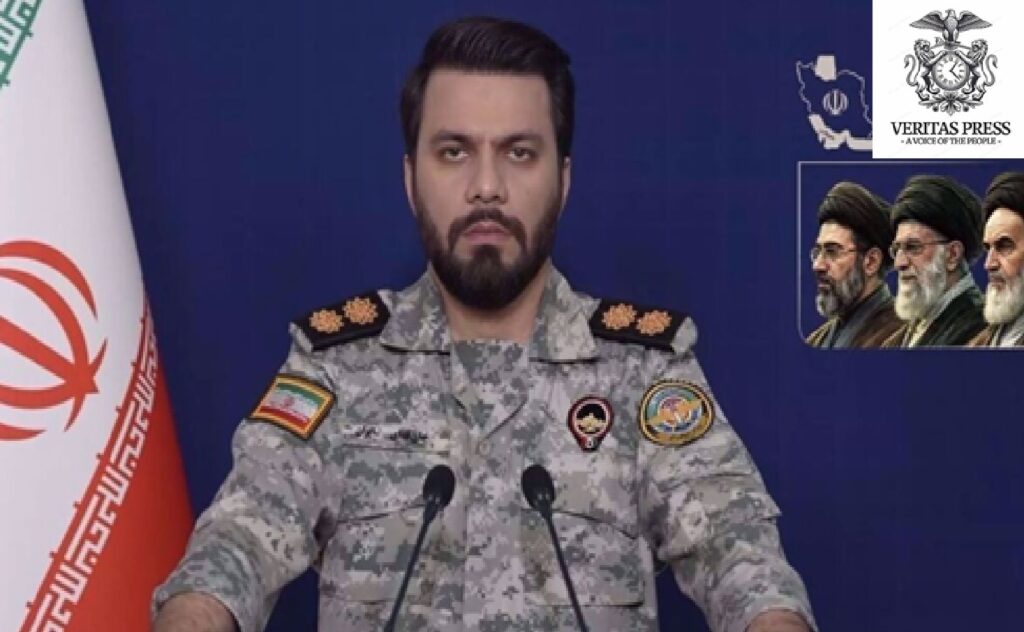
When Lieutenant Colonel Ebrahim Zolfaqari, spokesman for Iran’s Khatam al-Anbiya Central Headquarters, issued a warning
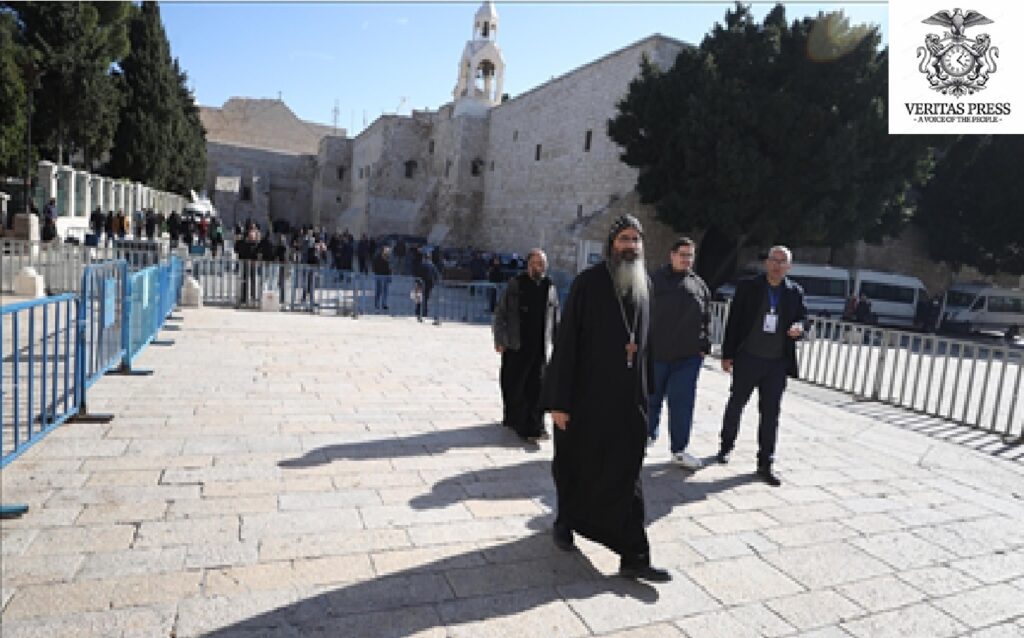
The historic Christian presence in Palestine, dating back to the earliest centuries of Christianity, is
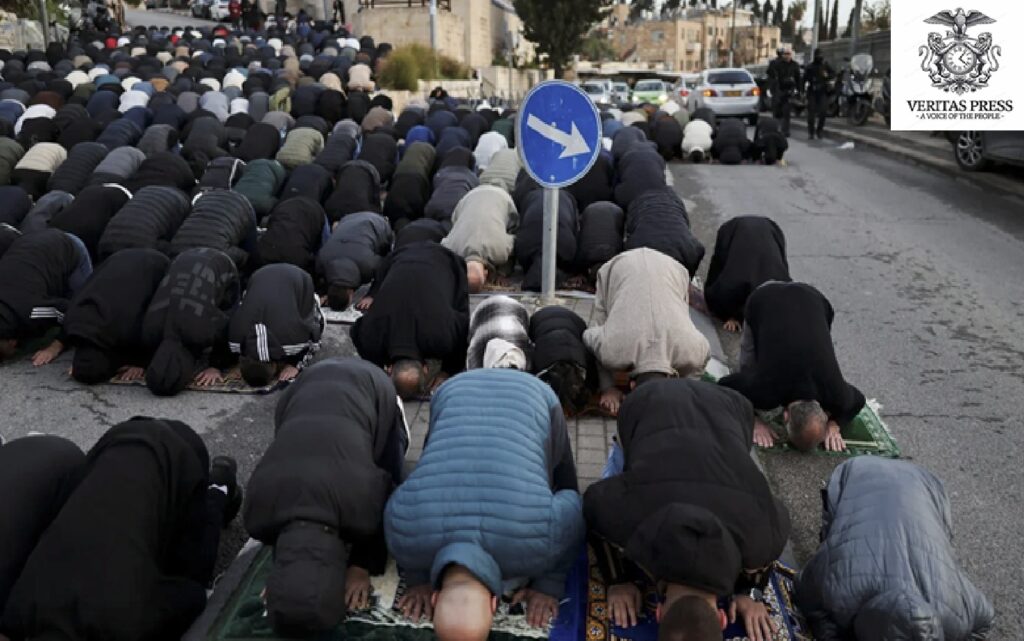
JERUSALEM – For the first time since the aftermath of the Six-Day War, the courtyards
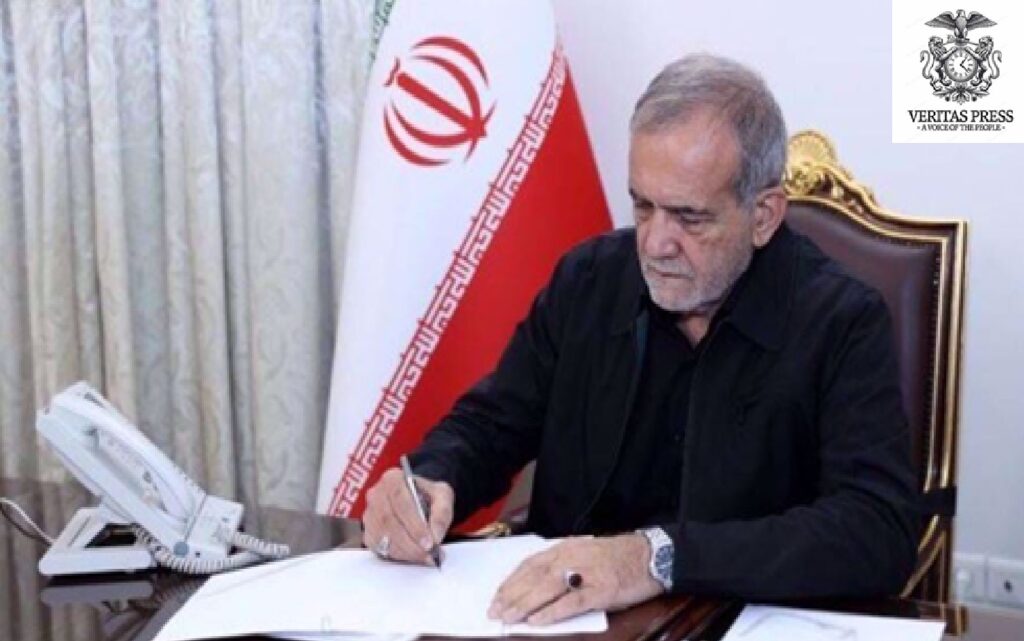
TEHRAN – As the sun rose on Eid al-Fitr, a day meant for celebration and
HUNGARY – As Benjamin Netanyahu prepares to travel to Hungary this weekend, a mounting legal
LONDON — In the polished corridors of 10 Downing Street, the language remains meticulously calibrated:
On March 20, 2026, the Pentagon quietly announced what amounts to a fundamental restructuring of
WASHINGTON / ISLAMABAD — A fresh warning by US Director of National Intelligence Tulsi Gabbard