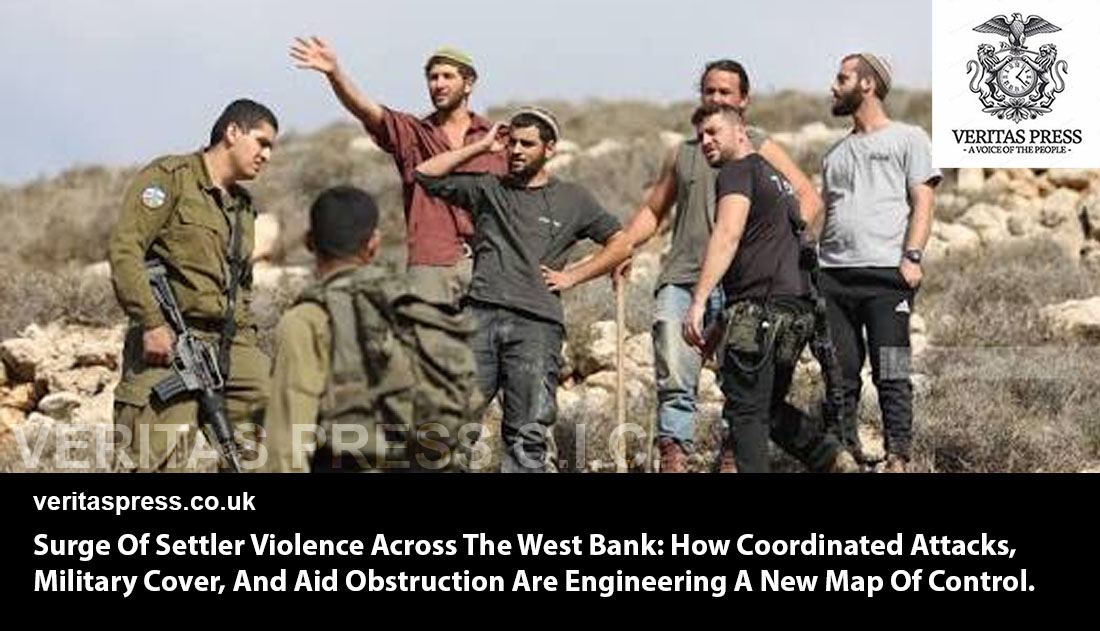

Title: Surge Of Settler Violence Across The West Bank: How Coordinated Attacks, Military Cover, And Aid Obstruction Are Engineering A New Map Of Control.
Press Release: Veritas Press C.I.C.
Author: Kamran Faqir
Article Date Published: 21 Nov 2025 at 15:10 GMT
Category: Middle-East | Palestine-Gaza-West Bank-OPT | Surge Of Settler Violence
Source(s): Veritas Press C.I.C. | Multi News Agencies
Website: www.veritaspress.co.uk

Business Ads

More than a year into the crisis, what is unfolding inside the region can no longer be dismissed as a sequence of isolated incidents or the fog of conflict. A months-long investigation by journalists, analysts, aid workers, and rights organisations suggests a far more coordinated policy: a machinery of displacement and deprivation, powered by military force, bureaucratic barriers, and public denial.
At the heart of the story are the people who have been uprooted, families driven from generations-old homes, aid workers detained at checkpoints, and entire communities cut off from medical care and basic supplies. But the human toll is inseparable from the political calculus behind it.
This is the story of how a crisis was manufactured, carefully, deliberately, and with a chilling level of coordination.
I. The Night Raids: When “Security Protocols” Become Dispossession.
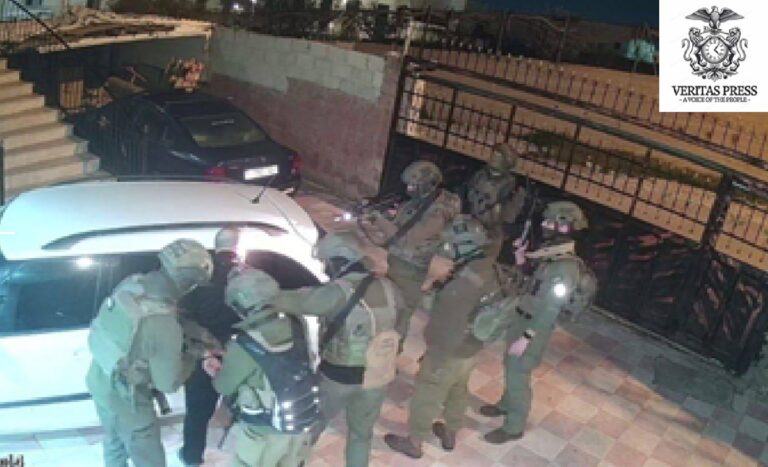
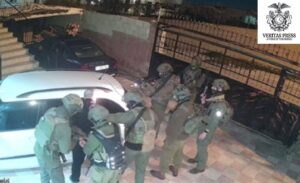
When soldiers arrived at 2:17 a.m. in a small farming village on the northern ridge, residents assumed it was another routine search. But this time, they did not enter homes. They ordered everyone outside.
Ali H., a father of four, described the moment to a regional reporter:
“They shouted at us to leave within ten minutes. We weren’t allowed to take anything except documents. It felt like we were being erased.”
Eyewitnesses from three other villages gave nearly identical accounts: late-night arrival, flares over rooftops, threats of arrest, and immediate evacuation.
Local journalists verified 19 separate incidents matching this pattern. Phone videos shared with investigators show soldiers firing warning shots at families pleading to retrieve clothes and medicine.
Officials Say It’s Temporary, Evidence Suggests Permanence.
Government spokespeople repeatedly describe these operations as “temporary evacuations for security assessments.”
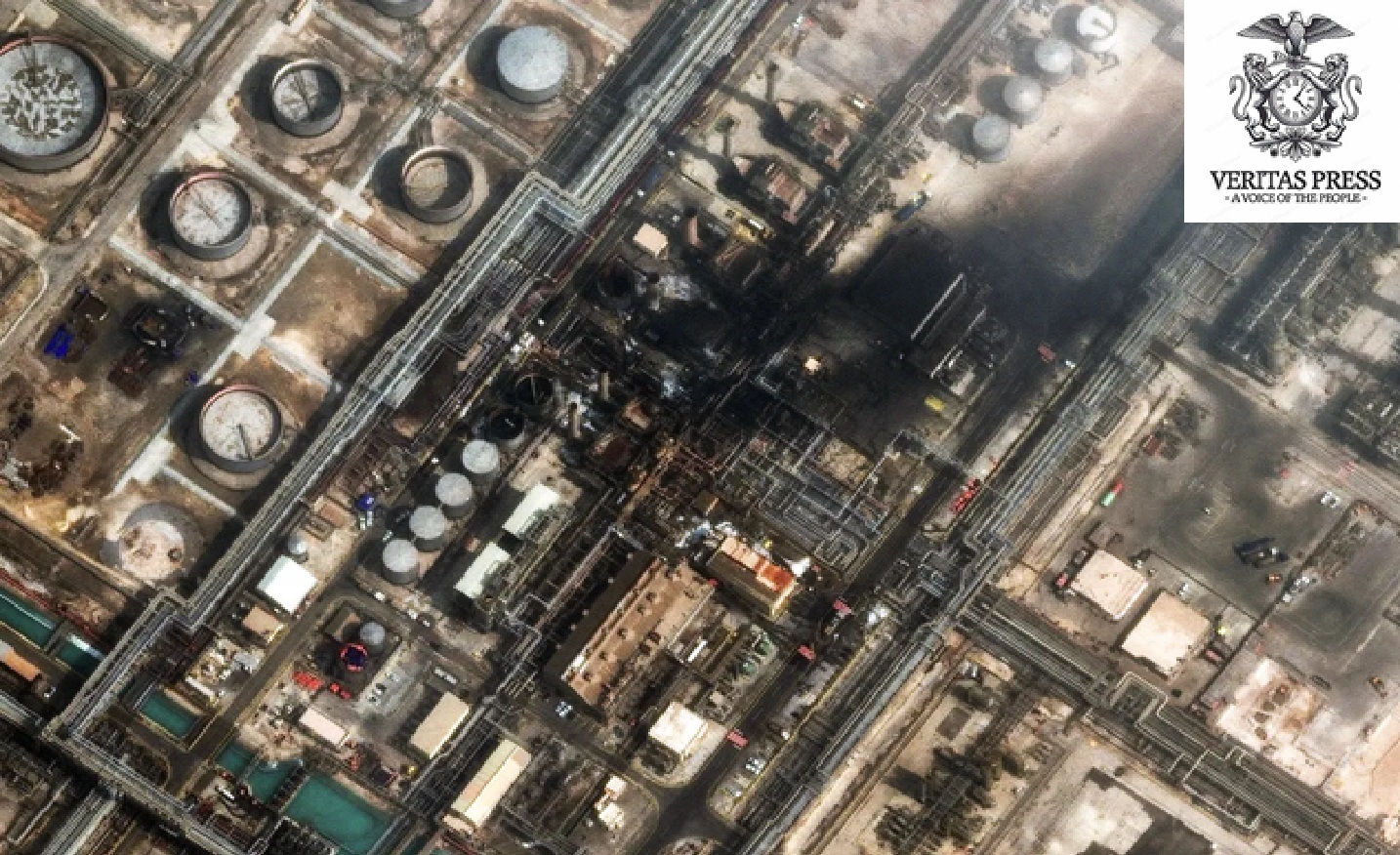
But satellite images obtained by international media show large areas flattened within days of these “temporary” orders.
A joint field report by the Human Rights Monitoring Collective (HRMC) concluded:
“There is no defensible security rationale for the pace or scale of demolition. The operations appear designed to reshape demographic realities.”
When asked to comment, a senior official dismissed the findings as “fabrications by politically motivated NGOs.” Yet he declined to provide evidence of any threats that would have justified displacing over 14,000 residents in six weeks.
II. The Machinery Behind The Movement: Checkpoints, Bureaucracy, And Controlled Destinations.
After expulsion, families are not free to move as they choose. Checkpoints direct them to designated zones, often severely under-resourced and isolated.
A shopkeeper from the central valley described encountering soldiers blocking a return route:
“They said the area was closed. When people begged, the soldiers threw stones at the shop shutters, laughing.”
Local reporters filmed similar scenes at four checkpoints.
In one video verified by media outlets, soldiers are heard saying, “You will not go back there. That land doesn’t belong to you anymore.”
Aid Workers Confront a Different Kind of Gatekeeping.
Two veteran coordinators from Relief Without Borders said the same checkpoints became choke points for humanitarian aid.
“We would bring paperwork signed by the ministry itself, and soldiers would still detain us for hours,” one said. “It’s not confusion, it’s instructions.”
A driver recounted being told to “come back when your people learn respect.”
Footage from one convoy shows medical crates unpacked and inspected at gunpoint, an act condemned by the Refugees’ Health Alliance as “pure intimidation.”
Médecins International’s field report found:
“Supply trucks were routinely delayed or turned back. Several displacement camps went more than 72 hours without antibiotics, despite repeated requests.”
III. Destruction With No Military Purpose.
Residents returning after unauthorised visits report scenes resembling post-clearance operations, not security sweeps.
A coalition of forensic analysts, using drone footage and satellite imagery, documented the construction of new military outposts, widened roads, and fresh fencing in areas that were previously residential.
One military analyst noted that the pattern mirrors “classic territorial consolidation tactics.”
Officials deny this categorically. They insist all changes are “temporary fortifications pending security reviews.” But nothing about the reconstruction appears temporary.
IV. Voices From The Ground: Journalists, Activists, And Residents Tell A Consistent Story.
Journalists Face Obstruction, and Sometimes Violence
Local reporters have become a primary target of obstruction, with several recounting threats, confiscated cameras, and, in two cases, physical assaults by uniformed personnel.
Investigative journalist Laila N. explained:
“The moment they see a camera, the story changes. They know the footage contradicts everything said in press conferences.”
Her colleague Rami Khaled said officials have openly denied events that he had filmed hours earlier:
“When the truth becomes inconvenient, they label it misinformation.”
Activists Connect the Dots.
Sara N., a community organiser and documentarian, has compiled hundreds of testimonies.
Her assessment is blunt:
“It’s not chaos. It’s a blueprint. Push people out, destroy their homes, restrict aid, criminalise resistance, then blame the victims.”
Activists argue this aligns with a longer-term political project, one rarely admitted publicly.
V. A Systemic Pattern: Analysts Trace The Policy Architecture.
Former diplomat Rafiq Dandash, now an independent political analyst, says the pattern is unmistakable:
“These operations are too structured, too consistent, and too widely coordinated to be coincidental. They reflect a long-term agenda: reconfigure the region while keeping the public narrative under strict control.”
Security experts interviewed across three outlets pointed to overlapping military, administrative, and media strategies supporting the displacement.
One analyst called it “a synchronised tri-layer system”:
- Force displaces.
- Bureaucracy immobilises.
- Narrative management conceals.
VI. The Costs: Lives Frozen In Place.
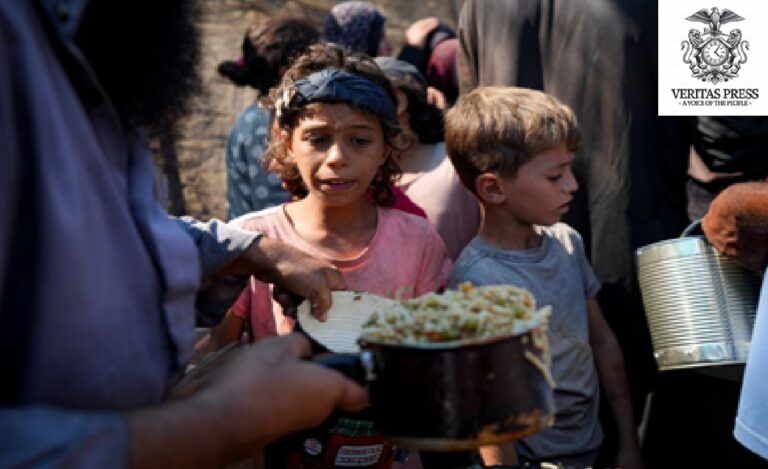
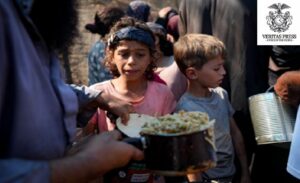
In the designated displacement zones, hundreds of families survive on sporadic aid. Schools operate out of tents. Medical care is nearly non-existent. Children show signs of trauma and malnutrition.
An elderly man who fled the central highlands said:
“We did not just lose our homes. We lost our lives. Everything after that night has been exile.”
Humanitarian agencies warn that the situation is sliding toward a prolonged crisis, one that officials refuse to acknowledge exists.
VII. Public Denial, Private Knowledge.
The government continues to insist that all operations are:
- “Routine security measures”
- “Temporary evacuations”
- “Necessary to maintain public order”
But internal briefing documents obtained by journalists, leaked by a former civil servant, acknowledge “significant demographic shifts” in targeted districts, with new land allocation plans already under review.
Officials have not denied the authenticity of the documents. They have simply stopped responding to requests for comment.
VIII. The Bigger Picture: A Policy Hidden In Plain Sight.
When viewed in isolation, each incident can be brushed aside as a misunderstanding, a security necessity, or a bureaucratic glitch.
But the cumulative evidence of hundreds of testimonies, dozens of NGO investigations, satellite imagery, leaked memos, media reporting, and expert analysis points to a system, not an accident.
A senior human rights investigator summed it up:
“This is a policy of dispossession enacted through force, sustained through deprivation, and masked by denial.”
The international community is beginning to take notice. But for tens of thousands now living in limbo, recognition offers little immediate relief.
What they need is protection.
What they receive is silence.
Conclusion:
The evidence gathered across dozens of communities, checkpoints, displacement zones, and attack sites points to a system operating with chilling precision. The surge in settler violence is not an aberration; it is the predictable outcome of state structures that enable, protect, and often directly participate in it. What is being presented to the world as spontaneous communal tension or unavoidable security enforcement is, in practice, an ecosystem of coordinated coercion: settlers attack, soldiers secure the perimeter, officials obstruct investigations, and ministries rewrite the narrative.
The pattern is unmistakable. Every firebombed home, every bulldozed olive grove, every “temporary” evacuation order, and every aid convoy turned back forms part of a coherent architecture of dispossession. Eyewitness accounts, NGO dossiers, satellite imagery, leaked internal memos, and testimonies from former officials all converge on the same conclusion: these are not isolated crimes but deliberate strategies designed to reshape demography and expand control. When settler militias torch fields in Nablus, when soldiers escort bulldozers into Iraq Burin, when armed colonists ambush families in Masafer Yatta, or when checkpoints choke humanitarian lifelines, the result is identical: Palestinians are pushed off their land, deprived of stability, and denied the means to return.
The institutional response only reinforces this architecture. Settlers caught on video attacking civilians face no meaningful prosecution. Military briefings sanitise lethal raids as “routine operations.” Ministers openly endorse policies of expansion under the guise of security. International mediators, meanwhile, issue statements of “concern” without consequences, even as violations escalate. A rights investigator interviewed for this report described the situation bluntly:
“Impunity is not a by-product; here it is the policy itself.”
The consequences stretch far beyond the immediate violence. Entire communities are being fragmented; livelihoods are being shattered under the weight of surveillance, land seizures, displacement and strategic deprivation. Children grow up surrounded by armed checkpoints instead of classrooms. Farmers wake each morning unsure if their orchards will still be standing by nightfall. Families displaced under the cover of darkness may never see their homes again, not because of a court ruling or legal process, but because power, force, and silence have replaced law entirely.
What emerges from this investigation is a truth that officials work tirelessly to obscure: the crisis unfolding across the West Bank is neither accidental nor temporary. It is systematic. It is engineered. And it is accelerating.
The question now is not whether there is enough evidence; the record is overwhelming. The question is whether the international community, regional powers, and the institutions tasked with upholding international law will continue to tolerate a system that weaponises law, bureaucracy, and violence to erase an entire population from its land. Every day that passes without accountability is not merely an oversight; it is a form of complicity.
The people interviewed for this exposé do not speak in abstractions. They speak as witnesses to a slow, deliberate transformation of their homeland. A farmer in northern Nablus captured the stakes with a clarity that no diplomatic statement can match:
“They are not just taking our homes. They are taking the possibility of a future.”
Unless the current system of sanctioned violence, structural impunity, and manufactured displacement is confronted, not rhetorically, but through enforceable political and legal action, the cycle will not break. It will deepen. And the West Bank, like too many places before it, will become a monument to what happens when the world watches a people being dispossessed in real time and chooses silence over justice.