

Original Article Date Published:
Article Date Modified:
Help support our mission, donate today and be the change. Every contribution goes directly toward driving real impact for the cause we believe in.
A New Maritime Front:
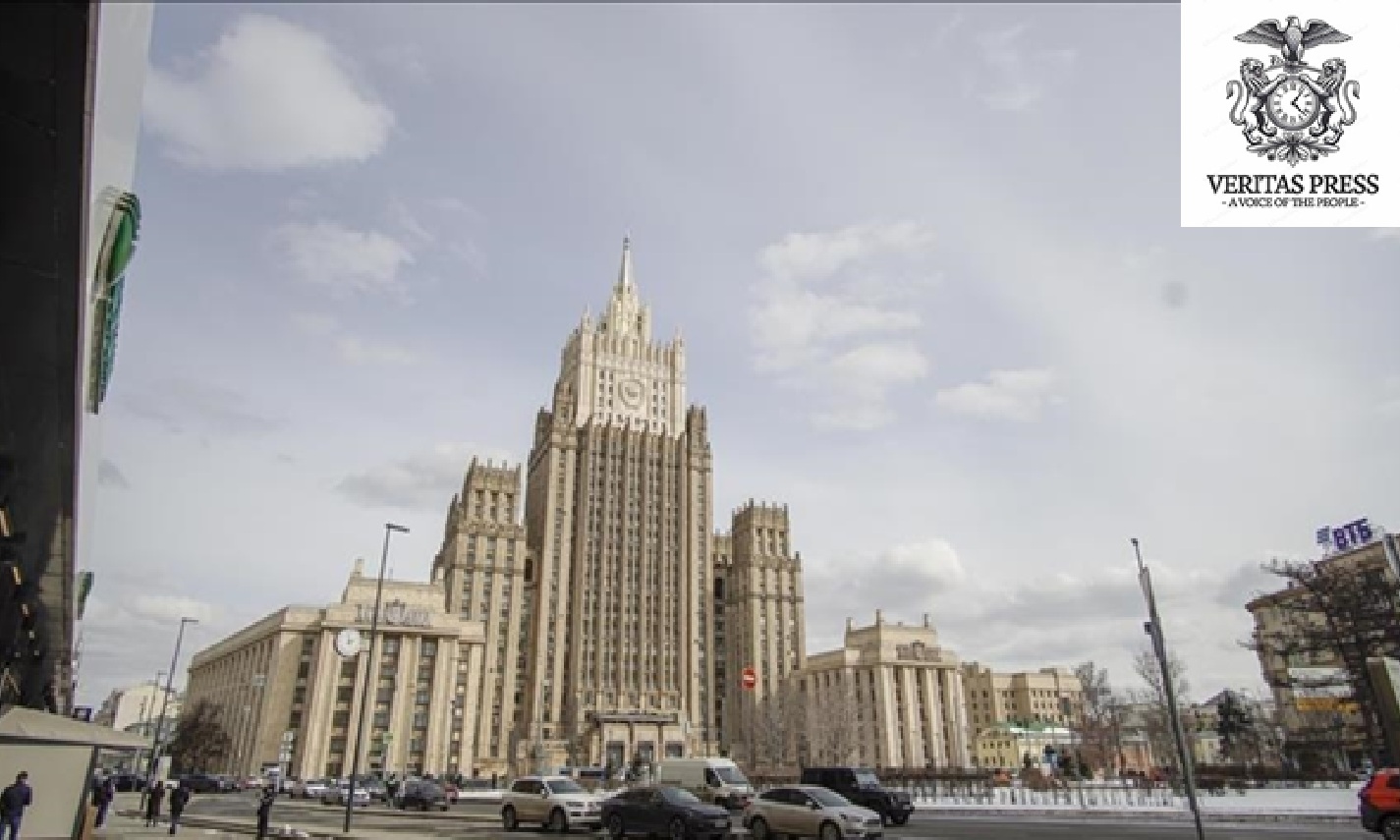
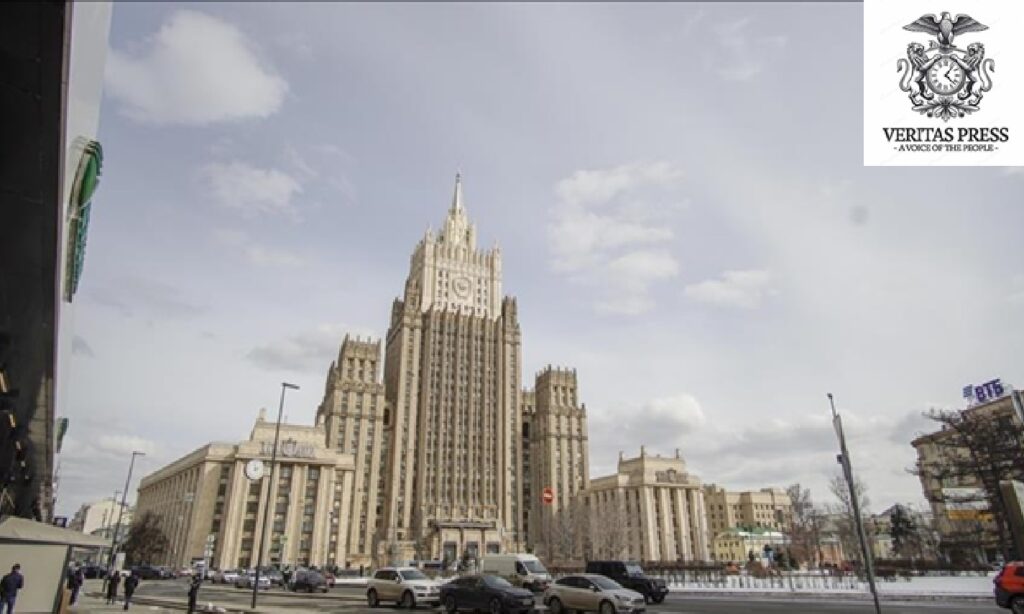
MOSCOW, LONDON – In what marks a significant escalation in the prolonged confrontation between London and Moscow, British Prime Minister Keir Starmer has authorised the Royal Navy and law enforcement officers to board, detain, and potentially seize Russian commercial vessels operating in British territorial waters. The decision, announced on March 26, 2026, specifically targets vessels classified as part of Moscow’s so-called “shadow fleet”, ageing tankers with opaque ownership structures that Western nations accuse of enabling Russia to circumvent oil sanctions imposed following its invasion of Ukraine.
Moscow’s response was swift and scathing. The Russian Foreign Ministry labelled the British move a “deeply hostile step against Russia” and vowed to deploy “all political, legal, and other instruments at its disposal, including asymmetric ones” to protect Russian interests. The Russian Embassy in London went further, condemning the plan as “acts of piracy” and warning that “navigation is becoming unsafe in British waters”.
The timing of this announcement, amidst escalating Ukrainian drone strikes on Russian energy infrastructure and a volatile Middle East conflict that has driven oil prices above $108 per barrel, adds a combustible element to an already fraught geopolitical landscape. This article undertakes a deeper investigative critique of the strategic calculus behind London’s decision, the legal and operational complexities involved, and the potential consequences for international maritime law, European energy security, and the broader Ukraine conflict.
Section 1: Understanding The “Shadow Fleet”, Definition, Scale, And Strategic Importance.
1.1 What Constitutes The Shadow Fleet?
The term “shadow fleet” has become central to Western sanctions enforcement, yet its definition remains contested. Russia has consistently denied operating any such fleet, with Russian Presidential Aide Nikolai Patrushev, who chairs the Russian Federation Maritime Board, dismissing the term as having “no legal basis” and characterising Western seizure threats as violations of international law.
Western intelligence and maritime analysts describe the shadow fleet as a diffuse network of ageing tankers, typically 15 to 20 years old or more, that operate outside conventional regulatory frameworks. These vessels employ a range of evasion tactics: frequent changes of flag registry to jurisdictions with limited oversight, disabling or manipulating Automatic Identification Systems (AIS) to mask their movements and cargo origins, conducting ship-to-ship transfers in international waters to obscure supply chains, and utilising complex, opaque ownership structures involving shell companies across multiple jurisdictions.
British government assessments estimate that approximately 75% of Russia’s crude oil exports are now transported via this network, a staggering proportion that underscores its centrality to Moscow’s war economy. Since the imposition of Western sanctions following the February 2022 invasion, Russia has successfully reoriented its energy exports away from European markets toward Asia, particularly India and China, with the shadow fleet serving as the critical logistical enabler of this pivot.
1.2 The Scale Of Sanctions: 544 Vessels And Counting
To date, the United Kingdom has imposed sanctions on 544 vessels allegedly linked to the Russian shadow fleet. The European Union has similarly blacklisted over 570 tankers since June 2024, while the United States has maintained its own sanctions designations. This coordinated Western approach represents an unprecedented effort to target maritime assets at scale.
However, the effectiveness of these sanctions has been limited by enforcement challenges. A BBC Verify analysis revealed that dozens of sanctioned vessels sailed through the English Channel in the weeks following the January 2026 identification of a legal mechanism for interdiction, without facing consequences. This enforcement gap appears to have been a primary catalyst for Starmer’s decision to authorise active military intervention.
1.3 The Economic Stakes: Oil Prices and War Finance
The shadow fleet’s significance has been amplified by recent geopolitical developments. The ongoing conflict in the Middle East, specifically the U.S.-Israel military campaign against Iran, has driven international oil prices to levels not seen since the early stages of the Ukraine war. As of March 26, 2026, Brent crude futures stood at $108.01 per barrel, a 5.66% increase in a single trading session.
Prime Minister Starmer explicitly linked these dynamics in his statement announcing the interdiction authority: “Putin is rubbing his hands at the war in the Middle East because he thinks higher oil prices will let him line his pockets. That’s why we’re going after his shadow fleet even harder, not just keeping Britain safe but starving Putin’s war machine of the dirty profits that fund his barbaric campaign in Ukraine”.
This framing reveals the strategic logic: by disrupting shadow fleet operations, London aims to impose real costs on Russian energy exports precisely when high global prices would otherwise maximise Moscow’s revenue. The calculus is straightforward; forced rerouting around British waters adds significant transit time and expense, while the threat of detention introduces legal and financial risks that could raise insurance premiums and discourage the use of these vessels altogether.
Section 2: London’s Escalation, Legal Framework, Operational Plans, and Alliance Coordination.
2.1 From Monitoring To Interdiction: A Qualitative Shift
The authorisation granted by Starmer represents a qualitative escalation in Western sanctions enforcement. Previously, British efforts focused on tracking, monitoring, and providing intelligence to allies, a posture of observation rather than intervention. The new authority empowers UK Armed Forces and law enforcement officers to “interdict vessels that have been sanctioned by the UK and are transiting through UK waters,” with military personnel authorised to board vessels that fail to comply.
Defence Secretary John Healey, in an interview with BBC Radio 4’s Today program, emphasised that this decision was not taken lightly. When questioned about why the authority had not been granted sooner, given that government lawyers identified a legal basis in the Sanctions and Money Laundering Act 2018 as early as January 2026, Healey explained that “what operations like this require is training, preparation, understanding, discussion with allies, a clear legal basis.” He asserted that these elements were now “lined up and ready”.
2.2 Operational Preparations: Wargaming The Confrontation
The operational preparations for these interdictions have been extensive. According to government statements, military and law enforcement specialists have undergone training for a range of scenarios, including:
- Boarding vessels that refuse to surrender—requiring forcible entry and potential close-quarters combat
- Confronting armed crews—some shadow fleet vessels reportedly carry armed security personnel
- Countering vessels using high-tech pervasive surveillance to evade capture—a reference to electronic warfare and counter-detection measures
The units likely to conduct these operations include the Special Boat Service (SBS), the Royal Navy’s elite special forces unit, and the Royal Marines, with the specific force contingent on the anticipated level of resistance. Royal Marines from 42 Commando have conducted night-time boarding exercises specifically in preparation for potential deployments.
2.3 The Joint Expeditionary Force: Alliance In Action
London is not acting alone. The interdiction authority was announced as Starmer arrived in Helsinki for the Joint Expeditionary Force (JEF) summit, a UK-led defence coalition of ten Northern European nations: the United Kingdom, Denmark, Iceland, Latvia, Lithuania, the Netherlands, Norway, Finland, Sweden, and Estonia.
The JEF has already coordinated operations against shadow fleet vessels in the Baltic Sea, with Finland, Sweden, and Estonia carrying out recent interdictions that have effectively “closed off critical maritime routes to Russia’s malign operation”. By joining these efforts, the UK aims to extend the enforcement zone to the English Channel, one of the world’s busiest maritime chokepoints, creating what officials describe as a “stranglehold” on shadow fleet transit routes.
Ukrainian President Volodymyr Zelensky welcomed the move, stating on X (formerly Twitter): “It is hardly a secret that Russia funnels illegal oil revenues directly into its war machine. Anything that cuts off that flow brings peace closer and makes Europe safer. Sanctioned tankers must be stopped, their oil seized”.
2.4 The Legal Justification: Sanctions And Money Laundering Act 2018
The legal basis for the interdictions lies in the Sanctions and Money Laundering Act 2018, which provides the framework for UK sanctions implementation and enforcement. Government lawyers have determined that this legislation, combined with the specific sanctions designations against individual vessels, authorises the use of “reasonable force” to detain vessels in UK waters that are in breach of sanctions.
Critically, following detention, criminal proceedings may be initiated not only against vessel owners and operators but also against crew members, a provision that could have a significant deterrent effect on mariners considering work aboard shadow fleet vessels. This personal liability dimension represents a novel approach to sanctions enforcement, potentially making it more difficult for these vessels to secure crews.
Section 3: Moscow’s Response, Diplomatic Fury And Threats Of Asymmetric Retaliation
3.1 “Piracy” and “Deeply Hostile Step”
The Russian Foreign Ministry’s statement on March 26, 2026, left little room for ambiguity regarding Moscow’s posture. Describing Britain’s actions as “yet another deeply hostile step against Russia,” the ministry asserted that regardless of “legal pretences, Britain’s sanctions are unilateral acts of piracy aimed at harming Russia”.
This language is carefully chosen. Accusing a NATO member state of “piracy” carries significant diplomatic weight, implying that the UK is not exercising legitimate sovereign authority but rather engaging in lawlessness on the high seas. The ministry further warned that “navigation is becoming unsafe in British waters, where any vessel may fall victim to pirate seizure”, a formulation that implicitly threatens to treat any future interdiction as an act of aggression.
3.2 The Asymmetric Response Threat
Perhaps most significant was Moscow’s pledge to use “all political, legal, and other instruments at its disposal, including asymmetric ones” to protect Russian interests. In diplomatic parlance, “asymmetric” responses typically refer to actions that do not directly mirror the provocation but instead target vulnerabilities in ways that maximise impact while minimising direct military confrontation.
What might such asymmetric responses entail? Based on previous Russian reactions to Western sanctions, potential measures could include:
- Cyber operations targeting UK maritime infrastructure, including port systems, shipping databases, and navigation systems
- Harassment of UK-flagged vessels in international waters, particularly near Russian naval bases or in strategically sensitive areas
- Espionage and intelligence operations aimed at disrupting the interdiction program
- Legal challenges in international forums, potentially at the International Maritime Organisation (IMO) or through arbitration
- Energy leverage—although Russia has largely redirected its energy exports away from Europe, there remain interdependencies in nuclear fuel and other specialised energy sectors
3.3 Linking The Interdictions To Ukrainian Strikes
A striking element of the Russian response was the explicit linkage drawn between British interdiction plans and Ukrainian attacks on Russian energy infrastructure. The Russian Foreign Ministry statement declared that “the stated goals and the timing chosen for the announcement leave no doubt that the escalation of Ukrainian attacks on Russian energy infrastructure did not occur without the involvement of the British side”.
This accusation, that the UK is directly coordinating with Ukraine on strikes against Russian oil and gas facilities, is not new. Russia has long described London as a “key force behind the Ukraine conflict,” accusing it of direct participation in Ukrainian long-range strikes using UK-made weapons. However, by connecting the interdiction authority to these strikes, Moscow frames the maritime enforcement as part of a broader Western campaign to undermine Russian energy security, potentially justifying an escalatory response.
3.4 Naval Protection Threats
Perhaps the most concrete threat has come from Patrushev, who in February 2026 suggested that Russia might deploy naval forces to protect shadow fleet vessels. In an interview with Russian media, Patrushev stated that Russia “may consider deploying navy to protect Russian-related ships from possible seizure by European countries,” adding that any attempt to impose a maritime blockade would violate international law.
This raises the spectre of a direct military confrontation between Russian naval vessels and British forces in the English Channel, a scenario that would represent a dramatic escalation with potentially catastrophic consequences. While such a deployment would carry immense risks for Moscow, the mere suggestion serves as a powerful deterrent signal.
Section 4: Investigative Critique, Legal, Operational, And Strategic Question Marks
4.1 The Piracy Accusation: A Question Of International Law
Russia’s characterisation of the interdictions as “piracy” demands serious legal scrutiny. Under international law, as codified in the United Nations Convention on the Law of the Sea (UNCLOS), piracy is defined as illegal acts of violence, detention, or depredation committed for private ends on the high seas. The UK is asserting sovereign authority within its territorial waters (extending 12 nautical miles from its coastline), where coastal states possess full jurisdiction subject to the right of innocent passage.
However, the legal picture is more nuanced than simple territorial sovereignty. The right of innocent passage guarantees vessels of all states the right to transit territorial waters, subject only to restrictions related to security, customs, and similar considerations. Whether sanctions enforcement constitutes a legitimate basis for suspending innocent passage is a contested legal question.
Furthermore, the UK’s assertion of jurisdiction extends beyond simply excluding sanctioned vessels; it involves active boarding, detention, and criminal prosecution. While this is within the sovereign prerogative of coastal states, the aggressive enforcement posture, including the potential use of force against non-compliant vessels, raises questions about whether the UK is effectively converting its territorial waters into an enforcement zone that could be challenged as an unlawful interference with navigation.
A former legal adviser to the UK Foreign Office, speaking on condition of anonymity, noted to this author: “The government is on reasonably solid ground legally, but they’re testing the limits. The real risk is that this sets a precedent that other states could use to justify aggressive enforcement of their own sanctions regimes, creating a patchwork of conflicting obligations that undermines the entire UNCLOS framework.”
4.2 The Operational Risks: English Channel As Battlespace?
The English Channel is not merely any waterway; it is one of the busiest maritime chokepoints in the world, with over 500 vessels transiting daily. Introducing military boarding operations in this environment carries inherent risks:
- Collision risks: Boarding operations involve high-speed intercepts and close-quarters manoeuvring in confined waters
- Escalation spirals: A contested boarding could quickly escalate if armed resistance is encountered
- Collateral impacts: Commercial shipping not involved in shadow fleet operations could be disrupted
- Retaliatory measures: Russia could respond by harassing UK-flagged vessels elsewhere, creating a cycle of retaliation
The government’s assertion that boarding teams have prepared for “vessels that don’t surrender, are armed, or use high-tech pervasive surveillance to evade capture” acknowledges these risks. However, the transition from planning to execution will inevitably encounter unpredictable scenarios that no amount of wargaming can fully anticipate.
4.3 The Timing Question: Geopolitical Convenience Or Strategic Necessity?
The announcement’s timing, coinciding with the JEF summit in Helsinki and occurring against the backdrop of the Middle East conflict, invites scrutiny. Several factors warrant consideration:
The Middle East Distraction Theory: Russian officials have suggested that London is exploiting Western attention being focused on the Middle East to escalate its conflict with Russia. The Foreign Ministry statement explicitly linked the timing to the perception that the UK “tried to convince us that it is not interested in escalation”.
The US Factor: Earlier in March 2026, President Donald Trump eased US sanctions preventing other countries from buying Russian oil and petroleum already loaded on vessels at sea, a move aimed at containing soaring energy prices sparked by the US-Israel war with Iran. This US policy shift created a potential gap in the sanctions regime that the UK interdictions may be designed to fill.
Defence Secretary Healey, when asked about the US policy change, carefully avoided direct comment, stating only that his priority was to “protect British interests and allies in the Middle East, not to criticise or comment on actions of the US president”. This evasion suggests that the UK is attempting to maintain sanctions pressure even as the US pivots to prioritise energy price stability.
The Domestic Politics Angle: With the UK economy facing persistent inflationary pressures and the Labour government seeking to demonstrate strong leadership on national security, the shadow fleet interdictions provide a high-profile platform for projecting strength. A Conservative Party spokesperson criticised the government, arguing that “Labour’s failure to back our armed forces with the resources they need shows he is in denial about the scale of the threats our country faces”, a criticism that implicitly acknowledges the political salience of the issue.
4.4 The Efficacy Question: Will It Actually Work?
Beyond the legal and operational questions, the fundamental issue is whether the interdiction program will achieve its stated objectives. Sceptics point to several challenges:
Geographic Limitations: The interdiction authority applies only to UK territorial waters. Shadow fleet vessels can simply avoid these waters by routing around them, taking longer, more expensive routes, but still delivering their cargoes. The government’s own statement acknowledges this dynamic, noting that operators will face a choice between “longer, financially painful routes” or detention. The economic impact will depend on how painful those alternative routes prove to be.
Enforcement Capacity: With 544 sanctioned vessels operating globally, the UK has limited capacity to interdict more than a fraction of them. The program’s deterrent effect depends on creating a credible threat of interdiction sufficient to alter operator behaviour. This requires both the reality and the perception of robust enforcement.
Adaptive Evasion: The shadow fleet has consistently demonstrated the capacity to adapt to Western enforcement measures. If UK waters become too risky, operators may shift to other routes, employ more sophisticated evasion techniques, or restructure their ownership and operational models to reduce exposure.
The Global South Dimension: The Russian Foreign Ministry’s statement highlighted what it called the “unintended consequences” of sanctions, namely, that they “will ultimately hurt countries in urgent need of energy resources”. This argument resonates in the Global South, where many nations view Western sanctions as imposing costs on developing economies while claiming to target Russian interests. To the extent that this perception gains traction, the political legitimacy of the interdiction program may be undermined.
Section 5: Broader Implications, Ukraine, NATO, And The Future Of Maritime Order
5.1 Ukraine’s Position: A Welcome Escalation
For Ukraine, the UK’s decision represents a welcome intensification of pressure on Russia’s war economy. President Zelensky’s endorsement was unequivocal: “Anything that cuts off that flow brings peace closer and makes Europe safer”.
Ukraine has itself been actively targeting Russian maritime assets. Ukrainian naval drones have repeatedly struck Russian vessels in the Black Sea, and Kyiv has announced that it is working with the EU on legislative changes to enable the confiscation of Russian and Iranian oil from shadow fleet vessels. The UK interdictions thus complement Ukraine’s direct maritime campaign.
Ukrainian Foreign Intelligence has also reported that Russia is attempting to increase the number of tankers sailing under the Russian flag in response to vessel detentions, a defensive adaptation that highlights the pressure Moscow is feeling.
5.2 NATO Cohesion: Coordinated But Not Unified
While the JEF provides a framework for coordination, the interdiction program raises questions about NATO unity. Not all NATO members have maritime borders with Russia, and views on sanctions enforcement vary. Some member states with significant shipping industries may be concerned about the precedent of military interdiction in busy commercial waterways.
The participation of Finland, Sweden, and Estonia, the Baltic states most directly threatened by Russian revanchism, demonstrates strong regional support. However, larger NATO powers like Germany and France have been more cautious about direct military engagement with Russian assets, preferring to focus on sanctions implementation through civilian mechanisms.
5.3 Precedents And The Future Of Maritime Law
Perhaps the most profound implication of the UK interdiction program is the precedent it sets for maritime sanctions enforcement. If coastal states begin using military force to enforce unilateral sanctions in territorial waters, the delicate balance of rights and obligations under UNCLOS could be disrupted.
The UK’s legal team has anchored its authority in the 2018 Sanctions Act, but critics argue that this domestic legislation cannot override the international law framework that guarantees innocent passage. A challenge at the International Tribunal for the Law of the Sea (ITLOS) could test these competing claims.
As one maritime law expert told this author: “We’re entering uncharted waters. If the UK can board and seize vessels for sanctions violations in the Channel, what stops Turkey from doing the same in the Bosporus? What stops Iran in the Strait of Hormuz? The law of the sea was designed to prevent exactly this kind of unilateral enforcement.”
5.4 The Russia-West Confrontation: A New Front
The maritime domain has become the latest front in the broader Russia-West confrontation, following patterns seen in hybrid warfare, cyber operations, and economic sanctions. Each side is probing the other’s red lines, seeking to impose costs without triggering direct military conflict.
The UK’s move represents a significant step in this contest. Moscow’s threat of “asymmetric” responses suggests that the confrontation will not remain confined to the maritime domain. Potential flashpoints include:
- Baltic Sea tensions: Increased Russian naval activity in response to JEF operations
- Arctic competition: Russia’s Northern Fleet poses a direct threat to transatlantic sea lines of communication
- Energy infrastructure: Undersea cables, pipelines, and energy facilities in the North Sea and elsewhere could become targets
- Cyber domain: Both sides have demonstrated the capacity for disruptive cyber operations against critical infrastructure
Conclusion: Calculated Risk Or Provocative Escalation?
Prime Minister Starmer’s decision to authorise military interdiction of Russian shadow fleet vessels represents a calculated risk that could fundamentally alter the dynamics of the Ukraine conflict. For London, the calculus is straightforward: if sanctions are to have meaning, they must be enforced; and if Russia’s war economy is to be constrained, its maritime lifelines must be severed.
Yet the risks are substantial. The spectre of a direct confrontation between British special forces and armed Russian crews in the English Channel, or worse, between UK naval vessels and Russian warships dispatched to protect shadow fleet tankers, is no longer theoretical. Moscow’s pledge of asymmetric retaliation opens the door to escalatory spirals that neither side may fully control.
The legal basis for the interdictions, while defensible in domestic law, tests the limits of international maritime norms. The precedent being set could be invoked by other states seeking to enforce their own sanctions regimes, potentially fragmenting the legal order that has governed global shipping for decades.
Ultimately, the shadow fleet interdictions are a high-stakes gamble. Success would demonstrate that Western sanctions can be effectively enforced, imposing real costs on Russia’s war economy. Failure, whether through operational mishap, diplomatic blowback, or retaliatory escalation, could expose the limits of Western power and embolden further Russian adventurism.
As the first interdiction operations loom, the international community watches with bated breath. In the English Channel, where the fate of nations has so often been decided, a new kind of naval confrontation is about to begin.
Source: Multiple News Agencies
Submissions:
For The Secure Submission Of Documentation, Testimonies, Or Exclusive Investigative Reports From Any Global Location, Please Utilise The Following Contact Details For Our Investigations Desk: enquiries@veritaspress.co.uk or editor@veritaspress.co.uk
Help Support Our Work:
Popular Information is powered by readers who believe that truth still matters. When just a few more people step up to support this work, it means more lies exposed, more corruption uncovered, and more accountability where it’s long overdue.
Help Protect Independent Journalism, Which Is Currently Under Attack.
If you believe journalism should serve the public, not the powerful, and you’re in a position to help, becoming a DONATOR or a PAID SUBSCRIBER truly makes a difference.
DONATION APPEAL: If You Found This Reporting Valuable, Please Consider Supporting Independent Journalism.
Help Support Our Work – We Know, We Know, We Know …
Seeing these messages is annoying. We know that. (Imagine what it’s like writing them … )
Your support fuels our fearless, truth-driven journalism. In unity, we endeavour to amplify marginalised voices and champion justice, irrespective of geographical location.
But it’s also extremely important. One of Veritas Press’s greatest assets is its reader-funded model.
1. Reader funding means we can cover what we like. We’re not beholden to the political whims of a billionaire owner. We are a small, independent and impartial organisation. No one can tell us what not to say or what not to report.
2. Reader funding means we don’t have to chase clicks and traffic. We’re not desperately seeking your attention for its own sake: we pursue the stories that our editorial team deems important and believe are worthy of your time.
3. Reader Funding: enables us to keep our website and other social media channels open, allowing as many people as possible to access quality journalism from around the world, particularly those in places where the free press is under threat.
We know not everyone can afford to pay for news, but if you’ve been meaning to support us, now’s the time.
Your donation goes a long way. It helps us:
- Keep the lights on and sustain our day-to-day operations
- Hire new, talented independent reporters
- Launch real-time live debates, community-focused shows, and on-the-ground reporting
- Cover the issues that matter most to our communities, in real time, with depth and integrity
We have plans to expand our work, but we can’t do it without your support. Every contribution, no matter the size, helps us stay independent and build a truly people-powered media platform.
If you believe in journalism that informs, empowers, and reflects the communities we serve, please donate today.
TEHRAN – In the pre-dawn hours of March 27, 2026, the Islamic Revolution Guards Corps
MOSCOW, LONDON – In what marks a significant escalation in the prolonged confrontation between London
TEL-AVIV – When Lieutenant General Eyal Zamir, Chief of Staff of the Israel Defence Forces
GREEK ISLANDS – A controversial proposal by Israeli politician Avri Steiner to purchase Greek islands
TEHRAN, IRAN – In the early hours of Thursday, the Islamic Revolutionary Guard Corps (IRGC)
LONDON, UK – In the early hours of Monday morning, a quiet street in Golders
SEOUL / TEHRAN — In a packed press conference at the Iranian Embassy in Seoul’s
Pakistan’s imprisoned former prime minister Imran Khan has issued one of his most forceful denunciations
At the Rubaya mining complex in eastern Democratic Republic of Congo, the hillside known as
On the 25th day of a conflict that has already rewritten the geopolitical map of