

Title: ‘Red Line’: Global NGOs Defy Israel After MSF Ban, Warning Of A Systematic Assault On Humanitarian Aid In Gaza.
Press Release: Veritas Press C.I.C.
Author: Kamran Faqir
Article Date Published: 02 Feb 2026 at 11:36 GMT
Category: Middle East | Palestine-Gaza-West Bank-OPT | ‘Red Line’: Global NGOs Defy Israel After MSF Ban, Warning Of A Systematic Assault On Humanitarian Aid In Gaza
Source(s): Veritas Press C.I.C. | Multi News Agencies
Website: www.veritaspress.co.uk

Business Ads

A widening confrontation between Israel and the international humanitarian sector is exposing what aid groups, doctors and legal experts increasingly describe as a deliberate strategy not merely to subordinate, but potentially eliminate, independent relief operations in Gaza, even as the enclave’s health system teeters on the edge of total collapse.
What is unfolding, analysts warn, is no longer a bureaucratic dispute over registration procedures. Rather, it reflects a deeper struggle over who is permitted to witness, document, and testify to the consequences of a war that international courts and rights bodies are already scrutinising for possible atrocity crimes.
At least ten international charities have now drawn what they call an unequivocal “red line,” refusing to comply with new Israeli registration requirements demanding detailed personal information on Palestinian staff, despite threats of expulsion and the withdrawal of operating licences. Aid organisations warn that the measures not only endanger their employees but form part of a broader campaign to weaponise humanitarian access, exert political control over life-saving assistance, and narrow the space for independent observation.
Among those rejecting the demands are ActionAid, Médecins du Monde, Premiere Urgence Internationale, Medical Aid for Palestinians (MAP), Medico International, American Friends Service Committee, Médicos del Mundo and Alianza por la Solidaridad, joining Oxfam and Doctors Without Borders (Médecins Sans Frontières, MSF) in open defiance.
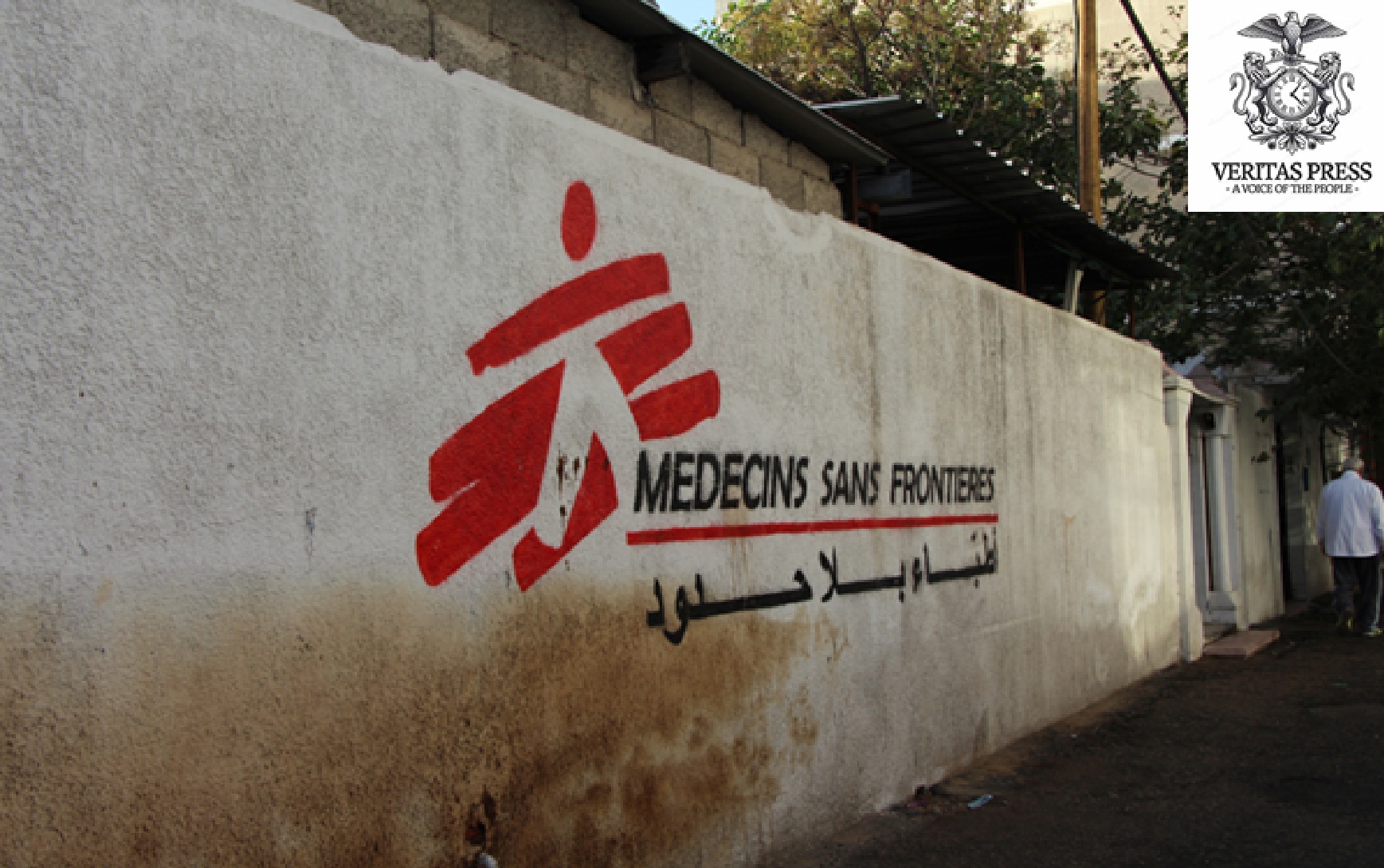
The standoff escalated sharply after Israel ordered MSF, one of the single largest providers of medical care in Gaza, to cease operations by February 28 after it refused to hand over a list of its Palestinian staff.
For many observers, the implications extend far beyond operational friction.
“If independent medical organisations are pushed out, one of the last remaining forms of international witnessing disappears with them,” said a Middle East analyst at the International Crisis Group. “Hospitals and humanitarian actors do not just treat the wounded, they document patterns of harm.”
Doctors, journalists and genocide scholars similarly warn that removing independent humanitarian actors risks sanitising the battlefield, limiting the presence of foreign professionals able to corroborate testimony, record casualty patterns, and challenge official narratives.
“Medical workers are often among the most reliable witnesses in war,” said a researcher with Physicians for Human Rights. “When they disappear, documentation becomes harder, and impunity becomes easier.”
Some European diplomats privately express similar concern. “Expelling aid groups does not just restrict care, it restricts visibility,” one official familiar with humanitarian negotiations said. “States accused of violations have historically tried to manage who is allowed to see what.”
For critics, the result is a form of strategic opacity: by removing independent medical observers, Israel risks being accused of attempting to pacify international outrage while shielding its conduct from external scrutiny.
“Security” Claims Versus Humanitarian Reality:
Israel’s Ministry for Diaspora Affairs and Combating Antisemitism has accused MSF of “lacking transparency” and alleged, without publicly presenting evidence, that some aid workers may have ties to armed groups, accusations the organisation categorically rejects.
Israeli officials argue the requirements, including copies of passports, CVs, home addresses and even family details such as spouses and children, are standard security procedures designed to prevent the “misuse of humanitarian cover.”
Aid organisations say this framing is deeply misleading.
“This is not about transparency. It is about control,” a spokesperson for Premiere Urgence Internationale told Al Jazeera. “Providing lists of Palestinian staff under these conditions would potentially endanger their lives. That is an absolute red line.”
Médecins du Monde was more explicit, warning that the demands violate core principles of humanitarian law.
“Humanitarian access is not optional, conditional, or political. Israel is unconditionally obliged to facilitate relief schemes under international humanitarian law.”
Legal scholars note that under the Fourth Geneva Convention, an occupying power must ensure and facilitate medical care for civilians, not condition it on compliance with politically imposed vetting regimes.
Janina Dill, co-director of the Oxford Institute for Ethics, Law and Armed Conflict, has warned that restrictions preventing care from reaching civilians may constitute serious violations of the laws of war if they are disproportionate or intentional.
The Weaponisation Of Bureaucracy:
What might appear administrative has rapidly evolved into a defining struggle over control of humanitarian space.
Israel has reportedly revoked the operating licences of 37 aid groups for failing to comply with the new framework, a move humanitarian lawyers warn may test the boundaries of international law, which obligates occupying powers to facilitate, not restrict, relief for civilians.
MSF has described Israel’s order as “a pretext to obstruct humanitarian assistance,” saying authorities failed to provide credible assurances that sensitive staff data would be protected.
“We were asked to hand over information without concrete assurances on data protection, staff safety, or the independence of our medical operations,” MSF said. “Under these circumstances, compliance would amount to a violation of our duty of care.”
Medical Aid for Palestinians went further, calling the order a deliberate attempt to “silence, control and censor humanitarian organisations.”
Taken together, the language marks a notable escalation: aid groups are no longer merely criticising operational hurdles, they are accusing a state of systematically restructuring the humanitarian environment itself.
Medico International echoed that concern bluntly:
“The goal is submission. Either humanitarian actors become subservient to Israeli policy, or they are criminalised and expelled.”
For veteran conflict analysts, such regulatory pressure often signals a transition toward state-managed humanitarianism, where relief operates only within parameters defined by military authorities.
A Health System One Expulsion Away From Collapse:
The implications of MSF’s removal are severe. The medical charity supports roughly 20 percent of Gaza’s hospital beds, assists one in every three births, and carried out around 800,000 medical consultations in 2025 alone, services it says “cannot be easily replaced.”
“If MSF is forced out, hundreds of thousands of people will lose access to medical care almost overnight,” the organisation warned.
Public health specialists caution that removing high-capacity NGOs could trigger cascading failures across the already shattered healthcare system, including trauma care interruptions, spikes in maternal mortality, breakdowns in vaccination programmes, untreated chronic illnesses and the resurgence of infectious diseases.
In conflicts from Syria to Yemen, similar restrictions have historically preceded sharp rises in preventable deaths.
“When independent medical actors are pushed out, mortality doesn’t just rise, it accelerates invisibly,” one Western humanitarian analyst said.
The crackdown comes as Gaza’s healthcare infrastructure remains functionally devastated. Hospitals have been repeatedly struck, specialised care has largely vanished, and surviving facilities rely almost entirely on Palestinian doctors supported by international NGOs.
Even Israel’s limited reopening of the Rafah crossing, allowing a small number of patients to leave for treatment, has underscored the scale of unmet medical need inside the territory.
“We are past emergency mode,” said one Gaza-based doctor speaking anonymously. “This is a prolonged, engineered collapse.”
British-Palestinian surgeon Ghassan Abu Sittah argued the bureaucratic pressure reflects a continuation of wartime strategy.
“The destruction of the health system is not collateral damage; it is central to the project. What we’re seeing now is the continuation of that project through bureaucratic and political means, even during a so-called ceasefire.”
The World Health Organization has similarly warned that attacks on healthcare in Gaza are occurring at an “unprecedented scale.”
Aid Workers In The Crosshairs:
The refusal by NGOs to hand over staff lists cannot be separated from the staggering toll the war has taken on humanitarian personnel.
More than 550 aid workers have been killed since October 2023, including at least 15 MSF staff members, while the broader death toll among healthcare workers exceeds 1,700, according to medical groups, making Gaza one of the deadliest environments for medical personnel in modern warfare.
“Public accusations that humanitarian organisations are infiltrated by militants have consequences,” said James Smith, a British emergency physician who volunteered in Gaza. “They normalise attacks on aid workers and erode any remaining protection we have.”
NGOs warn that once neutrality is publicly questioned, the long-standing deterrent against targeting medical personnel begins to weaken.
Toward “Managed” Humanitarianism?
Some emergency physicians and policy experts fear the removal of independent NGOs could pave the way for tightly controlled aid mechanisms aligned with Israeli security priorities.
Such systems risk producing what one doctor described as “pseudo-humanitarian structures”, operations that deliver limited relief while enabling population control.
Aid workers point to the Gaza Humanitarian Foundation (GHF), a US- and Israel-backed initiative during which hundreds of Palestinians were reportedly killed near distribution sites in 2025, as a warning of how militarised aid frameworks can unfold.
“Israel will create pseudo-humanitarian organisations,” Smith warned. “They will use humanitarian language while maintaining total control, and those systems will be used to enact violence, not relief.”
Humanitarian history offers sobering precedents. From Bosnia’s “safe areas” to Ethiopia’s militarised aid corridors, relief has at times been folded into broader military strategy.
Analysts caution that if independent charities are expelled, Israel would not only gain operational control over aid, but potentially greater control over the narrative of civilian suffering itself.
International Condemnation, And Legal Exposure:
More than 100 aid organisations have accused Israel of blocking lifesaving assistance and deliberately weaponising relief, allegations that strike at the core architecture of modern humanitarian law.
Legal scholars warn that deliberately obstructing humanitarian aid could expose officials to future war-crimes scrutiny, particularly if policies are shown to contribute directly to civilian suffering.
If the trajectory continues, analysts say the issue could migrate from diplomatic protest into formal legal arenas.
The Strategic Fault Line Of The War’s Next Phase:
What began as a registration dispute is rapidly becoming a defining struggle over who controls humanitarian space in Gaza.
For NGOs, refusal is existential, a defence of neutrality itself.
For Israel, the regulations appear tied to a broader doctrine prioritising security dominance across every operational domain, including aid.
The outcome may determine far more than which organisations remain in Gaza.
It could decide whether humanitarian action survives as an independent force, or evolves into a state-managed apparatus operating within the logic of war.
As one surgeon recently working in Gaza observed:
“After the destruction of the local health system, humanitarian organisations are no longer supplementary; they are the system.”
With deadlines approaching and positions hardening, the standoff now represents more than a bureaucratic clash.
It is a test of whether modern warfare will tolerate autonomous humanitarian action, or whether relief itself is becoming another battlefield.
When Lieutenant Colonel Ebrahim Zolfaqari, spokesman for Iran’s Khatam al-Anbiya Central Headquarters, issued a warning
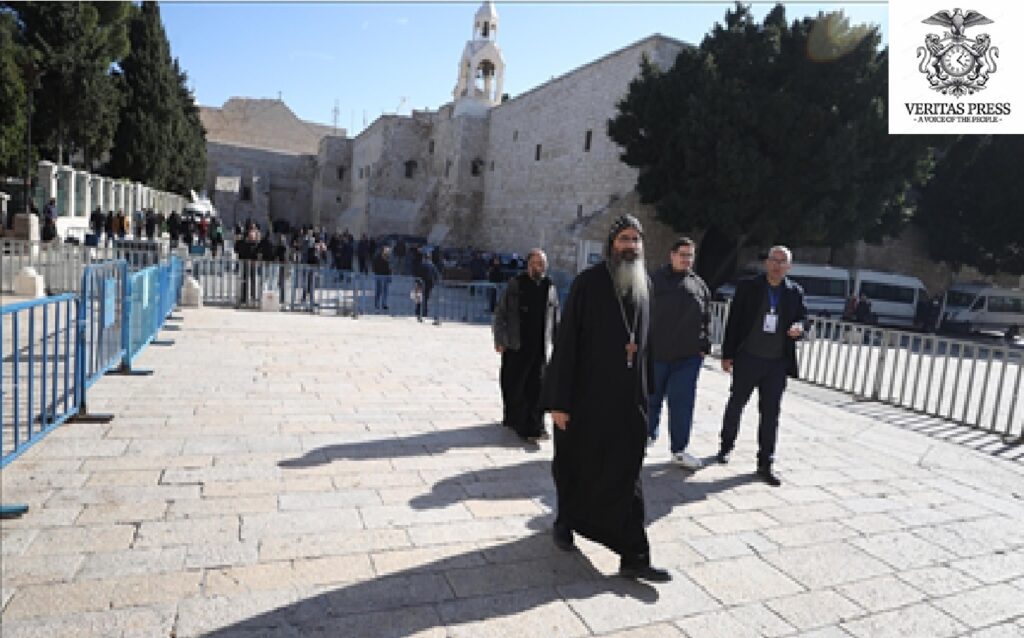
The historic Christian presence in Palestine, dating back to the earliest centuries of Christianity, is
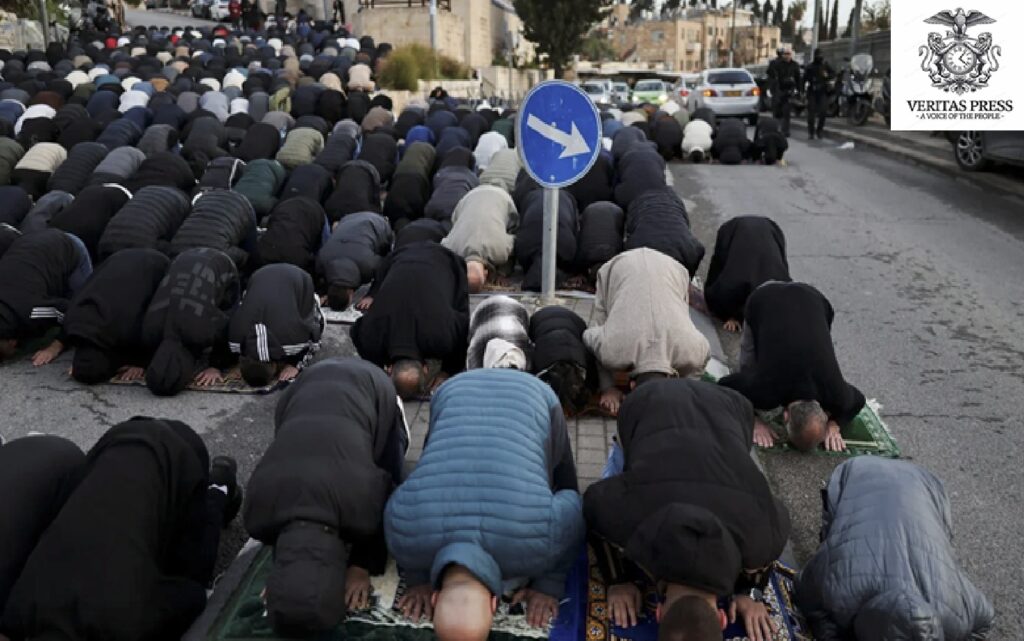
JERUSALEM – For the first time since the aftermath of the Six-Day War, the courtyards
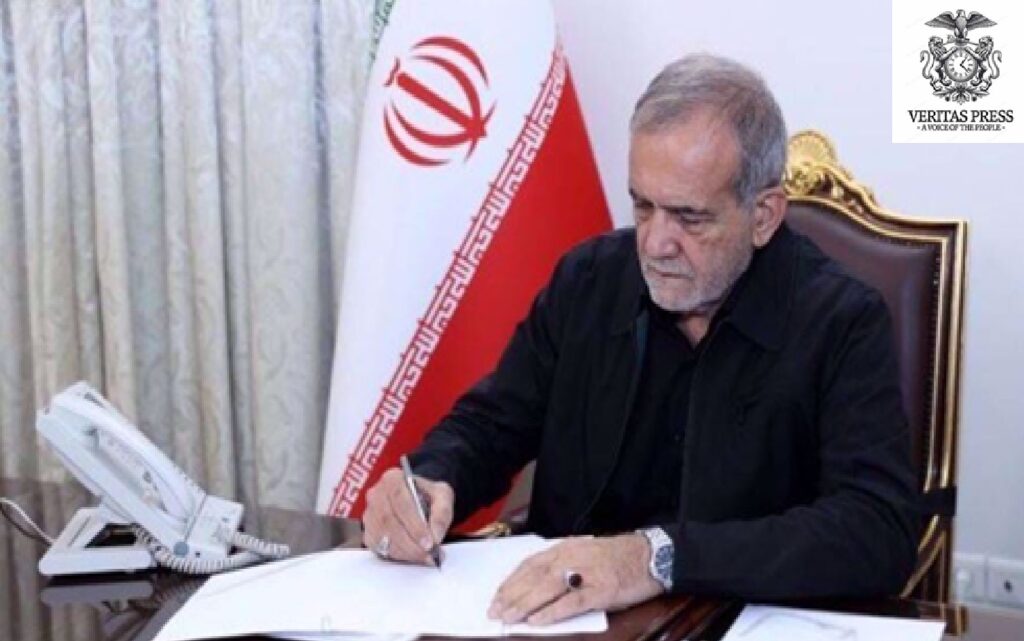
TEHRAN – As the sun rose on Eid al-Fitr, a day meant for celebration and
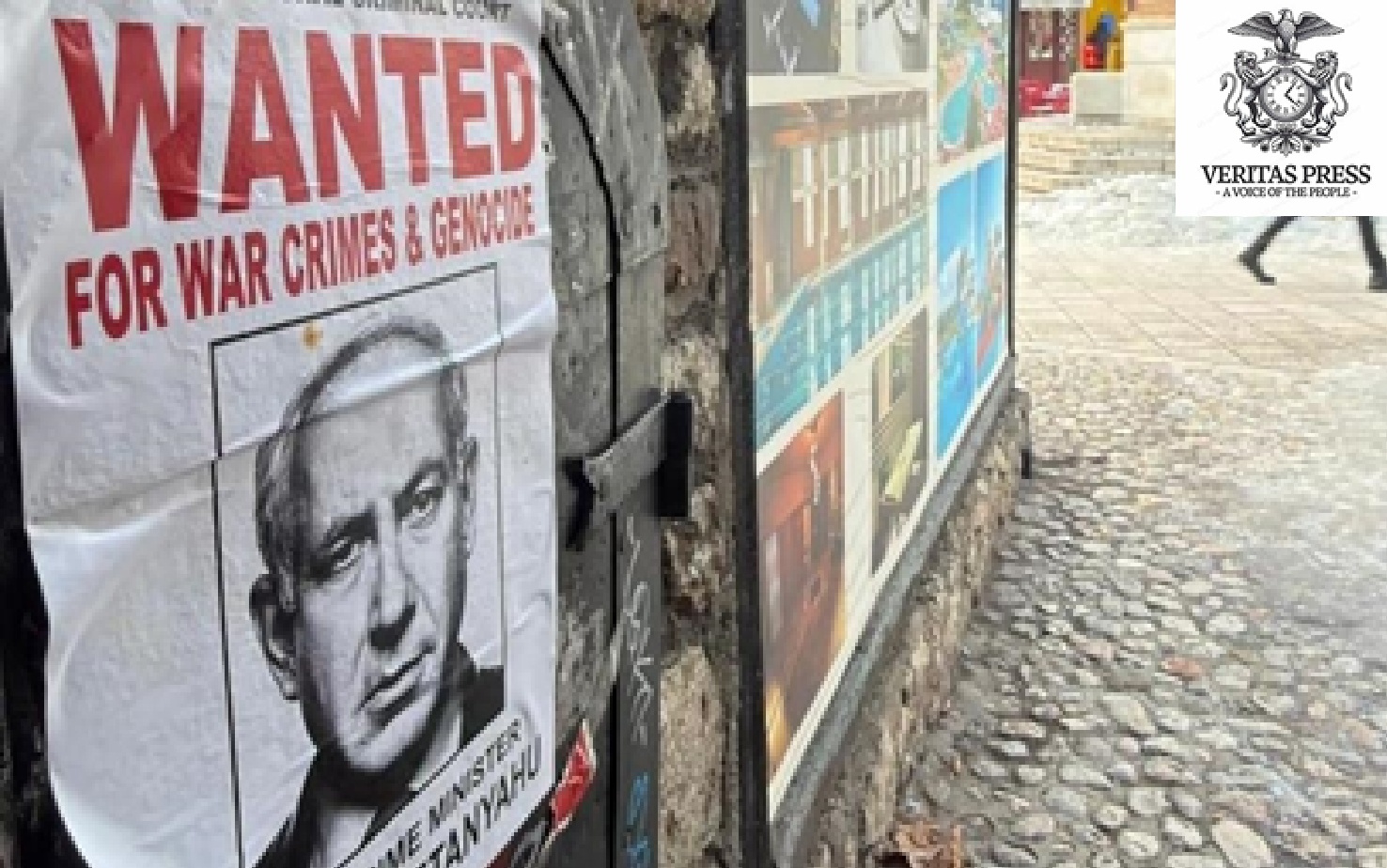
HUNGARY – As Benjamin Netanyahu prepares to travel to Hungary this weekend, a mounting legal
LONDON — In the polished corridors of 10 Downing Street, the language remains meticulously calibrated:
On March 20, 2026, the Pentagon quietly announced what amounts to a fundamental restructuring of
WASHINGTON / ISLAMABAD — A fresh warning by US Director of National Intelligence Tulsi Gabbard