

Original Article Date Published:
Article Date Modified:
Help support our mission, donate today and be the change. Every contribution goes directly toward driving real impact for the cause we believe in.
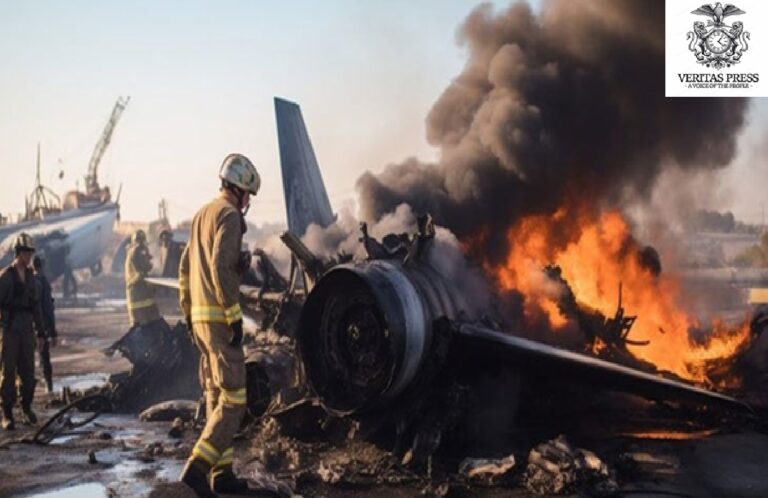
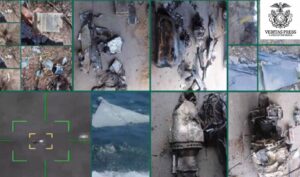
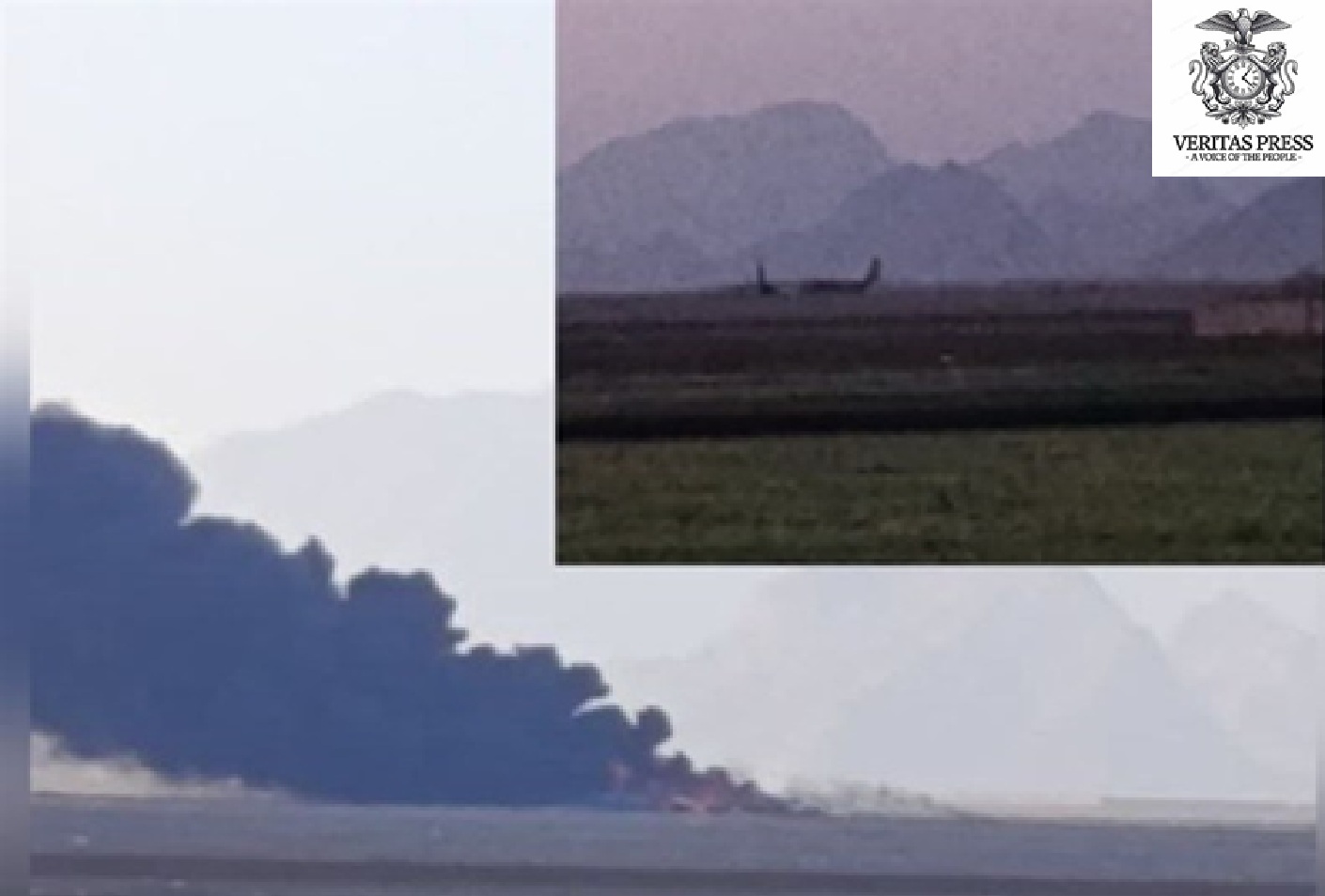
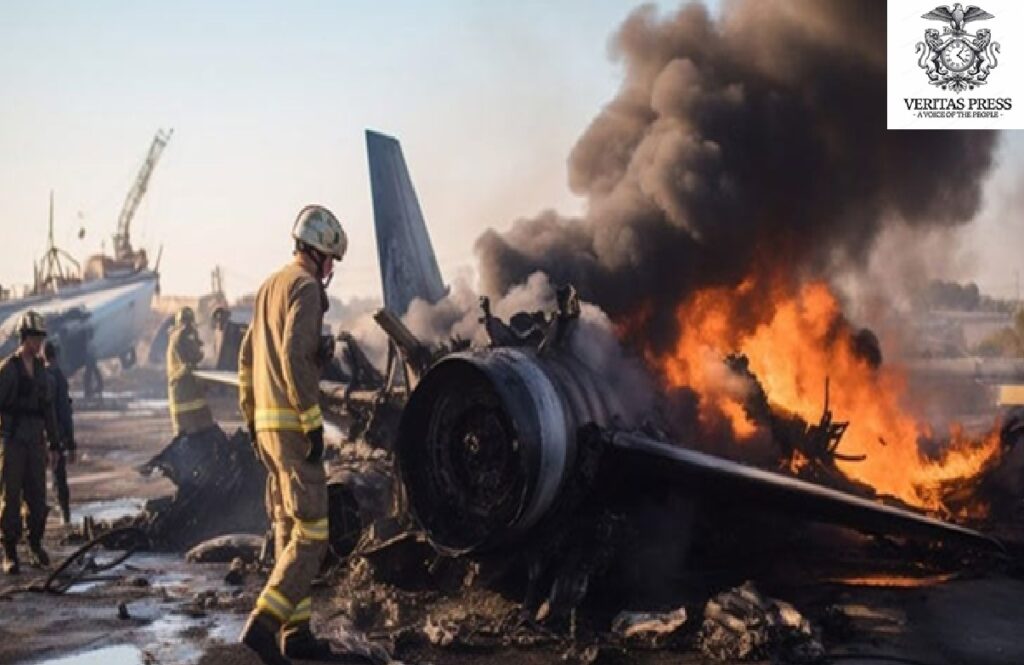
ISFAHAN PROVINCE, IRAN – April 5, 2026, In the rugged, mountainous terrain south of the ancient city of Isfahan, two starkly different realities are being etched into the historical record. According to the Iranian Armed Forces, the desert sands are scorched with the wreckage of an American military disaster: the remains of two Black Hawk helicopters and a C-130 transport plane, shot down in a coordinated ambush that thwarted a U.S. rescue mission. According to U.S. military and intelligence sources, that wreckage tells a far different story, one of deliberate demolition by American commandos to prevent sensitive equipment from falling into enemy hands.
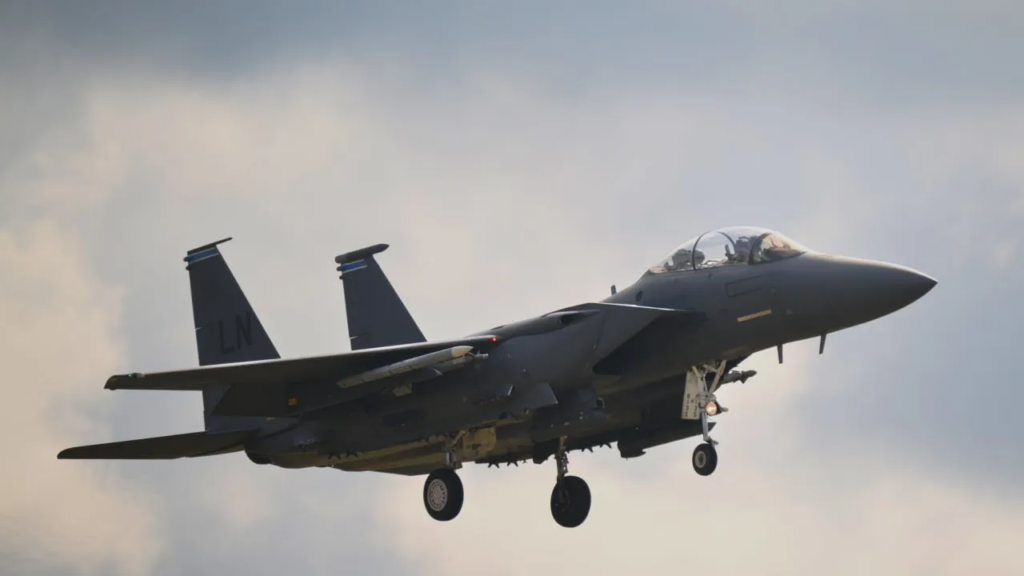
This is the fog of war in 2026. In the 46 years since the failed Operation Eagle Claw, the conflict between the United States and Iran has evolved from hostage crises and nuclear brinkmanship into a fully-fledged conventional war. Yet, as the narratives surrounding the downing of an F-15E Strike Eagle and the subsequent rescue of its crew demonstrate, the battle for public perception remains as critical as any engagement.
The Clash Of Narratives: ‘Humiliating Defeat’ Vs. ‘Daring Rescue’
The crisis erupted on April 3, when Iranian state media announced that the IRGC’s air defence systems had shot down a U.S. F-15E Strike Eagle fighter jet over the country’s southwest. Two crew members ejected. U.S. special operations forces swiftly rescued one pilot, but the second, a weapons systems officer, remained at large in hostile territory.
What followed was a 36-hour manhunt that became a test of strategic will. On the morning of April 5, U.S. President Donald Trump took to Truth Social to announce a triumph. “We got him,” Trump declared, confirming that the second airman was “SAFE and SOUND” following what he described as “one of the most daring search and rescue operations in U.S. history”.
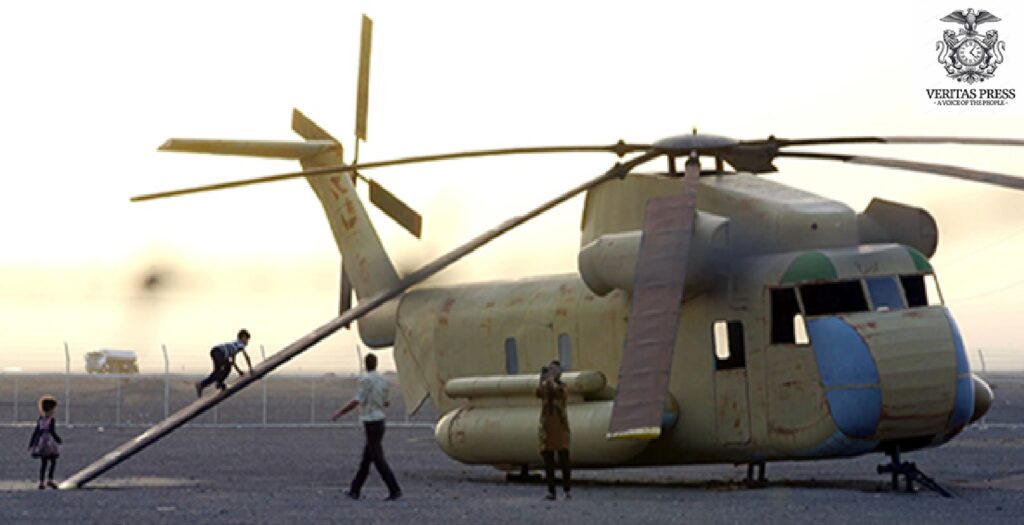
Within hours, the spokesperson for Iran’s Khatam al-Anbiya Central Headquarters delivered a diametrically opposed account. “The enemy’s desperate efforts to rescue its downed fighter pilot failed thanks to Almighty God’s blessings and divine assistance, as well as the timely actions and joint operations of Iranian forces,” the spokesman said. According to Tehran, the rescue was a failure. Worse, it was a humiliation. The spokesman claimed that U.S. aircraft were destroyed in a joint operation involving the IRGC, the Army, the Basij, and police special units. “Two Black Hawk helicopters and one C-130 military transport plane were struck and left burning in southern Isfahan,” he added. Iran’s semi-official Tasnim news agency gleefully drew parallels to the disastrous Operation Eagle Claw of 1980.
‘We Blew Them Up Ourselves’: The Other Side Of The Wreckage
A deeper, more investigative look at the evidence, however, reveals a far more complex and strategically sophisticated picture.
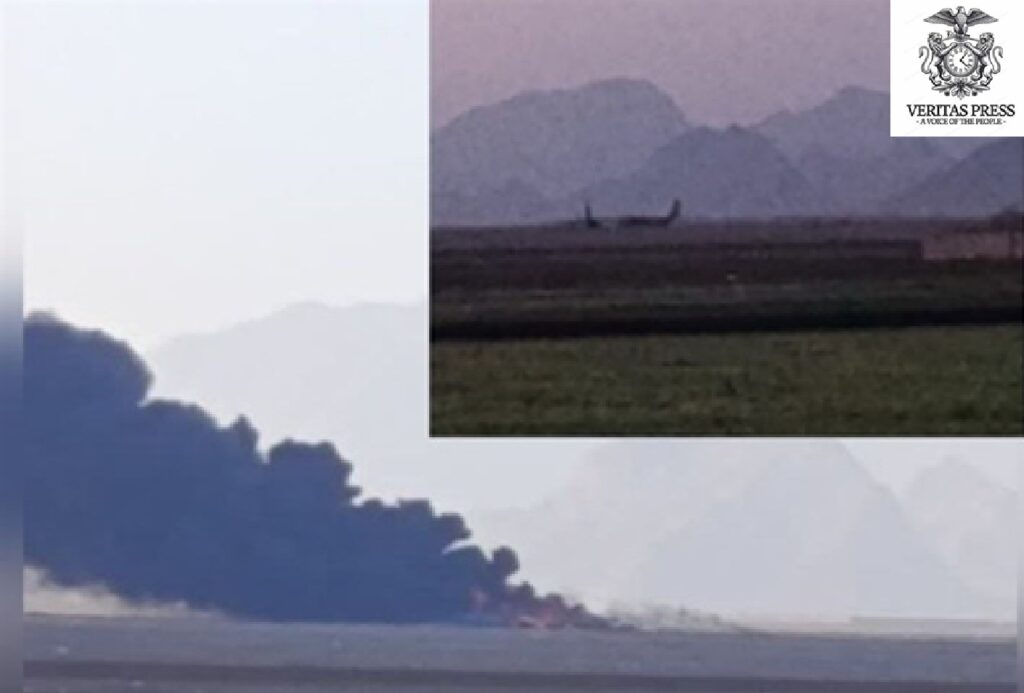
The New York Times and The Wall Street Journal have reported that at least two MC-130J transport planes, specialised aircraft used for covert infiltration and exfiltration, suffered mechanical failures during the mission. According to these reports, the planes became “stuck” or immobilised in the desert south of Isfahan. Facing the prospect of leaving sensitive military technology in Iranian territory, U.S. forces made the calculated decision to destroy the planes themselves before evacuating the area.
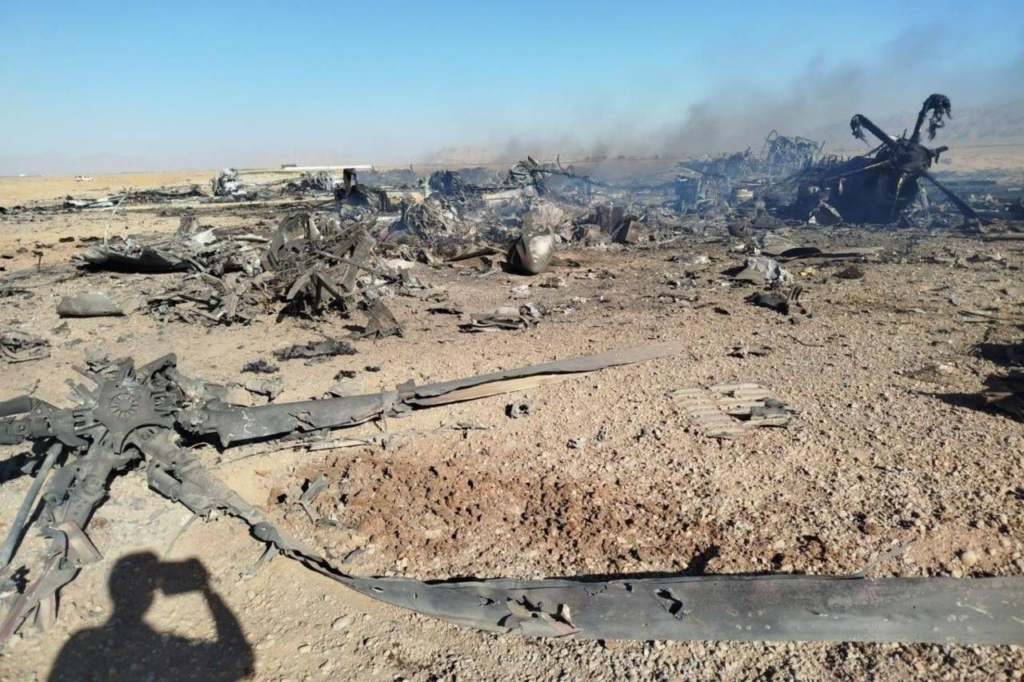
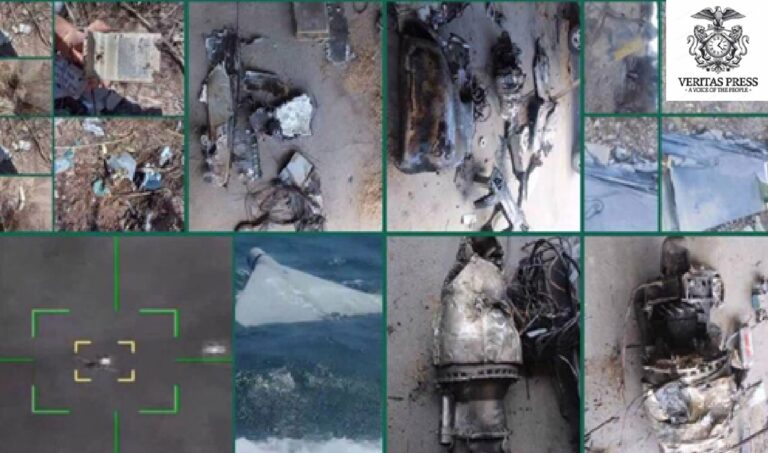
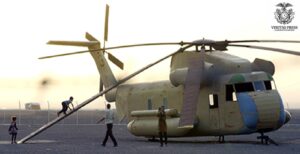
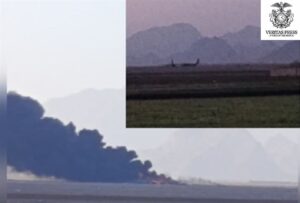
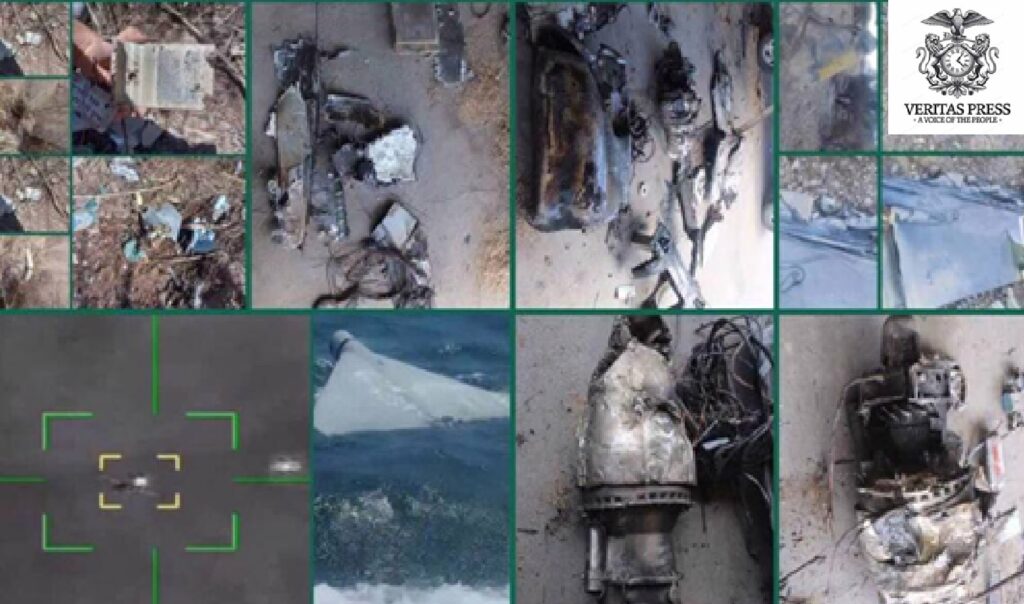
The photos show the aftermath of the scene where the US MC-130J
The charred wreckage that Iranian state media triumphantly displayed to the world may well be the result of controlled demolitions, not enemy fire. When Iran’s police command announced that a special forces unit had “destroyed” a C-130, they omitted the possibility that they were photographing the aftermath of a U.S. operational security measure, not a tactical victory.
Similarly, the claim regarding the two Black Hawk helicopters requires scrutiny. While Iranian officials credited coordinated military action, other state-linked reports offered a more folkloric account: that “mountain tribal fighters” from the Bakhtiari tribe and the provinces of Kohgiluyeh and Boyer-Ahmad independently engaged the helicopters with small-arms fire. A senior U.S. military official, speaking to Fox News, conceded that a firefight did erupt between American and Iranian forces during the final extraction, but characterised the overall mission as “one of the most challenging and complex in the history of U.S. special operations.”
The ‘Needle In A Haystack’ And The Art Of Deception
If the rescue was successful, how did the U.S. military pull it off? The answer appears to lie in a sophisticated combination of signals intelligence, psychological warfare, and brute force.
According to Fox News and CBS News, the CIA launched a deception campaign inside Iran before the rescue began. The agency spread word that U.S. forces had already found the missing airman and were moving him overland toward the border for exfiltration. A senior U.S. official described the situation to Fox News as the ultimate “needle in a haystack” scenario: “A courageous American hidden within a mountain crevice, undetectable by conventional means but revealed through CIA intelligence.”
This intelligence, likely drawn from electronic signals from the downed pilot’s survival radio, as well as satellite and drone surveillance, allowed Delta Force operators to close in on the airman’s location. As they did so, a firefight erupted with Iranian forces, during which U.S. aircraft provided close air support to suppress IRGC units attempting to reach the area. It was in this chaotic environment that the MC-130Js reportedly became disabled, leading to their destruction.
The duality of the outcome is stark. On one hand, the U.S. military achieved its primary objective: no American servicemember was captured. The psychological blow of a uniformed U.S. pilot paraded on Iranian state television, a propaganda victory Iran has explicitly sought, was averted. On the other hand, Iran succeeded in framing the incursion as a repelled invasion, showcasing wreckage to support its claims of territorial inviolability.
A ‘Black Day’ For The Enemy: Iranian Claims Under Scrutiny
The incident did not occur in a vacuum. Iran’s defence establishment has made a series of escalating claims in recent days, asserting that its forces have downed not only the F-15E but also an A-10 Warthog over the Persian Gulf, and even an F-35 fifth-generation fighter. While the Pentagon has confirmed the loss of an F-15 and an A-10, it has not corroborated the F-35 claim.
What is undeniable, however, is that Iran’s air defence network remains far from “annihilated,” despite President Trump’s recent assertions. NBC News reported that the White House’s credibility is being tested by Tehran’s success in targeting diverse aerial assets within a 24-hour period. This suggests that the Iranian military, while battered, retains significant capabilities.
The Human Cost: Civilians Caught In The Crossfire
The journalistic pursuit of military truth must not obscure the human tragedy unfolding on the ground. While the world debated the fates of the two American pilots, Iranian civilians in the southwest paid a heavy price.
According to Iranian state media and local officials, U.S. air strikes killed at least five people in the mountainous Kouh-e Siah area of Kohgiluyeh and Boyer-Ahmad province. The governor of Boyer-Ahmad county confirmed to Iranian outlets that several civilians were killed in attacks intended to clear the area of Iranian forces and prevent them from reaching the missing pilot. Independent casualty figures are difficult to verify, but the reports underscore the brutal reality of search-and-rescue operations conducted in a highly militarised zone.
“The ‘rescue’ came at the cost of innocent lives in our villages,” a resident of the Kohgiluyeh region, who requested anonymity for fear of reprisal, told this reporter. “The Americans came for one man, and left five of ours dead.”
Historical Echoes: Eagle Claw And The Ghost Of Tabas
Iranian state television has repeatedly invoked the memory of Operation Eagle Claw, the catastrophic 1980 mission to rescue American hostages in Tabas that resulted in the deaths of eight U.S. servicemen. The comparison is deliberate. For Tehran, portraying any U.S. incursion as a “humiliating defeat” reinforces the regime’s narrative of resistance and divine protection.
However, a more nuanced historical critique suggests the opposite: the U.S. military has learned the lessons of Eagle Claw. The creation of the Joint Special Operations Command (JSOC) and decades of practice in joint interoperability enabled a mission that, while messy, succeeded in its core goal. “Eagle Claw exposed serious deficiencies in joint planning,” notes a study from the Modern War Institute. “The 2026 operation, while contested, demonstrated the institutional readiness that was absent in 1980”.
Geopolitical Fallout: The Strait Of Hormuz And The $110 Barrel
The skirmish over Isfahan is a symptom of a wider, devastating war. The conflict, now in its 37th day, has resulted in over 2,000 deaths in Iran alone. Economically, the war has been catastrophic. Iran’s tight grip on the Strait of Hormuz has driven global oil prices above $110 a barrel, a 50% increase since the war began.
As the UN Security Council debates how to reopen the world’s most vital energy waterway, the competing narratives of the Isfahan incident serve as a microcosm of the larger conflict. Was this a daring American rescue that humiliated Iran, or a failed Iranian interception that forced the U.S. to destroy its own equipment? The answer depends entirely on which side’s wreckage one chooses to believe.
Conclusion: A War Fought In Shadows, Signals, And Silence
What unfolded south of Isfahan is not just a military incident; it is a case study in how modern wars are fought, obscured, and sold to the public.
Strip away the competing headlines, and a more troubling reality emerges.
The United States appears to have penetrated deep into Iranian territory with special operations forces, conducted an extremely high-risk extraction under fire, and, by its own implicit admission, lost or destroyed valuable aircraft in the process. That alone signals a level of escalation far beyond the carefully managed “limited conflict” narrative coming out of Washington.
At the same time, Iran has seized on the visible wreckage and the chaos of the operation to construct a narrative of deterrence and dominance, one that masks its own inability to prevent the successful extraction of a US servicemember from within its borders.
Both claims cannot be fully true. But both serve a purpose.
For Donald Trump, the emphasis on a “daring rescue” reinforces power, competence, and control, critical messaging in a war he has repeatedly claimed is already won. Yet the refusal by the Pentagon and White House to provide transparent details about aircraft losses, operational failures, military personnel casualties, or civilian casualties raises deeper questions about accountability in a rapidly expanding conflict.
For the Islamic Revolutionary Guard Corps and Iran’s state apparatus, the framing of a “humiliating American defeat” serves domestic legitimacy and regional signalling. But it also exposes a reliance on information warfare, selective visuals, exaggerated claims, and historical symbolism to compensate for strategic vulnerabilities.
This is the uncomfortable truth: the battle over Isfahan was not decisively won by either side; it was narratively managed by both.
And in that gap between fact and framing lies the real danger.
Because when wars are fought not only with missiles and forces, special operations, but with competing realities, the risk of miscalculation multiplies. Leaders begin to act not on verified intelligence, but on narratives they themselves have constructed. Red lines blur. Escalation becomes easier to justify, harder to control.
Meanwhile, the human cost, buried beneath secrecy and spin, continues to rise. Civilians killed in “precision” strikes. Communities destabilised by covert operations. Families displaced by decisions made in classified rooms and defended in televised statements.
Even the global economy is now hostage to these competing truths, as tensions around the Strait of Hormuz push energy markets toward crisis.
The lesson of Operation Eagle Claw was supposed to be institutional reform, coordination, and restraint. Instead, its ghost now lingers in a far more dangerous form: a war where military success is ambiguous, political narratives are absolute, and the truth itself is contested terrain.
If there is a definitive takeaway from Isfahan, it is this:
While it is no longer the case that either Washington or Tehran maintains absolute control over this war, the prevailing advantage continues to reside with Tehran.
And while the US-Israel is forced to rely on disinformation to claim victory, it is often a sign not of strength, but of a conflict slipping beyond their control.
Source: Multiple News Agencies
Submissions:
For The Secure Submission Of Documentation, Testimonies, Or Exclusive Investigative Reports From Any Global Location, Please Utilise The Following Contact Details For Our Investigations Desk: enquiries@veritaspress.co.uk or editor@veritaspress.co.uk
Help Support Our Work:
Popular Information is powered by readers who believe that truth still matters. When just a few more people step up to support this work, it means more lies exposed, more corruption uncovered, and more accountability where it’s long overdue.
Help Protect Independent Journalism, Which Is Currently Under Attack.
If you believe journalism should serve the public, not the powerful, and you’re in a position to help, becoming a DONATOR or a PAID SUBSCRIBER truly makes a difference.
DONATION APPEAL: If You Found This Reporting Valuable, Please Consider Supporting Independent Journalism.
Help Support Our Work – We Know, We Know, We Know …
Seeing these messages is annoying. We know that. (Imagine what it’s like writing them … )
Your support fuels our fearless, truth-driven journalism. In unity, we endeavour to amplify marginalised voices and champion justice, irrespective of geographical location.
But it’s also extremely important. One of Veritas Press’s greatest assets is its reader-funded model.
1. Reader funding means we can cover what we like. We’re not beholden to the political whims of a billionaire owner. We are a small, independent and impartial organisation. No one can tell us what not to say or what not to report.
2. Reader funding means we don’t have to chase clicks and traffic. We’re not desperately seeking your attention for its own sake: we pursue the stories that our editorial team deems important and believe are worthy of your time.
3. Reader Funding: enables us to keep our website and other social media channels open, allowing as many people as possible to access quality journalism from around the world, particularly those in places where the free press is under threat.
We know not everyone can afford to pay for news, but if you’ve been meaning to support us, now’s the time.
Your donation goes a long way. It helps us:
- Keep the lights on and sustain our day-to-day operations
- Hire new, talented independent reporters
- Launch real-time live debates, community-focused shows, and on-the-ground reporting
- Cover the issues that matter most to our communities, in real time, with depth and integrity
We have plans to expand our work, but we can’t do it without your support. Every contribution, no matter the size, helps us stay independent and build a truly people-powered media platform.
If you believe in journalism that informs, empowers, and reflects the communities we serve, please donate today.
TEHRAN – The fog of war thickened over central Iran on Sunday, as sharply conflicting
ISFAHAN PROVINCE, IRAN – April 5, 2026, In the rugged, mountainous terrain south of the
Original Article Date Modified: Article Date Modified: Help support our mission, donate today and be
The raw numbers tell a story of profound inequality. On 1 April 2026, more than
What began on February 28, 2026, as a coordinated US-Israeli campaign to decapitate Iran’s military
The idea of a “freedom flotilla” carries a ghost in its hold: the 2010 Mavi

Original Article Date Published: Article Date Modified: Help support our mission, donate today and be
Original Article Date Published: Article Date Modified: Help support our mission, donate today and be
A United States fighter jet has been shot down over Iran, marking a dangerous and
On February 28, the United States and Israel launched coordinated strikes on Iran, reported by