






Title: Punished Without Trial: Palestine Action Hunger Strikers Face Death As UK State Stands Firm
Press Release: Veritas Press C.I.C.
Author: Kamran Faqir
Article Date Published: 08 Jan 2026 at 11:50 GMT
Category: UK | Politics | Punished Without Trial: Palestine Action Hunger Strikers Face Death As UK State Stands Firm
Source(s): Veritas Press C.I.C. | Multi News Agencies
Website: www.veritaspress.co.uk

Business Ads


LONDON, UNITED KINGDOM — Three British remand prisoners affiliated with Palestine Action are now hovering at the edge of death after weeks without food, as the UK government refuses to intervene, meet their lawyers, or reconsider prolonged pre-trial detention that legal experts say has crossed into punishment without conviction.
Heba Muraisi, Kamran Ahmed and Lewie Chiaramello are part of a rolling hunger strike that began on 2 November in protest at what supporters describe as politically motivated detention, the criminalisation of Palestine solidarity, and a prison regime that has imposed censorship, isolation and medical neglect.
Doctors warn all three are in a critical, potentially irreversible phase of starvation, yet ministers insist that hunger strikes are “not unusual”, and that intervention would create “perverse incentives”.
To families, lawyers and rights groups, that language amounts to something far darker: a state prepared to let remand prisoners die rather than confront the legality of its actions.
![[Courtesy: Prisoners for Palestine]](https://www.aljazeera.com/wp-content/uploads/2026/01/s1-1767861597.jpg?resize=770%2C513&quality=80)
“She Is Dying In Front Of Us”
Heba Muraisi, 31, the longest-fasting hunger striker, has now spent more than two months without food. Once a florist and lifeguard from London, she has been hospitalised repeatedly with muscle spasms, breathlessness, severe pain and immune suppression.
“She looks emaciated. Her cheekbones are protruding. She’s visibly wasting away,” said her close friend Amareen Afzal after a prison visit. “Her memory is going. She struggles to stay engaged. And she knows she’s dying.”
Afzal said Muraisi speaks openly about the possibility of death.
“She’s scared, but she’s also resolute. She keeps saying: ‘If I stop now, then what was all this suffering for?’”
Dr James Smith, an emergency physician advising the hunger strikers, said Muraisi’s symptoms are medically alarming.
“Muscle spasms at this stage can indicate neurological compromise. Combined with immune suppression, the risk of sudden collapse or fatal infection is very real,” he said.
“She is not ‘protesting comfortably’. Her body is breaking down.”
Kamran Ahmed: “Perhaps They’re Waiting For A Body Bag”
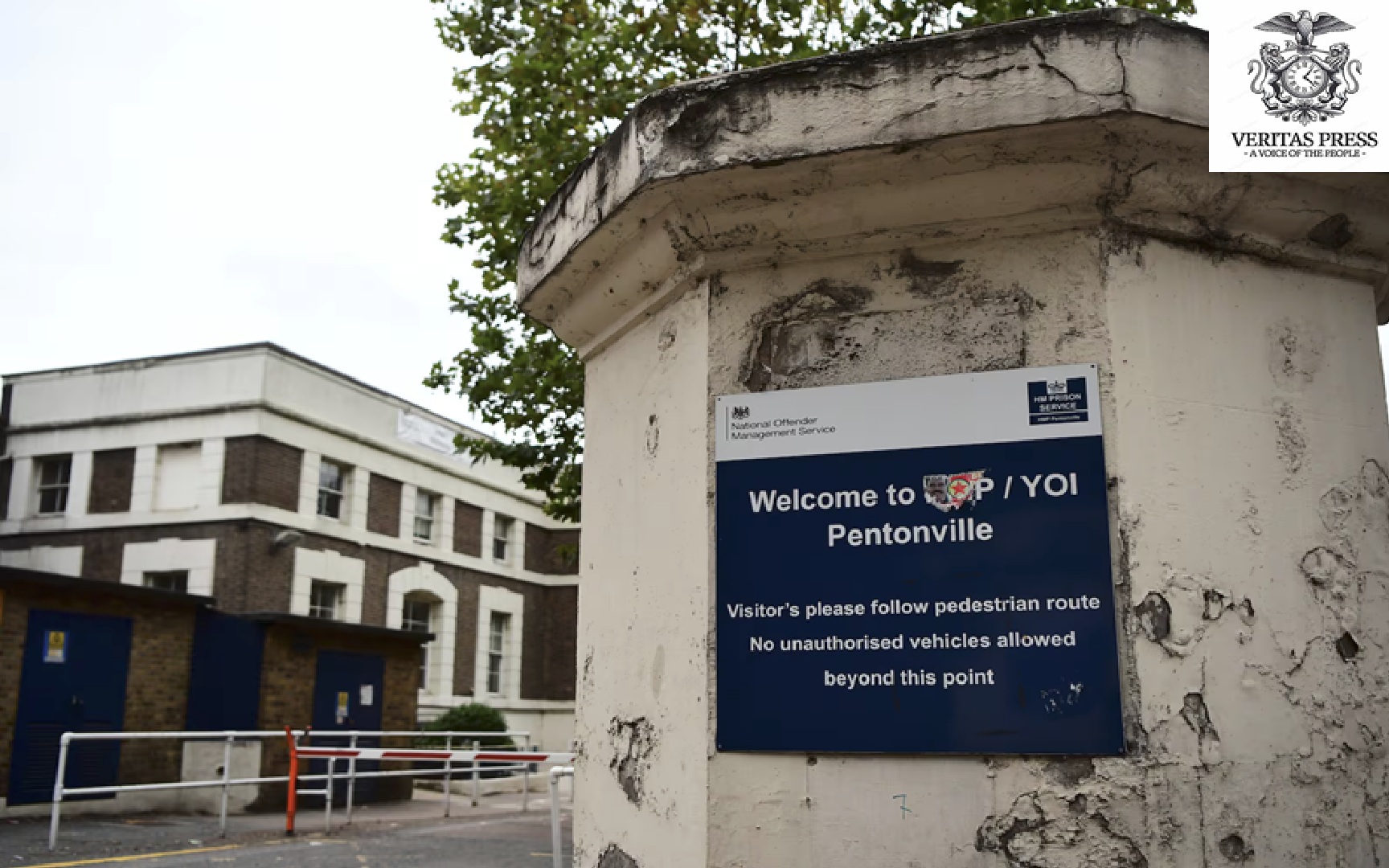
Kamran Ahmed, 28, held at Pentonville Prison, has been hospitalised six times since beginning his hunger strike. He has lost hearing in one ear, suffers chest pain, dizziness and breathlessness, and has recorded heart rates dropping below 40 beats per minute.
His sister, Shahmina Alam, described seeing her brother deteriorate visit by visit.
“He’s skeletal. He walks hunched over because it takes too much energy to stand upright. Every time I see him, it feels like it could be the last time.”
Ahmed himself has been starkly clear about what he believes is happening.
“I intend to continue my hunger strike,” he told the Guardian. “Perhaps they wait for me to leave in a body bag or to be hospitalised again. The way my chest hurts, it doesn’t feel far away.”
He rejected claims that responsibility lies with him.
“I know the consequences. But the onus is not on me; it is on the government. They are playing ping pong with our lives.”
Ahmed also linked his personal suffering to Britain’s broader political stance on Palestine.
“If I die, does it only matter because I have a UK passport?” he asked. “Are Palestinians just disposable numbers?”
A Diabetic Prisoner And The Risk Of Silent Death:
Lewie Chiaramello, 23, faces compounded danger due to type 1 diabetes. He fasts every other day to avoid immediate collapse, but doctors say this still places him at risk of diabetic coma, organ damage and long-term metabolic harm.
“He’s disoriented, dizzy, depressed,” said his partner, trainee solicitor Nneoma Joe-Ejim. “I’m terrified I’ll get a call saying he didn’t wake up.”
Dr Smith warned that Chiaramello’s condition is medically precarious.
“A diabetic body under starvation stress is unpredictable. Collapse can come without warning.”
Hospitalised In Chains: “Degrading, Dehumanising”.
Families and doctors have raised grave concerns over how hunger strikers are treated during hospital admissions. Prisoners have reportedly been handcuffed to beds, surrounded by guards, and restrained even while critically ill.
“It’s the most degrading treatment I’ve witnessed in an NHS hospital,” Dr Smith said. “It violates the spirit, if not the letter, of medical ethics.”
Alam said Ahmed dreads being sent to the hospital.
“He’s cuffed constantly. His wrists bruise. Guards watch him eat, sleep, breathe. It’s psychologically brutal.”
Supporters say this treatment appears designed to deter protest, not protect health.
Punishment Without Trial:
All eight hunger strikers are remand prisoners, accused of offences linked to direct action against Elbit Systems, Israel’s largest arms manufacturer, and an RAF base. All deny the charges.
By the time their cases reach court, they will have spent over 18 months in custody, nearly three times the UK’s typical six-month pre-trial limit.
Legal analysts say this amounts to de facto punishment before conviction.
“This is a remand being used as a tool of political suppression,” said a barrister familiar with the case, who spoke on condition of anonymity. “The length of detention alone is punitive.”
Terrorism Designation And The Criminalisation Of Dissent:
In July, the UK government designated Palestine Action a “terrorist organisation”, placing it in the same legal category as ISIL and al-Qaeda, a move widely criticised by rights groups.
Activists argue the hunger strike cannot be separated from this escalation.
“This is about silencing Palestine solidarity through fear,” said Francesca Nadin of Prisoners for Palestine. “They are innocent until proven guilty, yet treated as enemies of the state.”
She accused the government of “institutional contempt for their lives”.
Government Refusal And The Language Of Indifference:
Despite appeals from UN experts, hundreds of doctors, senior lawyers and MPs, the Ministry of Justice has refused to meet the prisoners or their legal teams.
Prisons minister James Timpson said intervention would be “unconstitutional” and warned against creating “perverse incentives”.
Families say this language masks deliberate inaction.
“They won’t even allow mediation,” Alam said. “What incentive is stronger than death?”
Echoes Of 1981, And A Familiar Pattern:
Supporters have drawn parallels with the 1981 Irish hunger strikes, when 10 prisoners died, including Bobby Sands.
Muraisi passed day 66, the day Sands died, a moment supporters described as chilling.
“This is the largest coordinated hunger strike in Britain since 1981,” Nadin said. “And the government response is hauntingly familiar.”
Dr Smith noted that while medical care has advanced, the political logic has not.
“Then, as now, the state calculated that conceding would be more dangerous than letting bodies fail.”
A Question Of Intent:
As former hunger strikers Teuta Hoxha and Amu Gib struggle with recovery, including the risk of fatal refeeding syndrome, the remaining three edge closer to irreversible collapse.
“The organs hold out,” Dr Smith said. “Until suddenly, they don’t.”
For families, the question is no longer whether the hunger strikers understand the risk, but whether the British state has accepted death as an outcome.
“They are not asking for special treatment,” Alam said.
“They are asking not to be punished to death before they’ve even had a trial.”
In Summary: Intentional Neglect And The Erosion Of Human Rights.
What distinguishes this hunger strike from a crisis of capacity or mismanagement is the clarity of the warnings and the deliberateness of the response. The British government has not been caught unaware. It has been formally notified by doctors of imminent risk of death, by legal representatives of excessive and punitive remand, and by families of irreversible physical and psychological deterioration. Its response has not been confusion or urgency, but procedural detachment.
By refusing to engage even in mediation, ministers have effectively narrowed the state’s obligation to a minimalist interpretation of care, monitoring decline rather than preventing it. This posture raises profound human rights concerns. Under both domestic law and international standards, the state has a positive duty to preserve life, particularly where individuals are entirely under its control. The insistence that hunger strikes are “not unusual” and that intervention would create “perverse incentives” reframes preventable death as an administrative inconvenience rather than a rights emergency.
This is not neutrality; it is intentional neglect.
Human rights organisations and legal observers note that prolonged remand without trial, combined with medical restraint and censorship, violates the presumption of innocence and may breach protections against inhuman or degrading treatment. Yet these warnings have been met with a rhetoric of constitutional distance, a cold insistence that separation of powers absolves the executive of moral responsibility, even as the state continues to control every aspect of the prisoners’ existence.
The contradiction is glaring. The government claims it cannot intervene in judicial matters, yet it has already intervened politically by proscribing Palestine Action as a terrorist organisation, escalating the severity of detention conditions and shaping the very context in which bail is denied. To invoke neutrality now is not restraint; it is selective disengagement.
What emerges is a pattern: a state willing to allow human rights to deteriorate alongside human bodies, so long as no single official must sign an order acknowledging responsibility. The prisoners’ suffering is fragmented across departments, policies and euphemisms, but its outcome is singular and foreseeable.
If a death occurs, it will not be the result of hunger alone. It will be the consequence of a government that reduced the right to life to a monitoring protocol, and human dignity to a risk-management exercise, choosing procedural purity over the preservation of life and the appeasement of foreign governments and corporations.
In that sense, the question facing Britain is no longer whether these prisoners will survive, but whether the state is prepared to accept, quietly, bureaucratically, that the erosion of human rights has become an instrument of governance.














fixy9f