







Title: People Are Dying In The Dark: How England’s Supported Housing System Became A Profitable Failure
Press Release: Veritas Press C.I.C.
Author: Kamran Faqir
Article Date Published: 28 Dec 2025 at 14:20 GMT
Category: UK | Politics | People Are Dying In The Dark: How England’s Supported Housing System Became A Profitable Failure
Source(s): Veritas Press C.I.C. | Multi News Agencies
Website: www.veritaspress.co.uk

Business Ads

Two years after parliament passed a law to clean up ‘exempt’ accommodation, vulnerable people remain trapped in unsafe housing, while landlords harvest public money and the government delays accountability.
By any measure, England’s unregulated supported housing sector has become one of the most quietly devastating social scandals of the past decade.
People with mental health conditions, addiction issues, histories of domestic abuse or recent prison release are being funnelled into dangerous, overcrowded properties where support is minimal or non-existent. Entire neighbourhoods are being hollowed out. Hundreds of millions of pounds in housing benefit are being paid each year, with little scrutiny over where the money goes or who profits.
And people are dying.
All of this is happening more than two years after parliament passed legislation specifically designed to stop it.
A Law That Exists Only On Paper:
In 2023, the Supported Housing (Regulatory Oversight) Act received royal assent after years of campaigning by charities, councils and residents. The private member’s bill, introduced by Conservative MP Bob Blackman, was supposed to bring order to the chaotic and exploitative world of “exempt” supported accommodation.
The act promised national minimum standards, local licensing schemes, proper data collection, and a new expert advisory panel. It was widely hailed as a turning point.
Yet today, none of those protections are fully in force.
The government launched a consultation on regulations in February this year, but has still not published its response. Full implementation is now not expected until at least 2027, nearly four years after the law was passed.
“It has been allowed to drift,” Blackman said.
“I’m pretty certain rogue landlords are making money hand over fist while this remains in limbo.”
Local authorities confirm they remain largely powerless.
“We know there are serious safeguarding risks,” said one senior housing officer in the West Midlands. “But without the regulations, we don’t have the legal tools to intervene.”
The Exempt Accommodation Loophole:
Exempt supported accommodation, sometimes branded as “supported exempt accommodation” or SEA, was originally designed to help vulnerable adults transition out of crisis.
Because it is “exempt” from standard housing benefit caps, providers can charge vastly inflated rents, justified by the promise of care and supervision that is supposed to be “more than minimal”.
In practice, the exemption has become a licence to extract public money with little oversight.
Investigations by The Observer, BBC Radio 4 and Inside Housing have shown how rooms are advertised on Gumtree and WhatsApp to anyone on benefits, often with no checks on vulnerability, risk or support needs.
“All you need is to be on benefits, have an ID and your service charge,” one agent told an undercover reporter. “I’ll get you in today.”
Support needs were rarely discussed. Gender restrictions were ignored. In some cases, women fleeing abuse were placed alongside people with serious drug addictions or violent histories.
“The practical effect is that the sector operates with almost no meaningful regulation,” said Barry Toon, an expert adviser to Birmingham’s supported housing forum.
“Even Dickens would have been lost for words.”
Birmingham: Britain’s Exempt Housing Capital.
No city illustrates the scale of the crisis more starkly than Birmingham.
The city now has an estimated 30,000 exempt accommodation units, around half of the national total, costing approximately £400m a year. Much of that bill is ultimately picked up by the central government.
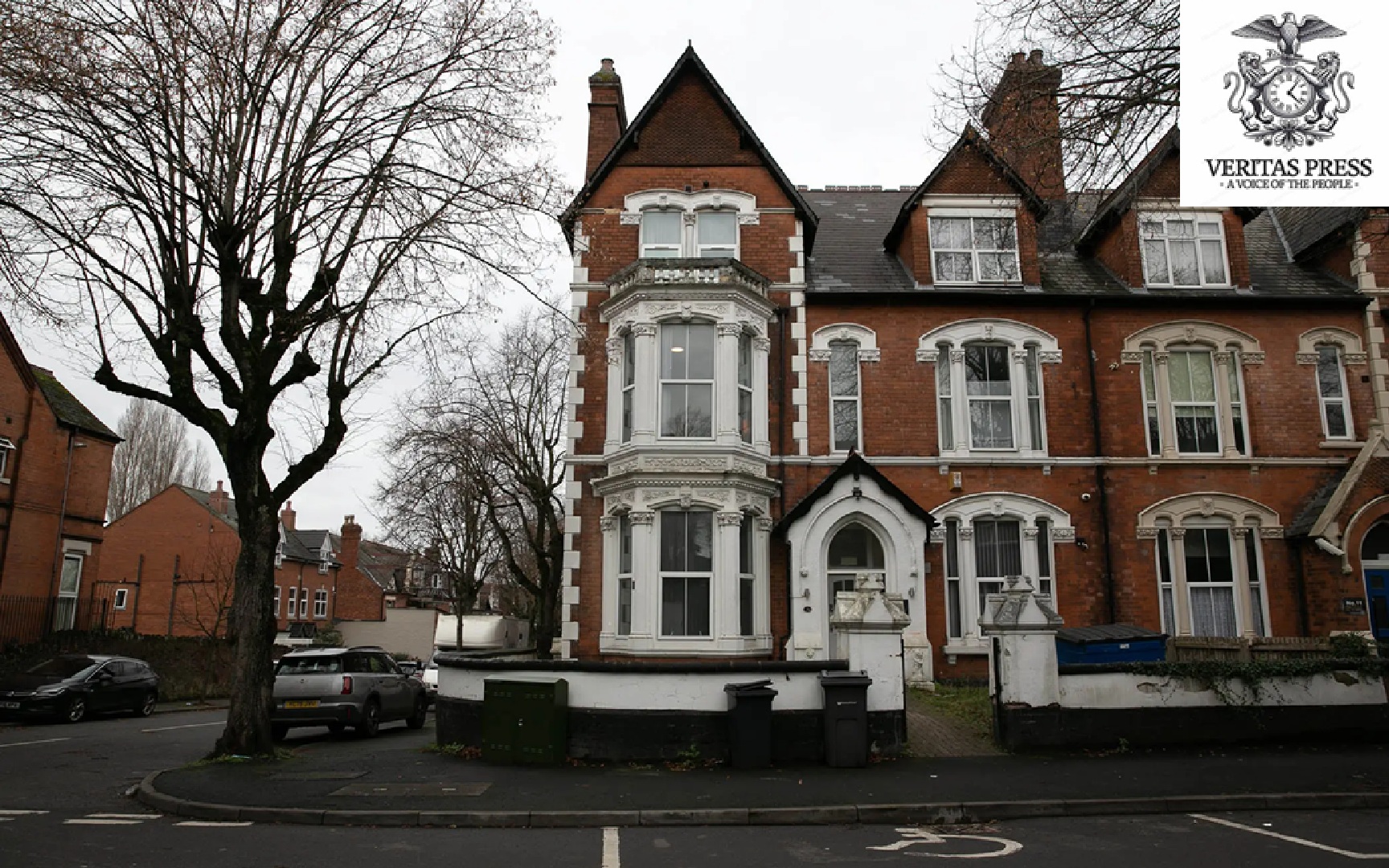
Entire streets have been transformed. Family homes are bought up cheaply, converted into six- to nine-bedroom properties, and leased to supported housing providers who can charge far higher rents via housing benefit.
In Selly Park, more than 40% of properties on some roads are now exempt accommodation.
“We’ve hit a tipping point,” said one local resident.
“How do you ever get the street back once it’s gone?”
Five large providers dominate Birmingham’s market, supplying more than 70% of units. All five have been found non-compliant by the Regulator of Social Housing on governance or financial viability grounds.
Yet they continue operating.
The regulator has limited powers, and no authority at all over the third-party managing agents who often control tenant selection, support delivery and evictions.
‘Set Up to Fail’
For residents, the consequences are brutal.
John Freeman, 37, has lived in around 30 exempt accommodation properties in four years.
“They say they’re going to support you,” he said. “But once you’re in, they’re not interested. You’re just left to fend for yourself in a house full of chaos.”
Freeman described being placed with people struggling with addiction and mental illness, with no meaningful supervision.
“They’re setting people up to fail,” he said. “It’s a money-making scheme.”
Sarah*, who fled more than a decade of domestic abuse, said her placement left her traumatised.
“I couldn’t sleep. People were banging on my door asking for money,” she said.
“They shouldn’t be mixing us like this.”
Faith groups and volunteers have become emergency lifelines. At Christ Church Selly Park, volunteers now stock food parcels for people arriving with nothing but a one-way bus ticket.
“We’re not social workers,” said the Rev Ben Green.
“But we know people aren’t getting the support they’re meant to be getting.”
Deaths That Barely Register:
The most disturbing evidence of systemic failure lies in what happens when things go wrong, and no one is watching.
The Dying Homeless Project at the Museum of Homelessness has identified at least 36 deaths in exempt accommodation in 2024 alone, across just 10 councils.
Because most local authorities do not collect or publish data on deaths in exempt accommodation, the true figure is almost certainly higher.
“People are dying really hidden,” said project lead Gill Taylor.
“It’s completely unclear whether the lack of support contributed, because nobody is even tracking it.”
The London Assembly Housing Committee previously uncovered evidence of homicides linked to unregulated exempt accommodation. Jess Phillips, MP for Birmingham Yardley, has warned of similar cases in her constituency.
“These are not isolated incidents,” said one housing analyst.
“This is what happens when you warehouse vulnerable people with no safeguards.”
Following The Money:
The financial incentives driving the crisis are stark.
Because rents are uncapped, providers can charge thousands of pounds per property each month, all funded by housing benefit. Investigations have revealed:
- Millions paid to providers were later found to be non-compliant
- Councils are recovering large sums of wrongly claimed benefits
- Allegations of ghost tenants and fraudulent claims
- Providers using complex corporate structures to obscure ownership
In Birmingham alone, the council has recovered nearly £5m in improper claims in recent years.
A cross-party parliamentary committee described the system as “a complete mess” that wastes public money while exposing vulnerable people to harm.
“This is not a failure of good intentions,” said one MP involved in the inquiry.
“This is a system that rewards exploitation.”
Government Promises, Repeated Delays:
The Ministry of Housing insists the Supported Housing Act is a priority. Ministers point to a new consultation, £124m in additional funding, and a promise that implementation will “begin next month”.
But even government briefings acknowledge the reality: full protections will not be in place until at least 2027.
Campaigners say that means years more of harm.
“Billions will be paid out before this is fixed,” said Barry Toon.
“And people will continue to suffer, or die, in the meantime.”
A Question Of Values:
This is not a marginal policy failure. It is a test of political will and moral priorities.
Exempt accommodation was meant to offer stability, dignity and care. Instead, it has become a parallel housing system where vulnerable people are placed out of sight, neighbourhoods are destabilised, and public money flows with minimal accountability.
“People are dying in the dark,” said Gill Taylor.
“And the longer this drags on, the more complicit the system becomes.”
Two years after parliament promised reform, the question is no longer whether the supported housing system is broken, but how much longer the government will allow it to remain that way.
Conclusion: A System Designed To Exploit, And Breaching Human Rights.
The crisis in England’s exempt supported housing is not simply a failure of oversight; it is a systemic breakdown, where public policy, market incentives, and bureaucratic inertia intersect to exploit society’s most vulnerable. Exempt status, originally intended to fund additional support for people in crisis, has instead become a profit-maximising loophole, allowing landlords and providers to extract millions from public funds while offering little meaningful care.
Two years after the Supported Housing (Regulatory Oversight) Act became law, delays in implementing its regulations have allowed a shadow system to flourish, one where landlords profit, local authorities are powerless, and lives are quietly destroyed. The evidence is stark: tenants trapped in overcrowded, unsafe properties, neighbourhoods destabilised by concentrations of poorly regulated housing, and deaths that go unrecorded and uninvestigated. These are not isolated missteps; they are structural failures reflecting deep political and regulatory neglect. Charities, faith groups, campaigners, and MPs have repeatedly sounded the alarm, yet the government’s response remains cold.
Experts warn that without urgent intervention, the cycle of exploitation will continue. Rogue providers will expand, taxpayers will continue to fund substandard and dangerous housing, and vulnerable people will remain in conditions that actively undermine recovery, rehabilitation, and dignity. The sector’s opacity, the absence of enforcement over third-party managing agents, and the systemic reliance on exempt status all point to a market captured by profit at the expense of care. As Barry Toon, an adviser on Birmingham’s SEA forum, warns: “This is a system captured by profit, designed to operate in the shadows. It’s no accident that vulnerable people are being exposed to risk; the incentives are built that way.”
This failure is not only moral and political, but it is also a violation of the Human Rights Act, which guarantees the right to life and the right to adequate housing. By allowing vulnerable individuals to live in unsafe, overcrowded, and unsupported conditions, the government is failing its legal obligations to protect fundamental human rights.
This is a test of values. It is a measure of whether public institutions act decisively to protect vulnerable citizens or allow exploitation to persist under the guise of policy. Every month of delay is a moral failure, a legal failure, and a tangible risk to human life. Charities and campaigners insist that hope and compassion are not abstract ideals; they are measured by action. And in the case of exempt supported housing, action has yet to match the urgency of the crisis.
Until the regulations are implemented, the law remains a paper promise, and thousands of people continue to live in the shadows of a system that has abandoned them. The question facing ministers, regulators, and society at large is stark: how many more lives must be quietly destroyed, and how many more human rights violated, before the government finally acts?