


Original Article Date Published:
Article Date Modified:
Help support our mission, donate today and be the change. Every contribution goes directly toward driving real impact for the cause we believe in.
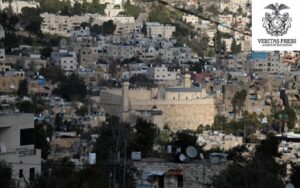
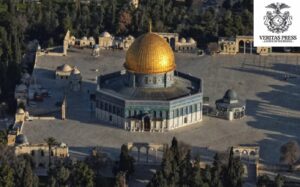
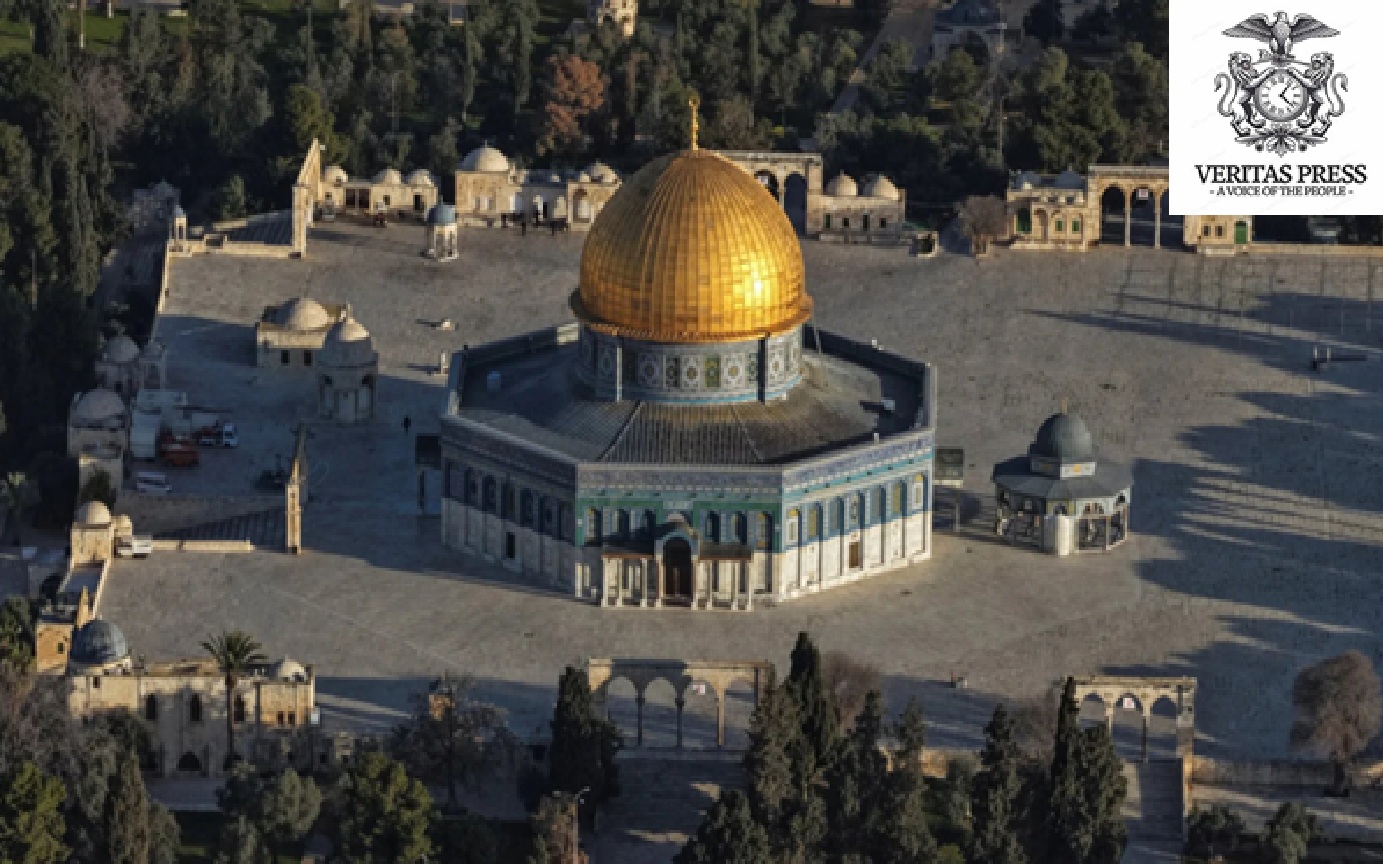
JERUSALEM – While Israel cites the war with Iran as the rationale for banning Friday prayers at Al-Aqsa Mosque, the continuation of Purim celebrations in the city has led Palestinians, experts, and regional actors to decry the move as a calculated exploitation of conflict. They argue the goal is not public safety, but the systematic erosion of the Islamic status of one of Islam’s holiest sites and the imposition of a new, discriminatory reality on occupied East Jerusalem.
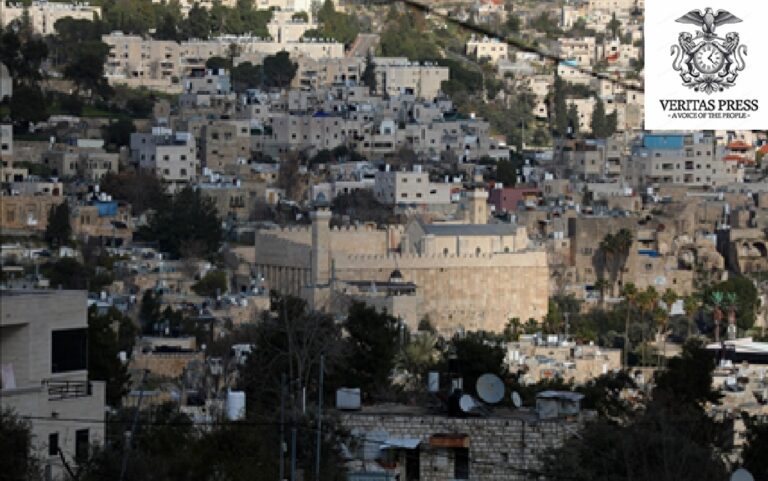
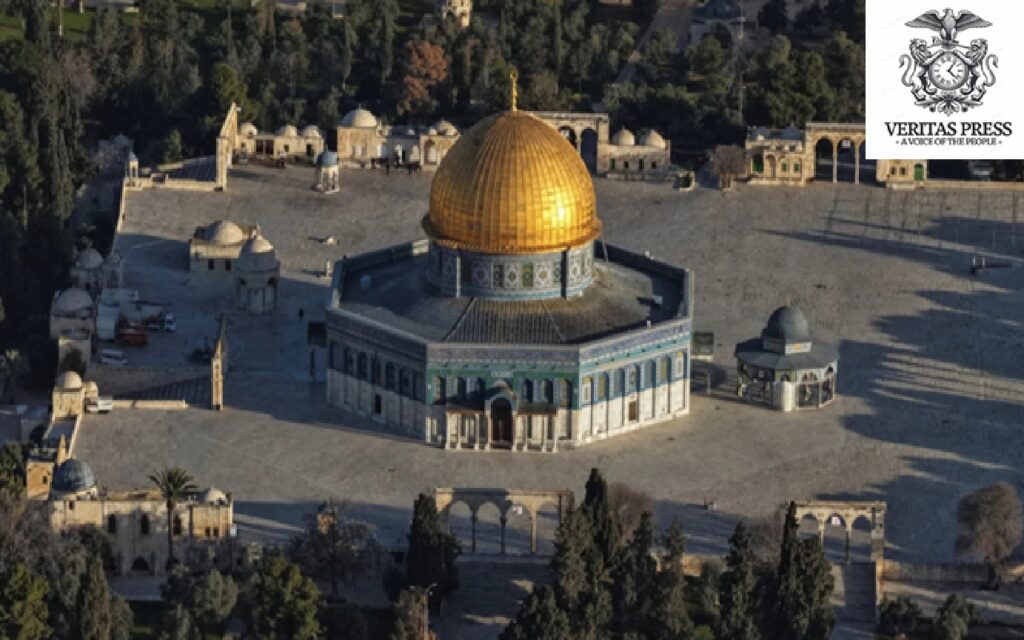
This Ramadan, the courtyards of the Al-Aqsa Mosque compound were uncharacteristically quiet, a silence not heard or seen in a long time. The call to prayer, which usually draws hundreds of thousands of worshippers to the third holiest site in Islam, echoed not through bustling crowds, but across empty stone plazas guarded by heavily armed Israeli police. Since Saturday, March 1, 2026, following the launch of joint US-Israeli military operations against Iran, the compound and much of Jerusalem’s walled Old City has been under a complete lockdown.
Israeli authorities frame the closure as a necessary precaution. Brigadier General Hisham Ibrahim, head of the Israeli Civil Administration, stated that the decision was taken “in light of the security situation after Iran’s retaliatory attacks on Israel and the wider region,” announcing that all holy sites, including Al-Aqsa, the Western Wall, and the Church of the Holy Sepulchre, would be closed to worshippers. On the surface, it is a neutral wartime measure affecting all faiths.
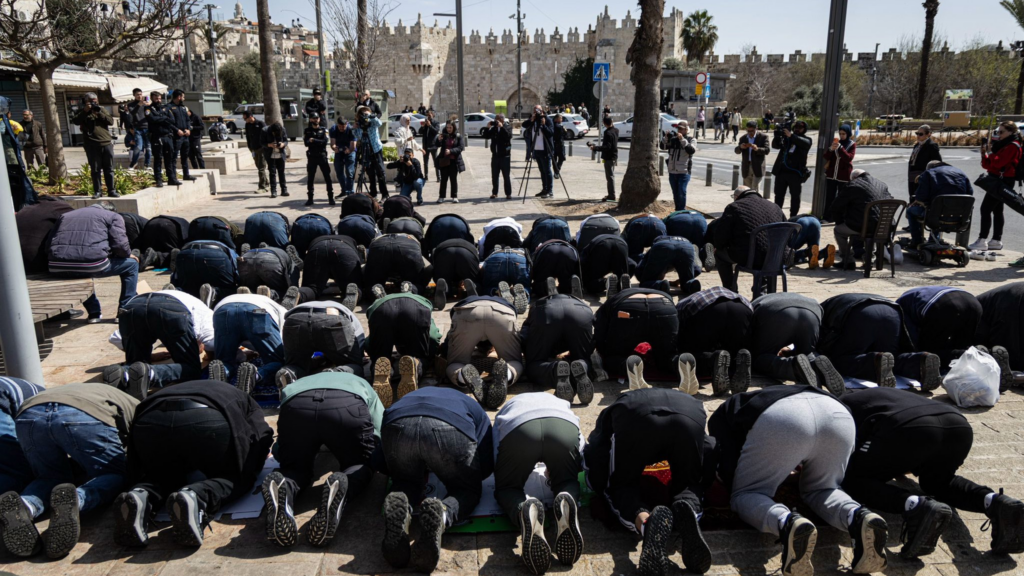
However, a closer examination of the situation on the ground reveals a stark disparity that undermines this official narrative. While tens of thousands of Muslims have been barred from their holiest site during the sacred month of Ramadan, Jewish celebrations for the Purim holiday have been permitted to proceed in West Jerusalem and other parts of the city. This contradiction has ignited fury and scepticism among Palestinians, who view the closures not as a blanket security protocol, but as a targeted campaign to “empty Al-Aqsa” and further entrench Israeli control over the occupied territory.
The Purim Disparity: A “Security” Measure With A Discriminatory Edge
The contrast could not be more pronounced. On Wednesday, March 4, as the closure of the Old City entered its fifth day, Israeli authorities permitted limited gatherings of approximately fifty people to mark Purim in West Jerusalem and near the Western Wall (Buraq Wall) plaza, an area that, unlike the Muslim Quarter, remained accessible to Israelis. Throughout the city, children in costume and festive gatherings were visible, a sign of normalcy during a wartime emergency.
Meanwhile, just a few kilometres away, the streets of the Old City’s Muslim Quarter were deserted. Shops that usually thrive during the Ramadan evening rush were shuttered. More importantly, the gates to the Al-Aqsa compound were sealed shut.
Fakhri Abu Diab, a Jerusalem-based activist and expert on the city’s affairs, dismissed the public safety justification as a lie. In an interview with Middle East Eye, he pointed to the lack of basic protections for Palestinians as proof that their safety is not the state’s concern.
“The police and the government do not care about protecting us, and there are no bomb shelters for Palestinians in Jerusalem,” Abu Diab stated. He argued that the objective of the closure is political, not protective. “We have been prevented from reaching Al-Aqsa, yet people are still in the streets and the markets. The shops are open, institutions are operating and daily life continues as normal. Meanwhile, the place that offers spiritual safety and is not even a target is the one that has been closed.”
This sentiment is echoed by Ma’rouf Al-Rifa’i, the spokesman for the Jerusalem Governorate. Speaking to the Palestinian news agency “Sind,” Al-Rifa’i highlighted the discriminatory application of the emergency orders. He noted that the decision to prevent the gathering of Muslim worshippers under security pretexts came at the very moment Israelis were being allowed to hold events in the city. “This indicates the enemy’s exploitation of security pretexts,” Al-Rifa’i said, pointing out that restrictions were tightening even before the war, with permits for West Bank worshippers slashed from a promised 10,000 to a mere 6,000 on the first Friday of Ramadan.
A Systematic Campaign: Beyond The “Temporary” Closure.
Palestinian officials and religious leaders warn that this closure is not an isolated incident but the culmination of a long-term strategy to “Judaize” Jerusalem and dismantle the historical status quo that governs the holy sites.
The Al-Aqsa Mosque compound, known to Muslims as the Noble Sanctuary and to Jews as the Temple Mount, is the epicentre of the Israeli-Palestinian conflict. Under the existing status quo established after Israel’s occupation of East Jerusalem in 1967, the site is administered by the Jordanian-appointed Islamic Waqf. While Israel controls security and access, the arrangement maintains that Muslims have the exclusive right to pray there, while non-Muslims may visit but not worship.
Sheikh Ikrimah Sabri, the senior imam of Al-Aqsa Mosque, has been a vocal critic of what he describes as a systematic erosion of this arrangement. Following the closure announcement, Sheikh Sabri condemned the move, stating that Israeli authorities “use every opportunity to close Al-Aqsa Mosque” and that the decision “cannot be justified”. His warnings are not new. In mid-February, he predicted that Israel would use Ramadan as a tool to limit worshippers, calling it part of broader efforts to “tighten control over the mosque” and “Judaize al-Quds”.
Ziad Ibhais, a researcher specialising in Jerusalem affairs, provided a sharp analysis to Middle East Eye, describing the closure as a “live rehearsal” for future seizures. He argued that the measure aims to “isolate the mosque from its Muslim worshippers” and marginalise the Islamic Waqf, reducing its role to that of “a spectator; a passive recipient of whatever measures are imposed by Israel.”
This concern is amplified by the actions and rhetoric of far-right members of the Israeli government. National Security Minister Itamar Ben-Gvir, who oversees the police forces implementing the closure, has a long history of calling for changing the status quo. In 2024, he explicitly stated his desire to build a synagogue within the Al-Aqsa compound. While Ben-Gvir’s proposals are not official government policy, his presence in the security cabinet and the increasing frequency of settler incursions into the compound, with at least 12,136 settlers entering in January 2026 alone, suggest a policy of “temporal and spatial division” is being aggressively pursued.
International Law And The Spectre Of Permanent Change:
Israel’s actions in East Jerusalem, including the Old City, are viewed by the vast majority of the international community as a violation of international law. As an occupying power, Israel has no sovereignty over the territory and cannot make permanent changes there.
The closure of Al-Aqsa for an extended period during Ramadan, a time of heightened spiritual significance, is seen by legal experts as a form of collective punishment and a severe breach of the right to freedom of worship. The UN has previously stressed that “civilians must be protected and their essential needs met”.
Aouni Bazbaz, director of international affairs at the Islamic Waqf, warned that the current situation carries profound risks. He told Middle East Eye that the prolonged closure, “particularly at a time when signs of normal life are returning elsewhere, could carry risks and future consequences that cannot be ignored.”
Bazbaz’s greatest fear is that the temporary will become permanent. “The persistence of this situation could also set a dangerous precedent, making the closure of places of worship something that can be repeated more easily in the future,” he explained. “The occupation authorities appear to be creating a new reality regarding access to Al-Aqsa Mosque through the prolonged closure.”
This fear is palpable on the streets. The economic pressure on Old City residents, whose shops have been forcibly closed, is mounting. Ma’rouf Al-Rifa’i warned that the combination of military closure, economic strangulation, and ongoing settlement activity is a deliberate strategy to displace Palestinians. He expressed fears that these conditions “might push some residents to leave their homes,” effectively achieving the goal of emptying the city of its indigenous population without firing a shot.
Regional And International Reaction:
The closure has drawn condemnation far beyond Palestine. Jordan, which serves as the official custodian of the Muslim and Christian holy sites in Jerusalem, has a long-standing position firmly rejecting any violation of the status quo. Following similar settler incursions in February, Jordan’s Foreign Ministry described such actions as a “flagrant violation of the established legal and historical status quo” and stressed that Israel has “no sovereignty over occupied East al-Quds or its Islamic and Christian holy sites”. While an official statement on the current closure is pending, the historical position makes Amman’s opposition clear.
In Indonesia, the world’s most populous Muslim nation, lawmakers have voiced outrage. Surahman Hidayat, a member of the Indonesian House of Representatives from the Prosperous Justice Party (PKS), condemned the closure as a “deep wound for the Islamic world.” He called on the Indonesian government to take “firm diplomatic steps” through the UN and the Organisation of Islamic Cooperation (OIC) to pressure Israel.
Even within the international media, the optics of the closure are damaging. Reports highlight the unprecedented nature of the ban, noting that while the Home Front Command initially closed all holy sites to everyone, leaving churches empty and synagogues deserted during the Sabbath, the continuation of that policy specifically targeting the main Muslim prayer day has raised eyebrows. Farid Jubran, a spokesman for the Catholic Patriarchate of Jerusalem, noted the surreal situation in the early days of the war, stating, “The priests will serve Mass as usual, but no one will be able to come”. That temporary situation for Christians and Jews has now normalised, while for Muslims, the prohibition has become entrenched.
Conclusion: A Dangerous Precedent.
As the sun sets on another day of Ramadan, the lights of the menorah for Purim flicker in West Jerusalem while the Old City remains under a siege-like lockdown. For Palestinians, the message is clear: the security pretext is a malleable tool, used to protect Jewish celebrations while preventing Muslim worship.
The war with Iran has provided the Israeli government with a powerful, albeit temporary, rationale. But as the conflict continues, and as the closure extends from days into weeks, the line between a wartime emergency measure and a permanent policy shift blurs. By demonstrating that Al-Aqsa can be completely emptied with little global resistance, even as Jewish life in the city continues, Israel is redrawing the red lines.
Whether this “new reality” will hold remains to be seen. But as Fakhri Abu Diab and Aouni Bazbaz have warned, the occupation is testing a hypothesis: that by exploiting conflict, it can achieve through “security” what it cannot through politics: the redefinition of one of the world’s most contested religious sites. For the worshippers left praying at locked gates, the fear is that even when the war ends, their right to pray may not return with it.
Source: Multiple News Agencies
Submissions:
For The Secure Submission Of Documentation, Testimonies, Or Exclusive Investigative Reports From Any Global Location, Please Utilise The Following Contact Details For Our Investigations Desk: enquiries@veritaspress.co.uk or editor@veritaspress.co.uk
Help Support Our Work:
Popular Information is powered by readers who believe that truth still matters. When just a few more people step up to support this work, it means more lies exposed, more corruption uncovered, and more accountability where it’s long overdue.
Help Protect Independent Journalism, Which Is Currently Under Attack.
If you believe journalism should serve the public, not the powerful, and you’re in a position to help, becoming a DONATOR or a PAID SUBSCRIBER truly makes a difference.
DONATION APPEAL: If You Found This Reporting Valuable, Please Consider Supporting Independent Journalism.
Help Support Our Work – We Know, We Know, We Know …
Seeing these messages is annoying. We know that. (Imagine what it’s like writing them … )
Your support fuels our fearless, truth-driven journalism. In unity, we endeavour to amplify marginalised voices and champion justice, irrespective of geographical location.
But it’s also extremely important. One of Veritas Press’s greatest assets is its reader-funded model.
1. Reader funding means we can cover what we like. We’re not beholden to the political whims of a billionaire owner. We are a small, independent and impartial organisation. No one can tell us what not to say or what not to report.
2. Reader funding means we don’t have to chase clicks and traffic. We’re not desperately seeking your attention for its own sake: we pursue the stories that our editorial team deems important and believe are worthy of your time.
3. Reader Funding: enables us to keep our website and other social media channels open, allowing as many people as possible to access quality journalism from around the world, particularly those in places where the free press is under threat.
We know not everyone can afford to pay for news, but if you’ve been meaning to support us, now’s the time.
Your donation goes a long way. It helps us:
- Keep the lights on and sustain our day-to-day operations
- Hire new, talented independent reporters
- Launch real-time live debates, community-focused shows, and on-the-ground reporting
- Cover the issues that matter most to our communities, in real time, with depth and integrity
We have plans to expand our work, but we can’t do it without your support. Every contribution, no matter the size, helps us stay independent and build a truly people-powered media platform.
If you believe in journalism that informs, empowers, and reflects the communities we serve, please donate today.
The third Friday of Ramadan is typically a day when the ancient stones of Hebron’s
JERUSALEM – While Israel cites the war with Iran as the rationale for banning Friday
In the first 100 hours alone, the financial cost to the United States has been
LONDON, UK – In the span of a single week, the fragile foundations of the
IRAN, DAY 6 – As the US-Israeli military campaign against Iran enters its sixth day,
The opening days of March 2026 have witnessed a seismic shift in the Middle Eastern
KHAN YUNIS, GAZA – In the early hours of Wednesday morning, east of Khan Yunis,
For The Secure Submission Of Documentation, Testimonies, Or Exclusive Investigative Reports From Any Global Location,
JENIN, OCCUPIED WEST BANK — For the residents of Faqqu’a, a small town nestled east
NEW DELHI/TEL AVIV: When Narendra Modi stood before the Knesset and described Israel as the