


Original Article Date Published:
Article Date Modified:
Help support our mission, donate today and be the change. Every contribution goes directly toward driving real impact for the cause we believe in.
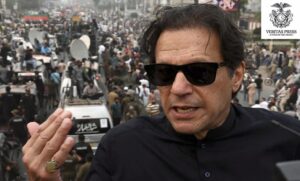
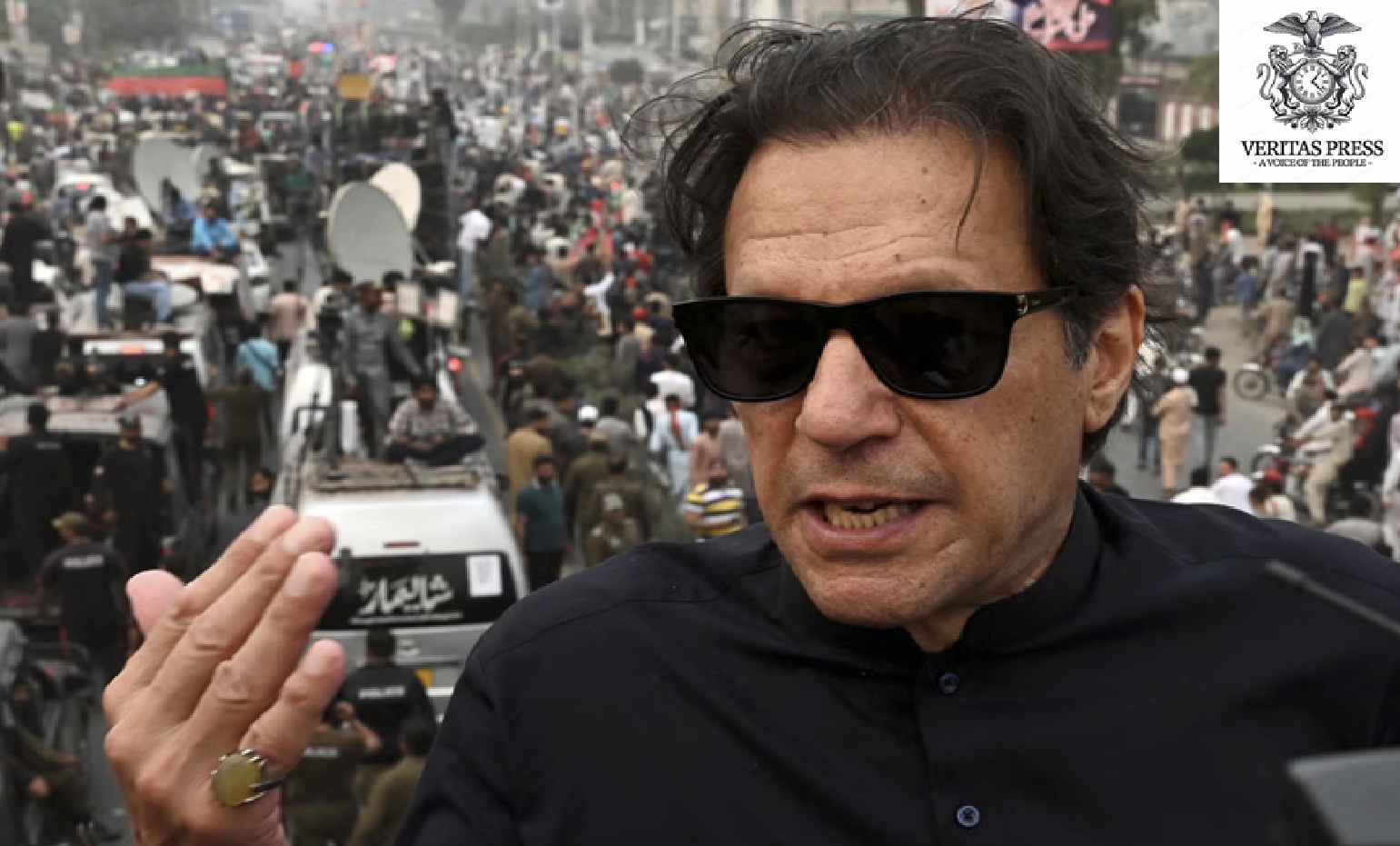
ISLAMABAD, PAKISTAN – The political temperature in Pakistan, already simmering after years of instability, has reached a perilous boiling point. At the heart of the crisis lies a single, visceral question: Is the state slowly allowing former Prime Minister Imran Khan to go blind in custody?
The opposition alliance Tehreek Tahafuz Ayeen-i-Pakistan (TTAP) issued a stark warning on Thursday, declaring that any “criminal negligence” regarding the health of the 74-year-old PTI founder could plunge the country’s political crisis onto an “even more dangerous path”. But beneath the rhetoric of this warning lies a deeper, more disturbing narrative, one of a state that has lost the trust of its opposition, a family that feels gaslit by the system, and a political prisoner whose deteriorating eyesight has become a metaphor for the nation’s own blurred vision of justice.
A Midnight Transfer And A Crisis Of Trust:
The immediate trigger for the escalating alarm was the early morning transfer of Imran Khan from Adiala Jail to the Pakistan Institute of Medical Sciences (PIMS) in Islamabad on February 24. According to officials, the former prime minister was transported under tight security for a scheduled second dose of an anti-VEGF intravitreal injection to treat Central Retinal Vein Occlusion (CRVO) in his right eye.
On paper, the government’s response appears efficient. Parliamentary Affairs Minister Tariq Fazal Chaudhry confirmed the procedure, noting that a third and final dose is scheduled for March 24. The hospital reported that Khan was “clinically stable” and that the procedure was a success.
However, it is the manner of the transfer, not the medical procedure itself, that has ignited a firestorm of controversy. Imran Khan’s sister, Aleema Khan, expressed the raw anguish of a family kept in the dark.
“We only found out from news reports that he was taken to PIMS again in the middle of the night,” she told media personnel outside Adiala Jail, calling the operation “criminal.” Her statement cuts to the core of the trust deficit: “We do not trust the diagnosis or test reports from government medical facilities. There are already reports coming from PIMS that doctors are being threatened with serious consequences if any information is leaked about Imran Khan”.
This isn’t just a family feud with the state; it has become a full-blown constitutional crisis. Jailed PTI leaders, including Shah Mehmood Qureshi and Dr. Yasmin Rashid, have penned an urgent letter to the Chief Justice of Pakistan. They drew a scathing comparison with the treatment of former PM Nawaz Sharif in 2019, who was allowed access to his personal physicians and eventually flown to London for treatment.
“The sitting government has engaged in ‘cloak-and-dagger’ conduct,” the letter reads, alleging that the state is “deliberately creating obstacles in order to retain political control”. The implication is damning: that the government is willing to risk a prisoner’s health to avoid the political instability his release might cause.
The Medical Evidence: A Battle Of Narratives.
The factual basis for the panic is medically serious. A report submitted to the Supreme Court earlier this month confirmed that Imran Khan has lost approximately 85% of the vision in his right eye due to CRVO, a condition where blood flow is blocked from the retina. While government doctors claim improvement, noting vision of 6/24 in the right eye, the Khan family and TTAP remain unconvinced.
Aleema Khan delivered a chilling message to the press: “Imran Khan has sent a message that he cannot see… He wants his personal doctors to be granted access to examine him”. The demand for Dr. Faisal Sultan and Dr. Aasim Yusuf to be allowed independent access has become a non-negotiable red line for the opposition.
The Politics Of Paralysis: TTAP’s Dual Strategy Of Dialogue And Defiance.
Paradoxically, even as the health crisis deepens, the political landscape has shifted toward negotiation. In a surprising development, the TTAP alliance has accepted the government’s offer for talks.
Following a late-night consultative meeting at the residence of Mustafa Nawaz Khokhar on February 25, the alliance authorised opposition leaders Mehmood Khan Achakzai and Allama Raja Nasir Abbas to initiate a dialogue process with key government figures during the holy month of Ramadan.
PTI leader Junaid Akbar articulated the opposition’s conditional willingness: “We are political people and have faith in the negotiation process. We want to resolve issues through compromise and dialogue… but the government must also correct its approach”.
This creates a fascinating and precarious dynamic. At the same table where they are negotiating the “Charter of Democracy” and constitutional protections, the opposition is accusing the government of potentially orchestrating a medical tragedy.
TTAP leader Mustafa Nawaz Khokhar highlighted the duality of their concern, linking Imran’s health to the wider national security crisis. “Clouds of war are looming over the region,” he warned, referencing US naval deployments against Iran, while simultaneously demanding that Imran be shifted to Shifa International Hospital.
The Wider Crisis: Terrorism, Economy, And Sovereignty.
The TTAP statement was not solely focused on Imran Khan. It painted a picture of a state under siege from multiple fronts. The alliance expressed grave concern over the “alarming increase” in terrorism, particularly in Khyber Pakhtunkhwa and Balochistan.
This security breakdown has economic teeth. Citing recent data, TTAP claimed poverty has skyrocketed to 29%, and unemployment has hit a 21-year high. They alleged that the “exit of hundreds of major multinational companies” is evidence of a deteriorating risk profile.
On the foreign policy front, the alliance launched a blistering critique of the government’s decision to join US President Donald Trump’s “Board of Peace,” which they described as an attempt to create a “non-representative alternative to the United Nations” that excludes Palestinians.
Analysis: The Reckoning.
What we are witnessing in late February 2026 is the culmination of two and a half years of political vendetta colliding with the biological realities of ageing.
The government’s narrative, that Imran Khan is receiving “the best available” treatment, is undermined entirely by its own security apparatus. When a prisoner’s sister has to learn about a medical procedure from a news report at 2 AM, it is not security; it is secrecy. And secrecy breeds suspicion.
The deeper investigative question remains: Why the fear of letting Dr. Faisal Sultan or Dr. Aasim Yusuf see their patient? If the government has nothing to hide, the refusal to allow independent medical verification reads as a form of political hostage-taking.
TTAP’s warning about “criminal negligence” escalating the political crisis is not hyperbole. Pakistan is a country where the death in custody of a political leader (Zulfikar Ali Bhutto) has cast a shadow for decades. If Imran Khan’s eyesight deteriorates further, or if he suffers a more severe health event, behind the walls of a jail where his family cannot witness it, the fragile olive branch of negotiations will snap.
As one political analyst in Islamabad noted privately: “They are trying to negotiate a charter of democracy with a man whose vision is failing. If he loses his sight completely while in their custody, no charter will save the country from the resulting inferno.”
For now, the opposition holds two paths forward: the path of dialogue in the halls of parliament, and the path of protest outside the gates of Adiala Jail. It remains to be seen which one the government’s actions will force them to take.
For The Secure Submission Of Documentation, Testimonies, Or Exclusive Investigative Reports From Any Global Location, Please Utilise The Following Contact Details For Our Investigations Desk: enquiries@veritaspress.co.uk or editor@veritaspress.co.uk
Popular Information is powered by readers who believe that truth still matters. When just a few more people step up to support this work, it means more lies exposed, more corruption uncovered, and more accountability where it’s long overdue.
If you believe journalism should serve the public, not the powerful, and you’re in a position to help, becoming a DONATOR or a PAID SUBSCRIBER truly makes a difference.
DONATION APPEAL: If You Found This Reporting Valuable, Please Consider Supporting Independent Journalism.
Help Support Our Work – We Know, We Know, We Know …
Seeing these messages is annoying. We know that. (Imagine what it’s like writing them … )
Your support fuels our fearless, truth-driven journalism. In unity, we endeavour to amplify marginalised voices and champion justice, irrespective of geographical location.
But it’s also extremely important. One of Veritas Press’s greatest assets is its reader-funded model.
1. Reader funding means we can cover what we like. We’re not beholden to the political whims of a billionaire owner. We are a small, independent and impartial organisation. No one can tell us what not to say or what not to report.
2. Reader funding means we don’t have to chase clicks and traffic. We’re not desperately seeking your attention for its own sake: we pursue the stories that our editorial team deems important and believe are worthy of your time.
3. Reader Funding: enables us to keep our website and other social media channels open, allowing as many people as possible to access quality journalism from around the world, particularly those in places where the free press is under threat.
We know not everyone can afford to pay for news, but if you’ve been meaning to support us, now’s the time.
Your donation goes a long way. It helps us:
- Keep the lights on and sustain our day-to-day operations
- Hire new, talented independent reporters
- Launch real-time live debates, community-focused shows, and on-the-ground reporting
- Cover the issues that matter most to our communities, in real time, with depth and integrity
We have plans to expand our work, but we can’t do it without your support. Every contribution, no matter the size, helps us stay independent and build a truly people-powered media platform.
If you believe in journalism that informs, empowers, and reflects the communities we serve, please donate today.
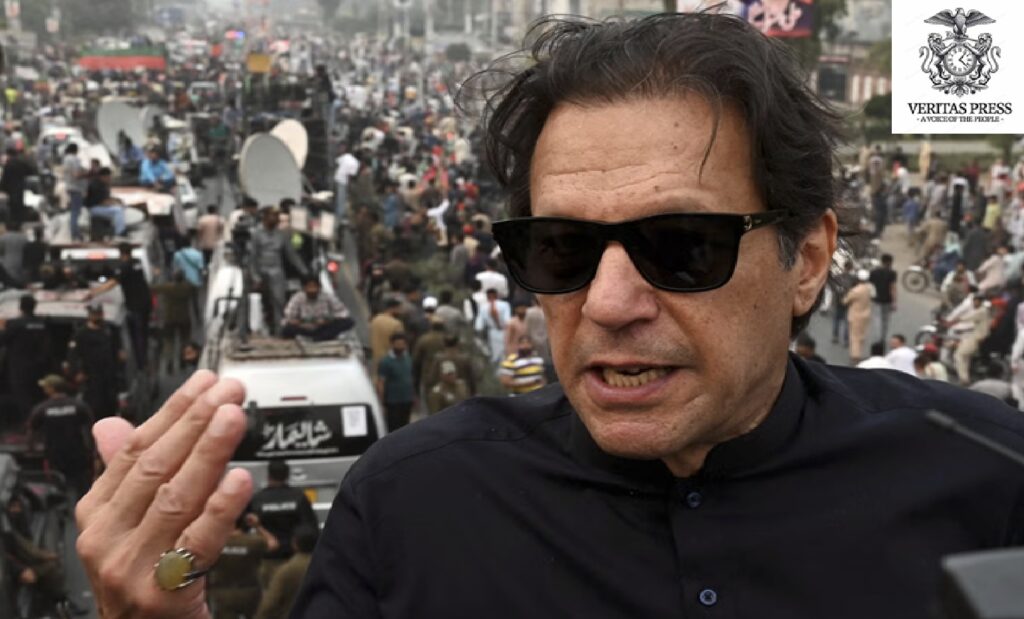
ISLAMABAD, PAKISTAN – The political temperature in Pakistan, already simmering after years of instability, has
For years, the United Kingdom has watched a harrowing pattern emerge from its maternity wards.
A significant and highly controversial development is underway in the southern Gaza Strip. Recent reporting
GENEVA/WASHINGTON — As a third round of indirect talks between the United States and Iran
In what press freedom watchdogs are calling a historic collapse of civilian protection, 2025 has
In an extraordinary parliamentary intervention that has sent shockwaves through Westminster, a coalition of Labour
GREATER MANCHESTER, UK – On the evening of February 24, prayers at Manchester Central Mosque,
WEST BANK, Date: February 25, 2026 – The occupied West Bank is witnessing a dramatic
NEW DELHI/KASHMIR -As Narendra Modi makes his second official visit to Israel starting February 25,
WASHINGTON/TEHRAN, Feb 25, 2026- For the second time in a week, Tehran has levelled an