





Original Article Date Published:
Article Date Modified:
Help Support our mission—donate today and be the change. Every contribution goes directly toward driving real impact for the cause we believe in.
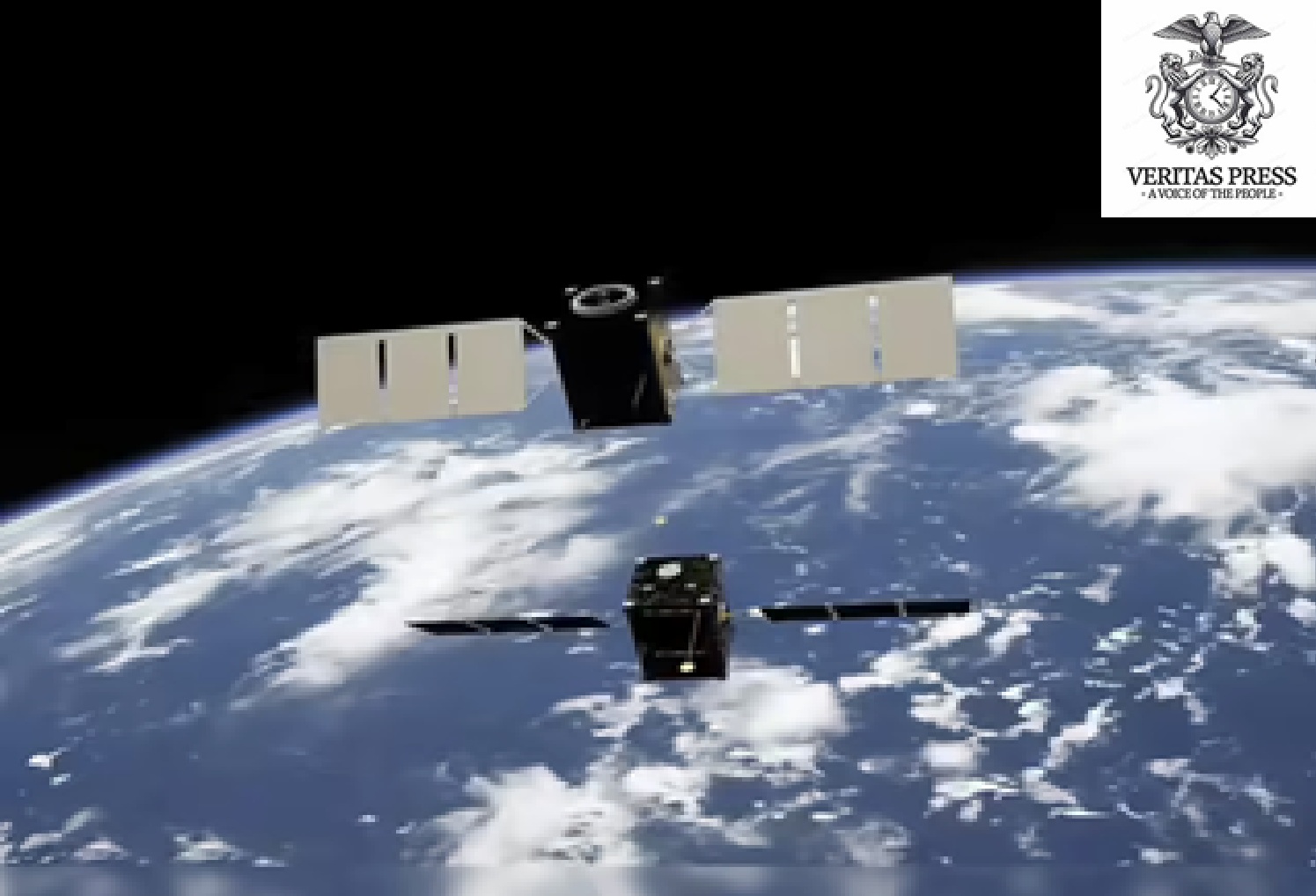
ISLAMABAD/BEIJING – February 12, 2026 – Pakistan has marked a historic advancement in its national space programme with the successful launch of its second indigenous Earth Observation satellite, EO-2, from China’s Yangjiang Seashore Launch Centre on Thursday. The mission, which took place at 14:37 Beijing Time (11:37 PKT), represents a significant leap forward in the country’s satellite engineering capabilities and technological self-reliance.

Successful launch of its second indigenous Earth Observation Satellite, EO-2, from Chinas Yangjiang Seashore Launch Centre, on Thursday. —Photo courtesy X
Mission Technical Specifications And Launch Details:
The EO-2 satellite, formally designated as PRSC-EO2, was developed indigenously by the Space and Upper Atmosphere Research Commission (SUPARCO) at its Satellite Research and Development Centre. In a demonstration of advancing domestic expertise, the satellite was entirely conceived, engineered, and integrated by Pakistani scientists and engineers through in-house research, systems engineering, and payload integration protocols.

Image of the rocket carrying the SUPARCO PRSC-EO2 satellite. SOURCE: STRATCOM BUREAU ON X
The launch was executed using China’s Jielong-3 (Smart Dragon-3) carrier rocket in a “one rocket, seven satellites” configuration, marking the ninth flight of the Jielong-3 vehicle. The mission was conducted under the operational command of the Taiyuan Satellite Launch Centre, with the launch platform positioned in maritime waters near Yangjiang. Alongside Pakistan’s EO-2, the rocket successfully deployed six other satellites: Hong Kong’s CUHK-1 satellite, Power Infrared Satellite A, Shutian Yuxing 03-05, and a space environment monitoring satellite, all of which entered their designated orbits with precision.

Transformative Applications For National Development:
SUPARCO officials have outlined an extensive portfolio of applications for EO-2, emphasising its role in generating critical spatial data to support evidence-based governance and development planning. The satellite’s high-resolution electro-optical imaging capabilities will directly serve national priorities, including natural resource management, environmental monitoring, and urban expansion mapping.
The satellite is also expected to strengthen Pakistan’s disaster management infrastructure. By delivering accurate and timely satellite imagery, EO-2 will enhance the country’s capacity for disaster assessment, climate change analysis, land use tracking, and infrastructure development monitoring. Officials noted that improved image resolution and broader coverage will support faster, more reliable decision-making across civilian authorities and strategic planning institutions that rely on geospatial intelligence.
Strategic Dual-Satellite Configuration:
A defining feature of this mission is the coordinated operational architecture established between EO-2 and its predecessor, EO-1, which was launched from China’s Jiuquan Satellite Launch Centre in January 2025. With both satellites now in orbit, Pakistan has established a dual electro-optical satellite system capable of operating in tandem. This configuration allows for Earth observation under varying illumination conditions, significantly improving surface feature interpretation, change detection accuracy, and the reliability of long-term environmental data comparisons.
SUPARCO emphasised that this expanded fleet ensures enhanced continuity, coverage, and precision of earth observation data, addressing critical gaps in revisit times and data availability that previously constrained domestic analytical capacity.
Parallel Advances In Human Spaceflight:
The EO-2 launch follows closely on the heels of another landmark achievement in Pakistan’s space ambitions. On February 7, 2026, the Inter-Services Public Relations (ISPR) announced that two Pakistani candidates had been officially shortlisted by the Astronauts Centre of China (ACC) for advanced astronaut training.
This development is anchored in a bilateral cooperation agreement signed in February 2025 between SUPARCO and the China Manned Space Agency (CMSA). Under the terms of the agreement, the two shortlisted candidates will undergo six months of comprehensive astronaut training at the ACC, encompassing rigorous medical, psychological, and aptitude assessments conducted in accordance with international human spaceflight standards.
Upon successful completion of their training, one candidate will be selected for a spaceflight mission aboard China’s Tiangong space station, currently scheduled for October or November 2026. The selected astronaut will serve as a payload specialist, conducting advanced scientific experiments on behalf of Pakistan while performing standard crew duties aboard the orbital outpost. CMSA spokesperson Lin Xiqiang confirmed that the Pakistani candidates are undergoing the same three-stage selection process, preliminary, secondary, and final, applied to Chinese astronauts.
China’s selection of Pakistan as its first international partner in the astronaut programme carries significant diplomatic weight, particularly given the 2011 US congressional prohibition on NASA collaboration with Chinese space agencies, a restriction that excluded China from the International Space Station partnership.
Official Reactions And Strategic Significance:
Deputy Prime Minister and Foreign Minister Ishaq Dar welcomed the EO-2 launch as a “historic milestone,” noting that it represents Pakistan’s fifth earth observation satellite overall and its second indigenously developed electro-optical satellite. “This achievement reflects Pakistan’s steady progress in strengthening its national space capabilities and advancing technological self-reliance,” Dar stated.
The Deputy Prime Minister specifically acknowledged China’s contribution to the mission, expressing “sincere gratitude to the Government of the People’s Republic of China for its continued cooperation and steadfast support.” He emphasised that the Pakistan–China All-Weather Strategic Cooperative Partnership “continues to scale new heights, including in space technology”.
Dar also commended SUPARCO, its scientists, engineers, and support teams for their “tireless efforts in expanding Pakistan’s indigenous space infrastructure and developing reliable, domestically engineered space systems for national development”.
Indigenous Engineering And Capacity Building:
SUPARCO officials characterised the EO-2 mission as compelling evidence of sustained institutional investment in applied research, skilled workforce development, and domestic space infrastructure. The satellite’s complete development lifecycle, from conceptual design through systems integration, testing, and operational deployment, was executed within Pakistan, demonstrating maturing competencies in satellite bus architecture, payload integration, and mission assurance protocols.
The agency noted that the successful indigenous development of EO-2 reflects the country’s growing technical expertise and self-reliance in advanced satellite technology, marking a substantive step forward in Pakistan’s space journey. This trajectory aligns with the National Space Policy and the broader Vision 2047 framework, which articulates Pakistan’s long-term commitment to becoming a technologically advanced, spacefaring nation capable of addressing domestic development challenges through indigenous innovation.
Historical Context And Future Trajectory:
Pakistan’s contemporary space programme has been revitalised since 2011, beginning with the launch of PakSat-1R in collaboration with China. Subsequent milestones include the indigenous PakTES-1A, the PakSat-MM1 communication satellite, and the student-developed iCube Qamar lunar satellite launched in 2024. The successful deployment of EO-1 in January 2025 marked Pakistan’s first fully homegrown electro-optical satellite, establishing the foundation upon which EO-2 now builds.
With EO-2 now operational alongside EO-1, Pakistan has substantially enhanced its remote sensing infrastructure. The parallel progress in satellite launches and human spaceflight preparation reflects a broader expansion of Pakistan-China cooperation in space science and technology, alongside a sustained domestic push for greater indigenous capability in satellite systems. Officials indicated that additional earth observation satellites are planned for deployment to further increase coverage frequency and data availability for national users.
As Pakistan advances toward its first crewed mission to the Tiangong space station and continues to expand its indigenous satellite constellation, the events of February 2026 are likely to be regarded as a defining moment in the nation’s transformation from a space technology consumer to an increasingly capable producer and operator of advanced space systems.

In the annals of American foreign policy, few moments have laid bare the tectonic shift

TEHRAN — In the early hours of March 31, 2026, the Islamic Revolution Guards Corps

On March 30, 2026, the Israeli Knesset passed legislation that fundamentally alters the country’s relationship

LONDON, UK – On a crisp Saturday in late March, central London became the stage

BINT JBEIL, LEBANON – The airstrike came just after midnight. Israeli warplanes targeted the perimeter

More than half a decade after COVID-19 first reshaped global society, a new variant dubbed
TEHRAN, IRAN – Twenty-eight days after the assassination of Iran’s Supreme Leader Ayatollah Seyyed Ali

Original Article Date Published: Article Date Modified: Help support our mission, donate today and be

NEW YORK, US – On the night of March 26, 2026, Nerdeen Kiswani received a

JERUSALEM — For the 29th consecutive day, the heavy iron gates surrounding the Al-Aqsa Mosque