



Title: On The Brink: How Threats, Lawfare, And Intelligence Failures Are Driving The U.S.–Iran Crisis.
Press Release: Veritas Press C.I.C.
Author: Kamran Faqir
Article Date Published: 29 Jan 2026 at 11:25 GMT
Category: Asia-Eurasia | U.S.-Iran | On The Brink: How Threats, Lawfare, And Intelligence Failures Are Driving The U.S.–Iran Crisis.
Source(s): Veritas Press C.I.C. | Multi News Agencies
Website: www.veritaspress.co.uk

Business Ads


Iran has warned it will respond “immediately and powerfully” to any U.S. military aggression, as President Donald Trump once again escalates tensions by threatening war, deploying naval forces, and reviving coercive demands over Tehran’s nuclear programme.
The warning came within hours of Trump declaring that a “massive armada” of U.S. forces, led by the nuclear-powered aircraft carrier USS Abraham Lincoln, was heading toward Iranian waters, accompanied by an ultimatum that “time is running out” for Tehran to submit to a new deal.
For many inside Iran, the moment feels dangerously familiar.
“Everyone is concerned here,” one Iranian analyst told regional media. “This is a situation where the country is under the threat of war. And at the end of the day, a war on Iran is not a war on the system or the establishment; people are going to be killed.”
Trump Revives The Language Of Force:
In a lengthy Truth Social post early Wednesday, Trump framed the deployment as leverage rather than preparation for war, but coupled it with explicit threats.
“Hopefully Iran will quickly ‘Come to the Table’ and negotiate a fair and equitable deal, NO NUCLEAR WEAPONS,” Trump wrote. “If not, the consequences will be far worse.”
He compared the deployment to previous U.S. naval shows of force, claiming the fleet was “ready, willing, and able to rapidly fulfil its mission, with speed and violence, if necessary.”
The remarks revived memories of last June, when the United States joined Israel in a 12-day war against Iran, striking three major nuclear facilities. Trump later claimed those attacks had “obliterated” Iran’s nuclear programme, a claim widely disputed by international experts, who say the location of Iran’s enriched uranium stockpile remains unknown.
Since then, Trump has repeatedly suggested that renewed military action remains on the table, particularly if Iran refuses negotiations conducted under threat.
Escalation By Design: A Timeline Of Missed Off-Ramps.
Collapse of Diplomacy
Indirect nuclear talks collapsed after Washington demanded concessions far beyond nuclear limits, while offering no binding guarantees, a position Tehran rejected as bad faith, citing the U.S. withdrawal from the 2015 JCPOA.
June 2025: Force Becomes Precedent
The U.S.–Israeli strikes and Iran’s retaliatory missile attack on Al Udeid Air Base in Qatar shattered long-standing taboos. Direct confrontation was no longer hypothetical; it was normalised.
Psychological Warfare Phase
By early 2026, U.S. deployments, public ultimatums, and daily threats replaced backchannel diplomacy. Iranian officials accused Washington of deliberate psychological warfare aimed at elite fracture and public fear.
The Armada Ultimatum
Trump’s public warning removed ambiguity and political space for de-escalation, effectively daring Tehran to either submit or retaliate.
Tehran Rejects Talks Under Coercion:
Iranian officials have categorically rejected negotiations framed by intimidation.
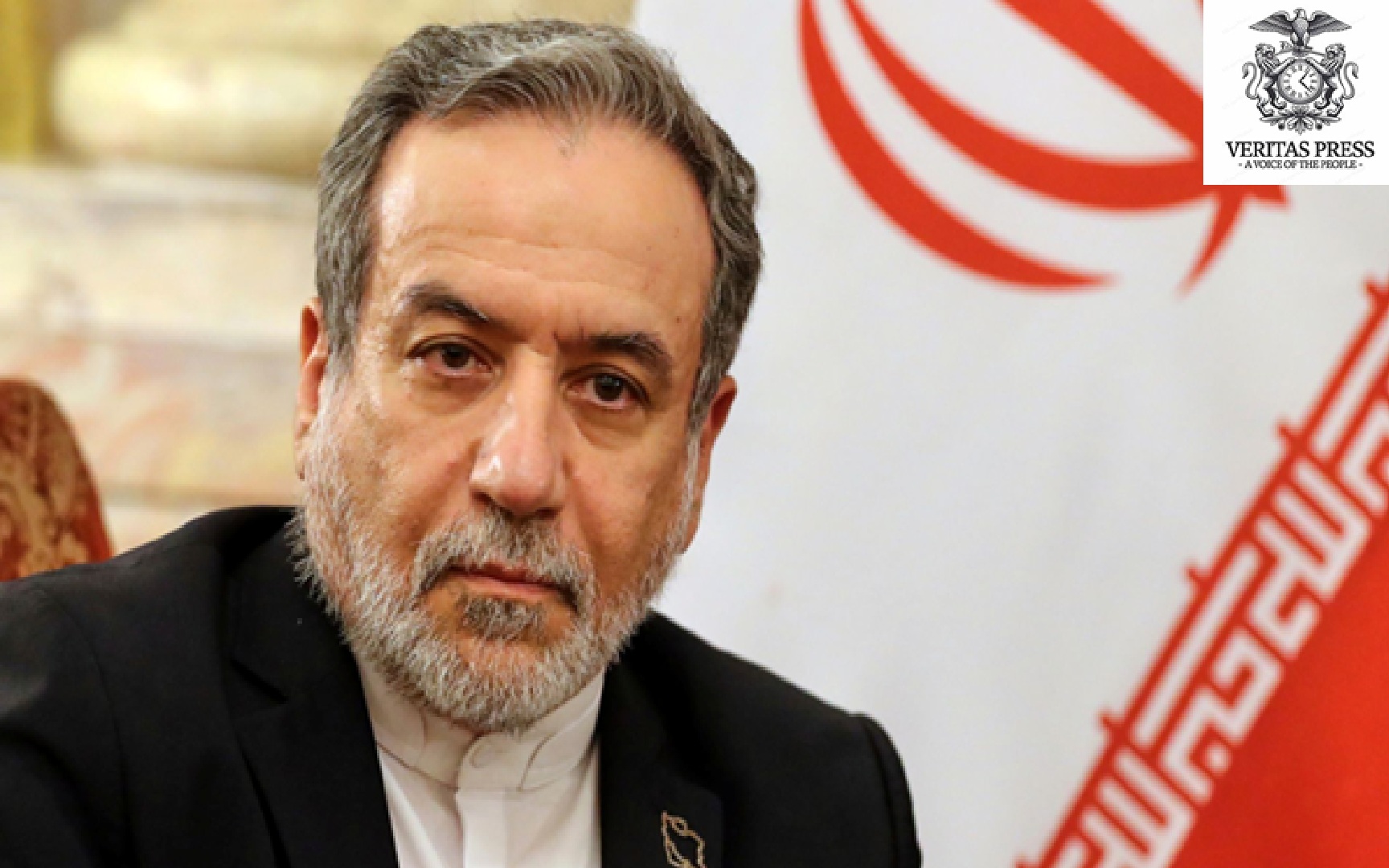
“Negotiations don’t go along with threats,” Foreign Minister Abbas Araghchi said, confirming that there had been no recent contact with U.S. officials.
Iran’s mission to the United Nations echoed the message, warning Washington that it was repeating the mistakes of past Middle East wars. While reaffirming openness to dialogue based on “mutual respect and interests,” the mission warned that any attack would be met with unprecedented force.
“If pushed, it will respond like never before,” the statement said.
Armed Forces On High Alert:
Iran’s warnings were reinforced by senior military officials.
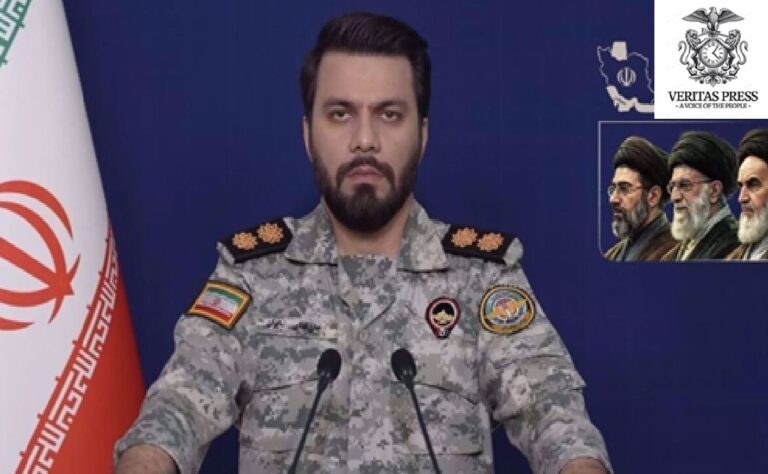
The Islamic Revolutionary Guard Corps (IRGC) said Iran’s armed forces are fully prepared for “all military scenarios.” Brigadier General Ali Mohammad Naeini confirmed that detailed operational plans are already in place.
Naeini accused Washington of waging psychological warfare after failing to break Iran through sanctions, covert operations, and last year’s war.
“The military option against Iran has failed,” he said, citing Iran’s retaliatory strike on Al Udeid, the largest U.S. base in the region. “The enemy has not forgotten our initial strikes.”
Classified-Style Intelligence Assessment: What The Public Is Not Being Told.
Assessment Summary (circulating among Western and regional intelligence services):
- U.S. strikes would not eliminate Iran’s nuclear capability, only disperse it further underground.
- Iran retains escalation dominance in the first 30–60 days of conflict due to missile saturation capacity and regional allies.
- Israeli territory and Gulf shipping lanes would become immediate secondary fronts.
- No credible exit strategy exists once hostilities begin.
Multiple assessments reportedly warn that Washington is mistaking coercive signalling for deterrence, while underestimating Iran’s tolerance for economic and military pain.
What U.S. Analysts Are Privately Warning:
- “This is Iraq logic all over again, public certainty, private doubt.”
- “We can start this war. We cannot control it.”
- “Iran is not isolated the way Iraq was. The region will not stay neutral.”
- “There is no post-war plan because no one believes a ‘post-war’ phase will exist.”
Several analysts reportedly describe the current posture as high-confidence rhetoric masking low-confidence intelligence, a pattern that mirrors previous U.S. military disasters.
Regional Spillover Risks:
Security analysts warn that any U.S. or Israeli attack would almost certainly trigger a regional conflagration.
Iran possesses ballistic missiles capable of striking U.S. bases, naval assets, and Israeli territory, while allied factions across Lebanon, Syria, Iraq, and Yemen have signalled readiness to join.
Saudi Arabia and the UAE have reportedly refused airspace access for attacks on Iran. Egypt and Qatar have launched emergency mediation efforts, a sign of deep regional alarm.
Legal Accountability: Breaches Of The UN Charter.
Iran has formally accused the United States of violating international law.
Key Alleged Violations:
- Article 2(4): Prohibition on the threat or use of force
- Article 33: Obligation to pursue peaceful dispute resolution
- Customary international law: Prohibition of coercive diplomacy
Iran’s UN ambassador warned Washington would bear “full and direct responsibility for any unpredictable and uncontrolled consequences.”
The Security Council’s paralysis underscores a broader erosion of international legal enforcement, particularly when violations are committed by permanent members.
History Repeats: Iraq 2003, Libya 2011 — And Iran Now.
Regime Change by Another Name: Resources, Power, Corporate Access — Military
Entrenchment and Control of Trade Routes.
Behind the rhetoric of nuclear non-proliferation lies a far more consistent objective: political subordination, military entrenchment, control of transcontinental trade routes, and economic penetration.
Multiple intelligence assessments and policy papers circulating in Washington describe Iran not primarily as a nuclear threat, but as a sovereign obstacle, a state that resists U.S. and Israeli military dominance, refuses permanent foreign basing, blocks Western corporate access to strategic resources, and occupies a geographic chokepoint at the heart of Eurasian trade.
Iran sits astride the modern revival of the Silk Road corridors linking East Asia to Europe, Russia, the Caucasus, the Eastern Mediterranean, and South Asia. Any U.S.-aligned post-regime order would grant Washington and its allies leverage over:
- Overland rail and road corridors connecting China to Europe
- Energy transit routes linking Central Asia to global markets
- North–South corridors connecting Russia to the Indian Ocean
Control over Iranian territory would allow Western powers to disrupt, tax, reroute, or condition Eurasian trade, directly undermining China’s Belt and Road Initiative (BRI) and constraining Russian and regional economic integration, objectives repeatedly cited in strategic planning circles.
Central to regime-change planning is the establishment of U.S.- and Israeli-aligned military infrastructure inside Iran itself.Former and current officials familiar with contingency planning say any post-regime order would involve:
- Forward-operating U.S. air and missile-defence bases
- Intelligence, surveillance, and reconnaissance (ISR) hubs integrated with Israeli systems
- Long-term security agreements modelled on post-2003 Iraq
- De facto loss of Iranian control over key strategic corridors
Such basing would fundamentally reshape the regional balance of power, placing American and Israeli forces directly astride Eurasian land routes and maritime chokepoints.
Maritime dominance is equally central. Iran commands coastlines along the Persian Gulf, the Gulf of Oman, and is in proximity to the Strait of Hormuz, through which roughly a fifth of the world’s oil trade passes. A compliant Iranian state would enable:
- Permanent Western naval access to Hormuz
- Denial of Iranian anti-access/area-denial (A2/AD) capabilities
- Expanded Israeli and U.S. maritime surveillance across the Indian Ocean
Iran possesses some of the world’s largest proven reserves of oil, natural gas, rare earth minerals, copper, zinc, and strategic industrial metals, much of which remains outside Western corporate control due to sanctions and state ownership. Analysts note that regime change, not disarmament, is the prerequisite for opening these sectors to multinational exploitation, privatization, and long-term concession agreements.
This logic closely mirrors Iraq in 2003, where weapons of mass destruction claims collapsed, but the war proceeded, followed by sweeping privatisation of oil, infrastructure, and reconstruction contracts benefiting U.S. and allied corporations, alongside the permanent embedding of American military bases controlling land and maritime routes. Libya followed a similar path in 2011, where humanitarian justifications masked a campaign that destroyed state control over energy assets and opened the country to foreign military access amid chaos.
In Iran’s case, intelligence officials privately concede that the development of an operational nuclear weapon is neither imminent nor technically necessary for Tehran’s deterrence strategy. Iran already possesses conventional and asymmetric capabilities sufficient to deter invasion, undermining the claim that nuclear urgency drives policy.
Instead, the nuclear issue functions as a political pretext: a flexible justification that legitimises pressure, sanctions, covert action, and ultimately war, while obscuring the real objective of dismantling an independent state structure resistant to foreign military basing, external economic control, domination of Silk Road corridors, and Western maritime supremacy.
Behind the rhetoric of nuclear non-proliferation lies a far more consistent objective: political subordination, military entrenchment, and economic penetration.
Multiple intelligence assessments and policy papers circulating in Washington describe Iran not primarily as a nuclear threat, but as a sovereign obstacle, a state that resists U.S. and Israeli military dominance, refuses permanent foreign basing, blocks Western corporate access to strategic resources, and maintains independent regional influence.
Central to regime-change planning is the establishment of U.S.- and Israeli-aligned military infrastructure inside Iran itself. Former and current officials familiar with contingency planning say any post-regime order would involve:
- Forward-operating U.S. air and missile-defence bases
- Intelligence, surveillance, and reconnaissance (ISR) hubs integrated with Israeli systems
- Long-term security agreements modelled on post-2003 Iraq
- De facto loss of Iranian control over key strategic corridors
Such basing would fundamentally reshape the regional balance of power, placing American and Israeli forces directly on Iran’s borders with the Caucasus, Central Asia, the Persian Gulf, and South Asia, a strategic prize that goes far beyond nuclear containment.
Iran possesses some of the world’s largest proven reserves of oil, natural gas, rare earth minerals, copper, zinc, and strategic industrial metals, much of which remains outside Western corporate control due to sanctions and state ownership. Analysts note that regime change, not disarmament, is the prerequisite for opening these sectors to multinational exploitation, privatization, and long-term concession agreements.
This logic closely mirrors Iraq in 2003, where weapons of mass destruction claims collapsed, but the war proceeded, followed by sweeping privatization of oil, infrastructure, and reconstruction contracts benefiting U.S. and allied corporations, alongside the permanent embedding of American military bases. Libya followed a similar path in 2011, where humanitarian justifications masked a campaign that destroyed state control over energy assets and opened the country to foreign military access amid chaos.
In Iran’s case, intelligence officials privately concede that the development of an operational nuclear weapon is neither imminent nor technically necessary for Tehran’s deterrence strategy. Iran already possesses conventional and asymmetric capabilities sufficient to deter invasion, undermining the claim that nuclear urgency drives policy.
Instead, the nuclear issue functions as a political pretext: a flexible justification that legitimises pressure, sanctions, covert action, and ultimately war, while obscuring the real objective of dismantling an independent state structure resistant to foreign military basing, external economic control, and Israeli strategic dominance.
Behind the rhetoric of nuclear non-proliferation lies a far more consistent objective: political subordination and economic penetration.
Multiple intelligence assessments and policy papers circulating in Washington describe Iran not primarily as a nuclear threat, but as a sovereign obstacle, a state that resists U.S. dominance over energy corridors, resists Western corporate access to strategic resources, and maintains independent regional influence.
Iran possesses some of the world’s largest proven reserves of oil, natural gas, rare earth minerals, copper, zinc, and strategic industrial metals, much of which remains outside Western corporate control due to sanctions and state ownership. Analysts note that regime change, not disarmament, is the prerequisite for opening these sectors to multinational exploitation, privatization, and long-term concession agreements.
This logic closely mirrors Iraq in 2003, where weapons of mass destruction claims collapsed, but the war proceeded, followed by sweeping privatisation of oil, infrastructure, and reconstruction contracts benefiting U.S. and allied corporations. Libya followed a similar path in 2011, where humanitarian justifications masked a campaign that destroyed state control over energy assets and left Western firms competing for access amid chaos.
In Iran’s case, intelligence officials privately concede that the development of an operational nuclear weapon is neither imminent nor technically necessary for Tehran’s deterrence strategy. Iran already possesses conventional and asymmetric capabilities sufficient to deter invasion, undermining the claim that nuclear urgency drives policy.
Instead, the nuclear issue functions as a political pretext: a flexible justification that legitimises pressure, sanctions, covert action, and ultimately war, while obscuring the real objective of dismantling an independent state structure resistant to external economic control.
The pattern is familiar:
- Public certainty vs. private doubt (Iraq’s WMDs)
- Human rights rhetoric fused with regime-change logic (Libya)
- Promises of limited action masking open-ended war
In each case, intelligence warnings were sidelined, international law was selectively interpreted, and civilian costs were catastrophically underestimated.
Iran, unlike Iraq or Libya, possesses both regional alliances and retaliatory depth, making the risks exponentially higher.
Protests, Sanctions, And Competing Narratives:
Trump has linked military threats to Iran’s internal unrest. Human rights groups estimate thousands killed during protests, though figures remain contested amid internet blackouts.
Iranian officials accuse the U.S. and Israel of exploiting unrest to justify escalation. Government spokesperson Fatemeh Mohajerani said foreign interference diverted protests into violence.
“We will not start a war,” she said, “but our Armed Forces will act as needed to defend our homeland.”
Meanwhile, the EU prepares new sanctions, a move Tehran views as alignment with Washington’s pressure campaign.
Conclusion: War As Policy, Not A Miscalculation.
The current U.S.–Iran crisis is not the result of spontaneous miscalculation or sudden provocation. It is the culmination of decades-long strategic design: a persistent drive to reshape the Middle East and Eurasia in ways that serve U.S. and Israeli geopolitical and economic interests. Every threat, every public deployment, and every ultimatum is part of a coordinated strategy to:
- Undermine Iran’s sovereign control over its government, economy, and military.
- Gain permanent U.S. and Israeli basing inside Iranian territory
- Dominate critical Silk Road corridors and overland trade linking East Asia, Russia, and Europe
- Secure maritime control over the Persian Gulf, the Gulf of Oman, and the Strait of Hormuz
- Open Iran’s vast energy and mineral wealth to multinational corporate exploitation
The narrative of a “nuclear threat” has consistently functioned as a pretext rather than a reality. Multiple intelligence assessments suggest Iran is neither on the verge of developing an operational nuclear weapon nor dependent on such a capability to maintain credible deterrence. In contrast, what is real and fully intentional is a war designed to dismantle Iran’s sovereignty, reconfigure regional power balances, and create strategic corridors for foreign control.
History offers a warning. Iraq 2003 and Libya 2011 reveal a pattern in which pretexts of WMDs or humanitarian intervention mask the true objectives of regime change, corporate access, and permanent military entrenchment. Iran is the next, and potentially far more dangerous, iteration of this blueprint: a country with substantial retaliatory capacity, regional alliances, and the strategic geography to challenge foreign dominion.
For ordinary Iranians, the stakes are existential. For the region, they are geopolitical. For the world, the risk of miscalculation, whether deliberate or accidental, is immense. The question is no longer whether Iran could develop a nuclear weapon, but whether external powers will sacrifice diplomacy, international law, and millions of lives for strategic dominance over land, sea, and trade.
In this context, war is a choice, not inevitability. The challenge for policymakers, analysts, and the international community is to recognise the true drivers of escalation: the desire for regime change, resource control, trade domination, and permanent military entrenchment. Without confronting these underlying objectives, every new threat, deployment, or ultimatum becomes a step closer to a conflict that could engulf the region and redefine global power structures.
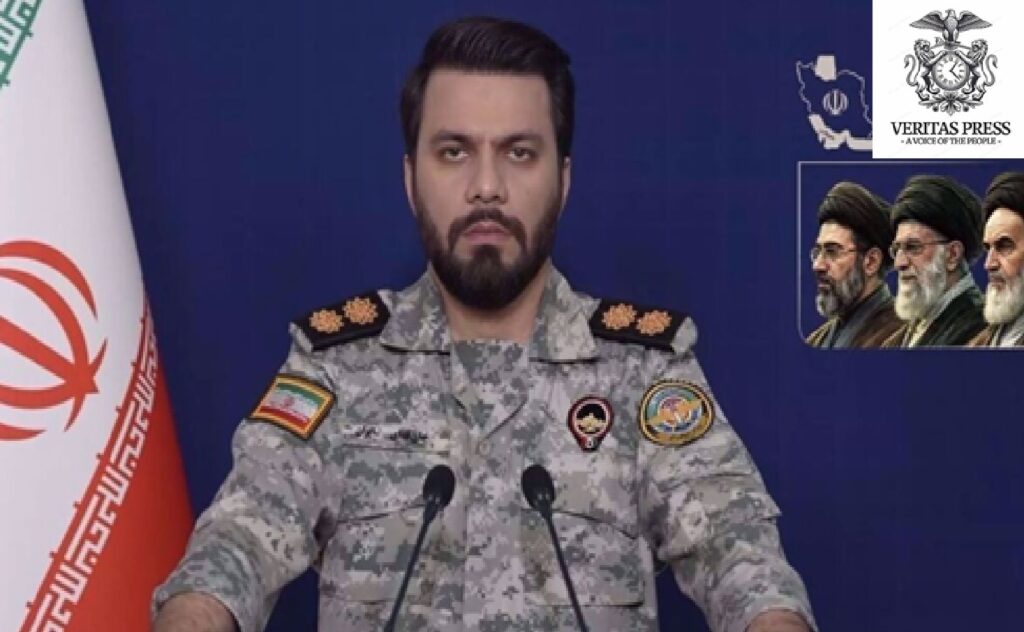
When Lieutenant Colonel Ebrahim Zolfaqari, spokesman for Iran’s Khatam al-Anbiya Central Headquarters, issued a warning

The historic Christian presence in Palestine, dating back to the earliest centuries of Christianity, is
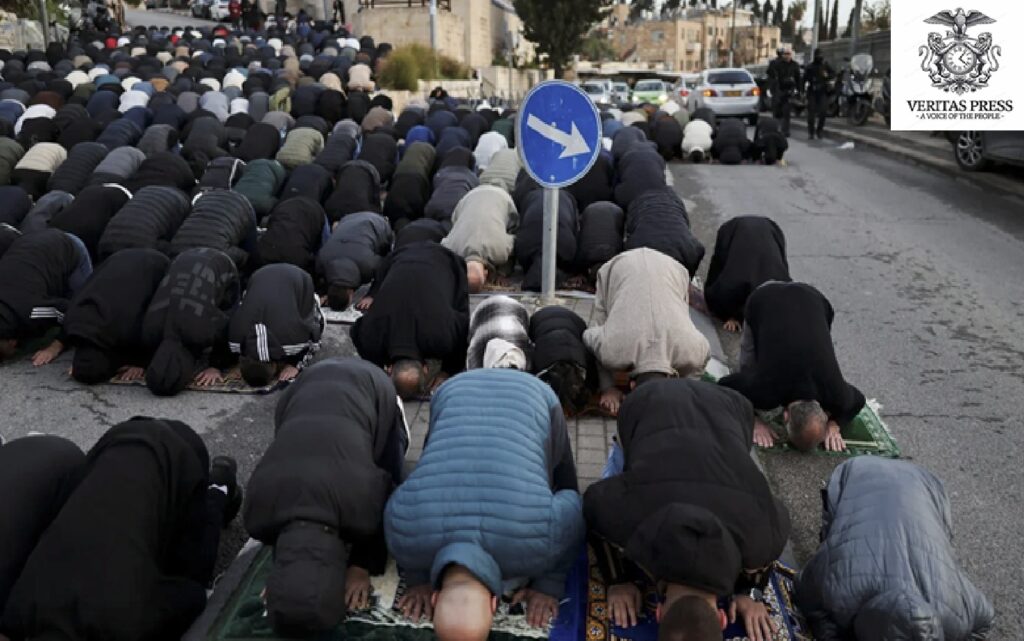
JERUSALEM – For the first time since the aftermath of the Six-Day War, the courtyards
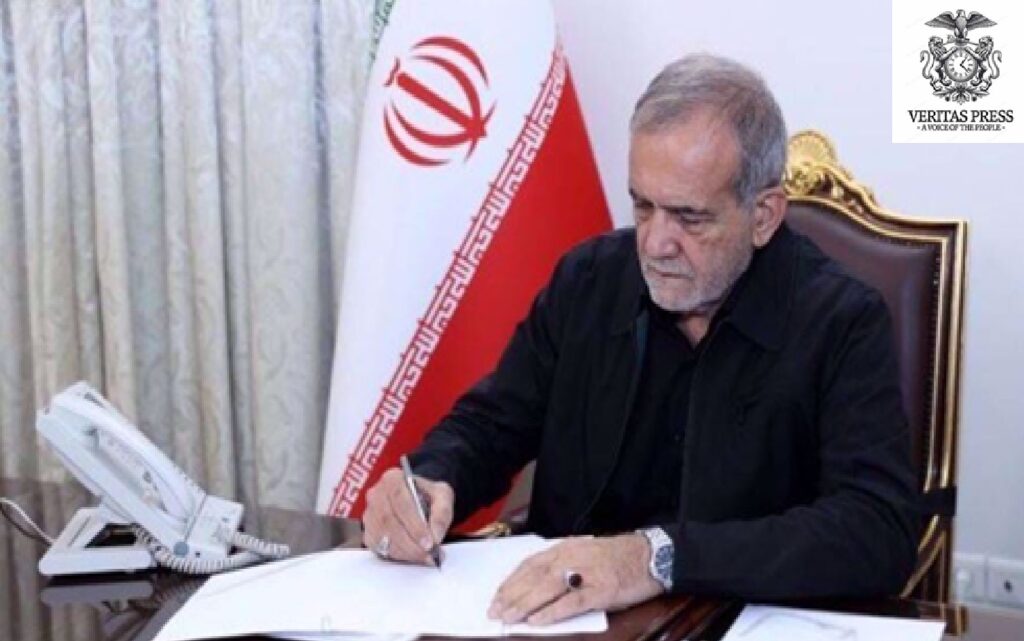
TEHRAN – As the sun rose on Eid al-Fitr, a day meant for celebration and
HUNGARY – As Benjamin Netanyahu prepares to travel to Hungary this weekend, a mounting legal
LONDON — In the polished corridors of 10 Downing Street, the language remains meticulously calibrated:
On March 20, 2026, the Pentagon quietly announced what amounts to a fundamental restructuring of
WASHINGTON / ISLAMABAD — A fresh warning by US Director of National Intelligence Tulsi Gabbard