

Original Article Date Published:
Article Date Modified:
Help Support our mission—donate today and be the change. Every contribution goes directly toward driving real impact for the cause we believe in.
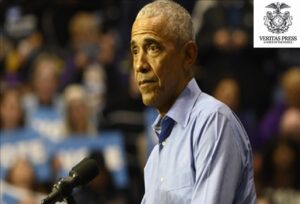
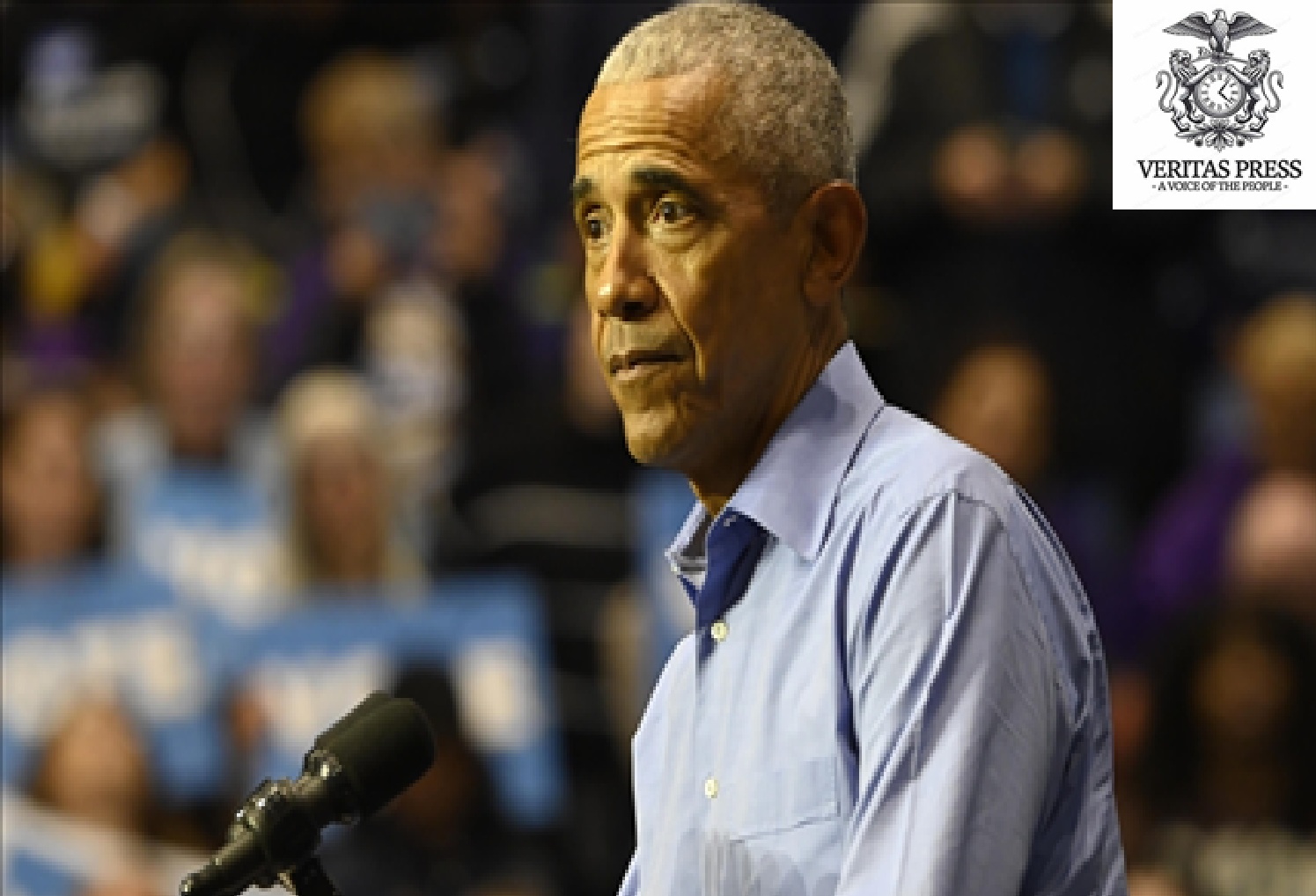
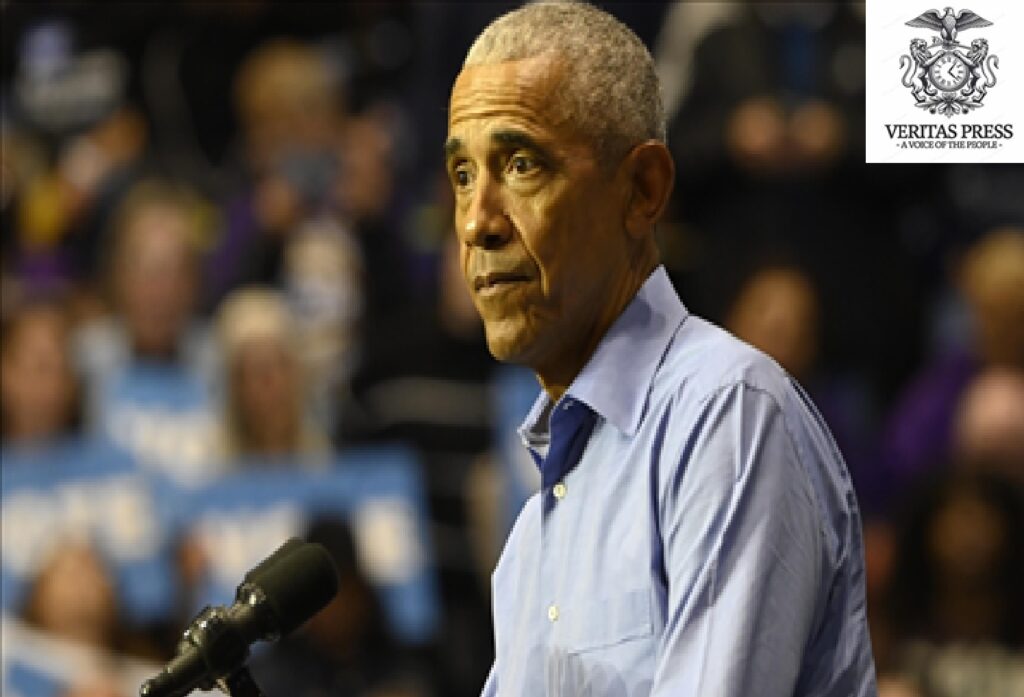
WASHINGTON, USA – Former U.S. president Barack Obama has delivered one of his starkest critiques yet of America’s political trajectory after a racist AI-generated video portraying him and former first lady Michelle Obama as apes was shared on the social platform of President Donald Trump.
While the White House moved to delete the clip and attribute it to a staff error, the episode has evolved into something far larger than a social media scandal. Analysts increasingly frame it as part of a widening pattern: the normalisation of racialised messaging, the erosion of democratic norms, and the re-emergence of authoritarian political aesthetics in Western democracies.
Obama did not mention Trump directly but warned that public life has lost the “decorum” and “propriety” once expected of high office, describing modern political media as a “clown show” devoid of shame.
Yet beneath the rhetorical clash lies a deeper question: whether the boundaries that once constrained openly racial political imagery are collapsing.
The Incident As Political Signal, Not Anomaly:
The roughly minute-long video, posted on Truth Social, promoted false claims about the 2020 United States presidential election before briefly showing the Obamas’ faces superimposed onto primates, imagery rooted in centuries-old racist propaganda.
Trump said he condemned the racist portion but refused to apologise, insisting, “I didn’t make a mistake.”
For investigators of political communication, the key issue is not merely that such content appeared, but that it could circulate from a presidential account at all.
The speed of deletion did little to blunt the symbolic damage: once presidential messaging crosses a line, even briefly, it shifts the perceived limits of acceptable discourse.
Racism As A Mobilising Strategy:
Historians note that depicting Black people as apes has long been used to justify exclusion, segregation, and political disenfranchisement. That such imagery targeted the first Black presidential couple amplifies its political resonance.
But experts increasingly argue that modern racial messaging is rarely accidental.
Instead, it often operates through what political scientists describe as strategic ambiguity, material inflammatory enough to energise ideological supporters while deniable enough to avoid formal accountability.
Trump’s partial condemnation, paired with refusal to apologize fits this model.
Obama hinted at the broader stakes, suggesting that cruelty has become embedded within political messaging rather than remaining outside its boundaries.
From Populism To Authoritarian Style:
Scholars studying democratic backsliding warn that the episode reflects traits commonly associated with authoritarian political movements:
- normalisation of dehumanising rhetoric
- attacks on electoral legitimacy
- reliance on conspiratorial narratives
- media spectacle replacing institutional seriousness
These dynamics do not automatically equal fascism. However, political theorists often describe them as preconditions that allow more explicitly authoritarian ideologies to gain mainstream traction.
The video’s fusion of election denialism with racial imagery is particularly notable, blending two themes that historically accompany democratic instability.
Not Just An American Story:
The controversy arrives amid a broader global trend. Over the past decade, far-right parties across parts of the UK and Europe have expanded influence by centring nationalist identity and anti-immigrant rhetoric, while some governments have adopted increasingly hardline positions on race, citizenship, and cultural belonging.
Researchers frequently point to a shared playbook:
- cultural grievance framed as a political crisis
- minority groups cast as threats
- Strongman leadership presented as corrective.
Against this backdrop, critics argue that what once seemed unthinkable in American presidential communication now mirrors rhetorical strategies visible in other polarised democracies.
In that sense, the scandal is less an outlier than a node in a transnational shift toward harsher political language.
Republican Backlash, And The Limits Of Outrage:
Several Republican lawmakers condemned the video, including Senator Tim Scott, who reportedly called it the most racist act he had seen from the current White House.
Such criticism is politically significant, yet equally revealing is what did not follow: no formal reprimand, no apology, and no clear institutional consequence.
For democratic theorists, this gap illustrates a crucial stage in norm erosion: when outrage becomes routine, but enforcement disappears.
Repeated controversies risk transforming shock into background noise.
The Attention Economy And The Collapse Of Restraint:
Trump’s use of direct-to-audience platforms signals a structural transformation in presidential communication.
Traditional guardrails, speechwriters, communications teams, policy review, once filtered rhetoric through institutional expectations. Social media dissolves those barriers, merging personal impulse with executive authority.
The result is a presidency increasingly shaped by viral logic:
Attention → Outrage → Polarization → Disengagement → Repetition.
Obama’s warning about lost shame speaks directly to this cycle.
When spectacle becomes strategy, restraint becomes politically costly.
Why Scholars Are Invoking The Language Of Democratic Erosion:
Experts caution against casually labelling contemporary politics “fascist,” yet many argue the warning signs deserve scrutiny.
Classic fascist movements relied heavily on:
- mythic nationalism
- racial hierarchy
- emotional mass communication
- delegitimisation of opponents
Modern democracies rarely replicate these patterns wholesale. Instead, they often experience gradual normalisation, small rhetorical breaches that accumulate until previously unacceptable ideas enter mainstream debate.
The ape imagery matters precisely because it tests that boundary.
If such symbolism fails to trigger meaningful political consequences, the threshold moves.
Obama’s Deeper Warning:
Obama ultimately struck a measured but unmistakably cautionary tone: Americans still believe in “decency, courtesy, kindness,” he said, but the country is at risk of drifting away from those values.
His comments read less like partisan criticism and more like an institutional alarm.
Democratic systems depend not only on laws but on unwritten norms, mutual restraint, respect for office, and recognition of shared citizenship.
When those norms weaken, constitutional structures alone may not prevent democratic decline.
The Unresolved Question: Desensitisation Or Turning Point?
The episode leaves the United States confronting a pivotal uncertainty:
Are Americans becoming desensitised to rhetoric once considered disqualifying, or nearing a political backlash that reasserts boundaries?
Obama suggested the answer will come from voters.
But political historians often note that democratic erosion is easiest to recognise in hindsight, after the guardrails have already failed.
Whether this controversy becomes a fleeting outrage or a marker of deeper ideological transformation may ultimately depend on what the public decides to tolerate next.
As racial rhetoric, digital propaganda, and strongman political styles increasingly seep into mainstream discourse, the controversy raises a defining question for the United States and other democracies alike:
If the boundaries of acceptable leadership continue to shift, at what point does normalisation become complicity and who ultimately decides where the line must be drawn before democratic values themselves begin to erode?

A viral livestream featuring American content creator Jeff Davidson and a man identifying himself as
In a ruling that has intensified debate over civil liberties and the right to protest
WASHINGTON, USA – Former U.S. president Barack Obama has delivered one of his starkest critiques

At its most basic level, Christianity is an Abrahamic monotheistic religion based on the life,
Hajj is the sacred pilgrimage to the holy city of Makkah (Mecca) in Saudi Arabia.
PAKISTAN – A wave of anxiety and solidarity has swept across Pakistan’s sporting and political

US – On February 12, 2026, the Donald Trump administration formally revoked a foundational scientific
In a landmark address at the Munich Security Conference on February 14, 2025, British Prime

From airsoft rifles in primary-school programs to teenage participation in settler harassment, a growing body

Israeli gunfire, drone strikes, and demolitions across the Gaza Strip have wounded civilians, including children,