





Title: NHS Nurse Struck Off: A Window Into Britain’s Rising Racism And Islamophobia.
Press Release: Veritas Press C.I.C.
Author: Kamran Faqir
Article Date Published: 05 Jan 2026 at 15:05 GMT
Category: UK | Islamophobia | NHS Nurse Struck Off, A Window Into Britain’s Rising Racism And Islamophobia.
Source(s): Veritas Press C.I.C. | Multi News Agencies
Website: www.veritaspress.co.uk

Business Ads

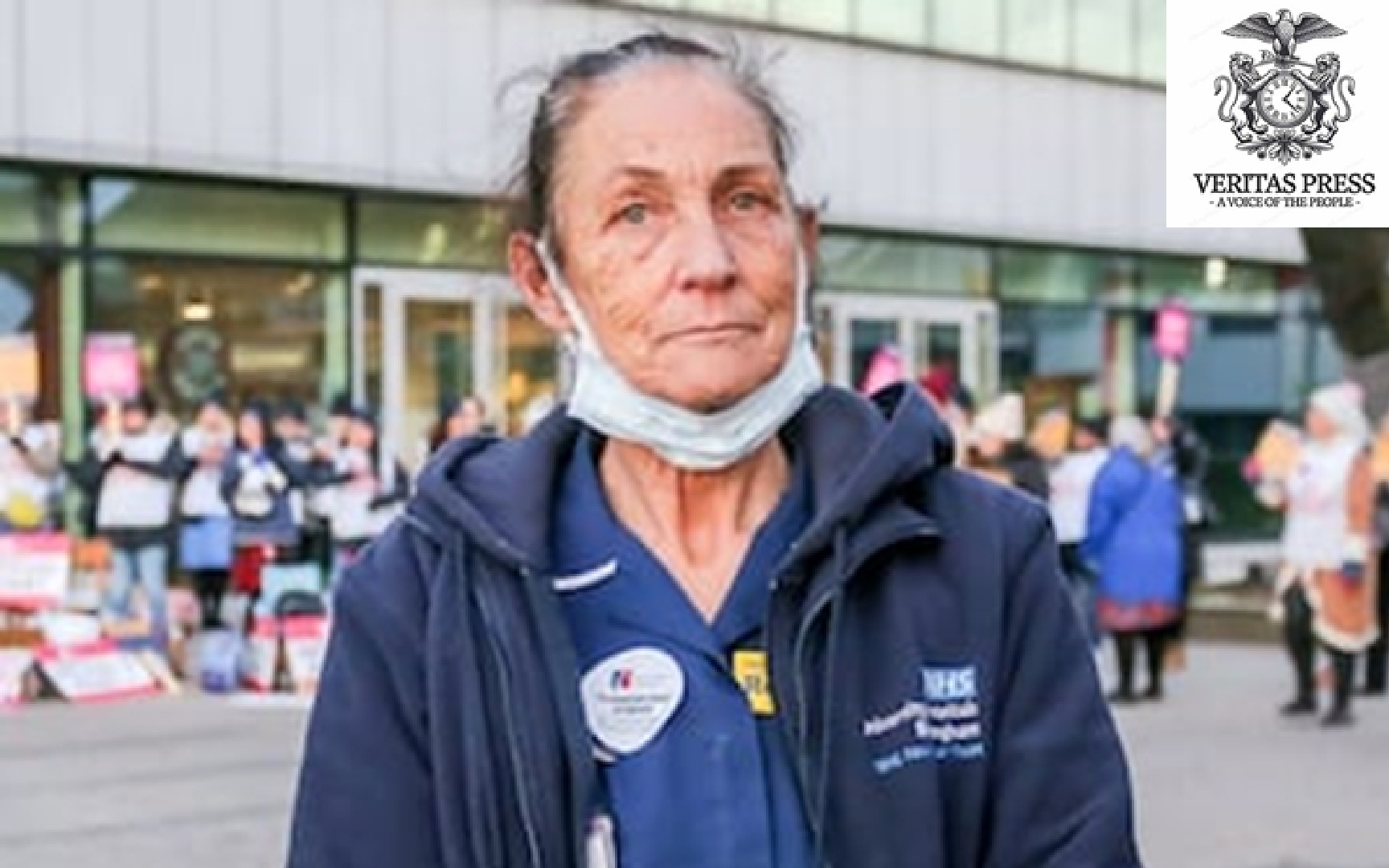
From Hero To Pariah: The Fall Of Roberta Batchelor.
Roberta Batchelor, a veteran NHS nurse from Birmingham, spent nearly 45 years caring for patients, rising from a cleaner to a ward manager and winning a Pride of Nursing Award in 2015. But in August 2024, her career ended abruptly after she posted a series of anti-Muslim and anti-immigrant images on Facebook.
The Nursing and Midwifery Council (NMC) struck her off the register, ruling that her posts, depicting migrants and Muslims in demeaning, threatening, and conspiratorial ways, amounted to serious misconduct, breached professional codes, and undermined public trust in the NHS.
The Posts That Shattered A Career:
Batchelor’s social media content was incendiary:
- A split image showing a boat of migrants arriving on a beach, captioned “these give nothing and get everything,” contrasted with a homeless veteran captioned “these give everything and get nothing.”
- A picture of a child being chased by men with a knife, warning taxpayers that some money was going to the “protection of mosques.”
- A highlighted passage from Deuteronomy asserts that foreigners would gradually gain power and become rulers.
- A split photo comparing airport security checks to a man arriving from a boat, captioned “Muhammad at Dover.”
These posts were shared in the wake of the Southport riots, a period marked by heightened nationalist rhetoric, anti-immigrant sentiment, and online radicalisation.
A Pattern Of Fear And Scapegoating:
Batchelor defended her actions as a reaction to anger over Labour’s winter fuel allowance cuts, telling investigators:
“I allowed myself to get caught up in all the unrest in the country. I find it very difficult to forgive myself for doing this ridiculous thing.”
But her posts were more than expressions of personal frustration. They reflected a broader social phenomenon: the transformation of economic and political grievances into racialised fear and Islamophobic rhetoric, portraying migrants as threats and morally inferior, and Muslims as potential aggressors.
Social Media As An Amplifier:
The Facebook posts did not exist in a vacuum. Researchers and NGOs warn that social media platforms amplify discriminatory narratives, allowing extreme or coded hate speech to reach wider audiences, normalise prejudice, and embolden online and offline hostility.
In Batchelor’s case, images and captions mirrored classic far-right narratives: dehumanisation of migrants, moral panic around Islam, and framing minorities as economic and cultural threats. This rhetoric is reminiscent of fascist strategies, using fear to divide communities and scapegoat vulnerable groups.
The Structural Context: Rising Islamophobia And Racism.
Batchelor’s posts are part of a wider surge in anti-Muslim and anti-immigrant sentiment in the UK:
- Anti-Muslim assaults rose by 73% in 2024, the highest level recorded by Tell MAMA.
- Reports of racial abuse toward NHS staff increased by 55% in recent years, disproportionately affecting ethnic minority nurses.
- Political and media narratives increasingly frame migrants as economic threats, echoing the same rhetoric that informed Batchelor’s posts.
NMC Ruling: Professional Misconduct And Public Trust.
The NMC panel found that Batchelor’s actions:
- Represented a serious departure from professional standards.
- They were racially motivated and “sought to cause offence to immigrants and those of Muslim faith.”
- Undermined public confidence in the NHS.
The decision to strike her off, while aligned with regulatory guidance, is also a symbolic reminder: the NHS and wider society cannot tolerate healthcare professionals who propagate prejudice or foster fear toward vulnerable communities.
Beyond One Nurse: A Societal Reckoning.
Batchelor’s case is emblematic of a deeper societal challenge. The rise of Islamophobia, scapegoating of migrants, and normalisation of racially coded fears reflect:
- Political and economic anxiety channelled into prejudice.
- Digital platforms are amplifying extremist narratives, shaping public perception.
- Institutional failures to proactively address systemic racism, particularly within healthcare and other public services.
When a respected nurse can post images that vilify entire communities, it signals a wider erosion of civic values, mirroring trends observed in far-right movements across Europe. This is not just a disciplinary issue, but a warning about the normalisation of fascist logic in public life.
Looking Ahead: Accountability And Cultural Change.
The NMC’s intervention is necessary but reactive. Meaningful change requires:
- Mandatory training on unconscious bias and anti-racism across healthcare professions.
- Clear professional guidelines for online conduct and public speech.
- Political and media leadership that actively resists scapegoating and Islamophobic narratives.
Otherwise, individual cases like Batchelor’s will continue to surface, symptomatic of a society struggling with inequality, fear, and intolerance.
Conclusion: Beyond A Career Ended, A Mirror Of Structural Prejudice And Intolerance.
Roberta Batchelor’s strike-off is a justified professional sanction. Yet it also exposes a broader cultural crisis: the intersection of social media, rising Islamophobia, far-right ideology, and the intolerance of minority communities in contemporary Britain. Her posts, though framed as personal anger over government policy, targeted communities already vulnerable to discrimination, including migrants fleeing their homelands for safety, casting them as threats rather than people in need of protection.
This is a cautionary tale: when personal anger, online platforms, and structural prejudice converge, the consequences are not just personal; they are societal. The Batchelor case demonstrates how professional misconduct intersects with a society in which fear, scapegoating, and dehumanisation of minority communities have become normalised. It is a stark illustration of how intolerance, amplified through social media and reinforced by political and cultural narratives, can permeate institutions tasked with care and protection.
In the UK today, the question is not just who posts hateful content online, but how a nation confronts the structural forces that make such hatred feel normal. Anti-migrant sentiment, particularly toward those fleeing violence, conflict, or persecution, is part of a broader ideology that stigmatises vulnerability and amplifies xenophobic fear. Without addressing these underlying conditions, from systemic Islamophobia to the mainstreaming of far-right narratives, incidents like Batchelor’s will continue to emerge, threatening the integrity of public institutions and the safety of minority communities.
Ultimately, this case is a stark reminder: disciplinary action alone cannot protect society from normalised prejudice. Meaningful change requires cultural, institutional, and political interventions to challenge hate at its roots, defend minority communities, and ensure that fear and exclusion do not dictate the rules of public life.