







Original Article Date Published:
Article Modified Date:
Help support our mission, donate today and be the change. Every contribution goes directly toward driving real impact for the cause we believe in.
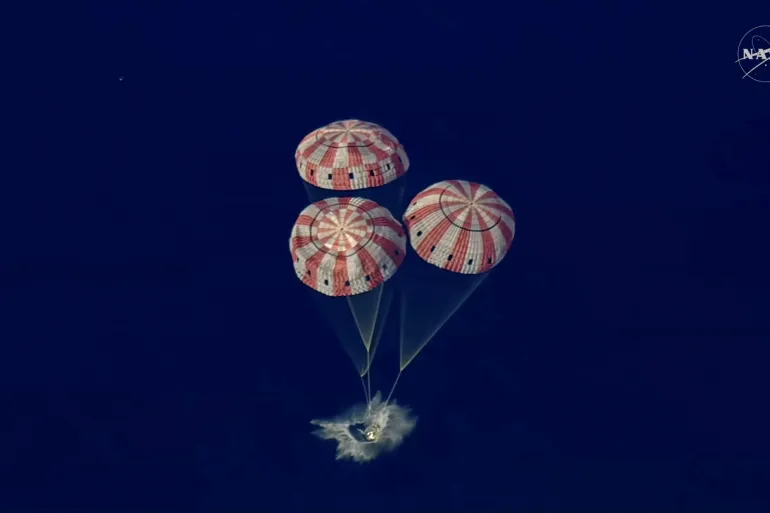
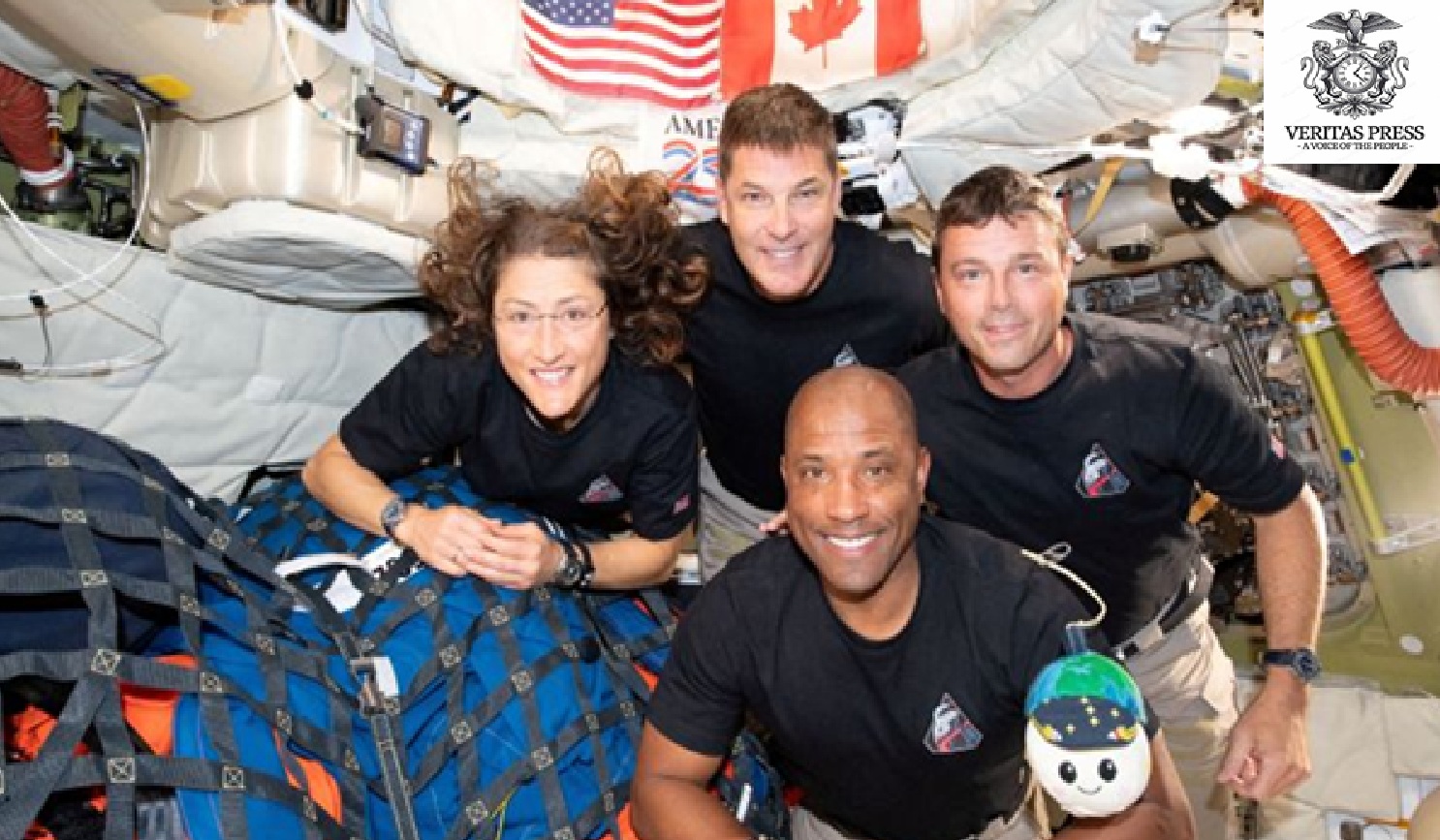
US, NASA – On Friday, April 10, 2026, at precisely 5:07 p.m. PDT (0007 GMT Saturday), NASA’s Orion capsule, named Integrity by its crew, punched through Earth’s atmosphere at 38,400 km/h and splashed down in the Pacific Ocean approximately 97 km west of Point Loma, San Diego, bringing the four astronauts of the Artemis II mission back to Earth. The 10-day journey saw NASA astronauts Reid Wiseman, Victor Glover, Christina Koch, and Canadian Space Agency astronaut Jeremy Hansen travel farther from Earth than any human in history, 252,756 miles (406,751 km) at their farthest point, surpassing even the record set by Apollo 13.
Yet, for all the triumphant imagery of parachutes unfurling against a Pacific sunset and the crew waving from a recovery raft, the splashdown was never just a celebration. As the Artemis program looks toward a 2028 lunar landing with Artemis III, this reentry served as a stark, fiery test of whether the technology, the political will, and the ethical calculus underpinning this new space age can truly survive the journey home.
“We live on a fragile planet in the vacuum of space. Our purpose is to find joy in lifting each other up.” — Jeremy Hansen, CSA Astronaut.
The Heat Shield: A Triumph Marred By Known Flaws
The central drama of the reentry, the part that held the breath of mission control and the global public, was the performance of Orion’s heat shield. As the capsule slammed into the atmosphere, it faced temperatures reaching 2,760°C (5,000°F), hotter than lava. For six agonising minutes, a plasma sheath enveloped the spacecraft, triggering a planned communications blackout during which no one on Earth knew if the crew was alive.
The tension was amplified by a persistent, unsettling truth: NASA flew this crewed mission with a heat shield that was, by its own admission, flawed. This was not a theoretical risk. During the uncrewed Artemis I mission in 2022, engineers were alarmed to find that Orion’s Avcoat heat shield had lost more material than expected, exhibiting unexpected pitting and cracking. The investigation later revealed that gases did not vent properly in the heat shield’s outer material, allowing pressure to accumulate and causing the observed damage.
As the Artemis II crew prepared for their return, former NASA astronaut and aerospace engineer Charles Camarda issued a stark public warning: “I do not believe that we should launch with the crew right now, it’s too risky. NASA does not understand what caused the failure on Artemis I … so there is no pressing need to fly a crew on this mission.” He added, “The heat shield we have right now is deviant … and NASA cannot predict accurately how or when it will fail”.
NASA’s response was a calculated gamble. Rather than replace the shield, a move that would have caused years of delay and added billions to an already ballooning budget, the agency opted to modify the reentry trajectory. By using a steeper, more direct path, Orion would spend less time in the most intense heating phase, theoretically reducing the stress on the flawed shield. “If we stick to the new re-entry profile NASA has planned, then this heat shield will be safe to fly,” Artemis II commander Reid Wiseman said.
Crucially, NASA officials also acknowledged there was “no plan B” if the shield were to fail catastrophically. The astronauts would be entirely reliant on a 3-inch-thick layer of Avcoat to survive. The fact that the capsule did survive does not erase the sobering reality: for the first crewed lunar mission in over half a century, NASA knowingly accepted a “deviant” critical safety system.
The $93 Billion Context: Politics, Cost, And The Commercial Space Race
The Artemis II splashdown occurred against a backdrop of intense political and financial scrutiny. NASA’s Office of Inspector General (OIG) has estimated that the Artemis program costs approximately $93 billion between 2012 and 2025, with each launch of the Space Launch System (SLS) rocket carrying a price tag of roughly $4.1 billion. To put that in perspective, the entire annual budget of the National Science Foundation is around $10 billion.
The cost has drawn sharp criticism from both sides of the political aisle. Some lawmakers have questioned whether the program’s old-space, cost-plus contracting model is sustainable, especially as SpaceX’s privately developed Starship, designed to be fully reusable and far cheaper per launch, inches closer to operational status. In a significant policy shift, NASA recently cancelled Boeing’s SLS upper-stage upgrade, tacitly acknowledging the need to streamline the program’s bloated architecture.
President Donald Trump, whose administration had championed the Artemis program’s accelerated timeline, hailed the splashdown as a political victory, declaring, “America is back in the business of sending astronauts to the Moon”. Yet the president’s own budget proposals have at times threatened to slash NASA’s science and technology funding, underscoring the precarious nature of long-term space exploration when tethered to short-term electoral cycles.
The commercial space sector, led by figures like Elon Musk and Jeff Bezos, offered a more complex reaction. While they publicly celebrated the return of the Artemis II heroes, the mission’s reliance on a non-reusable, multi-billion-dollar SLS rocket contrasts sharply with the ethos of rapid, cost-effective innovation they champion. Musk’s SpaceX is simultaneously developing the lunar lander for Artemis III under a $2.9 billion contract, a partnership that highlights NASA’s increasing dependence on commercial providers to fulfil its ambitious goals while managing its own sprawling, legacy cost structure.
Earthly Concerns: Environmental Impact And The “Toilet Problem”
Beyond the technical and political challenges, the Artemis II splashdown brought into focus a less-discussed but equally critical set of issues: the environmental footprint of space exploration. Marine biologists and environmental lawyers raised concerns about the impact of splashdowns on Pacific marine life, pointing to acoustic shockwaves from the capsule’s impact, potential residual propellants in the water, and the long-term accumulation of debris on the ocean floor.
A recent UN Environment Programme issue note highlighted that litter is just one of several environmental challenges linked to humanity’s rapidly expanding presence in outer space. The splashdown zone off San Diego, while carefully chosen for safety, is also part of a vital marine ecosystem. Current evidence suggests that splashdowns are unlikely to cause significant harm to marine life, but the long-term, cumulative effects of repeated landings as the Artemis program accelerates remain largely unstudied.
Adding a layer of absurdity to the high-stakes drama was the revelation, just days before reentry, that the Orion spacecraft’s toilet system had malfunctioned. The system designed to flush wastewater into space became clogged due to a chemical reaction in the urine treatment system, leaving the astronauts unable to dispose of waste properly. While NASA assured the public that this was a manageable inconvenience, the incident served as a reminder that even the most advanced space missions are not immune to the mundane, yet critical, challenges of basic human biology in microgravity. It also raises questions about the robustness of life-support systems as NASA plans for longer-duration missions to Mars.
The Scientific Payload: More Than Just A Flyby
Amidst the noise of political grandstanding and technical anxiety, the scientific achievements of Artemis II stand as a tangible, enduring legacy. The astronauts conducted a series of human health studies and radiation exposure research, gathering essential data for future long-duration missions to the Moon and, eventually, Mars. Experiments such as the AVATAR investigation examined how human tissue responds to microgravity and deep-space radiation, providing critical insights into the physiological toll of space travel.
The crew also captured over 7,000 high-resolution images of the lunar surface, including impact craters, ancient lava flows, and colour variations across the lunar terrain. They documented a rare in-space solar eclipse from Orion’s unique vantage point and proposed names for two lunar craters, one of which was named “Carroll” after commander Reid Wiseman’s late wife. These observations are not merely souvenirs; they are data points that will inform the selection of landing sites for Artemis III and beyond, helping identify areas of high scientific interest and potential resources such as water ice.
Perhaps the most profound return, however, was the shift in perspective captured in the astronauts’ own words. “We live on a fragile planet in the vacuum and the void of space,” astronaut Jeremy Hansen reflected. “Our purpose on the planet as humans is to find joy … by creating solutions together instead of destroying. And when you see it from out here, it doesn’t change it, it just absolutely reaffirms that.” Commander Wiseman described the moment Earth disappeared behind the Moon as “an unbelievable sight,” adding that the mission’s greatest hope was “for just a moment have the world pause and remember that this is a beautiful planet in a very special place in our universe”.
The Road Ahead: Landing In 2028 And The Spectre Of Mars
With Artemis II complete, NASA now turns its focus to Artemis III, the mission slated to return humans to the lunar surface for the first time since 1972. The target date is 2028, a timeline that has already slipped repeatedly from the original 2024 goal set by the first Trump administration. The delays are due in part to the sheer complexity of developing a new lunar lander, SpaceX’s Starship Human Landing System (HLS), as well as the need for new spacesuits and orbital refuelling technologies.
The OIG’s March 2026 report on the Artemis Lander Program warned of “schedule delays and unmitigated crew safety risks,” noting that both SpaceX and the backup lander provider (Blue Origin) have faced technical difficulties and integration challenges that could impact costs and delivery timelines. The report estimates NASA will have committed $69 billion to HLS development by 2030, with cumulative spending reaching $183 billion by that year.
In his statement after the splashdown, NASA Administrator Jared Isaacman thanked President Trump and Congress for providing “the mandate and resources that made this mission and the future of Artemis possible”. He declared, “With Artemis II complete, focus now turns confidently toward assembling Artemis III and preparing to return to the lunar surface, build the base, and never give up the Moon again.” NASA Associate Administrator Amit Kshatriya echoed the sentiment: “Fifty-three years ago, humanity left the Moon. This time, we returned to stay.”
The Artemis II splashdown was a moment of collective relief and national pride, a testament to the skill and courage of the crew and the thousands of engineers and technicians across 14 countries who built the vehicle that brought them home. But it was also a moment of reckoning. The known flaws in the heat shield, the staggering cost of the program, the unresolved environmental questions, and the formidable technical hurdles still ahead for Artemis III all cast a long shadow over the celebration. The journey to the Moon, it turns out, is not just about escaping Earth’s gravity; it’s about confronting the earthly realities of risk, politics, and the limits of human technology. The splashdown was a homecoming, but the real test of whether “we returned to stay” is just beginning.
Latest Developments & Key Quotes (Updated April 11, 2026)
- Splashdown Success: The Artemis II crew splashed down safely at 5:07 p.m. PDT on April 10, 2026, and were recovered by the USS John P. Murtha for medical evaluations.
- Heat Shield Scrutiny: NASA flew the mission with a known heat shield flaw, opting for a modified trajectory instead of a redesign. Former astronaut Charles Camarda called the decision “irresponsible”.
- Program Costs: NASA’s OIG reports the Artemis program has cost $93 billion (2012-2025), with each SLS launch at $4.1 billion.
- Science Return: The crew conducted radiation and health experiments and captured over 7,000 lunar images, including a solar eclipse from space.
- Crew Perspective: Astronaut Jeremy Hansen reflected on Earth’s fragility, while commander Reid Wiseman said the mission aimed to remind the world “this is a beautiful planet”.
- Future Missions: NASA targets a 2028 lunar landing with Artemis III, pending resolution of lander development and safety risks.
- Hurdle: SpaceX’s Starship lander isn’t ready yet.
- Warning: NASA’s Inspector General warns of “unmitigated crew safety risks” in the lander program.
Bottom Line: Artemis II was a beautiful, necessary, and successful test flight. But the investigation into whether we can afford to stay on the Moon, financially and ethically, has just begun.
To learn more about the Artemis program, visit:
Bethany Stevens / Rachel Kraft
Headquarters, Washington
202-358-1600
bethany.c.stevens@nasa.gov / rachel.h.kraft@nasa.gov
Source: Multiple News Agencies & NASA
Submissions:
For The Secure Submission Of Documentation, Testimonies, Or Exclusive Investigative Reports From Any Global Location, Please Utilise The Following Contact Details For Our Investigations Desk: enquiries@veritaspress.co.uk or editor@veritaspress.co.uk
Help Support Our Work:
Popular Information is powered by readers who believe that truth still matters. When just a few more people step up to support this work, it means more lies exposed, more corruption uncovered, and more accountability where it’s long overdue.
Help Protect Independent Journalism, Which Is Currently Under Attack.
If you believe journalism should serve the public, not the powerful, and you’re in a position to help, becoming a DONATOR or a PAID SUBSCRIBER truly makes a difference.
DONATION APPEAL: If You Found This Reporting Valuable, Please Consider Supporting Independent Journalism.
Help Support Our Work – We Know, We Know, We Know …
Seeing these messages is annoying. We know that. (Imagine what it’s like writing them … )
Your support fuels our fearless, truth-driven journalism. In unity, we endeavour to amplify marginalised voices and champion justice, irrespective of geographical location.
But it’s also extremely important. One of Veritas Press’s greatest assets is its reader-funded model.
1. Reader funding means we can cover what we like. We’re not beholden to the political whims of a billionaire owner. We are a small, independent and impartial organisation. No one can tell us what not to say or what not to report.
2. Reader funding means we don’t have to chase clicks and traffic. We’re not desperately seeking your attention for its own sake: we pursue the stories that our editorial team deems important and believe are worthy of your time.
3. Reader Funding: enables us to keep our website and other social media channels open, allowing as many people as possible to access quality journalism from around the world, particularly those in places where the free press is under threat.
We know not everyone can afford to pay for news, but if you’ve been meaning to support us, now’s the time.
Your donation goes a long way. It helps us:
- Keep the lights on and sustain our day-to-day operations
- Hire new, talented independent reporters
- Launch real-time live debates, community-focused shows, and on-the-ground reporting
- Cover the issues that matter most to our communities, in real time, with depth and integrity
We have plans to expand our work, but we can’t do it without your support. Every contribution, no matter the size, helps us stay independent and build a truly people-powered media platform.
If you believe in journalism that informs, empowers, and reflects the communities we serve, please donate today.

LONDON, UK – This wasn’t just another protest. On a Saturday afternoon in London’s Trafalgar

GAZA – The fragile ceasefire in Gaza was never a return to normalcy, but for

ISTANBUL — In a dramatic escalation of legal and political pressure against Israeli leadership, the

ISLAMABAD, TEHRAN, WASHINGTON – For 21 hours, the world watched Islamabad. Delegations from Washington and

GAZA CITY / GENEVA – The ceasefire was supposed to mark the beginning of the

EAST JERUSALEM — On a crisp April morning in the Ras al-Amud neighbourhood of Silwan,

BEIRUT/TEL AVIV — A humanitarian catastrophe is unfolding in Lebanon as Israeli military operations intensify,
US, NASA – On Friday, April 10, 2026, at precisely 5:07 p.m. PDT (0007 GMT

A fragile ceasefire intended to pause a 40-day war and reopen the world’s most critical

ISLAMABAD / BEIRUT — As dawn breaks over a locked-down Islamabad on Friday, the world’s