

Original Article Date Published:
Article Date Modified:
Help support our mission—donate today and be the change. Every contribution goes directly toward driving real impact for the cause we believe in.
WEST BANK – Israeli occupation forces launched a new wave of raids, arrests, and home demolitions across the occupied West Bank on 23 February 2026, targeting towns, refugee camps, and residential neighbourhoods. On the same day, illegal Israeli settlers carried out a brazen arson attack on the Abu Bakr al-Siddiq Mosque near Nablus, spraying “price tag” and “revenge” graffiti on its walls, part of a broader surge in extremist actions that have alarmed Palestinians and international observers alike.
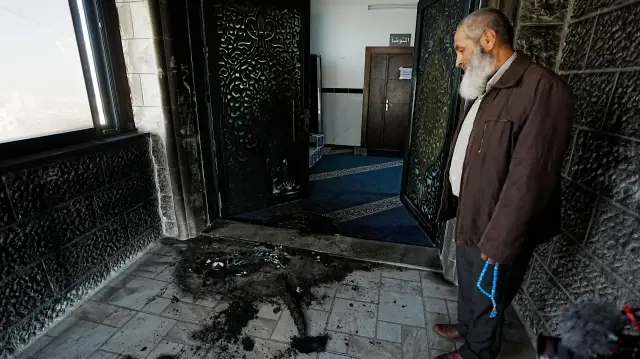
A view shows the burned entrance and damaged carpet of the Abu Bakr al-Siddiq Mosque after an attempted arson attack by Israeli settlers in the village of Tel near Nablus, West Bank, on February 23, 2026. The Palestinian Ministry of Awqaf said the assailants tried to set the mosque on fire, with the blaze damaging the entrance area before the attempt failed.
In response to these escalating violations, the Organisation of Islamic Cooperation (OIC) announced an emergency meeting to address what member states described as systematic abuses against Palestinian civilians.
Raids And Arrests, Including Children:
Local residents and activists reported heavy Israeli military presence across multiple West Bank areas as troops forcibly entered private homes.
“They knocked down the door, dragged my brother out in his pyjamas, and pointed rifles at the children. They barely looked at us, just shouted orders,” said Hanan Darwish, a resident of Asira al-Shamaliya, describing the raid on her family home that resulted in the detention of a minor, Ibrahim Rami Al-Jamal.
Witnesses told local media that soldiers overturned furniture, confiscated phones and laptops, and kept entire families under intense interrogation on their own doorstep.
Journalist Rasha Abu Khalil, reporting from Ramallah, described the atmosphere as “terrorising, not security operations,” adding:
“There was no distinction between adults and children. Boys as young as 15 were picked up on our street. Mothers were screaming and begging soldiers to stop.”
At least six Palestinians were detained on Monday, and one person was injured during clashes that erupted as residents resisted the incursions. Tear gas and live ammunition were reportedly deployed.
Home Demolitions, Collective Punishment In Practice:
In one of the raids, Israeli forces demolished a Palestinian family’s home, displacing its occupants. Local human rights lawyers emphasised this is not isolated, but a growing trend:
“This is collective punishment disguised as enforcement of planning laws,” said Dr. Jamal al-Qudsi, a legal advocate in Ramallah. “Permits for Palestinian construction are almost impossible to obtain, yet demolitions continue with zero accountability.”
A former Israeli military analyst, Yonatan Feldman, noted:
“These demolitions are not ad hoc; they fit into a larger strategy that seeks to minimise Palestinian presence in key areas of the West Bank.”
Mosque Arson, Desecration And Escalation:
In the early hours of Monday, illegal Israeli settlers attempted to burn the Abu Bakr al-Siddiq Mosque, located between the villages of Tal and Sarra near Nablus. The arson damaged the mosque’s entrance and interior carpets before worshippers extinguished the flames.
Locals found “price tag” and “revenge” phrases sprayed on the walls in Hebrew, a hallmark of extremist settler violence.
“We came out at dawn because we smelled smoke. The mosque is sacred to us. If the flames had reached the prayer hall, it would have been destroyed,” said Mohammed Turabi, a local activist who helped save the mosque.
Religious leaders condemned the attack:
“Burning a house of worship is not a security operation, it’s an assault on our faith and identity,” said Sheikh Khalid al-Masri, a West Bank imam. “This is not revenge; it is terror carried out by extremists sheltered by silence and impunity.”
International institutions have repeatedly condemned such acts. In November 2025, UN Secretary-General António Guterres said attacks on mosques “are unacceptable and must stop immediately.”
Context Of Rising Settler Violence: Patterns, Deaths, Displacement.
The mosque arson occurred amid a wider rise in settler violence across the West Bank. According to the UN Office for the Coordination of Humanitarian Affairs, such attacks have displaced hundreds of Palestinian families in recent months.
Just days earlier, a 19-year-old Palestinian-American, Nasrallah Abu Siyam, was shot and killed by settlers during a violent confrontation in the West Bank village of Mukhmas, one of the deadliest incidents in the territory this year.
“They came with weapons. When the army arrived, the settlers were encouraged and started shooting live bullets; it was deliberate,” a witness told The Guardian about the Abu Siyam killing.
Voices From Activists And Observers:
Local civil society groups condemned both the military raids and settler attacks:
“These are terror tactics designed to intimidate families into leaving their homes,” said Lina Tawil, a human rights activist with a West Bank NGO. “The coordination we witness between settlers and occupying forces is no accident.”
International analysts highlighted the broader political context:
“The current Israeli government has empowered extremist settler leadership, giving them de facto authority in many areas of the West Bank,” said Dr. Miriam Weiss, a Middle East expert at a European university. “This has translated into escalating violence with near-total impunity.”
Regional Response: OIC, Diplomacy, And Global Reactions.
In response to the latest developments, the Organisation of Islamic Cooperation scheduled an emergency summit to address the deteriorating situation. The OIC condemned both military operations and settler attacks on religious sites, signalling potential diplomatic and legal escalations.
Leaders within the OIC have emphasised solidarity with Palestinian civilians:
“We stand united against these blatant breaches of human rights and religious freedoms,” said an OIC foreign minister in a statement released ahead of the meeting.
International voices have also registered concern. The UN Secretary-General reiterated that Israel, as an occupying power, must protect civilians and prosecute those responsible for violence, including against houses of worship.
Life Under Intensified Occupation, Testimonies From The Street:
For Palestinian families on the ground, Monday’s events were not isolated, but yet another chapter in a worsening pattern.
“Every knock on the door could be soldiers with guns, or settlers with firebombs,” said Samir Hassan, stand-in for a Bantustan area resident. “Our children fear sleeping. Their future was taken long ago.”
Conclusion: Systemic Violations, Global Complicity, And The Collapse Of Accountability.
What unfolded across the West Bank on February 23, the torching of a mosque, the detention of children, the demolition of homes, and the expansion of coordinated raids, cannot be dismissed as isolated “security incidents.” Taken together, they point to a structural pattern that engages core prohibitions under international humanitarian law and international human rights law.
Under the Fourth Geneva Convention, an occupying power is prohibited from engaging in collective punishment, unlawful destruction of private property, forcible transfer, and failure to protect the occupied population. The arrest and interrogation of minors raises further concerns under the Convention on the Rights of the Child, particularly regarding detention practices, due process, and the prohibition of cruel, inhuman, or degrading treatment. Attacks on places of worship violate protections afforded to religious and cultural property under international law, while the state’s duty to prevent and prosecute settler violence remains unequivocal.
Legal scholars increasingly argue that the convergence of military raids, discriminatory planning regimes, and settler expansion policies may constitute grave breaches, potentially engaging the jurisdiction of international accountability mechanisms. The issue is no longer simply whether individual acts violate rights; it is whether a prolonged system of domination and dispossession is being sustained in defiance of binding legal norms.
Yet if violations are systemic, so too is the failure of enforcement.
Western governments, many of which routinely invoke the language of “rules-based international order”, continue to provide Israel with diplomatic shielding in international forums, arms transfers, intelligence cooperation, and preferential trade arrangements. Military aid packages proceed even as documentation of abuses accumulates. Condemnations are issued, but rarely accompanied by sanctions, suspension of weapons transfers, or meaningful legal consequences. This dissonance between rhetoric and policy has led critics to argue that impunity is not accidental but structurally enabled.
At the same time, Muslim-majority states, including influential members of the Organisation of Islamic Cooperation, face growing scrutiny over the limits of their response. Emergency meetings and communiqués have become familiar diplomatic rituals. Yet concrete actions, coordinated economic pressure, binding legal initiatives, or unified political leverage, remain limited and fragmented. Bilateral normalisation deals, security cooperation, and trade relationships with Israel continue in parallel with public denunciations.
For Palestinians, this dual-layered complicity, Western powers offering material and diplomatic backing, and Muslim states offering solidarity without sustained enforcement, reinforces the perception that international law is selectively applied. The architecture of impunity, in this sense, extends far beyond the West Bank. It is embedded in global power structures that determine which violations trigger consequences and which are absorbed into diplomatic routine.
The February 23 events thus illuminate more than localised violence. They expose a widening credibility crisis for international law itself. When the detention of children, the destruction of homes, and the burning of religious sites fail to produce accountability, the normative framework designed to protect civilians under occupation is weakened.
The central investigative question is no longer confined to Israeli policy alone. It is whether the international community, Western capitals, Muslim-majority governments, and multilateral institutions are prepared to reconcile their stated commitments to human rights with their political and economic alliances.
Without enforceable accountability mechanisms, whether through international courts, sanctions regimes, or binding diplomatic measures, each new raid, each demolished home, and each desecrated mosque risks reinforcing a dangerous precedent: that violations can be documented, debated, and condemned, yet continue uninterrupted.
Until that gap between law and enforcement is addressed, the cycle of dispossession will persist, not merely as a regional conflict, but as a test of whether international human rights norms retain meaningful force in the face of geopolitical convenience.
Britain is heading into a prolonged economic squeeze, where rising household bills, stagnant wages, and
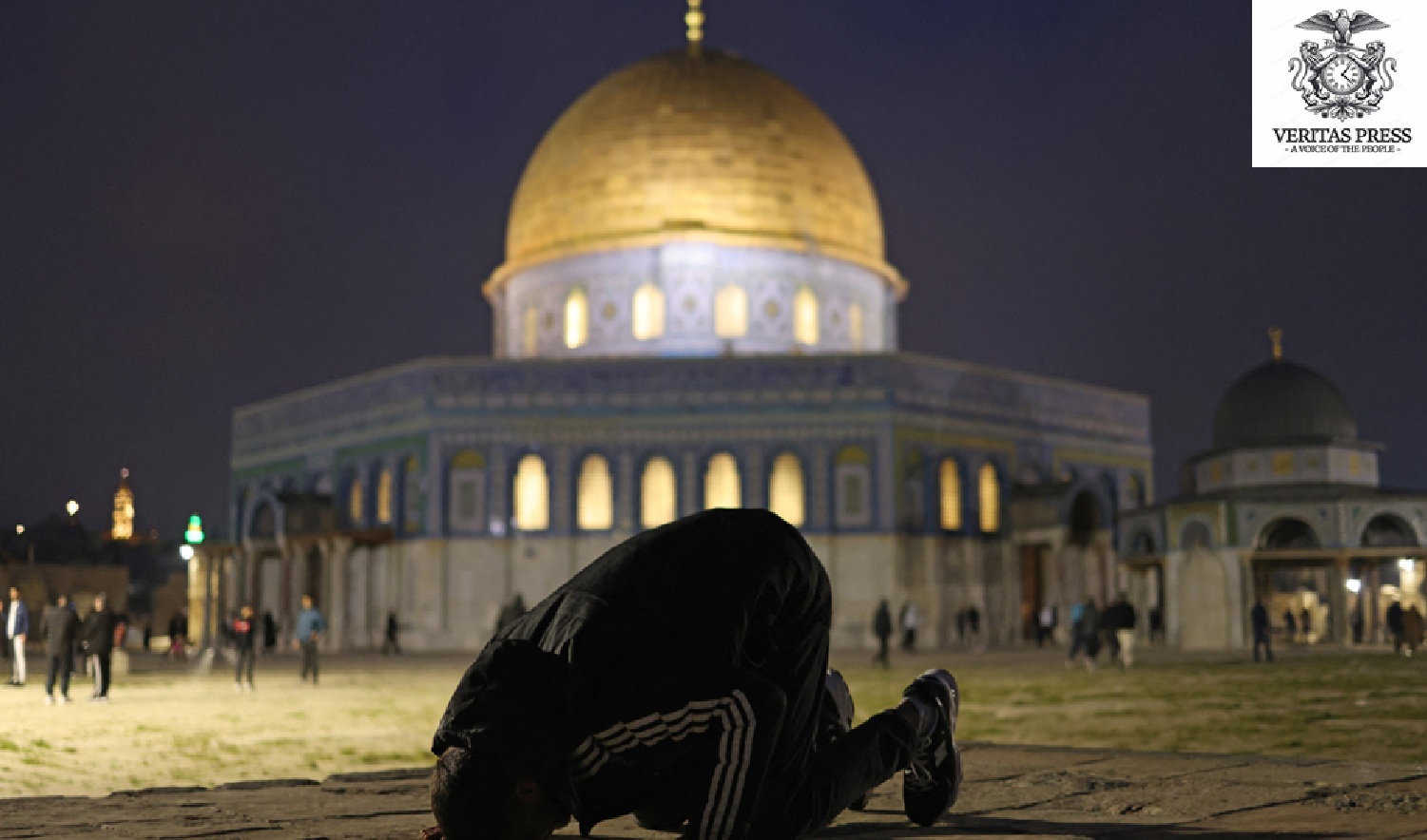
OCCUPIED EAST JERUSALEM, OPT, April 9, 2026 – After forty days of unprecedented closure, the
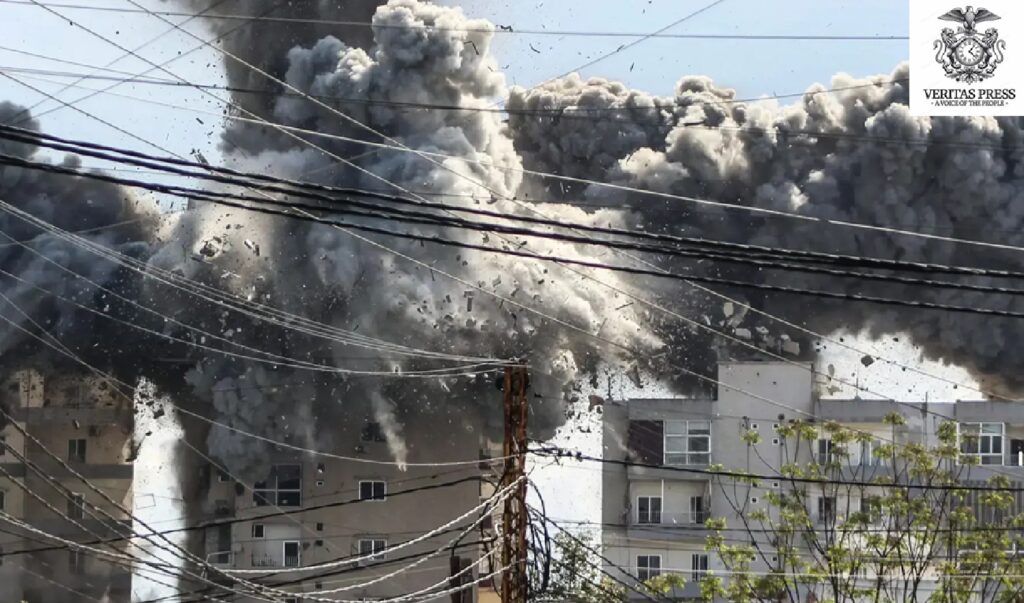
BEIRUT/ISLAMABAD — The ink had barely dried on a historic, last-minute ceasefire agreement between the
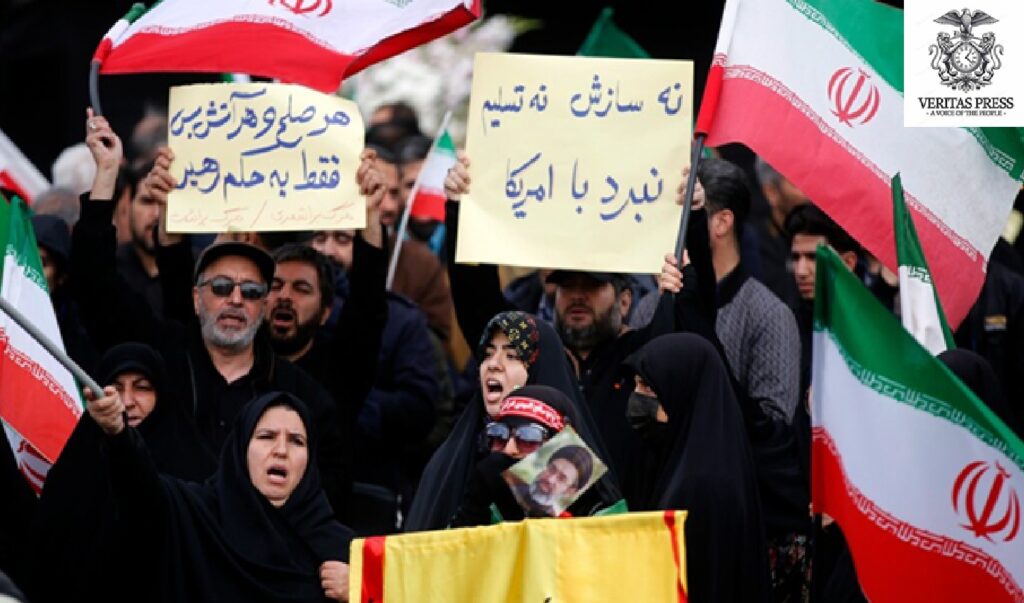
TEHRAN, WASHINGTON, TEL-AVIV – After 40 days of intense warfare that had reshaped the geopolitical
WASHINGTON – Within hours of announcing what he described as a pathway to “long-term PEACE,”
HELSINKI, FINLAND – For seven consecutive years, Finland has been crowned the “happiest country in
TEHRAN/ISLAMABAD/WASHINGTON — In the early hours of Wednesday, a deafening silence fell over the skies
TEHRAN / ISLAMABAD – The world exhaled on April 8, 2026, as the United States

In the United States, millions of people are now going into debt to buy food.
The Islamic Revolution Guards Corps (IRGC) has pounded US-owned petrochemical sites in the Wave 99